Home Blog Page 3

Valsamma Eapen AO : Kings Birthday Honours 2026

0
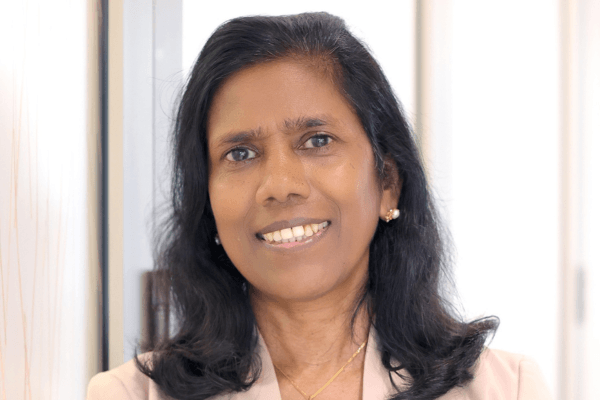
Valsamma Eapen AO
Valsamma Eapen AO (Source: Supplied)
Reading Time: 4 minutes


Valsamma Eapen AO

When Tourette Syndrome activist John Davidson involuntarily shouted a racial slur during this year’s BAFTA Awards, the backlash was immediate. The incident sparked global debate about a condition still widely misunderstood despite affecting thousands. Davidson later said he was “deeply mortified”, while disability advocates stressed the outburst was an involuntary symptom of Tourette Syndrome (TS), not a reflection of his views.

For Indian-origin, Sydney-based psychiatrist Professor Valsamma Eapen, the controversy highlighted a reality she has spent years trying to change.

Despite growing awareness of autism and ADHD, children with Tourette Syndrome in Australia still wait an average of two years for a diagnosis, often facing stigma and significant mental health challenges along the way.

“It is one of the most under-recognised, misunderstood and misdiagnosed medical conditions,” Eapen told Indian Link.

Eapen’s lifelong commitment to improving outcomes for child and adolescent mental health, to neurodevelopmental research, and to tertiary education has now been recognised with an Officer of the Order of Australia (AO), one of the nation’s highest civilian awards, in the 2026 King’s Birthday Honours.

Ask her reaction to the recognition, and she simply says: “Deeply humbled and honoured.”

Currently Chair of Infant, Child and Adolescent Psychiatry at the University of New South Wales and Director of the BestSTART Child Health Unit in South Western Sydney, Valsamma Eapen AO has helped shape national guidelines on autism and ADHD while advocating for equitable access to care for children across Australia.

Learning brain and behaviours

Her journey into child psychiatry began with a fascination for both children and the human brain.

“I always wanted to work with children, and during medical training, the brain fascinated me as an organ, but seeing a young patient with Tourette Syndrome and the diverse behavioural manifestations totally got me,” she recalled.

That early clinical encounter would go on to define an illustrious career that has focused on early identification and intervention in neurodevelopmental conditions. For Eapen, the appeal of the field lies in its potential to change life trajectories before difficulties become entrenched.

While early support is one of the most powerful tools in child mental health, she argues that systemic barriers continue to prevent many families from accessing timely care.

“One of the biggest challenges is the ‘inverse care effect’ in that those children from the most disadvantaged backgrounds with the highest risk of having neurodevelopmental needs are least likely to have early access to services,” she explained.

According to her, access to diagnosis and treatment is often shaped not by need, but by geography and socioeconomic circumstances. “It is often the case of a ‘postcode lottery’,” she said, pointing to deep inequities embedded within the system.
Valsamma Eapen AO
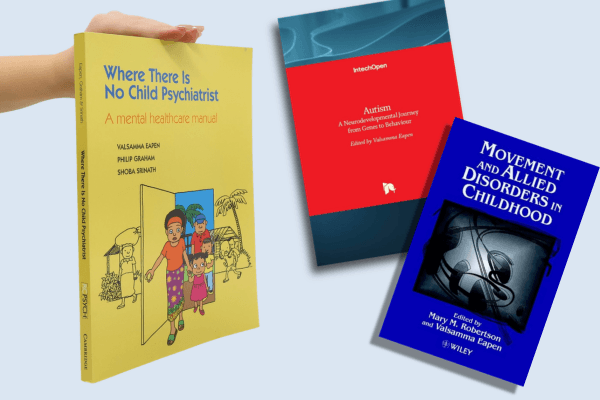
Findings as reported by Valsamma Eapen AO in the form of books (Source: Amazon Books)

Australia’s problem

Beyond diagnosis and access, Eapen believes one of the most overlooked gaps in Australia’s mental health system is the stage of life at which support is prioritized.

“Support in the early years of life is still lagging behind and in particular under 6s and under 12s are overlooked with quite a bit of focus instead on youth services,” she informed.

Yet, she argues, it is precisely these early years that offer the greatest opportunity for meaningful intervention. By the time children reach crisis points in adolescence, many developmental and behavioural challenges have already become complex and harder to treat.

“The return on investment and the opportunities to make a difference in the life course are much earlier in life and not after the issues have consolidated and comorbidities and complexities have set in,” she said.

Her work has increasingly focused on closing this gap through both research and practical tools. One of her key contributions is ‘Watch Me Grow’, an electronic developmental screening platform designed to track children from birth to school age. The aim is simple: identify developmental differences early and ensure families are connected to support as soon as concerns emerge.

“My hope is that no child is left behind due to their cultural, linguistic, geographic or socioeconomic background,” she shared.
Valsamma Eapen AO
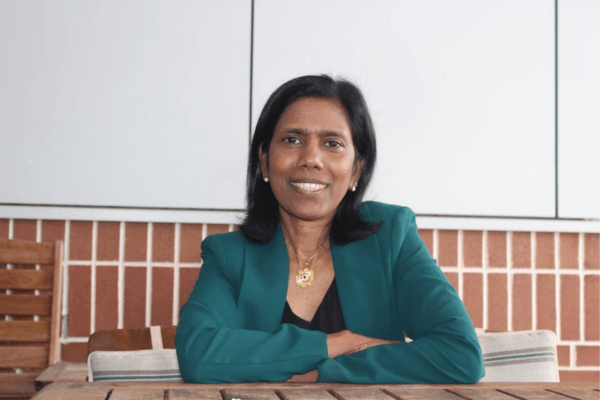
Valsamma Eapen AO is currently Chair of Infant, Child and Adolescent Psychiatry at UNSW (Source: UNSW)

Raising kids with care

Born in Kerala, she undertook specialist training and research in the United Kingdom before establishing her career in Australia. Along the way, she says, her guiding philosophy has remained consistent.

“I am guided by the values of family and I truly believe in the spirit of family and community connections as ‘it takes a village to raise a child’,” she added.

That belief, she explains, becomes even more important in migrant contexts, where families may not have the same extended support networks they once relied on. In those situations, she says, communities and services must help recreate that sense of collective care.

As a mentor to young clinicians and researchers, Eapen says the future of mental health care will depend on adaptability in a rapidly changing field and strong emotional intelligence.

For her, empathy is not abstract but essential – the foundation for building trust with children and families across diverse cultural and social backgrounds.

Read Also: Prof Bala Venkatesh AM: King’s Birthday Honours 2026
King’s Birthday Honours 2026: Indian links

0
Kings Birthday Honours 2026
Reading Time: 4 minutes


King’s Birthday Honours 2026

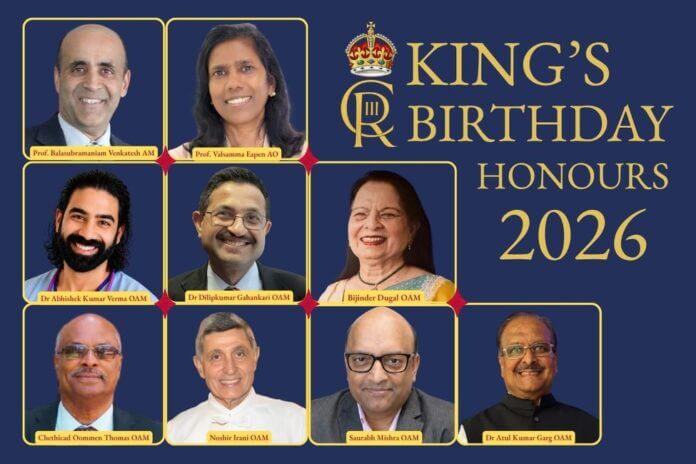
Ten Australians of Indian origin feature in the King’s Birthday Honours (2026) list, with recipients recognised across a range of medal categories. These include an AO, an AM, and eight OAMs, spanning medicine, mental health, tech, and decades of quiet, sustained community service.

Topping the list is a woman, continuing a trend that has become something of a hallmark in recent years.

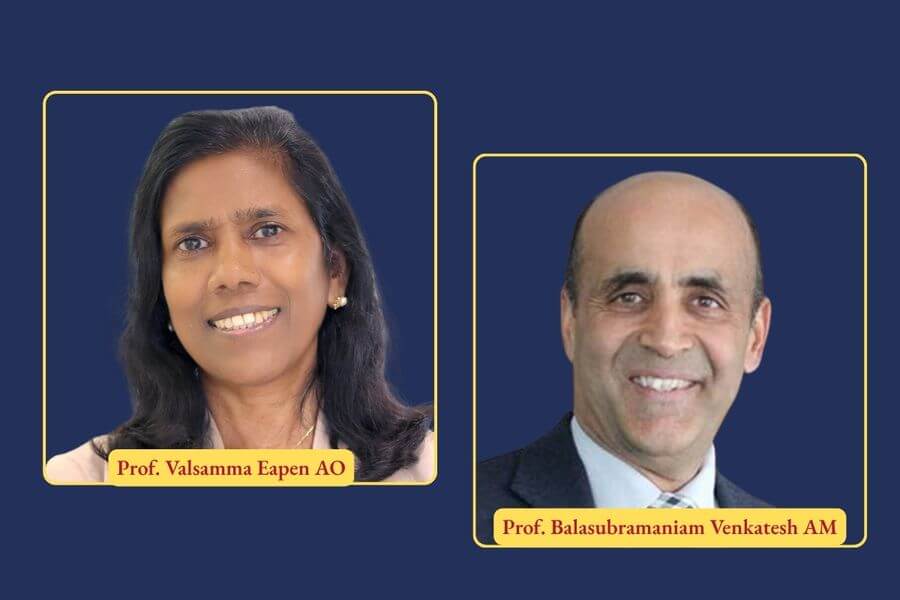
Professor Valsamma Eapen of UNSW has been recognised with an AO, one of the most distinguished honours, awarded for service of a high degree to Australia or to humanity at large. Scientia Professor of Infant, Child and Adolescent Psychiatry at UNSW since 2008, Professor Eapen has spent over three decades at the intersection of neurodevelopmental research and clinical care. As Head of the Academic Unit of Child Psychiatry at South West Sydney Local Health District, she has shaped national guidelines on autism assessment and ADHD, while also serving on the World Psychiatric Association’s board. Her AO places her in a select cohort of Indian-origin Australians recognised at this level.

Recognised with an AM is Professor Balasubramaniam Venkatesh, an intensivist whose career has defined the landscape of critical care medicine in Australia and beyond. A past president of the College of Intensive Care Medicine of Australia and New Zealand, Professor Venkatesh has led Queensland’s Sepsis Program, held professorial appointments at the University of Queensland and UNSW, and helped establish intensive care training infrastructure in India in the early 2000s. His AM recognises significant service to critical and intensive care medicine, infection control, and tertiary education.

Among this year’s OAM recipients are individuals whose contributions span clinical medicine, community organising, and the arts.
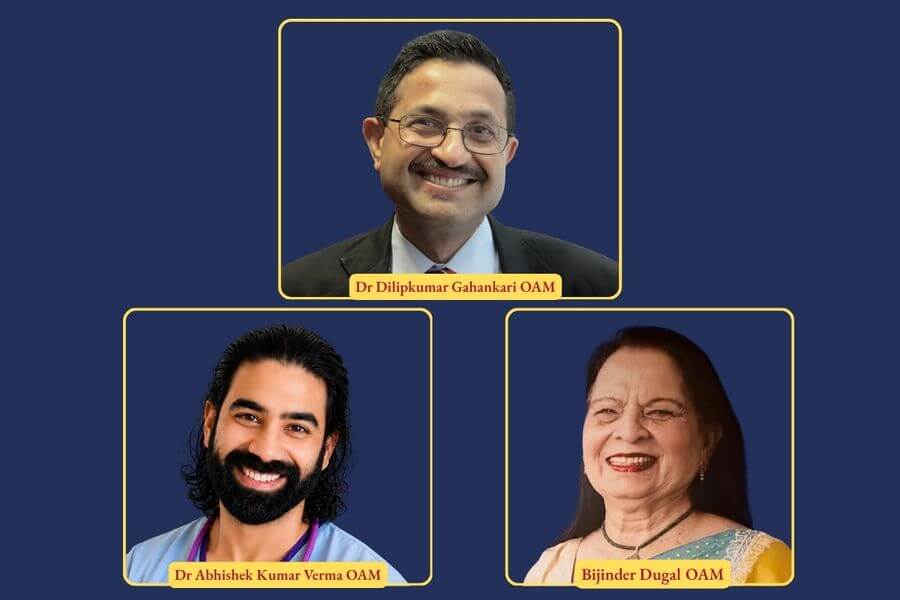
Dr Dilipkumar Gahankari of the Gold Coast has spent two decades leading pro bono reconstructive and cleft surgery missions to tribal communities in Maharashtra through the Melghat Tribal Healthcare Initiative, a commitment that has taken him across borders and, in 2002, to the emergency surgical response following the Bali bombings. His OAM is for service to plastic and reconstructive surgery, though the citation barely captures the human scale of what he has built.

Dr Abhishek Kumar Verma of Melbourne brings a different kind of public commitment to the honours list. A general practitioner serving refugee, migrant, and First Nations communities, Dr Verma also chairs the Victorian Medical Board and has held director roles at Alfred Health and multiple rural hospitals. His has been a career that moves fluidly between the consulting room and the boardroom, each informing the other. He was named RACGP General Practitioner of the Year in 2022.

King's Birthday Honours 2026

Bijinder Dugal of Sydney has spent years building AASHA Australia Foundation into a lifeline for elderly Indians navigating the Australian system, running active ageing programs, dementia awareness workshops, and elder rights education across Sydney. A former assistant principal with NSW Education, she has also taught Hindi for over fifteen years. For the Indian diaspora, particularly its older generation, hers is the kind of work that rarely makes news but changes lives daily.

Usha Kiran Chandra of Brisbane brings similar tenacity to Queensland’s multicultural civic landscape.

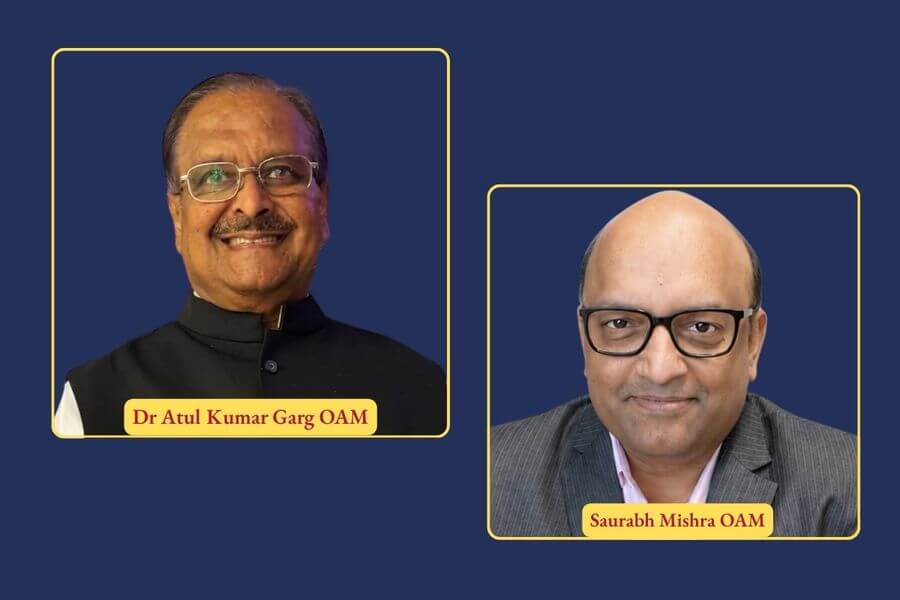
Dr Atul Kumar Garg of Perth and Saurabh Mishra of Melbourne round out the list, each recognised for service to the community through a range of organisations. Dr Garg’s decades-long dedication spans the Hindu Association of Western Australia, the Federation of Indian Associations of WA (which he founded), and a distinguished record with Neighbourhood Watch. Mr Mishra has had a string of achievements to his name, with innovations in health tech, healthcare, palliative care, ed tech, and classical Indian music.

King's Birthday Honours 2026

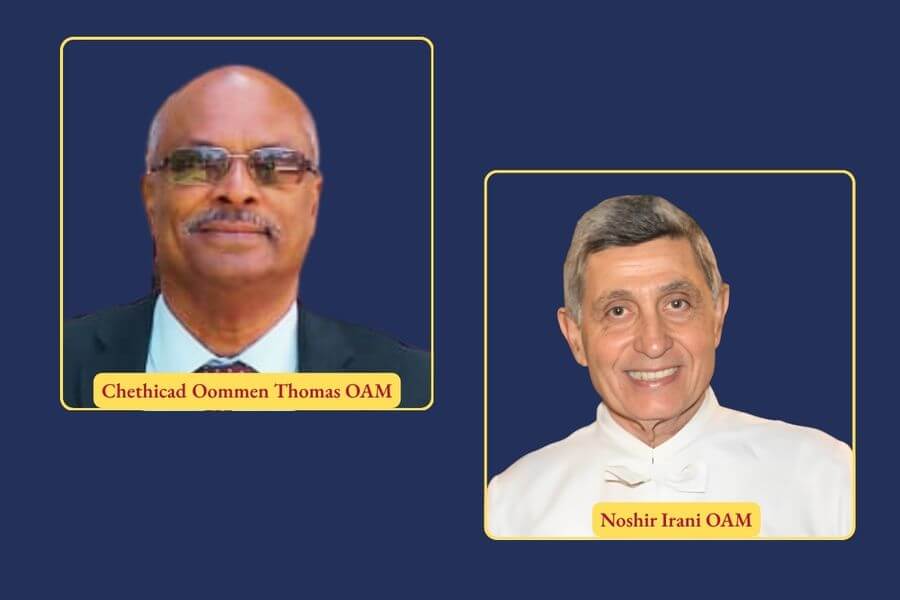
Representing the Indian community of Victoria, Chethicad Oommen Thomas, founding president of the Malayalee Association of Victoria in 1976 and played a role in the Australia India Society of Victoria AISV, but perhaps his lasting contribution will be in bringing the Indian Orthodox Church to Victoria.

Noshir Irani of Sydney has given service to the community through the Australian Zoroastrian Association, where he served as president across multiple terms, and through Justice of the Peace work and volunteering at Meals on Wheels, delivering meals for elderly residents for nearly two decades.

These stories may span generations and professions, but they share a common thread: a commitment to making Australia a stronger, kinder and more vibrant place.

948 Australians will be receiving King’s Birthday Honours 2026 across various medal categories. Of these 702 recipients are in the General Division of the Order of Australia, including 5 AC, 40 AO, 183 AM and 474 OAM.

34 awards were announced in the Military Division of the Order of Australia, including 3 AO, 11 AM and 20 OAM.  

149 Meritorious awards and 63 Conspicuous awards were also announced.

Recipients will be invested with their awards in coming months, at Government House in Canberra or through the respective State Governors.

Read more: Prof. Valsamma Eapen AO: King’s Birthday Honours 2026
The art of ‘Belonging’

0
Serenity and Storm from The Sacred Feminine Series by Shipra Anand. (Source: Supplied)
Reading Time: 4 minutes

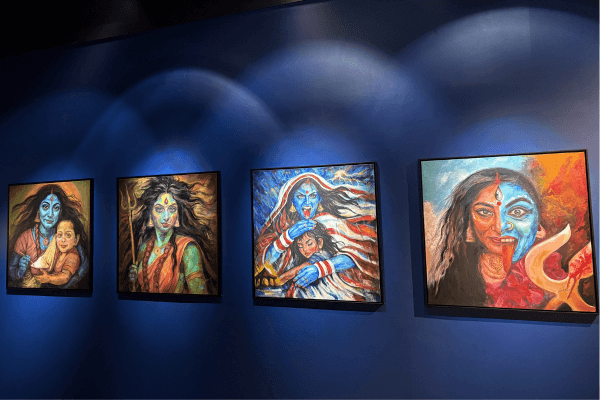
A split portrait of a woman, inspired by goddesses Durga and Kali, in bold colours and textured brushstrokes. An acrylic piece of lemon, chillies, and marigolds that adorns the threshold of Indian homes and shops. A painting of overlapping rainbow shades, sunshine, and finger-painted raindrops. This is just a glimpse of the diverse line-up of artworks that breathe life into the walls of Sol Gallery. the art of belonging

Art for purpose

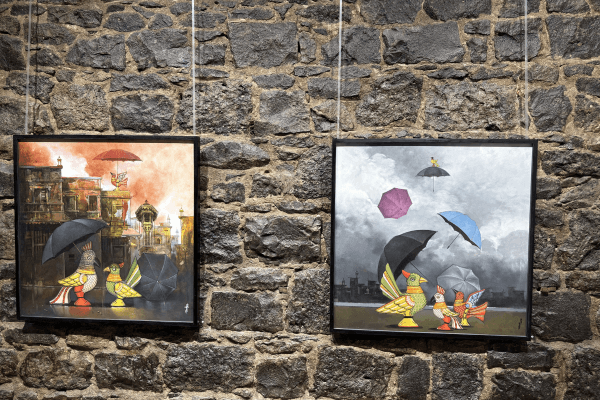
Showcased at Space 1-2 are artwork series of accomplished artists Gajendra Prasad Sahu and Chhatrapati Sri Dibyaranjan Biswal, who’ve come all the way from Odisha to present their creations in Melbourne for the first time. Developed over four decades, Gajendra Sahu’s artworks are a celebration of nature lovers. The human faces and the elements of floral landscapes in his works are a result of his meditative experience on the lap of nature.


View this post on Instagram


A post shared by SOL GALLERY (@solgalleryspace)

 “Walking down the streets of Melbourne and observing its art galleries encouraged me to bring my work,” said the national award-winning artist. The proceeds from his art exhibits will go towards an old-age home he runs in Odisha.

Chattrapati Biswal’s artworks bring together wooden dolls and umbrella, echoing the sentiment of safeguarding heritage. (Source: Supplied)

Chattrapati Biswal’s works feature recurring motifs of Odisha’s iconic wooden dolls and the symbolic umbrella. Dolls represent the traditional crafts of Odisha, and the umbrella represents a shield.  “This is a tribute to the silent protectors of art and craftsmanship, not just in Odisha but around the world. Our heritage must be preserved and passed on to the next generation, so they appreciate their roots,” Biswal affirmed.

A creative homecoming the art of belonging

On the other end of the gallery, the artworks of five artists – Nandita Chakraborty, Nitasha Malik, Rajvi Saria, Shipra Anand, and Samaya Tiwary – on display at the Project Room hit home. True to its theme, ‘Belonging’, each piece is an expression of the complex emotions behind the creative minds.

Nandita Chakraborty curated the 'Belonging' exhibition at Sol Gallery.
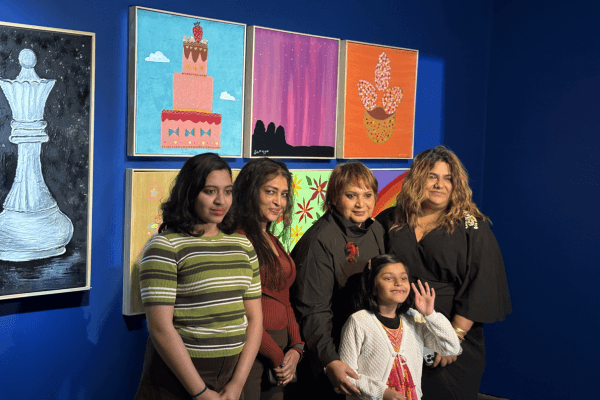
The artists of ‘Belonging’: (L-R) Rajvi Saria, Shipra Anand, Nandita Chakraborty, Samaya Tiwari and Nitasha Malik. (Source: Supplied)

The exhibition is a culmination of a year-long work, said Nandita Chakraborty, curator and producer of Belonging. Nandita employs a filmic approach in her work Beautifully Broken to integrate texture, movement, and visual rhythm to evoke the sensation of thought in motion. Priyankar Gupta, a pre-visualiser and a creative consultant from India, adds an animated spin to her live-action work.

“In this exhibition, attendees will journey through each artist’s unique expression of what defines them, their artistic voice, their sense of place, and the unseen threads that connect them to their work,” stated Nandita. the art of belonging

Art, once a therapeutic practice, has now transformed into a full-time profession rooted in healing and self-discovery for this mixed media artist Nitasha Malik. One of her pieces, Spill the Chai Sis, got the attention from art patrons for all the right reasons. “The idea stemmed from witnessing hour-long telephonic conversations between my mother and my aunt over a cup of tea. It was her time and space,” expressed Nitasha, who moved to Melbourne from Delhi a decade ago, but often feels like her two personalities are in a tug of war.


View this post on Instagram


A post shared by Nitasha (@lostchitrakaar)

 The brocade jacket from which a piece has been torn and embedded into the artwork sits right next to it within a frame. “Sometimes we celebrate the rich diversity of our Indian art only when it receives global recognition. It deserves more attention,” she added.

Shipra Anand’s Serenity and Storm – The Sacred Feminine Series draws spiritual energy from goddesses Durga and Kali to throw light on the many facets of feminine strength. Each work reflects the coexistence of two sides – strength and softness within every woman. “Raudra Durga is a fierce form. She’s never afraid to speak up for what’s right. We, too, must stay true to our beliefs,” elaborated Shipra, adding, “My paintings are not region or religion-specific. They have a global appeal.” the art of belonging

To each their own

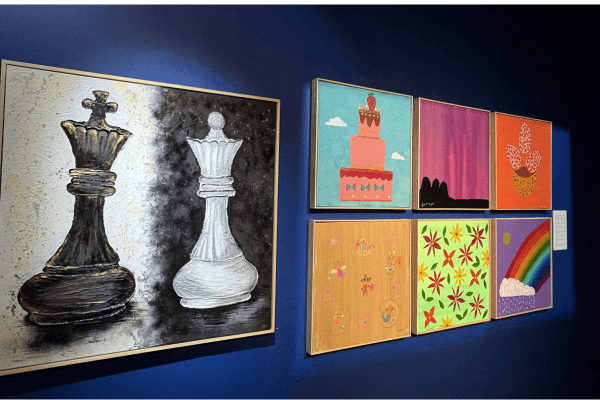
Art defies age. Two of the featured artists – Rajvi Saria and Samaya Tiwary, all of 13 and seven years of age, have the simplest explanation of what ‘Belonging’ means to them. “To belong is to be part of a group. I belong with art through my work,” said a proud Rajvi, four of whose paintings depict the theme of the day through Love & Divinity, Potential, Colours, and Stillness.

Samaya Tiwary, 7, and Rajvi Saria, 13, created naive yet striking depictions of what ‘Belonging’ means to them. (Source: Supplied)

Samaya uses art to articulate her everyday thoughts. Her acrylic works represent ‘Belonging’ through the basic idea that everything has a place. Strawberries belong at the top of the cake. Eggs belong to the nest. Stars belong to the sky. Flowers belong to the garden. The playful strokes with a vivid combination of colours present profound thoughts from a child’s perspective.

As humans, we are constantly questioning and navigating our identity and place in the ever-evolving world. We need more such art to anchor us and embrace us through shared human experience.

The opening reception was held on 3 June 2026, at the gallery in the presence of an intimate gathering. Artistes from Chandralaya School of Dance delivered a soulful Bharatanatyam performance. Shri Tej Krishan, Head of Chancery & Consul (Cons. & CGO) and Viv Nguyen, Chairperson, Victorian Multicultural Commission, graced the event and extended their wishes.

The exhibition is on till Sunday, 14 June 2026, 4:00pm at Sol Gallery.

READ ALSO: Hayley Millar Baker’s exhibition weaves together her Anglo Indian and Aboriginal identities

From Homeland to Heartland: Sourashtra

0
From Homeland to Heartland
Reading Time: 3 minutes

From Homeland to Heartland

“This book is more than just history,” says Anitha Rajarajan. “‘It is a return to our roots — a gathering of voices, memories and traditions that celebrate everything that makes us uniquely Sourashtra.”

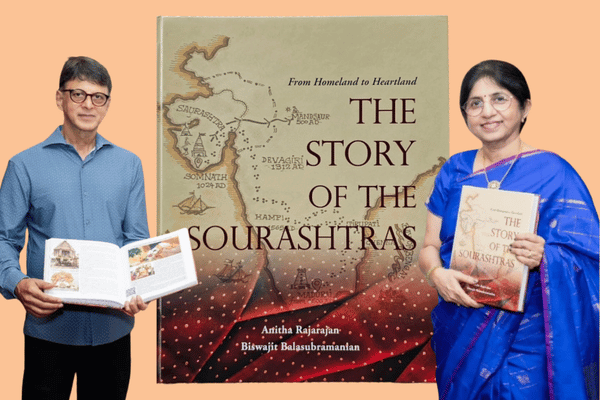
In a conversation with Sydney’s Indian Link, Anitha speaks about her recently published coffee-table book, From Homeland to Heartland: The Story of the Sourashtras, co-authored with Biswajit Balasubramanian.

Rich with stories of migration, weaving, language, food and faith, the book traces the remarkable journey of a community that quietly shaped parts of South Indian culture while fiercely holding on to its roots.

For centuries, Sourashtra’s history survived through oral tradition – carried across generations through language, weaving, and customs that families continued to protect. For a community that journeyed from the western coast of India to Tamil Nadu over a thousand years ago without losing its identity, preserving memory has become a way of preserving history itself.

Designed as a coffee table book, From Homeland to Heartland: The Story of the Sourashtras is enriched with colourful photographs, illustrations and humorous cartoons that visually trace the Sourashtran journey. What sets the book apart is its tone – far from being a dense historical account, it brings history alive through illustrated maps, archival photographs, anecdotes and cartoons, making it accessible and engaging. “We wanted younger generations to feel proud of their heritage, while also making the story engaging for non-Sourashtras,” Anitha explains cheerfully. “History does not always have to wear a serious face.”

From Homeland to Heartland
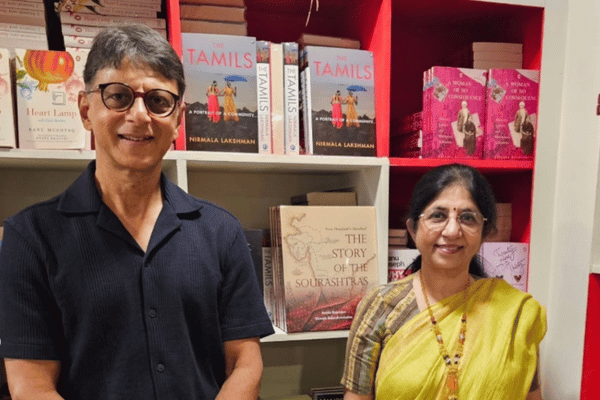
Authors Anita Rajarajan and Biswajit Balasubramanian at the launch of their book From Homeland to Heartland – The Story of the Sourashtras (Source: thesourashtrastory)

Researching for the book became an emotional journey in itself. “We quickly realised that research is not confined to libraries or archives,” Anitha reveals. “It meant travelling through narrow lanes, knocking on doors, making endless phone calls and listening patiently to stories people had carried for decades. In many ways, we found ourselves retracing the journey of the community we were trying to document.”

That journey began in the Sourashtra region of present-day Gujarat. Known for their expertise in weaving, dyeing and trade, the Sourashtras first migrated in search of stability and opportunity, eventually settling in Malwa under the Gupta rulers in the 5th century AD. But repeated invasions changed the course of their history. The destruction of the Somnath Temple by Mahmud of Ghazni in 1024 AD became a major turning point, forcing many families to move to Devagiri in present-day Maharashtra, then a thriving textile centre. Later, following Alauddin Khilji’s invasions, the community migrated again to the Vijayanagara Empire, where their weaving skills earned royal patronage and prosperity.

After the decline of the Vijayanagara Empire many Sourashtra families moved south once more in search of peace and stability. Invited by King Thirumalai Nayak, skilled Sourashtra weavers settled in Madurai and were granted land around the palace. Over time, Madurai became the cultural heartland of the community. At one point, Sourashtras are believed to have formed nearly one-third of the city’s population, contributing significantly to its thriving textile economy and commercial growth.

“Weaving was not just our profession – it was our identity and our strength,” says Anitha. “Wherever we travelled, our craftsmanship helped the community survive, settle and flourish.”

One of the strongest surviving symbols of that legacy is the Sungudi saree of Madurai, celebrated for its intricate tie-and-dye work. The technique closely mirrors Bandhani from Gujarat, creating what Anitha calls ‘a living thread connecting us to our ancestral roots.’


View this post on Instagram


A post shared by Art Works (@artworks_malvika)

Language, too, became a powerful link to the past. With roots in ancient Souraseni Prakrit, the Sourashtra language remains one of India’s oldest surviving spoken languages. Though it disappeared from Gujarat over time, it continues to survive in Tamil Nadu, preserved by the community for more than a millennium. Along the way, it absorbed influences from Marathi, Kannada, Telugu and Tamil, reflecting every stage of the community’s migration journey.

The book also highlights the community’s contributions beyond textiles – in education, philanthropy, cinema and India’s freedom movement.

Today, Sourashtras have expanded far beyond weaving – into medicine, business, technology and the arts across the world. Yet despite centuries of migration and adaptation, they have managed to preserve their language, customs and cultural identity.

As the conversation draws to a close, one thing becomes unmistakably clear – From Homeland to Heartland is not merely the story of a migration, but of resilience itself. The Sourashtras blended seamlessly into every land they settled in, contributing richly to local culture and economy while still holding tightly to who they were. Like sugar stirred into coffee, they dissolved effortlessly into the fabric of society, adding sweetness and strength without losing their essence.

READ ALSO: Bihar to Biennale: Western Sydney artist takes heritage to Venice

Anoop Lokkur: A deeply personal take for Sydney Film Festival

0
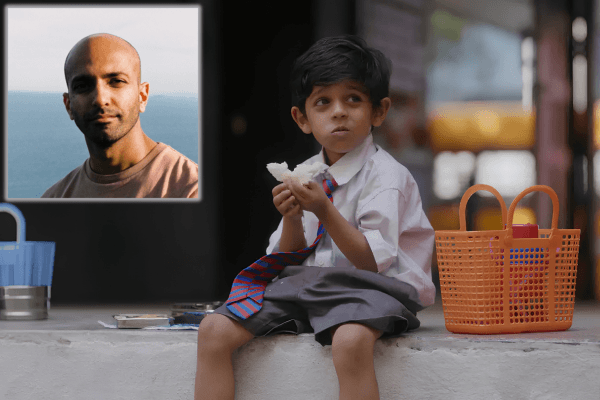
Filmmaker Anoop Lokkur's debut feature is at the this year's Sydney Film Festival
Reading Time: 3 minutes

don’t tell mother SFF

There is a particular kind of silence familiar to many of us who grew up in the subcontinent. It sits quietly between siblings who agree ‘not to tell mum’. don’t tell mother SFF 

It is this silence – heavy, inherited, and often invisible – that Lokkur interrogates with remarkable tenderness in Don’t Tell Mother, one of only two Indian films selected for this year’s Sydney Film Festival. 

For Lokkur, the Sydney screening is more than a career milestone. It is a return to the place where the film first began to take shape. 

“I actually started writing the script in Australia,” Lokkur tells Indian Link. “So now to have it screen here feels like we’ve come full circle.” 

Though he is currently based in the United States, Lokkur spent 14 formative years in Melbourne before relocating. Coming back to Australia for the festival has made the moment especially meaningful – not just personally, but creatively. 

“A lot of the crew were from Melbourne,” he reveals. “Our DOP, first AC, sound recordist, and even the colour grading team were all based here. So having the film premiere in Australia means a lot to all of us.” 

The film was entirely self funded, financed through Lokkur’s personal savings – a fact he admits he initially kept from his mother. The irony is not lost on him, given the film’s title.

Set in 1990s India, Don’t Tell Mother recreates the textures of middleclass childhood with uncanny precision: dusty school desks, WWF trading cards, the clatter of steel tiffin boxes, and mothers who juggle domestic labour with quiet, unacknowledged exhaustion. But beneath the nostalgia lies a harder truth – the casual normalisation of violence against children, a reality many viewers will recognise instantly. 

The idea for the film emerged from a conversation with his wife about parenting. 

“I grew up in India in the ‘90s, where pretty much everyone used to hit you as a child – parents, teachers, relatives,” he says. “At one point I found myself saying, ‘Sometimes you need to hit kids to discipline them,’ and my wife completely disagreed.” 

That disagreement became a turning point. It forced Lokkur to confront how deeply ingrained these beliefs were – not just in him, but across generations. 

“My grandparents hit my parents, my parents hit me, and then I found myself unconsciously carrying those same beliefs,” he reflects. “I started asking myself: where does that cycle end?” 

The film does not seek to villainise parents. Instead, it examines the systems – cultural, generational, patriarchal – that teach violence as discipline and silence as obedience.  

Lokkur’s approach is empathetic rather than accusatory, allowing audiences to recognise themselves without feeling judged.

Don't Tell Mother debuts at SFF 2026
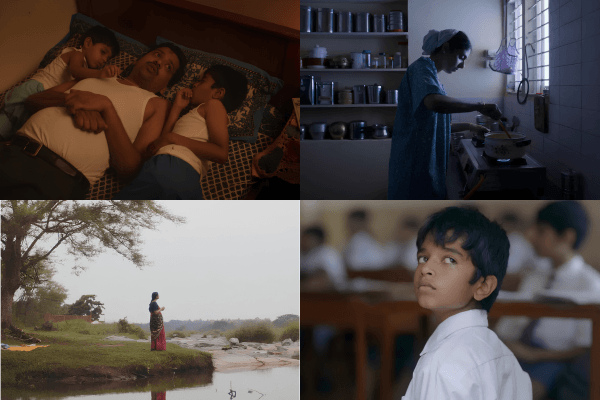
Don’t Tell Mother stills: Bedtime stories, Amma and school days. (Source: Sydney Film Festival)

Yet Don’t Tell Mother is not a film defined solely by trauma. Lokkur’s gaze is deeply compassionate, especially toward the mother figure, who gradually emerges as the emotional core of the story. 

Initially, the script focused entirely on the child’s perspective. But something felt incomplete. 

“When I started writing from the mother’s perspective, I suddenly understood my own mother so much more,” he says. “As children, we don’t always see what our mothers are carrying emotionally.” 

This shift in perspective becomes the film’s most powerful intervention. In many stories of this kind, the mother remains a background presence – loving, tired, and taken for granted.  

Lokkur instead gives her interiority: she is ambitious, observant, emotionally burdened, and constrained by the social structures around her. Her silence is not passive; it is survival. 

Much of the film is drawn directly from Lokkur’s own life. 

“Everything is rooted in my family – my parents, my brother, my memories,” he says. 

The authenticity extends beyond the writing. The school featured in the film is the very school Lokkur attended as a child – the same place where he experienced corporal punishment. Many props were sourced from family homes to recreate the aesthetics of ’90s India with neardocumentary accuracy.

The emotional realism of the film is further strengthened by the performances of its child actors, both of whom were first-time performers, with one discovered entirely by chance in a Bangalore café. 

The film has already resonated strongly with international audiences, including at the Busan International Film Festival. 

“We had audience members from Indonesia and the Philippines come up to us and say it felt like they were watching their own lives on screen,” Lokkur says. “That was really moving.” 

Despite its culturally specific setting, Lokkur believes the emotional themes are universal. 

“Fear, family, childhood, silence, love for your mother – those things exist everywhere,” he says. 

Ultimately, Don’t Tell Mother invites audiences to reconsider what they have accepted as normal. 

“When violence becomes normalized, it only creates more violence,” he says. “There are healthier ways to raise children.” 

Yet beneath the tension and trauma, the film remains a tribute – to mothers, their sacrifices, their emotional labour, and their resilience. 

“The title of the film is Don’t Tell Mother,” Lokkur says with a smile, “but honestly – please tell your mother.” 

Anoop Lokkur will be at the Sydney Film Festival screening of his film on Saturday 6 June at Event Cinemas George Street and on Sunday 7 June at Ritz Cinemas Randwick. don’t tell mother SFF

READ MORE: Sydney Film Festival 2026: All the South Asian links

Made in India: A Titan Story review

0
Made in India A Titan Story
Reading Time: 3 minutes


At first glance, Robbie Grewal’s Made in India: A Titan Story, a six-part series about the birth of Titan Watches sounds like the kind of corporate case study you would have slept through in business school. A watch company? In pre-liberalisation India? Six episodes? And yet, by the end of it, you find yourself emotionally invested in quartz movements, distribution networks, manufacturing deadlines and boardroom presentations.

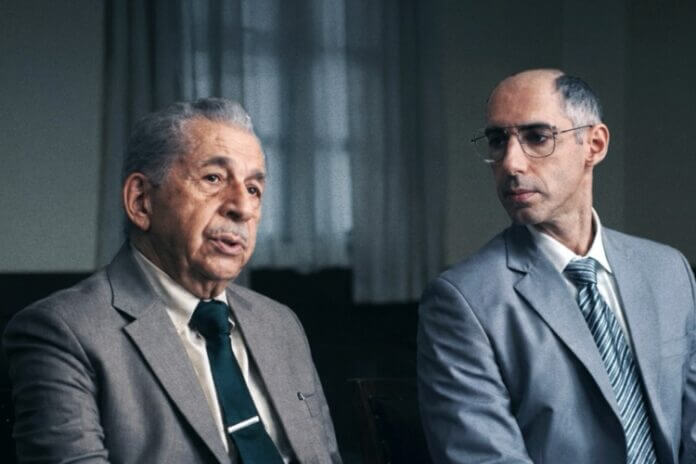
Adapted from journalist Vinay Kamath’s book on Titan’s rise, the series chronicles how visionary industrialist JRD Tata and the irrepressible Xerxes Desai transformed a seemingly impossible dream into one of India’s most beloved consumer brands. It is a story of ambition, innovation, setbacks and resilience, but more importantly, it is a story about people who dared to believe India could build something world-class.

AT A GLANCE

FILM: Made in India: A Titan Story (Prime video)
CAST: Jim Sarbh, Naseeruddin Shah, Vaibhav Tatwawadi
DIRECTOR: Robbie Grewal
PRODUCERS: Bhushan Kumar, Kishan Kumar
Rating: ★★★★/5

The series shines brightest whenever it focuses on the human side of nation-building. The endless meetings, bureaucratic hurdles, failed prototypes, bruised egos and sleepless nights all become part of a larger emotional tapestry. Titan is never presented as a product. It is presented as a collective dream.

And at the centre of that dream stands Jim Sarbh.

If there is one reason to watch this show, it is his performance as Xerxes Desai.

Sarbh has long been one of India’s most intelligent actors, bringing unpredictability and nuance to every role. But here he finds something deeper. His Xerxes is flamboyant without becoming theatrical, authoritative without appearing arrogant and visionary without turning into a cliché.

He gives Desai a restless energy that drives the narrative forward. Whether he is charming investors, motivating his team or staring at yet another setback, Sarbh makes you understand why people followed this man.

For Australian audiences, there is an added layer of familiarity. Sarbh spent a significant part of his childhood in Australia and studied at an international school in Sydney before moving to the United States. There is perhaps something in that global outlook that allows him to portray Desai not merely as an Indian industrialist but as a citizen of the world who believed Indian products deserved a place on the global stage.

It is one of the finest performances of his career and arguably the emotional backbone of the series.

Shah of acting

Matching Sarbh beat for beat is the incomparable Naseeruddin Shah as JRD Tata.

Shah wisely avoids imitation. Instead, he captures the quiet confidence and moral authority that made JRD such a revered figure. His scenes with Sarbh become the show’s emotional anchor. Their mentor-protégé relationship is written with warmth and performed with remarkable restraint. Several reviews have rightly singled out their chemistry as one of the series’ strongest assets.

The supporting cast also deserves mention. Vaibhav Tatwawadi, Kaveri Seth and Lakshvir Singh Saran bring authenticity and emotional weight to Titan’s wider story. The show repeatedly reminds us that institutions are never built by heroes alone.

It’s a well directed series from Robbie Grewal who has directed films like Samay (2003), Jewel Thief (2025) in the past .Visually, the series beautifully recreates the India of the 1970s and 80s. Vintage Bombay, period details, old advertising aesthetics and a soundtrack packed with classic Hindi songs evoke nostalgia without feeling manipulative. The result is a world that feels lived in rather than manufactured.

If the show has a weakness, it occasionally veers close to corporate hagiography. Some conflicts feel tidier than they probably were, and the reverence towards the Tata legacy can occasionally soften the sharper edges of the story. Yet the sincerity is difficult to resist.

In the end, Made in India: A Titan Story is not really about watches. It is about confidence. About believing that Indian ingenuity could compete with the world’s best. About leaders who invested in people as much as products. And about the rare kind of ambition that leaves behind more than profits.

In an era where “Made in India” has become a political slogan and marketing tagline, Made in India: A Titan Story takes us back to a time when it was a radical proposition.

Like the iconic Titan tune itself, the series lingers long after it ends.

Read more: Chand Mera Dil: Review

Six lessons I learned from Amitav Ghosh

0
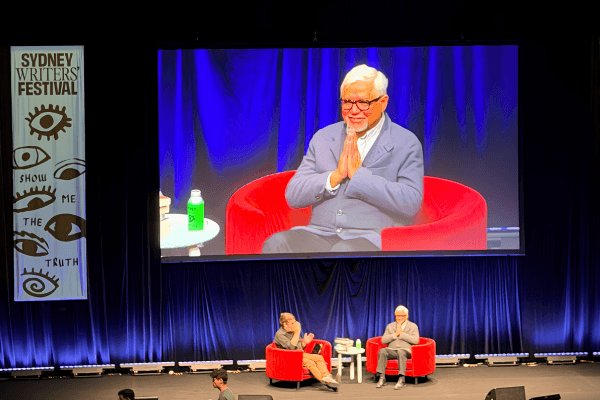
Amitav Ghosh and Michael Williams, SWF 2026 (Image: Pawan Luthra)
Reading Time: 4 minutes

Celebrated writer Amitav Ghosh’s conversation with Michael Williams at the recently concluded Sydney Writers’ Festival was a masterclass on a variety of levels. It was set in the backdrop of Amitav’s latest novel Ghost-Eye, about a young child who has memories from a past life (discovered after she asked for fish for lunch despite being born in a strictly vegetarian family), but the discussion spanned his entire body of work of some 20 publications.

The takeaways were many – from wonder, curiosity, data collecting, storytelling, language, and intellectual humility, to the willingness to admit that the world is far stranger than we think. 

Here’s a list of learnings from the Amitav Ghosh way of seeing the world. 

1. Make room for mystery 

“You have to be a bit weird (to be a writer),” Amitav Ghosh laughed. “A little ‘woo-woo’. Normal people don’t do it.” 

It was surprising honesty from one of the world’s most respected novelists. 

He was talking about his latest work Ghost-Eye and its themes of past lives, imperceptible worlds and realities that lie beyond rational explanation. 

It was his way, also, of introducing us to how the new work, different from his usual, came about – from a motivation to explore what cannot be fully understood yet. 

It’s not we who choose the myths that guide our lives, he writes in the book. It’s they who choose us. 

Rather than dismissing the mysterious, Ghosh seems interested in what happens when we take it seriously. 

Don’t believe in reincarnation? Cynical about traditional ecological knowledge? Take a moment to listen to a believer. Think of it as an exercise in perspective-taking or listening to a differing point of view – something we ought to be doing more of in the contemporary world, you’ll agree.

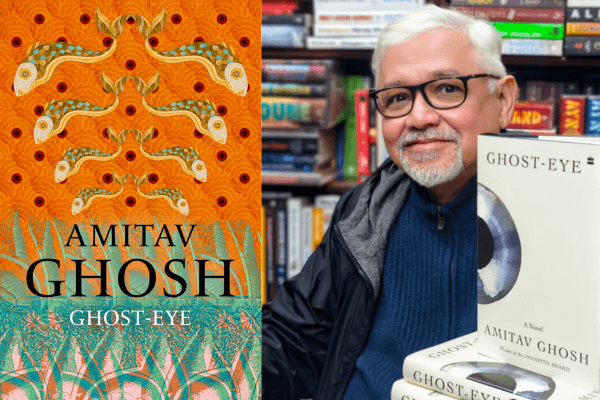
Amitav Ghosh and his upcoming novel Ghost-Eye
Amitav Ghosh’s magical realism novel, Ghost-Eye is publishing this month. (Source: Hachette Books AU and Amitav Ghosh Instagram)

2. Ground yourself before you imagine

Its spiritual and metaphysical questions notwithstanding, Ghost-Eye emerges from the same practice that has shaped the Amitav Ghosh we have known for four decades: observation.  

He described himself as “a very empirical person” whose instinct is still to carry a notebook, listen to people, keep “stacks and stacks of notes”, and accumulate experiences before ideas take shape. Whether researching the Sundarbans in The Hungry Tide or the opium trade in The Ibis Trilogy, imagination always began with immersion.  

Ghosh traced this habit back to his days as a journalist during India’s Emergency and later as an anthropology student living in an Egyptian village.  

“Talking to people always comes first,” he said. The story follows later – sometimes years later.


View this post on Instagram


A post shared by Sandip Hor (@traveling_with_sandip)

3. The most interesting truths often live between opposites

Across the conversation, Ghosh repeatedly resisted binary thinking. He is fascinated by the meeting point between seemingly contradictory ways of knowing – science and spirituality, reason and wonder, modern ecology and indigenous knowledge. Much of Ghost-Eye exists in precisely that space. In exploring past-life memories, it does not reject science. Instead, it asks what happens when reality proves larger than the frameworks we currently use to understand it. For Ghosh, the tension itself is productive.  

The lesson here: resist simplistic either/or thinking.  

4. Old language can teach you how to see amitav ghosh ghost-eye

Some of Ghosh’s happiest moments as a writer seem to happen in archives. While researching The Ibis Trilogy, he spent years reading nineteenth-century letters, journals and ship records, delighting in their multilingual vocabularies and sprawling sentences. He spoke almost wistfully about older English, filled with Persian, Hindi, Tamil and Portuguese influences. Reading those texts was not merely historical research; it reminded him that language was once stranger, richer and less standardised than it often feels today.  

For writers, there is much to be learned simply from listening to how language once moved.  

5. The footnotes are where the stories are

One of Ghosh’s gifts as a writer is his ability to follow obscure trails through archives and journals.  

“What’s very important in my work is the engagement with the history of science,” he said. “I wrote a book, for example, about Ronald Ross. Sir Ross, an English scientist who lived mainly in India, is credited with discovering the malaria parasite’s life cycle. Studying his field notes, it turned out – amazingly – that all the major connections in his results, all of them, were made for him by his Indian servants.” 

The lesson – remarkable stories often hide in the margins of history, waiting for someone curious enough to look. 

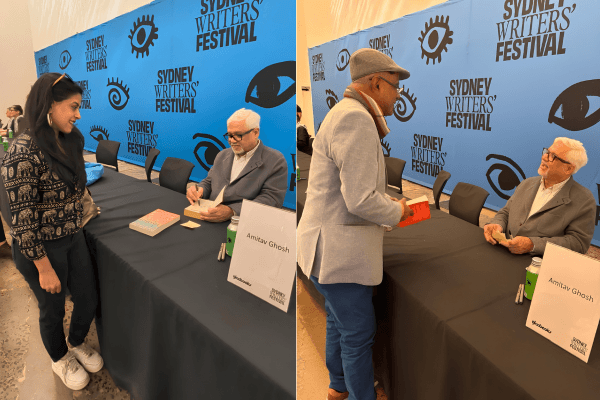
With love, Amitav: left, Shraddha Arjun; right, Sandip Hor (Images: Shraddha and Sandip)

6. Sometimes you need to ‘uneducate’ yourself amitav ghosh ghost-eye

The most memorable moment of the session came near the end, when Amitav Ghosh reflected on writing Ghost-Eye. Educated to become part of what he called the “expert class”, he eventually realised that expertise alone cannot explain the world, let alone its mysteries. Writing books like The Great Derangement and later Ghost Eye required him to loosen some of those inherited assumptions and become open to other ways of seeing.  

Ghosh has not shied away from using ecology to challenge ‘educated’ thought. By privileging ‘expert’ knowledge for far too long, have we lost other kinds of valuable knowledge in preserving our natural world?    

“I had to ‘uneducate’ myself,” he said.  

It may be the most Amitav Ghosh lesson of all, that wisdom sometimes begins where certainty ends.

READ ALSO: Difficult women, continued: Nikita Gill at SWF

Is that really you? The hidden cost of letting AI do the talking

0
Cognitive debt AI writing authenticity
Reading Time: 3 minutes


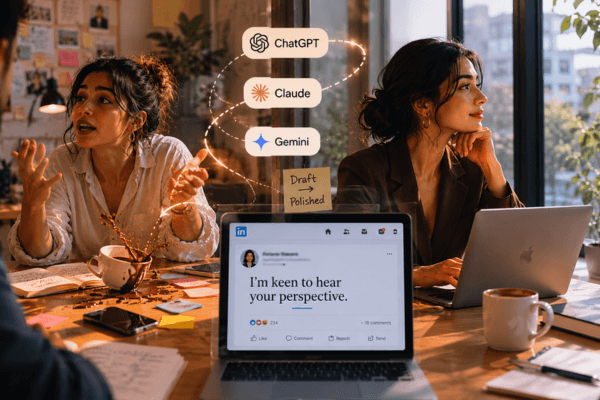
A few weeks ago, an old colleague posted something on LinkedIn. Someone I know quite well. The kind of person who speaks faster than most people think and somehow makes it all make sense, eventually. Cognitive debt

The post was something else entirely. Measured, calm, polished. Signed off with ‘I’m keen to hear your perspective’. I checked their profile picture to make sure it was actually them. And then imagined them saying it to me across a table. It didn’t quite fit at all.

I was pretty sure my colleague had some help from our recent best friends: ChatGPT, Claude or Gemini. No judgement, most of the professional world is doing the same thing right now anyway.

That one simple post got me thinking, of all things, about the 2006 Bollywood movie Jaan-E-Mann. In the movie, Akshay Kumar is trying to woo Preity Zinta but has absolutely no idea how to do it. So Salman Khan sets him up with an earpiece and feeds him every single line. And it works. Preity is charmed and falls for Akshay. The only small detail being that none of it is actually coming from Akshay. Cognitive debt

The problem isn’t the tool. It’s what happens when you stop using it as a tool and start using it as a replacement. The people who know you will notice, and quickly. Something feels hollow, a disconnect creeps in. They won’t remember the point you were making. They’ll remember that it didn’t sound like you. People want the real you, not just a messenger copy pasting from a chatbot. And if Akshay is the one they’re actually interested in, they deserve to hear from him directly. Not Salman whispering through an earpiece.

The Science Behind Cognitive Debt Cognitive debt

Researchers at the MIT Media Lab have a name for this – cognitive debt. Their 2025 study found that people who relied on AI showed weaker brain activity, remembered less, and struggled to accurately quote their own work afterwards. Because in any meaningful sense, they hadn’t written it. And when the AI was taken away, they struggled to think and write on their own. The habit had already taken hold.

In contrast, those who started on their own and then used AI did even better. They recalled more, engaged more deeply, and used the tool to enhance their thinking rather than replace it. The foundation was already there.

And keep in mind, we’re still in the early days of AI usage. Two, maybe three years at most. Think about what a decade of outsourcing your thinking, your expression, your voice might actually look like. The cognitive debt doesn’t stay the same size, it compounds. Until one day the earpiece isn’t there and suddenly you’re very much on your own.

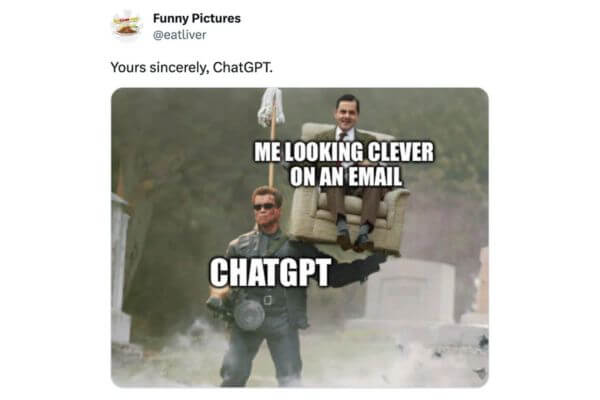
chatgpt meme cognitive debt
The ghost-writer finally signs its name. (Source: Reddit)

Which brings me to the cost of over-reliance on AI tools. Sure, it feels quite efficient to put out whatever AI gives you. But soon, people around you will notice and the trust and genuine connection erode. So be real. Be yourself. You might just be doing the internet a small but meaningful favour, making it a slightly less sloppy place, one post at a time.

Now back to our movie. In Jaan-E-Mann, Akshay Kumar eventually comes clean and tells Preity that the words weren’t really his, that Salman was behind the earpiece the whole time. He steps aside and lets the real connection win. And somehow, that moment of honesty is when everything actually falls into place. Cognitive debt

Come to think of it, it’s time we took some urgent inspiration from the movies for real life.

P.S: No old colleagues were harmed in the writing of this piece.

READ ALSO: This holiday season even ChatGPT needs a break!

One year after their brief war, how close are India and Pakistan to another conflict?

0
Reading Time: 4 minutes

india pakistan conflict

A year has passed since conflict broke out between India and Pakistan, briefly raising fears of an all-out war between the two nuclear powers.

While violent conflict between the neighbours has been commonplace for the past 80 years, this latest round of fighting felt different.

Both sides used new weapons against one another, including cruise missiles, short-range ballistic missiles and drones. The level of mistrust and sharp rhetoric worsened considerably, significantly testing regional partnerships.

One year later, tensions remain high, with an underlying risk of further escalation.

What happened last year?

The war broke out last May following a terrorist attack that killed 26 civilians in the Pahalgam area of Indian Kashmir on April 22.

Within days, Indian police claimed the Pakistan-based militant group Lashkar-e-Taiba was behind the attack. Pakistan vehemently denied any involvement.

Then, on May 7, India launched Operation Sindoor against alleged terrorist strongholds in Pakistan, which prompted a Pakistani retaliatory attack, Operation Bunyan-un-Marsoos.

Director Generals of Military Operations (DGMOs) from the Indian Army, Navy, and Air Force at a joint press briefing on Operation Sindoor in May 2025.

Dozens of people are believed to have been killed. As in any India-Pakistan conflict, the possibility of the use of nuclear weapons created further alarm.

The four-day conflict came to an end with a ceasefire on May 10. It was announced by the Trump administration, which claimed to have mediated the deal. This irritated India, but Pakistan nominated US President Donald Trump for the Nobel Peace Prize.

India nonetheless claimed victory, boasting of its ability to deliver precise attacks far inside Pakistani territory, exposing weaknesses in its rival’s air defences. Pakistan, meanwhile, claimed to have shot down five Indian fighter jets (which India denies).

Political ramifications

In Pakistan, the Pakistani military returned to the political mainstream following the conflict. After leading Pakistan’s military response to India, the chief of army staff, Syed Asim Munir, was elevated to field marshal, and then to the post of the country’s first chief of defence forces.

Munir’s influence has only grown since. He has become very close to Trump and has been a key figure in the negotiations between the US and Iran to bring an end to their war.

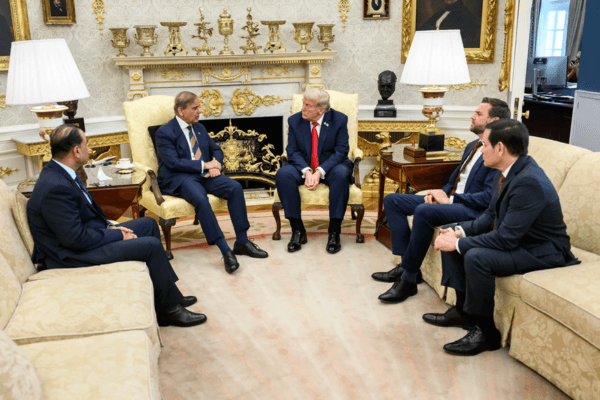
President Trump with PM Shehbaz Sharif and Field Marshal Asim Munir
President Donald Trump with Prime Minister Shehbaz Sharif and Field Marshal Asim Munir of Pakistan in September 2025 amid strengthening political relations. (Source: The White House)

In India, Operation Sindoor was seen as a win for the Modi government’s decisive foreign policy, and was a moment of rare political consensus in the country.

However, in Kashmir, the terror attack raised fresh questions about the government’s claims of normalcy in the region – and its push to boost tourism – following the controversial revocation of Kashmir’s statehood in 2019.

In the weeks that followed the attack, security operations in the Kashmir valley shut down several tourist sites. This led to a sharp decline in visitor numbers and severely affected local businesses. Security operations also targeted civilians, alarming human rights experts.

Shifting regional dynamics

Perhaps the most significant impact of the conflict has been the difference in diplomatic engagements of both countries.

The war highlighted Pakistan’s operational cooperation with both China and Turkey. The Pakistani military used Chinese-built fighter jets and missiles in its attacks, as well as Turkish-made drones. Its satellite-based intelligence was enabled by China, too.

After the war, Pakistan also signed a new deal with the Trump administration to develop Pakistan’s oil reserves, and a defence pact with Saudi Arabia, a staunch US ally.

India had pursued a decade-long push to isolate Pakistan diplomatically, which made Pakistan’s increasing bonhomie with the US and Gulf states particularly awkward.

Prime Minister Narendra Modi’s once-close relationship with Trump, meanwhile, began to deteriorate over US tariffs and India’s purchase of Russian oil.

Modi’s ill-timed visit to Israel and the visible lack of influence in the US–Iran war has also raised questions about India’s professed role as a regional leader. It has highlighted the limits to India’s strategy of balancing its strategic partnerships, especially during conflict.

India has tried to engage in proactive diplomacy, dispatching delegations of MPs and former diplomats to more than 30 countries over the past year. While India claims these visits were a success, they haven’t done much to convince the world that Pakistan was the aggressor in their conflict.

Where do things go from here? india pakistan conflict

One year on, the political rhetoric on both sides is as charged as ever.

Both India and Pakistan have signalled a resolve for further escalation in future conflicts.

Despite a sliver of hope for secret backchannel talks, India continues to give stern warnings to Pakistan over its alleged support to terrorist groups.

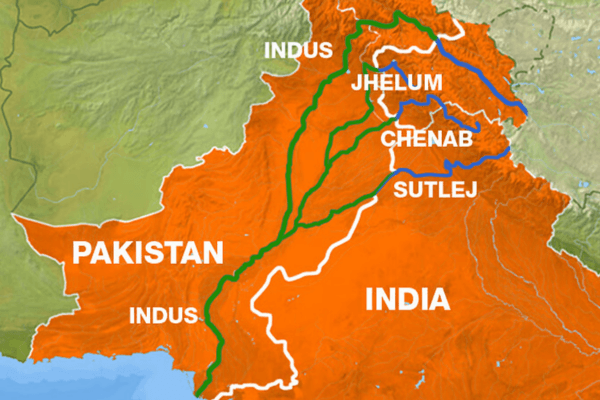
India has also reiterated that a major water-sharing treaty between the countries would remain suspended until Pakistan takes steps to end its support for terrorism – leaving a major concern over water security unresolved.

The Indus Waters Treaty, the water-distribution treaty between India and Pakistan to use the water available in the Indus River system, has been suspended by India following the Pahalgam attack.

In response, Pakistan has made clear any attempt to target Pakistan again would “trigger consequences” that would not be “geographically confined or strategically or politically palatable for India”.

The shifting geopolitics and heightened rhetoric have narrowed the space for any prospects of meaningful dialogue between the two. As a result, the alarmingly low levels of trust will remain.

The ceasefire holds for now, but the conflict continues unabated.

This article, written by Stuti Bhatnagar, a lecturer in Indo-Pacific Studies at The University of New South Wales, first appeared in The Conversation, and has been republished under a Creative Commons license. Find the original article here

READ MORE: India wins the battle against Pakistan, but loses the narrative

Nishan Velupillay : South Asian-origin forward named in Australia’s FIFA World Cup Squad

0
Nishan Velupillay
Nishan Velupillay playing for socceroos (Source: Instagram)
Reading Time: 2 minutes


Australia’s squad for the 2026 FIFA World Cup features a familiar reflection of modern multicultural Australia. Among the 26 players selected by head coach Tony Popovic is 24-year-old forward Nishan Velupillay, a rising star whose family story spans Sri Lanka, Malaysia, India and Australia.

Velupillay has been named in the Socceroos squad heading to North America for the tournament, which will be jointly hosted by the United States, Canada and Mexico from June 11.

For Australian football fans, the selection comes as little surprise.

The Melbourne-born attacker was one of the standout performers during Australia’s World Cup qualifying campaign, announcing himself on the international stage by scoring on debut against China. His pace, direct running and ability to unsettle defenders quickly made him a valuable option in Popovic’s plans.

Now, less than a year after making his senior international breakthrough, Velupillay finds himself preparing for football’s biggest stage.


View this post on Instagram


A post shared by A-Leagues (@aleagues)

His selection also carries significance for Australia’s South Asian communities.

Nishan Velupillay was born to a Malaysian father of Sri Lankan Tamil descent and an Anglo-Indian mother, making him one of the few players of South Asian heritage to break into the Socceroos setup in recent years. In a country where football has long been shaped by migration, his rise adds another chapter to the sport’s multicultural story.

Australia’s national teams have historically drawn strength from diverse communities, with players tracing their roots to Europe, Asia, Africa and the Middle East. Yet representation from South Asian backgrounds has remained relatively limited despite the region’s growing footprint in Australian sport.

Nishan Velupillay’s emergence therefore resonates beyond football.

Nishan Velupillay: South Asia’s Pride in the Socceroos

For young Australians from Sri Lankan, Indian and broader South Asian backgrounds, his presence in the World Cup squad offers a visible example of what is possible.

The forward joins a squad blending experience with youth as Australia seeks to make an impact on the global stage. Veteran goalkeeper and captain Mathew Ryan will provide leadership, while established names such as Jackson Irvine, Harry Souttar, Mathew Leckie and Aziz Behich bring valuable tournament experience.

The squad also includes exciting young talents such as Nestory Irankunda and former Italy youth international Cristian Volpato, who was named just days after formally committing his international future to Australia.

Volpato’s inclusion comes following the injury-enforced absence of Middlesbrough midfielder Riley McGree, creating an opportunity for the attacking midfielder to push for a starting role.

For Nishan Velupillay, however, the focus will be on continuing the momentum that earned him his place.


View this post on Instagram


A post shared by CommBank Socceroos (@socceroos)

The journey from Melbourne’s western suburbs to the FIFA World Cup is one that reflects both persistence and opportunity. It is also a reminder of the increasingly diverse face of Australian football.

When Australia takes the field in North America this month, millions will be watching. Among them will be Sri Lankan, Indian and South Asian communities across Australia and around the world, many of whom will see a little of their own story reflected in the young forward wearing green and gold.

For Nishan Velupillay, the World Cup dream is no longer a distant ambition.

It is now reality.

Read More: IndianCare’s Aao Khelo: Celebrating Indian women through sport