


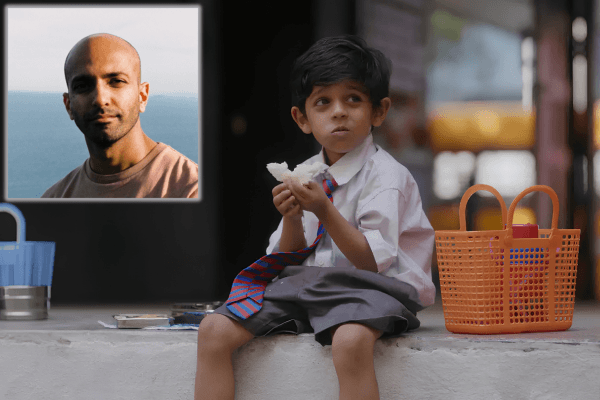

don’t tell mother SFF
There is a particular kind of silence familiar to many of us who grew up in the subcontinent. It sits quietly between siblings who agree ‘not to tell mum’. don’t tell mother SFF
It is this silence – heavy, inherited, and often invisible – that Lokkur interrogates with remarkable tenderness in Don’t Tell Mother, one of only two Indian films selected for this year’s Sydney Film Festival.
For Lokkur, the Sydney screening is more than a career milestone. It is a return to the place where the film first began to take shape.
“I actually started writing the script in Australia,” Lokkur tells Indian Link. “So now to have it screen here feels like we’ve come full circle.”
Though he is currently based in the United States, Lokkur spent 14 formative years in Melbourne before relocating. Coming back to Australia for the festival has made the moment especially meaningful – not just personally, but creatively.
“A lot of the crew were from Melbourne,” he reveals. “Our DOP, first AC, sound recordist, and even the colour grading team were all based here. So having the film premiere in Australia means a lot to all of us.”
The film was entirely self funded, financed through Lokkur’s personal savings – a fact he admits he initially kept from his mother. The irony is not lost on him, given the film’s title.
View this post on Instagram
Set in 1990s India, Don’t Tell Mother recreates the textures of middle‑class childhood with uncanny precision: dusty school desks, WWF trading cards, the clatter of steel tiffin boxes, and mothers who juggle domestic labour with quiet, unacknowledged exhaustion. But beneath the nostalgia lies a harder truth – the casual normalisation of violence against children, a reality many viewers will recognise instantly.
The idea for the film emerged from a conversation with his wife about parenting.
“I grew up in India in the ‘90s, where pretty much everyone used to hit you as a child – parents, teachers, relatives,” he says. “At one point I found myself saying, ‘Sometimes you need to hit kids to discipline them,’ and my wife completely disagreed.”
That disagreement became a turning point. It forced Lokkur to confront how deeply ingrained these beliefs were – not just in him, but across generations.
“My grandparents hit my parents, my parents hit me, and then I found myself unconsciously carrying those same beliefs,” he reflects. “I started asking myself: where does that cycle end?”
The film does not seek to villainise parents. Instead, it examines the systems – cultural, generational, patriarchal – that teach violence as discipline and silence as obedience.
Lokkur’s approach is empathetic rather than accusatory, allowing audiences to recognise themselves without feeling judged.
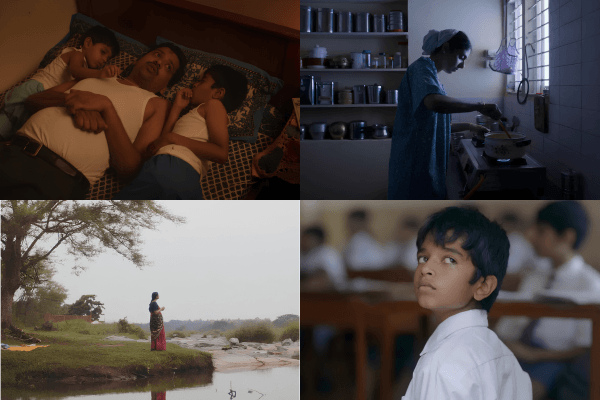
Yet Don’t Tell Mother is not a film defined solely by trauma. Lokkur’s gaze is deeply compassionate, especially toward the mother figure, who gradually emerges as the emotional core of the story.
Initially, the script focused entirely on the child’s perspective. But something felt incomplete.
“When I started writing from the mother’s perspective, I suddenly understood my own mother so much more,” he says. “As children, we don’t always see what our mothers are carrying emotionally.”
This shift in perspective becomes the film’s most powerful intervention. In many stories of this kind, the mother remains a background presence – loving, tired, and taken for granted.
Lokkur instead gives her interiority: she is ambitious, observant, emotionally burdened, and constrained by the social structures around her. Her silence is not passive; it is survival.
Much of the film is drawn directly from Lokkur’s own life.
“Everything is rooted in my family – my parents, my brother, my memories,” he says.
The authenticity extends beyond the writing. The school featured in the film is the very school Lokkur attended as a child – the same place where he experienced corporal punishment. Many props were sourced from family homes to recreate the aesthetics of ’90s India with near‑documentary accuracy.
The emotional realism of the film is further strengthened by the performances of its child actors, both of whom were first-time performers, with one discovered entirely by chance in a Bangalore café.
The film has already resonated strongly with international audiences, including at the Busan International Film Festival.
“We had audience members from Indonesia and the Philippines come up to us and say it felt like they were watching their own lives on screen,” Lokkur says. “That was really moving.”
Despite its culturally specific setting, Lokkur believes the emotional themes are universal.
“Fear, family, childhood, silence, love for your mother – those things exist everywhere,” he says.
Ultimately, Don’t Tell Mother invites audiences to reconsider what they have accepted as normal.
“When violence becomes normalized, it only creates more violence,” he says. “There are healthier ways to raise children.”
Yet beneath the tension and trauma, the film remains a tribute – to mothers, their sacrifices, their emotional labour, and their resilience.
“The title of the film is Don’t Tell Mother,” Lokkur says with a smile, “but honestly – please tell your mother.”
Anoop Lokkur will be at the Sydney Film Festival screening of his film on Saturday 6 June at Event Cinemas George Street and on Sunday 7 June at Ritz Cinemas Randwick. don’t tell mother SFF
READ MORE: Sydney Film Festival 2026: All the South Asian links