


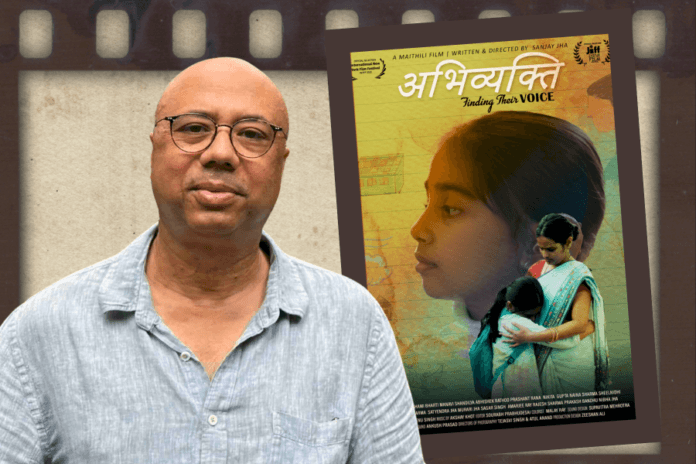

Sanjay Jha
Sanjay Jha does not look like someone who just made his first feature film. He looks like what he is: an academic, composed and precise, the kind of person who measures a sentence before he releases it. But somewhere over the Pacific, on a flight back to Sydney, something shifted.
“I was flying when this idea came to me. I couldn’t wait, I wrote the screenplay on that very flight,” he tells Indian Link.
That screenplay became Abhivyakti: Finding Their Voice, a Maithili-language drama set in rural Bihar. It is the debut feature of a man who, professionally speaking, has nothing to do with cinema. Jha is a full professor of computer science at UNSW, where he teaches artificial intelligence and cybersecurity. He took a short filmmaking course at AFTRS in 2016. That is the sum total of his formal training.
Abhivyakti follows Kanti, a young mother whose daughter Chutki is born with significant hearing loss. Set in Darbhanga, the film unfolds in a world where the family’s first disappointment is that Chutki is not a son and where her diagnosis comes with little support: no nearby specialists, no sign language in schools, and a culture where disability still carries shame. Kanti’s husband withdraws. Kanti does not.
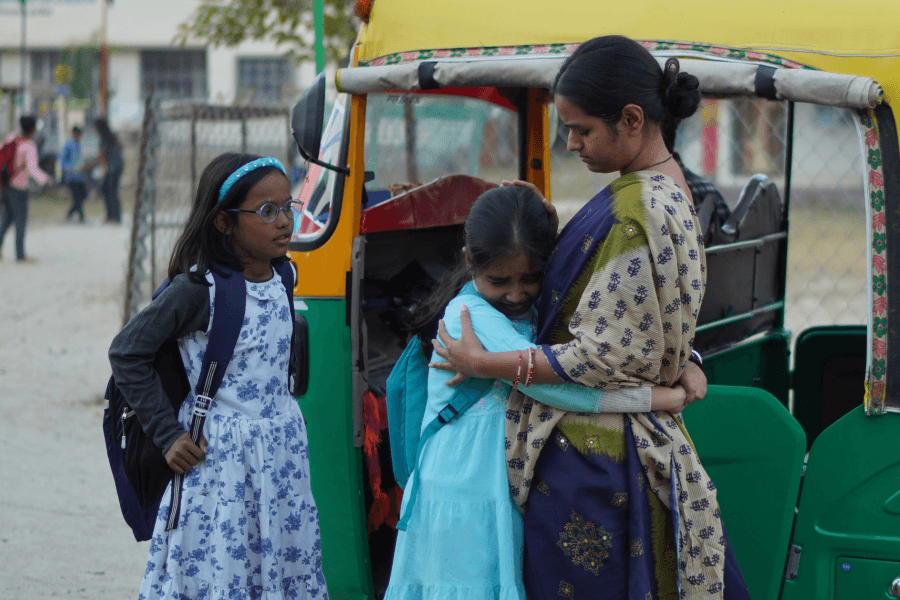
The subject is personal, and its origins are specific. Jha grew up in Darbhanga but had been away for more than three decades. He returned after 23 years for his father’s funeral and, amid the feasts, mourning, and family gatherings that follow a death in a Bihari household, noticed a hearing-impaired man quietly going about his chores, unaware that others were laughing at him.
“He didn’t know,” Jha says. “He was just doing what he was doing. And they were making fun of him.”
That man became a character in the opening of Abhivyakti. Not a protagonist or a plot point, simply a presence that tells the audience, from the very first minutes, what kind of world this story inhabits.
Jha had watched, in families around him, what happens when a system simply has no place for a child. “I have known members in my extended family with hearing disabilities and seen their struggle up close,” he says. Treatment becomes a possibility when finances allow. Social skills can be built when resources are available. “But in rural India, it’s more like a collective failure of imagination. The child is present but treated as absent.”
He wanted to put that gap on screen.
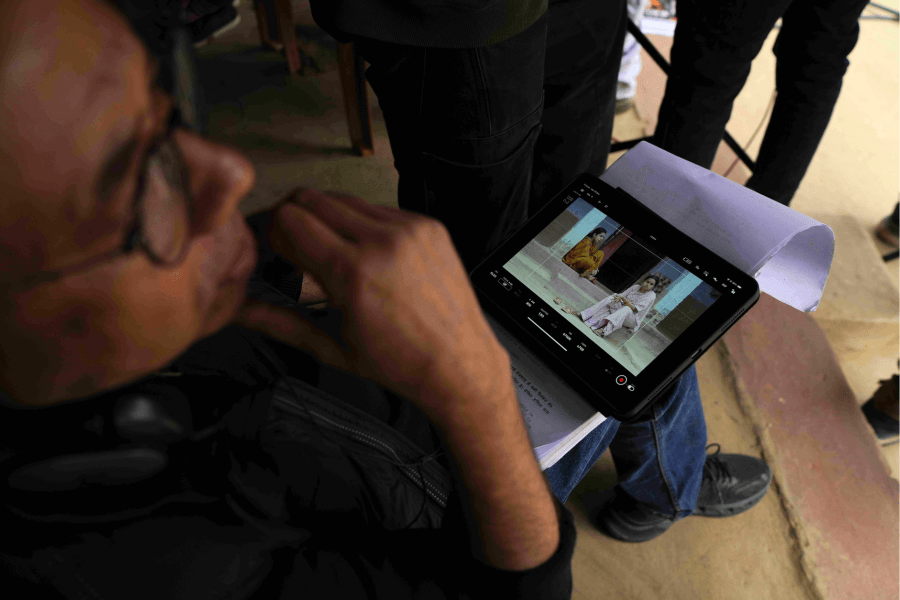
After the screenplay was written, he circulated it widely, gathering feedback from reader after reader before he felt it was ready. “More than perfecting the language, this feedback was important for me to know if people understood the subject and representation.” Then he did something that takes a certain kind of nerve: Sanjay Jha returned to Darbhanga to shoot a film in his mother tongue, Maithili.
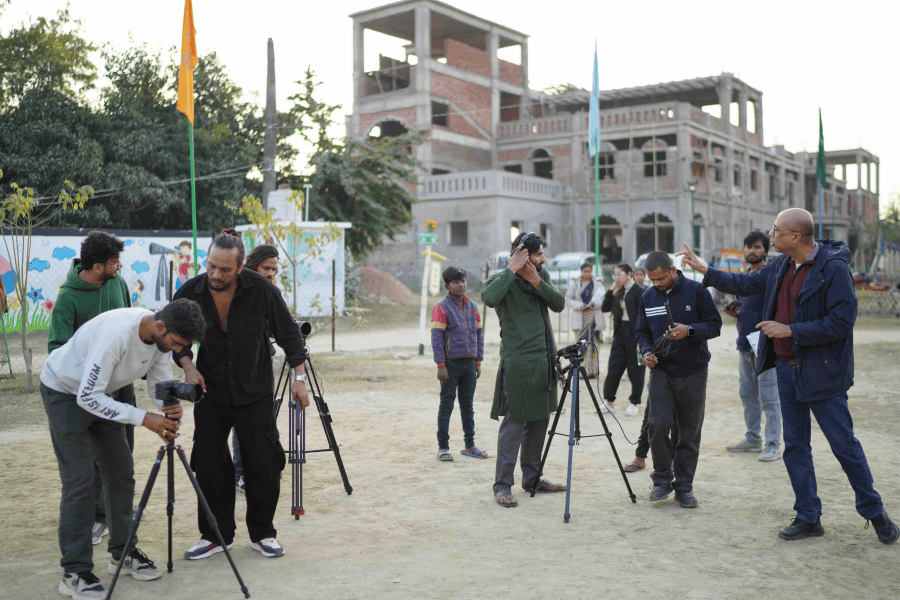
“I was lucky, as I got introduced to the local talent there,” he says. “There was a whole group of qualified young indie filmmakers there. I didn’t expect that. In fact, their assistance helped me.”
Long before the shoot, there was the preparation, and that too happened at a distance. From Sydney, Jha ran pre-production sessions with his cast and crew over video calls. Language was an early challenge. Actress Moushami Bharti, who plays Kanti, is not a native Maithili speaker, so Jha coached her scene by scene, line by line, until the language stopped sounding borrowed and started feeling lived in.
The shoot itself was lean. Eleven days in a native village, real-time constraints, limited resources. “Most of my ideas worked,” Jha says, with the mild satisfaction of someone who had done his homework. “Not all. But most.”
When asked whether the process differed from what he learned at AFTRS, Jha shakes his head. The grammar of filmmaking travels, he says. What surprised his former classmates was that he had actually used it. Among the first in his AFTRS cohort to make a feature, he has been met with warmth, even enthusiasm, from classmates considerably younger than him. There is something quietly satisfying in that: the professor, the oldest in the room, finishing first.
In a story where the central relationship is shaped by the absence of spoken language, Jha did not want the camera to compensate with noise. A hand on a vibrating surface to feel music. A bowl of water catching the bass of a drum. A mother refusing to let exhaustion become defeat.
“The camera had to become the dialogue,” he says. “What Chutki cannot hear, I wanted the audience to feel.”
Given his day job, the question of AI comes up. Jha is, after all, a researcher whose work sits at the frontier of the technology everyone is talking about. Did he use it?
He shakes his head. “The screenplay I wrote myself. That was important to me.” The only AI in the film is a newsreader scene produced through Eleven Labs, a workaround when a planned journalist sequence couldn’t be shot on the day. Everything else is as analogue as the village it was shot in.
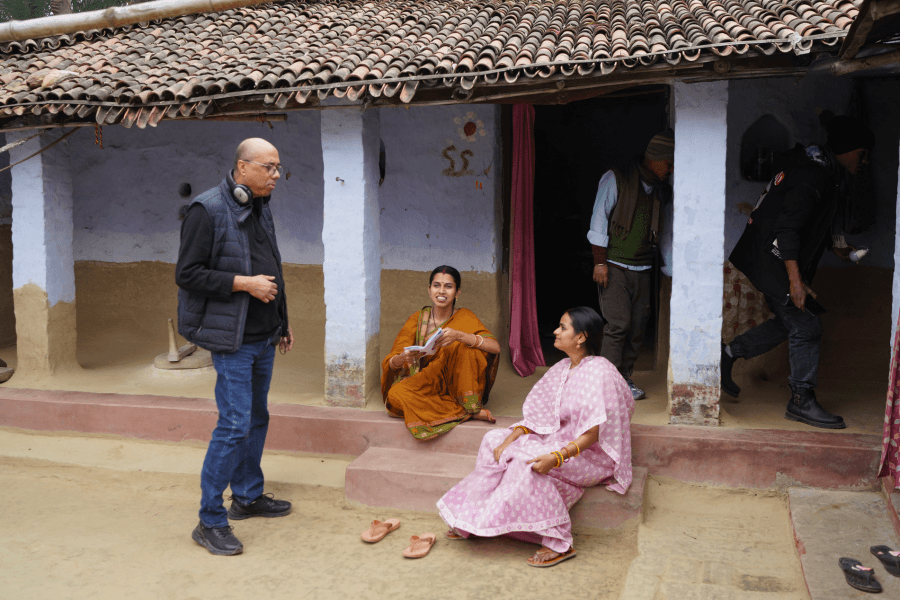
The film has since found its audience on the festival circuit. Abhivyakti: Finding Their Voice was selected at the International New York Film Festival and the Jaipur International Film Festival 2026. Jha says he made it initially as a test, without great expectations, but invested in a professional post-production team regardless. “I set up a production company in India, got the film certified from India’s Central Board of Film Certification (CBFC) so that we could screen it in India. It was a tedious process full of red tape. But if that means this story and the message get to reach a larger audience, it would all be worth it.” The two things are not contradictory for someone used to running research with rigour, regardless of what the results might turn out to be.
Jha is currently focused on where Abhivyakti: Finding Their Voice goes next – he is negotiating free streaming access and exploring distribution with Prasar Bharati for schools and disability communities in India.
“I would love to screen the film for our Indian community here in Australia.”
Sanjay Jha is clear that he wants it in classrooms and community centres, not just on festival lists.
Read more: Anoop Lokkur: A deeply personal take for Sydney Film Festival