


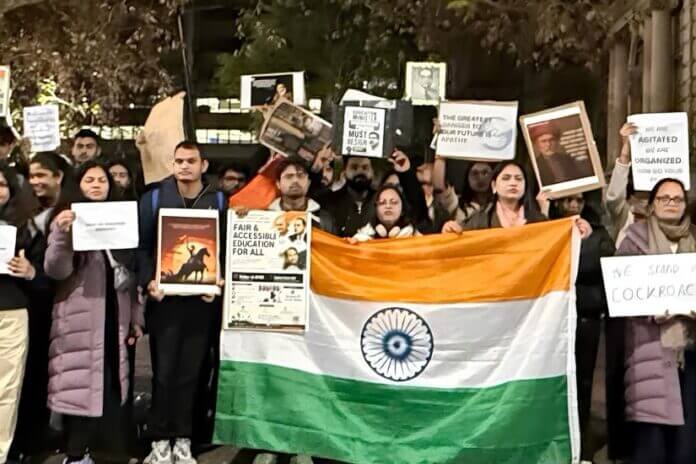
As student protesters in Delhi continue to face police crackdowns over the NEET-UG paper leak and demands for the resignation of Union Education Minister Dharmendra Pradhan, the ripples of the movement known as the CJP Protests are being felt well beyond India, including within Australia’s own Indian community.
Violence on the streets of Delhi
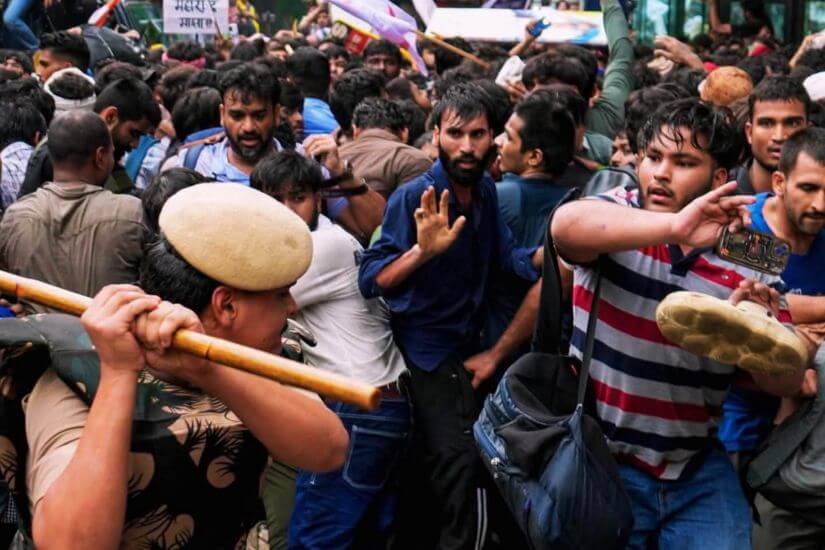
The protests have turned increasingly tense in recent weeks. When thousands of demonstrators attempted to march from Jantar Mantar towards Parliament on the opening day of the Monsoon Session, Delhi Police responded with lathi charges and tear gas. Visuals of students being beaten and dragged away have circulated widely on social media, drawing condemnation from opposition leaders and rights groups alike. For many young Indians, both at home and abroad, the crackdown has come to symbolise something larger than the exam scandal that sparked it.
Sydney, Brisbane and Melbourne join in
In Sydney, a small protest organised by Hindus for Human Rights ANZ (HFHRANZ) near Town Hall, with members of the Indian diaspora holding placards in support of the students in India. The turnout was modest, but participants said the size of the crowd was besides the point. For a community more used to celebrating cricket wins and Diwali melas together, a protest gathering in solidarity with youth in India, however small, marked a different kind of public statement. CJP Protest Australia
View this post on Instagram
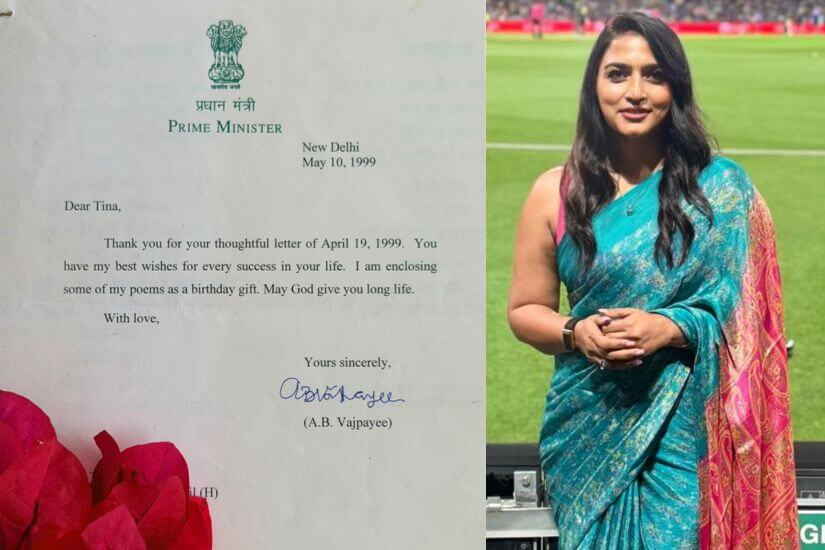
In Brisbane, Tina Treassa Joseph did her bit at the Indian Consulate (with her primary school aged kids in tow). “It was my way of registering my solidarity with the students in India, asking for accountability from the Indian government over the lapses in education policies and the police response to demonstrators.” She described it as a peaceful, deliberately low-key show of support, rather than a confrontation with consulate staff. “Standing up and speaking up for what is right is our duty,” she said. “What a sad day for democracy. It pains me to see children beaten up, manhandled and tear-gassed on the streets outside parliament.” She had indicated to Consulate staff that she would drop by, and was told to come after 3pm. “I considered giving it all up, and my daughter said, no Mum, you have to go. We have to go!”
She recalled writing to former PM Atal Bihari Vajpayee as a teenager after he lost power by a single vote in 1999. He replied to her and sent her a book of his poems, which included the popular Jung na hone denge. It included the lines Jo hum par guzri, bachchon ke sang ne hone denge. “I’m sure he’s hanging his head in shame seeing what his people are doing to the children of India now.”
Perhaps the more striking reaction has come from within a crowd that, only recently, was cheering the opposite message. Several members of the Indian diaspora who attended the “Melbourne Meets Modi” early this month have since taken to social media to voice concerns over the government’s handling of the protests. One diaspora voice, reacting online, put it plainly. If twenty thousand of them could fill a stadium to cheer for Modi, they were equally entitled to question his government over what they called growing anti-incumbency at home. It is a comment that captures a wider tension within the diaspora itself, between admiration for the country’s leadership on the world stage and discomfort with how dissent is treated on its streets.
The Hindus for Human Rights ANZ, along with other community organisations, is organising another protest at Sydney’s Parramatta Square and Melbourne’s Federation Square on July 24, where a larger turnout is expected.
Mohammed’s journey back
Among the more personal stories to emerge is that of Mohammed, an Indian-origin resident of Australia who flew back to Delhi specifically to join the protest at Jantar Mantar in person. Rather than post support from a distance, Mohammed chose to spend a significant sum of his own money to be physically present at the sit-in, a gesture that has been picked up widely in Indian media as emblematic of how personally this generation of the diaspora has taken the issue. “I flew in specifically to be here at the protest.” For Mohammed and others like him, showing up in person was less about the exam paper itself and more about standing with young Indians who felt, in his words, unheard. CJP Protest Australia
View this post on Instagram
An Australian vlogger’s careful silence
Andy Evans, the Melbourne-born content creator known online as Aussie Bhai, who has built a following of over 200,000 documenting his life in India, announced he would pause his daily uploads, a streak he had kept up for roughly a thousand consecutive days. He said the decision was not a comment on the protests themselves, but a recognition that his audience needed space to feel and express their emotions rather than be entertained, adding that he would return to posting within a few days. It was a small gesture, and a deliberately apolitical one, but it registered as its own quiet acknowledgment that something serious was unfolding in the country he calls home.
View this post on Instagram
Solidarity gatherings across the UK, US and Canada
The diaspora response has not been confined to Australia. In the UK, hundreds gathered outside the Indian High Commission in central London under the banner “Cockroaches of London Unite, Rise in Protest,” with sister demonstrations in Manchester, Leeds, Glasgow and Edinburgh. Organisers in Leeds said many local students felt compelled to join because they had personally been affected by India’s exam system before moving abroad. In the US, similar solidarity gatherings were reported in New York in support of the student movement. In Canada, students and diaspora members gathered outside the Consulate General of India in Toronto to voice support for the protesters and their demands, marking one of the more visible expressions of solidarity from North America so far.
View this post on Instagram
View this post on Instagram
A frustration that has been building
What is emerging from Sydney to Brisbane to Delhi is not a single, organised diaspora campaign but something more diffuse: individuals and small groups, often with no prior history of activism, choosing to speak up now. Some are reacting to the specific images of police violence against students. Others describe a more general frustration that has been accumulating for years, over unemployment, over the perceived gap between India’s global economic messaging and the lived experience of its young people, and over the sense that dissent at home is met with force rather than negotiation.
View this post on Instagram
It is worth noting that this is not a uniform diaspora position. Plenty within the community continue to support the government’s account of events, and many Indian-Australians remain wary of importing India’s domestic politics into Australian public life, a caution shaped partly by past tensions around Khalistan-related demonstrations in Australian cities. Whether the small gatherings in Sydney and Brisbane grow into something larger, or fade as the news cycle moves on, remains to be seen. But for now, they suggest that geography has done little to insulate the diaspora from India’s arguments with itself. CJP Protest Australia
Read more: The dance of democracy, reprised