

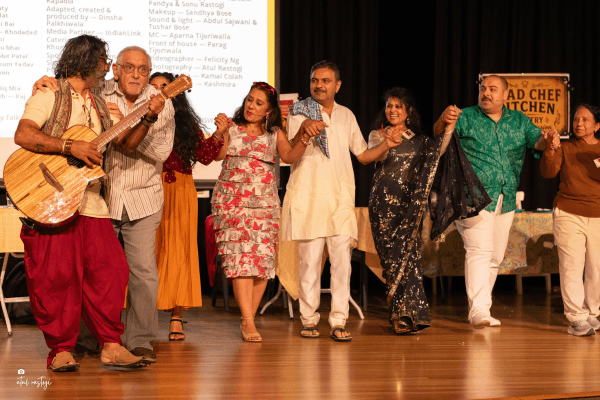

Dinsha Palkhiwala’s ‘Bombay Talkies’
The Irani café is a disappearing phenomenon in India. In its heyday it welcomed people of all backgrounds – regular folk, actors, writers, filmwallahs, lovers – who came for more than the bun maska and chai. These were safe spaces where everyone, regardless of class or creed, could gather as equals.
And that is precisely Dinsha Palkhiwala’s Bombay Talkies – an Irani café that attracts a motley group of characters from various walks of life in the heaving, pulsating metropolis.
As a microcosm of society, the café in this Natak Mandali production becomes the perfect stage on which diverse lives, conversations and stories intersect.
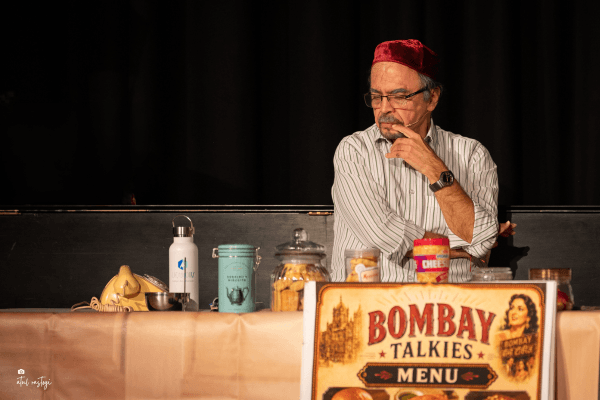
The establishment Bombay Talkies however, is not quite the pub in American sitcom Cheers. Cheers (the pub) attracted troubled souls who ended up becoming shoulders for each other as they gradually unburdened themselves.
The patrons at Bombay Talkies do not exactly become salve to each other. Instead, it is owner Khodu Bawa (Mahiyar Wellington), waiter Veeru Bhai (Mehul Somaiya) and cook Shanti Bai (Kamal Colah), who became informal counsellors, propping up each restless wanderer psychologically with their warm welcome and words of comfort.
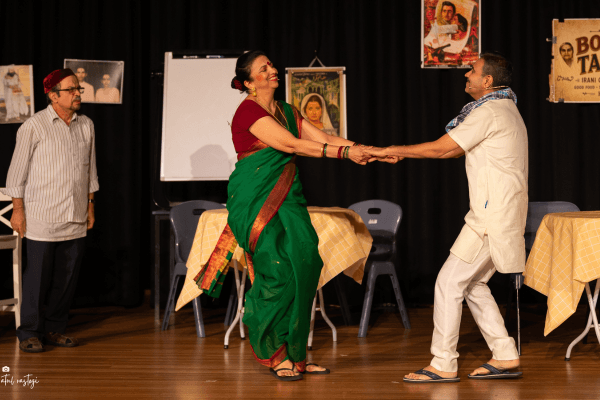
Among these are the lively but henpecked and somewhat lecherous old uncle (Dinsha Palkhiwala), the bored housewife (Cyra Noshirwan), the seriously misguided young man fixated on America as his north star (Mittal Bhavsar), the single older woman doing it hard (Namita Matani), a typical Mumbai wheeler-dealer (Taufeeq Sheikh), and those carrying deep invisible burdens (Nasir Sirguroh and Akanksha Srivastava).Dinsha Palkhiwala’s ‘Bombay Talkies’
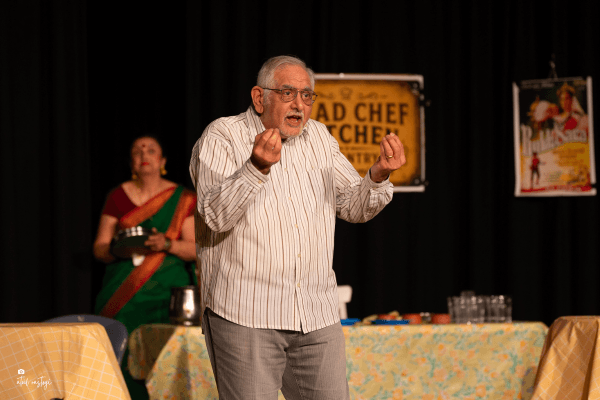
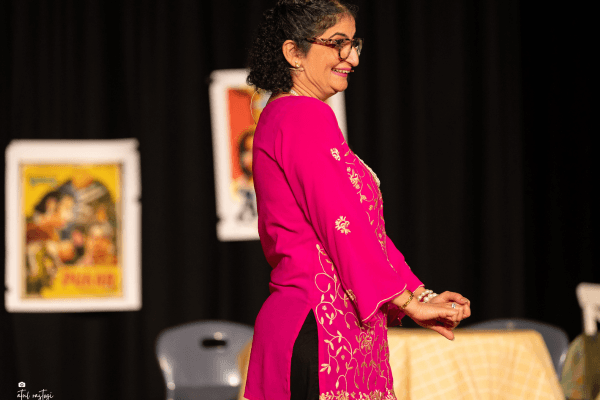
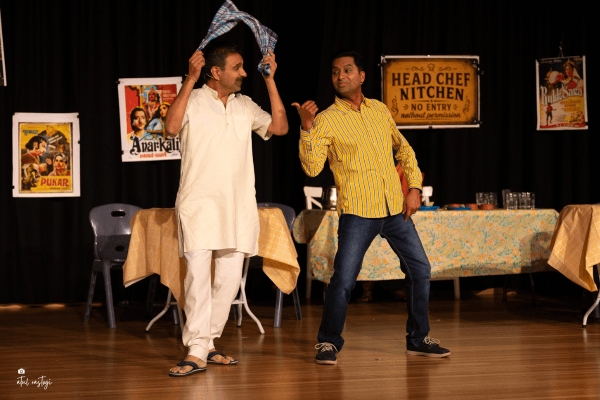
Each presents their story in a detailed monologue – perfectly designed to showcase their acting chops, in this Dinsha Palkhivala-directorial. In each story, a background is set and rapport established with the audience before the recount reaches its climax, often sharp and hitting. It is at the very end that most actors excel – Namita (as Kusum Yadav) nails it as she brings home the harsh realities of raising two kids alone while trying to find succour for herself; Akanksha (as Baby Dimple) is brilliant as she reenacts the harrowing moments before she is sexually assaulted by an unscrupulous film producer who has promised her a role, and Nasir (as Steven Fernandes) is utterly convincing as he lays bare the deep hurt of a man finally voicing the shameful childhood secret that robbed him of his innocence.
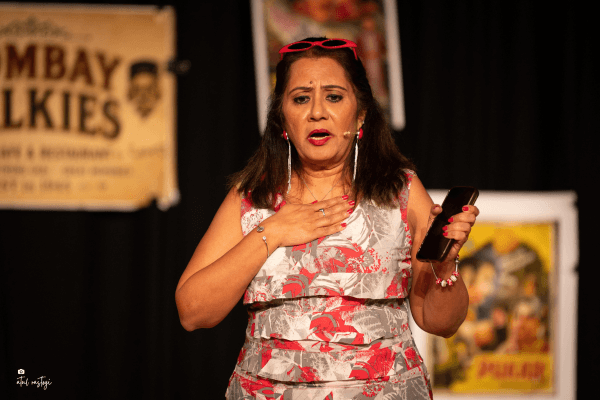
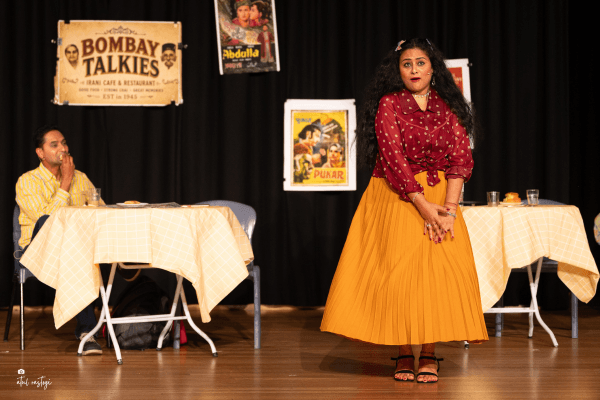
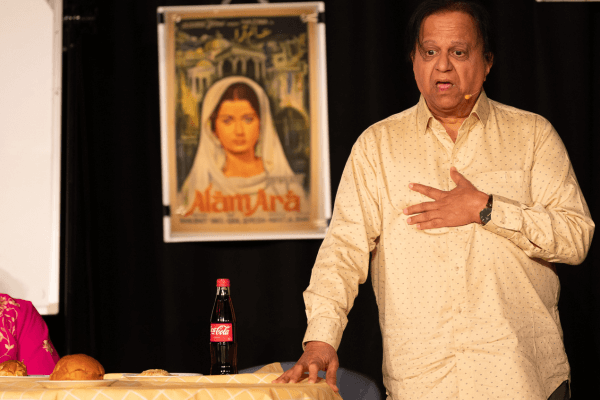
Coming in quick succession, the stories are unsettling, the unease mounting with each narration. If the audience is here for the warm vibes of an Irani café – with Parsi delicacies thrown in onstage and off (as promotions described) – then they are in a for a rude shock.
In the end, thank god for hustler Raj Gidwani (played admirably by Taufeeq Sheikh), improvising his way through an act that, quite oddly, brings a sense of relief after the deep discomfort of the previous monologues. A smooth operator who gets shit done – and boasts about it too – you feel like reaching out to him to say, hey buddy, can you not ferret out the molestors, philanderers, rapists, goondas we just heard about, and break a rib or two, to teach them a lesson and bring justice to the victims?
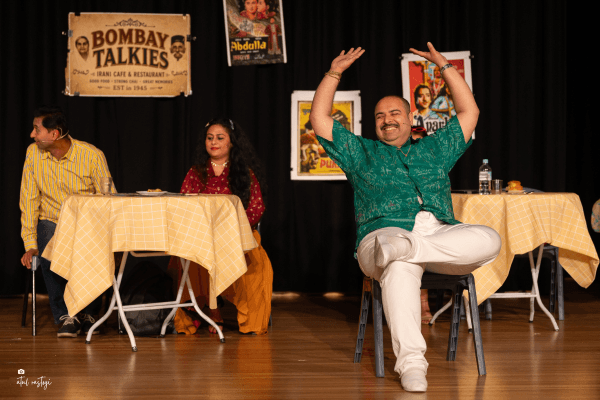
And then, you cannot forgive yourself that thought – sad, that we must resort to this to seek redress when the system fails us.
In between, respite comes from Bollywood tunes: thank you Sadiq Mia (Sadiq Rehmani) for those musical interludes of escapism. The audience, clapping along, absolutely cherish the break from torment that comes in the form of familiar and uplifting ditties.
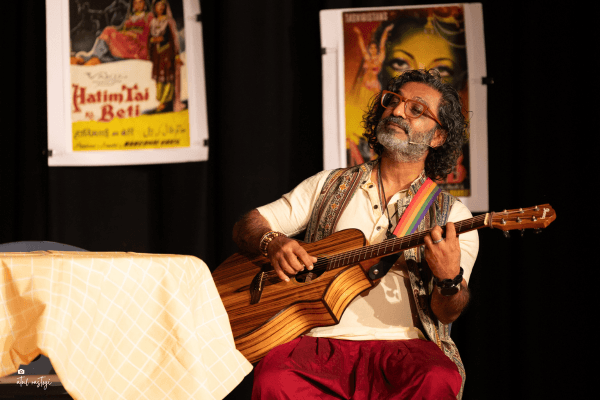
The multilingual dialogue, effortlessly weaving together Hindi, Gujarati and English, also feels authentic and refreshing.
And yet, if the original 2012 script by Vikram Kapadia was intended as an ode to the city of Mumbai, or a portrait of it as teeming with dreams, disappointments and determination, then this production doesn’t quite leave that impression. The city never quite emerges as the central character; instead, the audience leaves remembering the personal stories rather than Mumbai itself.
And so perhaps it is obvious why the establishment – or rather its human element – becomes the real hero of the show. Mahiyar Wellington (as owner Khodu Bawa), Mehul Somaiya (as waiter Veeru) and Kamal Colah (as cook Shanti Bai) are simply brilliant in their supposedly supporting ‘sutradhar’ roles to the monologues, but their silent reactions, comic interjections and constant movement give the production its warmth, rhythm and cohesion. They do more than serve tea and food; they hold the café – and, in many ways, the entire world of the play – together.
There is something deeply comforting in the reminder that small acts of warmth, kindness and acceptance can still transform lives – especially in a world increasingly fractured by conflict, othering and rapid change. Perhaps that is the Irani café’s enduring lesson. Founded by migrants who found a home in India, it became a place where everyone else could find one too, and an inseparable part of the nation’s cultural fabric. It is a quiet testament to the idea that today’s newcomers can build tomorrow’s traditions, and that the places we create with generosity and openness often outlast the divisions that surround us now.
READ ALSO: Review: Dinsha Palkhiwala’s ‘Rising From The Ashes’