


India’s global visa contracts
There was little ceremony by the time the hearing over India’s global visa contracts reached its most critical stage. Files were stacked high across the bar table, senior advocates were on their feet almost continuously and the judges were interrupting more than they were listening. It was one of those hearings where the courtroom seemed to have acquired its own rhythm, arguments layered upon arguments, submissions met with scepticism, and every answer triggering another question.
Outside the Supreme Court, however, the consequences of this legal battle were anything but academic. For weeks, thousands of overseas Indians, including many in Australia, had been unable to access routine passport, visa and Overseas Citizen of India (OCI) services after the Delhi High Court set aside the Ministry of External Affairs’ tender process for outsourcing consular services in Australia, Singapore, Kuwait and Qatar.
So, how did the disruption begin? In Nov 2025, India’s Ministry of External Affairs (MEA) called for fresh tenders for consular services in Australia and other countries. New contracts were awarded across the four countries, with VFS Global as the successful Australian bidder.
Before the new contract could begin, however, an unsuccessful bidder, E Trav Ltd. challenged the tender process in the Delhi High Court. The High Court found flaws in the technical evaluation and struck down the entire tender process. As a result, the contracts signed in May 25 were cancelled.
At the same time, the existing VFS contract had already expired on 30 June, leaving no legal contract in place for any provider to operate the centres.
MEA challenged the Delhi high court decision in the Supreme Court of India.
What had begun as a procurement dispute now snowballed into a diplomatic headache, forcing Indian missions to divert their own staff to keep only the most urgent services running.
The admission nobody expected
That reality found its way into the courtroom in unusually candid fashion.
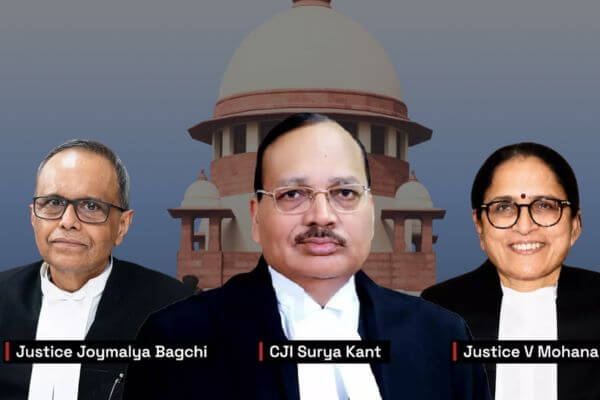
“We don’t have manpower,” MEA lawyer Solicitor General Tushar Mehta told the Supreme Court Bench comprising Chief Justice of India Surya Kant and Justices Jogmalya Bagchi and V Mohanna, acknowledging that embassy officials had been diverted from their regular diplomatic work to deal with emergencies. “Only emergency situations are being tackled like renewal of passports and giving visas.”
It was a remarkable admission.
In a courtroom dominated by arguments over evaluation criteria, technical scores and procurement rules, the government’s lawyer had inadvertently shifted the focus to something far more immediate – the disruption being experienced by ordinary people across four countries. It was a point the judges would return to repeatedly as they searched for a solution that balanced legal principle with practical necessity.
For MEA, the case was straightforward. The Delhi High Court, it argued, had misunderstood the tender evaluation process. The reasons for awarding technical scores had always existed, counsel insisted; the problem was that the High Court had never examined them.
Transparency under the microscope
“We have nothing to hide,” the Solicitor General Mehta submitted, explaining that detailed evaluation records had been brought before the High Court but were not taken on record after successful bidders objected to commercially sensitive information being shared with competing companies. The judges were told that reasons had been recorded by each technical evaluation committee and that the government remained willing to produce the original material before the Supreme Court.
The Bench, however, was not prepared to accept these assurances at face value.
Judge V Mohanna observed that the High Court’s concern was not merely whether reasons existed somewhere in government files, but whether the evaluation process itself had been sufficiently transparent.
If bidders received different scores in different countries, what explained those variations? And if the tender conditions contemplated comparative marking, had they actually been applied consistently?
Those questions would dominate the hearing.
Why Australia mattered
Government lawyers argued passionately that comparing technical scores across jurisdictions ignored the practical realities of overseas operations.
Australia, they submitted, could not sensibly be assessed using the same benchmarks as Abu Dhabi or Qatar. Geography, transport networks, applicant numbers and security arrangements all differed substantially.
“A delivery solution which is efficient for Australia may not result in ensuring smooth and secure delivery service of confidential passports in Abu Dhabi,” counsel argued, pointing out that Australia presented logistical challenges stretching across thousands of kilometres while Gulf missions operated under entirely different conditions.
Separate evaluation committees in different countries were therefore entitled to reach different conclusions about what constituted the optimal proposal.
The explanation was detailed, but the judges appeared unconvinced.
“We ourselves are not convinced that the standard of facilities will vary from Qatar to Australia,” Mr Justice Bagchi observed, suggesting that multinational outsourcing companies should ordinarily be expected to maintain consistent standards across jurisdictions.
It was one of several moments during the hearing when the Bench signalled, politely but unmistakably, that it was testing every assertion rather than accepting it.
Millions already committed
Australia surfaced again when Dr Abhishek Manu Singhvi appearing for VFS Global, the successful bidder for Australia, revealed the scale of investments already made following the award of contracts. Premises had been leased, technology installed, staff recruited and operations prepared for commencement.
“My client in Australia has invested US$20 million,” Dr Singhvi told the court, warning that months of planning and significant financial commitments now hung in the balance.
Another lawyer spoke of more than 400 employees waiting in the UAE, office leases already signed and commercial commitments that could not simply be unwound because litigation had intervened.
The submissions highlighted the commercial reality behind the legal arguments. By the time the dispute reached the Supreme Court, it was no longer simply about which company had won a tender. Significant investments had already been made, staff recruited and infrastructure established, raising the stakes for every additional day of uncertainty.
A system built for litigation?
Yet the most politically charged moment came when Solicitor General Mehta for the MEA suggested this was not an isolated dispute at all.
“This has been happening since 2011,” he submitted. Every time an outsourcing contract approached expiry, litigation followed – but the incumbent operator continued providing services while the legal process dragged on. “This time we took the decision that we will not permit that to happen.”
Whether the judges accepted that characterisation was impossible to tell, but it reframed the dispute. Instead of a single contested tender, the government was inviting the court to view the case as part of a recurring cycle that had plagued overseas outsourcing contracts for more than a decade.
Searching for a practical solution
Despite the commercial interests at stake, the Bench repeatedly steered the discussion back to a simpler question: what happened to the public while lawyers argued?
“What do we do for the transit period?” Justice Mrs Bagchi from the bench asked, cutting through competing legal submissions. It was a deceptively simple question, yet it ultimately shaped the outcome of the hearing.
By the time proceedings drew to a close, it had become clear that the judges were searching less for a winner than for a workable solution.
The High Court’s concerns about the tender process would remain intact, but the paralysis affecting passport and visa services could not.
The compromise eventually fashioned by the Supreme Court reflected that balancing act.
While leaving the High Court’s findings undisturbed, the Bench granted the Ministry flexibility to ensure uninterrupted consular services by allowing it to temporarily continue with existing arrangements, engage successful L-1 bidders or appoint another agency until a fresh tender process was completed. Any such arrangement, the judges stressed, would be purely interim and confer no special rights on any party.
More than a tender dispute
Officially, the hearing was about procurement law.
In reality, it exposed something much larger: the fragility of a system on which millions of Indians overseas depend. Throughout the hearing, judges wrestled with legal doctrine, senior advocates defended competing commercial interests and government lawyers sought to justify a complex tender process.
Yet the issue that lingered long after the arguments ended was not who had won the contract, but how easily essential public services had been caught in the crossfire of prolonged litigation.
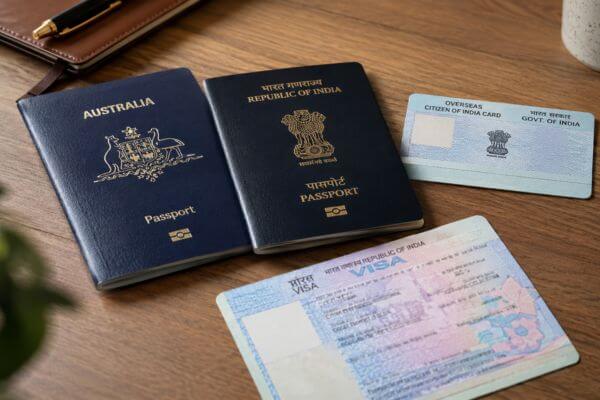
For thousands of Indian Australians waiting for a passport, visa or OCI card, that was always the real case before the court.
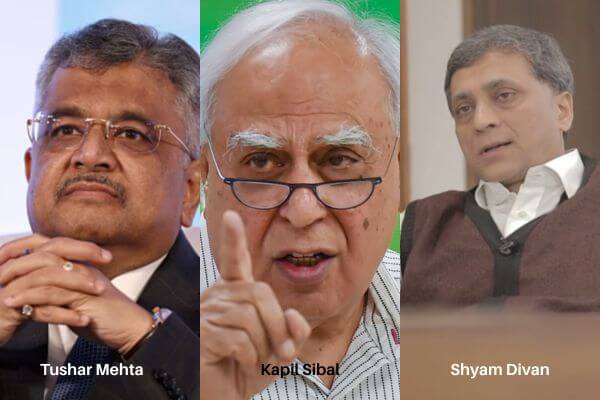
(Lawyers for MEA: Solicitor General Tushar Mehta, Addl. Solicitor General Natarajan; for VFS Global: Sr Counsel Dr Abhishek Manu Singhvi, Sr Counsel Meenakshi Arora; for Al Hind: Sr Counsel Mukul Rohtage; for E Trav Tech: Sr Advocate Kapil Sibal, Sr Advocate Shyam Diwan)
This article on India’s global visa contracts is based on the Supreme Court hearing transcript and observations from proceedings of the Union of India and E Trav Tech on 20 July 2026. Watch the full proceedings here.
Read Also: Why has the VFS fee increased to $115?