


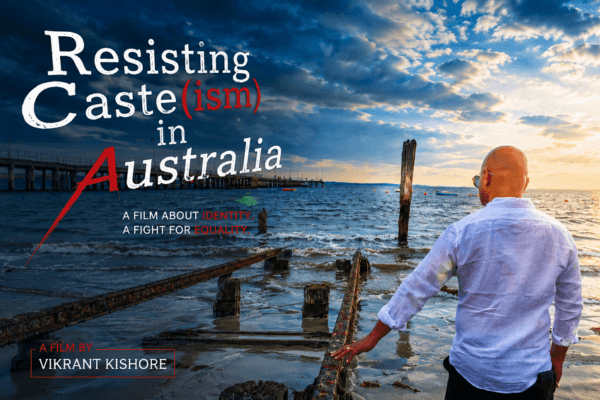
“I never meant to make this film, but caste has a way of travelling borders quietly,” narrates Dr Vikrant Kishore near the start of his film, ‘Resisting Caste(ism) In Australia’.
Following Dr Vikrant Kishore on a road trip across Australia to chronicle those who have experienced caste discrimination in Australia, the documentary shows how intergenerational trauma can persist in new lands, interviewees sharing stories ranging from surname-based microaggressions to children being excluded and families losing loans or accommodation.
“Caste is not just a system – it’s a habit of silence, of separation, of pretending,” Dr Kishore narrates in the film.
Tackling the subject from a place of strength rather than despair, the film stresses collective responsibility rather than blame of certain groups.
“We did not want to spell out what religion you are coming from…It is more of a testimonial of all these people, what they are going through. The film doesn’t want to accuse – it is about our personal feelings,” Dr Kishore said.
Dr Kishore also chose to intersperse lived experience with poetry and scenic shots of the Australian coast, adding a reflective layer to the piece.
“Australia and the proximity to sea made me feel so alive. It works as a breather. But for me, it was also a time for reflection,” he noted.
Dr Vikrant Kishore says he was inspired to make the film to educate both Indian and wider community audiences after encountering double standards in his own life.
“Every time I would meet my Indian friends, they had a story about racism – ‘Hey, there was this microaggression against me’. I would ask them, what about caste discrimination? You were just using some caste slur as if it is so natural and normal,” he recounts.
As the wider South Asian community contend with the threat of the far-right in Australia, Dr Kishore says confronting intra-community caste discrimination is equally necessary.
“It’s high time we question our privilege, because you can’t go on a battle expecting everyone to come along with you and then also do the same far right kind of thinking in a caste manner,” he told Indian Link.
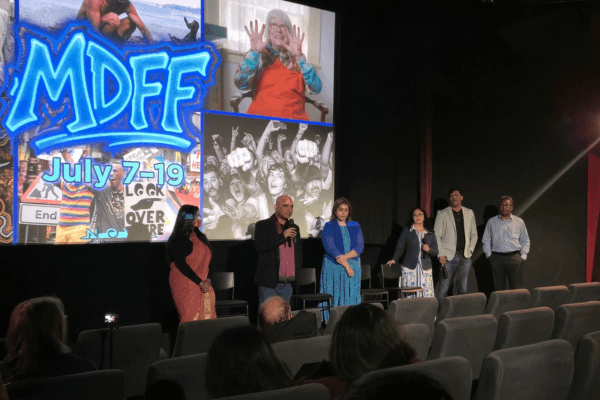
Screening at Carlton’s Cinema Nova as part of the 2026 Melbourne Documentary Film Festival, the film also netted a Wildcard Award nomination. But rather than critical acclaim, Dr Kishore says the film’s purpose is to prompt consideration within the diaspora.
Dr Vikrant Kishore
“For people who say caste discrimination doesn’t exist…I want people to understand one basic thing, humanity,” he told Indian Link.
“[People have] said we are trying to make problems and challenging the social cohesion. Caste [discrimination] breaks social cohesion, so talking about casteism is talking about humanity and bringing [about] social cohesion.”
It seems this message has cut through to audiences.
“I had a screening in China just a month back, and after the screening, one girl, a PhD student, stands up and she says, Jai Bheem. I asked: do you know what Jai Bheem is and why are you saying that? She said: I understand your film and I feel what you have gone through and that is my comment to you, Jai Bheem,” Dr Kishore remembers.
The advocacy of Dr Vikrant Kishore and the Ambedkar International Mission has meant caste discrimination is now recognised as a form of intersectional discrimination by the Australian Human Rights Commission, as well as the Monash and Melbourne councils.
He hopes to carry the message beyond movie theatres and enact more legislative change.
“To talk about caste and just get testimonials is not enough. We have to talk to the policymakers and share this with the community,” he told audiences at the post-screening forum.
READ ALSO: Become an anti-caste ally if you haven’t already: Melbourne academic Vikrant Kishore