


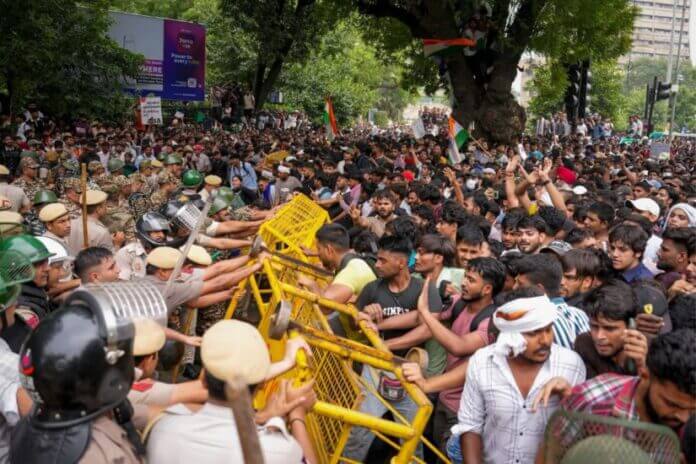
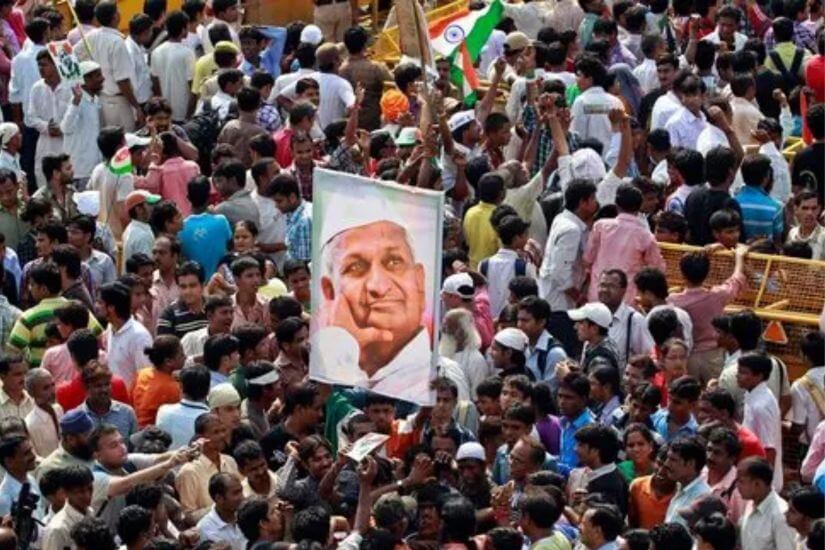
In 2011, I stood at Jantar Mantar as a Delhi University student, placard in hand, shouting for activist Anna Hazare and against a government drowning in corruption scandals. Fifteen years later, the same patch of Delhi is hosting the same fight, different names, same script. Educationist Sonam Wangchuk on hunger strike. A government refusing to blink. A minister refusing to resign. If this feels like deja vu, that is because India has been here before, and the uncomfortable question this time is whether we have learned anything at all.
The choice of Jantar Mantar is never incidental. It is, quite literally, the only site in the capital where the Delhi Police still permit protest, a small, fenced patch of history turned into a pressure valve for an entire nation’s grievances. Everywhere else, permission is refused on grounds of security or order. That a functioning democracy of a billion and a half people has narrowed its right to dissent down to one park, watched over by eighteenth-century instruments meant to measure celestial movement, tells its own quiet story. In 2011, that park held the fury of a country against corruption. In 2026, it holds the fury of its young against an examination system that failed them, against a paper leak that stole futures before they had even begun.

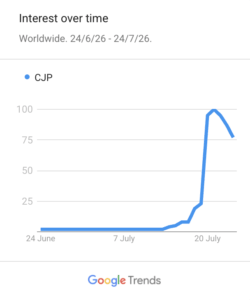
The Cockroach Janta Party, for those still catching up, was never meant to become a movement in the way it has. It began as satire, a retort to a remark by the Chief Justice of India, Surya Kant, who was widely reported to have described the country’s unemployed youth as cockroaches and parasites during a court hearing. What started as memes and dark humour online curdled, over a single summer, into something with teeth (according to Google Trends data ‘CJP’ is the fifth most searched term in India in the last 7 days with 1m+ searches).
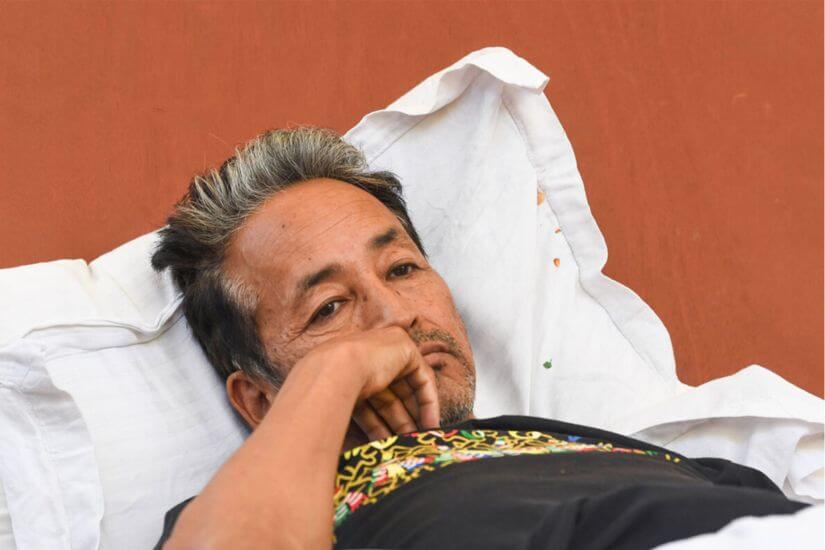
When the NEET-UG examination was found to have leaked in May, and a re-test failed to quiet the anger, the CJP moved from irony to occupation. Its founder, Abhijeet Dipke, and thousands of students found themselves at Jantar Mantar demanding one thing above all else, the resignation of Education Minister Dharmendra Pradhan. Wangchuk, the Ladakhi engineer who has made a career of turning himself into a human petition, joined in solidarity, and by the third week of his fast, having survived on salt water and resolve, his body had begun to fail him in ways that made even his critics anxious.
What makes this movement different from 2011?
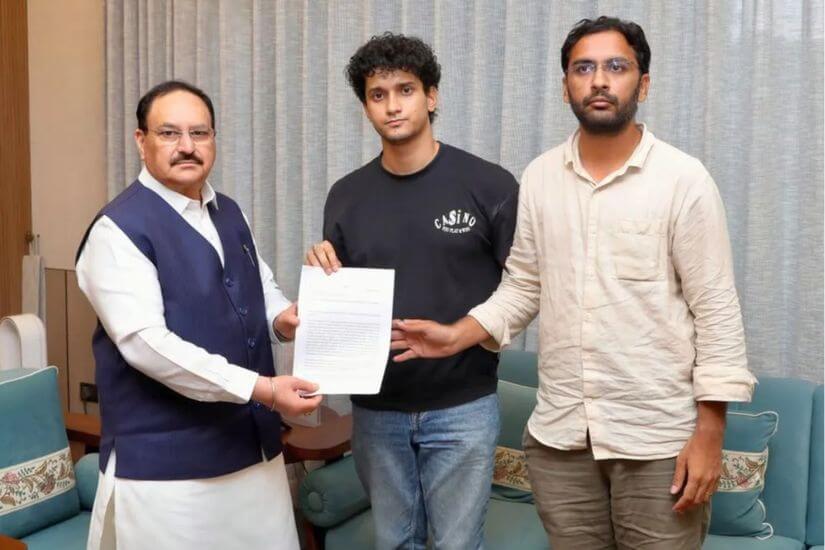
We need to look at where this movement was actually born – not on a stage or in a party office, but on timelines and group chats. The CJP was a digital insurgency before it was ever a physical one, built on memes, reposts and a shared, sardonic embrace of the word ‘cockroach’ as a badge rather than an insult. That online anger only spilled onto the street when the exam leak gave it a concrete grievance to organise around, which is precisely the pattern the region has seen before. Bangladesh’s students toppled a government in 2024 after a quota protest turned into something much larger. Nepal’s Gen Z, mobilised largely through social media, forced a prime minister out in 2025. India’s version has, so far, followed a slower burn, less explosive, more attritional, and a hunger strike rather than a storming of a secretariat. And when the moment came, it did not end in collapse or confrontation but in a room, when CJP representatives Saurav Das and Ashutosh Ranka finally sat across from Union Minister JP Nadda after weeks of being ignored. That meeting, and Wangchuk breaking his fast soon after, is the one crucial way this is not quite Dhaka or Kathmandu. The system bent before it broke.
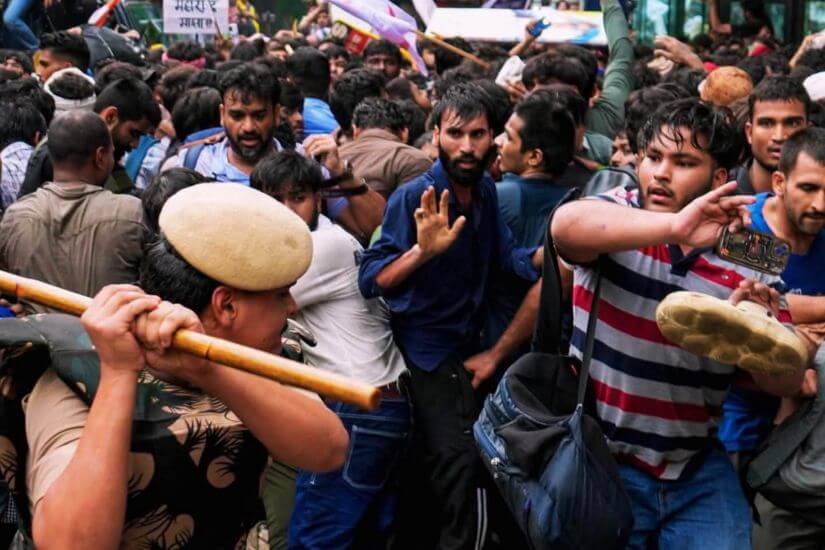
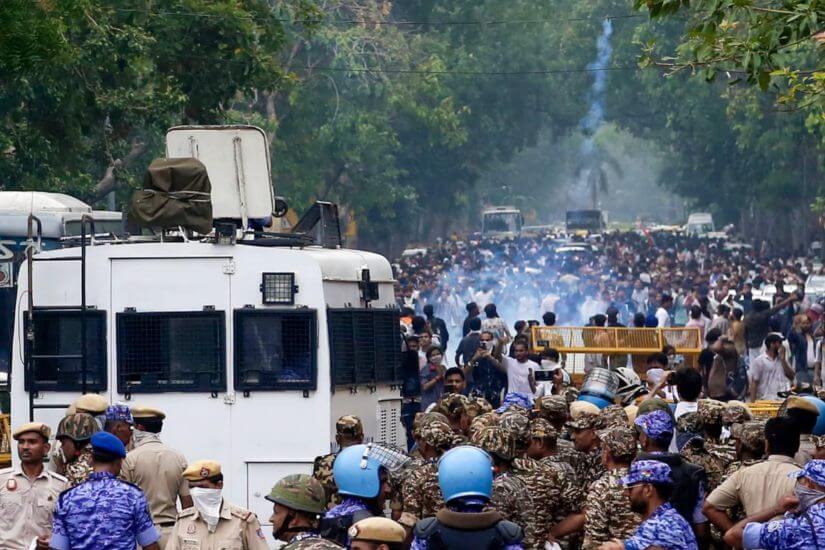
It did not bend without cost. On the day the government suddenly discovered its willingness to talk, protesters marching towards Parliament in a ‘Sansad Chalo’ call were met with tear gas shelling and lathi charge, batons landing on the same young people whose grievance was an examination paper, not a coup. It is a strange sequence for any democracy to explain, that the state’s opening gambit was force, and its concession came only hours later, as though negotiation were a reward for enduring violence rather than a right that should have preceded it. Wangchuk himself, weakened and hospitalised days earlier for dehydration and failing potassium levels, said afterward that he was moved by how peacefully the youth had held themselves despite the provocation. That is a generous reading of a government’s conduct. A less generous one would call it a preview of how dissent gets managed in this country now: ignore first, strike second, negotiate last.
Deja vu turns uncomfortable
In 2011, the government of the day eventually engaged, however reluctantly, with the India Against Corruption movement. A Jan Lokpal Bill was tabled, however imperfectly. Out of that churn came a new political party, Aam Aadmi Party, born of the very anger it claimed to represent. It promised to be different, an outsider’s party, a broom to sweep clean. Fifteen years is enough time to judge a promise, and by most honest accounts, that party has done comparatively little with the mandate it was handed. It governs one city with the theatrics of a movement and the caution of an establishment, its founding energy long since traded for the ordinary compromises of holding office. The lesson of that party is not that protest fails, but that protest without institutional follow-through curdles into just another brand of politics, indistinguishable, eventually, from the very system it opposed.
What should worry us more in 2026 is not the CJP’s youthful chaos, which is at least honest in its rage, but how long the government’s silence lasted, and what finally broke it. A minister accused of presiding over one of the largest examination frauds in the country’s history has still not resigned. The state’s first visible response to a peaceful, ailing 59-year-old activist was to have him forcibly removed from a protest site and taken to hospital, against his and his family’s stated wishes, on the orders of a court that had to be asked to simply ensure he was not left to die. Only after that, after a lathi charge, after a second hunger strike by CJP founder Abhijeet Dipke, after weeks of being studiously ignored, did the government suddenly find ten minutes on a minister’s calendar. This is not strength. It is the optics of a government that has confused endurance with legitimacy, that believes dissent should be starved and beaten into exhaustion before it is ever worth answering.
There is a cost to this kind of governance by silence, and it is not paid immediately. It is paid the next time a student loses faith in the fairness of an exam, the next time a family calculates whether their child’s future is safe in the hands of the state, the next time a young person decides that a hunger strike, a satirical party, a placard scrawled at midnight, is the only language left to them because every formal channel has gone quiet. Twelve years into one government’s rule, an image is forming, of an administration that has learned to wait out its critics rather than answer them, that treats accountability as a negotiable inconvenience.
What does the future hold? Perhaps another party will be born of this summer’s anger, as one was born of 2011’s. Perhaps it, too, will arrive with the same unbearable idealism and dilute, over its own fifteen years, into something ordinary. Or perhaps, this time, the lesson will be different, that movements need not calcify into parties to matter, that the true test of a democracy is not how many hunger strikes it survives but how quickly it learns, each time, to listen before someone has to nearly die to be heard. Until then, the instruments at Jantar Mantar will keep reading the sky, indifferent to the fact that the real weather, the one that matters, is happening on the ground beneath them.
Read more: The Cockroach Janta Party: The itch we can’t ignore