


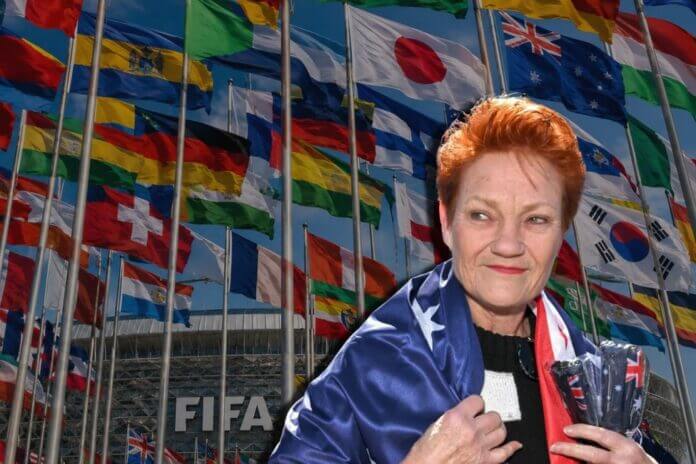

Pauline Hanson’s monoculture
Australia has spent years arguing over national identity: what holds it together, what threatens it, and whether multiculturalism strengthens or weakens social cohesion.
In that debate, Pauline Hanson has offered one of the bluntest and most limiting answers. Australia, she argues, should be multiracial but monocultural, with cultural difference tolerated only when it stays safely beneath one dominant national identity.
It is a politics of suspicion, built on anxiety about fragmentation, migration, cultural compatibility and the tired fear that openness will somehow dilute the country’s common values.
Now drag that argument out of Parliament and drop it in the middle of a FIFA World Cup fan zone.
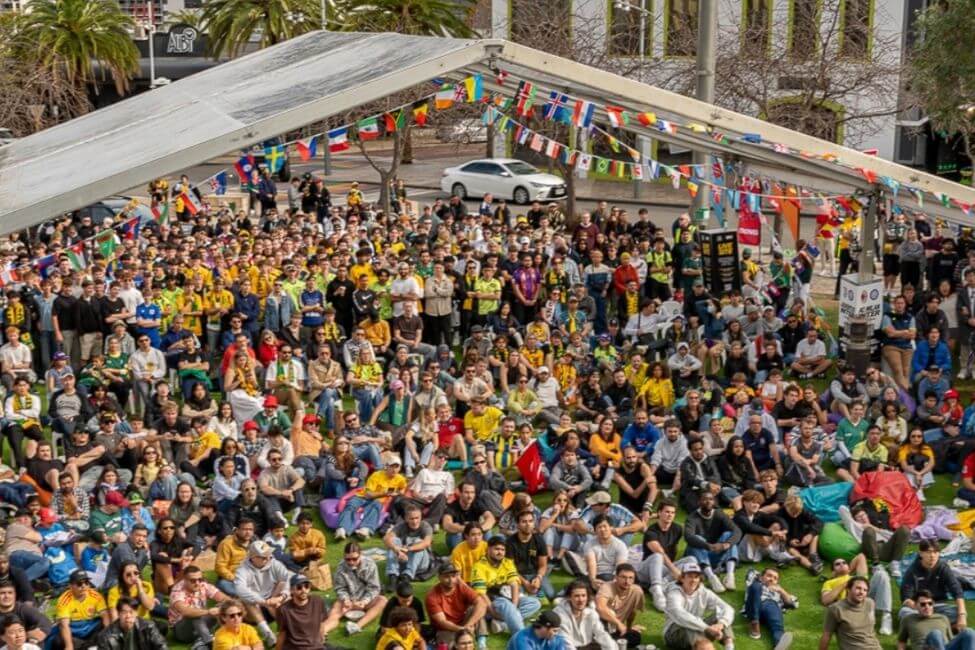
What would Pauline actually see? Not policy papers. Not slogans about failed multiculturalism. Not another warning that difference is a threat. But tens of thousands of people from every corner of the world standing shoulder to shoulder in the same public space.
Japanese supporters quietly collecting rubbish after matches, showing civic responsibility without needing cultural uniformity. Dutch fans turning precincts into seas of orange yet pulling strangers into the spectacle rather than pushing them away. Brazilian supporters filling streets with music, dance and colour, proving that public culture becomes richer when people are allowed to bring their whole selves into it.
View this post on Instagram
She would see national identity everywhere, not erased but amplified. People not abandoning who they are, but expressing themselves confidently – flags waving, chants rising, faces painted and country colours worn with pride.
In the fan zone, difference is visible, noisy and unapologetic, yet it does not collapse into division. Rival supporters take photos together. Strangers share tables, songs and stories. The dominant emotion is not fear or fragmentation; it is participation, generosity and release.
This is where the contrast becomes important.
This is the point a monocultural worldview struggles to explain: pride does not have to harden into exclusion.
For years Hanson has presented multiculturalism as a zero-sum equation: every culture added somehow subtracts from Australia itself.
The World Cup exposes that argument as fundamentally flawed. Nobody becomes less Australian by celebrating Peru, Japan, Brazil or England.
If anything, Australia becomes more confident because it is comfortable enough to accept the world without demanding the world accept Australia first.
Hanson’s policy instinct is to shrink the national imagination: one people, one umbrella, one approved version of belonging, with everyone else expected to fit inside it quietly.
But the World Cup fan zone exposes how small that imagination is. Identity is not treated as a threat to social cohesion; it becomes one of the ways cohesion is created. Fans remain proudly Japanese, Australian, English or Peruvian, while joining a temporary community built around the game.
That does not mean every political concern is unfounded. Societies are complex, and questions of integration, values and belonging matter. But fear-based politics turns these into blunt weapons, framing cultural difference as danger rather than a normal, productive part of public life.
The lived reality in these crowds is more fluid, more social and far more generous than the fear merchants admit.
The FIFA fan zone is not naïve multicultural fantasy, but a practical rebuke to the idea that national identity survives only when difference is managed, muted or made invisible.
Here, identity does not vanish. It opens outward. And that openness is not a weakness in the national story; it is the part that makes the story worth telling.
Read Also: Pauline Hanson’s One Nation: Has Australia finally had its MAGA moment?