
Pauline Hanson’s One Nation
There’s no greater frustration than watching Australia seeming destined to import a political model that is failing in plain sight elsewhere. With Pauline Hanson’s One Nation Party now topping polls, and on the back of a fiery debut at the National Press Club, there are unmistakeable hallmarks of Trumpian politics taking hold in Australia. These echoes have long lurked in pockets of the country, but never truly threatened Australian democracy. That is changing.
For the better part of a decade, Donald Trump’s MAGA movement have been held up by parts of the Australian right as proof that conventional politics is broken and that only populist outsiders can save ordinary people from self-serving elites.
The evidence has very much suggested the opposite.
Trump promised to ‘drain the swamp’. Instead, he has systematically transformed the United States government into a vehicle for personal loyalty, grievance and self-enrichment. His family and his associates have been the only ones to meaningfully prosper. Legal controversies became routine and long-standing institutions have been decimated. Americans were promised a revolution on behalf of ordinary workers, but what they largely received was a cult of personality centred on one man and those closest to him.
Still, sections of Australia’s political class and media – including One Nation – continue to market Trumpism as a success story.
Watch enough Sky News and you could be forgiven for believing modern America is enjoying a golden age. Culture wars, political correctness and liberal overreach, all now seemingly being stamped out by the Trump administration, with little discussion of the dysfunction, corruption allegations, institutional erosion and relentless division. Let alone the economic turmoil that Trump’s contradictory mix of isolationism and interventionism has wrought on the United States and the world at large.
Fuelled by media distortion, Hanson stands to become the biggest beneficiary of what is now an unstoppable global shift. Her appearance at the National Press Club this week highlighted how little policy matters in the current milieu – to no surprise, Hanson laid out a vision underpinned primarily by grievance over substance.
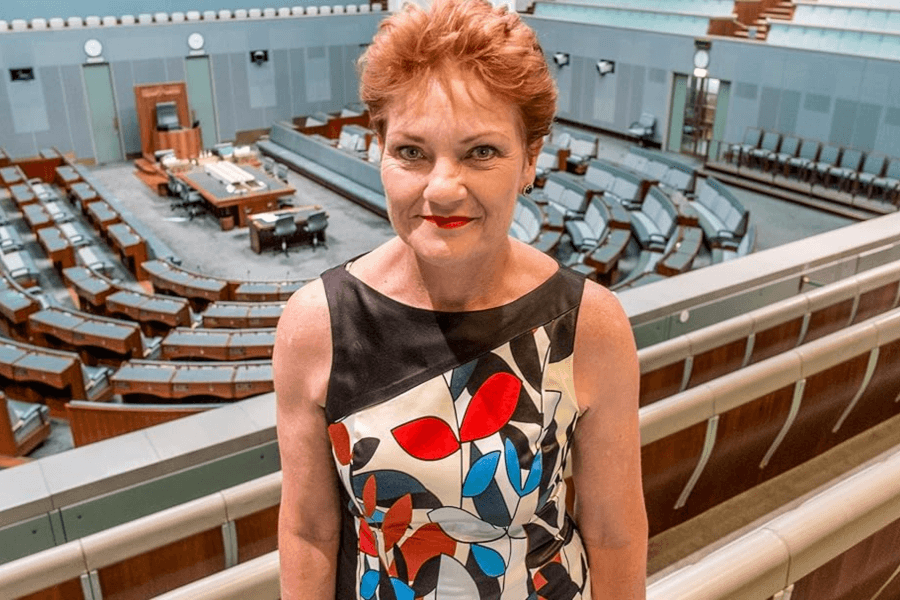
What is remarkable is not Hanson herself; she has been broadly consistent for decades. The remarkable thing is how many Australians have apparently decided that her past no longer matters. Hanson’s abysmal parliamentary attendance record has repeatedly attracted criticism, as have her repeated culture war stunts. Most importantly, her documented voting record is contrary to the interests of those whose causes she seeks to champion.
Even her highest-profile colleague – former Deputy Prime Minister Barnaby Joyce – doesn’t seem to grasp his party’s policy platform, with Joyce mistakenly asserting on Sky News that under a One Nation government, permanent residents, including existing homeowners, would be stripped of their right to property ownership.
While a strong third political party could in many ways deliver genuine benefits to the electorate, despite the absence of any meaningful or sensible policy agenda, One Nation is now regarded as a genuine contender to govern the country after the next election, potentially as part of a broader coalition.
The reason is that modern populism does not require education, competence, policy, or evidence-based solutions. It requires villains: migrants, journalists, universities, public servants, international institutions, political elites. The targets may change, but the formula remains remarkably consistent.
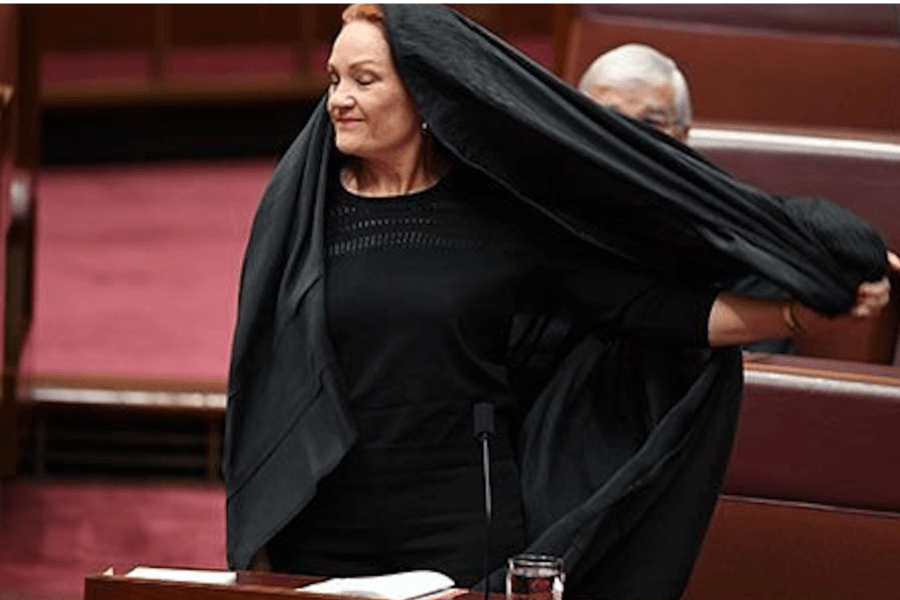
One Nation masterfully exploits legitimate frustrations felt by many Australians. Housing affordability and cost-of-living pressures are real problems, and the infrastructure challenges associated with population growth are legitimate. But recognising these problems does not validate the simplistic explanations offered by populists.
The most dangerous aspect of modern right-wing politics is its refusal to distinguish between a legitimate debate about migration and outright hostility towards migrants themselves. Australia should absolutely have a serious discussion about sustainable migration levels; it should not slide into the lazy and poisonous assumption that migrants are responsible for every social and economic challenge facing the country.
Yet that is increasingly where the debate is heading. Racism towards migrants – particularly those of Indian heritage – is more prevalent, open and vitriolic than I have seen it in my lifetime in Australia. It’s the exceedingly obvious result of the increasing normalisation of political rhetoric that treats migrants as permanent outsiders whose legitimacy can be questioned whenever politically convenient.
The same applies to the treatment of journalists. Hanson and other populist figures increasingly borrow from the Trump playbook by portraying media scrutiny as evidence of bias and by attempting to delegitimise, attack and altogether exclude journalists who ask uncomfortable questions. At her National Press Club address, Hanson committed to abolishing the SBS and to banning the ABC and other critical reporters from her press pack, labelling them as “trashy”.
Equally revealing is the growing relationship between supposedly anti-establishment political movements and some of Australia’s wealthiest individuals, again harking to Trump’s America. For movements that claim to represent forgotten Australians, populists seem remarkably comfortable in the company of billionaires.

The contradiction is obvious. The people most affected by political dysfunction are rarely those with private jets and direct access to power. Yet like Trump, Hanson continues to present herself as an insurgent battling powerful interests while simultaneously cultivating those very interests.
All of these trends should alarm anyone who values social cohesion, democratic accountability and representative government.
But alarm bells have been ringing for a decade now, to no avail. Those who regard a One Nation government as this country’s only hope do so despite being faced with all the evidence to the contrary, as has been laid bare in the United States.
And perhaps that is the point. For these voters, such is the distrust and discontent in the political system, burning it all to the ground is well worth the feeling of agency, of controlling their own destiny.
Ultimately, as always, Australia will deserve what it votes for.
Read more: The day the Liberal Party lost its way