


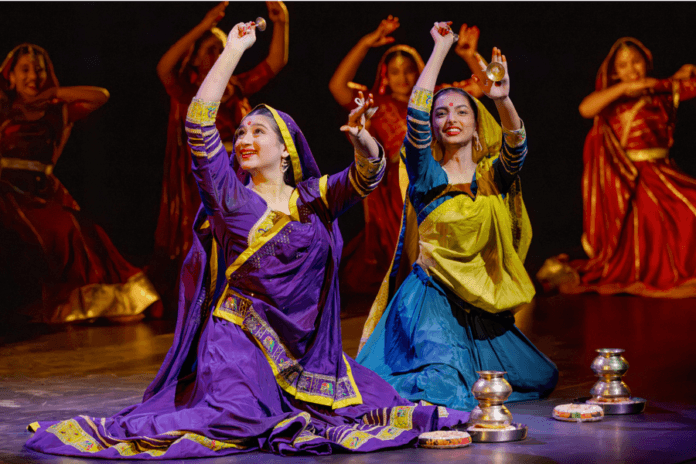

Paasbaan, a Kathak musical production, staged by Ruchi Sanghi Dance Company at NIDA in late July was an evocative exploration of loss, sisterhood, revenge, and the difficult choice of peace. An original script by Viral Hathi centred on two princesses torn away from their kingdom after the loss of their parents, with the narrative following their upbringing in a courtesan’s home and the divergent paths they take when confronted with the opportunity to reclaim justice.
Hira and Chand, sisters scarred by the same loss, choose opposing paths. Hardened by war and displacement, Hira seeks vengeance against Prince Amar. Chand becomes the story’s moral compass, urging non-violence and empathy, intensified by her attraction to Amar. The poignant words, “We have only seen the shadows; we haven’t seen the light,” referring to how we are sometimes too quick to judge, emerge as one of the production’s most resonant ideas.
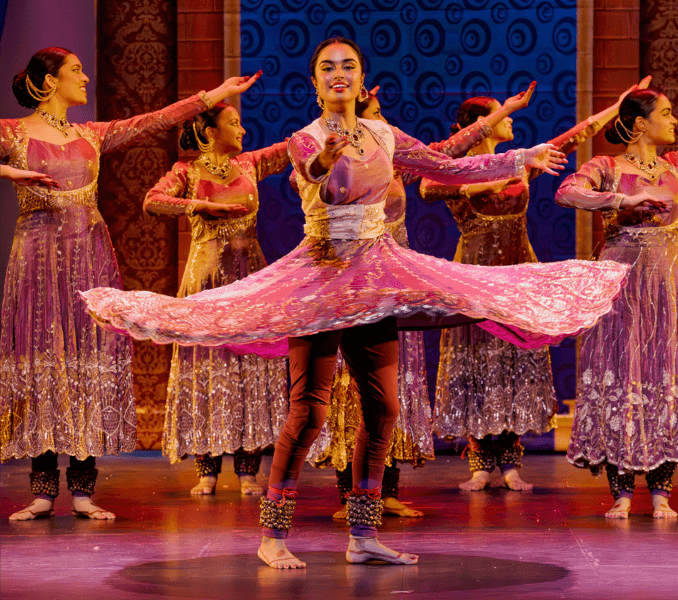
The screenplay by Viral Hathi is among Paasbaan‘s greatest strengths, carefully exploring what it means to be a paasbaan (Urdu for ‘protector’). Dialogues landed with a punch and purpose while allowing the story’s symbolism to unfold organically. The names themselves were subtly meaningful: Hira evokes the strength, brilliance, and sharpness of a diamond; Chand, the moon, suggests reflection, and light amid darkness; while Amar carries the weight of permanence and legacy. Soulful and stirring music by Abhijit Dan heightened the symbolic undercurrents of the narrative.
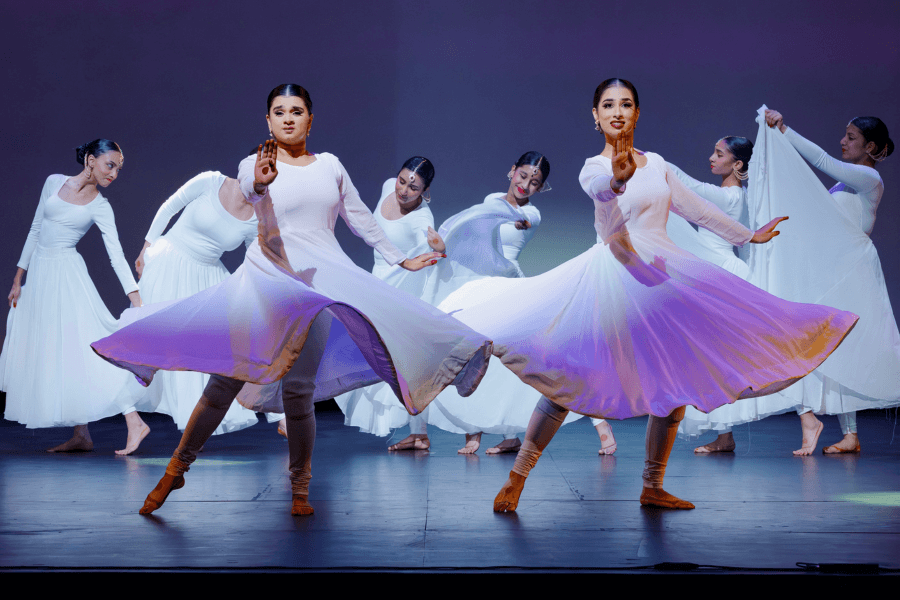
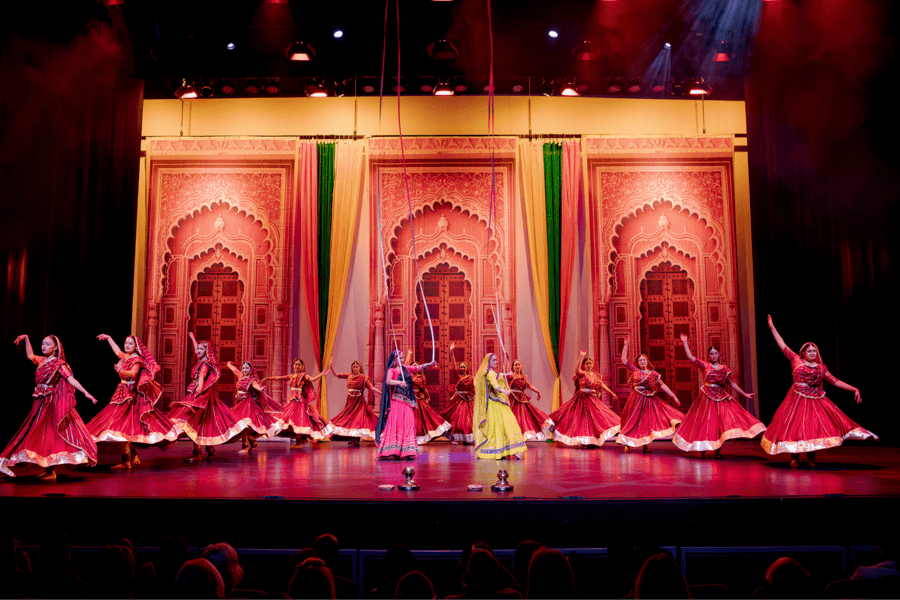
Choreographer Niharika Sanghi shared how they used diverse props, ranging from luminous lamps to the commanding rhythmic presence of silambam sticks to the tinkling tera taal extending the vocabulary of Kathak beyond conventional movement. The layered formations with about twenty dancers in each scene, wove a spectacular tapestry of rhythm and movement.
The production’s theatrical imagination was shown in several memorable moments. The puppet-show sequence was an enchanting interlude, while the rebellion scene broke the fourth wall as dancers streamed into the audience, making the uprising feel immediate and immersive. Masked black figures evoked dread as the young princesses were tossed through the bazaar, capturing external and inner chaos. One particularly soul-stirring image was when a dupatta was gently laid out to mourn the death of the courtesan who sacrifices her life in an attempt to assassinate the king. A quiet, restrained gesture, yet one that carried immense emotional weight.
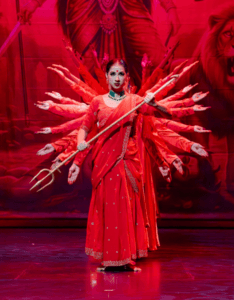
Niharika Sanghi delivered a tour-de-force portrayal of Hira. Her performance was passionate, and deeply vulnerable at the same time. Whether embodying feminine energy in the electrifying Durga Pooja sequence or lying flat on the floor in defeat, stripped of all defiance, Sanghi captured the many facets within Hira. Shreya Gomes as the younger Chand, brought a delightful vitality to the stage. Expressive, bubbly, and vibrant, in contrast to her quieter older sister played by Anvi Shirude, Gomes was particularly endearing when rolling her eyes at being forced to dance – small gestures but big impact. Pavitraa Hathi as the older Chand exquisitely carved out the more introspective side: the dreamer who retreats into imagination, even as she learns that peace must demand action.
It is easy to portray exuberance; it is far more difficult to render quiet conviction and inner solitude. Hitesh Bhuta, as the newly crowned King, Amar, played his role with understated precision. A subtle lift of the chin, a fleeting spark in the eye – small details that struck an emotional chord, inviting the audience to question whether they too have judged only the “shadows.”
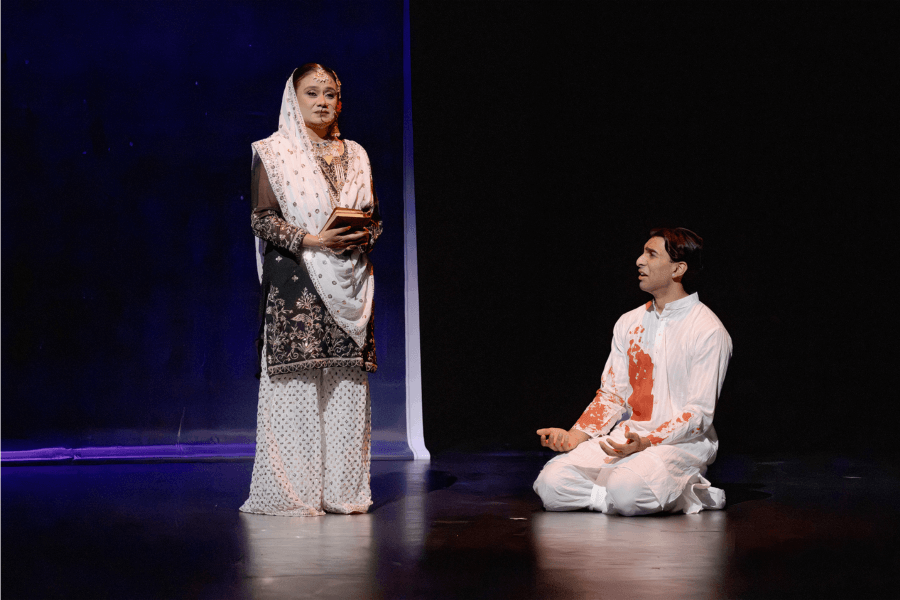
Paasbaan was painted on a richly imagined canvas where each visual choice seemed designed not merely to decorate the stage, but to deepen the emotional stakes. The colour palette reflected through costumes was exceptional, where red became the colour of passionate revenge, black embodied evil and dread, and white gestured towards reconciliation and hope. Lighting by Sagar Agashe was designed with great dramatic intelligence, the sisters meeting in shadows to plot revenge; Chand and Amar illuminated through spotlights during the first mujra while the rest of the world disappeared into darkness; and the strobe effects heightening Hira’s dance of devastation.
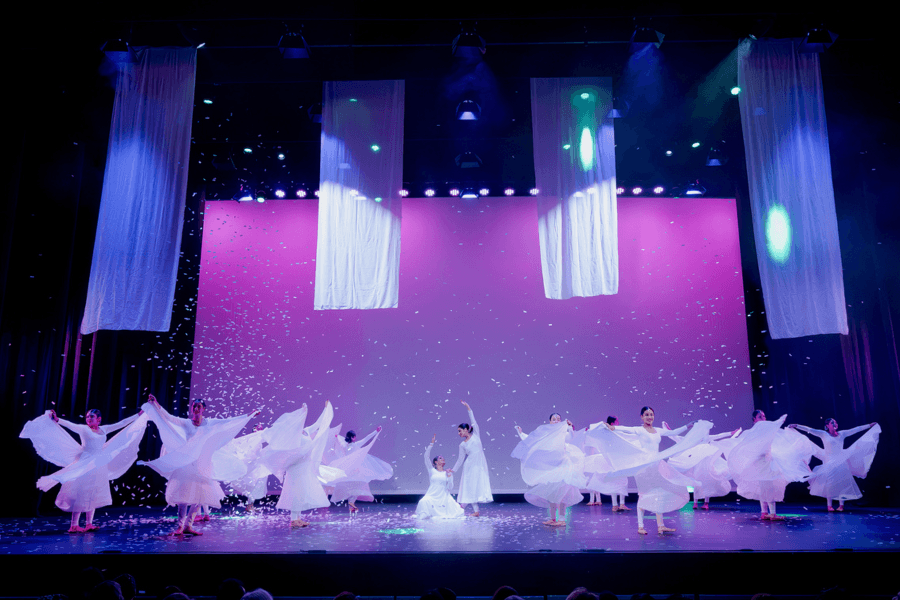
As producer and artistic director, Ruchi Sanghi has elevated Paasbaan as more than a dance production. It was a moving meditation on what it means to protect – one’s family, one’s memory, and one’s humanity and how “peace and poetry should be used as a promise, and not an escape”. Through compelling performances, powerful writing, inventive choreography, and striking stagecraft, it asks whether revenge can ever heal what violence has taken away, and whether peace can be an act of courage rather than surrender.
Read more: Christina Prakanthan’s Ādal: Where dance meets devotion