




India public relations
Just about a month ago, Pakistan’s federal cabinet formally elevated General Asim Munir—the current Army Chief, to the five-star rank of Field Marshal, a distinction only previously held by Ayub Khan in 1965. The decision was made to honour what Prime Minister Shehbaz Sharif described as his “strategic brilliance”. Even jailed former leader Imran Khan praised the Armed Forces. Regarding Pakistan’s “Bunyan-um-Marsoos” response, (denoting an infallible Islamic barrier in battle) a Gallup Pakistan poll reported that 93% of the public now view the military more favourably. India public relations
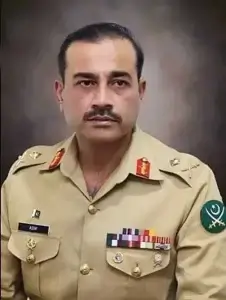
Since then, Pakistan’s stock has only gone up: the Army Chief has met Trump for lunch, and been lauded as a “phenomenal partner” for counter-terrorism by his nominal American military counterpart. India, on the other hand has followed the path of traditional statecraft: it provided official briefings. Post ceasefire, Modi and Trump have been pointedly snubbing each other on whether America mediated the ceasefire or not. Belatedly, Shashi Tharoor and other Indian statesmen have toured no less than 33 countries, while Pakistan has reached out to five key allies. But with Modi’s typical silence on all things high-profile, he continues to fail where it matters most: shaping the narrative from the top. This has been the typical Modi style: silence during the Gujarat riots over two decades ago (where he was credibly accused of encouraging through silence), silence during the Manipur unrest, and silence where Pakistan has been articulate.

This silence mattered less when India was seen to be a powerful and ascending power, and when Foreign Minister Jaishankar could speak about his domain. However, Trump has made it clear that for now, there is one – and ONLY one – superpower in the world. While that may change over the next decade as China, India and other countries rally and re-arm, that does not take away from today’s reality.
India public relatin
As has been pointed out already in analysing the war, suspending the Indus Water Treaty was a diplomatic masterstroke. It caught attention, without triggering an immediate genocide since India lacked the infrastructure to stop the water. The real error was in not articulating an aim: was it done to wipe out terror bases? If so, Hafeez Saeed and Masood Azhar still roam free. Was it to show overwhelming military strength? If so, that was a failure. Was it to get more international support? In a bizarre twist, India, the victim of terrorism got, if anything, the short end of the stick.
What could India have done to avoid this public relations fiasco?
It could have waited longer before attacking. India public relations

India should have kept the temperature up, bided its time, as it did in 1971, and Bush did in 1991, by allowing the processes to play out, signed the trade agreement with the US and other countries, and clearly turned the narrative against Pakistan, which the world would have been ready to believe anyway. Loudly criticizing Türkiye seems strange when it is China that supplies 80% of Pakistan’s weapons. Geopolitically speaking, being friends with Israel did not help. Israel largely uses the US as its proxy, but India was unable to leverage that experience. India public relations
A war without an aim is a battle already lost. So what can India do next? Possibly go back to looking at war as the last resort, rather than the first one. Openly providing diplomatic support to Baluchistan in the UN would be a great first step. India-aided Baloch terrorism only kills innocents and has run its course. The Taliban, the former hosts of Al Qaeda who ironically condemned the Pahalgam attack would be another regional ally.
Showing China more business incentive would help, but it should clearly be linked to reduced Chinese support for Pakistan. India must point out that China’s support for Pakistan has little value in reality: CPEC merely bleeds China of people and money. An entrée to firms like BYD starting at $1 billion can quickly eclipse the $60 billion that China has spent, with little to show for it. This, as it comes out that Pakistan is now offering to allow US companies to invest in Balochistan.

The only thing we can predict is that the next two years of Trump will be unpredictable.
India needs a clear policy of engaging other countries quickly as it seeks to counter uncompromising Trumpian aggression. Can India build bridges with the EU, China, Russia, and others quickly? Signs are positive for a rapprochement with Canada, but only time will tell. InIndia public relationsdia public relations
While we are on the topic of realpolitik, can we also have a complete détente over Kashmir? The UK-Ireland agreement offers a template. Munir and Modi might just be the strongmen who can see it through.