The fog of war persists, and the speculations continue. Prime Ministers have made their speeches, and the President has congratulated himself. In the wake of the Pahalgam attack, the massacre of innocents has caused tensions and once again thrust South Asia into the spotlight. What should India’s strategy be, while working with a neighbour’s army that does not want peace?
Parsing the narratives
What is important is that we look at what is said, and what was unsaid. India stated that they had hit several targets and sent a clear warning to Pakistan. What we know is that several known terrorists were, indeed, killed. The fact that many Pakistani military leaders were photographed attending their funerals shows that the jihadi infrastructure in Pakistan is thriving in its close integration with the military. On the Air Force side, India has stated that all its pilots were accounted for but not denied multiple reports that its aircraft were shot down. The French manufacturer Dassault has also admitted that one plane was lost, resulting in a drop in its share price. At the same time, Chinese defence stocks have jumped 36%, indicating that they performed far better than expected. That said, India’s successful strikes also show that Pakistan’s Chinese-made missile defences failed.

The Pakistani narrative is that India lost because they lost planes. Never mind that India has another 400+ planes in its kitty and billions of dollars to buy more at short order if needed. For Pakistan, a ceasefire itself was a victory. Additionally, it trotted out its old trope that it has been guilty of supporting terror in the past but is now innocent.
This denial rings hollow.
From an external perspective, it appears India held the upper hand but was pushed into a ceasefire. Yet, the truth lies somewhere within this ambiguity. The US intervention, led by Donald Trump, raises questions. Was it driven by the spectre of nuclear escalation or Trump’s penchant for the spotlight? With Trump, all things are possible, and none need to make sense. Trump’s swift ceasefire call allowed him to claim credit, while India stayed furiously silent. Meanwhile, China’s role is evident in the performance of its defence technology. The surge in Chinese defence stocks suggests their systems outperformed expectations and is surely giving American strategists sleepless nights over Taiwan.

Strategic goals and outcomes
Wars are now fought at many levels of escalation and this war did go all the way to Level 6. Unfortunately, it is not clear if India had thought through its strategic goals. In the case of the first Gulf War, Iraq invaded Kuwait in August 1990, Bush only started bombing in January 1991 and they were successful in getting Saddam Hussein out of Kuwait. In 2003, there was no consensus, no clear goal – and the US was left in a morass for decades. In Pahalgam as well, there was a rush to a hot war, on which Trump decided to pour cold water just a few days later.
India’s strategic objectives plausibly included the following:
- Altering the Indus Water Treaty (success)
- Eliminating senior terrorist leaders (partially achieved)
- Minimising economic damage (questionable)
- Supporting insurgents like the Baloch and Afghans (failure, since it ended early).
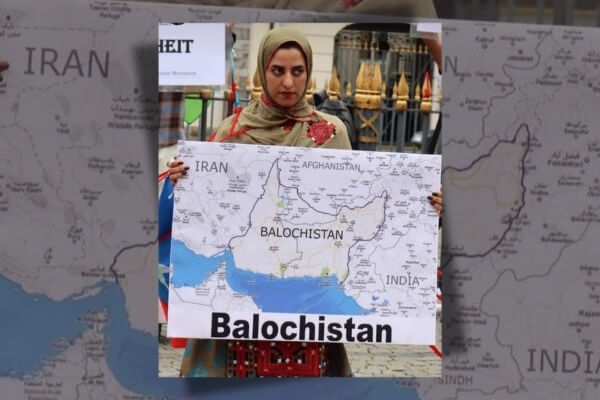
(Source: X)

Pakistan’s aims could have possibly included the following:
- Retain the Army’s hold on power (successful)
- Deny involvement (unsuccessful)
- Leverage air superiority (partially successful in downing a Rafale, since India has lost planes in the past as noted previously)
- Secure a quick intervention (success)
- Stabilise internally (a failure, given its economic strain).
Recommendations for India for the future
India could have played its cards differently: waiting to sign the bilateral trade agreement with the US could have bolstered its diplomatic leverage, denying Trump the chance to wield trade as a carrot and stick. A few weeks of patience could have shifted the outcome in India’s favour.

More crucially, India must demonstrate to Pakistani civilians that jihadis are our common enemy, while maintaining a robust military posture. Goodwill persists at the people-to-people level. Notably, during General Munir’s eight-minute speech, his remarks about Hindus were met with pin-drop silence, while other points drew applause. This suggests an opportunity: while bombing terrorists is unavoidable, fostering peace with civilians is possible – India has done it with Afghanistan. A dual approach of strength and friendship is challenging but essential.
All told, India emerged with gains, but its rushed escalation diluted its impact. Moving forward, India must exercise strategic patience, secure its economic flanks, and balance military might with outreach to civilians. This is also how we demonstrate our military strength and honour our own innocent victims – by showing that India can, indeed, show a better way that is a win-win – not for all, but for the good.
Read more: India’s current restraint: The calm before the storm?