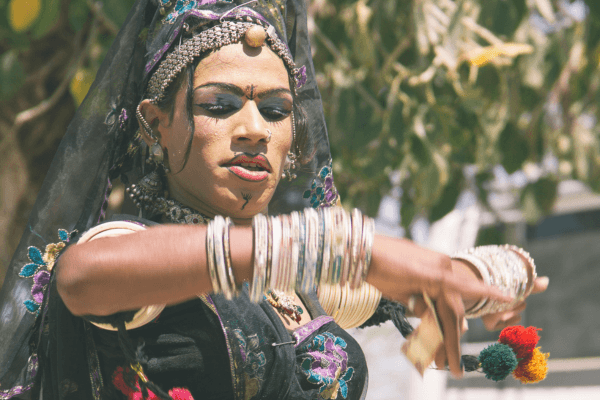

Little did I know, when I wrote a glowing article in February on the slow but steady legal wins for LGBTQIA+ people in India, that the Indian Parliament would soon pass sweeping rollbacks to the Transgender Persons (Protection of Rights) Act 2019 (Original Act).
The new Transgender Persons (Protection of Rights) Amendment Act 2026 (Amending Act), attracted widespread condemnation from opposition politicians, media outlets, human rights organisations, and LGBTQIA+ activists, commentators and allies globally. It has drawn the ire of well-known personalities from Sushant Divgikr and Trinetra, to Rajya Sabha (Upper House) member and actress, Jaya Bachchan, whose speech in Parliament lambasting the bill has gone viral.
The original Act was prompted by a landmark Supreme Court of India decision in 2014, which found that transgender people were entitled to fundamental rights under the Indian Constitution. They had the rights to self-identification, equality and non-discrimination, and as socially and economically backward classes, should be given reservations for educational and employment opportunities.
View this post on Instagram
In 2019, the original Act was passed, introducing protections from discrimination when accessing goods and services, finding a place to live, and in relation to employment and education.
The Act also introduced protections from forced and bonded labour, and established a National Council for Transgender Persons to advise and review policies, laws and programmes relating to transgender people. These measures were designed to address the widespread marginalisation, threats to safety and significant socio-economic disadvantage many trans Indians faced across the country.
The original Act defined a transgender person as “a person whose gender does not match with the gender assigned at birth and includes trans-man or trans-woman (whether or not such person has undergone Sex Reassignment Surgery or hormone therapy or laser therapy or such other therapy), person with intersex variations, genderqueer and person having such socio-cultural identities as kinner, hijra, aravani and jogta.”
This approach was broadly consistent with the definition in the widely recognised Yogyakarta Principles of 2006, which sets out how to apply international human rights law to sexual orientation and gender identity.
The original Act formalised the right to self-perceived gender identity for trans Indians seeking a certificate to recognise their identity. By comparison, New South Wales has only recognised self-identification (without the need for surgery) for change in gender marker and names on birth certificates last year – meaning India was ahead of some Australian governments!
View this post on Instagram
Transgender rights india
The amending Act removes the right to self-identification, instead requiring medical experts to determine the gender identity of those seeking a certificate of identity from a District Magistrate. Further, the amended definition of transgender person is significantly narrower than the original, with just kinner, hijra, aravani and jogta groups and intersex people included. It also includes eunuchs (which technically means people who have been castrated) and people who have been forced into changing their gender identity.
Many transgender people do not fall into any of these categories and yet still face social barriers, family rejection and exploitation. Whole swathes of trans Indians have now lost hard-won legal protections and welfare entitlements.
Medical practitioners may now be deterred from delivering gender affirming care, with hospitals now required to report private medical information to officials.
Equally, issues around force or inducement, and the mental capacity of those undertaking surgery should be assessed on a case-by-case basis with professional judgment, rather than being addressed through a blanket, paternalistic approach.
View this post on Instagram
Further, conflating intersex people with transgender people is also inaccurate, given intersex people are those with a variation of biological sex characteristics, unlike the widely accepted definition of transgender people explained earlier.
The trap India may be falling into, as it seeks to become a top three economy and lift living standards for hundreds of millions, is being caught up in manufactured culture wars imported from the West. Indian civilisations have long recognised diversity, including around gender identity. With the Government delayed in its $5 trillion GDP target, sky-high rates of pollution and an Indian rupee in free-fall, we instead have yet another minority whose rights are being toyed with.