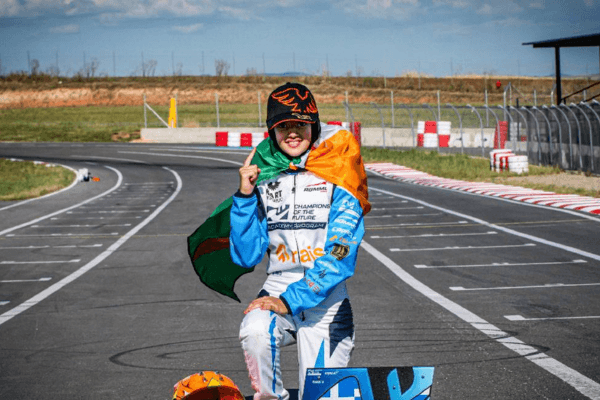
Indian karting prodigy Atiqa Mir has added another milestone to her rapidly growing résumé, securing a dominant pole-to-flag victory at Round 2 of the Champions of the Future Academy Program in Thessaloniki, Greece.
The 11-year-old racer from Jammu and Kashmir topped qualifying, won both heat races and then converted pole position into victory in the final, completing a clean sweep of the weekend in the OK-NJ category. In doing so, she became only the third driver in the history of the series to win qualifying, the heats and the final in a single round.
Mir set the tone early by clocking a record lap time of 56.77 seconds during qualifying and maintained her advantage throughout the event, leading from the front against an international field of young drivers.
“It is such a difficult and physical track and I managed to win all the races. I was very emotional when the National Anthem played and there is no better feeling for me than that,” Mir said after the victory.
The result marks the latest achievement in what has been a breakthrough year for the young racer, who has emerged as one of India’s brightest motorsport prospects.
Atiqa Mir: India’s Rising Karting Champion
Born in Srinagar and raised in Dubai, Mir has steadily built a reputation on the European karting circuit. Earlier this year, she became the first Indian driver to receive backing from the Formula 1 Academy development programme, a significant endorsement for a driver still in the early stages of her career.
Atiqa Mir Karting Champion has also continued to impress against older and more experienced competitors. In May, Mir made her debut in the FIA European Karting Championship in Valencia, widely regarded as one of the highest levels of karting competition. Competing as a wildcard entrant in a category featuring drivers aged 12 to 14, she finished sixth in one of the races and recorded the fastest lap in another.
Earlier in the season, Mir also made headlines in Italy during her debut in the WSK Super Master Series, becoming the first Indian to qualify second in the highly competitive OKNJ category. Despite mechanical issues affecting her final result, her pace throughout the weekend drew attention across the paddock.
Her latest success in Greece further strengthens her standing as one of the most promising young racers in international karting and comes at a time when Indian representation in global motorsport remains limited.
While India has produced drivers who have competed at the highest levels of racing, opportunities for young racers, particularly girls, remain scarce. Mir’s performances in Europe are therefore being closely watched by motorsport observers, with many viewing her as a potential future standard-bearer for Indian racing.
For now, however, the focus remains on the next race. And if recent results are any indication, Atiqa Mir is quickly establishing herself as a name to watch on the international karting circuit.
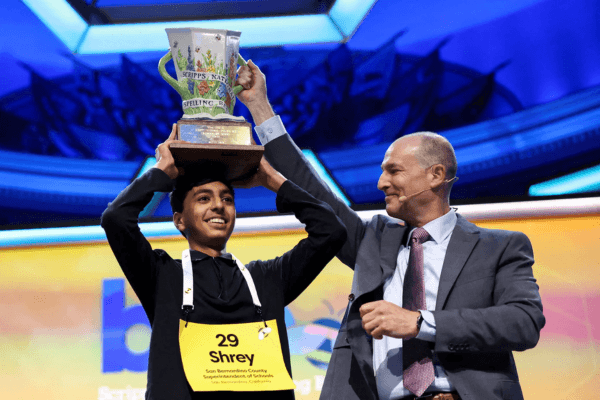
Shrey Parikh, 14, is the latest in a long line of Spelling Bee champions
Reading Time: 2minutes
For many children, spelling bees are a school activity. For Shrey Parikh spelling bee became a lesson in resilience.
The 14-year-old Indian-American from Rancho Cucamonga, California, was crowned champion of the 2026 Scripps National Spelling Bee after a dazzling performance that left judges, audiences and fellow competitors stunned. In the competition’s dramatic spell-off finale, Shrey correctly spelled 32 words in just 90 seconds, setting a new record and securing one of the most prestigious academic titles in the United States.
His winning word was bromocriptine, a dopamine-mimicking alkaloid that few adults could confidently pronounce, let alone spell. But by the time that word arrived, the contest was effectively witnessing a masterclass. Shrey outpaced runner-up Ishaan Gupta of New Jersey, who correctly spelled 25 words in the same rapid-fire round.
Yet the real story lies beyond the trophy.
Shrey Parikh’s Spelling Bee Journey
Like many great sporting victories, this one was forged through disappointment.
Shrey first appeared at the national bee in 2022, finishing tied for 89th place. Two years later, he came agonisingly close to the title, finishing third. Then came an unexpected blow. In 2025, he failed to even qualify for the national competition after losing his school spelling bee while battling a fever. What could have been a confidence-shattering setback instead became fuel.
When he returned to the national stage this year, he arrived not merely as a contender but as one of the favourites.
The final rounds showcased the extraordinary calibre of modern spelling bee contestants. After surviving multiple rounds of increasingly obscure words, Shrey and Ishaan remained locked in a dead heat, forcing the contest into a spell-off. Introduced in 2021 to prevent shared championships, the format requires finalists to spell as many words as possible within 90 seconds.
What followed was breathtaking.
Words flew at Shrey with machine-gun speed. He responded with calm precision, barely pausing between letters. By the end, he had shattered the previous spell-off record, correctly spelling 32 of 35 words attempted.
The victory earned him a US$50,000 cash prize, the iconic Scripps Cup, a commemorative medal and a host of additional awards from sponsors and educational partners.
But perhaps the greatest reward was redemption.
Speaking after the win, Shrey reflected on the disappointment of missing out the previous year and the satisfaction of finally achieving a goal he had pursued for years. His triumph is the latest chapter in the long and celebrated relationship between Indian-origin students and the Scripps National Spelling Bee, a competition where dedication, discipline and a love of language often prove just as important as raw talent.
In an era obsessed with instant success, the Shrey Parikh Spelling Bee story offers a different message.
Sometimes the winning word comes only after years of learning how to lose.
Meanwhile, the world is finally recognising what generations of Indian families have quietly nurtured: a remarkable culture of linguistic excellence.
Imagine if you could clone yourself and live the life you always wanted to before you succumbed to migrant family pressures? the supposed to be
That’s the premise of The Supposed to Be, 2025 NSW Literary Prize nominee Chenturan Aran’s latest play showing at Footscray Community Arts as part of Melbourne’s RISING Festival. Kavitha, a tired corporate executive who once harboured dreams of NIDA greatness, meets her clone Kaye, who has realised these dreams as an OnlyFans star and the lead of b-grade soap opera ‘Bondi Brown’.
The play opens with some intriguing ethical questions about meeting your clone, something we are told is against the rules in this world, but sadly, these promising ideas are left unexplored, the science fiction element of the script largely forgotten a third of the way in.
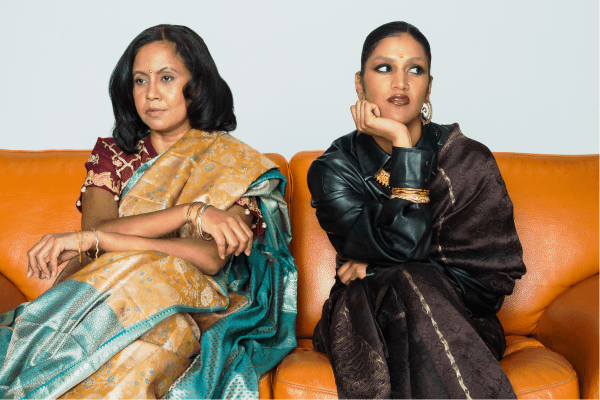
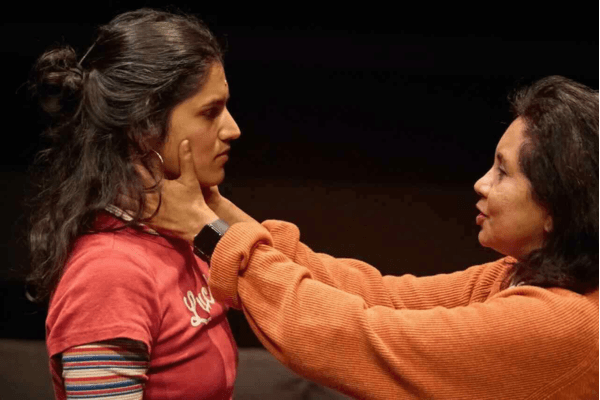
Instead, the play becomes a Groundhog-day-esque exploration of memory and migrant guilt, where an interaction between a young Kavitha and her mother is repeated to mine clues as to what led to their relationship deteriorating. This sits alongside a send up of the creative industry’s fixation with ‘real’ migrant experiences, a charged mother-daughter quarrel reminiscent of Girls Will Be Girls, and some naughty online shenanigans.
It’s a lot to do in one play, and therein is this piece caught up in its own ‘supposed to bes’, attempting to be a cogent science fiction, satire, metatheatre and family drama; concepts enough for an individual play themselves, but here squashed together and incompletely explored despite the 105-minute runtime.
There is promise in Aran’s honest and pointed writing, with many moments of sharp hilarity. The play skewers tokenism as Kaye suffers through the casting process for ‘Bondi Brown’, and it successfully critiques ethnic fetishisation through a sequence involving possibly the most outlandish prop to grace the Footscray Community Arts stage, a ‘vag-ankle’ (don’t ask).
Kaye and Kavitha – a love hate relationship. (Source: Facebook)
The Supposed to Be review
Equally, the Tamil women we see in this play are written tenderly and authentically, in all their chappal-throwing, fruit cutting complexity, and Aran captures the unique mix of love and frustration that only your relations can evoke with great aplomb.
This sometimes bickering, sometimes hair-oiling mother-daughter dynamic between Kaye and Kavitha is rendered very realistically on stage, a credit to Michele Perera and Sarah Fitzgerald’s performances. But the production, under Isabella Vadiveloo’s direction, doesn’t find the pace and dynamism the work seems to call for, leaning instead into a contained, filmic style that leaves many of the script’s witticisms fizzling out.
This is compounded by the set, an austere black bench and sofa that the actors often appear to be negotiating rather than inhabiting, and which offers little to stimulate the audience’s imagination. Equally, a black and white projection of the two actors stretching and performing mudras is a confusing addition. However, Hari Sivanesan’s compositions which fuse Konnakol with futuristic drones and beeps are well engaged, enhancing the mood without being too obtrusive.
It’s wonderful to see an almost entirely South Asian team at RISING, and the passion behind the project is unmistakable. With some refinement to the script and direction choices, The Supposed to Be has the potential to match that passion with a fully realised production.
READ ALSO: Love, Actually: ‘Five Arrows’ by Christopher Gurusamy
Hayley Millar Baker's 'Selected Works' is currently showing at Wyndham Art Gallery.
Reading Time: 4minutes
Hayley Millar Baker
For artist Hayley Millar Baker, some of her strongest memories of India now live in stories.
Stories told by her grandfather, who migrated alone from Moradabad in Uttar Pradesh to Australia in the 1950s. Stories about family members who remained in India, others who moved to England, and histories shaped by migration, colonialism, and separation. Stories she now holds even closer after his passing.
“My grandfather passed away in 2025, but we were very close, and I relished his stories of India,” she told Indian Link. “Now that he is gone, I keep them close to my heart.”
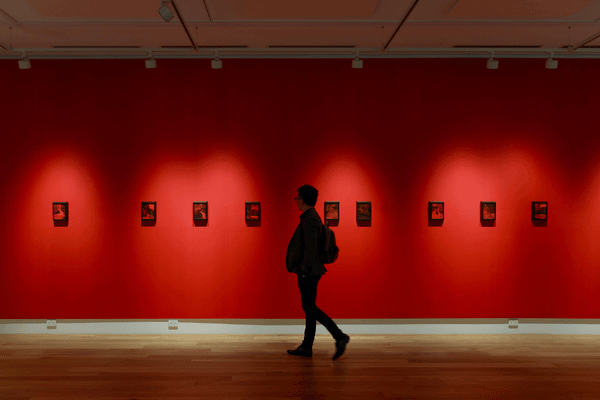
Those memories – inherited, fragmented, emotional, and deeply personal – sit quietly beneath the surface of ‘Selected Works’ [from May 9 till June 14], Millar Baker’s ongoing exhibition at Melbourne’s Wyndham Art Gallery. This exhibition brings together photography, moving image, archives, and self-portraiture to explore ancestry, identity, memory, colonialism, and belonging through the lens of her Gunditjmara, Djabwurrung, Anglo-Indian, and Brazilian heritage.
In a rare and significant gesture toward multicultural accessibility, the exhibition is also hosting a Hindi-language tour by guide Jasmeet Sahi – an unusual offering in Australian contemporary art spaces and one that speaks directly to the exhibition’s layered South Asian connections.
The intersection of culture and cuisine
For Millar Baker, identity has never existed in neat categories.
“As I’ve gotten older, I definitely feel culturally ‘between worlds’ as an Anglo-Indian,” she reflected.
Growing up in Australia surrounded by Indian diaspora friends – many of them Anglo-Indian and Fijian Indian – she says she did not initially think deeply about hybridity or cultural complexity. That understanding evolved later, particularly as she began unpacking the colonial histories that shaped Anglo-Indian identity itself.
“It’s something that’s often discussed at the family dinner table,” she said.
Today, she and her husband – himself an Anglo-Indian Australian whose family migrated from Allahabad – are consciously passing those histories onto their two children.
“The kids learn Hindi, we eat a lot of home-cooked Indian food, and we make sure the kids are confident in their cultures,” she shared.
Food remains one of her strongest emotional links to India. As a child, she was the only vegetarian in the household, and her father would regularly cook her his special aloo curry – still one of her most cherished memories.
Exploring Anglo-Indian and Indigenous histories
But beneath these intimate family stories lies a larger exploration of colonialism and displacement, themes that recur throughout ‘Selected Works’.
“The parallels are very strong,” she said, speaking about the intersections between Anglo-Indian and Indigenous histories.
“She was like the lizard that fell into the water and became a crocodile” series (Source: Supplied)
Millar Baker, born in Naarm/Melbourne, carefully distinguishes the vastly different violences of colonial histories, noting that Australia’s colonisation sought to violently erase Aboriginal people, leaving deep intergenerational scars. Yet she also sees Anglo-Indian identity as shaped by another form of colonial disruption – one rooted in displacement and hybridity.
And so, while family histories form an important thread throughout ‘Selected Works’, the exhibition is equally concerned with Indigenous ways of remembering. Many of the works explore continuing culture, spirituality and the importance of maintaining connections to Country, ancestors and community in the face of colonial disruption.
Today, Baker has built a national reputation for works that challenge official versions of Australian history.
These layered histories increasingly shape both her artistic practice and personal life. Though deeply connected to her family’s stories, Millar Baker admits there are still parts of her Indian ancestry she hopes to reconnect with more directly.
“One thing I have yet to do is travel to India with my husband and kids,” she shared, smiling. “I would love to take the kids to the places where my family and my husband’s family lived, to the schools they attended, and to see their houses.”
For now, much of that connection happens through archives, photographs, oral histories, and inherited memory – recurring motifs throughout her work.
“I love collecting family stories, photographs, data, and archives,” she continued. “I’m deeply interested in remembering those who came before me, in understanding how they shaped who I am today, and in honouring their lives.”
Stop, look closer and immerse yourself
Ask which particular artwork in the exhibition felt especially personal for her, and Millar Baker picks the most confronting series: ‘In Life, In Death’, seven large-scale self-portrait photographs created shortly after Australia’s failed Voice referendum in 2023.
“It felt like colonisation all over again,” she remembered. “Australia voted ‘no’ to allowing us, Aboriginal people, a voice within the government.”
The works were also shaped by witnessing the beginning of the war in Gaza, which intensified her reflections on ongoing colonial violence globally.
“Those self-portraits are connected through so many webs of trauma from colonisation, past, present, and, sadly, probably future,” she explained. “But ultimately, their message is that no matter the pain caused to the spirit, we are supported by generations of strong and loving ancestors.”
Ultimately, Millar Baker hopes audiences leave the exhibition thinking not only about her family’s histories, but also their own.
“I hope audiences consider the stories of the people whose land they occupy, including how they came to be there, where they are from, and the stories that connect to mine – acknowledging what has been done and exploring where we go from here.”
Analysts have tried to make sense of US President Donald Trump’s second term with countless, sometimes contradictory, labels. He’s isolationist and transactional. He’s a populist. Or, more recently, a neoconservative.
One way to make sense of both him and the broader state of geopolitics at the moment is to understand the difference between structure and agency.
Trump has undoubtedly exercised his agency in expansive ways since beginning his second term. Yet, at the same time, he has been constrained by structural limitations. The Supreme Court’s ruling against his Liberation Day tariffs is one example. Another is Congress’ release of the Epstein files.
Even Trump’s fiercest boosters will admit that he is, like his predecessors who also sought to expand executive powers, limited by the US constitution and its stipulation of three co-equal branches of government.
The same goes for foreign policy. Trump can berate allies, implement tariffs and withdraw from international institutions, but he can’t fundamentally alter certain structural realities. This is helpful in making sense of the way Trump’s actions are impacting the US’ alliances and partnerships.
A pivotal moment for the Quad
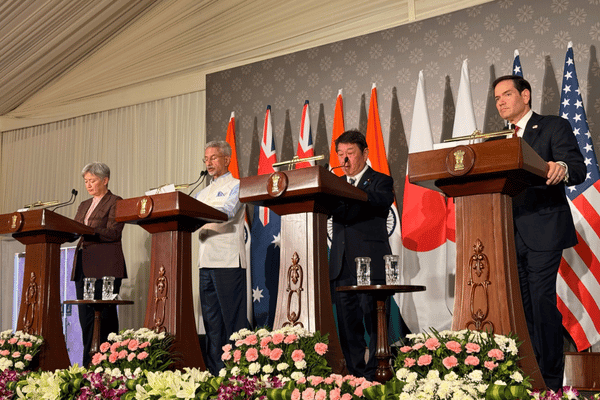
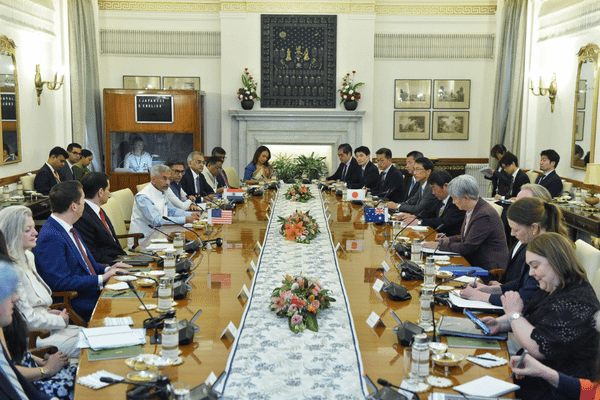
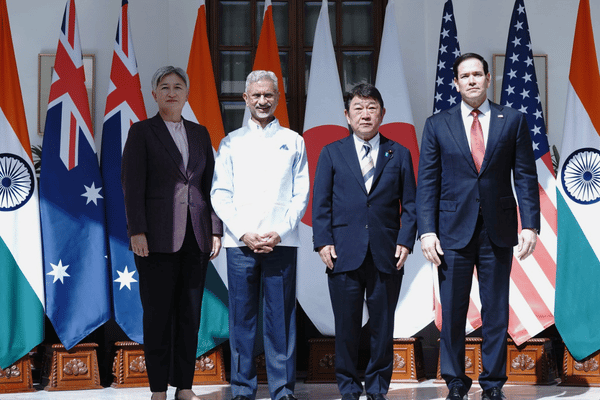
This week, the foreign ministers of the four nations in the so-called “Quad” – the United States, Australia, Japan and India – met in New Delhi.
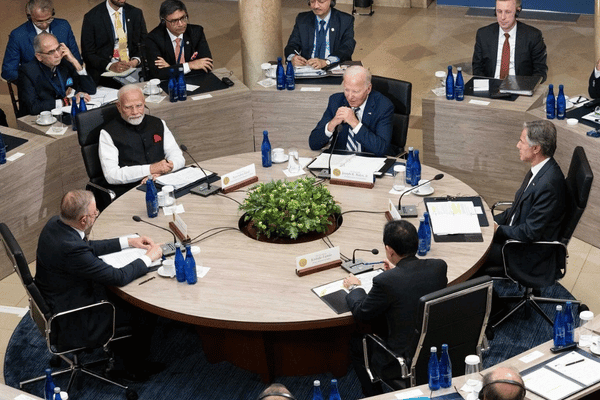
The leaders of these nations, however, haven’t gathered for a summit since 2024, when Joe Biden was president. India was meant to host last year, but a summit never came together. It’s unclear if one will happen this year, either.
Quad 2024 Leaders Summit in Delaware, US (Source: Australian Government)
Yet, as much as the leaders of the four nations have exercised their agency in distinct ways – including, at times, changing the trajectory of the Quad to be less ambitious – the structural dynamics in the Indo-Pacific remain unchanged.
China’s rapid military buildup, extensive maritime aggression, economically destabilising practices, wolf-warrior diplomacy and violent border clashes have altered the strategic calculations of the region for the foreseeable future.
This is why, before the Trump administration took office in January 2025, the four Quad nations dramatically expanded the group’s scope and ambitions. The members agreed to cooperate on everything from fighting cancer to developing vaccines to enhancing cyber security.
…[the] Quad countries have built a vital and enduring regional grouping that will buttress the Indo-Pacific for decades to come.
US-India ties go downhill
This is not to say there hasn’t been challenges. Quad Alliance Future
No single issue has been as problematic for Quad ambitions in the second Trump administration than US-India ties.
For decades, US presidents have all touted the importance of a powerful, independent and democratic India to American’s national interests. In their view, India served as a helpful counterbalance to China in the Indo-Pacific. It was the first Trump administration, after all, that resuscitated the Quad in 2017. (The group was originally formed in 2007, but fell apart soon after that.)
Trump also befriended Indian Prime Minister Narendra Modi during his first term, calling him “one of America’s greatest, most devoted, and most loyal friends”.
PM Modi’s visit to Washington in 2025 concluding with a reaffirmed India-U.S. Comprehensive Global Strategic Partnership (Source: X)
And after a testy exchange between Trump and Modi over the phone last June, Trump reportedly cancelled his plans to travel to India for the summit.
An effective counter-balance to China
Beijing has been opposed to the Quad since its inception, accusing the four democratic members of encirclement, engaging in a Cold War mentality and antagonising China. Beijing said it would accelerate its own military modernisation in response.
After the Quad disbanded in 2008 – for reasons that remain debated – one US scholar argued:
The Quad came down and China did exactly what it said it was going to do if the Quad persisted.
Unsurprisingly, China has continued to oppose the Quad since it regrouped. It still sees the Quad the same way the four members envisioned it – as an effective, albeit still nascent, counterbalance to China.
At this week’s foreign ministers’ meeting in India, the Quad members agreed to jointly build a port in Fiji, increase critical minerals cooperation and expand maritime cooperation in the region.
Beijing wasn’t impressed. Almost immediately after the meeting ended, Chinese state media ran a story with the headline, “Beijing blasts exclusive cliques after Quad meeting”.
Public opinion in the four Quad countries also shows firm backing for the alignment. Our polling at the US Studies Centre at the University of Sydney in 2025, for example, found respondents were far more supportive of the Quad becoming a formal military alliance than not. Quad Alliance Future
Australians were the most supportive (49% agree), followed by Indians (44%), Americans (42%) and Japanese respondents (41%). Only a small number of respondents in the four nations opposed the Quad becoming a formal military alliance (from 7-15%). The rest either didn’t know or were unsure.
Cooperation among the Quad members is continuing to expand and deepen, as well. With every passing year, the Quad nations are engaging in an increasing number of military exercises, humanitarian and disaster assistance activities, and maritime cooperation efforts.
The individual leaders of the four nations will continue to change. And they will at times have significant reservations about each other. Yet China’s destabilising behaviour gives the Quad members few alternatives but to persist in using their agency to counterbalance Beijing’s revisionist agenda.
This article first appeared on The Conversation, written by Jared Mondschein, Director of Research at the US Studies Centre, The University of Sydney. Read original article here.
If you’ve recently gone through a breakup, you may find yourself hoping for reconciliation – but even if paths cross again, some issues may still remain unresolved. Work life is thriving –the self-employed particularly could see a welcome boost in income. Be mindful of overindulgence, whether your own or a partner’s. If a new connection has moved too quickly, pay attention to red flags, especially around respect and boundaries. Some areas of life may feel heavy now, but improvement is on the horizon.
Taurus: April 21 – May 20
The appearance of 11:11 signals positive energy ahead, with this card symbolising teamwork, confidence and divine protection. Stress-related aches and pains may slow you down, so take care of yourself. Financially, smaller payments or gains add up to more than expected. Honest and open communication will help avoid misunderstandings or conflict. A long-standing emotional issue may begin to heal through a simple but meaningful conversation with a friend. Keep showing up and doing your best – steady effort will bring rewarding results.
Gemini: May 21 – June 20
You’ve picked the Capricorn card, encouraging you to stay grounded and practical during your birthday season. Clear logic will help you navigate important romantic decisions. Friends may step in with valuable support, whether in love, introductions or business matters. Relationships already under strain could reach breaking point. Financially, things are set to improve, bringing greater comfort and stability than expected. Fresh ideas at work have strong potential, so don’t hesitate to act on them. Practical thinking and timely action will bring the best results.
Cancer: June 21 – July 20
Are you taking on too much? This month may force you to reassess your priorities. Romantic decisions could feel complicated, especially if you are torn between two paths. Travel for pleasure brings memorable experiences and a welcome change of pace. Those considering a move into new-age therapies may find success there. Seek a second opinion for health concerns. A significant shift in your love life – and in your outlook overall – is beginning to take shape. Stay focused on your goals.
Leo: July 21 – August 20
You’ve drawn the Taurus card, encouraging fiery Leos to slow down and take a more practical approach this month. Relationships may bring surprises, with a past breakup still lingering emotionally – and an ex possibly reappearing. Emotional stress could spill into work life, leaving some of you considering a career change. Financial discipline now will help avoid complications later. Progress may feel slow, but steady effort, patience and a few unexpected opportunities will gradually lead you toward success and greater stability.
Virgo: August 21 – September 20
The Emperor card appears to remind you that you have the power to manifest your goals, especially in career matters. If you’re dating, feelings are likely to be mutual. Women facing challenges with male figures may benefit from emotional healing, as unresolved “daddy issues” could be influencing relationships. Financially, things improve, allowing room for a long-awaited purchase. A sudden opportunity may turn into a lucky break, don’t hesitate to seize it. Focus now on building strong foundations for your future goals and ambitions.
Libra: September 21 – October 20
This may feel like a stressful month as you push forward despite uncertainty, juggling multiple areas of life without complete clarity. Singles could find exciting new romance. Unexpected news may spark travel plans or a sudden change of scenery. At work, fresh ideas will be well received, so trust your instincts. Pay close attention to your energy levels, as stress could affect your immunity. A financial concern is likely to resolve naturally. A mentor or guide may appear, helping you move closer to your goals.
Scorpio: October 21 – November 20
A month of financial balancing, with expenses closely matching income. Honest communication will be essential if you want improvements in a relationship. At work, trying a fresh approach to an existing idea could deliver results. Stress-related aches and pains may temporarily affect your energy or mobility, so listen to your body. Emotional confusion that has been weighing on you will ease. A shift in perspective can transform both work and love matters. Stay calm, centred and focused on maintaining balance throughout the month.
Sagittarius: November 21 – December 20
What are you holding on to that you need to let go of? Ask yourself this in matters of the heart and the head. A new business idea leads to financial gains. If dating, your attachment to a previous lover prevents you from being fully present in this relationship. Seek a second opinion regarding any chronic health concern. Let go of a feeling of lack in money matters. Emotional healing and inner work will help prevent insecurities from quietly taking over different areas of your life.
Capricorn: December 21 – January 20
June brings the promise of a fresh beginning, especially in creative pursuits for Capricorns. Singles may feel ready to date again, but only if the connection offers genuine commitment and emotional depth. A work-from-home opportunity or flexible arrangement could appear unexpectedly. Relationships that have felt unstable may finally move into calmerterritory, with some couples even considering marriage. Artistic talents or passion projects may also bring financial rewards. Overall, expect meaningful new beginnings and steady progress across several important areas of your life.
Aquarius: January 21 – February 20
This month brings emotional reconnection as you practise self-love, heal old wounds and experience quiet spiritual awakening. Speak openly about your feelings if you feel misunderstood or emotionally distant from others. A family member may require extra care and attention. Avoid overindulging in food or drink as a way of coping with stress. An inheritance or meaningful gift is possible. Important news could become the catalyst for achieving your goals. Stay clear about your intentions, take risks bravely, and trust the support coming your way.
Pisces: February 21 – March 20
The Knight of Swords brings fast-moving energy, especially around ideas, plans and communication. A new romance could arrive to sweep you off your feet. Expect a lively social calendar and exciting connections this month. Relationships already facing tension may experience hiccups, but they are unlikely to fall apart completely. You may hear disappointing news affecting someone close to you. A fresh business opportunity could lead to strong financial gains. Stay focused, visualise your goals clearly, and trust your ability to manifest positive outcomes.
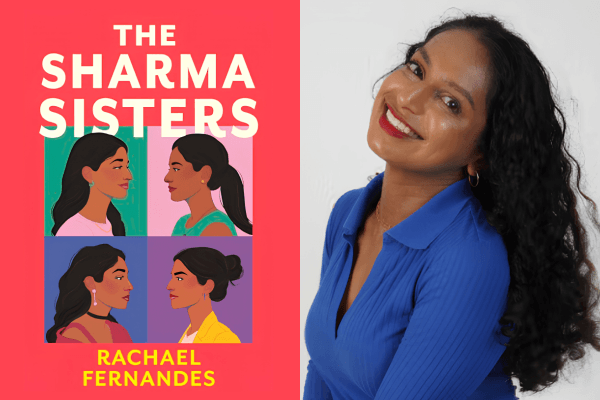
Author Rachael Fernandes and her latest book. (Source: Goodreads)
Ever loved a story so much that you wished you could erase the original and experience it again for the first time? The Sharma Sisters by Rachael Fernandes allows fans of Little Women to experience the story from a completely new perspective. Set in contemporary Britain, the book follows storyteller Kav, corporate girlie Mally, quiet dreamer Trina and childhood crush Ori as they navigate their way through heartbreak and grief. It’s a portal into a world of nostalgia, warmth and childhood memories. June 2026 favourites
WATCH
Mohanlal is back as your favourite anti-hero in the highly awaited third instalment of the Drishyam series. In Drishyam 3, Mohanlal’s Georgekutty is still covering up the traces of events that happened two movies ago. Set 6 years after the last movie, the iconic characteris no longer the underdog you once knew, but a man haunted by his own actions. Less movie thriller and more character study, the film is once again defined by a layered performance by a Mollywood legend. June 2026 favourites
LISTEN
The Call of Panjab, Diljit Dosanjh’s latest EP. (Source: Spotify and Instagram)
How can we not include Diljit Dosanjh’s TheCall of Panjab EP, when the icon has just been breaking record after record? His song “Morni” has gone viral on social media and has made its way into hearts all over the world via his live performances. It may even be the unofficial anthem of his now global fandom. Other standout songs include “Jeona Morh,” “Aroma” which combines traditional instrumentals with electro music and “Haan Da,” which sees Dosanjh showcase his vocal chops. It’s only up from here for the musical powerhouse.
Remix the traditional Lebanese Arayes (pita bread stuffed with spiced meats) with Indian spices for an ultra-indulgent fusion dish. Thought up by cooking influencer Lochan Nowacki, this dish combines lamb mince with garlic, ginger, masala, turmeric and mozzarella. This is then stuffed into pita bread which is then fried, baked and then poured over with a traditional tadka. If you’re not into the spice, balance it with a decadent tzatziki (which honestly goes well with everything), and watch it quickly become a household favourite.June favourites
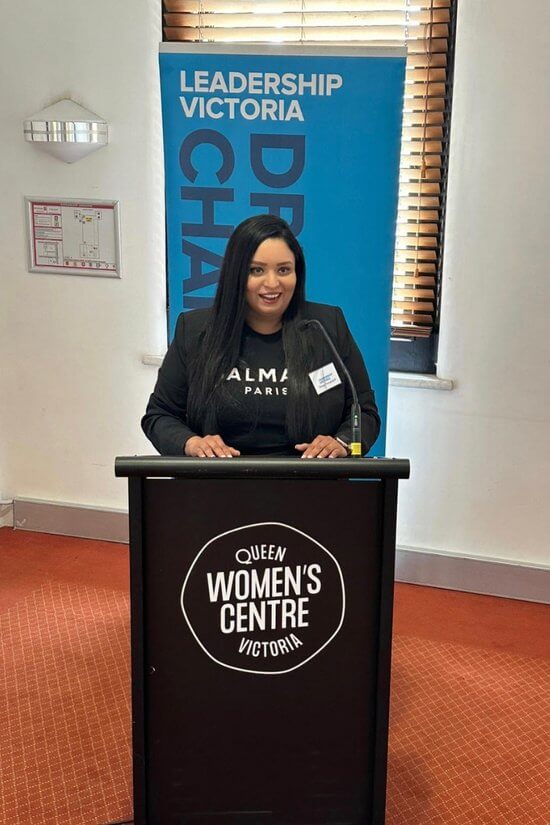
“I have once been the person I am now trying to uplift,” says Divya Pasupuleti, winner of the recently announced Australian Award for Excellence in Women’s Leadership for Victoria.
Divya was chosen for the award by Women & Leadership Australia for her contribution in advancing equity in different facets of Australian society.
Based in Melbourne, Divya works full time as a senior strategy and transformation leader in the telecom industry. She admits she has faced the same challenges of gender and cultural biases that continue to pull down migrants, especially women from culturally diverse backgrounds. Her own lived experiences motivate her to help others in changing the narrative.
“When I started my career in the corporate world, forget brown women, there were hardly any women at all,” Divya says, reminiscing about her own journey up the corporate ladder.
Divya Pasupuleti: Helping break the double-glazed ceiling (Source: Supplied)
While admitting that the situation is much different now with more women being seen in leadership positions, she says cultural diversity at the top of the Australian corporate world is still a wishful dream.
“People from culturally diverse backgrounds, especially women, face what I believe is a double-glazed ceiling with many subtle and invisible barriers,” she admits.
Which is why, aside from her own professional career, she devotes considerable time in trying to influence governance, policy, and community systems on inclusion and cultural diversity. She does this as board member of Gender Equity Victoria, Melbourne Forum, the Australian Gender Equality Council, and the Project Management Institute (PMI) Melbourne Chapter (where she chairs Women in Project Management). Divya has also been an advisory member to the Victorian Multicultural Commission and National Association of Women in Operations.
“Throughout my career, I have witnessed talented people overlooked, not for lack of capability, but because they did not fit expectations of leadership. This reality has shaped a commitment to changing systems, so difference is recognised as strength. My focus has been on turning advocacy into action through mentoring, sponsorship, policies, building governance, and reshaping structures so diversity is not only present at decision-making tables but appreciated,” Divya says.
Using her seat at the table to make room for others. (Source: Supplied)
Diversity and Inclusion
Divya encourages migrants, especially women, to build confidence and own their career’s progression. She emphasises on the importance of being visible and making meaningful connections.
“Many women feel pushed back believing something is lacking in them. The reality is that the system isn’t always set up in our favour,” she says.
Originally from Hyderabad, Divya first came to Australia nearly 20 years ago to pursue a master’s degree. Having watched her parents devoting themselves to community service, volunteering has always been a way of life for Divya. Having worked her way up from the grass-roots level here in Australia too, Divya takes pride in every victory, big and small.
“I feel immense satisfaction when I see women mentored by me join advisory boards or attain senior corporate positions,” Divya Pasupuleti says. “The response I get from culturally diverse groups is so heartening, because they feel seen and heard. I am happy to be able to shape the cultural diversity strategy of big corporates, including my own employer which now offers employees opportunities to swap in a day of leave to be able to enjoy significant festivals in their cultural calendars.”
From rich narratives, mesmerising romance to gripping dramas, the Indian films in June 2026 are bound to treat the audience. Be prepared to be left at the edge of your seats, these releases are everything you expect and more.
MAA BEHEN (Netflix)
Directed by Suresh Triveni, Maa Behen turns an ordinary family’s life upside down in the most unexpected way. Starring Madhuri Dixit, Triptii Dimri and Ravi Kishan, the film follows a mother and her daughters as they get caught in a messy situation after a dead body suddenly shows up in their kitchen. What follows is a crazy ride filled with panic, secrets, and dark humour. With its mix of suspense and comedy set in a gossip-loving neighbourhood, Maa Behen promises to be a fun and chaotic watch.
Releasing 4 June 2026
PEDDI (In cinemas)
Ram Charan trades the city for red soil in this 1980s rural Andhra Pradesh epic where sport becomes war. Directed by Buchi Babu Sana and scored by A. R. Rahman, Peddi follows a village man rallying his community against a powerful rival — the kind of story where pride runs deeper than the game itself. With Janhvi Kapoor, Shiva Rajkumar, and a reported ₹300 crore budget, this one is swinging for the fences.
Releasing 4 June 2026
HAI JAWANI TOH ISHQ HONA HAI (In cinemas)
Double trouble! This David Dhawan directorial is a light-hearted romantic comedy that celebrates love and youth. The film stars Varun Dhawan, Mrunal Thakur, and Pooja Hegde in lead roles, with a fun supporting cast including Maniesh Paul, Chunky Panday, Jimmy Sheirgill, and Mouni Roy. We’re thinking a mix of comedy, romance, and family drama, staying true to David Dhawan’s signature style. Interestingly, this one’s also expected to be Dhawan’s final film as director, making it a special project in his long career.
Releasing 5 June 2026
GULLAK Season 5 (SonyLIV)
Gullak has done five seasons on the simple premise that your family is both your greatest comfort and your biggest headache. No villains, no plot twists — just the Mishras being very, very themselves. Season 5 hits SonyLIV next week, and the only drama before it even drops is a recast that’s got fans arguing in the comments like, well, a family. Some things never change.
Releasing 5 June 2026
BANDAR (In cinemas)
Nobody had “Bobby Deol in an Anurag Kashyap thriller” on their 2026 bingo card, and yet here we are. Bandar follows a washed-up TV star whose ex accuses him of rape — and then the real nightmare begins. It’s been sitting on a TIFF premiere since 2025 like a secret nobody was allowed to talk about yet, and if the Paatal Lok writers are involved, you already know it’s going to mess you up in the best way possible.
Releasing 5 June 2026
THE SILENT SAVIOUR: GOVERNOR (In cinemas)Indian films in June 2026
Featuring Manoj Bajpayee in a powerful lead role, this Chinmay Mandlekar directorial tells the story of a man working quietly behind closed doors while the nation faces one of its toughest financial crises. Instead of loud political drama, it focuses on tense decisions, silent pressure, and the weight of responsibility during a time of uncertainty. Given Manoj Bajpayee’s usual intense screen presence, expect a gripping and thought-provoking watch.
Releasing 12 June 2026
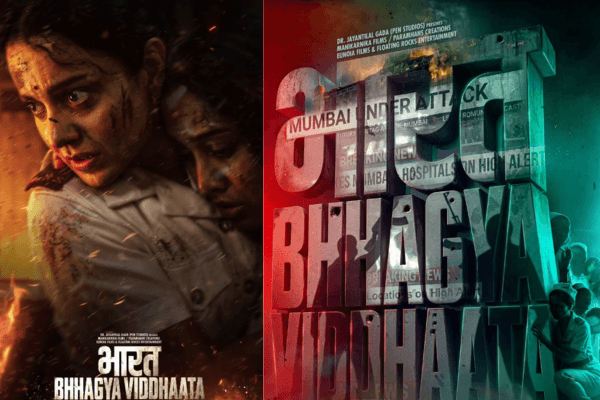
BHARAT BHHAGYA VIDDHAATA (In cinemas)
Kangana Ranaut’s tense and emotionally charged drama is set during the horrific 26/11 Mumbai terror attacks. But unlike most narratives surrounding that night, the film shifts its focus away from the battlefield and into the quiet corridors of Mumbai’s Cama Hospital where ordinary people are forced to confront unimaginable fear. Kangana reportedly portrays a nurse who, alongside other hospital staff, becomes part of a desperate effort to protect hundreds of vulnerable patients trapped inside the hospital while terror consumes the city outside.
Releasing 12 June 2026
OYE BHOLE OYE 2 (In cinemas)
In this Jagjeet Sandhu directorial, Bhola, a down-to-earth village boy, values his land and roots beyond what money can offer. When a wealthy company offers a tempting deal, most people including Bhola’s own family decide to sell their land and move on. Bhola, however, refuses to give in and finds himself standing alone against powerful outsiders. What follows is a mix of emotional and light-hearted moments as Bhola deals with pressure, opposition, and everyday struggles in his own unique way.
Releasing 12 June 2026
CARRY ON JATTA 4 (In cinemas)
Carry On Jatta 4 continues the franchise’s trademark blend of confusion, mistaken identities, and non-stop comic chaos, bringing together a strong ensemble cast including Binnu Dhillon, Sargun Mehta, Gurpreet Ghuggi, Karamjit Anmol, and Prince Kanwaljit Singh. Fans of the franchise can expect the film to stay true to the series’ high-energy comedy style, where ordinary situations quickly spiral into uncontrollable misunderstandings, turning everyday life into a chain of humorous disasters.
Releasing 12 June 2026
THUKRA KE MERA PYAAR Season 2 (JioHotstar)
One of 2024’s biggest surprise hits, Thukra Ke Mera Pyaar is back with Season 2. The story continues with Shanvika (Sanchita Basu) and Kuldeep Kumar (Dhaval Thakur). Kuldeep is still driven by revenge, but this time Shanvika has become powerful too. As the two former lovers face each other again, love, power, and revenge are about to collide.
Releasing 19 June 2026
COCKTAIL 2 (In cinemas)
The iconic cult classic Cocktail makes its (spiritual) return! Same messy, modern relationship dilemma. New characters, bolder arcs. This urban love story brings us into the world of Kunal (Shahid Kapoor), Ally (Kriti Sanon) and Diya (Rashmika Mandanna) – but it’s not your common love triangle. Shaking up the conventions, the film is set to add a fresh touch to Bollywood as Kunal finds himself as more of a buddy to Ally and Diya who explore their own deep connection.
Releasing 19 June 2026
WELCOME TO THE JUNGLE (In cinemas)
24 Bollywood stars. One jungle. What could go wrong. Welcome to the Jungle is essentially what happens when someone looked at the original Welcome cast, thought it needed more people, and just kept going. Akshay Kumar back where he belongs — pure, unhinged comedy chaos with Arshad Warsi, Sanjay Dutt, Paresh Rawal and somehow everyone else too. Desi Tropic Thunder but make it louder. Much louder.
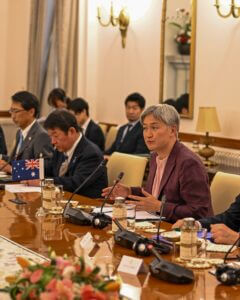
New Delhi has had a busy fortnight in diplomacy. Just two weeks after India hosted the BRICS Foreign Ministers’ Meeting as the 2026 chair – where member and observer states came together to discuss global trade and supply chain resilience on the backdrop of US-Iran tensions – India hosted Quad Foreign Ministers’ Meeting in New Delhi. Foreign Minister Jaishankar, Australia’s Penny Wong, Japan’s Toshimitsu Motegi and US Secretary of State Marco Rubio gathered in what Rubio called the “linchpin” of US’s global strategy. The meeting produced four concrete outcomes: a maritime surveillance initiative expanding to the Indian Ocean, a port infrastructure pilot in Fiji, critical minerals framework covering mining to refining, and an energy security initiative responding to the fuel crisis.
The Quad grew from a disaster response coalition formed after the 2004 Indian Ocean Tsunami. After years of dormancy, leaders met at the ASEAN Summit in 2017, the first Foreign Ministers’ Meeting followed in 2019, and the first Leaders’ Summit came in 2021, kickstarted by COVID-19 and India-China border tensions.
Ministerial by design
Why does it matter that India’s hosting Quad if its institutionalism is no longer reliable? The lack of a Leaders’ Summit since 2024 alongside emboldened tensions over US tariffs on Quad members has led people to call Quad’s time of death. However, since its establishment in 2007, the grouping has survived leadership changes across all four members. But with no Summit in the cards, its significance is being questioned – and rightfully so. With President Trump’s re-election came a highly volatile world order, and his actions have caused concern regarding the centrality of the Quad grouping. However, Rubio’s first act as Secretary of State was to attend a meeting with Quad members’ foreign ministers on the day of his inauguration. After that, two more meetings followed in just sixteen months.
Quad Foreign Ministers roundtable on 26th May 2026 in New Delhi (Source: Dr. S. Jaishankar on X)
Hosting both meetings gave India agenda-setting power; it was used deliberately. It secured BRICS endorsement – including China’s – condemning the Pahalgam attack and steered the Quad’s maritime expansion into the Indian Ocean. Whether this constitutes a new foreign policy direction or skilled opportunism, is yet to be known.
Rubio, in his closing remarks at Quad, framed the collective goal plainly: to turn Quad from “a place where we get together every now and then and discuss problems” into “a forum of action towards collective interests.”
Action items
Maritime security was the headline. The newly launched Indo-Pacific Maritime Surveillance Collaboration (IPMSC) initiative will coordinate the four nations’ surveillance capabilities and expand maritime domain awareness in the Indian Ocean, providing almost real-time satellite tracking data to partner countries to combat illegal fishing, trafficking and support disaster response. India committed to hosting the next Quad Coast Guard Cooperation exercises later this year.
Driving momentum and delivering outcomes in the Indo-Pacific (Source: Senator Penny Wong on X)
The Quad Ports of the Future partnership launched its first pilot in Fiji, collaborating in infrastructure building. Wong, who visited Fiji weeks earlier, called it the grouping’s “strongest ever commitment to the Pacific.” Fiji’s geographical significance in the South Pacific alongside its long-standing support for Beijing’s Belt and Road Initiative (BRI) and Global Development Index (GDI) has situated Fiji as an essential Pacific Island partner for the states.
The Critical Minerals Framework covering mining, process and refining provide an opportunity for member states to coordinate investment with the goal of strengthening critical minerals supply chains – producing an opportunity for India to leverage its domestic minerals ambitions into Quad’s collective interests. Whether India’s infrastructure is ready to meet that ambition is a separate question.
The Iranian closure of the Strait of Hormuz has created acute economic stress across the region. The Indo-Pacific Energy Security Initiative with the US Department of Energy holding a fuel security forum for Quad member states later this year is a direct response to the global fuel crisis.
The bet
India chaired a BRICS document condemning unilateral tariffs as damaging to global trade. Days later, it hosted the Quad, welcoming the representative of the government that imposed them. Hosting two meetings and signing two documents isn’t a foreign policy architecture, just a fortnight in diplomacy. The Quad’s maritime expansion into the Indian Ocean and BRICS’s submarine cable task force are beginning to overlap geographically, and the two will eventually require careful navigating.












 OYE BHOLE OYE 2 (In cinemas)