Home Blog Page 5

Difficult women, continued: Nikita Gill at SWF

0
Reading Time: 4 minutes

nikita gill hekate

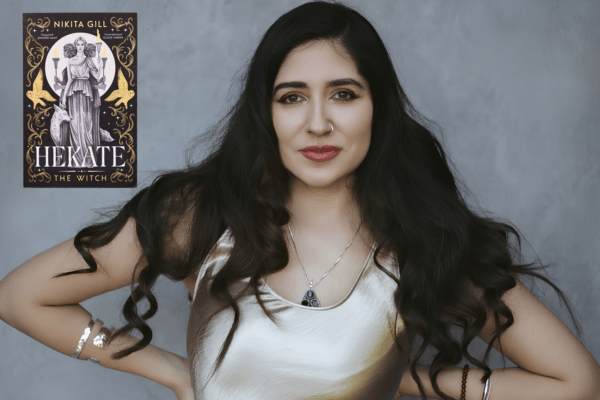
“A woman they cannot control, whether Goddess or mortal, is a dangerous woman,” writes Nikita Gill in Hekate (2025).

At the heart of this Irish-Indian writer’s work broadly, are so-called ‘difficult’ women reclaiming and redefining their power.

In Hekate, we encounter the Greek goddess Hekate, a ‘dangerous’ woman reimagined instead as a symbol of feminine power, healing and self-reclamation.

Speaking at the Sydney Writers’ Festival recently, Gill reflected on why she was drawn to Hekate for her latest work.

“Personally, I found that the single most interesting part of Shakespeare’s Macbeth, was Hekate’s very brief appearance as one of the three gender-bending witches,” Gill revealed. “Essentially, she was the first witch, and the genesis of modern witchcraft. I simply became fixated with her.”

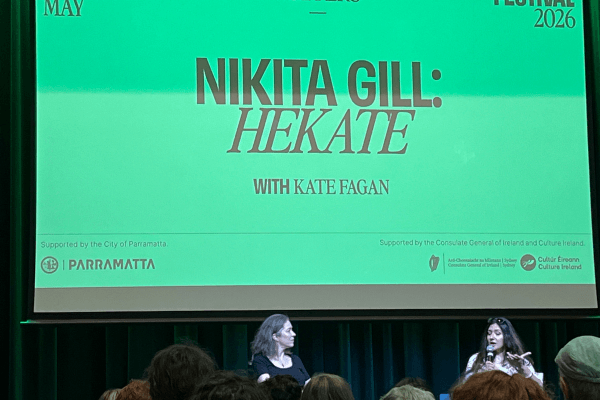
Nikita Gill in conversation with Kate Fagan at the Sydney Writers’ Festival 2026. (Source: Own)

For a young Gill, the possibility of this alternative femininity – dark, witchy and unruffled in its non-conformity – proved deeply compelling.

Hekate’s story in Greek mythology unfolds against the backdrop of a brutal ten-year war between the older Titans and the younger Olympian gods for control of the cosmos. Revered as a powerful guardian of earth, sea and sky, Hekate is forced to summon her divine powers, transforming grief and trauma into unwavering strength, to bring the devastating conflict to an end.

Time and time again, Hekate chooses to fight for herself, transforming her ‘dangerousness’ into unbounded liberation.

Gill’s Hekate emerges as an electrifying, charismatic and fiercely feminist retelling of the goddess of magic and the underworld.

OPTING OUT OF THE PATRIARCHY nikita gill hekate

Powerful mother figures and the sublimity of maternal instincts are interwoven into Hekate’s story. From the goddess’s tight attachment to her own mother Asteria and placing her on a pedestal to her less-felt bond with the mother who actually raised her, Styx, Gill’s retelling gives due importance to these strong, resilient mothers.


View this post on Instagram


A post shared by Nikita Gill (@nikita_gill)

“I feel overprotective of them,” Gill confessed, “and my own tough relationship with my mum adds on to deep concern towards mothers. I believe that Hekate too carries that overprotectiveness within her – for it is her instinct to guide and protect that drives her untamable and bold persona.”

It is only justified that a retelling of an empowered woman such as Hekate should stand in defiance of patriarchy. Gill achieves just that: her verse, emotionally direct and accessible, subverts from the male-dominated mythological tropes.

Challenging the common dismissal of female anger as hysteria or villainous, Gill composes Hekate’s rage as a politicised driving force in self-discovery. “The patriarchy views independent women as uncontrollable and dangerous, when in fact they dislike admitting their insecurities,” Gill expressed. “Hekate’s independence and refusal to shrink to the expectations of Mount Olympus terrifies the ruling male gods. It is this self-ownership that propels her strength.”

In this regard, Hekate is a continuation of a body of work in a literary landscape where women are no longer confined to the margins of male-centred stories but instead occupy the centre of their own complex and powerful narratives.

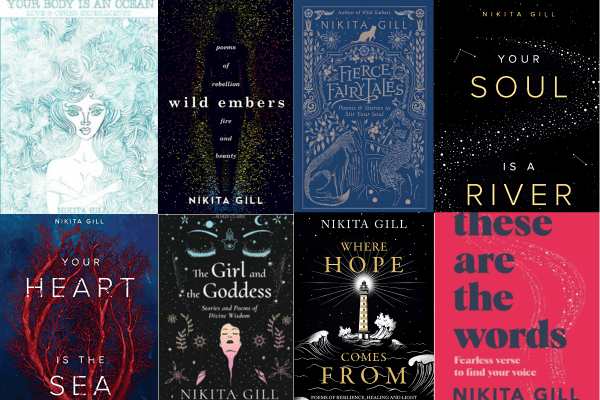
A collection of Nikita Gill's books
Gill’s works feature women as stars of their own stories. (Source: Goodreads)

THE ALLEGORY OF SEARCHING FOR HOME

“We are all closer to being refugees than we are to being billionaires,” Gill remarked, “and that’s an idea that was relevant during both Hekate’s time and unfortunately, present times.”

The child of Zeus and Asteria, Hekate was forced into a world of war at a young age, leaving her without her parents and in a tiresome pursuit of belonging – a vicious trauma that seeped deep into her bones.

“It was really important for me to show what happens to women who are on the losing side of these wars; it doesn’t matter if you are a goddess or not, if you are on the losing side, you are enslaved,” Gill pointed out. “So, Hekate’s mother crossing the waters illegally to give her child to strangers in hopes of saving her is, sadly, a phenomenon that repeats itself far too many times in our world.”

Two poems in Hekate – one at the beginning and one at the end – speak of home, creating a full-circle journey through the goddess’s search for belonging; a longing that quietly echoes the dreams of many asylum seekers.

ONTO ANOTHER FEARED YET REVERED GODDESS

Now, if Hekate in any way reminded you of the Goddess Kali, you’d be pleased to know that Gill is currently writing a book on the Hindu goddess of time, death and destruction.

Kali is visualised with an incredible iconography of being blue-skinned, many-armed, with her eyes wide and her tongue out, displaying her fangs. Her visage sits, to this day, at the entrances of homes and city gates as a vital household protector – in the same fashion as shrines called Hekataia in Ancient Greece.

Sharing her adoration of the Goddess Kali, Gill gushed, “She is genuinely so cool. She wears the skulls of her enemies as a necklace and their limbs as a skirt. There is so much to her story, and writing this book has been so, so special.”

Gill’s forthcoming retelling of Kali is already shaping up to be something deeply significant – a rare and thrilling moment in which a Hindu goddess steps powerfully into the landscape of contemporary English literature.

Read also: Top 10 books of 2025 by Indian authors

“Her eyes speak volumes”: Sydney photographer Shekhar Jay on Kajol

0
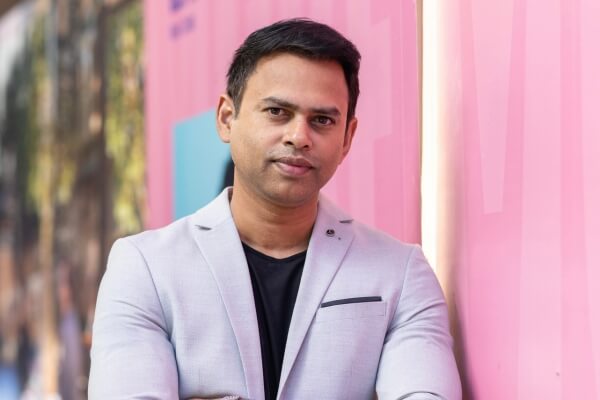
(Source: Shekhar Jay)
Reading Time: 3 minutes

Sydney photographer Shekhar Jay

There are moments in a photographer’s life that quietly redefine everything. For Jay, a clinical research project manager by day and a portrait photographer by devotion, one such moment came through a hotel room lens in Sydney, with Bollywood icon Kajol on the other side of it.

When Jay heard through a friend that Kajol was flying to Australia for a store launch across Sydney and Melbourne, he did what most fans wouldn’t. Through another contact based in Mumbai, he reached out to her agency and put himself forward. The shoot was commissioned, and a pharma professional from Vizag found himself behind the lens with one of Hindi cinema’s most enduring leading ladies.

“She’s been around for so many years,” Jay says. “I’ve been a big fan since my college days.”


View this post on Instagram


A post shared by Shekhar (@shekhar_jay)

Kajol, he found, is no-nonsense. She knew exactly what kind of shots she needed, which angles suited her, and she had no interest in pretence. “She will call a spade a spade,” he says. For some, that directness might feel like pressure. For Jay it was something richer. “She gave me creative freedom, but she also knew what she wanted. She’d say, top angle, tell me the angles. She wanted 100 percent. And honestly, so did I.”

The shoot unfolded differently across the two cities. Sydney leaned warmer, the images carrying a golden softness. Melbourne required more working through, test shots first, adjusting colour and contrast, finding the mood within the space of her hotel room. It was the kind of collaboration that good portrait photography demands, two people reading the light and each other at the same time.

And then there were her eyes.


View this post on Instagram


A post shared by Shekhar (@shekhar_jay)

“Her eyes speak volumes,” Jay says, and the plainness of the phrase carries more than elaboration would. For someone who has spent years studying faces through a lens and built a quiet second life out of understanding what a portrait can hold, that is not a small observation. She is a perfectionist, he says. She wants everything to be right. So does he. By the end, she was happy with the results.

When Jay arrived in Australia in 2002 from Vizag, photography was already a deep passion. His subject of choice – people, faces, the stories that live just beneath the surface of a gaze.

“Although I am not being able to devote too much time to it,” he admits, “I breathe and dream about it always.”

Sydney photographer Shekhar Jay
Sydney photographer Shekhar Jay works in the pharma industry as a Project Manager for clinical research and trials

His instrument of choice is the Sony A7R5, paired with prime lenses and an 85mm at f/1.4, that signature shallow focus that makes portrait photography feel almost cinematic.

For a clinical researcher who fits photography into the margins of a demanding career, landing a commissioned shoot with Kajol is about as good as it gets. The networking paid off, the images were delivered, and the subject was happy.

Not a bad result for a weekend photographer from Vizag.

Read more: Tony Burke came to talk visas but gave us viral SRK fan moment

TiE Melbourne launches TiE Women 2026 program

0
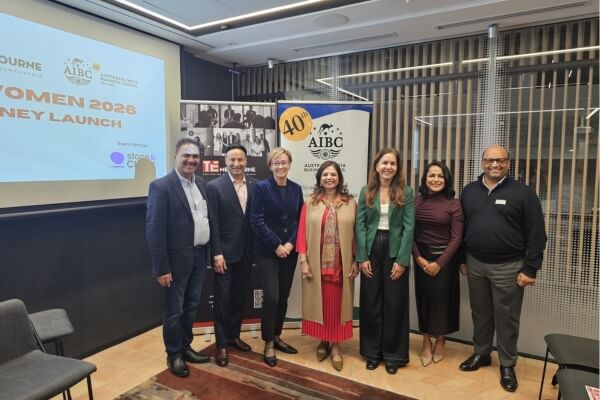
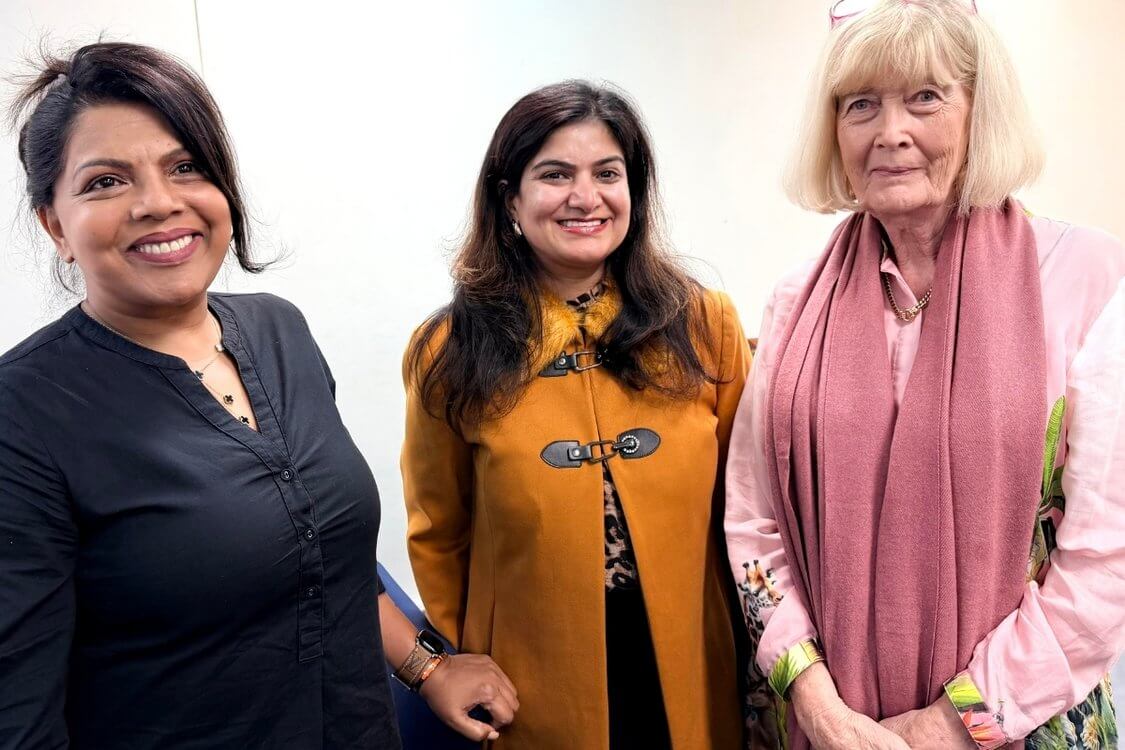
Lisa Singh (CEO Australia India Institute) and Sheela Edwards (CEO Aurora Early Education) with Dr Namita Gupta (Vice President TiE Melbourne) at the Sydney launch of the TiE Women 2026 program (Image: Prakash Gupta)
Reading Time: 3 minutes

TiE Women 2026 program

For many women entrepreneurs, getting a business idea off the ground is not simply about innovation or ambition, but about being seen, backed, and given access to the right networks. That is one of the key gaps the TiE Women Entrepreneurs (TWE) program hopes to address.

Run by TiE Melbourne as part of the global TiE (The IndUS Entrepreneur) network, the initiative supports women-led startups through mentorship, investor exposure, networking opportunities, and access to a worldwide entrepreneurial ecosystem.

It also creates opportunities for participants to pitch their ventures on an international stage, with local winners progressing to a global finale, where they compete for a US$50,000 equity-free prize.

With the support of the Australia-India Business Council, the 2026 program was launched across Melbourne, Sydney and Brisbane this past week, reflecting growing national interest in women-led entrepreneurship and startup innovation.

Namita Gupta (Source: Supplied)

Namita Gupta, Vice President of TiE Melbourne (who now helps run the program alongside Sangeeta Mulchandani, Elena Moran, Sheela Edwards, Saurabh Mishra and Jasmine Batra) understands the impact of the initiative firsthand. Three years ago, she herself won the Australian chapter competition before progressing to the global finals in Bengaluru, India.

“That really opened my eyes to the scale and magnitude of TiE, and the type of people that are part of TiE,” she recalls. “It was a great experience… we met some very interesting people, and through that connection became more deeply involved with TiE Melbourne.”

(A dentist by profession and a medtech entrepreneur, Namita co-founded Dental Sanctuary with her husband, fellow dentist Dr Stephan Kantharajah, before going on to launch the dental procurement AI platform Restocq.)

Today, TWE has become one of the organisation’s flagship initiatives, spanning the 63 chapters globally. Participants undergo local mentoring and programming before one winner from each chapter progresses to the international finals.

Yet beneath the mentoring and international exposure lies a more serious purpose: helping female founders navigate the longstanding funding gap that continues to affect women-led startups.

“The statistics are pretty appalling when it comes to institutional backing of female-founded startups,” Namita says. “The program was started to give female founders more exposure in circles where there is access to seed funding or institutional funding.”

Importantly, she notes, the program offers other opportunities.

NSW Minister for Women Jodi Harrison at the Sydney launch (Image: Prakash Gupta)

“There’s also mentorship and access to people who can collaborate and help scale some of these ventures across borders,” she explains. “Because TiE is an international organisation with chapters all over the world, particularly in the US and India, it’s a huge opportunity for Australian startups looking to expand into those regions.”

The program aims to build a supportive entrepreneurial ecosystem for women founders by encouraging collaboration, leadership development, knowledge-sharing, and long-term community connections.

While women founders are now entering virtually every industry sector, Namita believes supporting female entrepreneurs remains especially significant because many are building products and businesses responding directly to women’s lived experiences.

“Women founders have been found to be highly investable and more likely to deliver returns,” she says. “But they’re also building products and companies that support the female population – whether that’s in health, children’s services, or other areas where women bring a different sensibility and understanding.”

The diversity of businesses entering the program has also grown significantly, spanning healthcare, medtech, deep tech, food, marketing, and broader technology sectors.

Importantly, the initiative is open to women from all backgrounds, not only migrant or multicultural entrepreneurs.

For younger women hesitating over whether to pursue a business idea, Namita’s advice is simple: back yourself.

“Have courage and take the leap,” she says. “If nothing else, you’ll learn a lot from the experience.”

She also stresses the importance of community and mentorship.

“Don’t expect to do it alone. Surround yourself with the support network you need. For me, it was TiE and the mentorship I received there.”

And finally, she feels, entrepreneurs must learn not to fear failure.

“With failure comes a lot of learning,” she reflects. “The difference between those that fail and those that succeed is grit and determination – the ability to stay in the game, ride the wave, and keep going even when things get hard.”

Applications for the 2026 TWE program close on 15 June. More details here

Read more: Sangeeta Mulchandani wins Innovation & Entrepreneurship award

Chand Mera Dil: Review

0
Chand Mera Dil
Reading Time: 3 minutes


There is a scene in Chand Mera Dil where two people deeply in love sit in silence inside a cramped apartment, exhausted not from heartbreak but from life itself. Dirty dishes pile up in the sink, a baby cries in the background, ambitions begin shrinking quietly and romance slowly starts sounding like responsibility. That is the film Vivek Soni truly wants to make. And when it leans into that emotional chaos, Chand Mera Dil genuinely shines.

Produced by Dharma Productions and directed by Vivek Soni, who previously directed the much-talked-about Netflix film Aap Jaisa Koi in the past, this film follows Aarav and Chandni, played by Lakshya and Ananya Panday, two engineering students in Hyderabad who fall in love hard and fast before adulthood crashes into their carefully curated romance.

AT A GLANCE

FILM: Chand Mera Dil (Theatres)
CAST: Ananya Panday and Lakshya
DIRECTOR: Vivek Soni
PRODUCERS: Karan Johar, Apoorva Mehta, Aadar Poonawallah
Rating: ★★★/5

At first, Chand Mera Dil feels like a familiar Dharma love story. Cute flirting, colour coordinated outfits, campus banter, yearning stares and a soundtrack constantly reminding you that these people are in love. But somewhere midway, the film changes gears. Suddenly this is no longer about butterflies and chemistry. It becomes about compromise, financial stress, emotional immaturity and two people realising that love alone cannot hold together a collapsing life.

That tonal shift is both the film’s biggest strength and biggest problem.

Because while the second half carries emotional weight, the screenplay struggles to transition smoothly from dreamy romance to grounded relationship drama. Some scenes feel beautifully observed while others seem stitched together from three different films. There are moments where Chand Mera Dil wants to be a sweeping romance, a social drama and a Gen Z relationship manual all at once.

Yet somehow, despite the mess, the emotions land.

Leading the screen

Lakshya continues to prove that he has serious leading man potential. There is a rawness to his performance that keeps Aarav human even when the character becomes frustrating. He captures male vulnerability rather well, especially in scenes where pride and helplessness collide. His breakdowns feel internalised instead of performative.

Ananya Panday, meanwhile, delivers one of her more emotionally committed performances. There are traces of awkwardness in certain dramatic scenes, but Chandni works because Ananya plays her with sincerity instead of polish. She allows the character to look tired, irritated and emotionally burnt out. That honesty helps. The internet may currently be busy debating her Bharatanatyam fusion sequence from the film, but thankfully the movie itself gives her far more to do than dance reels.

Visually, the film looks gorgeous in classic Dharma fashion. Hyderabad appears warm, youthful and lived in rather than postcard perfect. The music, though melodic, occasionally overdoes the emotional spoon feeding. Some scenes would have worked better with silence.

What Chand Mera Dil gets absolutely right is the ugliness of growing together. Bollywood romances often stop at confession scenes and wedding songs. This one asks what happens after that. What happens when love has to survive rent, resentment and emotional exhaustion? What happens when two people who adored each other begin missing the versions they once were?

The film does not always have answers. But it asks the questions sincerely.

At 2 hours and 26 minutes, it definitely overstays its welcome. Certain confrontations repeat themselves, and the screenplay could have benefitted from sharper editing. A few dramatic moments also feel manufactured purely to force emotional catharsis. But even in its unevenness, Chand Mera Dil feels more emotionally ambitious than most mainstream Hindi romances these days.

You can certainly wait for its OTT release to watch this film.

Read more: Kartavya : Review

Love, Actually: ‘Five Arrows’ by Christopher Gurusamy

0
Christopher Gurusamy 5 Arrows
(Source: Supplied)
Reading Time: 3 minutes

Christopher Gurusamy’s 5 Arrows 

Christopher Gurusamy’s 5 Arrows is a work of extraordinary precision and emotional clarity. Rooted deeply in the traditions of Bharatanatyam, 5 Arrows is a vivid demonstration of classical Indian dance’s ability to function as narrative architecture. Choreographed and performed by Gurusamy and performed as part of Sydney Dance Company‘s INDance 2026, he proves himself not only a formidable dancer, but an artist with a deep understanding of the form’s expressive language.

Gurusamy’s command of Bharatanatyam technique is strong. His aramandi (foundational) stance remains unwaveringly grounded, lending the choreography a striking geometric clarity, while every mudra (hand gesture) is articulated with meticulous detail. The cleanliness of his lines is disciplined, his eyes are alive with intention, and his feet strike rhythmic complex patterns. Gurusamy uses technique as emotional text, allowing rhythm, gesture and expression to reveal character and conflict.

What makes 5 Arrows most dramatically engrossing is Gurusamy’s use of Bharatanatyam as a storytelling medium. He handles the dance form’s blend of nritta (pure dance) and abhinaya (expressive storytelling) with intelligence. In passages of intricate footwork, there is an undercurrent of tension and propulsion; in quieter moments, his smallest shift of gaze or tilt of chin or tremble of lip communicates volumes. Gurusamy understands that Bharatanatyam’s storytelling power lies not in realism, but in suggestion.

Christopher Gurusamy 5 Arrows
(Source: Supplied)

His choreography also captures the restraint and intensity at the heart of Bharatanatyam. Sharp rhythmic sequences explode into fluid transitions, while sculptural poses dissolve into moments of vulnerability and longing. Gurusamy finds contemporary immediacy within the form’s ancient vocabulary, crafting a technically accomplished performance.

Gurusamy’s pick for the evening is Mohamana Varnam, an iconic composition from the early 19th century by one of the famed Tanjore Quartet (the brothers who elevated Bharatanatyam to an artform performed in temples and royal courts).

At its core, Mohamana is about desire – longing for a loved one after separation. Whether that beloved is human or divine is deliberately ambiguous; it is the emotion that matters. The piece traverses the full spectrum – abashment, coy playfulness, flashes of anger, the sweet sorrow of parting/abandonment, ecstasy in ultimate fulfilment.

Here, love begins at the tip of an arrow, much like Cupid’s. But there are five arrows, each tipped with flowers, each striking one of the senses until the entire being is consumed with love. This is a love that moves beyond the physical, believed to offer spiritual strength, and a heightened state of consciousness.

And in that final moment – standing illuminated under five arclights, enveloped in bliss – one is left wondering: could Christopher have done this better?

Flower-tipped arrow, ready to be hurled (Source: Supplied)

Crucially, Gurusamy performs with an unmistakable sense of conviction. Every movement appears fully inhabited, every phrase connected to a larger dramatic intention. The live music ensemble – Arjunan Puveendran on vocals, nattuvangam by Ranjeev Kirupairajah, veena by Saumya Sritharan and mridangam by Lojen Wijeyamanoharan – support him well in this endeavour.

Ultimately, 5 Arrows is a production of immense sophistication and beauty. Through technical brilliance, choreographic intelligence and a deep respect for Bharatanatyam’s expressive traditions, Chris Gurusamy has created a work that feels both timeless and urgently alive.

This article by Manan Luthra was first published in The State Of The Art media. 

Read more: When stillness stole the spotlight: Nandana Nithin’s arrangetram

Bobby Matharu’s exhibition: sea, sky and a Satinder Sartaaj stopover

0
Reading Time: 4 minutes


Bobby Matharu has spent a lot of his life observing nature – from the sky, the land, the sea. As an enjoyer of adventure sports like paragliding, motorbiking and climbing, he is fully in touch with nature’s splendour.

“You sometimes think, wow, how beautiful the world is, if I could only share these emotions with other people,” he says. “Painting lets you put these emotions on a canvas.”

His latest exhibition ‘Between Earth and Sky’, channels the joy and wonder he feels in the outdoors into oil paintings – vividly rendered coastline vistas and gardens which speak to the expansive and lively atmosphere of these places.

Held at the Creative Asia Art Centre in Docklands, ‘Between Earth and Sky’ showcases Matharu’s works of the last six years, with a portion of profits going to the Leukemia Foundation, a cause close to his heart as an oncology pharmacist of 16 years. Matharu has had no formal training but has been painting since he was in school, with his last exhibition taking place in India.

Painting is a meditative practice for him, something he describes as ‘deeply fulfilling’.

Bobby Matharu Artist
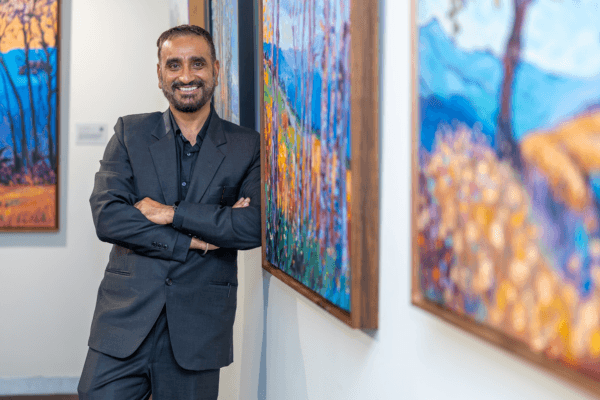
Bobby Matharu: Oncology pharmacist by profession, and painter by passion. (Source: Supplied)

“Paintings take me somewhere else; I can travel to different places. It’s that experience of being in a dreamy stage where you can blend reality and dream in one,” he reflects.

Like with his adventure sports, the doing is more important than the ruminating, Matharu dabbing colour quickly and intuitively to reflect the verve of each place he paints.

His favourite piece, ‘Aqua Light at Geelong Jetty’ exemplifies this approach, white and light blue ripple drawing the eye to the end of the pier.

Aqua Light at Geelong Jetty
‘This painting of the Geelong waterfront jetty captures a quiet, almost suspended moment where light becomes the main subject,’ says Matharu. (Source: Supplied)

“I don’t like to go into too much detail; because then the more time you spend on a painting, the more cautious you look – I want to look confident when I paint and not like someone who’s scared to put the brush of the paint on the canvas,” he says.

Particularly striking is Bobby Matharu’s use of vibrant colours, inspired by the impressionist style (think Monet, Renoir), adding an expressive layer to the landscape. It’s a passion he shares with his close friend, poet Satinder Sartaaj.

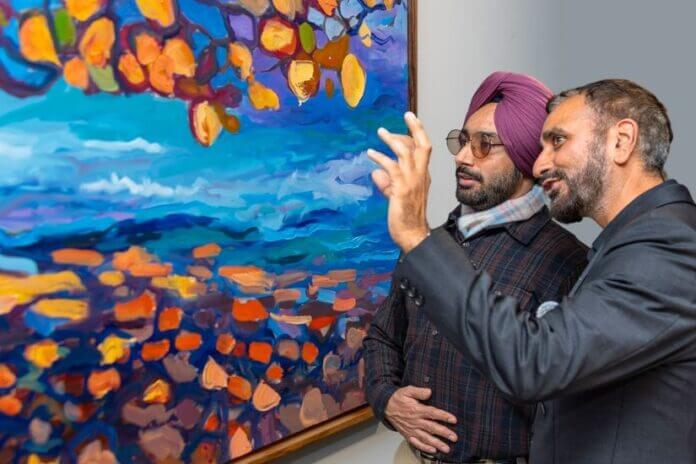
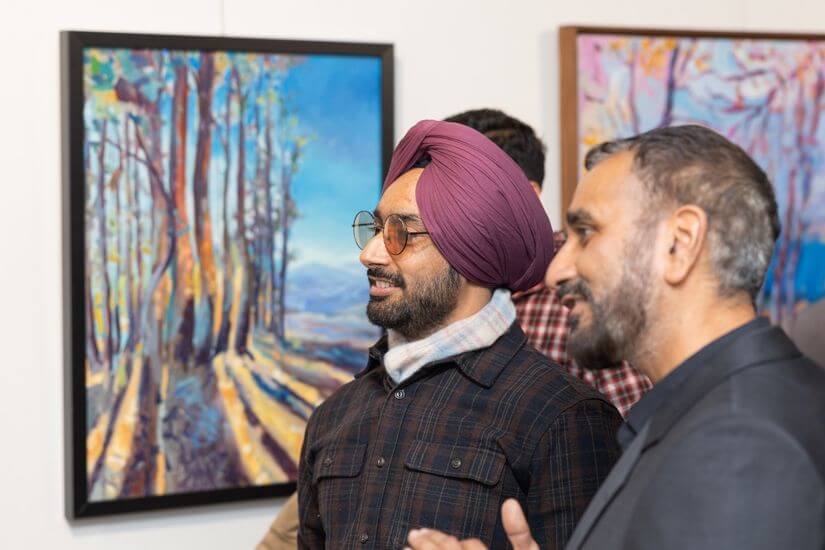
Matharu takes Sartaaj around each of his paintings on display. (Source: Supplied)

“It you ever happen to go to [Satinder Sartaaj’s] place, he’s got very colourful walls. During university times, he used to call me ‘rangrez’ because I used to play with colours in a different way,” he says.

Sartaaj was someone Matharu found a likeminded artistic spirit in over twenty years ago, where they used to listen to Sufi music together. Naturally, he was the first choice to inaugurate Matharu’s exhibition.

BOBBY MATHARU 

“He is such a good guy, who always remembers old friends. I thought it might be a big ask, but he was like ‘don’t worry. I’ll come’,” says Matharu of asking Sartaaj to the exhibition during his Australian tour.

Both Sartaaj and Matharu enjoy the spiritual stillness of being in nature and connecting to something bigger.

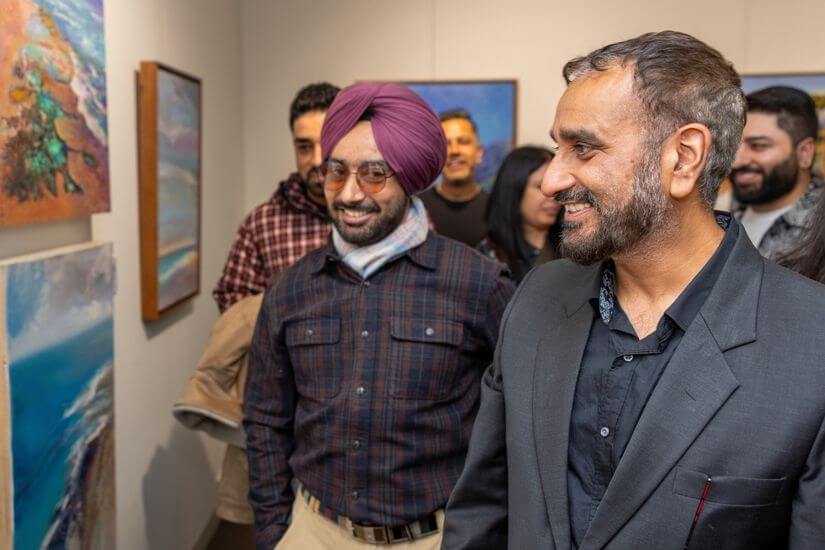
Sartaaj and Matharu have known each other since their college days (Source: supplied).

“When you’re in nature, you feel relaxed, you connect with this power. That’s like my way of praying; being in that stage where you are part of the earth, you’re part of the universe,” Matharu says.

Just as Satinder Sartaaj writes poetry using words, Bobby Matharu aims to paint nature’s poetry – the intangible way we are in ‘quiet dialogue’ with ‘land, sea, and spirit’.

Still water at rocky point
Bobby’s ‘Still water at Rocky Point’. (Source: Supplied)

“I’m trying to capture something between the physical and spiritual – that stage where your mind elevates and you feel like you’re meditating,” he says.

Having received many sales, commissions and positive response from his exhibition, Matharu looks forward to getting back into the studio.

“It’s like I’m time traveling. I can’t explain it in words, but the painting automatically happens – I’m not thinking about what to do, I get the colours ready and then the painting slowly starts coming alive,” Matharu says.

READ ALSO: Viraj, George, Hitha: Finalists at Young Archie 2026

The cat’s out of the bag? PM Modi’s Australia visit all but confirmed

0
Trudeau's allegations against India
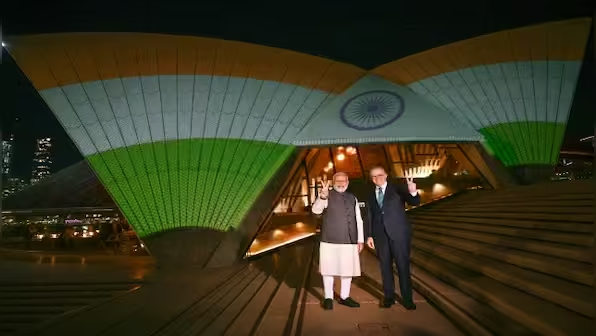
Australian PM Anthony Albanese with Indian PM Narendra Modi (Source: Twitter)
Reading Time: 3 minutes

PM Modi’s Australia Visit

When Indian Link first reported nearly two months ago that Indian Prime Minister Narendra Modi was likely to visit Australia later this year, there was the usual diplomatic silence. Neither India’s Ministry of External Affairs (MEA) nor Australia’s Department of Foreign Affairs and Trade (DFAT) offered confirmation. Officials on both sides remained tight-lipped, as is often the case with high-level bilateral visits that involve extensive security and protocol arrangements.

But now, what was once whispered in diplomatic corridors appears to have been publicly all but acknowledged.

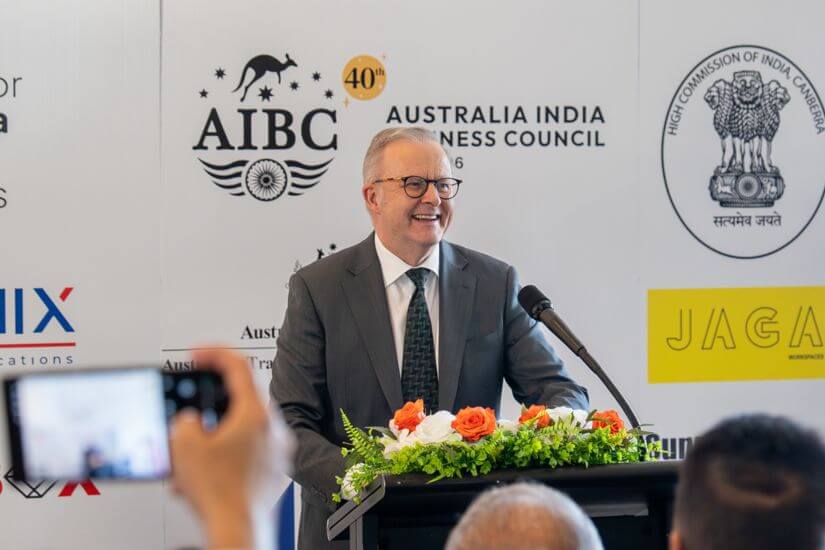
Speaking at an event hosted by the Australia India Business Council (AIBC) in Canberra today, Australian Prime Minister Anthony Albanese made perhaps the clearest indication yet that PM Modi’s visit is imminent.

“So, when Prime Minister Modi, of course, comes here in a short period of time, for the second time since I’ve been Prime Minister, I’m so looking forward to the engagement with the community, because it is a community without whom modern Australia would be hard to imagine,” Albanese said.

PM Modi Australia Visit
Most credible source? PM Albanese addressing the AIBC event in the capital (Source: Supplied)

The remark, delivered almost in passing at the AIBC event marking its 40th anniversary, has effectively fuelled expectations that an official announcement may now be only days away.

And increasingly, all signs point towards Melbourne emerging as the likely centrepiece of the visit over Sydney.

Why not? Sydney has played host to the last two major PM Modi community events in Australia, including the massive Olympic Park gathering in 2023 alongside Albanese. Melbourne, meanwhile, has quietly become home to one of the country’s largest and fastest-growing Indian diaspora populations. Politically, culturally, and economically, Victoria’s Indian community has become impossible to ignore.

A Melbourne event would not only spread the diplomatic spotlight beyond Sydney but also acknowledge the demographic shift taking place within Australia’s Indian diaspora. Suburbs across Melbourne’s west and southeast have seen explosive growth in Indian-origin residents over the past decade, transforming the city into a major hub for Indian business, education, culture and political engagement.

In front of Sydney Opera House from PM Modi Australia Visit back in 2023 (Source: File Photo)

If confirmed, this would mark PM Modi’s third visit to Australia and would further underline the rapidly deepening relationship between Canberra and New Delhi. The two nations have significantly expanded cooperation in trade, defence, critical minerals, education and the Indo-Pacific strategic space over recent years.

Equally important is the political symbolism. Albanese’s specific mention of community engagement highlights the growing importance of the Indian-Australian diaspora, now one of the country’s fastest-growing and most influential migrant communities.

“I assure you that our position on migration, when it comes to the Indian community, is one of welcoming, welcoming as Australians. And you will never hear from me a distinction drawn between migrants and Australians,” said the Australian Prime Minister.

From business and technology to medicine, education and politics, the Indian community has become deeply woven into Australia’s social and economic fabric.

For Indian Link, however, there may also be a quiet sense of vindication. What was initially treated cautiously in some quarters now appears to have moved from informed speculation to near certainty.

As diplomats would say, watch this space. But increasingly, this seems less like a rumour and more like the worst-kept secret in Canberra.

Read more: July dates firm for Modi visit down under

UNSW scientist Ashish Sharma bags top American award in hydraulic engineering

0
UNSW scientist Ashish Sharma
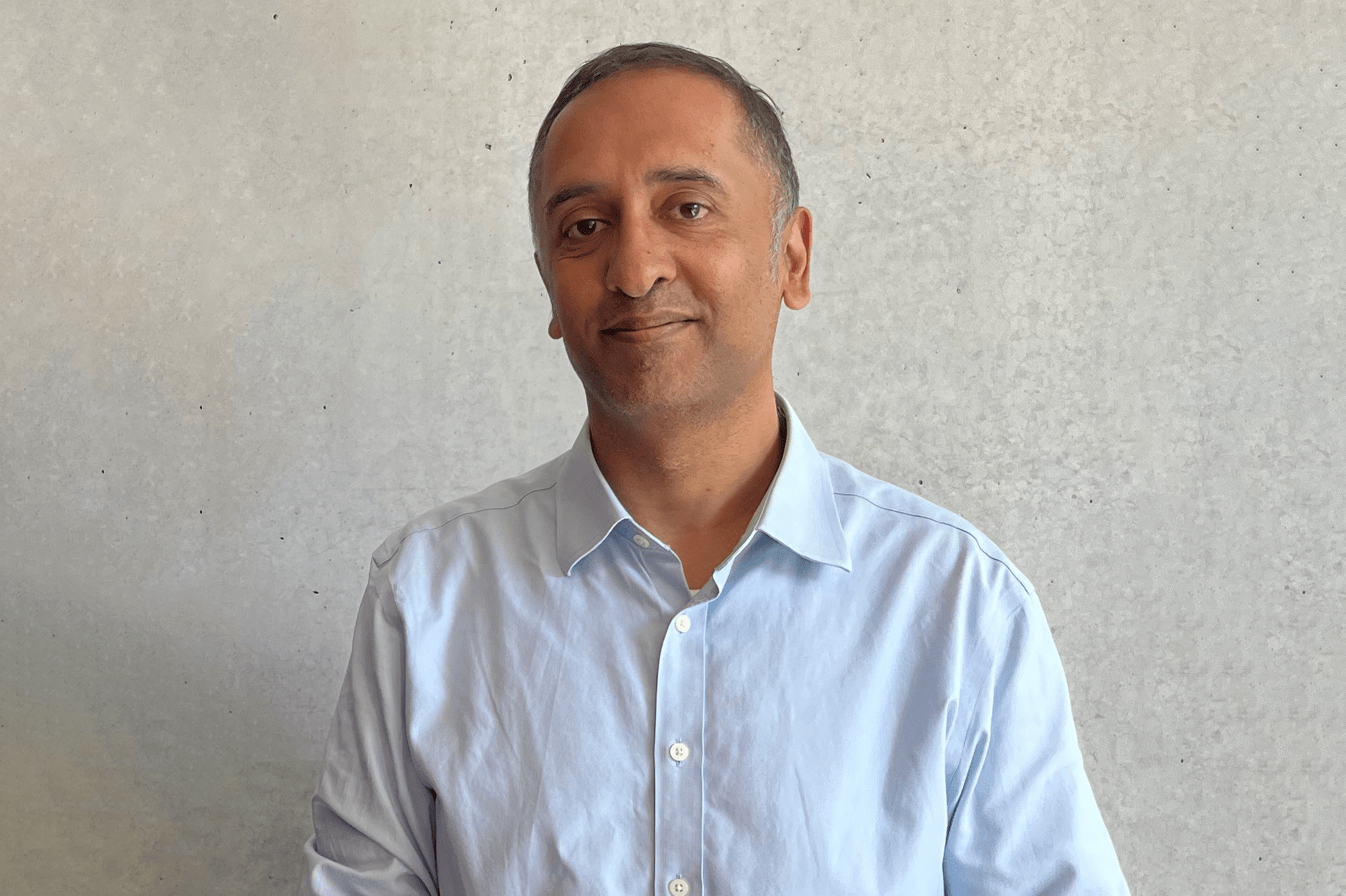
Professor Ashish Sharma
Reading Time: 4 minutes

UNSW scientist Ashish Sharma

Water, water everywhere…not any drop to drink! Indian-born engineering hydrologist Ashish Sharma believes the world is hurtling towards a future where floods become fiercer, droughts more unforgiving, and water insecurity increasingly determines geopolitical power. 

“A global water crisis means increased water insecurity which means less secure water supply for irrigation and human consumption and more intensified floods due to added moisture coming down in extreme storms worldwide,” UNSW Sydney Prof. Sharma told Indian Link. “To add to this is also an increased demand for water supply because of an increased population base that expects more water security. Put all this together, and one has the makings of a global water crisis.”

The warning comes as the University of New South Wales scientist receives the prestigious 2026 Arid Lands Hydraulic Engineering Award from the American Society of Civil Engineers for his pioneering work on water security, flood forecasting, and hydrological extremes.

The problem at hand

The crisis is no longer theoretical, as Sharma rightly points out. 

It is already unfolding across countries like India and Australia, where communities are increasingly trapped between devastating floods, bushfires and severe droughts.

“More intense floods are an expected outcome as a warmer atmosphere stores more moisture which is then released in a more intensified storm,” he said. “And, a warmer atmosphere also dries soil moisture which means there is a tendency towards the drier soils that create the extreme agricultural droughts one is worried about.”

Sharma’s research focuses on predicting hydrological extremes in an era where climate change is rendering decades-old infrastructure assumptions obsolete. Water systems worldwide, he explained, were designed using historical patterns that no longer hold true.

“In the past, systems (such as water supply) were designed with the expectation that these extremes will occur with a certain defined frequency. This was factored in when building these systems and managing them,” he explained.

“The change in extremes has made all these existing designs insufficient,” he said. “The water infrastructure that allows us to host a population of nearly 5 million in Sydney is now at a heightened risk of both water supply failure and flood failure. And this is happening everywhere across the world.”

UNSW scientist Ashish Sharma (Source: Supplied)

In deep water 

Born and educated in India before building an internationally recognized academic career in Australia, Sharma credits his foundations to India’s rigorous engineering institutions. He studied at the Indian Institute of Technology Roorkee in western Uttar Pradesh located in the historic canal town built around the Ganga Canal system.

“Roorkee is a small town created in 1837 to train engineers to build the Ganga Canal, which is often credited as the reason why the North and North-west produce as much grain as they do,” he shared. 

“But perhaps, more than the town, it was the basics of Maths, Physics and Chemistry that were grilled in so deep to all students, that they allowed most to excel in whichever fields they specialized in,” he added.

Over the years, Sharma has emerged as one of the world’s leading hydrologists, with his research influencing global conversations around climate extremes, flood forecasting, and water security.

His work increasingly intersects with artificial intelligence and satellite technology, particularly in remote regions where river flow monitoring infrastructure is limited or non-existent.

“I believe in the year 2126, a century from now, flows would be monitored through much better technologies than what we have been using in the past,” he said. “It is the lack of flow observations that creates insecurity in remote regions, as one does not know how to engineer relief as there is no record for how high or low the flows have been.”

Satellites will form a key part of flow reconstruction into the future, he predicts.

But while technology may improve prediction systems, Sharma warns that governance failures continue to cost lives particularly in poorer and remote communities. 

“Remote and underprivileged communities are less vocal about needing the latest technology that can help build effective warning systems,” he said. 

A sea change is needed 

Prof Sharma noted that Australia remains among the better protected nations globally when it comes to water disasters, but stressed that many developing nations remain dangerously vulnerable.

“One must think of the thousands who die year after year in underdeveloped, remote settings across the world because warning systems are poor and governance even poorer,” he highlighted.

For India specifically, Sharma believes the bigger challenge may not be changing monsoons alone, but whether existing infrastructure can withstand a rapidly intensifying climate.

Against the backdrop of today’s geopolitical tensions over oil, Sharma believes future global conflicts will increasingly be fought over water instead. 

“Water is what the United Nations has said will be the biggest source of conflict in this and the next century,” Sharma said.

Governments still have the power to reduce suffering, Sharma hopes.

“I believe publicly documenting water insecurity at a community level along with interventions that have been put in place, is the first step for dialogue on what needs to be done,” he added.

He points to the stark realities already visible in parts of India.

“This includes water insecurity in terms of quality, with children as young as 12 being operated in many coastal villages in India for kidney stones due to the well water they have access to,” he said. “This needs to be known and questions asked as to how this will be addressed over time.” 

UNSW scientist Ashish Sharma

Read More: The shelf life scientist: Prof Zora Singh wins world honour in horticulture

India’s tourism story needs a bigger Australian push

0
australia india travel tourism featured
(Source: AI generated/ Gemini)
Reading Time: 4 minutes


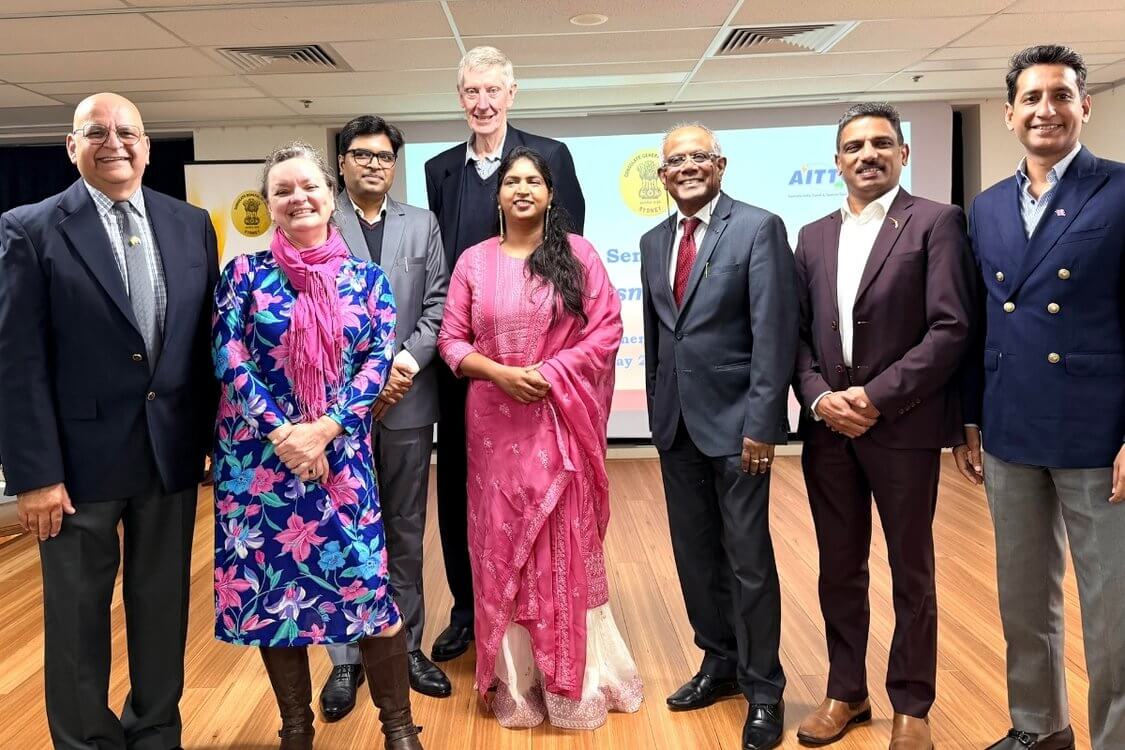
At a recent event hosted by the Australia India Travel and Tourism Council (AITTC), the message was clear: India’s tourism story is evolving rapidly – and Australia may still be underestimating the scale of the opportunity.

Beautifully curated and passionately presented, the evening showcased an India far beyond the traditional clichés of the Taj Mahal and crowded cities. Speaker after speaker took guests on a journey through the extraordinary diversity of modern Indian tourism: from tiger safaris in the national parks of Madhya Pradesh and Rajasthan, to luxury cruises along the Ganges and Brahmaputra rivers; from Himalayan trekking adventures in Ladakh and Uttarakhand, to world-class wellness retreats rooted in Ayurveda and yoga traditions.

There was truly something for everyone.

India’s tourism story needs a bigger Australian push - AITTC
(Source: Supplied)

For wildlife lovers, India now offers sophisticated safari experiences that rival parts of Africa. (“In India, unlike other parts of the world, man lives in harmony with nature and wild life, which makes it such a unique travel destination,” Dennis Jones from Wildlife Safari Consultants recounted). For adventure seekers, trekking routes through the Himalayas continue to attract global attention. Wellness tourism has become one of India’s fastest-growing sectors, blending luxury with spirituality and holistic health. River cruising, once considered niche, is emerging as a premium travel experience attracting mature travellers looking for culture, cuisine and history at a slower pace.

And then there is culinary tourism, heritage tourism, spiritual tourism, luxury rail journeys, beach destinations like Goa and the Andamans, and the growing popularity of boutique stays and eco-tourism.

Above all, the evening reinforced one idea: India is no longer a single-destination experience, it is a tourism universe.

Connectivity

Encouragingly, connectivity between Australia and India continues to improve. Air India was a prominent participant at the event. Its Motti Abrham spoke of the carrier’s transformation journey, improved customer experience and the arrival of newer aircraft as part of its ambitious fleet modernisation. “Air India deploys 290 aircraft globally, and we are awaiting delivery of 525 of aircraft of which 185 are Boeing and 340 from Airbus,” he said. Air India has also been expanding partnerships and strengthening Australia links as demand grows. 

Travel numbers certainly reflect that growth. The number of Australians travelling to India has reportedly risen from around 200,000 in 2012 annually to closer to 600,000 in recent years, an increase driven partly by improved aviation links, stronger business ties and growing cultural familiarity.

However, there is an important nuance in those figures.

A significant share of this growth is being driven by Australia’s rapidly expanding Indian diaspora, with many travelling to reconnect with family, culture and their roots. That is valuable traffic, but it also highlights a challenge: mainstream Australian leisure tourism to India still remains underdeveloped compared to its potential.

In many ways, Australia is missing the broader opportunity. 

India today is one of the world’s most dynamic travel destinations. Its infrastructure has improved significantly, luxury offerings have expanded, and younger Indian entrepreneurs are reshaping hospitality experiences across the country. Yet it continues to battle outdated perceptions in parts of the Australian market.

That is where the role of the Government of India’s tourism machinery becomes critical.

australia india torism forum
(Source: Suppllied)

Sandip Hor, founder of the AITTC, said that his team has been working for years to facilitate growth in travel to India. “We lobbied for direct flights; we lobbied for e-visas; we now have these in place,” he said. “But the biggest initiative was to educate the Australian population better about India. We did this by engaging with stake holders and holding regular sessions like this to update travel professionals of what is happening in India.” 

The passion and expertise clearly exist among local travel operators, destination specialists, and tourism promoters in Australia. The event itself demonstrated that. But enthusiasm alone cannot build a sustained tourism pipeline. There needs to be greater investment in destination marketing, trade engagement, consumer awareness campaigns and collaborative partnerships with Australian travel agents and airlines.

India’s tourism push globally is becoming more visible through roadshows and international campaigns. But Australia deserves sharper focus given the growing people-to-people relationship between the two nations.

This matters economically as well.

With uncertainty surrounding global markets and ongoing geopolitical tensions in the Middle East potentially impacting expatriate flows and overseas remittances into India, tourism becomes even more strategically important. India cannot rely solely on domestic tourism forever, strong as it may be. International visitor spending brings foreign exchange, creates employment, and supports regional economies.

Australia represents a high-value outbound travel market with travellers increasingly seeking authentic experiences, wellness escapes and culturally immersive journeys, all areas where India has enormous strengths.

The opportunity is sitting there.

What is needed now is sustained vision, coordinated promotion and stronger institutional support to match the energy already being shown by those on the ground. 

The Australia India Travel and Tourism Council event proved one thing beyond doubt: the storytellers are ready.

Now the broader tourism strategy needs to catch up.

Read Also: Vanuatu: More than a tropical getaway