Home Blog Page 2

Indian Badminton’s biggest names are in Sydney

0
pv sindhi badminton featured
(Source: X)
Reading Time: 4 minutes

India at Australian Open

The Sathio Group Australian Badminton Open 2026 returns to Sydney from 9–14 June 2026, bringing some of the world’s best badminton talent to the Quaycentre at Sydney Olympic Park. For fans following Indian Badminton, this year’s tournament promises a particularly exciting line-up.

For fans following the Indian campaign at the Australian Badminton Open campaign, this year’s tournament promises a particularly exciting line-up.

As a BWF World Tour Super 500 event, the tournament attracts Olympic medallists, world champions, and rising stars from across the globe. Despite some late withdrawals, India brings a strong contingent with players including the Olympic medallist PV Sindhu, Indonesia Open 2026 Super 1000 Quarterfinalists, MR Arjun, and Hariharan Amsakarunan, and emerging stars like Malvika Bansod, Tanvi Sharma, and Tharun Mannepalli.

Why the Australian Open Matters

Since its inception in 1975, the Australian Open has been Oceania’s premier badminton tournament. The 2026 edition, the event’s 35th, is part of the BWF World Tour, with ranking points contributing to qualification for the Los Angeles 2028 Olympics. It also serves as a crucial lead-up to the BWF World Championships in New Delhi and the Glasgow Commonwealth Games later this year.

Following the qualifying rounds, the tournament progresses through the main draw to Sunday’s finals, offering fans a rare chance to experience world-class badminton from courtside, where every rally, dive and smash unfolds just metres away.

India’s New Generation Arrives

Indian badminton has never been deeper. The foundations laid by stars such as PV Sindhu, Lakshya Sen, and the celebrated doubles pair of Satwiksairaj Rankireddy and Chirag Shetty have created a pathway for a new generation of talent now beginning to make their mark on the international stage.

Sydney will provide one of the first opportunities for Australian audiences to witness that next wave in action.

Men’s Doubles

Arjun and Hariharan: The Underdogs Turning Heads  Until last week, MR Arjun and Hariharan Amsakarunan were known mainly to devoted Indian badminton fans. Their breakthrough came at the Indonesia Open Super 1000, where a stunning quarter-final run against some of the world’s best pairs announced their arrival on the international stage. The duo were also part of India’s Thomas Cup bronze medal-winning squad earlier this year.
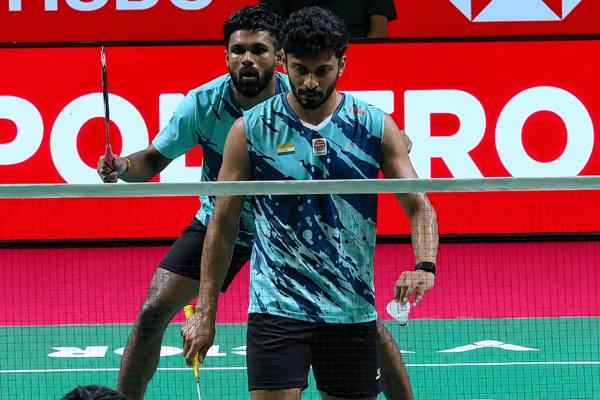
The young rising Men’s Double duo of Hariharan-Arjun
The rising Men’s Double duo of Hariharan-Arjun (Source: X) India at Australian Open

They come to Sydney with momentum and confidence, leading India’s men’s doubles challenge alongside Achutaditya Rao Doddavarapu and Pochana Arjun Reddy. While fans will miss the celebrated Satwik-Chirag partnership, Arjun and Hariharan represent the next generation of Indian badminton.

*Arjun and Hariharan are now seeded, following multiple withdrawals in the Men’s Doubles category.

Women’s Singles

PV Sindhu: A Champion Reclaiming Her Best For many Indian Australians, PV Sindhu needs little introduction. Her Olympic silver at Rio 2016 and bronze at Tokyo 2020 cemented her place among India’s greatest athletes, while she remains the country’s only badminton world champion and one of its few multiple Olympic medallists.
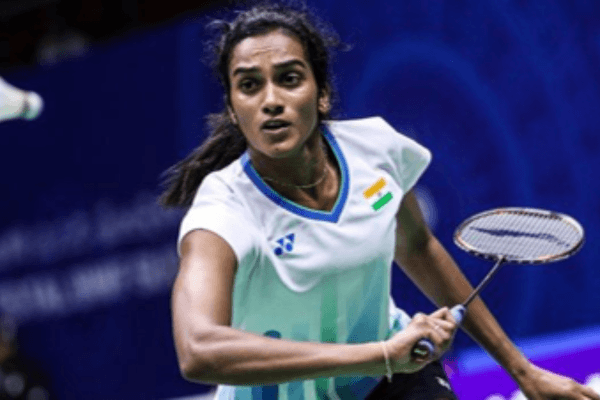
PV Sindhu- 3rd seeded in Women's Singles at Australian Open 2026
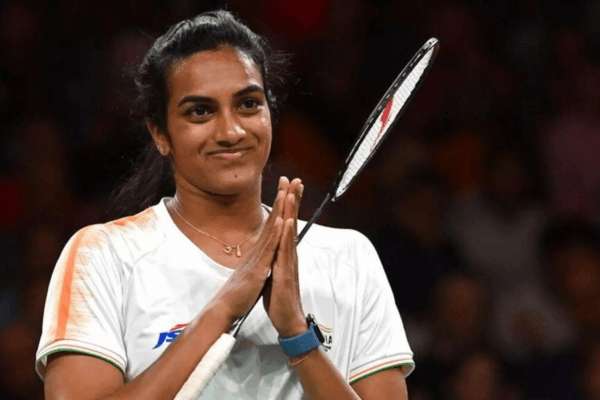
PV Sindhu, 3rd seeded in Women’s Singles at Australian Open 2026 (Source: X) India at Australian Open

After a challenging period marked by injuries and inconsistent form, Sindhu has rediscovered her touch. Strong recent performances have returned her to the world’s top 10 for the first time in over two years, and as the third seed in Sydney, the attacking star fans remember could be one of the tournament’s biggest threats.

Malvika Bansod and Tanvi Sharma: Future of Indian Women’s Singles  While PV Sindhu will attract much of the attention, India’s women’s singles strength extends well beyond its biggest star.

Malvika Bansod has established herself as one of the country’s leading players, with the consistency and composure to challenge higher-ranked opponents. Alongside her is 17-year-old Tanvi Sharma, one of Indian badminton’s brightest young prospects, eager to test herself against the world’s best.

Together with Aakarshi Kashyap, Isharani Baruah and Tanya Hemanth, they represent a new generation building on the legacy of PV Sindhu and Saina Nehwal, and ready to carry Indian women’s badminton into its next chapter.

Men’s Singles

India’s men’s singles campaign will be led by Kiran George and Tharun Mannepalli following the withdrawals of Ayush Shetty and veteran HS Prannoy.

Kiran announced himself with a famous victory over then world No. 1 Shi Yuqi at the 2023 Thailand Open, while rising star Tharun secured the biggest win of his career by defeating top seed Lee Cheuk Yiu at the 2025 Macau Open. Saneeth Dayanand and Manraj Singh will contest the qualifiers, hoping to join them in the main draw.

For this new generation of Indian talent, the Australian Open offers a valuable opportunity to gain experience, confidence and crucial ranking points.

Mixed Doubles

Mixed doubles remain one of the most exciting disciplines in world badminton, and India will be represented by Druv Rawat-Maneesha K. and Mohit Jaglan-Lakshita Jaglan, after the withdrawal of world No. 23, Dhruv Kapila and Tanisha Crasto.

More Than Just a Tournament

Indian badminton is entering a new era. PV Sindhu’s legacy is secure, India’s doubles stars have raised expectations, and a new generation is ready to take the next step.
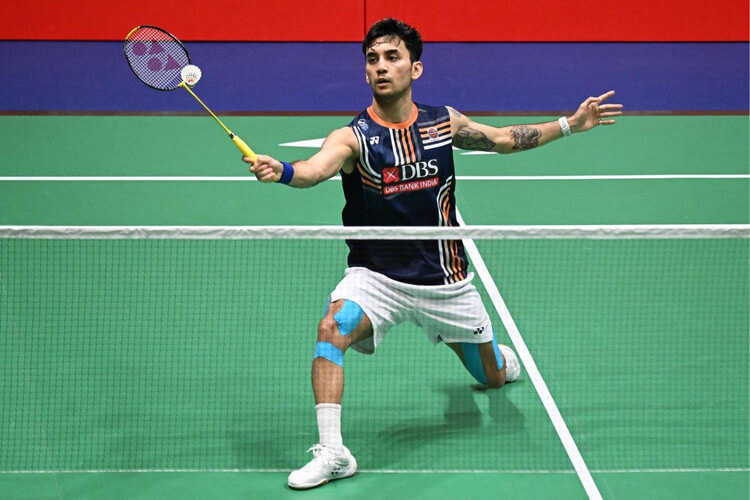
lakshya sen badminton
Will be missed: Lakshya Sen  (Source: X)

The absence of defending champion Lakshya Sen will undoubtedly be felt by Indian fans in Sydney, after he delivered one of the standout performances at the 2025 Australian Open. However it also opens doors for emerging talents such as Tharun Mannepalli and the Arjun-Hariharan pairing to continue India’s recent success.

For Sydney’s Indian diaspora, the Australian Open is a rare chance to support these athletes in person as they chase titles, ranking points and international recognition. After all, sport is at its best when communities rally behind their own. The players have travelled thousands of kilometres to compete – now it’s Sydney’s turn to show up for them.

Check the complete draw here.

Read Also: Nishan Velupillay : South Asian-origin forward named in Australia’s FIFA World Cup Squad


Anirudh Ravichander concert made me do this

0
Anirudh Ravichander
Anirudh Ravichander live in Melbourne (Source: Supplied)
Reading Time: 3 minutes


Dear Manager,

I need a day off.
This request is the direct result of a series of poor but deeply enjoyable decisions, culminating in Anirudh Ravichander’s XV Tour arriving in Melbourne on Thursday night. I am currently recovering from it.

I spent three hours deleting any plans I had of being a functional adult on Friday. The week before the XV Tour arrived in Melbourne, artificial intelligence was dragged into service. Parking was discussed. Weather forecasts were analysed. Power bank policies were investigated. At least one person asked a chatbot whether a leather jacket counted as an outfit (me).

Will he sing Hukum?

Will Jonita Gandhi be there?

Will Kanave Kanave ruin my emotional stability?

Dear ChatGPT. Dear Gemini. Dear Claude. Is Anirudh the best?

The robots tried their hardest. They produced balanced answers. Nuanced answers. Thoughtful answers. Then 13,000 people arrived at John Cain Arena on June 4, and collectively said, “That’s cute.” By the time Hukum hit, the debate had ended.

Adulthood lasted exactly four seconds

The opening notes of Raga of Revenge hadn’t even finished echoing around the arena before every carefully constructed adult personality dissolved. That’s the funny thing about Anirudh fans. We spend all year behaving like sensible members of society. We attend lectures. We answer emails. We discuss career plans. Some of us even have LinkedIn profiles. Then Anirudh walks onto a stage and suddenly we’re screaming before he’s reached the microphone. The crowd fascinated me. Outside the arena, everyone arrived carrying their own carefully maintained identity. There were gym enthusiasts, med students, finance bros, girls in leather jackets, couples on date night and at least a few people who had clearly spent longer planning their outfit than their route to the venue. I am including myself in that category. Then the music started and most of that information became completely useless. Aaya Sher arrived and the crowd reacted like a beloved relative had returned from overseas carrying gifts. Then Anirudh sang it again later and received exactly the same reaction. Nobody questioned this. Some songs deserve an encore. Aaya Sher deserves diplomatic immunity.

The joy of watching Anirudh Ravichander live (Source: Supplied)

The Melbourne convention of emotional support ft. Anirudh

Nobody arrives at an Anirudh concert carrying the same memories. The Rajini fans were waiting for Hukum. The instagram crowd had emotionally invested in Chuttamalle. The Bollywood crowd wanted Chaleya. The romantics knew Kanave Kanave was sitting somewhere in the setlist like a pending emotional invoice. Then there were the Why This Kolaveri Di loyalists. That song has survived school buses, tuition centres, first crushes, first heartbreaks, Instagram, TikTok and every terrible cover version humanity has inflicted upon it. Most songs get a moment. Kolaveri still clocks in for work. Fifteen years later, an arena full of people still knew every word. It was amusing to watch people get exposed by their favourite songs. People who had spent the evening looking cool and mysterious suddenly knew every lyric. People who claimed they were “just there for the atmosphere” developed an encyclopaedic knowledge of backing vocals.

Situationships receive fresh funding

Then came Kanave Kanave. John Cain Arena briefly transformed into an emotional archaeology site. Memories nobody had requested suddenly resurfaced. Exes returned. Situationships returned. Crushes returned. Somewhere in Melbourne, somebody definitely typed a name into Instagram’s search bar and then remembered they had self-respect. Hopefully. The couples looked delighted. The singles developed a sudden appreciation for architecture. The ceiling became fascinating. The floor became fascinating. The emergency exit signs delivered a career-best performance. Then Thangamey performed CPR on the atmosphere.


View this post on Instagram


A post shared by Sadhana (@reviewsbysadhu)

Victoria temporarily joins Tamil Nadu

Just when the arena had settled into a comfortable rhythm of chaos, Jonita Gandhi walked on stage and reminded everyone why she remains unfairly cool. Don’u Don’u Don’u landed exactly as it was supposed to. Loud, playful and impossible to resist. That night all the gods were present in spirit. Thalaivar, Thalapathy, Andavar and Kadavul. No further context will be provided. Those who know, know. Every familiar intro produced another wave of hysteria. The song Chennai city gangsta became Melbourne city gangsta. Later, Anirudh Ravichander delivered the line. “You know what, Melbourne? I’m a Chennai City Gangsta.” For one beautiful moment, Victoria became an overseas district of Tamil Nadu.

Unfortunately, society continued. Friday morning arrived carrying emails, assignments, and consequences. Across Melbourne, people opened laptops, joined meetings, and stared blankly into the middle distance. Physically, they were present. Spiritually, a concerning percentage of the city was still at Aaya Sher.

Dear Manager, I opened my laptop on Friday. That’s all I can confidently confirm.

Regards,
Sharanya

Read more: Diljit Dosanjh’s Melbourne show was more a letdown than hype

Chethicad Thomas OAM : King’s Birthday Honours 2026

0
Chethicad Thomas OAM
(Source: Supplied)
Reading Time: 3 minutes


Chethicad Thomas

When Chethicad Oommen Thomas OAM landed in Victoria in 1969, the White Australia Policy had just been lifted. Determined to help other migrants build a life here in Australia, he dedicated over 50 years of his life to championing the Indian community, leading with grace, empathy and kindness.

Chethicad founded the Malayali Association of Victoria just a few years after he landed and later joined the Australia India Society of Victoria, established the Victorian Indian Community Charitable Trust and helped bring the Indian Orthodox Church to Australia.

Now, at 83 years of age, he’s shown no signs of slowing down.

“I believe God has given me talents and education,” he says. “I believe that it is my duty to give what I have to other people. Helping others doesn’t mean helping financially, but extends to giving advice, getting involved in initiatives and giving others moral support.”

First established in 1976, the Malayali Association looked very different from the organisation it is today.

“Initially, our home became a hub for Indians, especially Malayalis, to get together on the weekend. But eventually, I realised that we needed a common place to meet that was accessible to all. That was when a good friend and I came up with the idea for the Malayali Association,” he says.

Soon, the organisation began hosting Onam functions and attracted the attention of Victorian-Indians from other parts of India who were exposed to Kerala’s culture for the first time, as well as mainstream Australians.

The exposure got him introduced to the Australia India Society of Victoria (AISV) which, after seeing the rapid growth of the Malayali Association, was eager to get him on their team of executive members.

Chethicad Thomas OAM
Chethicad Thomas helped bring the Indian Orthodox Church to Australia. (Source: Supplied)

Chethicad saw the AISV as a platform that would allow for greater reach to Indians all across Victoria.

“It was a well-recognised organisation that was able to get support and grants from both the Australian and Indian governments. This meant that our efforts to raise awareness about the issues faced by the Indian community were well received by the greater public,” he says.

During his time as the President of the Association, he used the connections he forged with politicians and businessmen in the broader community through his role in financial management, to help Indians get the help they needed to settle in Australia as well as to help organise events such as Indira Gandhi’s visit to Victoria in 1981.

“One issue I was proud to be involved in addressing was that of discrimination which was rampant at the time,” he remembers.

On one occasion, when a psychiatrist was denied a promotion on account of his background, the AISV lobbied ministers, and provided moral support during legal proceedings.

During his tenure as President, he also established the Victorian Indian Community Charitable Trust, which was intended to provide financial relief to the disadvantaged.

His continual engagement with the broader community is largely underpinned by his faith. Whilst balancing his day job and his role as an executive member of the AISV, he helped bring the Indian Orthodox Church to Victoria, with the launch of the St. Gregorios Indian Orthodox Church at Clayton South.

Chethicad Thomas OAM
Chethicad has guided building development – funding renovations and establishing a trust for the Church’s long-term sustainability (Source: Supplied)

As of 2026, there are three Indian Orthodox churches in Victoria, with five to six congregations in regional areas. Chethicad has played a vital role in establishing all three churches as Chairman of the Church Development Committee. His contributions included organising building development, funding renovations and establishing a trust for the Church. With the spike in attendees over the past few years, the Church is looking to expand once again with renovations already underway.

Although Chethicad is now primarily concerned with the Church, he notes the declining popularity of cultural associations. To him, this growing disinterest is largely a by-product of a lack of youth focused events.

“These associations simply aren’t appealing to the youth. We have to go beyond talking about what happened in 1947. We need more young people to helm these organisations and to create events that will make a connection.”

Despite this growing disinterest, Chethicad Thomas strongly believes in the diaspora’s potential to effect change on a grand scale.

“We, the Indian diaspora, have the capacity to contribute so much. Most of us are well-educated and fairly well off. I urge everyone to share a bit of what they have with others – it will be well appreciated,” he says.

Read more: Noshir Irani OAM: King’s Birthday Honours 2026

Noshir Irani OAM: King’s Birthday Honours 2026

0
(Source: Supplied)
Reading Time: 3 minutes

Noshir Irani

Noshir Irani, a beloved figure in Sydney’s Zoroastrian and broader Indian-Australian community, has been awarded the Medal of the Order of Australia (OAM) in the King’s Birthday Honours 2026, recognising decades of volunteer work and community service.

For Irani, the recognition came as a genuine surprise. “The reaction was a great surprise, but I felt happy that what a little bit I’m trying to do in my own capacity was recognised,” he said. Characteristically modest, he was quick to put the award in perspective. “It’s not really about getting the award, to be honest with you. The most important thing is that whatever little you’re trying to do for the community has been recognised. The award is secondary, really.”

Irani arrived in Australia in 1979, transferred here by the multinational pharmaceutical company he worked for at the time. He admits he was initially uncertain about the move, worried about how his wife Maggie and two young daughters, Hilla and Homaxi, would settle into a country that was vastly different from the Bombay they had left behind. His concerns proved unfounded. “To my great surprise, all three of them just loved the place. It was I who carried on for four, five, six months.”

After a long career in the corporate world, including a stint in Dubai, and a period running a small water purification business, Irani retired around 2006. It was at that point that he made a decision that would define the next chapter of his life. “I made up my mind very, very strongly, what I want to do is try and give something back to the community. They’ve been nice to me. I’ve been very fortunate. So, come on, time to give back something.”

That commitment took many forms. For nearly nineteen years, Irani has been a volunteer with Meals on Wheels, delivering food to elderly residents across Sydney. “The very satisfaction that you’re ringing the bell and an old man or woman, hardly able to walk, comes to the door, you give them the meal because they can’t prepare it themselves. And more importantly, not just giving the meal, but associating a little bit with them. They are so lonely,” he said.

Noshir Irani
Justice of Peace: Noshir Irani (Source: Supplied)

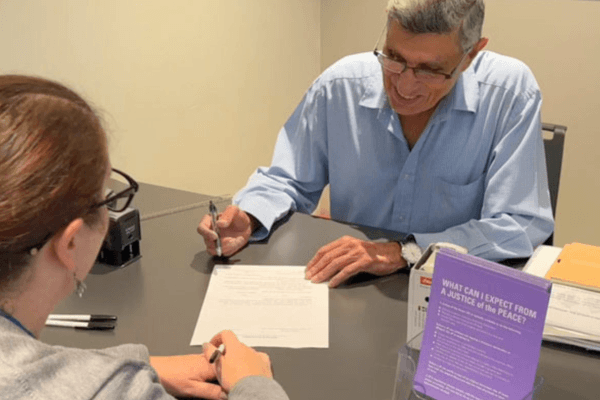
Twelve years ago, he became a Justice of the Peace, offering his services free of charge across multiple locations in Sydney every week. He has also served on the board of Ku-ring-gai Neighbourhood Centre (KNC), a not-for-profit dedicated to health and welfare support for the elderly, and was president of the Indo-Australian Cultural Society, which worked to foster exchange between Indian and Australian communities.

Irani’s contributions to the Zoroastrian community in Australia span decades. He served multiple terms as president of the Australian Zoroastrian Association, helping grow a community of just 40 or 50 families in 1979 to over 500 today, and led a landmark legal battle that secured the community’s right to use their own prayer hall in the Baulkham Hills area.

Now in his eighties, Noshir Irani plays golf twice a week and shows no signs of slowing down. His message to younger generations is simple: look up from your screens and look after the vulnerable. “The old and the vulnerable people of society, they need a lot of support. Whatever little you can do in your capacity, please do it.”

Read Also: Chethicad Thomas OAM: King’s Birthday Honours 2026

Bijinder Dugal, OAM: King’s Birthday Honours 2026

0
Bijinder Dugal OAM
(Source: Supplied)
Reading Time: 3 minutes

Bijinder Dugal 

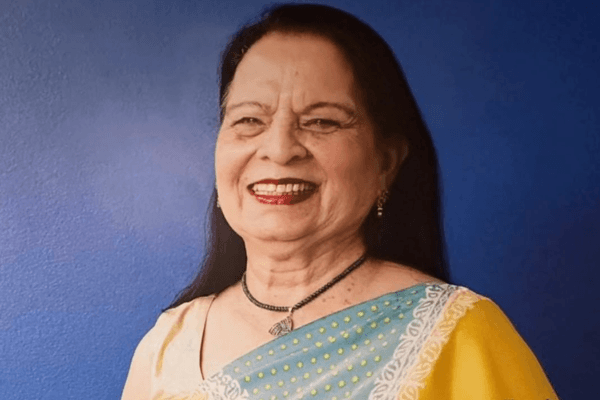
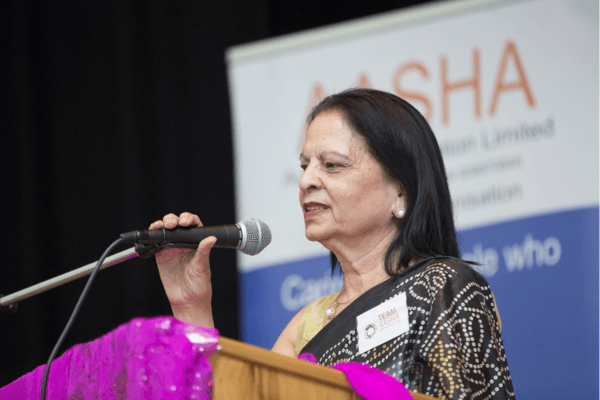
Bijinder Dugal is a familiar face at community events across ever-expanding Sydney. Being the co-founding director of Aasha Australia Foundation, she has championed support for the health and well-being of older members of the Indian community since 2017. Her work has been acknowledged as part of the King’s Birthday Honours this year with a Medal of the Order of Australia in the general division for service to aged welfare.

Expressing her gratitude for the recognition, Dugal says the accolades belong equally to the volunteers of Aasha Foundation which conducts regular programs for elderly members of the Indian diaspora, combining cultural programs, music, dance and entertainment with food, information and awareness sessions, health checks and vaccination drives too.

Australia has been home for Dugal since 1975. She’s worked with the NSW Department of Education for more than four decades, working her way up from a teacher, all the way to Assistant Principal in schools including Auburn Girls High School, Clarke Road School, Redfern Public School, Ryde Public School and Spastic Centre among others. She continues to be a teacher with IABBV Hindi School, besides serving as Executive Member of Ryde Indian Association and is the former vice president of the Australian Hindi Indian Association (AHIA).

Bijinder Dugal has been a strong advocate for health of the elderly for several years, especially helping raise awareness about dementia, and credits her work there in laying the roots for Aasha Foundation.

Bijinder Dugal
Offering an ‘Aasha’ of hope and wellbeing (Source: Supplied)

“’Aasha’ means hope in Sanskrit, and that is exactly what we try to provide for the elderly members of our community. So many of them suffer loneliness, isolation, sickness, familial challenges and abuse etc but have nobody to share their problems with, nor any outlet for respite,” she explains. “To bridge that gap, we regularly conduct programs across different corners of Sydney to provide this cohort of people a safe space for a few hours of fun and enjoyment.”

Sessions are well attended, Dugal reveals. “We are present in Blacktown, Gordon, Crows Nest, Strathfield, West Ryde etc, to name a few. In the few hours of the program, the attendees get to mingle with others, enjoy good food, learn new skills, enjoy dancing and music, fitness and health sessions etc. All these are wonderful activities for their mental well-being too. We also try to bring expert speakers to talk about subjects like digital literacy, how to identify and tackle abuse, do their health checks etc,” she says.

The sessions have evolved over the years, she says. “Covid was a particularly challenging time, but we managed to conduct programs online and that helped us to connect with elderly in other parts of the world too, and they continue to stay in touch. I have learnt so many new skills too along the way, including how to conduct live programs on social media!”

Bijinder Dugal
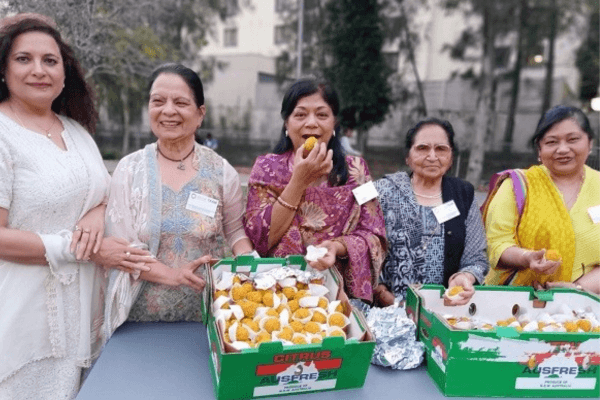
Bijinder Dugal (second from left), along with fellow Aasha volunteers (Source: Supplied)

It’s no wonder that Aasha Foundation and Bijinder Dugal have been recognised at various forums through the years, including Individual Community Hero by City of Ryde Volunteer Recognition Awards 2025, Volunteer of the Year (Blacktown City Multicultural Awards 2023), Upper North Shore Volunteer Team of the Year, NSW Volunteer of the Year Awards 2022, to name a few.

The awards and accolades notwithstanding, Bijinder Dugal says the biggest reward for her continues to be the smiles on faces of the elderly. “This recognition is not the end of a journey. Rather, it is a reminder that there is still much work to do. Too many people are still isolated, their voices unheard. There are countless others who just need someone to stand beside them to assure them that they are not alone. At Aasha, we feel honoured to be able to watch strangers become friends, see the hope return to someone’s eyes, and witness communities come together in support of one another,” she says.

Read more: Dr Atul Kumar Garg, OAM: King’s Birthday Honours 2026

Saurabh Mishra OAM: King’s Birthday Honours 2026

0
(Source: Supplied)
Reading Time: 3 minutes


Saurabh Mishra OAM

“I’m interested in many things,” Saurabh Mishra says, matter-of-factly. “I find I can contribute meaningfully in many streams.”

For his many innovative contributions – in healthtech, healthcare, edtech, business mentoring, classical Indian music – Mishra has received an OAM in this year’s King’s Birthday Honours.

As a tech entrepreneur, Mishra started and scaled tech initiatives in healthcare that have now gone on to become part and parcel of the daily work life of practitioners. These include EClinic (a communication software that surgeries utilise to send out medical test results), Healthnote (SMS reminders) and PalCare (a patient management software in use in palliative care in Australia and New Zealand).

Throughout though, it was community service and pro bono work that really defined Saurabh Mishra.

The first voluntary activity he talks about, is with TiE (The IndUS Entrepreneur), one of the world’s largest entrepreneurial networks that supports founders through mentoring, education, funding access, investor connections and a global community of business leaders.

At TiE Melbourne, Saurabh Mishra has helped nurture the careers of early stage entrepreneurs, changing their business by connecting them, help them grow, even investing in them as an angel investor.

“I gave twenty years, even serving on their executive,” Saurabh tells Indian Link. “It was deeply satisfying.”

Alongside, Saurabh kept up his early passion for Hindustani classical music. It has been fascinating to watch him “scale” that passion too, to borrow the business parlance he is accustomed to.

In 2016 he founded the Melbourne Hindustani Classical Music Society.

“It’s been a good forum to promote this genre of music – in nice venues, to good audiences, and to promote local artistes. Besides our monthly performances, we organise an annual international festival on Labour Day weekend by inviting international performers.”

Saurabh mishra OAM
A lifelong passion for Hindustani classical music (Source: Supplied)

His goal here is nothing short of ambitious – to see a world-class Hindustani classical musician emerge from Melbourne. “For this, I’ve been deep in grassroots work, investing time and effort in teaching and learning endeavours, and in performances.”

Saurabh talks with equal passion about the unexpected opportunities that came from his technical contributions in palliative care. He began to volunteer as a companion for end-stage patients.

“It was an opportunity that came at the right time,” he recalls. “I had always wanted to give back, and always had a strong interest in spiritual practice. I began to look forward to my weekly visits. We would have coffee, or walk, or chat, or meditate. Soon I began to help write their biographies.”

He has kept up this weekly activity to this day.

“I’ve met some remarkable people who have inspired me. One person that comes to mind was close to my age, and while it was disturbing for me at first, I found he had reconciled to the fact, talking about (his impending death), even joking. What a remarkable outlook to life he had – it was greatly inspiring, making me look at my own life anew, and with gratitude.”

For someone whose life has been shaped by multiple passions, the obvious question was this: if he could start again but only pursue one, which would he choose?

“I’ve been asked that before,” he laughed. “My answer – all! Each has given me joy. I’ve come to realise an underlying theme in my life’s activities – connecting people with other people, and with themselves.”

Saurabh Mishra OAM has doing both together in a brand new program that he’s waist-deep into these days. It’s called Vyatra (pronounced V-yatra, as in, virtual travel), an innovative educational platform that is finding a growing audience in schools.

“Using live video technology, students can explore places they are studying without leaving the classroom,” Saurabh described. “A geography lesson on river ecosystems, for example, might feature a guide joining in real time from the banks of the Ganga, taking students on an 800-km journey through Hrishikesh, Haridwar, Prayagraj and Varanasi while explaining the river’s ecological and cultural significance. Student engagement has been incredible.”

The concept extends beyond geography to history and culture, with immersive experiences for students in places such as Japan or Uzbekistan or East Arnhem Land.

The idea was born in 2020 during lockdown, when a virtual journey along the Ganga moved participants to tears.

Since then, Vyatra has shown Indian families their ancestral homes in pre-partition Pakistan, taken Japanese Buddhists to religious spots in South Asia, and connected palliative care patients with distant memories in Europe.

Virtual pilgrimages. Ancestral homecomings. Immersive classrooms. Smarter medical surgery practices. Gentler palliative care. A movement for Hindustani classical music. On the surface, these may seem very different ideas. But each, in its own way, is about connecting people – to place, to memory, to culture, to one another. And given that track record, it is hard not to wonder what Saurabh Mishra OAM, tech entrepreneur and social connector, will dream up next.

READ ALSO: Dr Atul Kumar Garg OAM: King’s Birthday Honours  2026

Dr Atul Kumar Garg: King’s Birthday Honours 2026

0
Atul Kumar Garg
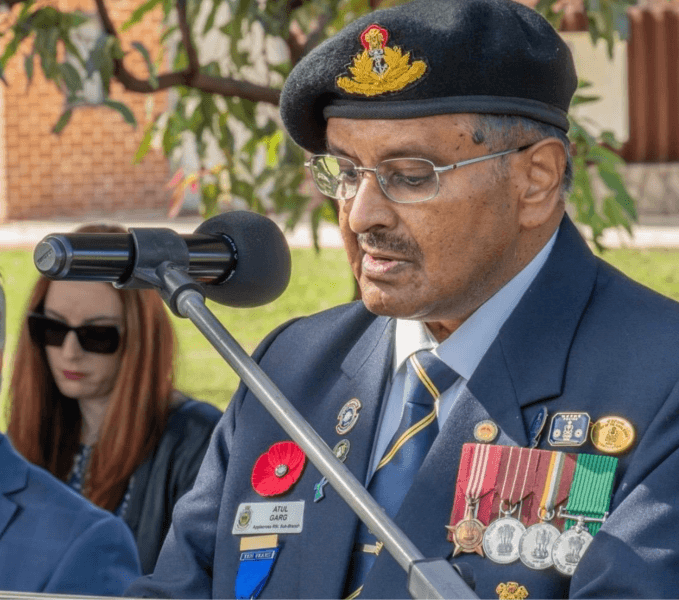
Dr Atul Kumar Garg of Perth (Source: Supplied)
Reading Time: 4 minutes


Reflecting on his journey since arriving in Australia, Dr Atul Kumar Garg of Perth says, “Australia has given me great opportunities since I arrived here in 1993.”

As someone who grabbed each of these opportunities with both hands and made something of them, he is not only a great role model, but one whose contributions have now been recognised with an OAM.

Dr Garg gave up a life in the Indian Navy when he moved to Australia, taking up roles here in the State Energy Commission, Alinta Energy, Department of Planning and Infrastructure of Western Australia and more.

He has spent years building and directing volunteer networks across Western Australia. In his 33 years here, his civic participation has touched community as well as mainstream platforms.

Community builder

At the community level, almost immediately after his arrival, he became involved with activities in the Indian Society of Western Australia ISWA, the Hindi Samaj of Western Australia and the Hindu Association of Western Australia. He played a major role in the establishment of WA’s first Hindu temple at Perth. In 2017, he founded the Federation of Indian Associations of Western Australia, uniting over 150 Indian associations under one umbrella for better outcomes for the Indian community of the state.

Atul Kumar Garg
(Source: Supplied)

In the mainstream, Neighbourhood Watch was one of Dr Atul Kumar Garg’s earliest forays in community involvement, only months after arriving in the country. He began as a street representative, rose to suburb manager and area coordinator, and has been a Member of the State Board since 2017.

“We must all use our skills to do good to the community,” Dr Garg told Indian Link about his early start in civic roles here in Australia.

It’s a lesson he claims he learned from his parents, and from his time in the Indian Navy.

“My parents taught me values of hard work, integrity and education, and to use these in the service to others. The Indian navy taught me the importance of serving the community and serving something larger than myself.”

Atul Kumar Garg
(Source: Supplied)

Roles in the Prostate Cancer Foundation of Australia and Carers’ Advisory Council also seemed aligned to his interest in public health.

Dr Garg also joined the Returned Services League of Australia in 2020, currently Acting President in the Applecross sub-branch.

His interests in technology took him to Chair the High Technology Club at Murdoch University, and he also founded the Institute of Electronics and Telecommunication Engineers Australia.

Dr Garg is also a Justice of the Peace, and a keen golfer, founder of the Ozind Golf Club.

But wait, there’s more.

If you’re wondering about that ‘Dr’ title – the unstoppable Atul Garg took a PhD, from the University of Paris no less, in the field of Transformational Leadership. This latest accolade is the newest feather in his cap, arriving only six months ago.

“I’ve believed strongly in transformational leadership in all my roles professionally and in the community,” he said. Looking at his life’s work, it is obvious why transformational leadership – with its focus on fostering morale, motivation and evolving ‘followers’ into leaders themselves – would appeal to him.

Bridging the Indian Ocean

Dr Atul Kumar Garg served in the Indian Navy for nineteen years, before retiring as a Commander in 1993 to move to Australia with his family. He has been honoured with six decorations in the navy, and served as the Chief Aviation Officer/ Engineer on the highly distinguished INS Viraat Aircraft Carrier, and was part of the team that installed computers on it, a first for the Indian Navy. As an engineer in the Navy with a Masters in IT and Computer Science, he sits at the nexus of defence and technology, an area of deep interest to him.

Dr Atul Kumar Garg’s nineteen-year career in the Indian navy has given him strong insights into the relationship between the Indian and Australian navies over the shared Indian Ocean.

Atul Kumar Garg
(Source: Supplied)

Through his Perth Research Organisation, he writes policy papers for the state and federal governments on areas of significance. His latest paper was on the AUKUS submarine deal.

“What happens in the ocean is of importance to both the countries,” he says, hoping for a deeper partnership between the two nations in not just defence and maritime security, but also technology.

Now serving as the newly appointed Australian advisor to the Economic Council of India, he hopes to “focus more on growing the relationship, and make sure that Australia and India develop the defence ties and maritime ties and share the new technology,” to make their region more secure.

Clearly, Dr Garg’s service to the people did not end with the Indian Navy – it simply found new expression in Australia.

“Volunteering gives you great satisfaction,” Dr Garg mused. “I feel that this OAM honour is not mine alone – it belongs to every volunteer who is quietly serving the community out there, without expecting any recognition. I might add, this honour has reinforced my beliefs that every individual can make a positive difference through service to the community.”

Read Also: Bijinder Dugal 0AM: King’s Birthday Honours 2026

Dr Abhishek Verma OAM: King’s Birthday Honours 2026

0
Abhishek Verma GP
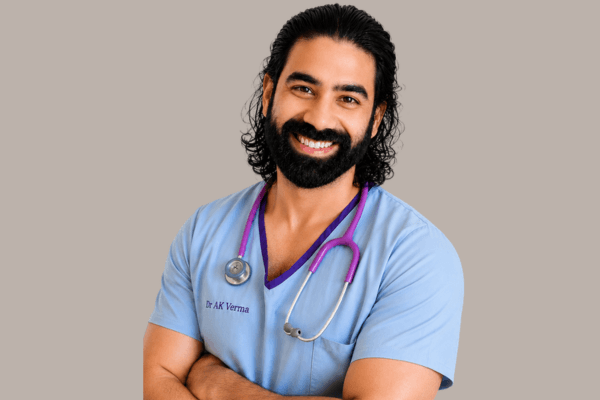
Melbourne GP Dr Abhishek Verma (Source: Supplied)
Reading Time: 4 minutes


When Melbourne’s Dr Abhishek Verma first found out he was getting an OAM, he didn’t believe it.

“I thought this has got to be some sort of scam – like, I haven’t done anything extraordinary or special,” he laughs.

“It was not anything that was on my radar in a million years.”

Growing up in a household full of medical professionals, including Dr Amit Verma, consultant dermatologist at The Alfred Hospital, and Dr Ajai Verma, Chief Medical Officer at Barwon Health, Dr Abhishek Verma OAM feels like the ‘least accomplished’ member of his family.

Dr Abhishek Verma receives his 2022 award from RACGP President Dr Nicole Higgins. (Source; RACGP)
Dr Abhishek Verma receives GP of the Year 2022 award from RACGP President Dr Nicole Higgins. (Source: RACGP)

But as the youngest Chair of the Victorian Medical Board, and a GP of the Year winner in 2022, Dr Abhishek Verma OAM has achieved career successes most of us can only dream of.

“My parents instilled the value of having a job where you are doing something with impact and tangibly improving people’s lives, not just doing a job for a pay check or recognition. I guess that was the reason we were all encouraged to consider medicine as a career,” he says of their family passion for medicine.

Dr Verma fell in love with general practice in Year 10, when work experience at his family practice ‘exceeded his expectations’.

“I was sitting in on our family GP, just watching him do his job and [loved] the variety of stuff,” he recalls. “You got this sense that this doctor knew everything. Now it’s not possible to know everything about medicine, but he just had a breadth of knowledge and could contribute something to every consultation.”

“I thought, wow, that’s pretty extraordinary.”

After medical school, he did a brief stint as an ENT surgeon but found his way back to General Practice when his child was born so he could ‘be around a bit more’.

Coming from this surgery background, Dr Verma still enjoys the more hands-on parts of being a GP, such as skin procedures. But his favourite part of the job is the chance to offer longitudinal care, and to witness the impact of that care.

“General practice can be whatever you want. It can be a transactional thing where you go in, needing a script or a medical certificate and that’s it,” he explains.

“But the kind of GP that I want to be is your partner in health, to help you manage whatever it is that you need to manage.”

In a system that prioritises expedience, Dr Verma believes in taking the time to listen and learn from his patients.

RACGP GP of the Year 2022
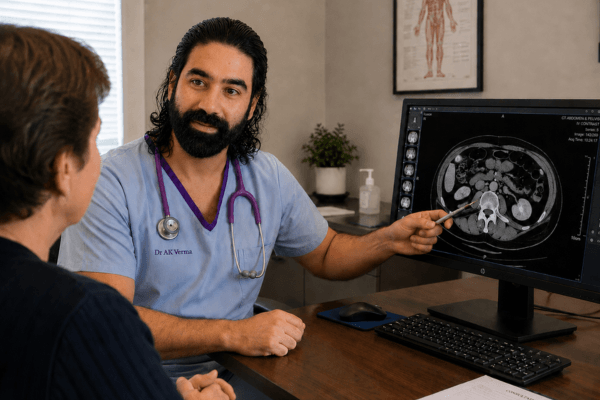
“That cradle to grave longitudinal care in general practice is what I’ve learned is a better fit for me,” says Dr Abhishek Verma OAM. (Source: Supplied)

“As a GP, you get this unique window into people’s lives and you don’t just see the illness, but you also see other stuff, which is amazing,” he says.

“From any clinical consultation, I get just as much out of it as my patients. I’m very lucky in that way.”

As the lynchpin of primary care, general practitioners are crucial for managing quality of life – so Dr Verma’s time and care towards his patients has garnered their exceptional trust.

“I’ve had patients who’ll wait four hours in my waiting room just for a script because they want to see me. They won’t see anyone else – it’s really humbling that they trust you with any healthcare issues,” he reveals.

“I’ll have some patients see a specialist, come back and they won’t have done anything the specialist says because they want to check that you’re okay with it, which is crazy because they just value you [so much]. I think to get that level of trust, you have to spend the time and invest.”

Equally, Dr Verma feels strongly about using his talents to help marginalised communities in Melbourne’s outer-eastern suburbs access medical care, inspired by his grandfather’s selflessness.

“My grandfather was a maxillofacial surgeon; once, on holiday there was a disadvantaged patient who had a bad cleft lip palate, a physical deformity which in particular countries can be really debilitating socially,” he recalls.

“He left the holidays with the family to go and work on this young person for free. Using your training to add something in an altruistic way – I thought that’s amazing.”

Dr Verma juggles practice alongside his roles as an examiner for the RACGP, and as the chair of the Victorian Medical Board.

With only 17 percent of new medical graduates considering general practice, he hopes to use these roles to advocate for the next generation of practitioners.

Dr Abhishek Verma OAM

Dr Verma GP Narre Warren
Being able to ‘walk someone through the hardest illness of their life’ is an honour for Dr Abhishek Verma. (Source: Supplied)

“We need to give medical students more exposure to general in medical school. If we did, you’d have a lot more uptake because people would see this is actually what you thought being a doctor would be like, seeing a patient from scratch, figuring out their problems, coming up with a plan,” he says.

Despite workforce shortages and persistent Medicare challenges, Dr Abhishek Verma OAM says it’s his desire to help his patients that keeps him going.

“It sounds awfully hubristic, but when people say, ‘you’re the best doctor I’ve ever met’, I just tell them I’m the doctor with the best patients because I learn something from all my patients,” he says. “I learn from the way they manage their health, the way they manage their relationships. I see their courage, I see their resilience, I see their hope, I see their dreams, and I learn something.”

“It’s the patients that sustain me. I really feel that I’m blessed to work in a profession where you can make a difference.”


READ ALSO: Dr Dilipkumar Gahankari OAM: King’s Birthday Honours 2026

Dr Dilip Gahankari OAM: King’s Birthday Honours 2026

0
Dr Dilip Gahankari
Dr Dilip Gahankari OAM (Source: Supplied)
Reading Time: 4 minutes


An 18-month-old girl from Melghat, a tribal Maharashtra region, arrived with severe burn contractures across her right arm and fingers. Malnourished and living far from specialist medical care, she could barely use her hand.

Years later, Dr Dilip Gahankari watched a video of the same child dancing at home. “The smile was priceless,” he recounts to Indian Link.

The Australian surgeon had operated on her during one of his annual surgical camps at Melghat, where access to reconstructive surgery remains scarce. Today, the child attends school and has a functioning hand.

“For us, it’s just another operation. For them, it is their new life,” he shares, smiling. It is this lifelong commitment to restoring lives through surgery – both in Australia and India – that has earned Dr Gahankari a Medal of the Order of Australia (OAM) in this year’s King’s Birthday Honours.

Recognised for his service to plastic and reconstructive surgery, the Gold Coast-based surgeon says the honour belongs as much to his volunteers and patients as it does to him. “Humbled, and genuinely surprised,” he says, of his reaction upon first hearing, adding, “My very first thought was that this award doesn’t belong to me, it belongs to every person who has given up their Christmas to operate in a village most people will never find on a map.”

 To love is to serve

Today, Dr Dilip Gahankari is recognised as one of Australia’s leading plastic and reconstructive surgeons. Most recently, he was named a Champion of Rural Surgery 2025, an honour conferred at the 29th Annual ARSICON, Conference of the Association of Rural Surgeons of India.

But his connection to Melghat stretches back more than four decades.

Growing up in a small town in India, he says education was the greatest gift his father could offer. “My father believed his children’s education was the only inheritance worth giving – and he was right,” he shares.

As a medical student in Nagpur, he and three friends shared a dream of serving remote communities. One of those friends, Dr Ravi Kolhe, moved to the isolated village of Bairagad in Melghat in 1984. Dr Gahankari soon joined him.

The experience left a lasting impression.

“There was no electricity, radio, phones. We slept on the floor in a shack. The village would be cut off from the rest of the world for four months during the rainy season.”

The young doctors treated difficult childbirth cases, severe injuries, malnutrition and infectious diseases with almost no resources.

“The plight of people, their poverty and their helplessness left a lasting impression on me.”

Determined to return better equipped, Dr Gahankari completed surgical training in India before pursuing further training in Malaysia, the United Kingdom and eventually Australia, where he specialised in hand surgery and later settled permanently.

“My wife and I decided to embrace Australia as a land of opportunity, and we became citizens,” he remembers.

(Source: Australian Society of Plastic Surgeons)

 Bridging back to the motherland

Yet he never lost sight of Melghat. After establishing himself as a plastic surgeon on the Gold Coast, he began organising annual surgical camps in the region. After 2007, these camps have operated in partnership with the MAHAN Trust and the Mahatma Gandhi Tribal Hospital.

“What keeps me returning is simple,” he says. “Tribal people in Melghat have practically no direct access for specialised plastic and reconstructive surgery care.”

The work addresses conditions that are often life-altering. Burn contractures are particularly common, with children injured by open cooking fires and untreated burns leaving permanent deformities.

“This isn’t cosmetic surgery. It’s giving someone back their hands, their work, their place in the world.”

The camps take place annually during the Christmas period, requiring Australian surgeons, anaesthetists and medical staff to sacrifice holidays with their families.

“They [Dr Dilip Gahankari’s team and volunteers] ask for nothing, and they come home changed.”

Balancing a busy public and private surgical practice with humanitarian work is demanding, but he sees the two pursuits as complementary.

“The private and public practice on the Gold Coast is my profession; the camps are my purpose. Each one makes the other meaningful.”

Dr Dilip Gahankari
(Source: Supplied)

Two homes, two hearts

“Nearly five billion people in the world cannot access safe surgical care,” Dr Gahankari informs.

Australia’s healthcare system, he believes, excels because it successfully organises goodwill through training, accountability and strong institutions.

India has taught him resilience and adaptability, and ‘the ability to deliver world-class outcomes with very little investment.’

“The ideal,” he muses, “is to combine both.”

Beyond humanitarian work, Dr Dilip Gahankari has served in emergency responses following the Bali bombings and natural disasters, and has held academic and advisory positions across Australia and India. Yet among all his achievements, one role remains closest to his heart.

“The operating theatre in Melghat – without question.”

“When I release a contracture from a young person’s hand and watch them open their fingers for the first time in years, there is no abstraction.”

The camps, he says, represent something deeper than medicine. “It is where the two halves of who I am – the country that gave me my roots and the country that gave me my opportunities – come together completely.”

Read Also: Dr Abhishek Verma OAM: King’s Birthday Honours 2026

Professor Bala Venkatesh AM: King’s Birthday Honours 2026

0
bala venkatesh
Reading Time: 4 minutes


In the 1800s, U V Swaminatha Iyer (known affectionately as Tamil Thaataa) painstakingly rebuilt Tamil scholarship, restoring lost texts and revitalising the language for future generations.  

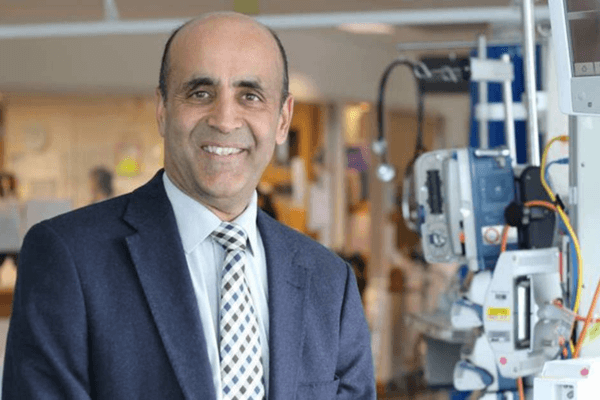
Is it any surprise that Professor Balasubramaniam Venkatesh, one of Australia’s pre-eminent intensive care medicine specialists who has shaped the discipline’s scholarship internationally, is a descendant of Tamil Thaataa? 

Surely his forefather would approve of his recent appointment to the Member of the Order of Australia? 

“The scale of his achievements was phenomenal,” Professor Bala Venkatesh AM muses. “I’m sure he’d be proud of this if he was alive though.”  

As a child, he remembers being brought to the feet of his antecedent’s statue in Chennai to learn about Tamil literature. But he always had an eye for science, loving biology when he was in school.  

“I’m the first doctor in my family, as far as we can trace back. My grandfather, who was based in Tirunelveli, built a free maternity hospital for the poor based on charitable donations. That was a big influence in our family,” he recalls.  

Training generations of ICU professionals 

After completing his MBBS at the Christian Medical College, Vellore, Professor Venkatesh studied a research degree at the University of Birmingham, where he felt compelled to specialise in intensive care medicine.  

“The attraction of intensive care is you see conditions related to all the specialties,” Professor Venkatesh says.  

Bala Venkatesh
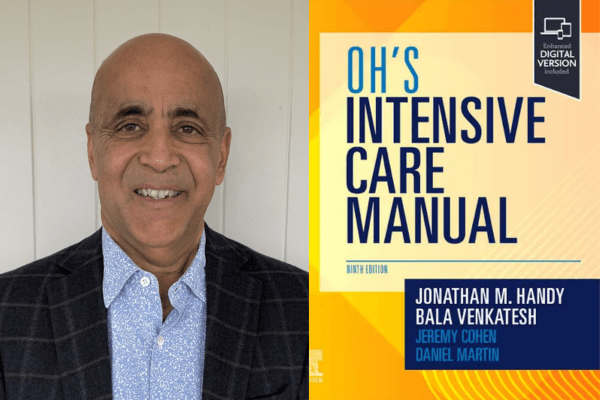
Professor Venkatesh helped write The Oh’s Intensive Care Manual, considered the ‘bible’ of the specialty. (Source: Supplied)

“The other thing is it’s very procedural, you are very hands-on. You have to put patients on life support and put big central cannulae into the arteries and veins. All that makes it challenging, but at the same time, very attractive.”  

When Professor Venkatesh arrived in Australia in 1995, intensive care medicine was a discipline still in its infancy, with only one accredited course. Over 25 years, he helped establish the College of Intensive Care Medicine’s training program, a course which every ICU practitioner working in Australia has undergone.  

“It’s pleasing to see people who’ve gone through it succeed, become specialists and come back as examiners on the course,” Professor Venkatesh says.  

It was a training model so successful he was invited to implement it in India, where he remains an Honorary Professor at the College of Critical Care Medicine, and at St John’s Medical College Research Institute, Bangalore.  

Serving as an examination chair, Vice President, and then President of the College of Intensive Care Medicine from 2014 to 2016, he helped set the rigorous framework which has made Australia a leading critical care provider.   

“Intensive care in Australia has the world’s best outcomes; we have a 90 to 95 percent survival rate which is fantastic. A small proportion do not survive, but at least they get the best care whilst in the intensive care unit,” he says.  

During his tenure, Professor Bala Venkatesh AM not only advanced the field’s academic rigour, but its workplace culture, leading an international taskforce to improve gender equity and eliminate discrimination.  

A confronting, pressurised environment, ICU specialists see people in the worst of health, from burns victims to car crash survivors.  

“When you start, it is confronting, especially when you see people who don’t survive the illness despite your best efforts, and when you see young people die,” Professor Venkatesh says of working in ICU.  

Despite the demanding nature of the job, Professor Venkatesh stresses the importance of collaboration.  

“You’ve got to remember you are part of a team and respect your colleagues. Patients are always first and foremost. The team is equally important,” he advises budding doctors.  

“If there’s a smart junior doctor in your team, do not see them as a threat to your leadership. If you in fact nurture that person, then it’s great for the patients, your team, your department and your own career, because if the department grows, everybody grows.” 

Fighting septic shock deaths  

From 2013 to 2017, Professor Bala Venkatesh AM helmed ADRENAL, the world’s largest septic shock clinical trial across Australia, New Zealand, Denmark, Saudi Arabia and the UK. It found administering steroids greatly improved septic shock patient’s recovery, findings which were published in the prestigious New England Journal of Medicine in 2018. 

A life-threatening reaction to an infection, septic shock is caused by an overactive immune system causing blood pressure to plummet, which leads to organ failure and death within hours if not treated.  

“The trial was important for a variety of reasons, because till then this had been a 50-year controversy – people weren’t sure whether steroids improved it or not, and clearly the ADRENAL trial established the conclusions very clearly,” Professor Venkatesh recalls.  

Since this trial, Professor Venkatesh has worked to increase our understanding of the condition, currently chair of Queensland Health Statewide Sepsis Steering Committee.   

“People understand the word pneumonia, but people don’t understand sepsis. It’s interesting because when people die from a pneumonia, they’re dying because the pneumonia progresses to a whole lot of body reactions which cause sepsis,” he explains. 

“The word sepsis is not commonly mentioned; the hospital discharge summaries, the death certificates don’t mention the word sepsis, they often say pneumonia. I think we as physicians and clinicians have to increasingly use the term to raise the awareness.”


Bala Venkatesh ICU
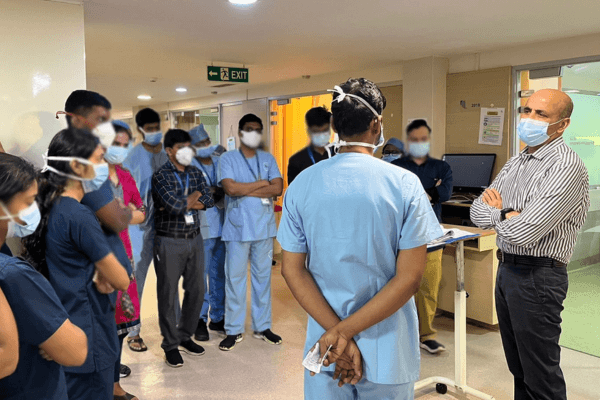
Doing ICU rounds in India. (Source: Supplied)

As a Professor in Intensive Care Medicine at the University of Queensland and The George Institute for Global Health, Professor Bala Venkatesh AM has helped developed a nationwide sepsis standard to help clinicians recognise the condition.   

“Sepsis is one of the most common reasons for admission and death in the intensive care unit. The deaths from sepsis exceed those of the national road toll and all the common cancers combined in Australia, but it’s a little-known fact,” he reveals.  

“Sepsis is an area which really needs a lot of research, and that’s why we are now doing a major program of work.” 

Committed to sharing health outcomes across the pond, he was instrumental in The George Institute’s Indian COVID-19 research program and is currently investigating the efficacy of precision medicine in treating septic shock with paediatric patients in Delhi. 

“What I tell people now is we have to think global. We are very privileged to live in this country, but we have the ability to influence global health,” he says.  

“I tell people to go and work in other jurisdictions – there’s a lot to be learned.”

READ ALSO: Professor Valsamma Eapen AO: King’s Birthday Honours 2026