


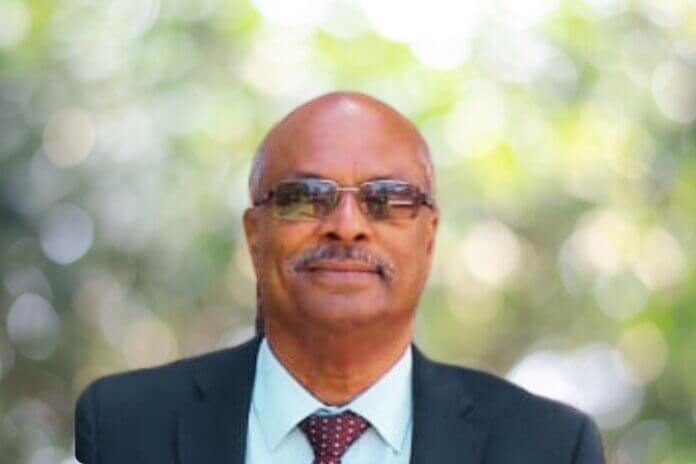

Chethicad Thomas
When Chethicad Oommen Thomas OAM landed in Victoria in 1969, the White Australia Policy had just been lifted. Determined to help other migrants build a life here in Australia, he dedicated over 50 years of his life to championing the Indian community, leading with grace, empathy and kindness.
Chethicad founded the Malayali Association of Victoria just a few years after he landed and later joined the Australia India Society of Victoria, established the Victorian Indian Community Charitable Trust and helped bring the Indian Orthodox Church to Australia.
Now, at 83 years of age, he’s shown no signs of slowing down.
“I believe God has given me talents and education,” he says. “I believe that it is my duty to give what I have to other people. Helping others doesn’t mean helping financially, but extends to giving advice, getting involved in initiatives and giving others moral support.”
First established in 1976, the Malayali Association looked very different from the organisation it is today.
“Initially, our home became a hub for Indians, especially Malayalis, to get together on the weekend. But eventually, I realised that we needed a common place to meet that was accessible to all. That was when a good friend and I came up with the idea for the Malayali Association,” he says.
Soon, the organisation began hosting Onam functions and attracted the attention of Victorian-Indians from other parts of India who were exposed to Kerala’s culture for the first time, as well as mainstream Australians.
The exposure got him introduced to the Australia India Society of Victoria (AISV) which, after seeing the rapid growth of the Malayali Association, was eager to get him on their team of executive members.
Chethicad saw the AISV as a platform that would allow for greater reach to Indians all across Victoria.
“It was a well-recognised organisation that was able to get support and grants from both the Australian and Indian governments. This meant that our efforts to raise awareness about the issues faced by the Indian community were well received by the greater public,” he says.
During his time as the President of the Association, he used the connections he forged with politicians and businessmen in the broader community through his role in financial management, to help Indians get the help they needed to settle in Australia as well as to help organise events such as Indira Gandhi’s visit to Victoria in 1981.
“One issue I was proud to be involved in addressing was that of discrimination which was rampant at the time,” he remembers.
On one occasion, when a psychiatrist was denied a promotion on account of his background, the AISV lobbied ministers, and provided moral support during legal proceedings.
During his tenure as President, he also established the Victorian Indian Community Charitable Trust, which was intended to provide financial relief to the disadvantaged.
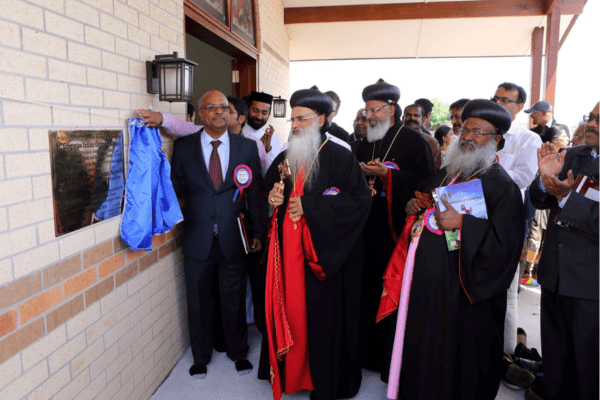
His continual engagement with the broader community is largely underpinned by his faith. Whilst balancing his day job and his role as an executive member of the AISV, he helped bring the Indian Orthodox Church to Victoria, with the launch of the St. Gregorios Indian Orthodox Church at Clayton South.
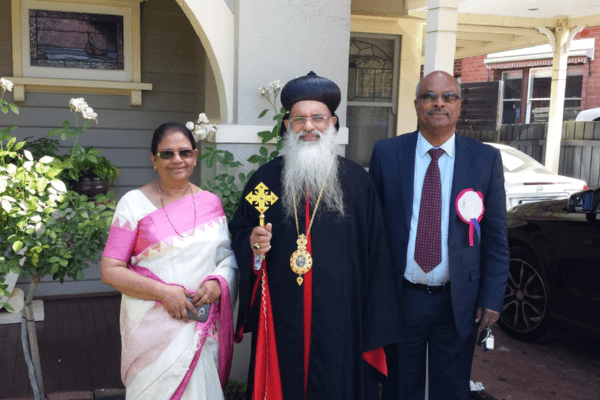
As of 2026, there are three Indian Orthodox churches in Victoria, with five to six congregations in regional areas. Chethicad has played a vital role in establishing all three churches as Chairman of the Church Development Committee. His contributions included organising building development, funding renovations and establishing a trust for the Church. With the spike in attendees over the past few years, the Church is looking to expand once again with renovations already underway.
Although Chethicad is now primarily concerned with the Church, he notes the declining popularity of cultural associations. To him, this growing disinterest is largely a by-product of a lack of youth focused events.
“These associations simply aren’t appealing to the youth. We have to go beyond talking about what happened in 1947. We need more young people to helm these organisations and to create events that will make a connection.”
Despite this growing disinterest, Chethicad Thomas strongly believes in the diaspora’s potential to effect change on a grand scale.
“We, the Indian diaspora, have the capacity to contribute so much. Most of us are well-educated and fairly well off. I urge everyone to share a bit of what they have with others – it will be well appreciated,” he says.