


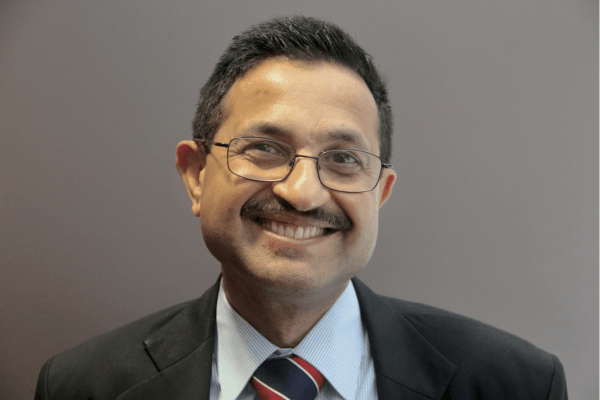

An 18-month-old girl from Melghat, a tribal Maharashtra region, arrived with severe burn contractures across her right arm and fingers. Malnourished and living far from specialist medical care, she could barely use her hand.
Years later, Dr Dilip Gahankari watched a video of the same child dancing at home. “The smile was priceless,” he recounts to Indian Link.
The Australian surgeon had operated on her during one of his annual surgical camps at Melghat, where access to reconstructive surgery remains scarce. Today, the child attends school and has a functioning hand.
“For us, it’s just another operation. For them, it is their new life,” he shares, smiling. It is this lifelong commitment to restoring lives through surgery – both in Australia and India – that has earned Dr Gahankari a Medal of the Order of Australia (OAM) in this year’s King’s Birthday Honours.
Recognised for his service to plastic and reconstructive surgery, the Gold Coast-based surgeon says the honour belongs as much to his volunteers and patients as it does to him. “Humbled, and genuinely surprised,” he says, of his reaction upon first hearing, adding, “My very first thought was that this award doesn’t belong to me, it belongs to every person who has given up their Christmas to operate in a village most people will never find on a map.”
To love is to serve
Today, Dr Dilip Gahankari is recognised as one of Australia’s leading plastic and reconstructive surgeons. Most recently, he was named a Champion of Rural Surgery 2025, an honour conferred at the 29th Annual ARSICON, Conference of the Association of Rural Surgeons of India.
But his connection to Melghat stretches back more than four decades.
Growing up in a small town in India, he says education was the greatest gift his father could offer. “My father believed his children’s education was the only inheritance worth giving – and he was right,” he shares.
As a medical student in Nagpur, he and three friends shared a dream of serving remote communities. One of those friends, Dr Ravi Kolhe, moved to the isolated village of Bairagad in Melghat in 1984. Dr Gahankari soon joined him.
The experience left a lasting impression.
“There was no electricity, radio, phones. We slept on the floor in a shack. The village would be cut off from the rest of the world for four months during the rainy season.”
The young doctors treated difficult childbirth cases, severe injuries, malnutrition and infectious diseases with almost no resources.
“The plight of people, their poverty and their helplessness left a lasting impression on me.”
Determined to return better equipped, Dr Gahankari completed surgical training in India before pursuing further training in Malaysia, the United Kingdom and eventually Australia, where he specialised in hand surgery and later settled permanently.
“My wife and I decided to embrace Australia as a land of opportunity, and we became citizens,” he remembers.
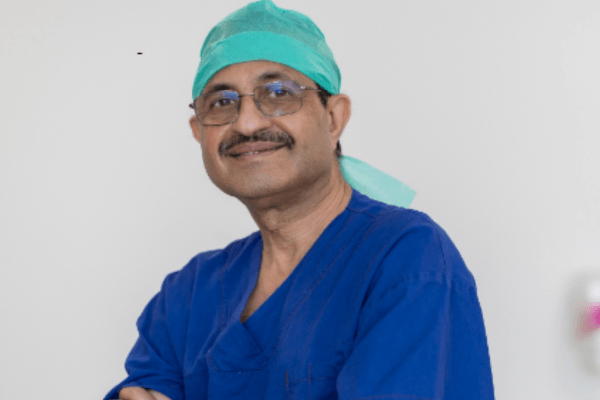
Bridging back to the motherland
Yet he never lost sight of Melghat. After establishing himself as a plastic surgeon on the Gold Coast, he began organising annual surgical camps in the region. After 2007, these camps have operated in partnership with the MAHAN Trust and the Mahatma Gandhi Tribal Hospital.
“What keeps me returning is simple,” he says. “Tribal people in Melghat have practically no direct access for specialised plastic and reconstructive surgery care.”
The work addresses conditions that are often life-altering. Burn contractures are particularly common, with children injured by open cooking fires and untreated burns leaving permanent deformities.
“This isn’t cosmetic surgery. It’s giving someone back their hands, their work, their place in the world.”
The camps take place annually during the Christmas period, requiring Australian surgeons, anaesthetists and medical staff to sacrifice holidays with their families.
“They [Dr Dilip Gahankari’s team and volunteers] ask for nothing, and they come home changed.”
Balancing a busy public and private surgical practice with humanitarian work is demanding, but he sees the two pursuits as complementary.
“The private and public practice on the Gold Coast is my profession; the camps are my purpose. Each one makes the other meaningful.”
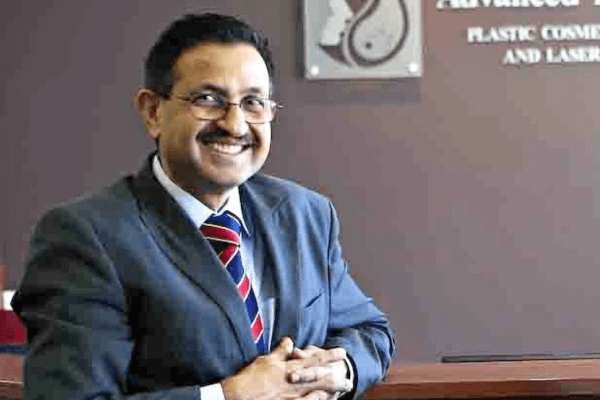
Two homes, two hearts
“Nearly five billion people in the world cannot access safe surgical care,” Dr Gahankari informs.
Australia’s healthcare system, he believes, excels because it successfully organises goodwill through training, accountability and strong institutions.
India has taught him resilience and adaptability, and ‘the ability to deliver world-class outcomes with very little investment.’
“The ideal,” he muses, “is to combine both.”
Beyond humanitarian work, Dr Dilip Gahankari has served in emergency responses following the Bali bombings and natural disasters, and has held academic and advisory positions across Australia and India. Yet among all his achievements, one role remains closest to his heart.
“The operating theatre in Melghat – without question.”
“When I release a contracture from a young person’s hand and watch them open their fingers for the first time in years, there is no abstraction.”
The camps, he says, represent something deeper than medicine. “It is where the two halves of who I am – the country that gave me my roots and the country that gave me my opportunities – come together completely.”
Read Also: Dr Abhishek Verma OAM: King’s Birthday Honours 2026