Home Blog Page 11

Tony Burke came to talk visas but gave us viral SRK fan moment

0
tony burke srk fan
Reading Time: 3 minutes


Tony Burke SRK Fan

There are interviews you prepare for, and then there are the moments inside those interviews that you cannot prepare for. We had both in the same sitting, during the latest episode of the Pawan Luthra Podcast.

When Tony Burke walked into the Indian Link studio, he carried the full weight of his portfolio with him.

Minister for Home Affairs, Minister for Immigration and Citizenship, Minister for Cyber Security, Minister for the Arts, Leader of the House – he’s one the most consequential figures in the current Australian cabinet.

In conversation with host Pawan Luthra before the interview began, the Minister recalled his visits to India, including an invitation to the Mumbai home of actor Shah Rukh Khan.

But the conversation ahead was set to centre on immigration – the issue of the day.

Pawan had already lined up the questions that mattered: Liberal leader Angus Taylor’s migration policy; the Coalition’s drifting towards One Nation; One Nation’s record support currently; his government’s plans to restore the “social licence” for migration; the issues with skilled migration; Martin Parkinson’s 2023 review of the migration system.

The conversation was going to be heavy, and it was.

Until it wasn’t.

It was somewhere near the end of the recording when Pawan shifted gears, as he often does with guests, steering the conversation toward something warmer and less scripted. He asked Burke, in his capacity as Minster for the Arts, about Indian cinema. There was a pause that followed. Not a politician’s pause, but the pause of a person deciding how honest to be.


View this post on Instagram


A post shared by Indian Link (@indianlink)

“I am a massive Shah Rukh Khan fan,” Burke began, “so let me start with that. And I love AR Rahman’s soundtracks as well.” There was something almost relieved in the way he said it, as though he had been waiting for the right room to admit this in. This was not a man performing cultural appreciation for a diaspora audience. This was someone who had, at some point in his private life, sat with these films and let them matter to him.

The Minister went on to speak about Chak De! India (2007), a hockey drama filmed in Sydney, Melbourne, and Brisbane; Lagaan (2001), and Jodha Akhbar (2008).

But he saved the best for the end. “The last one I want to mention isn’t just my favourite Bollywood film, it’s my favourite film of all time – Om Shanti Om“.

And then he spoke about that line from the film: “If it’s not happy, it’s not the end, the story is not over yet. It’s a line that feels particularly alive right now, given the world is in such a difficult place.”

A senior government minister, sitting across from us, citing the philosophy of a Farah Khan production, was not what we had expected from the afternoon.

Here was a man who holds the Arts portfolio for an entire nation, who understands at a structural level what culture does to a community and why it endures. And yet his relationship with these films was not administrative. It was personal in the way that only unplanned love can be. No one had briefed him to love Om Shanti Om. He had arrived there on his own.

The clip went viral before the episode had even properly settled, fan pages resharing into loops (garnering 182K views as of this morning).

And before we knew it, Indian media houses were all over it, lifting it, sharing it, clipping it: NDTV, Hindustan Times, India Today, Times of India, The Print, Zoom TV, Live Mint, Times Now, WION News, Aaj Tak, Amar Ujala, Mathrubhumi.

The comments came in thick and fast.

* “He had me at “I’m a fan of Shah Rukh Khan” 😍👏🙌

* Omg I was not expecting Tony to rattle off Bollywood gems and dialogues! I’m biased I LOVE Om Shanti Om!

* I was about to scroll but then he said Shah Rukh Khan. 🫠✨❤️

And then came the conversations underneath, the ones that always seem to find Shah Rukh Khan eventually.

I’ll say it again, Shah Rukh Khan is the face of Indian cinema, arguably the most famous Indian alive today. You can run all the negative PR you want, but you can’t erase what he has built. The GOAT of Indian cinema Shah Rukh Khan ❤️

Shah Rukh’s name rising this visibly in global discourse had fans noting, not unkindly but firmly, that even Ranveer Singh’s barnstorming run with Dhurandhar (2025-26) had not yet placed him in the kind of cultural conversation where a foreign minister reaches for his films unprompted, in a moment of genuine feeling, years after release. Tony Burke SRK Fan

Minister Burke had come in to talk about migration. He left having wandered elsewhere – into cinema, memory, and the lines we carry when the moment turns difficult. He stepped out of our offices lighter than when he arrived. That, perhaps, is what Shah Rukh Khan tends to do to people.

Read more: Come on Angus Taylor, you can do better

Tony Burke SRK Fan

Indian films releasing in May 2026

0
Indian films in May 2026
Reading Time: 4 minutes


From captivating love stories to intense dramas and epic narratives, Indian films in May 2026 promise an exciting mix. With fresh talent and familiar faces, get ready to experience a rollercoaster of emotions.

EK DIN (In cinemas)

The trailer opens on a tranquil, snow-blanketed landscape as Junaid Khan steps quietly up to a wish bell – a haunting image that sets the film’s dreamy tone. In that fleeting moment, he makes a heartfelt wish, one that soon begins to blur the line between reality and longing. Directed by Sunil Pandey, Ek Din stars Sai Pallavi in her Hindi debut alongside Khan. Adapted from the 2016 Thai film One Day, it follows Rohan, a soft-spoken man in love with colleague Meera. A work trip to Japan changes everything. The film also releases in Tamil and Telugu as Oru Naal and Okka Roju.

Releasing 1 May 2026

GLORY (Netflix)

A boxing-set drama starring Divyenndu Sharma, Pulkit Samrat, and Suvinder Vicky, this story unfolds in a world where legacy and survival go hand in hand. When a shocking murder disrupts the tightly knit boxing community, two estranged brothers are unexpectedly pulled back into each other’s lives. What begins as a search for truth soon turns into something far more personal, forcing them to confront old wounds and a broken relationship with their father.

Releasing 1 May 2026

RAJA SHIVAJI (In cinemas)

A grand, star-studded spectacle, this film brings together Riteish Deshmukh, Abhishek Bachchan, Sanjay Dutt, Fardeen Khan, Mahesh Manjrekar, Sachin Khedekar, Genelia Deshmukh, Bhagyashree and Vidya Balan. Directed and written by Riteish Deshmukh, it narrates the journey of Shivaji Maharaj, capturing the spirit, bravery, and vision of the legendary ruler. Blending emotion and visual grandeur, expect a tale told with both strength and sensitivity. Scheduled to release on the special occasion of Maharashtra Day, the film will be presented in Marathi, Hindi and Telugu.

Releasing 1 May 2026

CITADEL season 2 (Prime video)

Citadel returns with a more intense second season, again led by Priyanka Chopra Jonas as elite spy Nadia Sinh. Picking up after Season 1, the story follows Nadia and Mason Kane as they confront Manticore, the powerful syndicate that destroyed their agency. When a new threat emerges, Nadia is drawn back into a world she tried to leave behind. Joined by Kane and Bernard Orlick, the team assembles new operatives and embarks on a global mission to stop a dangerous conspiracy. Expect high energy, emotional depth, and twists where no one can be fully trusted.

Releasing 6 May 2026

DAADI KI SHAADI (In cinemas)

Riddhima Kapoor Sahni, daughter of Neetu Kapoor, makes her much-anticipated Bollywood debut in a family comedy-drama that offers a refreshing, feel-good take on love and companionship. When a strong-willed grandmother decides to remarry, it sets off a delightful chain of reactions within the family. Directed by Ashish R. Mohan, the film also features Kapil Sharma, whose lively screen presence is sure to add charm and humour. A warm, modern take on generational differences.

Releasing 8 May 2026

MAIN ACTOR NAHIN HOON (In cinemas)

Led by Nawazuddin Siddiqui, this thought-provoking drama follows a retired banker who dares to pursue a long-buried dream of becoming an actor. What begins as an unlikely aspiration turns into a deeply personal journey of reinvention. In a contemporary twist, he takes virtual acting lessons, opening a door to a world he has only admired from afar. As he navigates self-doubt, identity, and ambition, the film explores loneliness and the courage to begin again. Directed by Aditya Kripalani, it promises a quietly powerful, emotionally resonant experience.

Releasing 8 May 2026

LUKKHE (Amazon Prime) 

See rapper King in a gripping new role, alongside Raashii Khanna and Palak Tiwari. Filmed in Punjab, Lukkhe blends love, ambition, and rivalry into a gripping narrative. King stars as Lucky, a determined sportsman, who falls for Sanober (Raashii Khanna), a passionate musician. However, their blossoming romance is soon caught in a dangerous clash between a relentless cop and an up-and-coming rapper.

Releasing 8 May 2026

AAKHRI SAWAL (In cinemas)

Directed by Abhijeet Mohan Warang, this is a thought-provoking drama starring Sanjay Dutt. The story follows Vicky, a talented but unpredictable student, who publicly accuses his respected mentor, Professor Gopal Nadkarni, of bias. What starts as a personal disagreement quickly grows into a big national issue. As the media and politics get involved, their conflict turns into a heated televised debate, bringing questions of power, fairness, and truth into the spotlight.

Releasing 8 May 2026

PATI, PATNI AUR WOH DO (In cinemas)

The journey of Pati Patni Aur Woh began in 1978, when filmmaker B.R. Chopra crafted a satirical look at marriage and social norms. The original film became known for its sharp humour and relatable take on relationships. Years later, Mudassar Aziz revisited the concept with a 2019 adaptation starring Kartik Aaryan, Bhumi Pednekar, and Ananya Panday, updating the story with a modern spin on love and urban marital life. The franchise now moves forward with a fresh instalment led by Ayushmann Khurrana as Prajapati Pandey, alongside Sara Ali Khan, Wamiqa Gabbi, and Rakul Preet Singh, with Vijay Raaz appearing as an eccentric cop.

Releasing 15 May 2026

CHAND MERA DIL (In cinemas)

With its central line, pyaar mein thoda paagal hona hi padta hai, this is a tender coming-of-age romantic drama set on an engineering campus, starring Ananya Panday and Lakshya Lalwani. As their relationship evolves, it becomes more layered and emotionally complex, reflecting how young love changes under the weight of time, growth, and real-world choices. Directed by Vivek Soni, who previously made the heartfelt Aap Jaisa Koi.

Releasing 22 May 2026

READ ALSO: When books become blockbusters: 8 Indian adaptations worth watching

AirTrunk’s India push shows where Australia’s next tech opportunity lies

0
Airtrunk
Bangladesh-born Australian Robin Khuda is the founder of Airtrunk
Reading Time: 3 minutes

AirTrunk in India

Australian data centre giant AirTrunk’s $7 billion push into India is being seen as a major expansion into one of the world’s fastest-growing markets. It is an early signal of where the next layer of global technology infrastructure is being built, and a signal for other Australian companies to take note and move with urgency. 

What’s unfolding in India is not just another growth story. India is positioning itself as a serious player in AI infrastructure, emerging as a third major region alongside the United States and China. Data centre capacity, typically measured in megawatts of power, is expected to grow from around 1.5 gigawatts in 2025 to close to 10 gigawatts by 2030, based on Deloitte estimates. This expansion is being backed by unprecedented capital commitments, with industry and government collectively targeting more than US$200 billion in AI infrastructure investment over the coming years.

That scale is already attracting large-scale global capital and partnerships. Google has committed US$15 billion towards AI and digital infrastructure in India over the rest of the decade, while Amazon Web Services (AWS) has announced plans to invest US$12.7 billion in cloud infrastructure over a similar timeframe. OpenAI is partnering with the multi-billion dollar Indian conglomerate Tata Group to develop 100 megawatts of AI capacity, with plans to scale to 1 gigawatt. In practice, this means build-out of large-scale data centre campuses, supported by dedicated power, advanced cooling and the high-speed connectivity required to run AI workloads at scale.

This is exactly where the opportunity lies for Australian companies. The build-out of AI infrastructure at this scale requires capabilities that go well beyond the construction of data centres. It involves reliable power systems, advanced cooling, high-speed connectivity and the operational expertise needed to run large-scale infrastructure efficiently and securely.

These are areas where Australian capability is well established. From infrastructure investment and project delivery to renewable energy integration and enterprise-grade systems, Australian firms have experience operating at global standards. This combination of capabilities is critical to delivering and operating AI infrastructure at scale.

Inside AirTrunk’s headquarters in Sydney / Source: AirTrunk in India

If that opportunity is to be realised, it will require a shift in how Australian companies engage with India. Three priorities stand out.

First, move beyond exporting services and establish a long-term presence in India. This means partnering with local players that are already committing significant capital to AI infrastructure, including large industrial and energy groups building integrated data centre platforms. Joint ventures, co-investment and on-the-ground teams will be critical to navigating the market and participating meaningfully in the build-out.

Second, leverage Australia’s strength in energy and sustainability. As AI infrastructure scales, energy is emerging as the primary constraint globally. India’s approach is already integrating data centre expansion with renewable energy and long-term power strategies. Australian expertise in renewable integration, energy efficiency and grid management positions its companies well to contribute to the development of sustainable AI infrastructure at scale.

Third, make better use of policy and institutional pathways to support commercial engagement. India’s push into AI infrastructure is being driven not just by private capital, but by coordinated national ambition, reflected in large-scale investment commitments and government-led initiatives. Engaging through bilateral forums, industry platforms and channels such as Austrade and DFAT can help Australian firms build relationships, navigate regulatory environments and position themselves early in the market.

AirTrunk’s move is an early signal of where this is heading. The larger question is whether more Australian companies are prepared to follow with the same level of conviction. The build-out of AI infrastructure will define the next phase of the global technology economy. The opportunity for Australia is real, but it will not remain open indefinitely. The time to act is now.

Nikhil Kulkarni is a Sydney-based AI product leader with experience across Australia and India, and an active contributor to technology and business collaboration between the two countries.

Read more: Pax Silica: What India actually signed

COVID and connection collide in ‘Camp Darwin’

0
Camp Darwin play Arjun Raina
Reading Time: 3 minutes


Though over six years ago, Arjun Raina still remembers his first moments on Australian soil, after being evacuated from India during the Delta wave of COVID.

Stepping off the plane in Darwin, he was escorted to Howard Springs Quarantine Facility, where he would spend the next two weeks amongst equally harried return travellers.

“There was a big, strong policewoman who kept threatening us to stay three feet from each other, otherwise there’s a $5,000 fine and ‘we apply that very strictly at the camp’,” he recalls.

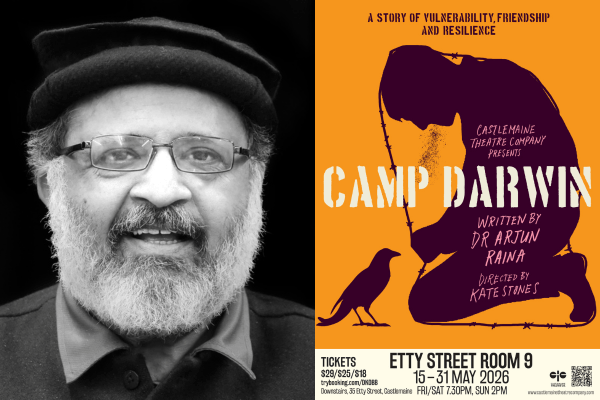
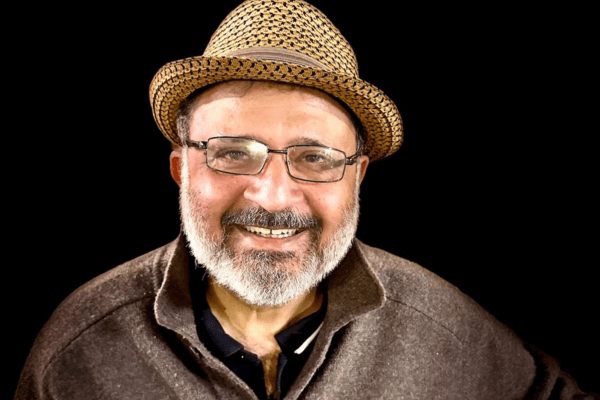
Arjun Raina playwright
Gisborne-based playwright Arjun Raina. (Source: Supplied)

It’s within the strict regimentation of this experience, which he jokingly refers to as a ‘regime’, that his latest play Camp Darwin finds its genesis.

Told over fourteen days, the play follows six Australians from diverse backgrounds, as they navigate cabin fever, the prospect of having COVID and interpersonal tensions, all while the outside world shuts down around them.

“It was an incredibly stressful time… you are under Australian regimentation. As one of the characters says, we’re very good at creating these prison systems because that’s what we started off as – a penal colony. So, it’s a very efficient quarantine system with all its carrots and sticks,” Raina muses.

“I don’t have an experience of Australian prisons. But there is an element that you are an inmate. There’s an element you obey rules. There’s an element you do it in a precise way. The limitations were there.”

As the ‘inmates’ are tested, the threat of the mysterious ‘Red Zone’ quarantine looms, an inclusion from Raina’s own experience which lends the drama a sense of ever-present pressure.

“If on day 13 the test comes positive, then you go into the Red Zone for another 14 days…We had no idea whether the Red Zone had any porches or whether you were put into a laboratory and operated on to discover what COVID was,” Raina explains.

But despite being a work mined from the ‘lived experience of the entire COVID spectrum’, Raina is keen to point out it’s ‘not just a play about COVID’.

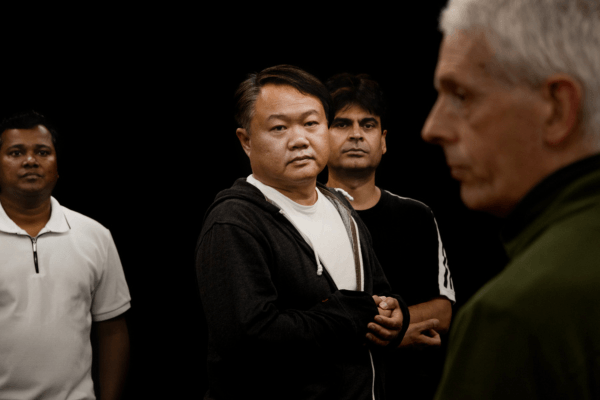
Camp Darwin Castlemaine Theatre Company
L-R Martin Thomas, Ivan Sun, Hem Tiwary, Peter Gutteridge (Source: Supplied)

Camp Darwin

“Naturally if people are going to be together [for 14 days], they’re going to find ways of singing songs and telling jokes,” Raina notes.

Cooped up in isolation for 14 days, Camp Darwin examines human connection and resilience in the face of unprecedented circumstances, something which Raina believes Victorian audiences are yet to confront.

“As Indians, we have no problem dealing with the toughness of [COVID] and seeing a story about this. But here you have to keep saying ‘no, no, it’s not confronting, it’s about human resilience,” he asserts.

“People [here] say, Oh God, COVID, we don’t want to deal with COVID, we just want to go down and have our beers and get back to our partying.”

Held captive together, Camp Darwin offers a rare chance to explore the commonalities between six Australian men from vastly different walks of life.

“To show brown men and white men, not in subservience or not in obvious very violent conflict, but in a social space together, becomes very interesting,” Raina says.

“It’s very rare that you have white men and brown men and black men all equal. They are all equally in the same situation, and they are negotiating the same reality, finding the same sense of resilience and humour and affection and fun together.”

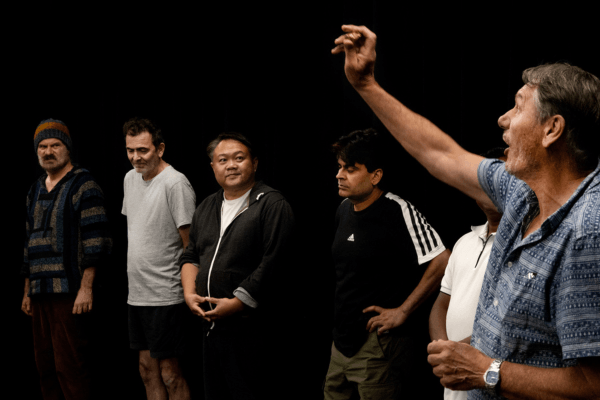
Camp Darwin
L-R David Farrington, Matt Barbetti, Ivan Sun, Hem Tiwary, Martin Thomas, Kim Johnson. (Source: Supplied)

Resisting the urge to write conventional multicultural stories, Raina will be the first Indian Australian programmed on Castlemaine Theatre Company’s stage.

“This is the first time a playwright of colour is telling a story in Castlemaine, which is a very white town. I’m very aware of the interplay between the races,” he says.

“[Audiences] are going to enjoy the fact that they’re going to see these six characters of different cultures together, not necessarily in an aggressive, sort of anti-racist kind of way, but it’ll be a new experience.”

The Gisborne-based playwright hopes seeing an inclusive multicultural story will break down existing cultural siloes and encourage a new understanding of humanity.

“Unicultural performances, in a way, are celebrated; of which Counting and Cracking was one of the most celebrated, where there were no white characters, that community did not engage with the mainstream,” Raina contends.

“This is a fabulous effort by [Director] Kate Stones to bring in a playwright of colour, to bring in a multicultural cast – there are enough people wanting the breaking of the white citadel in a way.”

READ ALSO: A review of Arjun Raina’s Straight From the Horse’s Heart

Bought a new EV? Here’s a quick guide to driving and charging

0
(Source: Canva)
Reading Time: 4 minutes


Electric vehicle purchases in Australia have surged amid the ongoing war in Iran, as drivers worry about rising fuel costs.

The big drawcard: much cheaper running costs. As of 22 April, A$1 of electricity takes an EV 45 kilometres, while $1 of diesel gets you 5.4 km.

Driving an EV is fairly similar to a combustion engine car. The biggest difference is charging instead of refuelling.

In our research, we interviewed renters and people who live in apartments to understand how they made the switch – and what practical advice they would give others.

Driving experience

EVs generally offer a smoother ride with punchier acceleration compared to combustion engine cars.

One thing to watch for is speed. Because EVs have much more torque, they can accelerate much faster – and do so quietly. It can be easy to speed without meaning to. Using cruise control on freeways is a good idea.

Almost all EVs have regenerative braking, meaning the brakes recharge the battery.

Many EVs allow drivers to use just one pedal to accelerate and brake. To brake gently, you can take your foot off the accelerator and let the car slow itself down. But there’s still a traditional brake pedal.

The rise in fuel prices has shot up demand for EVs in Australia (Source: Canva)

Refuelling vs charging

Refuelling a combustion engine car is quick, but requires going to a service station. Charging an EV can be done at home, at work, in shopping centres and public charging stations.

Charging time varies depending on the speed of the charger, from slow Level 1 trickle chargers, Level 2 chargers and Level 3 fast or ultrafast public chargers. The cost varies by location, time and operator.

The cheapest and easiest method is to plug in at home and charge overnight at off-peak electricity rates or using solar during the day. Charging overnight at off-peak rates is cheap, while running off solar is effectively free. EVs and solar pair well.

Drivers who regularly do longer distances can install a faster wallbox charger at home.

For the millions of Australians who live in apartments, it may not be possible to charge at home. Public charging plays a vital role here.

EVs in Australia
Plan for trips to optimise charge utilisation (Source: Canva)—EVs in Australia.

Range anxiety is fading

Early EV adopters often experienced range anxiety – the fear of running out of charge mid-trip.

This concern is fading, as the average range of new EVs is now over 400 km. Research shows this anxiety fades away as drivers become comfortable with their vehicles, learn the distances they usually travel and use apps and maps to plan where they will charge during road trips.

As one EV owner told us:

“Charging’s not something I really think about. Like, as soon as I get home and park, I just plug my car in and it charges automatically at 12 o’clock at night for 6 hours”

Home charging offers the biggest comfort. Most EV owners (93%) in Australia can charge at home, and most of them say home charging meets their travel needs.

Over time, EV owners learn the locations of more public chargers, which also reduces anxiety.

Public charging stations are becoming a must for EVs in Australia (Source: Canva)

Public charging is the biggest challenge

It took decades to build Australia’s network of more than 6,600 service stations.

The public charging network has had much less time to develop. The network is significantly bigger than it was five years ago, but some issues remain.

The main challenge then shifts from range anxiety to charging anxiety. This is the fear of arriving at a public charging station only to find the chargers don’t work, have an incompatible plug, deliver slower-than-advertised speeds or have long queues, especially at peak times.

EV drivers have told us the solution is to check on public chargers before driving there. Real-time data about chargers is easy to come by.

Charging apps let you check charger reliability easily. If you can see a charger has been successfully used recently, it’s a good sign. Charger ratings and reviews help you decide.

Choosing chargers used by drivers with similar EVs is an easy way to ensure the charger has the right plug.

Much of this information is held in charging apps such as Evie, Chargefox or Tesla.

Apps such as PlugShareGoogle Maps and the Electric Vehicle Council’s Charge@Large have data on chargers from many different networks.

EVs in Australia
Aim to charge before the battery drops (Source: Canva)

Planning roadtrips

Longer distance trips require a little bit of planning.

  • Use route planners such as A Better Route Planner to see where you will need to charge, find good charger options and identify backups
  • Pack an EV travel kit with a charger cable and extension lead
  • Allow time for charging, queues and possible detours, especially during busy periods. Aim to charge before the battery drops below 20%.

Some new EV owners may find public charging a hassle compared to a quick refuel stop. But there are perks.

Many regional charging stations are located in the centre of a town. As one EV owner told us:

“Just plug it in there, stroll up the street, have a coffee, grab a muffin or something. By the time you come back, the car’s charged.”

This article was first published in The Conversation and is authored by Isrrah Malabanan, PhD Candidate in Transport Engineering, The University of Melbourne, and Senior Lecturer in Transport Engineering, The University of Melbourne. 

Read more: A Good Deal?: Chinese electric vehicles in the Australian Market

Wyndham council vote no confidence in Preet Singh

0
Preet Singh
Reading Time: 2 minutes


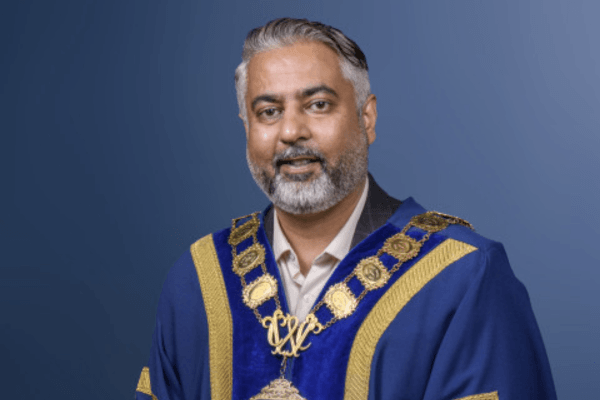
Wyndham City councillors have unanimously passed a vote of no confidence against their Mayor Preet Singh, who refused to resign amid a character reference scandal.

Passed at a special meeting on Monday night, the motion does not obligate Cr Singh formally to step down but does capture councillors’ and community’s sentiments towards him.

Cr Peter Maynard who moved the motion of no confidence, described Cr Singh’s actions as ‘morally reprehensible’.

“Whilst we can all acknowledge that the mayor has done nothing illegal, he has shown an extremely concerning error of judgement — something we simply cannot tolerate in the leader of this council,” he said at the online meeting.

All councillors spoke to the decision, with Cr Larry Zhao noting he believed ‘the decision was not about racism at all’ and announcing he would boycott the next council meeting  ‘dysfunction as normal’.

The vote follows a media statement from the councillors earlier this month, where they stated they were ‘united to call for the mayor to resign’, and were ‘working behind the scenes to urge Cr Singh to step down’.

The state government have also intervened, installing an independent monitor at the municipality amidst a period of heightened scrutiny towards local government transparency.

What did Preet Singh do?

In April 2024, before he was elected to Wyndham City Council, Cr Preet Singh provided a reference for Kashyap Patel, who has been charged with grooming and sexually assaulting a child under 16.

Cr Singh’s reference describes Patel as someone of ‘high integrity’ despite his assault charges, and argues the offences are ‘a one-off event’ and ‘completely outside of [his] usual character’.

Provided during Cr Preet Singh’s time as a Justice of the Peace, the reference impacted Patel’s County Court judgement but was provided prior to his guilty plea.

In the aftermath of Patel’s verdict, many residents have called for Cr Singh’s resignation, with three protests and a parliamentary petition filed against him.   

Though since ‘accepting accountability for his error of judgement’, Cr Singh has defended his actions online, stating last month he ‘had done nothing illegal, criminal, or unlawful’, and intended to return to office ‘shortly’.

Cr Singh has described the calls as a ‘sustained campaign waged against him’, suggesting they ‘aim to destabilise a democratically elected Council and undermine what we have achieved together’.

“Capitulating to this pressure would not reflect accountability, it would wrongly legitimise allegations that are false, unfounded, and made to instil other leaders into positions of influence at Wyndham City,” Cr Singh wrote online.

Cr Preet Singh has not yet commented on the vote.

READ ALSO: Clusters, chagrin & first-time candidates: Victorian LGA elections

More than a simple cold: Are you prepared for RSV?

0
RSV
(Source: Canva)
Reading Time: 3 minutes


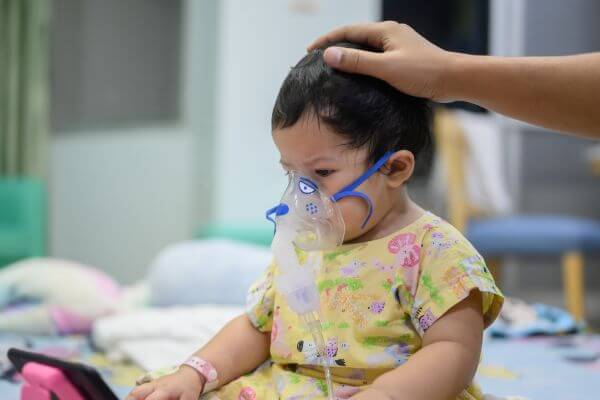
It was a quiet Tuesday morning when Aarav’s mother brought him in.
He was just six weeks old.
She thought it was a simple cold. His older sibling had been unwell a few days earlier, a runny nose, a cough, nothing unusual.
But overnight, something had changed.
Aarav was feeding differently. Slower. Pausing more. He seemed more tired than usual. Not distressed, just not himself.
When I examined him, his breathing was faster than it should have been.
Within hours, he was in the hospital.
The diagnosis was respiratory syncytial virus, or RSV.
Later that day, his parents asked, “We didn’t realise a cold could do this.”

This is not a rare story.

As we head into winter, these presentations become increasingly common.

(Source: Canva)

What exactly is RSV?

RSV is one of the most common respiratory viruses in early childhood. Almost all children will catch it at least once in the first two years of life. For many, it behaves like a cold. But in young babies, it can affect the small airways in the lungs and lead to bronchiolitis, making breathing and feeding much harder.

Information for families is available through the Sydney Children’s Hospitals Network: Here

How RSV shows up in real life

In the clinic, RSV rarely begins as an emergency. It usually starts quietly, a runny nose, a cough, maybe a mild fever.
Over a few days, some babies begin to change. Feeding becomes more difficult. Breathing becomes faster. Sleep becomes unsettled. Parents often say, “Something just isn’t right.”

That observation matters.

Why do we see more of it in winter

Every year, RSV follows a familiar pattern.Cases begin to rise through autumn and peak in winter, usually between April and September in Australia. It spreads easily within households, through coughs, close contact, and even surfaces like toys and hands. Once one child becomes unwell, it often moves quickly through the family.

Watch: RSV explained simply

Who tends to get sicker?

Most children recover with supportive care at home. But some are more vulnerable, particularly babies under six months, those born prematurely, or children with underlying medical conditions. These are the infants we watch more closely each winter.

Prevention is changing

Until recently, there was little families could do beyond supportive care. One of the biggest shifts in recent years is that prevention options are now available for some infants, especially in early infancy. This includes vaccination during pregnancy, which helps protect the baby in the first few months of life, as well as newer antibody-based protection for some infants. Detailed guidance is available here through NCIRS

(Source: Canva)


When should parents worry?

Most viral illnesses in children settle with time. But with RSV, it is the change that matters. If a baby is feeding poorly, breathing faster, or seems unusually sleepy, it is worth getting checked. Seek urgent care if there is laboured breathing, pauses in breathing, or difficulty waking.

A familiar winter pattern

Aarav improved after a few days in the hospital. His breathing settled, and feeding slowly returned to normal. For his parents, it was unexpected. For many paediatricians, it is something we see every winter. RSV is common. For most children, it remains mild.

But recognising when a “simple cold” is no longer simple and acting early is what makes the difference.

Read more: From wheeze to ease: Supporting children with asthma

“Afraid to fight; was murder more disgrace?”

0
The Anzac Legend
The Battle of Lone Pine by Drew Harrison (Source: Military Shop)
Reading Time: 3 minutes

The ANZAC legend

I was well versed in the legend of the ANZACs by the time I was ten years old:

They were ordinary men who went and did extraordinary things. These soldiers didn’t know what they were in for when they signed up, but despite the terror they faced, they helped each other out.

But knowing is very different from empathising. The ANZAC legend might be known to primary school kids all across Australia and New Zealand, but peek into a school hall during ANZAC Day and you’ll see many children nodding off. 

I was one of those children many years ago. One thing that was clear to me growing up was that the ANZAC legend may make its presence clear through monuments and murals, but they’re only truly alive in people’s minds. And how was I, someone who couldn’t relate to the community I had to somehow assimilate into, supposed to “remember” their relatives?

I almost felt vengeful. If you don’t understand my community, why should I revere the heroes in your history?

Justified I thought. Until, in Year 7 English, I read the lines “They leave their trenches, going over the top / While time ticks blank and busy on their wrists / And hope, with furtive eyes and grappling fists / Flounders in mud. O Jesu, make it stop!”

The ANZAC legend
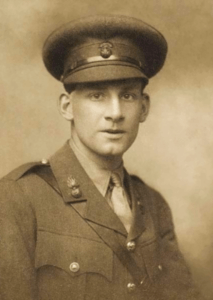
Siegfried Sassoon – one of the leading poets of WWI (Source: Wikimedia)

Something about that last line, written by English war poet Siegfried Sassoon, made me shiver. It painted the picture of a soldier who was not just afraid but who was helpless. In my mind, the war was no longer just an event, but an unrelenting wave of horror that swallowed people whole regardless of their skill with a gun. 

Ironically, it was as though the ANZAC legend itself, which honours sacrifice and places soldiers on a pedestal, actually obscures the heroes we are supposed to remember. But somehow this English poet was able to, in just a few words, transport me to the trenches. 

Sassoon stands out for his singular ability to paint a landscape of terror through his poetry. In his poem ‘Ancient History,’ he depicts the internal conflict of warfare writing, ‘Afraid to fight; was murder more disgrace? …/‘God always hated Cain’ … Whereas in ‘Counter-Attack,’ he writes about a soldier ‘Sick for escape,—loathing the strangled horror / And butchered, frantic gestures of the dead.’

He depicts men who are not just changed, but utterly transformed by circumstance. His lines go for the jugular and vibrate with rage. The persona behind most of his poems is not just a victim, but a man resentful of the position he’s in. 

After reading these poems, it became obvious that the story of the ANZACs didn’t just belong to those who had lived in Australia much longer than I had. To actively engage with these stories is to acknowledge our shared humanity. Which nowadays, is no easy task. 

As I’ve gotten older, I’ve realised that empathy is no longer just something that you by chance feel, but something that must be cultivated. 

In a world where we now have direct access to the horrors of war, the responsibility falls on us to reject indifference – whether that’s by listening to poetry (Palestinian author and journalist Plestia Alaqad might just be the voice of our times), or by following online one of the many journalists who have willingly placed themselves on the frontlines of conflict. 

By making a genuine effort to remember the ANZACs, we also remember the horrors of war and, most importantly, why we said “never again,” in the first place.

READ MORE: Anzac Day 2025: Remembering the fallen soldiers

Satya Nadella comes to Australia to seal $25 billion AI deal

0
Australia Microsoft AI deal
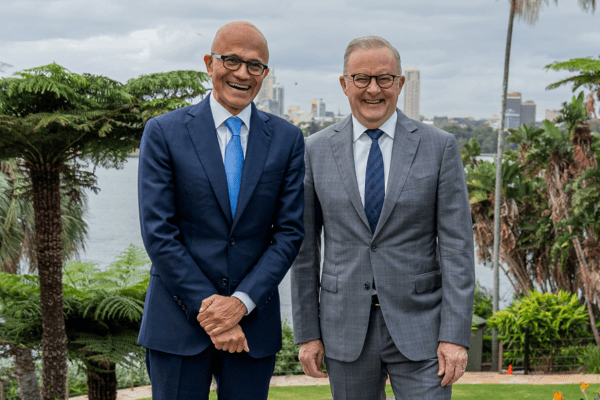
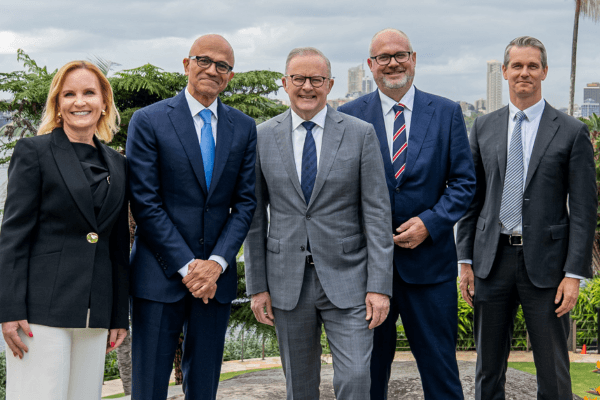
Before the cameras, Albanese and Nadella met quietly to seal the terms of the agreement. (Source: Supplied)
Reading Time: 2 minutes

Satya Nadella AI deal

The Federal Government signs a landmark agreement with Microsoft, promising jobs, infrastructure and a seat at the table for one of Australia’s fastest-growing communities.

Australia has taken a significant step in its artificial intelligence future, with the Federal Government signing a Memorandum of Understanding with Microsoft that unlocks a $25 billion investment into the country’s digital economy and commits to training three million Australian workers.

On 23 April, Prime Minister Anthony Albanese stood alongside Microsoft CEO Satya Nadella in Sydney to announce the company’s largest ever investment in Australia, a $25 billion commitment that will reshape the country’s AI landscape over the next three years.

For the Indian Australian community, which has long been woven into the fabric of Australia’s technology sector as engineers, developers, entrepreneurs and educators, the announcement signals something more than a policy milestone. It is an acknowledgement that the AI economy is arriving, and that Australia intends to shape it on its own terms.

The agreement builds on the National AI Plan launched in late 2025 and extends Microsoft’s existing footprint in Australia, adding to the $5 billion cloud and AI investment the company announced in 2023. The new MoU covers continued infrastructure investment, collaboration with the AI Safety Institute and the National AI Centre, and a commitment to sustainable and secure data centre operations aligned with government expectations around energy and water use.

(Source: Supplied) Satya Nadella AI deal

Minister for Industry and Innovation Tim Ayres said the agreement is designed to ensure that AI “delivers real economic and social benefits for Australians while keeping safety front of mind.” Assistant Minister Andrew Charlton framed it as part of a broader effort to set “the regional benchmark for safe, secure and inclusive AI.”

For a community that has contributed so substantially to Australia’s technology workforce, the promise of three million workers receiving AI training carries particular resonance. Indian Australians are disproportionately represented in STEM fields, and as AI reshapes industries from healthcare to finance to education, access to reskilling and upskilling pathways will shape who benefits and who is left behind.

The MoU also signals Australia’s ambition to position itself as a trusted regional hub for AI, a goal that places the country in conversation with India’s own rapidly expanding technology sector. With bilateral ties between India and Australia continuing to deepen, a stronger Australian AI ecosystem may create new corridors for collaboration, talent and investment between the two nations.

Microsoft has operated in Australia for more than 40 years. This agreement is perhaps its most consequential commitment yet.

The full MoU is available at industry.gov.au/MOUMicrosoft

Read more: Aus-India green steel push, powered by rice husk


Isha, Madura, Riya: Three of Aust’s 5-member Y20 team

0
G20 Youth Summit Indian women
Reading Time: 3 minutes


Indian-origin women will make up three of the five delegates chosen to represent Australia at the G20 Youth Summit in Washington D.C. later this year.
 

The G20 Youth Summit, also known as the Y20, is the official engagement group of the G20 Leaders’ Summit. In August, the Y20 will conduct a week of negotiations to produce a set of policy recommendations feeding directly into the G20 leaders’ agenda. 

Isha Desai, Madura Katta, and Riya Rao were selected from a national round of competitive applications by Global Voices, a civil society policy organisation. They will each lead negotiations across key global challenges, from economic reform to food security, global health, and conflict. 

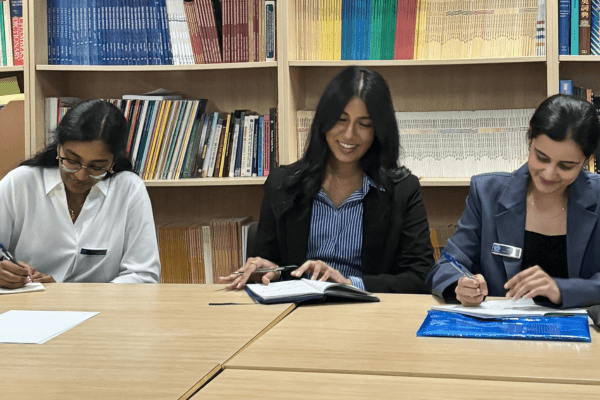
The three women met in Canberra earlier this year, where they engaged with the Human Rights Commissioner, Department of Foreign Affairs and Trade and the Department of Prime Minister and Cabinet. In between sessions, Isha, Madura and Riya connected over their shared experiences as South Asian women and are excited to actively shape global spaces as they prepare to travel to Washington together later this year. 

Isha Desai  

Isha Desai is negotiating on the Global Economy and Job Creation track. She is currently researching the rights of gig workers in Australia, as well as policies to increase medium/high density developments to provide more affordable housing. In addition to her duties at the G20 Youth Summit, she is developing a policy brief with Global Voices to strengthen Australia’s policies to support climate refugees in the Indo Pacific. 

In high school, Isha took modern history and economics, becoming fascinated with how change happens slowly on the international level. This led her to study politics and international relations at the University of Sydney, where she had the chance to intern at the United States Studies Centre. 

“My highlight as an Australian delegate has been meeting with the G20 team at the Department of Prime Minister and Cabinet to hear their insights and advice for working at global summits. I am especially excited to be travelling with other like-minded young women. Riya and I also connected over going to the same Indian wedding four years ago!” Isha told Indian Link.

Madura Katta 

Moving as a 12-year-old from tropical Bengaluru to -25℃ weather in Edmonton, Canada, helped Madura Katta understand how domestic and international inequities shape health outcomes for people across the globe, and negotiating different perspectives became a daily part of her life.  

While pursuing a Bachelor of Science at the University of British Columbia, Madura was drawn to public health policy, addressing problems at a system level and developing sustainable and resilient interventions targeting the drivers of health issues. This led to her pursuing a Master of Public Health at the University of Queensland, and she hopes to bring this perspective to engaging in diplomacy at the global level.  

“Growing up in India, and then immigrating to two different countries helped me understand how domestic and international inequities shape health outcomes for people across the globe. I hope to bring this perspective to the G20 Youth Summit, where I am negotiating on the Food Security and Global Health track,” she says.

At the G20 Youth Summit, Madura is exploring food security, disaster preparedness, and health financing. She is also drafting a policy brief on how to limit exposure to unhealthy foods to improve dietary patterns and health outcomes for Australians as part of the Global Voices fellowship.  

Riya Rao 

Riya Rao was born and brought up in Sydney’s West, where she got used to seeing people like herself absent from rooms that matter. Studying International Studies and Media (Communication & Journalism) at the University of New South Wales, with a year at King’s College, London, shaped her focus on the role of policy communication, and whose voices are included in that process.  

Riya’s turning point was fieldwork in Tanna, Vanuatu, contributing to a Department of Foreign Affairs and Trade-funded project; Fiksim Sola, co-designing solar literacy and repair strategies. Working within remote, Ni-Vanuatu communities, she saw how quickly locally led solutions can falter without long-term policy support. This informed her contribution to the Global Voices journal, on how Indigenous knowledge inclusion can build resilience into Australia’s disaster governance system – a separate duty from her Y20 work.  

At the G20 Youth Summit, Riya is negotiating on the Fragility, Conflict and Violence track, where she hopes to mediate between communities and decision-makers: listening, translating lived experience into policy and making those outcomes accessible again. Working alongside delegates like Madura and Isha, she is looking forward to ensuring global policy discussions include the voices of those most affected by the decisions they produce.   

As the second-largest minority group in Australia, estimated to grow to the largest by 2031, it is no surprise this year’s Y20 Australia Team is majority Indian-origin. For Indian-Australians, this demographic shift is an opportunity to step up from being part of this society to actively driving change in their communities.  

Isha, Madura, and Riya are keen to hear from other young Australians who would like to improve their local, national, and global communities, to bring these perspectives with them to the G20 Youth Summit. 

READ ALSO: Applications for the Australia-India Youth Dialogue now open