
Home Blog Page 4

Indian links at Met Gala 2026: A little bit palace, a little bit gallery

0
Reading Time: 4 minutes


The first Monday of May each year is when fashion stops playing safe, as the world’s style set gathers at New York’s Met Gala. In recent years, India has been stepping in, not as a guest, but as part of the conversation. And for Met Gala 2026, the Indian contingent that climbed those famous steps – from Bollywood royalty to actual royalty – rewrote every rule about what it means to bring heritage to the world’s most watched red carpet.

Let us begin where the conversation began: with Karan Johar making his long-awaited Met debut. The filmmaker who has spent decades dressing Bollywood’s biggest stars for their biggest moments finally stepped into the frame himself, wearing a custom Manish Malhotra creation inspired by the paintings of Raja Ravi Varma. A vintage jacket layered beneath a hand-painted cape, the look was cinematic in the truest sense.


View this post on Instagram


A post shared by Met Gala 2026 (@metgalaofficial_)

“Raja Ravi Varma felt right because his work does something I’ve always tried to do in cinema,” Johar said on Instagram. “He painted feelings.”

Johar thanked his “oldest partner in crime and fashion,” Manish Malhotra, saying “you made me feel like a canvas for your art.”

A canvas, indeed. Someone frame it.

Manish Malhotra, for his part, did not merely send a client up those steps. He walked them himself, a designer ascending the same stairs as his own muse, which felt like the most satisfying kind of symmetry. Fashion as art, and the artist, present.


View this post on Instagram


A post shared by VOGUE India (@vogueindia)

Isha Ambani, a Met veteran by now, remains in a class entirely her own. She strode out regally in a gold-and-silver sari with embroidered detail, a blouse dripping with jewellery (from her mother, she declared, pieces presented to her at milestone moments like the birth of her kids), and of course, a few million dollars around her neck. All lovely, only to be added a bit later with a sculptural cape that stood over her head like the many-faced snake head of Sheshnaag, and which cascaded uncomfortably down her shoulders.


View this post on Instagram


A post shared by Gaurav Gupta (@gauravguptaofficial)

Simone Ashley arrived draped in silver chains – an echo, perhaps, of Vasantasena, the courtesan played by Rekha in Utsav (1984), who famously wore gold chains as costume. Or, if that’s too far back, think Amber Rose at the 2014 VMAs. Either way, the jury on Simone – sometimes called a modern-day Rekha – is still out.


View this post on Instagram


A post shared by VOGUE India (@vogueindia)

Natasha Poonawalla, who approaches each Met Gala the way a sculptor approaches a block of marble, arrived this year in a collaboration between artist Marc Quinn and Dolce & Gabbana, bringing together art and fashion in a sculptural creation that embodied the evening’s theme with forensic precision. A giant white moth orchid, the intent was to bring in ‘a moment of peace’ to the event.


View this post on Instagram


A post shared by VOGUE India (@vogueindia)

Ananya Birla made her own striking debut, arriving in a custom Robert Wun black couture look featuring a structured jacket with a dramatic peplum and voluminous pleated skirt, paired with a sculptural metallic face mask by artist Subodh Gupta. Hidden identity, visible power. If that is not the Costume Art theme distilled into a single silhouette, nothing is.


View this post on Instagram


A post shared by VOGUE India (@vogueindia)

And then, the moment the fashion world did not know it needed: Princess Gauravi Kumari of Jaipur gliding onto the carpet in a Prabal Gurung creation for her Met debut. She honoured her roots in a vintage chiffon saree once owned by her famous great grandmother Maharani Gayatri Devi. “Our home city Jaipur’s colour is pink, so this attire is also an ode to our home city,” she said. She completed the look with pearls inspired by Maharani Gayatri Devi. One saree. Three generations of women. An entire story told without a single word spoken.

The Maharaja of Jaipur, Padmanabh Singh aka Pacho, followed in equal splendour, embodying that particular brand of effortless royal elegance that reminds you some people are simply born knowing how to wear a room.


View this post on Instagram


A post shared by VOGUE India (@vogueindia)

Meanwhile, across the carpet… more Met Gala 2026 Indian links

We couldn’t help thinking India when we saw Beyonce’s headgear; SZA in her yellow (lehenga-inspired?) outfit, complete with beads on the head; when Tyla appeared, shaking her hips like a blue peacock in Delhi’s Sunder Nursery; when Doechii arrived in burgundy chiffon and in a move nobody saw coming, stepped barefoot onto the carpet with cascading anklets and complete, unapologetic conviction, and when Hailey Bieber flaunted her custom Saint Laurent ensemble with gold bodice, cobalt blue skirt and, er, ‘cape’ around the neck – which you and I would call a plain old dupatta.

Indian links at Met gala 2026
(From left to right) Hailey Beiber, Tyla, SZA, and Doechii at the Met Gala Red Carpet (Source: Vogue India & Getty Images)

READ ALSO: Met Gala 2025: Indian links
 

Blockbusters to Ballots: Thalapathy Vijay

0
Vijay Thalapathy
Reading Time: 3 minutes


I watched the results of Tamil Nadu’s election from Melbourne.

Numbers glided like a live score; leads rose, dipped, then flipped again. Voice notes from home tried to keep pace as I kept refreshing my phone. On 4 May 2026, results day felt like an Indian movie scene: a public figure arrives, a crowd gathers, and the story unfolds.

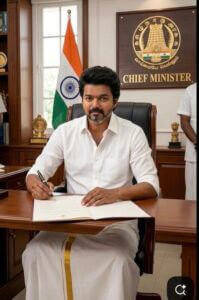
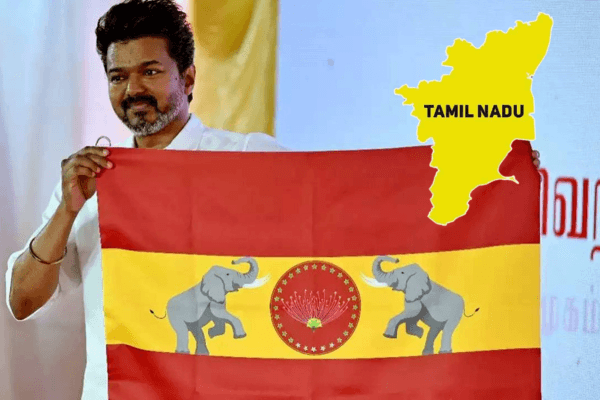
Chandrasekaran Joseph Vijay, known as Thalapathy to millions, was at the centre of it all. Early results showed his party, Tamilaga Vettri Kazhagam, crossing the 100-lead mark. For a state that has switched between DMK and AIADMK for decades, this was a big change. These two parties have shaped most elections and influenced how people see government, social justice, and progress. Their long rivalry made them the main players in the state, so a new party breaking through that space is interesting.

For many of us in Australia, he is the actor who is everywhere. We watched Ghilli again and again, cheered for Thuppakki, and turned Mersal lines into moments for the crowd. There are the packed Hoyts screen and the loud first‑day show; someone convinces you to attend. You may not follow every film, but you know the excitement around him.

Vijay Thalapathy
Actor turned politician breaks records (Source: Actor Vijay Team on X)

From acting to politics

And then, like many public figures in India, he stepped into politics.

This is not unusual.

Across the country, famous people move into politics. Whether they come from cinema, sports, TV, or business, their fame helps them get started in politics.

Tamil Nadu has seen this before. M. G. Ramachandran did it. J. Jayalalithaa did it. Vijayakanth tried his own path. Actors joining politics is nothing new here.

What matters is who Vijay Thalapathy managed to attract.

This time, things felt different. Friends who never cared about politics started paying attention, while people who usually ignored news debates checked seat counts. Even quiet cousins posted photos of their inked fingers, and group chats that once argued about biryani now tracked constituencies.

How did this shift happen?

Vijay made politics feel more accessible for many people, making it seem like anyone could get involved, even if only out of curiosity.

Vijay didn’t enter as a policy expert, but as someone everyone already knew. That’s his strength, but it’s also a risk.

People will keep asking tougher questions about Vijay’s policies. His party promised ₹4,000 a month to unemployed graduates and ₹2,500 to women. These are clear promises about income and support. But making them happen will need steady funding, so people will want to know where the money will come from and what the government will focus on. Large cash programs can strain the state budget if tax collections or grants do not rise at the same pace. Rival parties may question these plans in the assembly, which can slow the implementation of new schemes. His plans for education and jobs need strong links with industry. Colleges and training centres need funds, staff, and clear targets. Building these links takes time and cooperation from many sides. His stand on delimitation places him within a broader debate over how states are represented. That debate could shape how political power is shared across the region.

Ultimately, the long-term impact of this change will depend on whether promises are kept. If Vijay’s plans lead to real improvements, Tamil Nadu’s politics could change for years. If not, old habits might return quickly.

Vijay Thalapathy
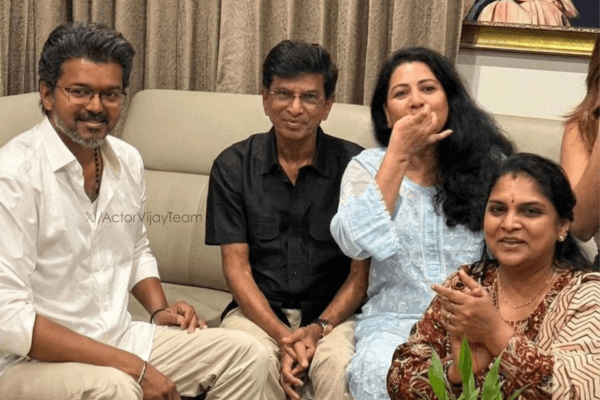
Vijay Thalapathy celebrating with his family (Source: Actor Vijay team on X)

Can a more aware generation make up for a leader with less experience? Yes, but only if people turn awareness into action. This means questioning decisions, tracking promises, and staying involved after the election, as simply posting or debating isn’t enough. Accountability must be steady. Sustained public pressure and organised advocacy bring results: new laws, more budget transparency, and even reversal of unpopular decisions. When citizens follow up on promises and demand updates, leaders are more likely to honour commitments.

For now, Vijay Thalapathy has succeeded at one thing.

He got people to pay attention.

He turned interest into turnout. He brought new voters into the line.

But this moment, people awakening to politics, new voices lining up to vote, marks the beginning of a deeper transformation. Whether it endures will depend on what happens next, and whether those who turned up this time will stay engaged. For Tamil Nadu, and for those watching from afar, the stakes are higher now than ever before.

READ ALSO: Zohran Mamdani: Reaching beyond identity politics

IAWBD: A new forum energising India-Australia women in business

0
IAWBD Forum
Reading Time: 4 minutes


The India-Australia Women in Business Dialogue (IAWBD) Forum is early in its journey, but the intent is clear – deliver plans to increase women’s participation in business growth and development.

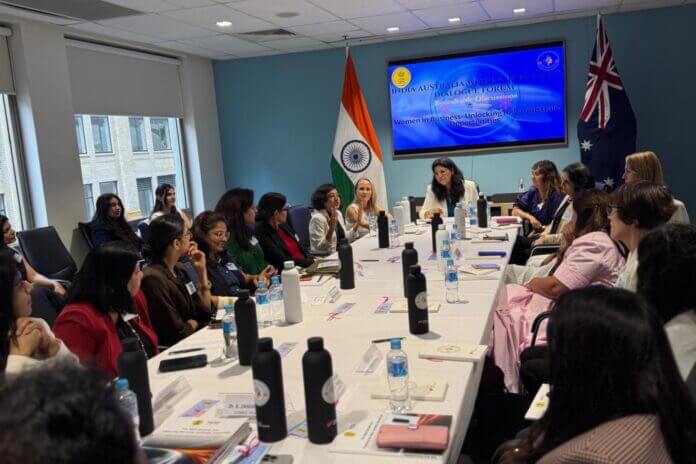
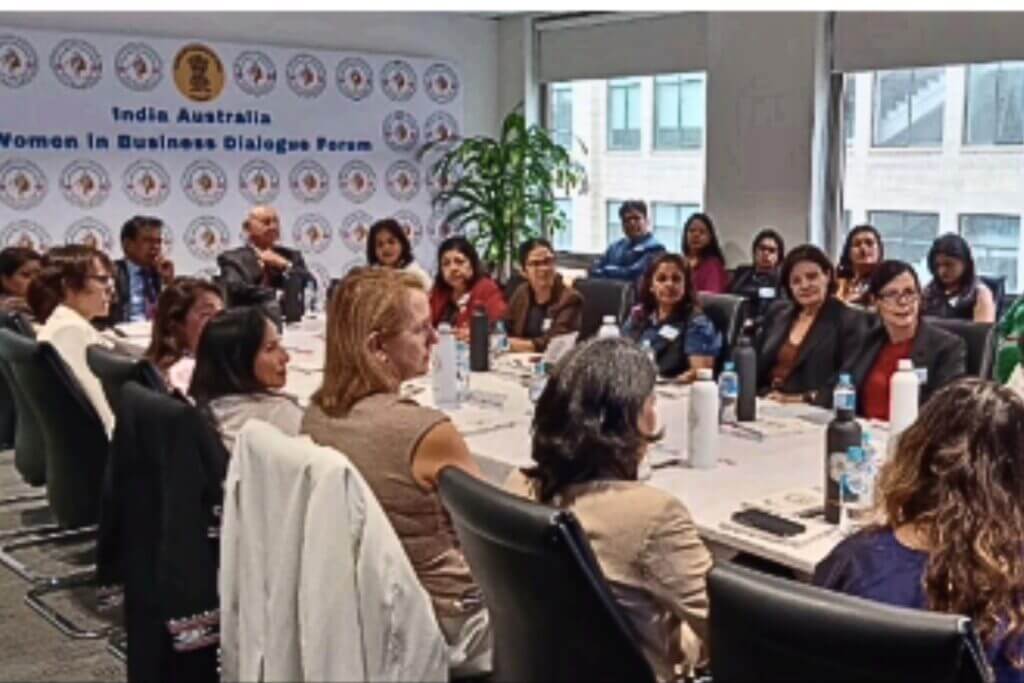
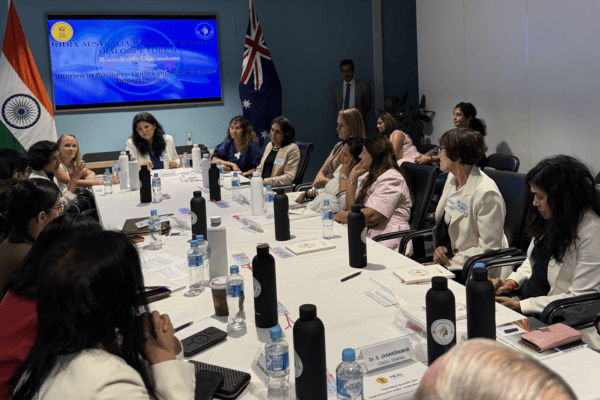
Launched by the Consulate General of India in Sydney in mid-March, its inaugural roundtable brought together senior leaders and young businesswomen from across sectors for a discussion on development of women in business with practical actions to achieve it.

Twenty-five women from a wide spectrum of industries – government and diplomacy, technology, healthcare, business, media, education, sustainability, and the creative sectors – took part in the roundtable discussion.

What is the IAWBD Forum? 

The IAWBD Forum was established to ensure women are active participants in the growing trade relationship between India and Australia. It was founded with a focus on women-led enterprises that need support to access markets, secure investment, and build cross-border networks.

“From insightful discussions to meaningful networking, the Forum reinforced the growing role of women entrepreneurs as a powerful force shaping economic growth, innovation, and bilateral partnerships between India and Australia,” Dr S. Jankiraman, Consul General of India (Sydney) and chair of the event, wrote in his LinkedIn post.

The Forum’s ambition is to grow into an ecosystem where women can support and elevate each other across the corridor, with tangible outcomes as a measure of success.

Recommendations from the IAWBD Forum 

“We often see the outcomes, growth, and success – less visible are the decisions, resilience and trade-offs behind it all,” event moderator Natasha Jha Bhaskar told Indian Link. “When women leaders come together to share experiences openly, it creates practical learning, trusted support and the opportunity to lift others as they climb. The IAWBD forum initiative creates space for conversations that build insights, capabilities and connections.”

Beyond inspiration, the IAWBD Forum has translated its discussions into a forward agenda aimed at strengthening India-Australia business engagement in practical, measurable ways.

Its recommendations signal a unified direction: less talking about opportunities, and more actually creating it. They cover three areas – access to markets, access to capital, and the support required to turn the access into real outcomes.

On access, the panel called for a network of advisors and sector-focused panels that give businesses a structured space to learn and navigate the realities of entering a new market. Digital resources would support self-directed learning, with the goal of providing a genuine soft landing for new entrants rather than leaving them to figure it out alone.

Alongside this, a central knowledge platform would cut through conflicting information online by documenting what has gone wrong for businesses, not just what has worked, so others can make better decisions earlier. It would also include a verified directory of investors and partners to support grassroots organisations in building trustworthy connections.

The panel also addressed capital directly. The proposed Corridor Capital platform would connect investors with businesses across both markets while helping those businesses become investment-ready. Women-led firms are the top priority here. This shows a change in how success gets measured, with deals and real outcomes, not just meetings and reports.

Archana Kapadnis, Executive Vice President, Growth and Partnerships at iSOFT Technologies, drew out the strong technology thread running through the discussion. “The IAWBD was a powerful reminder that women are not only participants but leaders shaping the technology‑driven future of the India-Australia business corridor,” she told Indian Link. “The discussions reinforced how technology can act as a true equaliser, enabling women‑led enterprises to scale across borders more rapidly. What stood out was the strong collective focus on digital innovation, capability building, and creating ecosystems that support sustainable, tech‑driven growth.”

Action plan

The report sets out a clear plan for the next 6 to 12 months. An advisory group of 10 to 12 senior leaders from diverse sectors will be established to guide the Forum’s direction and open doors for participants. A cross-border mentorship and sponsorship program will connect entrepreneurs with meteors who can make introductions to clients, investors and partners, working in targeted cohorts to keep connections meaningful. The first group of 20 to 30 women-led businesses will be selected and supported based on their specific needs.

A market access platform will go live as a central hub for practical market entry guides, honest analysis of what has and hasn’t worked, and a verified directory of partners.

Finally, the Forum will replace one-off events with recurring structured sessions, tracking progress from first introduction through to established deals. The measure of success will not be attendance, but outcomes.

Participant Sumeet Saigal, founder and CEO of SugarCube Foods Pty, summed it up for everyone. “The Forum marked a clear shift from conversation to tangible action, unlocking pathways for women to lead and scale across the India-Australia corridor. There was a powerful sense of collective ambition in the room, not just connect, but to actively support and accelerate the growth of women-led businesses across both markets.”

Follow IABWD on Instagram and LinkedIn

Read more: Sangeeta Mulchandani wins Innovation & Entrepreneurship award

Indian migrants: Invisible in the Australian healthcare system

0
Indians in Australian healthcare
Reading Time: 4 minutes


Despite being one of Australia’s highly educated and fastest-growing migrant communities, Indians — along with other South Asians — are still not properly understood by the country’s healthcare system.

New research led by Zohra Lassi at the University of Adelaide shows that a major reason is simple but concerning: South Asians are often grouped into broad labels like “Asian” or “CALD” (culturally and linguistically diverse), which hides the differences within these communities.

“As a result, their specific health needs, access barriers, and care experiences are rarely examined in depth,” Lassi tells Indian Link.

Simply put, this means policies and healthcare services are often built without a clear understanding of what Indian migrants actually need — or the challenges they face in accessing care.

Zohra Lassi on Indians in Australian healthcare
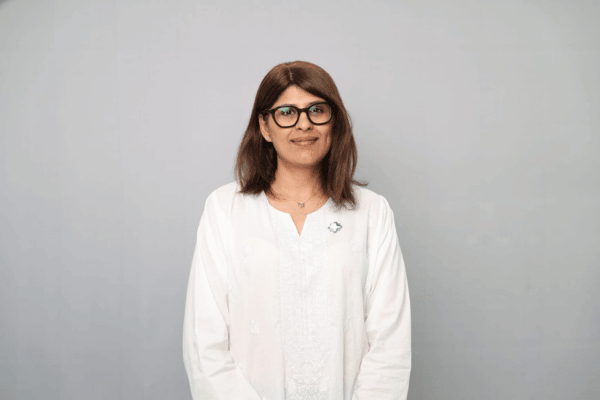
Zohra Lassi, researcher at the University of Adelaide (Source: Canva)

For many, the issue isn’t awareness. A key finding was that Indian migrants are generally familiar with how Australia’s healthcare system works. But that doesn’t always make it easier to use.

“These include difficulties with culturally responsive communication, uncertainty around when and how to seek care, and challenges in accessing preventive and mental health services,” Lassi explains.

The issue goes deeper than navigation, Lassi finds. Her research shows that many healthcare services in Australia are not designed with cultural differences in mind — something that can quietly shape how comfortable migrants feel seeking care in the first place.

Data: or the lack of it!

For Indian migrants, these expectations are often shaped long before they arrive in Australia.

In India, patients can usually go directly to specialists without needing a referral. In Australia, however, the system is built around general practitioners (GPs) as the first point of contact – something that can feel unfamiliar and, at times, frustrating.

There are also differences in how healthcare itself is approached. Preventive care – such as regular screenings or early check-ups – is not always a priority in the same way, which can affect how early people enter the system.

“Preventive care is not always prioritized, which can delay engagement with early screening and chronic disease management services,” she says.

While existing research tends to focus on mental health and chronic diseases, Lassi points out that several important areas remain largely ignored when it comes to Indian migrants.

“We found relatively less evidence on maternal and reproductive health, preventive screening uptake, and child and adolescent health,” she adds.

Indians in Australian healthcare
Differences between Indian and Australian healthcare can create confusion among migrants (Source: Canva)

There is also limited understanding of how different migration experiences – such as visa status or financial transitions – affect health outcomes over time.

Even basic but critical areas like oral health and health literacy are under-researched, despite playing a major role in long-term wellbeing.

Without this data, it becomes difficult to design healthcare services that actually respond to people’s needs.

Stop the stigma 

Another loophole is that Indian migrants rely on informal networks for health advice.

“Indian migrants were more likely to report strong reliance on informal networks, family, friends, and ethnic community groups, for health information and decision-making,” Lassi says.

While these networks can provide support, they can also delay engagement with formal healthcare services — especially in more sensitive areas.

This is particularly evident in mental health.

“Indian migrants were more likely to report delayed care-seeking for mental health concerns, often due to stigma and concerns about confidentiality,” she explains.

Stigma continues to play a powerful role.

“Mental health conditions are often not discussed openly, and there is concern about reputational impact within families and community networks,” Lassi says. “This can lead to delayed help-seeking, reliance on informal coping strategies, or preference for addressing symptoms through general practitioners rather than mental health specialists.”

Indians in Australian healthcareThe way forward : Indians in Australian healthcare

The solution, Lassi feels, is not just about increasing awareness, but about changing how healthcare is designed and delivered.

“Interventions need to go beyond awareness campaigns,” she points. “Culturally tailored, community-led models of care are essential — particularly those that integrate mental health into primary care in a non-stigmatizing way.”

She also points to the need for better communication in healthcare settings, stronger support services such as interpreters and system navigators, and closer collaboration with community organizations that migrants already trust.

Digital health tools, if designed with cultural context in mind, could also help bridge some of these gaps.

Until these policy changes take place, Indian migrants can take some steps to better navigate the system.

“The most practical step is to establish a relationship with a regular general practitioner, as this is the entry point to most healthcare services in Australia,” Lassi advises.

She also encourages Indians in Australian healthcare to make use of available resources – including Medicare, where needed.

Seeking preventive care early, rather than waiting for symptoms to worsen, can make a significant difference to long-term health.

“Finally, asking questions and clarifying treatment plans with healthcare providers is key,” she adds. “The system relies heavily on patient engagement and shared decision-making.”

READ ALSO: More than a simple cold: Are you prepared for RSV?

How Australia’s GrainSupp could help Indian farmers sell grain

0
Grainsupp
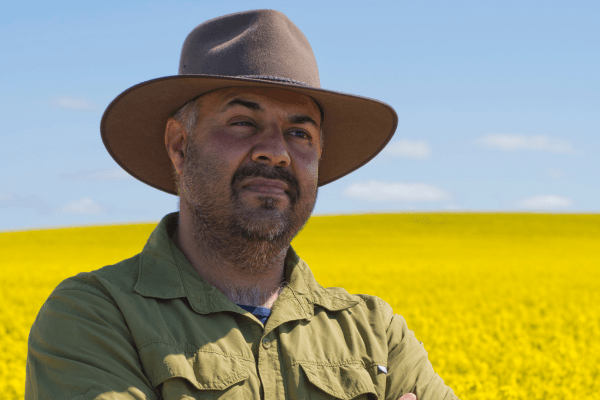
Professor Harpinder Sandhu of Federation University (Source: Supplied)
Reading Time: 3 minutes


When Prof Harpinder Sandhu and his research team at Federation University Australia set out to build GrainSupp, they were not thinking about India.

The goal was simpler, and far more urgent in Australia’s context: fix the broken visibility in grain supply chains.

But what began as an Australian solution to trace grain from paddock to port is now being adopted for one of the world’s most complex agricultural ecosystems – India.

What is GrainSupp3.0?

GrainSupp3.0 is a digital traceability system that fuses blockchain and artificial intelligence to create a tamper-proof identity for every grain batch.

“It tracks grain from farm to consumer by combining blockchain record-keeping with AI-enabled capture of policy and regulatory requirements across the supply chain,” explains Sandhu, an agricultural scientist.

At the farm level, every detail – from crop type and inputs to harvest conditions – is recorded and verified. Once validated, it is time-stamped and stored on a blockchain ledger, creating what Sandhu describes as a “trusted digital identity for each grain batch”.

As the grain moves through storage, processing, and export, every transaction and quality check is added. AI flags anomalies, while blockchain ensures the record cannot be altered.

GrainSupp was built for Australia to address a key gap – fragmented, paper-based systems that fail once grain leaves the farm.

“GrainSupp was created to address a gap in Australia’s grain supply chains where verified farm-level quality, provenance, and compliance data could not be reliably preserved and shared beyond the farm gate,” Sandhu tells Indian Link.

That gap becomes even more critical as export markets demand proof – not just of quality, but of origin, sustainability, and safety. Traditional systems, he notes, simply are not equipped.

It is this mismatch between demand and documentation that has now pushed GrainSupp towards India.

“The decision to bring GrainSupp to India was triggered by a convergence of strategic, market, and policy factors,” he shares.

All roads lead to India through GrainSupp

India’s agriculture, while globally significant, is marred by fragmentation, informal transactions, and inconsistent quality verification. At the same time, the country is rapidly digitizing its agri systems, creating what Sandhu sees as a timely opportunity.

“GrainSupp3.0 delivers trusted, low cost traceability suited to smallholder dominated systems,” he adds. “The timing is further shaped by strengthening Australia–India trade relations under ECTA and growing demand for transparent, verifiable supply chains for grains, pulses, and value added products. Support through the Maitri Grant Program of the Centre for Australia–India Relations has also enabled deeper collaboration, making India a logical next market to adapt and scale GrainSupp beyond its Australian origins.”

To adapt, Sandhu’s team is removing complexity out of the system.

“GrainSupp is being modified… by prioritizing simplicity, affordability, and inclusion,” he says.

In practice, that means farmers will not interact with the technology directly. Instead, engagement will flow through Farmer Producer Organisations (FPOs) and Farmer Producer Companies (FPCs), avoiding the need for individual digital onboarding or new infrastructure.

This intermediary-led model is key to scaling in India, where digital literacy and connectivity vary widely.

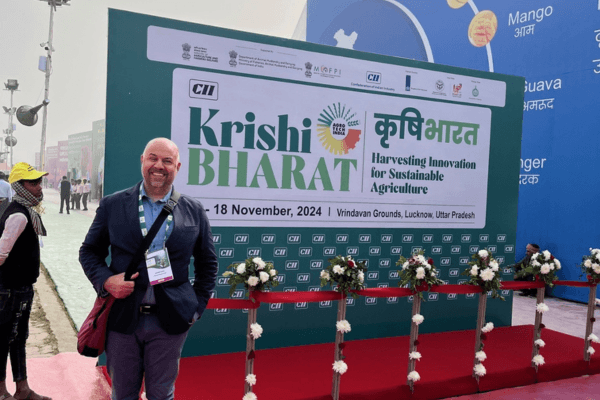
Professor Harpinder Sandhu at the 16th Confederation of Indian Industry-supported AgroTech Conference in 2024 (Source: Supplied)

Small solution, big problem : GrainSupp

The impact, Sandhu feels, will be significant.

By enabling verified traceability, GrainSupp could allow Indian farmers to move beyond anonymous bulk selling and into premium, certified markets.

“GrainSupp3.0 can help Indian farmers secure better prices and stronger bargaining power by enabling verified access to premium domestic and export markets,” Sandhu informs.

He, however, feels the biggest hurdles in implementing GrainSupp in India are not technological.

“The biggest barriers… are institutional and behavioural,” Sandhu points.

India’s multiple overlapping systems – mandis, procurement networks, traders, and cooperatives – make coordination difficult. Equally challenging is trust: convincing stakeholders to adopt a system that changes long-standing trade practices.

Still, Sandhu is hopeful, and feels that this model can open doors for other Australian AgTech innovations to India.

“Yes, this project can serve as a practical model for exporting other Australian AgTech innovations to India,” he says.

READ MORE: Aus-India green steel push, powered by rice husk

Tarot Predictions for May 2026

1
tarot
Reading Time: 5 minutes

Aries: March 21 – April 20

  You draw your sign’s card in reverse – expect delays, and possibly a no from the universe on something you’ve been hoping for. Turn inward instead: focus on self-growth and personal goals. In relationships, resist the urge to shut down or cut people off; stay open to positive energy. At work, make confident, well-considered decisions. Singles may receive a marriage proposal. For the self-employed, fresh ideas and clear communication bring results. If you’re in a technical field, prioritise upskilling.  

Taurus: April 21 – May 20

  A good month ahead, as delays begin to lift – if they haven’t already – expect resolution within eight weeks. The Wands card signals action, bringing movement across all areas. A blind date or unexpected invitation could spark a passionate romance. Travel, for work or pleasure, is likely. Professionals and the self-employed may see sudden progress, while finances improve. Trust in divine timing – what’s meant for you is on its way. Stagnation fades as life begins to flow smoothly again.

Gemini: May 21 – June 20

  This month calls for healing your inner child to support emotional wellbeing, even as nostalgia surfaces. The health problems you face this month may be signals to slow down and reflect. Someone or something may exit your life, making way for new beginnings. A surprise job or business opportunity could arrive. Writers may find literary success. Seek joy in multiple sources, not just one. Whatever is worrying you now is likely to resolve more positively than you expect.

Cancer: June 21 – July 20

  Finances may feel tight this month, with income matching expenses. In relationships, tensions could rise – open communication is key. Solutions may come from unexpected sources. At work, try a fresh approach to ongoing projects. . Work may get so busy you may have no time to spend with family. The self-employed might need to offer discounts to attract business. A shift in perspective will be your greatest asset – adaptability and openness can turn challenges into opportunities.

Leo: July 21 – August 20

  A slightly challenging month for you, Leos, with disruptions to travel and work plans. You’ll stand firm on not compromising your values. Be cautious – someone may attempt manipulation or mind games. Stay alert. Any aches and pains are your body’s way of telling you to slow down and rest. A friend offers timely support. Unexpected financial gains are possible. Socialising and business meetings could open doors, bringing opportunities and success if you remain grounded and aware.  

Virgo: August 21 – September 20

  Gemini energy brings a surge of ideas and communication for meticulous Virgos. In relationships, recent disagreements or distance may persist, with neither side willing to give in – set ego aside, and a reunion is possible. Professionals and business owners could meet influential people who open doors. Children may be a little challenging this month. On the financial front, it’s a win-win period, with gains and stability likely if you stay practical and open-minded.  

Libra: September 21 – October 20

  Knights signal fast-moving energy, so actions taken this month will bring quicker results. An existing situation may shift unexpectedly. Singles could meet someone with soulmate energy – an instant, familiar connection worth exploring. Workplace arguments will be temporary. Obstacles may feel stressful, but handle them methodically. Emotional strain could affect your stamina, so pace yourself. It’s a good time for a dental check-up. Avoid forcing outcomes – trust the universe to unfold things in its own time.  

Scorpio: October 21 – November 20

  A month to release insecurities around money – trust that the universe provides. Ask yourself what you’re still holding on to. In dating, hurdles may arise, but with effort, things can still work. The self-employed may start a new venture or see sudden gains. If work feels stagnant, consider a change. Let go of anxiety and attachment to people, ideas, or material things – it only drains your energy. Embrace trust, flexibility, and forward movement.  

Sagittarius: November 21 – December 20

  The start of a creative phase or new venture is likely – possibly one that brings financial reward. If you’re awaiting results within a set timeframe, they could arrive within a week. Singles will seek a deeply committed partner. If you’re feeling sluggish, consider a detox or cleansing routine. Shake things up by refreshing your daily habits. To manifest your dreams, consistent action is essential – intent alone won’t suffice, so stay proactive and focused.

Capricorn: December 21 – January 20

  A month of abundance across multiple areas for Capricorn. Singles may meet someone through social circles or at work. Opportunities for self-promotion are likely, helping you step into the spotlight. Family and friends remain supportive, and a monetary gift could come your way. If you’re dating, the relationship may move to the next level. At the same time, a karmic connection could come to an end. Luck is on your side – move ahead with confidence and without fear.

Aquarius: January 21 – February 20

  The next three months are significant for Aquarians, with the Ace of Cups card signalling new beginnings, joy and emotional healing. A silent admirer may reveal their interest. Some may purchase a new home. If you’re in a creative field, innovative ideas will find success. New assignments could boost your income. The universe is sending an unexpected gift your way. What is meant for you is already in motion – trust in divine timing and allow things to unfold naturally.  

Pisces: February 21 – March 20

  Letting go and making sacrifices may be your key challenges this month. Singles may date, but the spark could feel missing. Some may choose to end a relationship and walk away. Avoid bottling up your feelings – speak your truth. A sudden windfall or unexpected event may shift your perspective. Professionally, expect expansion, with your skills in demand. A legal matter could go in your favour. If you’re experiencing vision issues, consider getting your eyes checked.    

Tony Burke came to talk visas but gave us viral SRK fan moment

0
tony burke srk fan

Reading Time: 3 minutes 

Tony Burke SRK Fan

There are interviews you prepare for, and then there are the moments inside those interviews that you cannot prepare for. We had both in the same sitting, during the latest episode of the Pawan Luthra Podcast.

When Tony Burke walked into the Indian Link studio, he carried the full weight of his portfolio with him.

Minister for Home Affairs, Minister for Immigration and Citizenship, Minister for Cyber Security, Minister for the Arts, Leader of the House – he’s one the most consequential figures in the current Australian cabinet.

In conversation with host Pawan Luthra before the interview began, the Minister recalled his visits to India, including an invitation to the Mumbai home of actor Shah Rukh Khan.

But the conversation ahead was set to centre on immigration – the issue of the day.

Pawan had already lined up the questions that mattered: Liberal leader Angus Taylor’s migration policy; the Coalition’s drifting towards One Nation; One Nation’s record support currently; his government’s plans to restore the “social licence” for migration; the issues with skilled migration; Martin Parkinson’s 2023 review of the migration system.

The conversation was going to be heavy, and it was.

Until it wasn’t.

It was somewhere near the end of the recording when Pawan shifted gears, as he often does with guests, steering the conversation toward something warmer and less scripted. He asked Burke, in his capacity as Minster for the Arts, about Indian cinema. There was a pause that followed. Not a politician’s pause, but the pause of a person deciding how honest to be.


View this post on Instagram


A post shared by Indian Link (@indianlink)

“I am a massive Shah Rukh Khan fan,” Burke began, “so let me start with that. And I love AR Rahman’s soundtracks as well.” There was something almost relieved in the way he said it, as though he had been waiting for the right room to admit this in. This was not a man performing cultural appreciation for a diaspora audience. This was someone who had, at some point in his private life, sat with these films and let them matter to him.

The Minister went on to speak about Chak De! India (2007), a hockey drama filmed in Sydney, Melbourne, and Brisbane; Lagaan (2001), and Jodha Akhbar (2008).

But he saved the best for the end. “The last one I want to mention isn’t just my favourite Bollywood film, it’s my favourite film of all time – Om Shanti Om“.

And then he spoke about that line from the film: “If it’s not happy, it’s not the end, the story is not over yet. It’s a line that feels particularly alive right now, given the world is in such a difficult place.”

A senior government minister, sitting across from us, citing the philosophy of a Farah Khan production, was not what we had expected from the afternoon.

Here was a man who holds the Arts portfolio for an entire nation, who understands at a structural level what culture does to a community and why it endures. And yet his relationship with these films was not administrative. It was personal in the way that only unplanned love can be. No one had briefed him to love Om Shanti Om. He had arrived there on his own.

The clip went viral before the episode had even properly settled, fan pages resharing into loops (garnering 182K views as of this morning).

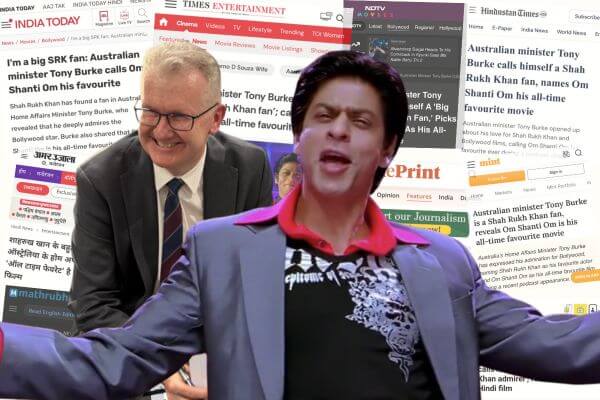
And before we knew it, Indian media houses were all over it, lifting it, sharing it, clipping it: NDTV, Hindustan Times, India Today, Times of India, The Print, Zoom TV, Live Mint, Times Now, WION News, Aaj Tak, Amar Ujala, Mathrubhumi.

The comments came in thick and fast.

* “He had me at “I’m a fan of Shah Rukh Khan” 😍👏🙌

* Omg I was not expecting Tony to rattle off Bollywood gems and dialogues! I’m biased I LOVE Om Shanti Om!

* I was about to scroll but then he said Shah Rukh Khan. 🫠✨❤️

And then came the conversations underneath, the ones that always seem to find Shah Rukh Khan eventually.

I’ll say it again, Shah Rukh Khan is the face of Indian cinema, arguably the most famous Indian alive today. You can run all the negative PR you want, but you can’t erase what he has built. The GOAT of Indian cinema Shah Rukh Khan ❤️

Shah Rukh’s name rising this visibly in global discourse had fans noting, not unkindly but firmly, that even Ranveer Singh’s barnstorming run with Dhurandhar (2025-26) had not yet placed him in the kind of cultural conversation where a foreign minister reaches for his films unprompted, in a moment of genuine feeling, years after release. Tony Burke SRK Fan

Minister Burke had come in to talk about migration. He left having wandered elsewhere – into cinema, memory, and the lines we carry when the moment turns difficult. He stepped out of our offices lighter than when he arrived. That, perhaps, is what Shah Rukh Khan tends to do to people.

Read more: Come on Angus Taylor, you can do better

Tony Burke SRK Fan

Indian films releasing in May 2026

0
Indian films in May 2026

Reading Time: 4 minutes 

From captivating love stories to intense dramas and epic narratives, Indian films in May 2026 promise an exciting mix. With fresh talent and familiar faces, get ready to experience a rollercoaster of emotions.

EK DIN (In cinemas)

The trailer opens on a tranquil, snow-blanketed landscape as Junaid Khan steps quietly up to a wish bell – a haunting image that sets the film’s dreamy tone. In that fleeting moment, he makes a heartfelt wish, one that soon begins to blur the line between reality and longing. Directed by Sunil Pandey, Ek Din stars Sai Pallavi in her Hindi debut alongside Khan. Adapted from the 2016 Thai film One Day, it follows Rohan, a soft-spoken man in love with colleague Meera. A work trip to Japan changes everything. The film also releases in Tamil and Telugu as Oru Naal and Okka Roju.

Releasing 1 May 2026

GLORY (Netflix)

A boxing-set drama starring Divyenndu Sharma, Pulkit Samrat, and Suvinder Vicky, this story unfolds in a world where legacy and survival go hand in hand. When a shocking murder disrupts the tightly knit boxing community, two estranged brothers are unexpectedly pulled back into each other’s lives. What begins as a search for truth soon turns into something far more personal, forcing them to confront old wounds and a broken relationship with their father.

Releasing 1 May 2026

RAJA SHIVAJI (In cinemas)

A grand, star-studded spectacle, this film brings together Riteish Deshmukh, Abhishek Bachchan, Sanjay Dutt, Fardeen Khan, Mahesh Manjrekar, Sachin Khedekar, Genelia Deshmukh, Bhagyashree and Vidya Balan. Directed and written by Riteish Deshmukh, it narrates the journey of Shivaji Maharaj, capturing the spirit, bravery, and vision of the legendary ruler. Blending emotion and visual grandeur, expect a tale told with both strength and sensitivity. Scheduled to release on the special occasion of Maharashtra Day, the film will be presented in Marathi, Hindi and Telugu.

Releasing 1 May 2026

CITADEL season 2 (Prime video)

Citadel returns with a more intense second season, again led by Priyanka Chopra Jonas as elite spy Nadia Sinh. Picking up after Season 1, the story follows Nadia and Mason Kane as they confront Manticore, the powerful syndicate that destroyed their agency. When a new threat emerges, Nadia is drawn back into a world she tried to leave behind. Joined by Kane and Bernard Orlick, the team assembles new operatives and embarks on a global mission to stop a dangerous conspiracy. Expect high energy, emotional depth, and twists where no one can be fully trusted.

Releasing 6 May 2026

DAADI KI SHAADI (In cinemas)

Riddhima Kapoor Sahni, daughter of Neetu Kapoor, makes her much-anticipated Bollywood debut in a family comedy-drama that offers a refreshing, feel-good take on love and companionship. When a strong-willed grandmother decides to remarry, it sets off a delightful chain of reactions within the family. Directed by Ashish R. Mohan, the film also features Kapil Sharma, whose lively screen presence is sure to add charm and humour. A warm, modern take on generational differences.

Releasing 8 May 2026

MAIN ACTOR NAHIN HOON (In cinemas)

Led by Nawazuddin Siddiqui, this thought-provoking drama follows a retired banker who dares to pursue a long-buried dream of becoming an actor. What begins as an unlikely aspiration turns into a deeply personal journey of reinvention. In a contemporary twist, he takes virtual acting lessons, opening a door to a world he has only admired from afar. As he navigates self-doubt, identity, and ambition, the film explores loneliness and the courage to begin again. Directed by Aditya Kripalani, it promises a quietly powerful, emotionally resonant experience.

Releasing 8 May 2026

LUKKHE (Amazon Prime) 

See rapper King in a gripping new role, alongside Raashii Khanna and Palak Tiwari. Filmed in Punjab, Lukkhe blends love, ambition, and rivalry into a gripping narrative. King stars as Lucky, a determined sportsman, who falls for Sanober (Raashii Khanna), a passionate musician. However, their blossoming romance is soon caught in a dangerous clash between a relentless cop and an up-and-coming rapper.

Releasing 8 May 2026

AAKHRI SAWAL (In cinemas)

Directed by Abhijeet Mohan Warang, this is a thought-provoking drama starring Sanjay Dutt. The story follows Vicky, a talented but unpredictable student, who publicly accuses his respected mentor, Professor Gopal Nadkarni, of bias. What starts as a personal disagreement quickly grows into a big national issue. As the media and politics get involved, their conflict turns into a heated televised debate, bringing questions of power, fairness, and truth into the spotlight.

Releasing 8 May 2026

PATI, PATNI AUR WOH DO (In cinemas)

The journey of Pati Patni Aur Woh began in 1978, when filmmaker B.R. Chopra crafted a satirical look at marriage and social norms. The original film became known for its sharp humour and relatable take on relationships. Years later, Mudassar Aziz revisited the concept with a 2019 adaptation starring Kartik Aaryan, Bhumi Pednekar, and Ananya Panday, updating the story with a modern spin on love and urban marital life. The franchise now moves forward with a fresh instalment led by Ayushmann Khurrana as Prajapati Pandey, alongside Sara Ali Khan, Wamiqa Gabbi, and Rakul Preet Singh, with Vijay Raaz appearing as an eccentric cop.

Releasing 15 May 2026

CHAND MERA DIL (In cinemas)

With its central line, pyaar mein thoda paagal hona hi padta hai, this is a tender coming-of-age romantic drama set on an engineering campus, starring Ananya Panday and Lakshya Lalwani. As their relationship evolves, it becomes more layered and emotionally complex, reflecting how young love changes under the weight of time, growth, and real-world choices. Directed by Vivek Soni, who previously made the heartfelt Aap Jaisa Koi.

Releasing 22 May 2026

READ ALSO: When books become blockbusters: 8 Indian adaptations worth watching

AirTrunk’s India push shows where Australia’s next tech opportunity lies

0
Airtrunk
Bangladesh-born Australian Robin Khuda is the founder of Airtrunk

Reading Time: 3 minutes

AirTrunk in India

Australian data centre giant AirTrunk’s $7 billion push into India is being seen as a major expansion into one of the world’s fastest-growing markets. It is an early signal of where the next layer of global technology infrastructure is being built, and a signal for other Australian companies to take note and move with urgency. 

What’s unfolding in India is not just another growth story. India is positioning itself as a serious player in AI infrastructure, emerging as a third major region alongside the United States and China. Data centre capacity, typically measured in megawatts of power, is expected to grow from around 1.5 gigawatts in 2025 to close to 10 gigawatts by 2030, based on Deloitte estimates. This expansion is being backed by unprecedented capital commitments, with industry and government collectively targeting more than US$200 billion in AI infrastructure investment over the coming years.

That scale is already attracting large-scale global capital and partnerships. Google has committed US$15 billion towards AI and digital infrastructure in India over the rest of the decade, while Amazon Web Services (AWS) has announced plans to invest US$12.7 billion in cloud infrastructure over a similar timeframe. OpenAI is partnering with the multi-billion dollar Indian conglomerate Tata Group to develop 100 megawatts of AI capacity, with plans to scale to 1 gigawatt. In practice, this means build-out of large-scale data centre campuses, supported by dedicated power, advanced cooling and the high-speed connectivity required to run AI workloads at scale.

This is exactly where the opportunity lies for Australian companies. The build-out of AI infrastructure at this scale requires capabilities that go well beyond the construction of data centres. It involves reliable power systems, advanced cooling, high-speed connectivity and the operational expertise needed to run large-scale infrastructure efficiently and securely.

These are areas where Australian capability is well established. From infrastructure investment and project delivery to renewable energy integration and enterprise-grade systems, Australian firms have experience operating at global standards. This combination of capabilities is critical to delivering and operating AI infrastructure at scale.

Inside AirTrunk’s headquarters in Sydney / Source: AirTrunk in India

If that opportunity is to be realised, it will require a shift in how Australian companies engage with India. Three priorities stand out.

First, move beyond exporting services and establish a long-term presence in India. This means partnering with local players that are already committing significant capital to AI infrastructure, including large industrial and energy groups building integrated data centre platforms. Joint ventures, co-investment and on-the-ground teams will be critical to navigating the market and participating meaningfully in the build-out.

Second, leverage Australia’s strength in energy and sustainability. As AI infrastructure scales, energy is emerging as the primary constraint globally. India’s approach is already integrating data centre expansion with renewable energy and long-term power strategies. Australian expertise in renewable integration, energy efficiency and grid management positions its companies well to contribute to the development of sustainable AI infrastructure at scale.

Third, make better use of policy and institutional pathways to support commercial engagement. India’s push into AI infrastructure is being driven not just by private capital, but by coordinated national ambition, reflected in large-scale investment commitments and government-led initiatives. Engaging through bilateral forums, industry platforms and channels such as Austrade and DFAT can help Australian firms build relationships, navigate regulatory environments and position themselves early in the market.

AirTrunk’s move is an early signal of where this is heading. The larger question is whether more Australian companies are prepared to follow with the same level of conviction. The build-out of AI infrastructure will define the next phase of the global technology economy. The opportunity for Australia is real, but it will not remain open indefinitely. The time to act is now.

Nikhil Kulkarni is a Sydney-based AI product leader with experience across Australia and India, and an active contributor to technology and business collaboration between the two countries.

Read more: Pax Silica: What India actually signed

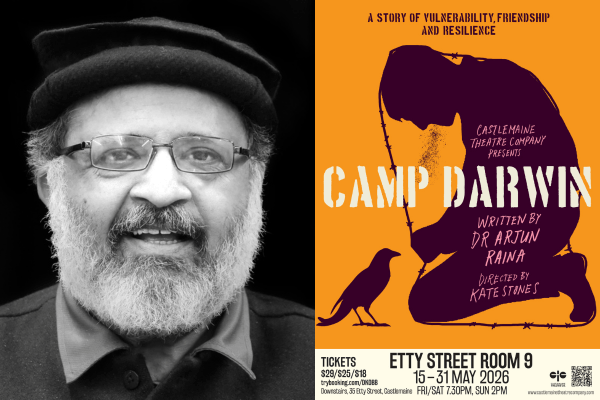
COVID and connection collide in ‘Camp Darwin’

0
Camp Darwin play Arjun Raina

Reading Time: 3 minutes 

Though over six years ago, Arjun Raina still remembers his first moments on Australian soil, after being evacuated from India during the Delta wave of COVID.

Stepping off the plane in Darwin, he was escorted to Howard Springs Quarantine Facility, where he would spend the next two weeks amongst equally harried return travellers.

“There was a big, strong policewoman who kept threatening us to stay three feet from each other, otherwise there’s a $5,000 fine and ‘we apply that very strictly at the camp’,” he recalls.

Arjun Raina playwright
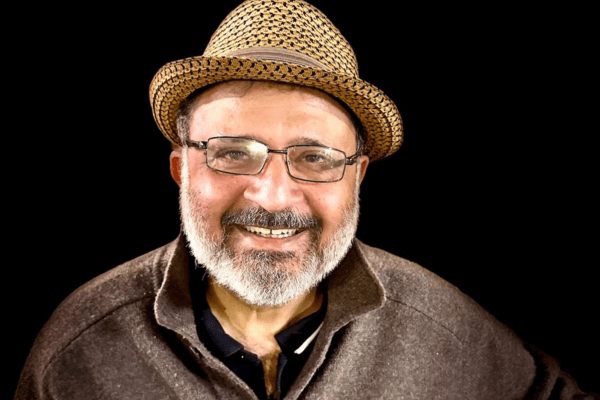
Gisborne-based playwright Arjun Raina. (Source: Supplied)

It’s within the strict regimentation of this experience, which he jokingly refers to as a ‘regime’, that his latest play Camp Darwin finds its genesis.

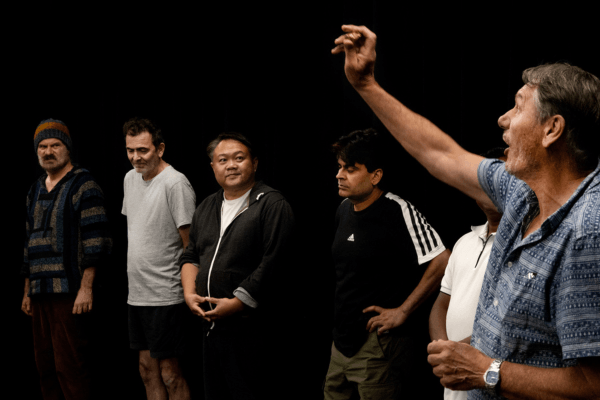
Told over fourteen days, the play follows six Australians from diverse backgrounds, as they navigate cabin fever, the prospect of having COVID and interpersonal tensions, all while the outside world shuts down around them.

“It was an incredibly stressful time… you are under Australian regimentation. As one of the characters says, we’re very good at creating these prison systems because that’s what we started off as – a penal colony. So, it’s a very efficient quarantine system with all its carrots and sticks,” Raina muses.

“I don’t have an experience of Australian prisons. But there is an element that you are an inmate. There’s an element you obey rules. There’s an element you do it in a precise way. The limitations were there.”

As the ‘inmates’ are tested, the threat of the mysterious ‘Red Zone’ quarantine looms, an inclusion from Raina’s own experience which lends the drama a sense of ever-present pressure.

“If on day 13 the test comes positive, then you go into the Red Zone for another 14 days…We had no idea whether the Red Zone had any porches or whether you were put into a laboratory and operated on to discover what COVID was,” Raina explains.

But despite being a work mined from the ‘lived experience of the entire COVID spectrum’, Raina is keen to point out it’s ‘not just a play about COVID’.

Camp Darwin Castlemaine Theatre Company
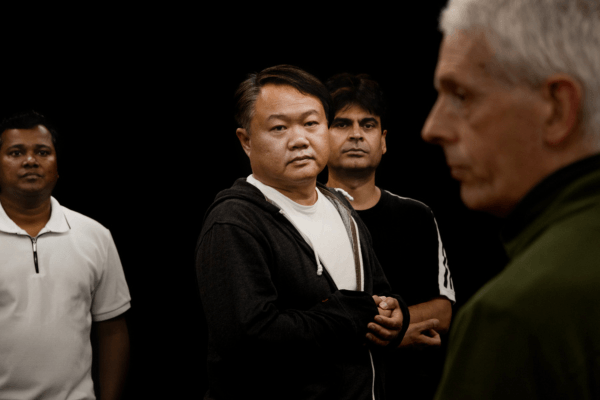
L-R Martin Thomas, Ivan Sun, Hem Tiwary, Peter Gutteridge (Source: Supplied)

Camp Darwin

“Naturally if people are going to be together [for 14 days], they’re going to find ways of singing songs and telling jokes,” Raina notes.

Cooped up in isolation for 14 days, Camp Darwin examines human connection and resilience in the face of unprecedented circumstances, something which Raina believes Victorian audiences are yet to confront.

“As Indians, we have no problem dealing with the toughness of [COVID] and seeing a story about this. But here you have to keep saying ‘no, no, it’s not confronting, it’s about human resilience,” he asserts.

“People [here] say, Oh God, COVID, we don’t want to deal with COVID, we just want to go down and have our beers and get back to our partying.”

Held captive together, Camp Darwin offers a rare chance to explore the commonalities between six Australian men from vastly different walks of life.

“To show brown men and white men, not in subservience or not in obvious very violent conflict, but in a social space together, becomes very interesting,” Raina says.

“It’s very rare that you have white men and brown men and black men all equal. They are all equally in the same situation, and they are negotiating the same reality, finding the same sense of resilience and humour and affection and fun together.”

Camp Darwin
L-R David Farrington, Matt Barbetti, Ivan Sun, Hem Tiwary, Martin Thomas, Kim Johnson. (Source: Supplied)

Resisting the urge to write conventional multicultural stories, Raina will be the first Indian Australian programmed on Castlemaine Theatre Company’s stage.

“This is the first time a playwright of colour is telling a story in Castlemaine, which is a very white town. I’m very aware of the interplay between the races,” he says.

“[Audiences] are going to enjoy the fact that they’re going to see these six characters of different cultures together, not necessarily in an aggressive, sort of anti-racist kind of way, but it’ll be a new experience.”

The Gisborne-based playwright hopes seeing an inclusive multicultural story will break down existing cultural siloes and encourage a new understanding of humanity.

“Unicultural performances, in a way, are celebrated; of which Counting and Cracking was one of the most celebrated, where there were no white characters, that community did not engage with the mainstream,” Raina contends.

“This is a fabulous effort by [Director] Kate Stones to bring in a playwright of colour, to bring in a multicultural cast – there are enough people wanting the breaking of the white citadel in a way.”

READ ALSO: A review of Arjun Raina’s Straight From the Horse’s Heart