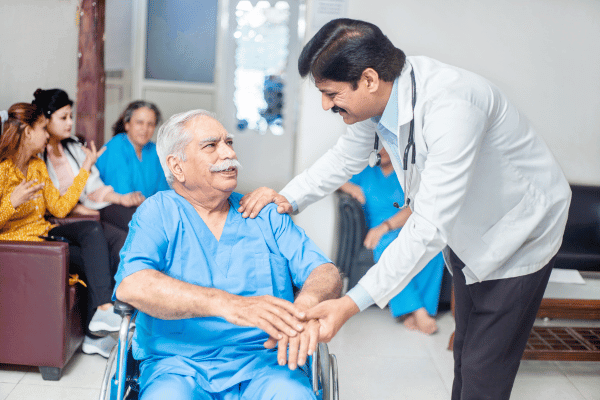

Despite being one of Australia’s highly educated and fastest-growing migrant communities, Indians — along with other South Asians — are still not properly understood by the country’s healthcare system.
New research led by Zohra Lassi at the University of Adelaide shows that a major reason is simple but concerning: South Asians are often grouped into broad labels like “Asian” or “CALD” (culturally and linguistically diverse), which hides the differences within these communities.
“As a result, their specific health needs, access barriers, and care experiences are rarely examined in depth,” Lassi tells Indian Link.
Simply put, this means policies and healthcare services are often built without a clear understanding of what Indian migrants actually need — or the challenges they face in accessing care.

For many, the issue isn’t awareness. A key finding was that Indian migrants are generally familiar with how Australia’s healthcare system works. But that doesn’t always make it easier to use.
“These include difficulties with culturally responsive communication, uncertainty around when and how to seek care, and challenges in accessing preventive and mental health services,” Lassi explains.
The issue goes deeper than navigation, Lassi finds. Her research shows that many healthcare services in Australia are not designed with cultural differences in mind — something that can quietly shape how comfortable migrants feel seeking care in the first place.
Data: or the lack of it!
For Indian migrants, these expectations are often shaped long before they arrive in Australia.
In India, patients can usually go directly to specialists without needing a referral. In Australia, however, the system is built around general practitioners (GPs) as the first point of contact – something that can feel unfamiliar and, at times, frustrating.
There are also differences in how healthcare itself is approached. Preventive care – such as regular screenings or early check-ups – is not always a priority in the same way, which can affect how early people enter the system.
“Preventive care is not always prioritized, which can delay engagement with early screening and chronic disease management services,” she says.
While existing research tends to focus on mental health and chronic diseases, Lassi points out that several important areas remain largely ignored when it comes to Indian migrants.
“We found relatively less evidence on maternal and reproductive health, preventive screening uptake, and child and adolescent health,” she adds.

There is also limited understanding of how different migration experiences – such as visa status or financial transitions – affect health outcomes over time.
Even basic but critical areas like oral health and health literacy are under-researched, despite playing a major role in long-term wellbeing.
Without this data, it becomes difficult to design healthcare services that actually respond to people’s needs.
Stop the stigma
Another loophole is that Indian migrants rely on informal networks for health advice.
“Indian migrants were more likely to report strong reliance on informal networks, family, friends, and ethnic community groups, for health information and decision-making,” Lassi says.
While these networks can provide support, they can also delay engagement with formal healthcare services — especially in more sensitive areas.
This is particularly evident in mental health.
“Indian migrants were more likely to report delayed care-seeking for mental health concerns, often due to stigma and concerns about confidentiality,” she explains.
Stigma continues to play a powerful role.
“Mental health conditions are often not discussed openly, and there is concern about reputational impact within families and community networks,” Lassi says. “This can lead to delayed help-seeking, reliance on informal coping strategies, or preference for addressing symptoms through general practitioners rather than mental health specialists.”
 The way forward : Indians in Australian healthcare
The solution, Lassi feels, is not just about increasing awareness, but about changing how healthcare is designed and delivered.
“Interventions need to go beyond awareness campaigns,” she points. “Culturally tailored, community-led models of care are essential — particularly those that integrate mental health into primary care in a non-stigmatizing way.”
She also points to the need for better communication in healthcare settings, stronger support services such as interpreters and system navigators, and closer collaboration with community organizations that migrants already trust.
Digital health tools, if designed with cultural context in mind, could also help bridge some of these gaps.
Until these policy changes take place, Indian migrants can take some steps to better navigate the system.
“The most practical step is to establish a relationship with a regular general practitioner, as this is the entry point to most healthcare services in Australia,” Lassi advises.
She also encourages Indians in Australian healthcare to make use of available resources – including Medicare, where needed.
Seeking preventive care early, rather than waiting for symptoms to worsen, can make a significant difference to long-term health.
“Finally, asking questions and clarifying treatment plans with healthcare providers is key,” she adds. “The system relies heavily on patient engagement and shared decision-making.”
READ ALSO: More than a simple cold: Are you prepared for RSV?