


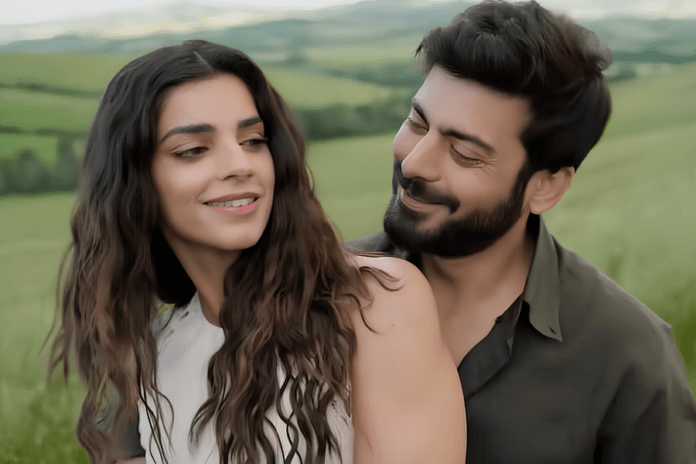
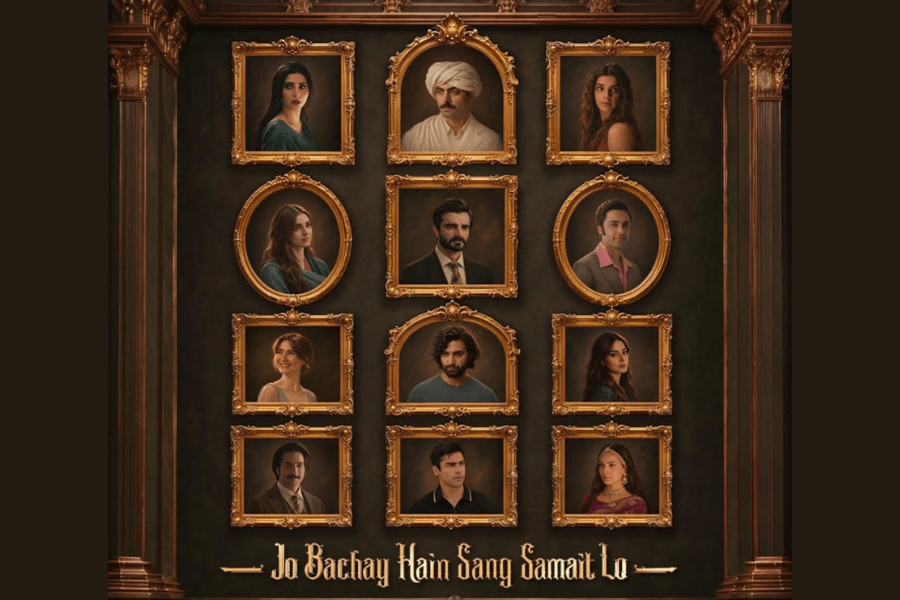
On December 4, Netflix releases Jo Bachay Hain Sang Samait Lo, its first Pakistani original. It is a romance spread across three generations, adapted from Farhat Ishtiaq’s 2013 Urdu novel, with Fawad Khan, Mahira Khan, Hania Aamir and Sanam Saeed in the cast. It will stream almost everywhere, but not in India. Days before the premiere, the Ministry of Information and Broadcasting reminded Netflix to stick to its May 2025 advisory, issued after Pahalgam, which keeps Pakistani-origin content off Indian screens. The All Indian Cine Workers Association had written to the Prime Minister asking for just that,and for a permanent law against Pakistani films, series, songs and podcasts.
So a show about six love stories is now, in India, a question of national interest. It is worth asking what the ban actually achieves.
Free publicity, paid for by the state
Until last week, the series was something a particular Indian audience was quietly looking forward to. That audience is large. It grew up on Zindagi Gulzar Hai and Humsafar when the Zindagi channel brought them here in 2014, and it has followed Fawad and Mahira ever since. Now the show is on every entertainment page in the country, complete with explainers on the “Pakistani Netflix show facing an India ban”. The ministry has done Netflix’s Indian marketing for free. India bans Pakistani content
And the audience will find it anyway, through VPNs, Telegram links, clipped YouTube uploads and cousins in Dubai. A ban does not stop people watching. It only stops them watching legally, where views can be counted and creators paid. It turns curiosity into contraband, and contraband is always more interesting.
Look at Dar-e-Nijaat, Umera Ahmed’s ARY Digital drama: it has been on Indian screens since it premiered in August, advisory or no advisory, and it is one of the most-talked-about Pakistani shows in India this year, watched mostly on YouTube. India bans Pakistani content
Diljit Dosanjh understood this better than anyone this year. Satluj, first titled Punjab ’95, is Honey Trehan’s film on Jaswant Singh Khalra, the human rights activist who documented secret cremations by the Punjab Police in the 1990s. It spent years stuck at the CBFC, which reportedly asked for around 120 cuts. When it finally premiered on ZEE5 on July 3, the team had deliberately skipped promotion, afraid that publicity would get it pulled before release. It was pulled anyway: gone from the Indian catalogue within 48 hours, and later from the international one. Dosanjh said he had expected a ban once government offices opened on Monday. He hadn’t expected it by Sunday evening.
In those two days, the film drew huge viewership. A film whose own makers tried to slip it out quietly became a national row, with political parties and the SGPC calling it censorship. Nobody officially explained who complained or why. That silence says a lot on its own.
An old habit
None of this is new. In 1971 the Chogyal of Sikkim commissioned Satyajit Ray to make a documentary about his kingdom. After Sikkim merged with India in 1975, the government banned Sikkim because it showed the place as a sovereign monarchy, with people bowing before their king. “And that’s now democratic Indian territory,” Ray said, with a chuckle. The ban was lifted only in 2010, and even then the film was pulled after a single screening at the Kolkata film festival when a Sikkim court stayed it. That was forty years of guarding a fact nobody disputed: Sikkim is part of India. The film threatened nothing except the memory that it had once been otherwise.
Anurag Kashyap has been here twice. Paanch (2001) was refused for its drugs, sex and violence, later cleared with cuts, and never released. Being unseen has made it a cult object. Black Friday, his film on the 1993 Bombay blasts, was due out in January 2005. The Bombay High Court held it back on a petition from the undertrials until the case was decided, and it reached theatres only in February 2007.
Then there is Deepa Mehta. When Fire opened, mobs attacked cinemas over its portrayal of two women in love. The film was withdrawn and sent back to the Censor Board, which later passed it uncut. In 2000, protesters wrecked her Water sets in Varanasi and the Uttar Pradesh government stopped the shoot. Mehta rebuilt Varanasi beside a lake in Sri Lanka and shot under a fake title, Full Moon. India finally saw the film in 2007, a story of Indian widows that had to be made outside India.
What the bans are really about
Look at the pattern and you’ll notice the target is rarely the work itself. Sikkim touched an anxiety about sovereignty. Black Friday and Satluj looked at the state’s own police and investigations. Fire and Water questioned one version of Hindu tradition. And Pakistani dramas carry the most unsettling idea of all: that the “enemy” can be tender, witty and familiar, speaking an Urdu many of our grandparents spoke.
That is the real threat of Jo Bachay Hain Sang Samait Lo. Pakistani dramas won Indian viewers because they offered what Indian television gave up long ago: short, finished runs, literary writing, restraint.

The ban’s supporters have a real case. Pahalgam was an atrocity. Cultural exchange can’t carry on untouched while people die, and the workers’ association says it is standing with soldiers and victims. That anger is legitimate. But how exactly does a streaming block on a platform like Netflix help? What it does is hand Pakistan a ready-made story to tell the world: that India, home to the biggest film industry on the planet, is insecure it can’t let its own citizens watch a Pakistani romance. Every Indian ban becomes a Pakistani talking point, and a more flattering one for Islamabad than anything its own propaganda could come up with. Pakistan has banned Indian films many times, and nobody holds that up as a sign of national confidence. We shouldn’t be competing to look just as nervous.
How it looks from outside
India is a cultural superpower. It makes more films than any other country, its stars sell out stadiums from Toronto to Melbourne. But soft power mostly takes nerve: the confidence to let other people’s stories in, knowing your own will hold up.
Every ban, from Ray’s documentary to Diljit starrer biopic, ends the same way. The work survives, gets seen, and grows in reputation, while the ban becomes a footnote that embarrasses the people who imposed it. Sikkim came back. Black Friday came out. Water got made.
The new Netflix show in question roughly means gather whatever is left. That is a fair description of the cultural ties India and Pakistan still share: a language, some music, and audiences on both sides who watch each other’s stories. Will blocking a Netflix series erase those ties?