



When Karl and Loretta Blake arrived at Melbourne’s Essendon Airport from India in 1969, they had just eight dollars in their pockets. By the time they had taken a taxi to St Kilda and paid for their accommodation, they had nothing left.
Fifty-seven years later, their son has been appointed to one of Australia’s senior judicial positions.
The Federal Government today announced the appointment of Judge Karl Blake as Deputy Chief Judge (General and Fair Work) of the Federal Circuit and Family Court of Australia (Division 2).
He will commence in the role on 7 December 2026.
Blake studied law and commerce at the University of Melbourne, graduating with honours in law in 1997 and being admitted to legal practice in 1998.
He began his career at Blake Dawson Waldron, specialising in industrial relations and employment law, and rose rapidly through the professional ranks. He became a partner at Maddocks in 2007 and subsequently at MinterEllison in 2015.
His career saw him involved in significant employment law cases, including litigation before the High Court of Australia.
Along the way, he developed a reputation for meticulous legal analysis, calmness under pressure and a commitment to mentoring younger lawyers.
His liberal use of the red pen when reviewing junior colleagues’ work even acquired its own affectionate terminology: having one’s work “Karl Blaked”.
In 2019, at a time when he was at the height of his career in private practice, he chose to move into public service by joining the judiciary.
He currently sits across the general federal law and family law jurisdictions of the Federal Circuit and Family Court of Australia (Division 2).
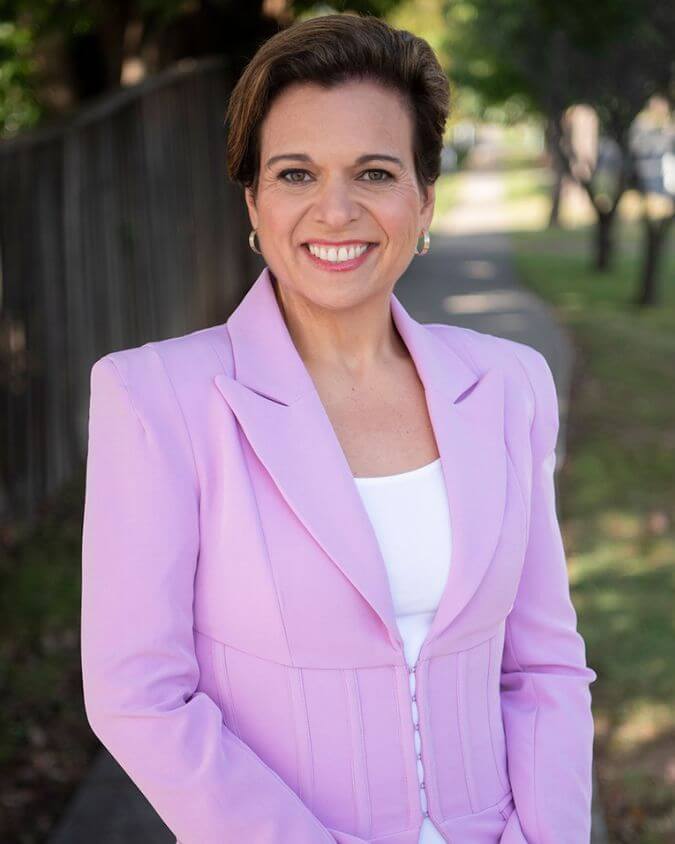
In announcing the appointment, Attorney-General Michelle Rowland made particular reference to his migrant background.
“Judge Blake is an inspiration to us all. His story is one of courage and resilience in the face of adversity that members of our migrant community experience all too often,” she said.
“Born to parents who arrived in Australia from India with just $8 in their pockets, Judge Blake shows what Australia can be at its best – a country where anyone, no matter their background, can rise to the highest offices in the land.”
Growing up different
Judge Blake recounted his story with remarkable candour at his ceremonial welcome to the Federal Circuit Court in Melbourne in February 2019.
With little money and no support networks, his parents had built a life from scratch, determined to give their children opportunities they themselves had been denied.
But growing up in an Australia still shedding the vestiges of the White Australia policy was not easy. At primary school, Blake endured relentless racial bullying – lunches stomped on, pushed to the ground, subjected to racial slurs.
“Those feelings of fear, helplessness and pain are seared into my mind,” he recalled.
His father enrolled him in martial arts classes. The bullying stopped, a lifelong passion for karate was born, and his experiences left him acutely aware of the human cost of discrimination.
An unlikely career inspiration
Another formidable challenge came in 1989, when Blake was diagnosed with cancer in Year 10. Surgery and gruelling chemotherapy left him incapacitated for weeks.
Yet it was during this period that he discovered his calling. While other 15-year-olds might have dreamed of visiting Disneyland, Blake found himself absorbed by television coverage of the 1989 Australian pilots’ dispute.
A passing interest in law became a determination to pursue industrial relations law – an ambition that, alongside the support of family and friends, helped carry him through his illness.
Lessons from his migrant parents
At his 2019 welcome ceremony, Blake credited his parents with instilling in him two defining values: self-reliance and hard work.
His father taught him to confront difficulties regardless of fear or personal cost. His mother taught him to remain focused on his goals, undeterred by those who might distract him.
Together, they had given him the foundations on which he built his life and career.
It was a bittersweet occasion. His mother Loretta was present to witness her son’s elevation to the bench, but his father had passed away just eight weeks earlier.
What Australia can be
Perhaps the most poignant observation at that ceremony came from Judge Blake himself.
Despite the discrimination and hardship of his early years, he spoke of his faith in Australia’s institutions and its people. That the child of immigrants from India could be entrusted with judicial office, making decisions that affected the rights of others, said something profound, he believed, about the character of the nation.
Seven years on, his elevation to Deputy Chief Judge lends even greater significance to those reflections.
At a time when migration and national identity are once again the subject of intense public debate, the story of Karl Blake offers a particularly timely perspective on what migrant families have endured, what they have contributed, and what Australia stands to gain when opportunity is extended to all.
It is a remarkable journey for a family that began its Australian life with eight dollars.
READ ALSO: Cardiologist Dr Rolf Gomes is QLD’s Australian of the Year 2026
Judge Karl Blake