


A temple, mosque, synagogue, church or gurdwara can feel unfamiliar when you have never crossed its threshold. But Reverend Dr Manas Ghosh believes that stepping inside, meeting the people who gather there and sharing a conversation can bridge religious divides.
For more than 30 years, the Uniting Church minister has organised twice-yearly Interfaith Pilgrim Visits across Western Sydney, taking groups of up to 50 people to places of worship across faiths. Participants listen to faith leaders, ask questions, observe rituals and often share food. The aim is not to make everyone think alike, but to help them understand one another.
“Instead of talking about people, we could meet people. Instead of relying on assumptions, we could listen and learn,” Dr Manas Ghosh says of the thinking behind the visits.
The idea stemmed from a gap he noticed: people lived alongside neighbours of different faiths but rarely entered one another’s places of worship or spoke meaningfully about belief. Public conversations about religion were often shaped by stereotypes and media headlines.
Dr Ghosh wanted to create a space where curiosity could replace fear and relationships could challenge prejudice.
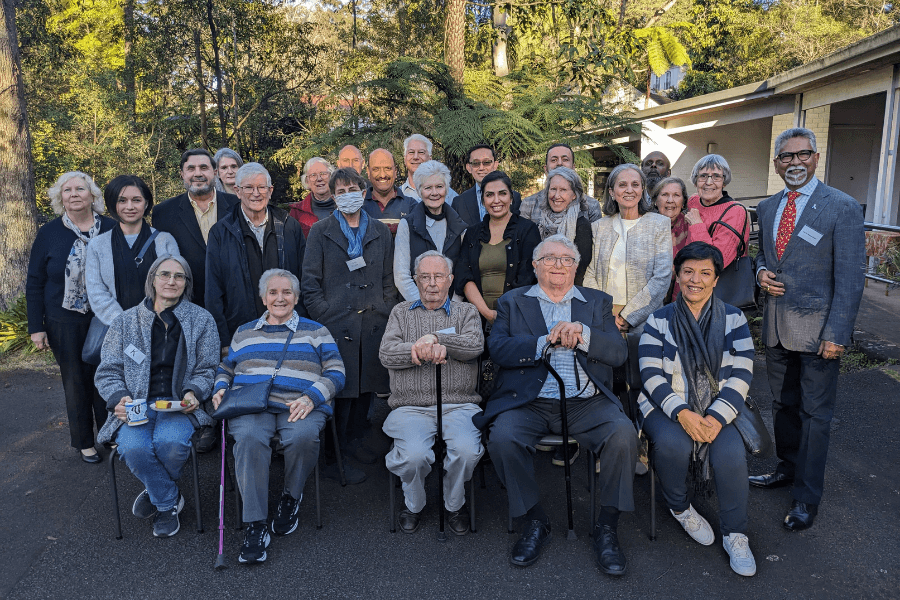
“Following global events that heightened tensions between communities and increased suspicion of religious minorities, I felt there was a need for opportunities where people could meet face-to-face and learn directly from one another,” he tells Indian Link.
The interfaith pilgrim visits
Dr Ghosh’s journey began in India. Raised in a devout Christian family, he learned about faith not only through his parents’ teachings but by watching their kindness, generosity and respect for others.
During university and later in his professional life, he met people from different religious traditions. Those encounters, he says, did not weaken his faith; they deepened it and widened his appreciation of diverse human experiences.
He migrated to Australia in 1992 and soon sensed a calling to church ministry. After studying theology, he was ordained in the Uniting Church in Australia in 1996. Western Sydney, with its diversity, offered a place to put his beliefs into practice.
“Bringing people of different faiths together was not a strategic goal, but a natural response to the reality of the community around me,” he shares. As he got to know his neighbours, he saw how relationships across faith traditions could strengthen social cohesion and understanding.
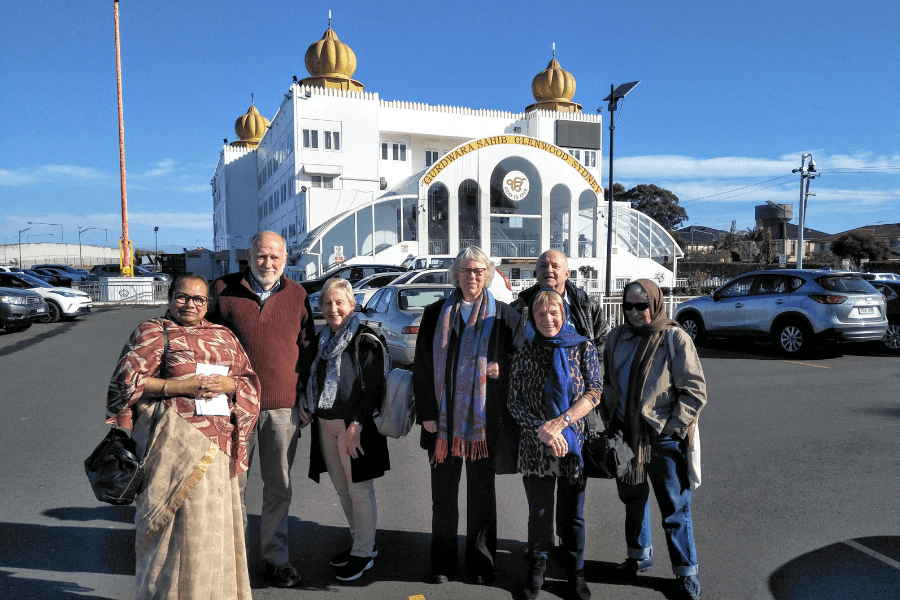
The impact of the pilgrim visits is often visible by the end of a day. Participants may arrive nervous about entering an unfamiliar place of worship but leave smiling, exchanging stories and sometimes contact details. Dr Ghosh has heard people say, “I wish I had done this years ago.” Others have told him assumptions they had held for decades disappeared after a single conversation.
“Fear often grows in the absence of relationships,” he says. “Once people meet, talk and listen, barriers begin to fall away.”
The multifaith prayer service
One gathering that remains vivid took place during the catastrophic 2019–20 Black Summer bushfires. Dr Ghosh organised an interfaith prayer service in Parramatta for victims, volunteers and affected communities. Nearly 200 people representing 15 faiths came together.
They shared grief and hope. Afterwards, several people who had arrived as strangers exchanged contact details and kept in touch. The gathering showed how compassion could create common ground.
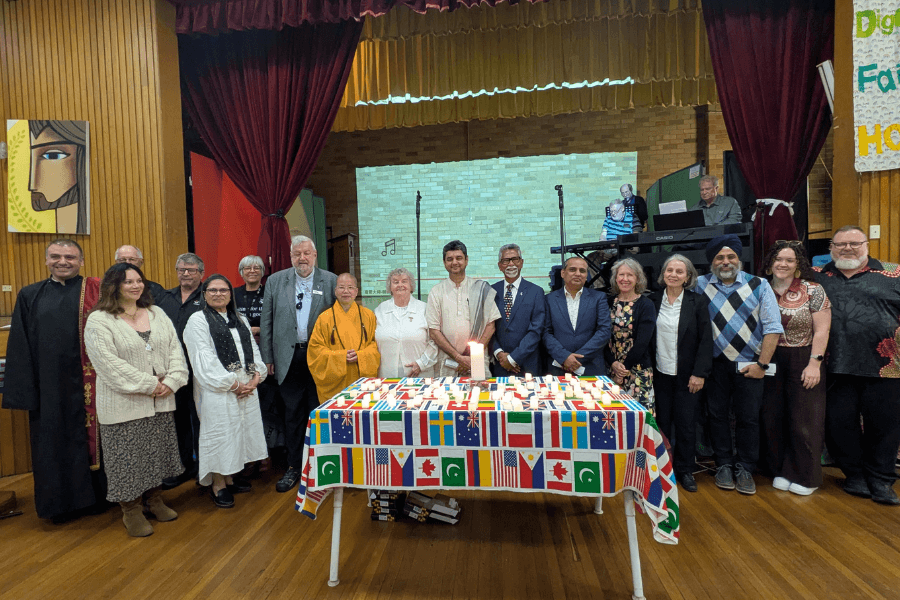
This gathering was part of a tradition Dr Ghosh had begun more than two decades ago: an interfaith prayer service marking the United Nations International Day of Peace. For 23 years, the service has brought together faith leaders and community members. Each leader offers prayers, readings or reflections from their tradition. Differences are not set aside; they are acknowledged and respected.
“We do not blur our differences or pretend they do not exist. Instead, we honour them while standing together around shared values such as peace, compassion and justice,” he clarifies.
For Dr Manas Ghosh, the distinction between tolerance and friendship matters. Tolerance is a beginning, but friendship asks people to give time, show vulnerability and approach one another with curiosity. Busy lives, fear of saying the wrong thing and stereotypes can keep neighbours at a distance.
It can start with introducing yourself to a neighbour, attending a community event, accepting an invitation, sharing a meal or asking a respectful question.
“Some of the most important interfaith work happens around dinner tables, school gates and local sporting fields,” he says, continuing, “and by working together for common good rather than in formal meetings.”
The interfaith harmony award
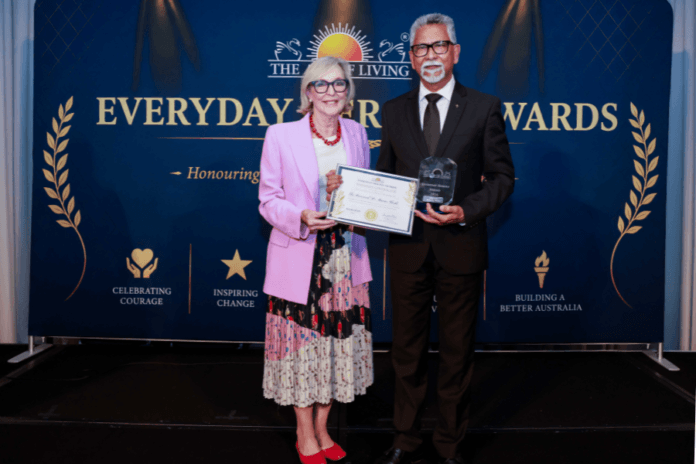
This incredible work has earned Dr Manas Ghosh the Interfaith Harmony Award at the inaugural Everyday Heroes Awards, presented by The Art of Living Australia as part of its 45th anniversary celebrations. Dr Ghosh was deeply humbled, but quick to share the credit.
Every faith leader who has opened a place of worship, every volunteer who has helped organise an event and every participant willing to step beyond their comfort zone has contributed, he adds. The award belongs to the community.
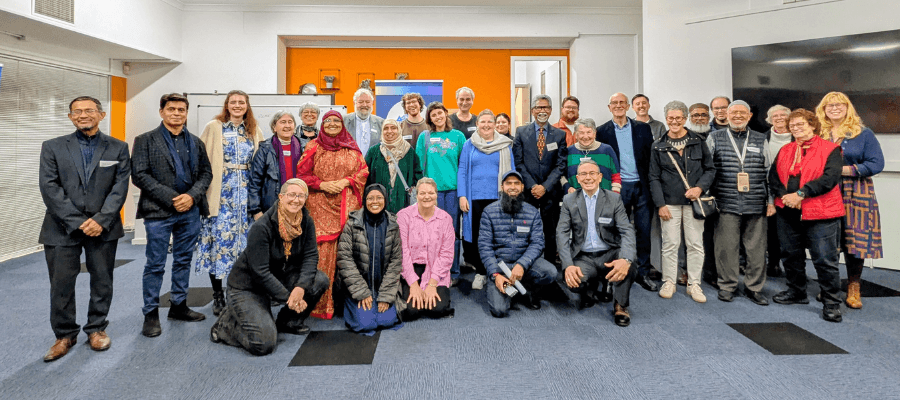
Looking ahead, he hopes interfaith engagement will become part of ordinary community life rather than remain a specialist activity. He wants more young people involved and sees shared action as important as dialogue: people of different faiths working together to support refugees, pursue social justice, care for the environment and help vulnerable families.
His hope is for an Australia where diversity is not a challenge to overcome but a gift to celebrate.
“Peace is not just an ideal,” he says. “It is something we can build together, one relationship at a time.”
Learn more about the Everyday Heroes Awards here
READ ALSO: A multifaith Holi celebration