

PRIYANKA TATER features in the new ad for 7-UP, made right here in Sydney
Dil bole UP, UP, UP!
Reading Time: 4 minutes
Corn Creations

Reading Time: 6 minutes
Roasted on charcoal and rubbed with lemon juice, salt and chilli powder – that is probably how most Indians best like their fresh corn. The closest you can get to that here in Australia is boiled corn dished out by vendors at street fairs and beach-sides. Equally good, you might say!

I like sweet corn best the way my kids eat it – simply washed in water and cooked in the microwave for three minutes on high, no dressing.
Yet many different ways of serving corn can be found in Indian cuisine. Sample the following.
Corn Korma
- 2 cups corn kernels
- 3-4 tbsp tomato puree
- 1 medium-sized onion, finely chopped
- 1 tsp crushed garlic
- ¼ tsp turmeric powder
- 1 tsp chilli powder
- ½ cup coconut milk
- ½ tsp sugar
- 1 tsp garam masala
- Salt to taste
- 2 tbsp oil
- Coriander leaves for garnish
Heat oil in a pan and fry the onions and garlic. When lightly browned, add tomato puree. Stir well and fry for awhile. Then, add the corn, the dry masala, salt and sugar. Add one cup of water and allow to boil.
Finally add the coconut milk, stir well and serve garnished with coriander.
Corn Cutlets

- 1 cup corn kernels
- 2 medium-sized potatoes
- 1 medium-sized onion
- 1 tsp grated ginger
- 1 tsp crushed garlic
- 1 tsp coriander powder
- 1 tsp cumin powder
- 1 tsp red chilli powder (or to taste)
- Salt for taste
- Chopped fresh coriander leaves
- Oil for deep-frying
Boil and mash the potatoes. Give the corn a gentle whirl in the food processor. Dice the onion fine.
Mix potatoes, corn, onion, ginger and garlic, and coriander, cumin and chilli powders. Add the salt and coriander leaves. Make small round balls of the mixture. Heat the oil in the frying pan or wok. Put the small balls of the mixture into the hot oil one by one. Deep fry until golden brown. Drain on absorbent paper.
Serve hot with tomato sauce or mint-coriander chutney.
Corn Raita
- ½ – ¾ cup corn kernels
- 250 gms yoghurt
- Salt to taste
- 1 tsp pepper powder
- ½ tsp red chilli powder
- 1 tsp cumin seeds
- 1 tbsp grated coconut
- Green coriander for garnishing
Beat yoghurt well, add salt, pepper, chilli powder, grated coconut and corn, and mix well. Dry roast cumin seeds and powder. Add this to raita. Garnish with coriander.
Corn Masala Rice

- 1 cup basmati rice
- 1 cup corn kernels
- 1 cup green peas
- 10-12 cashews halved
- 1 tsp chilli powder
- 1 tsp sambhar masala
- ½ tsp garam masala
- 1 tsp sugar
- ¼ tsp turmeric
- Salt to taste
- Juice of 1 lemon
- 2 tbsp oil or ghee
- ½ tsp each cumin and mustard seeds.
Heat ghee in a heavy-bottomed saucepan. Add the cashews and fry till light brown. Remove.
To the same oil, add cumin and mustard seeds to splutter. Add the corn, peas, rice and all dry masalas and 5 cups water. Cover and cook till almost done.
Add lemon juice, sugar, coriander and cashews. Cover and cook till rice is done and no water is left.
Serve hot with yoghurt.
Corn Bhel
- 1 cup corn kernels
- ½ cup grated carrot
- 1 medium onion diced fine
- 1 medium tomato chopped fine
- ½ cup coriander chopped fine
- 1 large boiled potato
- ½ cup plain yoghurt
- ½ cup sev (fine)
- 1 tsp chat masala
- 1 tsp limejuice
- 1 finely chopped green chilli
- ½ tsp powdered sugar
- ½ tsp cumin seeds powdered
Keep aside sev and half the coriander.
Chop potato finely. Mix all the ingredients well in a large mixing bowl. (Best do this just before serving).
Transfer to individual bowls. Garnish with sev and coriander.
Pea and Corn Cutlets
- 1 cup peas
- 1 cup corn kernels
- 6 spring onions, thinly sliced
- 2/3 cup fine polenta
- 2/3 cup self-raising flour
- 1 ½ tsp coriander powder
- 2 eggs
- ½ cup plain yoghurt
- Oil for frying
- Salt and pepper to taste.
Mix together peas, corn, spring onions, polenta, salt and pepper. Add sifted flour and coriander powder.
Mix yolks from both eggs in ½ cup yoghurt and add to peas and corn mixture.
Beat egg whites well. Fold one-third into peas and corn mixture and mix well. Gently fold in remaining egg whites.
Heat oil in a frying pan. Over medium heat, spoon small quantities of mixture into oil and flatten slightly. Cook for 3-4 minutes on each side or until golden and cooked through.
Drain on absorbent paper.
Serve hot with tomato sauce or mint-coriander chutney.
Corn and Cheese Sandwich Mix
- 1 cup corn kernels
- 1 cup shredded tasty cheese
- ½ bunch of fresh dill leaves, finely cut
- 1 tbsp mayonnaise
- 1 tbsp cream
- Salt to taste
- ¾ tsp sugar
Mix all the ingredients well in a bowl. Use as sandwich spread.
Gujarati-style Corn
- 2 cups corn kernels
- 1 ½ cups milk
- ½ tsp grated ginger
- 1 green chilli, finely chopped
- ½ tsp sugar
- Salt to taste
- Red chilli powder to taste
- 2 tbsp desiccated coconut (or grated fresh)
- 1 tbsp oil
- ¼ tsp cumin seeds
- Fresh coriander for garnish
Combine milk and corn kernels in a pan and bring to a boil. Keep on a simmer, stirring occasionally, till most of the milk is evaporated. Remove from the heat.
In another pan, heat oil and add cumin seeds. When they begin to pop, add ginger and green chilli and stir. Then add the corn, salt, sugar and red chilli powder. Stir. Then add the coconut and fresh coriander. Mix well.
Chicken Corn-wallah
- 8 chicken drumsticks
- ¼ cup plain flour
- 1 chicken stock cube
- 2 tsp crushed garlic
- 2 large onions, chopped
- 2 tbsp oil
- 2 cups corn kernels
- 2 cups peas
- 4 large tomatoes, chopped (use tinned tomatoes if preferred).
- 1 tbsp tomato paste
- ¼ cup brandy (optional)
- ½ cup mango chutney
- Red chilli powder to taste
- ½ tsp turmeric powder
- 1 cup water
Mix flour with crumbed stock cube and toss drumsticks in. Shake away excess flour.
Heat oil in a pan and cook drumsticks until lightly browned. Remove drumsticks from oil. In the same oil, add onions and garlic and cook until soft. Add turmeric, tomatoes, tomato paste, corn, peas, chutney and brandy. Stir well, then add the drumsticks, pepper and water and simmer, covered until chicken is cooked through.
Corn Paneer

- 250 gms paneer, diced
- 1 cup corn kernels
- 2 large tomatoes diced
- 1 tsp cumin seeds
- 1 tsp coriander powder
- ½ tsp turmeric powder
- Red chilli powder to taste
- 2 tsp oil
- Salt to taste
- Fresh coriander leaves for garnish
Put corn through food processor to make a thick paste. Heat oil in a heavy-bottomed pan, add cumin seeds and allow to splutter. The add coriander, turmeric and red chilli powders and stir briefly. Introduce diced tomatoes. Cook, stirring and mashing well until combined with the masala powders and oil begins to separate. Reduce heat and put in the corn paste and salt. Stir briefly until well-combined. Add in paneer and mix gently. Cook, covered, on medium heat. Serve garnished with fresh coriander leaves.
Kadhai Babycorn
- 2 cups chopped baby corn (either canned or fresh)
- 2 large capsicums (one green and one red), deseeded and chopped finely
- 1 large onion cut into thin strips
- 1 tsp crushed garlic
- 1 tsp grated ginger
- 5-6 tsp tomato sauce
- 1-2 tsp kasuri methi (dried fenugreek leaves)
- 1 tsp coriander seeds
- 1 tsp cumin seeds
- 2 tsp chilli powder
- 1 tsp sugar
- Salt to taste
- 3-4 tsp oil
- Fresh coriander leaves for garnish
Dry grind the kasuri methi, coriander seeds and cumin seeds together and make a fine powder.
Heat oil in a heavy-bottomed pan or kadhai and add the chopped onion and the ginger and garlic. When the onions turn translucent, add the chopped capsicums and stir well. Now add the tomato sauce and the dry powder. Mix well and add the cut babycorn. Add water if needed, cover and simmer till almost done (about 10-15 mins). Then add the sugar, salt, chilli powder and the fresh coriander. Simmer for a further five minutes.
Malai Corn
- 1 cup corn kernels
- 2 bunches fresh methi (fenugreek) leaves
- 1 cup cream
- 1 medium onion chopped
- 2 tsp crushed garlic
- Red chilli powder to taste
- ½ tsp garam masala
- Salt to taste
- 2 tsp oil
Heat oil in a heavy-bottomed pan and sauté onions till colourless. Then add fenugreek leaves and cook gently till the leaves let off their aroma. Then add garlic, red chilli powder and about a cup of water. Cook briefly. Then introduce the corn and cook until a thick consistency is obtained. Finally add cream, salt and garam masala and stir till combined well.
Oz sees rise in Indian students’ applications
Reading Time: 2 minutes
 After a phase of decline in Indian students coming to Australia, the continent nation is once again registering a rise in number of students applying for admissions to its universities.
Talking to IANS on the sidelines of a press meet in New Delhi, Australian High Commissioner Peter Varghese said around 30 percent increase has been noticed in number of applications for Australian universities so far.
“There has been a significant increase in number of applications received and the number of students applying for universities in Australia. The increase is almost 30 percent compared to last year,” Varghese said.
A major decline was noted in the number of Indian students going to Australia in 2010-11.
“Compared to the peak years of 2008 and 2009, there was nearly 40 percent drop,” Varghese said.
The decline came close at heels with a number of incidents of violent attacks on Indian students in Australia. Varghese, however, said the incidents were not the main reason behind the decline.
“There was decline not just in the number of Indian students but in the number of international students from all countries. It was because of the overall economic scenario, and high (Australian) dollar value,” he said.
Ted Baillieu, the premier of Australia’s Victoria province, who is visiting India, also said that the number of students from India was increasing following special steps from the Australian government.
“We have started to see an increase again. The state has taken steps to ensure safety of the students and we are very serious about it,” Baillieu said, replying to a query.
“There is more patrolling, more police presence. We have taken it seriously,” he said.
More than 100 incidents of attacks against Indian students have been reported in 2009 and 2010 in Australia, mainly in its Victoria province.
Varghese says new visa rules are attracting more applications.
“The new visa rules allow students to stay for a few years after completing their degree and work, so more students are applying,” he says.
The new visa rules announced last year allow students to stay back from two to four years after getting degrees and also allow them to work.
Canberra had earlier tightened visa regime for Indian students, stating that a number of them come to Australia to settle down by taking admissions in non-skilled vocational courses like cookery and hair-cutting. It had implied that this was one of the reasons for a series of attacks on Indian youths here.
Oz sees rise in Indian students' applications
Reading Time: 2 minutes
After a phase of decline in Indian students coming to Australia, the continent nation is once again registering a rise in number of students applying for admissions to its universities.
Talking to IANS on the sidelines of a press meet in New Delhi, Australian High Commissioner Peter Varghese said around 30 percent increase has been noticed in number of applications for Australian universities so far.
“There has been a significant increase in number of applications received and the number of students applying for universities in Australia. The increase is almost 30 percent compared to last year,” Varghese said.
A major decline was noted in the number of Indian students going to Australia in 2010-11.
“Compared to the peak years of 2008 and 2009, there was nearly 40 percent drop,” Varghese said.
The decline came close at heels with a number of incidents of violent attacks on Indian students in Australia. Varghese, however, said the incidents were not the main reason behind the decline.
“There was decline not just in the number of Indian students but in the number of international students from all countries. It was because of the overall economic scenario, and high (Australian) dollar value,” he said.
Ted Baillieu, the premier of Australia’s Victoria province, who is visiting India, also said that the number of students from India was increasing following special steps from the Australian government.
“We have started to see an increase again. The state has taken steps to ensure safety of the students and we are very serious about it,” Baillieu said, replying to a query.
“There is more patrolling, more police presence. We have taken it seriously,” he said.
More than 100 incidents of attacks against Indian students have been reported in 2009 and 2010 in Australia, mainly in its Victoria province.
Varghese says new visa rules are attracting more applications.
“The new visa rules allow students to stay for a few years after completing their degree and work, so more students are applying,” he says.
The new visa rules announced last year allow students to stay back from two to four years after getting degrees and also allow them to work.
Canberra had earlier tightened visa regime for Indian students, stating that a number of them come to Australia to settle down by taking admissions in non-skilled vocational courses like cookery and hair-cutting. It had implied that this was one of the reasons for a series of attacks on Indian youths here.
Salvation of the cat species

Reading Time: 4 minutes
New research by Monash Uni’s Rajneesh Verma could save the snow leopard from extinction. USHA ARVIND reports
Hair could hold the key….
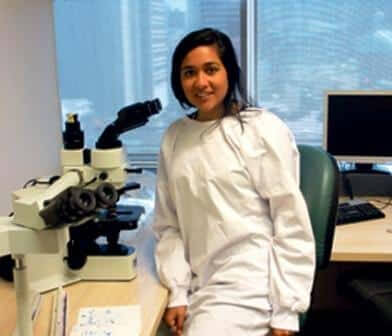
Reading Time: 4 minutes
… to unlocking cancer codes, says researcher Dharmica Mistry. USHA ARVIND reports
Kolaveri live on Pitt St Mall
Reading Time: 5 minutes
SHAILENDRA BEDARKAR is part of a flashmob in the heart of Sydney’s CBD
Legacies of love

Reading Time: 6 minutes
It’s a very special love that keeps us young and happy, even after decades, reports GEORGE THAKUR
Romance keeps us young, or so goes an ancient adage. And if there is any truth in this saying, it comes alive in the stories below which highlight the experience of true love among the senior members of our community. They share their tales of romance which are still strongly unravelling, even after half a century or more in each others’ company.
Love from Agra to Alaska

Anand Shome
“My wife Sushmita and I must be doing something right in the ‘romance department’, for recently, when we went to buy shoes for ourselves, the salesman asked if it would be okay with me if he attended to my daughter first! How complimentary to the love of my life! Shurojit, our son, and Aparajita, our daughter, had a great laugh.
Sushmita and I were married in 1977. Our honeymoon that continues to date could not have begun in a more symptomatic city than Mumtaz Mahal’s Agra, and one can imagine how much and in what measure viewing the Taj by daylight and in moonlight, and strolling through centuries of history in Agra fort, added to our commitment to each other. Old fashioned, we rate this God-gifted opportunity as monumentally romantic, which just keeps growing upon us.
More recently, our cherished togetherness took us on an Alaskan cruise where we travelled through the inner Alaskan passage and rode the historic, glassed-top train past the Canadian Rocky Mountains.
Between Agra and Alaska, we have enjoyed each other’s company travelling past more than 25 countries that span five continents. We now agree that romance has less to do with ‘buying stuff’ for one another, but more to do with knowing that as life partners we are there for each through the thick and thin that everyone faces at one stage of life or another. Conscious of this Nature-implanted boon, no problem seems unsurmountable and no challenge too difficult for us together.
Anand Shome is Vice President for COMMON (Centre of Melbourne Multi-faith and Others Network), affiliated to United Religions Initiative and United Nations – and the epitome of politeness!
Sixty years strong
 Tilak Chaddha
I was born and brought up in Peshawar which is now Pakistan, and in 1946 I gained my M. Com. from Punjab in Lahore. I worked there briefly before our wonderful country was partitioned into two, then worked in Simla, Faridkot, and in Osmania University in Hyderabad, at the time when the Nizam of Hyderabad, floated his own currency.
In 1951, I was invited to Delhi to see Lalit, my future wife, at whom I barely stole a glance, for during that era morality ruled the epoch, and I did not wish my staring at beautiful Lalit to be construed as improper. I admit I had seen her photograph before meeting her. Although lady Lalit had little say in the matter, we got married in 1952, and to this date, are completely immersed in each other. Soon came our first daughter, the second a year later and another in two years. Must you now ask how romantic we have been?
I am blessed with five grandchildren; some live here and some in the UK. We recently celebrated our sixtieth wedding anniversary, and inshaallah, we will celebrate my ninetieth birthday in December 2012.”
Tilak and Lalit Chaddha quite appropriately address each other as ‘Jaan’, or soul. Tilak is sentimentally poetic and owns a Diwan-e-Ghalib, so whenever us Urdu lovers stumble upon a technicality, Tilak will sort out our conundrum.
Reliving romantic moments
 Jasbir Bedi
Pavita and I were born at Rawalpindi and Quetta respectively, now Pakistan. While my father from the Army Medical Corps was posted back to our ancestral town Amritsar before partition, Pavita’s family faced the arduous task of relocating themselves to Lucknow.
Once I earned a postgraduate degree in orthopaedic surgery, my parents began to look for suitable partners for me. My first glance of my future life partner, also a doctor, was in March 1968, in Lucknow. It was love at first sight of Shakespearean proportions. My request to take Pavita out to a movie was conditional that her brother accompanied us: kabab men haddi! I returned to Amritsar, but our romance blossomed while our families settled formalities, and we were married on December 9, 1968. Our honeymoon was at freezing-point in Nainital, but when has cold ever triumphed the warmth of love? We frequently visit Nainital to re-live those romantic moments. Soon, we were blessed with a son and were also lucky to be granted immigration to Australia.
Well settled into our respective careers, we were blessed with another son, which cemented our commitment to the other. We travelled to every nook and corner of the world. Life beautiful could not paint a more perfect scenario! Since musically inclined, we devoted considerable time in arranging charitable musical concerts to raise funds.
Pavita has been a dutiful daughter-in-law, a devoted mother and a perfect soul-mate to me which no other woman, in a million years, would match. Without her personified motivation I could never have achieved professional success, and we raised two sons in education and music. We enjoy holding social gatherings of lovers of Indian music at our cottage, and Pavita’s cooking skills equal her affable demeanour. Even as seniors, our togetherness attracts enviable comments. I hope in the years to come, the Almighty will strengthen us to love all and continually serve our community.
Jasbir and Pavita Bedi are a treat to be with, friendly and never presumptuous. Jasbir is Vice President of Indian Senior Citizens Association (ISCA), and Pavita complements his endeavour in serving the community.
Every day is Valentine’s Day
 Nilesh Nadkarni
Nandita and I lived in the same apartment block in Mumbai, soon became friends and some twenty-eight years ago, we married. We migrated to Australia 20 years ago, and to settle down in our new country of choice quickly, I gave up specialised Italian cuisine where I loved to see Nandita enjoy my cooking, in favour of public service. A ceramic artist, Nandita has floated exhibitions of 15 Australian ceramic artists to New Delhi in 2006 and 2010. We share many interests such as gardening, travelling around Australia in motor homes, and entertaining friends with innovative and creative spreads full of punch.
“We both strongly believe that we are a Providence-granted gift to the other, therefore we love and respect the other, avoid controversy and with each passing day, we keep getting closer. In consequence, every day is Valentine’s Day to us. Not just us, but our daughter and son uphold our adorable Indian culture. Since we are now Aussies, we equally regard the culture this beautiful country bestows upon us.”
A famous German saying goes: “Ich will mit meine frau alt werden!” (I want to grow old with my wife). Nilesh Nadkarni appears to live this saying, with wife Nandita.
An exemplary love

Kirit and Meenakshi Kapadia’s grandson Akshay describes the romance between these two simply spoken and good at heart people, who will readily give a needy the shirt from their backs.
My grandparents, who I call Aja and Aji first met in Mumbai on January 1, 1970. Tragically, they were given no time to get to know each other and since it was an arranged marriage, they were married by January 5. In comparison, I would like to know my future wife for four years than just four days, before agreeing to tie the knot.
Tragically again, their honeymoon was not a typical honeymoon in the true sense of the word. In 2012 parlance it was an anticlimax, for seven kill-joys including Aja’s parents and other family members, trailed along with them. This alone speaks volumes of the non-romance in their early lives together.
My Aji is a traditional Indian wife who still listens to her husband, respects his wishes and cooks curry and roti for him every night, but their love for each other drips from their postures every minute. They are simply two good people, such as those who lived during Ram Rajya. Their two daughters and three grandchildren find their love quite exemplary.
Valentine’s Day may be a special day for romance, but I see my grandparents express romance silently to each other every single day of the year!
Inspiring cricket at Amba tournament
Reading Time: 3 minutes
A local tournament provides the thrills even as India’s stars fail, reports SUJITH KRISHNAN