

India to firm up strategic partnership with Australia, writes SAROJ MOHANTY

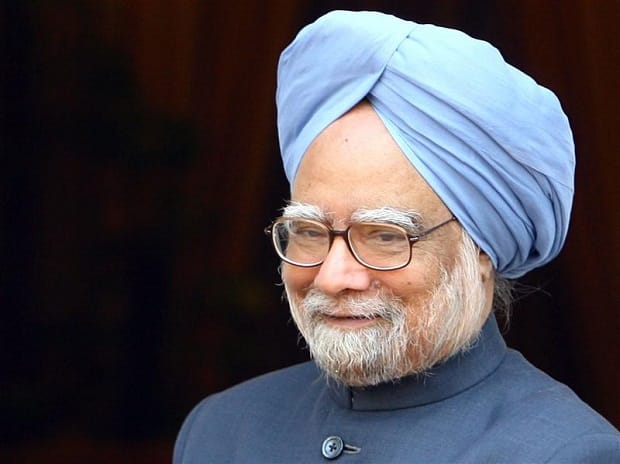
Indian Prime Minister Manmohan Singh will meet the new Australian Prime Minister Tony Abbott during his trip to Brunei this week during which a nuclear deal and negotiations on a free trade agreement are expected to figure.
The two countries are also looking to firm up a blueprint for future engagement.
Manmohan Singh will hold bilateral meetings, including with the Australian leader, on the sidelines of the India-ASEAN and the East Asia Summit Oct 9-10.
In 2009, the two countries had elevated their bilateral relations to a strategic partnership. Since then, Australia and India have exchanged over 50 high-level visits.
After six years of centre-left government by the Australian Labor Party (ALP), Australia is under the right-wing Liberal-National Party (LNP) coalition led by Abbott, which swept to power in federal elections last month.
Foreign and defence policies were not major issues during the election campaign. However, with the LNP in power, diplomatic observers say some differences are likely in the way in which Canberra relates to the Asian region.
Foreign Minister Julie Bishop has repeatedly said her party’s foreign policy would be “more Jakarta-less Geneva”, a jab at her predecessor’s Kevin Rudd’s global roaming. And Abbott’s first overseas visit was to Indonesia.
India is seeking to conclude a nuclear trade deal with Australia’s new government by the end of the year.
Australia, the world’s largest holder of uranium reserves, and India have already held two rounds of negotiations for a safeguard agreement that will enable uranium sales for India’s nuclear power plants. According to Australian High Commissioner Patrick Suckling, the last round of talks was held in July and the next is scheduled for later this year.
It was Abbott’s party, led by Howard, that had decided to sell uranium to India in their last term in power and now they are keen to expedite the process.
The previous Labor government had in 2011 changed its long-held policy and reversed the ban on selling uranium to India as it has not signed the Nuclear Non-proliferation Treaty (NPT).
The India-Australia nuclear agreement will be consistent with Australia’s agreements with Russia and China for supply of uranium. One of the key conditions will be that India utilize the uranium for peaceful purposes.
Australia also wants to beef up defence cooperation with India. The navy-to-navy exercises will be held in 2015.
Australia wants stronger cooperation with India in infrastructure, education, agri-business, biotech, pharmaceutical and IT sectors.
Both sides are also trying to work out a collaboration for restoration of old films.
In the past decade, Australia has emerged as a country with tremendous opportunities for minerals and gas. The Adani group and GVK are among the largest Indian investors in Australia (over $17 billion and $10 billion, respectively), both seeking to exploit its coal mines and ship the coal to India and other places.
India is currently Australia’s 10th largest trading partner.
Tony Abbott to meet Manmohan Singh
Being a Bookwallah
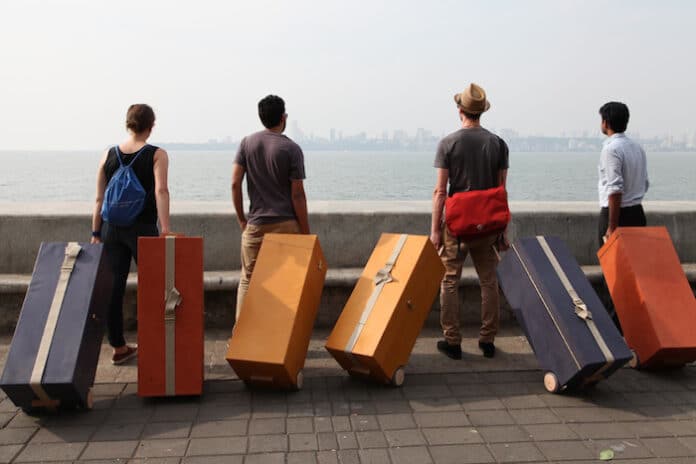
Chandrahas Choundhury travelled across Australia pedalling Indian literature to an appreciative audience

The ‘Bookwallah’ tour travelled along Australia’s East coast from Melbourne to Brisbane recently. Organised by the Asia link at the University of Melbourne, Bookwallah was formed to make direct literary links between Australia and India. Chandrahas Choundhury, one of the writers from the tour spoke about the lack of direct literary links between the two countries as much of the literature read in India comes via England and America. In 2012, three Indian and two Australian writers journeyed via train through Indian cities and towns, conducting forums to promote Australian literature across India. The writers included Benjamin Law, Kirsty Murray Chandrahas Choundhury, Sudeep Sen and Annie Zaidi.
“Travel by train added to the idea of a connection between the works, us writers and the communities we visited,” said Choundhury. “I believe Indian trains have a charm and things don’t always go according to plan.” The journey was documented by Catriona Mitchell in her lovely film, The Bookwallah. Travelling helped build the sense of connection with the audiences and friendships between the writers. For Choundhury it was a discovery of ‘Australian books and writers that I hadn’t read’. Packed into designer suitcases, the travelling writers carried 150-200 books with them. When they spoke in schools and community centres, the books were unpacked and displayed in a pop-up, purpose-built exhibition. Seeing so many books together helped students studying English to realise that there was a body of work from a different literary world – and that together they constitute a tradition. Many books were left behind as a legacy for the communities to borrow and read.
The idea of the Bookwallah tour in Australia is to replicate the journey undertaken in India – in the reverse. Zaidi and Choundhury chose Indian books as ‘a representation of the Indian canon through our eyes’. The whistlestop tour started with a rural retreat in Victoria and included an exhibition at the State Library of Victoria while the writers travelled on trains from Sydney to Brisbane. It was Choundhury’s first time in Australia, but he already had a connection here. “It’s lovely to arrive in a country where the tour is organised and very welcoming. It’s good to reunite with the Australian writers, Christie Murray and Benjamin Law and spend time together again,” he stated. Choundhury has seen kangaroos in the wild, has read Christina Stead and is interested in Australian literary journalism up close, in journals like Meanjin and Kill Your Darlings.
I see Zaidi’s and my contribution to the tour as talking about the works we have chosen and offering an insiders view of political, social and cultural views of India,” he stated. The team will give group talks and separate sessions. So were the Indian writers chosen to represent their country because of the breadth of their knowledge? Choundhury has recently edited India: A Traveller’s Literary Companion, a collection of 14 short stories from some of India’s best writers. “Zaidi and myself were chosen because we write across different literary styles,” he explained modestly. He is a novelist, literary critic and reviewer who also writes columns for Bloomberg, a US news service. Zaidi is an essayist, poet, playwright and journalist. “Indian literature, compared to mono-lingual literature like Australia, has around two dozen different languages spoken across the country. The works in those languages are often not translated and to discover them is a gigantic mystery,” explained Choundhuary. “Some of the works are a hundred years old and haven’t been available to be read by Indians in other parts of the country. Indian, like Australian writers, still have a specific view of the world depending on their background, such as white and indigenous views,” he explained.
A surprising influence on Choundhury’s writing is Australian cricket writer Gideon Hay, whom he describes as, “a good writer and a good proponent of the game. He is model of erudition across fields.” Choundhury read his daily reports and even copied out sentences because they were so well written. He says Hay was a formative influence on his work.” He also met Tom Keneally, a venerable Australian writer, at the Jaipur Literature Festival and admired this powerful and inspiring writer. Choundhury has had conversations with others about Keneally’s influence on Australian literature. “It is great being in Australia because you enter a culture and access a lot of different viewpoints. You also transmit one’s own and pick up from others,” he stated.
Choundhury’s first novel, Arzee the Dwarf that was published in 2009 came from an idea born when working as a cricket writer. He saw a man, a dwarf, crossing the road. He was good looking, and that sparked the idea of how someone is disadvantaged in life and how unfair that is – a double joke. He writes: “He was good-looking- there was no doubt about that. But what of it? Looks weren’t just about shape and colour, but also about size. Even in his reflection there was something irredeemably odd and stunted about him, like a thought that had come out all wrong in the speaking”. Other elements in the story are resonant of Mumbai – Noor cinema where Arzee works becomes like a second body to the protagonist. “Mumbai has a great cinema culture which is close to being shut down. There is little privacy in Mumbai – millions of people all trying to coexist, so the cinema is one of the few places in which to lose sight of the world, and the illusion is so powerful that you forget your life. It’s a novel where characters often do the unexpected and where turns and twists in their behaviour endear them to the reader,” explained Choundhury. The novel was written over 3 or 4 years and took shape over time; “You get to know your character very well,” he added.
The Bookwallah tour began in Melbourne on August 22 August and concluded at the Brisbane Writer’s Festival on September 8.
Choundhury describes the central idea of the tour as writers as ‘wallahs’, merchants or helpers that belong to that profession. “As a writer you carry forward in the world and you belong to that world. We carry and communicate books and their meaning – we arrive under the sky of books,” he stated.
Indian Link also caught up with the Bookwallahs in Sydney- read article here
Velvet voiced
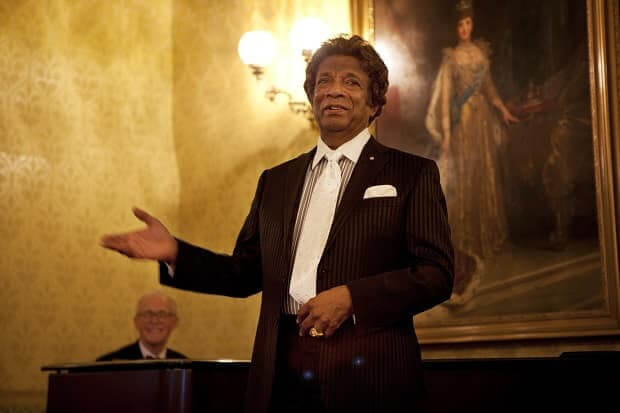
An enchanted evening with Kamahl at Her Majesty’s for OzAsia, writes PRIYADARSHINI CHIDAMBARANATHAN

The “velvet voiced” Kamahl held his audience enraptured for more than two hours as he sang and reminisced during his show My Music, My Life. The show was part of the OzAsia Festival 2013, which took place on September 28 at Her Majesty’s Festival Theatre in Adelaide.
He sang over ten songs including favourites such as The wind beneath my wings, and Some enchanted evening from the hit musical South Pacific, Memories and many more. He then went on to Amazing Grace and his all-time hit, The elephant Song. He sang with such aplomb and grace in his truly magnificent voice. The mostly senior members of the audience clearly adored him, and responded well to every question thrown at them.
Each song was preceded by an explanation of what they meant to him, and between songs, he talked about many incidents that had shaped his life and career.
It was interesting to hear of his early history in this country and the tough times he had faced. An episode played from the ABC’s Australian Encounters that described part of his journey. Born Kandiah Kameswaran in 1934 to Srilankan Tamil parents in Malaysia, he was sent to Adelaide in 1953 to complete his schooling at the Kings College. Almost as a reaction to being so different, he learnt to sing, especially the songs of Nat King Cole, who was a favourite. It was at one of his performances at an Adelaide hotel that he met Rupert Murdoch. It was Murdoch who encouraged him to move to Sydney and shielded him from the immigration authorities when his attempts at a university education failed. The Australian Government finally granted him a PR in 1965.
With a singing career spanning many decades, Kamahl has performed around the world and released many albums and singles, the most recent one being Heart and soul. He has rubbed shoulders with a number of famous personalities. A montage of his achievements and photographs with many of these people, was displayed as a slideshow during the show.
He regards the most important meeting of his life as the one with Barack Obama, whom he met in Canberra in 2011. He said that this two minute meeting inspired him to learn the Gettysburg Address which he recited during the performance in his deep resonant voice.
The mood of the evening was mostly romantic, as were his songs. He talked about the time he met his wife and fell in love almost instantly. He distributed roses to a few lucky ladies in the audience while also singing Treat her like a lady. And all the audience, especially the old timers responded enthusiastically.
He talked about the time his career was at a low and he hired the London Palladium for a performance. The show luckily sold out and came to the notice of his Dutch recording company who offered him The elephant song, which was part of a worldwide campaign for the World Wildlife Fund. He almost refused, but was luckily convinced to go to Amsterdam to record the song, which went on to become one of his most famous.
Close to the end of the night he recited My home /Australia, his own composition, where he described what it felt to be Australian. It was while he was writing this that he started his long friendship with Sir Donald Bradman.
The concert, fittingly, drew to a close with My way by Frank Sinatra, a fitting song from a man who has certainly gone his own unconventional way.
For most people in the audience, the night felt like a walk down memory lane, with their favourite singer leading the way.
Indian links from the past
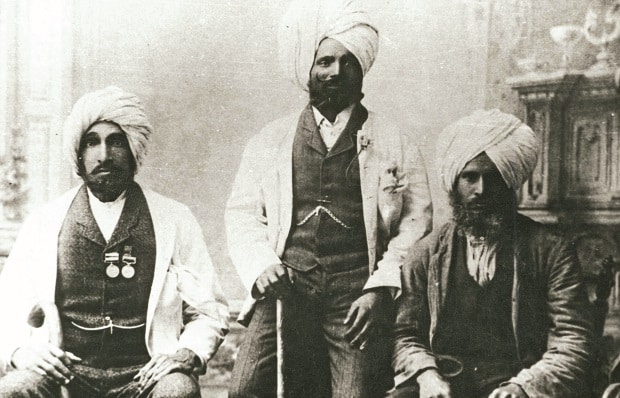
Horse trading, missionaries and hawkers were all looked at during Professor Allen’s talk on the forgotten connections between India and South Australia, writes PRIYADARSHINI CHIDAMBARANATHAN

If you thought that Indians have only been in Australia for the last couple of decades, think again. Indians have been living here since the late 1880’s, facing far tougher immigration laws that anything we have today. This, and other historical connections between India and Australia, were the subject of a fascinating talk by Professor Emerita Margaret Allen.
Titled Forgotten Connections: India and South Australia 1880s-1940s, the event took place at the Adelaide Festival Centre, on September 17, as part of the Oz Asia festival 2013. The talk focused on three areas from the Professor’s research, Indian hawkers in the South Australian region, the horse trade between the two countries and the missionary connection.
Professor Allen, who works at the University of Adelaide has been researching this subject for many years, focusing specifically on the late nineteenth and early twentieth centuries. She is interested in transnational, post-colonial and feminist histories.
Speaking to Indian Link after the talk, she told us that she has been researching the subject for 30 years. She started out studying female Australian missionaries in India because of her interest in feminism, and slowly expanded the scope of her study to include other links between India and Australia. She has spent some time in Mumbai as part of her research activities.
Speaking to a hall packed with over 150 attendees, Professor Allen recounted fascinating stories of hawkers who had plied their trade in the South Australian region. Hawkers in the time between 1880 and the beginning of the twentieth century travelled on horse drawn carriages, between far flung stations in the region and carried news and goods from place to place. Some of them like Otim Singh managed to taste success, and established a general store on Kangaroo Island, which he ran for many years. Otim Singh married and lived on Kangaroo Island until his death in 1927. Others were not as lucky however, and lived out a lonely existence, far away from their families in India, in the face of a regime that grew more and more racially intolerant.
Another connection between India and Australia was the horse trade, where Australian horses called ‘Walers’ were shipped to and sold in India. Accounts of the Delhi durbar in 1901 mention horses that came from Australia. They were also used by the Police and the army in India. Australian horse traders made frequent trips to India for this purpose.
The missionary connection between the two countries has been quite strong with a number of Australian missionaries visiting India during the period, and some of them choosing to live out their lives in India. There were a number of female missionaries who also went over during the period. One of them was Amy Parsons, a young woman from Adelaide who spent a large part of her life in India, and adopted a few Indian customs herself. The Professor also mentioned Pandita Ramabai, one of India’s first feminists, who became a missionary in India. Her daughter visited Adelaide in the early 1900s.
Professor Allen also talked about an Indian missionary Rev. Nanda Lall Doss who visited Australia in 1888 as part of a world tour. His written account of the journey details visiting and preaching in Adelaide and country towns in South Australia. He criticises Australia’s immigration policies, racial prejudice and treatment of Aborigines in his book, but also praises the Australian ability for hard labour, no matter how rich the person.
The talk drew some specific questions from the audience about Australian Walers, and horse traders in the region. There was also a discussion about the White Australia policy and the immigration restrictions that came into place after 1901, that restricted Indians and Asians from entering Australia.
It was a very informative evening with Professor Allen showing up some interesting new connections between Australia and India.
A melange of martial arts and meditation
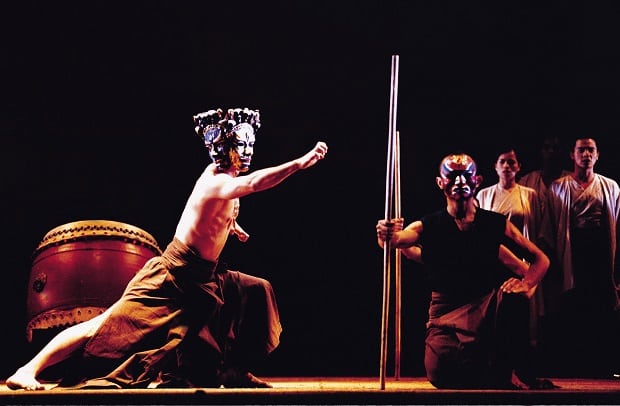
A powerful performance that evokes a sensuous and spiritual feeling in the audience

The seventh OzAsia festival opened, literally, with a bang to the beat of seven drums and two large gongs in the opening act of Meeting with Bodhisattva. The huge drums took me back to the opening ceremony of the Beijing Olympics and even further to the famous Tamil movie Chandralekha (1948), where a bevy of beautiful girls dance on top of some fifty massive drums, a scene bigger than Ben Hur. The venue was Her Majesty’s Theatre, a neo-classical building that has just celebrated its centenary, and was appropriate to hold this event.
Although the play is based on a classical theme, it is presented in a modern ballet format. In essence it expresses a ‘journey of a man facing his fears as he enters unknown territories; a journey from questioning everything to accepting anything that happens to him for better or worse’. There is no dialogue. It is left to the audience to understand the Buddhist mantra, ‘get rid of impurity and relinquish the dualism that divides thought and action’. This dualism is well brought out by an interesting mix of contrasts, non-stop movements by characters and moments of absolute stillness; billowing sound of drums and stony silence; waving long sticks in threatening gestures and gentle tai chi-like movement of limbs; soul-stirring music but no lyrics; constant flow of messages through body language, and yet hardly any words.
This unique presentation by Taiwan’s U Theatre features sixteen dancers who slice through the air, striking their instruments – drums, gongs and cymbals, with immaculate precision. The sixteen players – seven women and nine men – are all attired in uniformly looking long off-white robes; it is hard to tell them apart from a distance, except for the bun-like hair-do of the women. They seem super-fit and yet supple as the 90-minute show demands constant movement of the players, especially the central character.
He is there from start to finish prancing, jumping, twirling, while at the same time waving his stick in mid-air, tapping the floor and hitting the drums. At times he uses his staff to fend off others seemingly attacking him with long sticks. This is very much like the ‘silambattam’ in Tamil Nadu, where similar fight scenes were once seen in rural areas. It is also akin to certain Japanese stick play I saw a few years ago. When Buddhist monks from India were sent out to foreign lands to spread their message, they were instructed not to harm any attackers but defend themselves with their sticks and other forms of martial arts which later took deep roots in those countries, giving the impression that they originated from there.
The stamina of all players is phenomenal in this immensely physical tale of the search for inner calm among chaos. In the last but one scene, all of them whirl round and round – like the Dervishes of Turkey- for almost an eternity, to the accompaniment of soulful music in slowly dimming light.
The seven acts move seamlessly with no curtain drop. The huge drums and gongs are moved in and out on special skates, without a squeak. In the entire play only three words are uttered. The background music, audible when the drums are not struck, is soft, soulful and sensuous. A few times when the gong is struck, the sound of ‘Om’ emanates and lingers for long, giving the performance a spiritual feel.
Bodhissattva is a beautiful blend of athletic drumming, Buddhist chanting, martial arts and meditation where the players’ bodies act out a language both religious and artistic, as the drums and gongs fill the hearts of the audience with a sensual and spiritual feeling. It is a unique narrative of one man’s chance meeting with a deity whose only way to wisdom is through letting go.
Glimpses of Indian classical art forms in OzAsia festival
The performers of this beautifully controlled dance of strength and beauty mesmerise the audience, writes VINAYA RAI

In the early 80s I developed a sudden (and shortlived) interest in Asian literature. It was then that I heard of a book called This Earth of Mankind by an Indonesian author. I think I read a review at the time, but that before the worldwide web and ebay existed, so it was very difficult to get unusual books, so I never read it! And now, just as suddenly, I recently saw a show based on the book!
Ontosoroh was performed at OzAsia Festival 2013 and was a collaboration between Indonesia and Australia, between Peni Candra Rini, composer, song writer and vocalist in the gamelan tradition (more about gamelan later), and Ade Suharto, choreographer and dancer from Adelaide, with three musicians from Surakarta in Central Java.
The show is about Nyai Ontosoroh, a Javanese woman who embodied all the complexities of 19th century Dutch East Indies, in the book by Pramoedya Ananta Toer, that is an allegory of Indonesia’s struggle at that time. Nyai was a derogatory title for an indigenous woman who became the mistress of a Dutch man during colonial times. Nyai Ontosoroh plays an important role in the transformation of Minke, the hero, from rich kid to radical nationalist. The book was also pivotal in changes in Indonesian culture, nationalism and, ultimately, gaining independence.
The play, Ontosoroh, incorporating exquisite music and dance, “is structured in several non-linear, yet intertwining segments”. The dances by Ade Suharto were mesmerising. Mainly in the beautiful classical Javanese style, which is so similar to Odissi and other classical Indian dance styles, the performance also had a mix of classical western and contemporary movements. Her easy mixing of styles flowed beautifully, and seemed to fit the narration perfectly.
The poems sung by the female characters were in Javanese, and together with the beautiful dance movements, became the text itself. There were no other dialogues. Peni Candra Rini was the soloist performing in the female style of gamelan singing. Again, Peni combined traditional and contemporary styles in her singing techniques and the classical Javanese songs called tembang, which she wrote for the play were in both, colloquial and poetic Javanese language. And even though I had no idea what the words meant, the pathos in the singer’s voice and the other emotions that came across, needed no language to understand their meaning.
I should definitely not forget the musicians! Plenthe, the percussionist, was extremely good on a mridangam-like drum. In the first scene, I’m sure I heard teen taal flowing through his fingers and the tha-dhin-na-like beats helped me sit back, relax and enjoy the show. There was Prisha Sebastian, the violinist, who not only performed divinely, but was also physically a part of the show as he played the violin as a character, and not just as a musician in the background.
As they helped us visualize a morning scene with the flute imitating the chirping of the birds, the music sounded like very Assamese. The sort of tunes you would hear in a tea plantation in the North East. It was just incredible, the mixing of styles and notes.
And incredible too was an instrument I saw and heard for the first time, the gamelan. This is a musical ensemble featuring a variety of instruments such as metallophones, xylophones, drums, gongs, bamboo flutes and string instruments. It was just amazing, the music that flowed from this set of instruments, and Iswanto, the gamelan player, did full justice to the various instruments. These instruments are all built and tuned to stay together as one entity! Gamelan music is an integral part of Indonesian culture and I felt very lucky to see this instrument being played at the show.
The beautiful, flowing dances brought out the rasas of love and dreams in the beginning to desolation, and then a kind of rebellion at the last dance where silence was used beautifully. This was a beautifully controlled dance of strength and beauty, using a lot of yoga-like movements.
All in all, a beautiful show, made specially for OzAsia 2013 as a collaborative effort, I hope it tours around Australia and many more people will get to watch it.
Live Indian marriage at OzAsia Festival
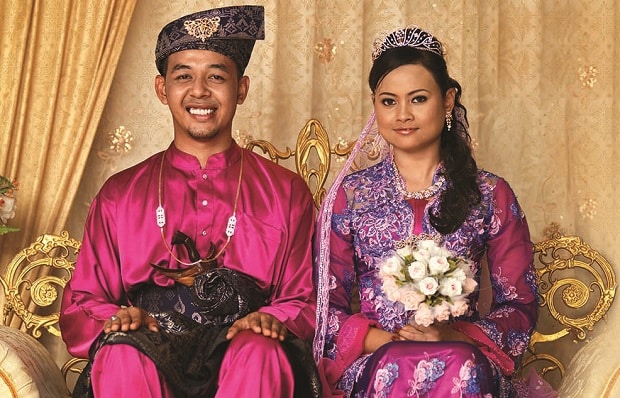
From cuisine to culture to films, the Indian influence in Malaysia was prominent at the festival, reports VINAYA RAI

South Australia is called the ‘Festival State’ and OzAsia, one of the major annual festivals, has grown from strength to strength in recent years. Started seven years ago to culturally engage with our Asian neighbours, today it is the country’s pre-eminent Asian-Australian festival. It is a celebration of the cultural diversity of Asia and brings across all art forms, theatre, dance, music, film and literature, as well as food, both traditional and contemporary to Australian shores.
Last year, for the first time, the concept of a focus country was introduced, and that was India. This year it was Malaysia. In keeping with the mixture of cultures that can be seen there, the focus was on Malay, Chinese as well as Indian cultural influence on their arts and culture. Along with the focus country, other Asian countries too brought in their cultural offerings. Local community members also participated enthusiastically, and especially in the Moon Lantern Festival which is community event. What makes the festival so unique is that there are international stars and premiere shows, Asian-Australian collaborations, and also local involvement. It is a fortnight during which something happens every day in various venues.
The Indian community has been involved in the Moon Lantern festival and various other workshops, and Malaysians of Indian background have done their bit to highlight their culture this year. A wonderful event called Three Weddings and a Cook was held in the Migration Museum where in the ceremonies, food and customs of Malay, Chinese and Indian weddings could be seen and enjoyed. It included cooking demonstrations, craft and even dance workshops. But the most special attraction at this event was that the Indian wedding was a true wedding, with a couple really being married according to Vedic rites that day at the venue! A unique event indeed!
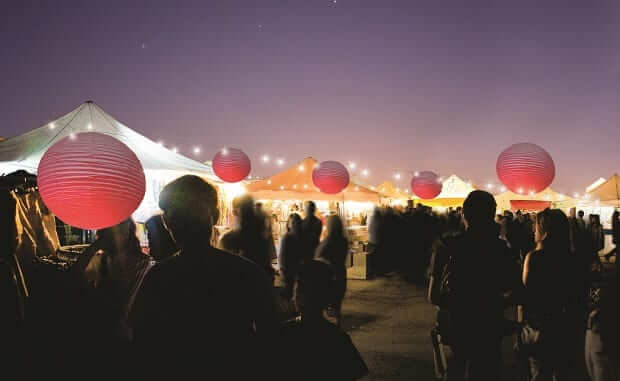
The Malaysian Indians were also involved in Pasar Malam, a night market reminiscent of Penang that was set up in Adelaide on the Terraces of the Festival Theatre. With coloured lanterns adding to the atmosphere, there was rustic street food, other cultural goods being sold, roving entertainment, live music and dance, among other events. It was just great!
The Moon Lantern Festival to which everyone looked forward was unfortunately washed out because rain and high wind. There were at least eight Indian performances slated for the evening including two workshops, one on Bollywood dance and the other on Sikh turban tying. The Temple of Fine Arts that conducts Odissi, Bharatanatyam and folk dance classes was also heavily involved in the finale, which would have been a collaboration of Malaysian, Chinese, Indian, Balinese and other dance styles, along with Dragon and Lion Dances. Although all these events could not take place as planned, the Adelaide Tamil Association managed to perform their item before the heavens opened up and the event was abandoned. With Karaga and Kummi dances, the kids enthralled everyone and ethnic Malaysians were also very happy to see these dances as the Tamil culture is the most predominant among Indian influences in Malaysia.
There were also talks and movies to be enjoyed, and the ever-popular singer Kamahl, whom Adelaide claims as a son, talked about his life and music. There was also another talk, called Forgotten Connections, about the historical connections between India and South Australia.
A highlight of the festival and a much awaited event were the viewing of movies from India. The discerning filmgoer enjoyed gems such as a lovely children’s film called Gattu (which had been nominated for Best Children’s Feature Film at the Asia Pacific Screen Awards), Gangs of Wasseypur Parts 1 & 2 and three fantastic movies by Satyajit Ray: Charulata, Mahanagar and Mahapurush. These were digitally remastered and a pleasure to watch. A treat indeed!
So ended OzAsia 2013, a true feast of food and art, talks and movies and everything that goes into what we can call ‘culture’ and one that is uniquely Asian. I can’t wait for next year!
Shivaji Maharaj theme for Sarvajanik Ganeshotsav
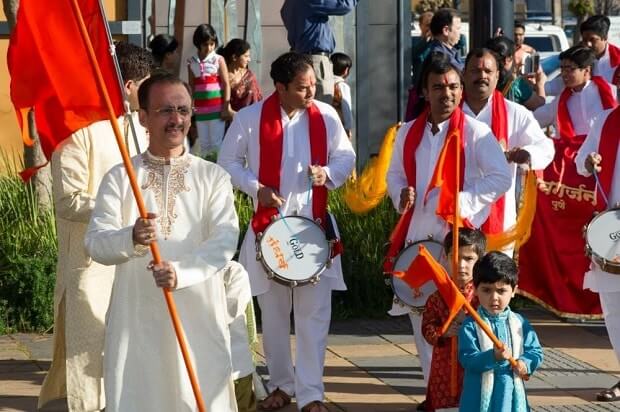
Celebrating Ganesh Chaturthi publicly brought back the flavour of similar celebrations in Mumbai or Pune, reports GAURI GAONKAR

The Adelaide Sarvajanik Ganeshotsav 2013 was celebrated on a grand scale on September 14 and 15 at the Goodwood Community Centre. This public celebration of Ganesh Chaturthi was first begun in Adelaide in 2012, on a small scale by a few enthusiastic Maharashtrian families. Their vision was to celebrate Ganeshotsav in the same way that it is celebrated back home in cities like Mumbai and Pune. Their aim was to make this festival truly sarvajanik (public) by incorporating the various regional Indian communities as well as the Australian public. Children would also be given a platform to participate in the cultural programme to showcase their talents.
Among the extravagant two-day festival program were events like Ganesh sthapana with dhol tasha troupe ‘Shivagarjana Adelaide’, Ganpati puja, cultural performances to encourage local talent, maha-aarti, Atharvashirsha avartan program and Prasad. It was an enthusiastic way to celebrate the arrival of our beloved Ganpati bappa!
Festivities on the first day began with pratisthapana or installation of the Ganpati idol, that was brought into the venue with a grand procession accompanied by traditional instruments like the dhol, tasha and lejhim. With participants decked in traditional attire such as ‘nauvari’ and ‘phetas’, dancing with fervour to the beats of the dhol and tasha, it was hard to believe one was not in Pune!
After a colourful and lively Ganesh sthapana, the Ganpati puja was performed. In keeping with custom, colourfully decorated pavilions are erected specifically for the Ganpati idol, and are adorned with flower garlands, lights or theme-based decorations depicting religious scenes or current events. This year’s theme, skilfully created by one of Adelaide Sarvajanik Ganeshotsav committee members, depicted the great Maratha king Shivaji Maharaj, his spiritual master Shree Ramdas Swami Samarth and his mavlas or soldiers.
Aside from religious activities, a cultural programme was conducted on both days of the event. The aim of the cultural programme was to be inclusive of the various regional Indian communities, but at the same time, keep the flavour of the event quintessentially Maharashtrian. This was certainly achieved! The first day saw everything from bhangra, children’s dances and recitations, to typically Maharashtrian presentations like Nandi, Powada, to an elaborate audio visual presentation on the great king Shivaji Maharaj, Jogwa and Mangalagaur. The cultural programme on the second day began with a Stuti and Pushpanjali dance dedicated to Lord Ganesha, with energetic performances such as garba, kirtan, Marathi mimicry, classical fusion dance and a Hindi medley.. The grand finale of the evening was a lively group performance to a popular Marathi song on Ganpati titled, ‘Deva tujhya daari alo’, which was enhanced by music played by the local dhol tasha troupe.
It was a wonderful two days when raised voices proclaimed ‘Ganpati Bappa Moriya!’ often and with great fervour. It will be a bigger and better celebration next year, and we will all be looking forward to it, I’m sure!
Sarvajanik Ganeshotsav is the public celebration of Ganesh Chaturthi. Bal Gangadhar Tilak, a freedom fighter, founded the publicly celebrated Ganeshotsav Festival in 1893 as a means of promoting the dream of Indian independence and home-rule (swaraj). The aim behind celebrating the festival in this way was to unite people from diverse groups, and by doing so, enhance their sense of social belonging. Through the medium of this festival, Tilak brought together all classes of the society against British rule and revived their patriotic spirit. Ganeshotsav is an integral part of Maharashtrian culture and the most awaited festival in this part of India.
Photos courtesy: Stephen Watts Photography
Tips on reducing the risk of dementia now in Hindi
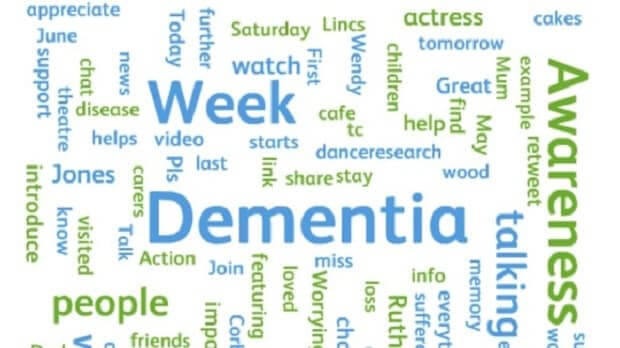

Dementia Awareness Week was celebrated in September in Australia, bringing into focus brain matters and suggesting making changes to lead a ‘brain healthy’ lifestyle.
Already there are an estimated 109,000 people living with dementia in NSW alone, and as the population ages that, number is set to skyrocket to 132,000 in less than 10 years. More than 320,000 people have dementia in Australia, and this number is projected to reach more than half a million by 2030.
The Hon. John Watkins, CEO of Alzheimer’s Australia NSW, said while there is, as yet, no cure, scientific research shows it may be possible to reduce the risk of developing dementia, or delay the onset, by taking action in your 30s, 40s and 50s.
Alzheimer’s Australia has a range on information about how people can lead a ‘brain healthy’ lifestyle in 29 different languages on its Your Brain Matters website.
The tips, on what people can do to help reduce their risk of dementia, are in a variety of languages, including Arabic, Assyrian, Chinese, Croatian, Dari, Dinka, Dutch, French, German, Greek, Hindi, Indonesian, Italian, Japanese, Khmer, Korean, Lithuanian, Macedonian, Maltese, Polish, Serbian, Somali, Spanish, Swahili, Tagalog, Thai, Turkish, Ukrainian and Vietnamese.
It’s never too late to take time out to look after your brain health, emphasised Mr Watkins. “It can be as simple as going for a walk, eating more fruit and vegetables or looking after your cholesterol and blood pressure. The time to act is now,” he stated.
Alzheimer’s Australia is the charity for people with dementia and their families and carers. As the peak body, it provides advocacy, support services, education and information. Dementia is the third leading cause of death in Australia and there is no cure. The National Dementia Helpline number is 1800 100 500, with interpreter service available.
Superstar Shanthi
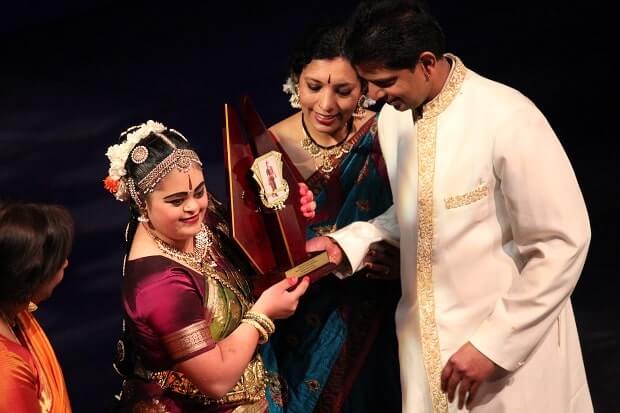
A young girl overcomes the challenges of Down Syndrome and delivers a flawless and inspirational performance, writes SAI NARAYAN

August was a momentous month in the lives of the Fielding family, as Shanthi Anita Fielding, aged 19, performed her Bharatnatyam arangetram (graduation in Indian classical dance) at the John Curtin Theatre in Perth, to an audience of about 300 people. Shanthi was born with Down Syndrome, a genetic disorder resulting in severe intellectual disability. She has congenital problems that require ongoing corrective surgery and management. Her disability is compounded by anxiety and panic attacks triggered at times when facing crowds of unknown people and stage lights. Given these disconcerting facts, her mother, Para Fielding and teacher Shobana Puganeswaran, founder and director of the Narthanalaya School of Indian Classical Dance, had a challenging task to prepare Shanthi for the arangetram. To their knowledge, no one known to be afflicted with Down Syndrome had ever done such an event!
Shanthi had studied for seven years under Shobha’s tutelage, and she would be a trailblazer to accomplish this. Letters of support poured in from the country’s leaders, including then Prime Minister Kevin Rudd, ex-Prime Minister Julia Gillard and Fiona Stanley, AC.
To find out what happened at the performance and also her story, Indian Link caught up with her mother Para Fielding and teacher, Shobana.
Indian Link (IL): What challenges did Shanthi face leading up to the performance of her arangetram?
Para Fielding (PF): Shanthi was initially enrolled in a mainstream school with a full-time aide to support her learning. However, she wasn’t making much progress, so we enrolled her in a specialist school. By nine, Shanthi’s learning was very slow, and she could hardly read or write. She started learning dancing then too, but it took a while and was a struggle to find the right teacher until we found Shobana, who was also happy to take her on. Initially, she worked one-on-one with Shanthi, but later put her in the group classes with other children. Shanthi liked the group classes because she could watch the others and found it more stimulating.
Because of her condition and medications, Shanthi struggles to sleep. Though she has been learning Bharatnatyam for seven years, the real learning time is much less, because of her regular hospitalisations. She has anxiety and panic attacks.
Shobana Puganeswaran (SP): During one of her practice performances at the temple, Shanthi had a ‘shutdown’ and lost track of all the moves. It could have been because she was performing in front of unknown people and because of the stage lights. We worried about she would perform on the arangetram day, as she has problems processing emotions. In her dance, she had to portray the navarasa, or nine emotions.
IL: How did this momentous event come about?
SP: Shanthi is absolutely passionate about dancing, and her has gone against all odds to learn the art. There was also complete trust in her guru, exemplifying the ‘guru-shishya’ tradition of surrender to the guru. Seeing this complete trust, I felt I had to reciprocate. From the start we had a great chemistry and Shanthi considers me as the ultimate teacher who knows everything about dance. I would write out her mistakes in a little notebook and give it to her. Shanthi would keep it with her all the time and the next day she made sure that the mistakes were rectified. Another interesting aspect is her phenomenal memory when it comes to dance. With the other dance groups, I would have to record a video for them to remember the moves. However, with Shanthi’s group, I never needed a video. She would remember every move I taught and the other children in her group would look to her to lead. She has a complete focus with dance, to the exclusion of all other distractions. This single-minded focus set her apart.
IL: What challenges did you face in teaching her?
SP: Though Shanthi is 19, her intellectual level is that of a 5 or 6 year old. Making her understand the complexities of Bharatnatyam was a challenge, and I had teach at her level. She could sometimes go ‘blank’ and shutdown. Shanthi would hardly make eye-contact with people but as expression is conveyed through the eyes in dance, I had to constantly exhort her to look up and make eye contact. I had to learn and improvise new teaching techniques for her. In teaching Shanthi I learnt a lot, and derived immense satisfaction and enjoyment.
PF: Shobana stretched the boundaries in her teaching. She thought out of the box and challenged Shanthi to perform at the same level as any other student, which pushed her to perform well beyond expectations. Shobana’s patience is another remarkable attribute. Not once did she raise her voice or lose her temper. Even at specialist schools for disabled children, I have seen teachers scream in frustration.
IL: Did you face criticism for arranging this arangetram for Shanthi?
SP: A dance teacher warned me not to take on this challenge. As Shanthi’s arangetram was the first from my dance school, she told me that I would lose prestige if Shanthi were to fail on the night of the event. Shanthi is possibly the first ever in the world with Down Syndrome to perform an arangetram. However, I went ahead, after getting her techniques reviewed and approved by my guru PT Narendran. When we can have the Para-Olympics for disabled athletes, why shouldn’t a disabled person being able to perform an arangetram? Shanthi has the full repertoire of dance techniques and that is what an arangetram is all about.
IL: Did Shanthi develop in other areas because of her dance?
PF: Over the years, Shanthi has developed her reading and writing skills because of her passion for dancing. She was able to memorise and say a prayer in Sanskrit taught by Shobana, which is a remarkable achievement for her. Shanthi has developed a new thirst for life because of her dancing. She has won the respect of her fellow students, which has had a great and positive influence on her outlook.
IL: How did the arangetram go?
SP: Most students are tense before the performance and adjust their make-up or drink water. When we asked Shanthi whether she was tense, she just said, “No, I am happy!” She gave a flawless rendition. I completely forgot about the crowds and was immersed in watching her. There was a standing ovation and many in the audience had tears in their eyes.
PF: She gave a thank you speech at the end of her performance, pushing her brother away when he wanted to help, she was so confident in her own abilities! The doctor who has been managing her condition for the last nine years said, “She is my hero”.
Jeyarama Sarma (SP’s father): What happened was nothing short of a miracle. In her dance, she forgot herself, she forgot her anxieties, fears and disabilities, the crowds and stage lights. It reminded me of Vivekananda’s story when Ramakrishna touched him, he forgot the world and had a spiritual experience.
IL: What implications does Shanthi’s success have for others with a disability?
SP: I believe this arangetram is an eye-opener for many people on what is possible. Shanthi’s performance is an inspiration, and shows the way for others with similar disabilities. Even for people without a disability, it is inspirational to how much children can do if they push themselves.
PF: Every family knows someone with a disability. In a lot of cases, the disabled person is not allowed to develop or grow. Shanthi’s arangetram could at least start a dialogue process to discover what is possible. If the arangetram sends out this message, nothing would give me greater pleasure! Some families from the Down Syndrome Association attended the performance. Though they were from different cultures and backgrounds, they sat through the event and appreciated it. A little girl with the same condition was following the dance movements with her hands and feet, trying to copy them. She might also learn dance and follow in Shanthi’s footsteps.
IL: And what does Shanthi herself have to say about her dancing?
Shanthi feels happy and excited about dancing to the gods. In her own words, she exclaims, “I am a superstar!”
“No pessimist ever discovered the secret of the stars, or sailed to an uncharted land, or opened a new doorway for the human spirit,” are words by Helen Keller, which never rang more true. The optimism of Shanthi’s mother and teacher, as well as her own passion and hard work has brought about a miracle. Shanthi Fielding’s arangetram and personal journey is a beacon of hope with the inspiring message of boundless possibility for all humans.