


There’s something wonderfully defiant about a woman scaling an indoor rock wall in a sari, her pallu cascading effortlessly down one shoulder. Who says elegance and adventure can’t climb to new heights together?
That, in a nutshell, is The Offbeat Sari – Liverpool Powerhouse’s new exhibition on the contemporary sari. The brainchild of London-based design curator and writer Priya Khanchandani, the Liverpool exhibition brings together 50 pieces from the original exhibition at London’s Design Museum.
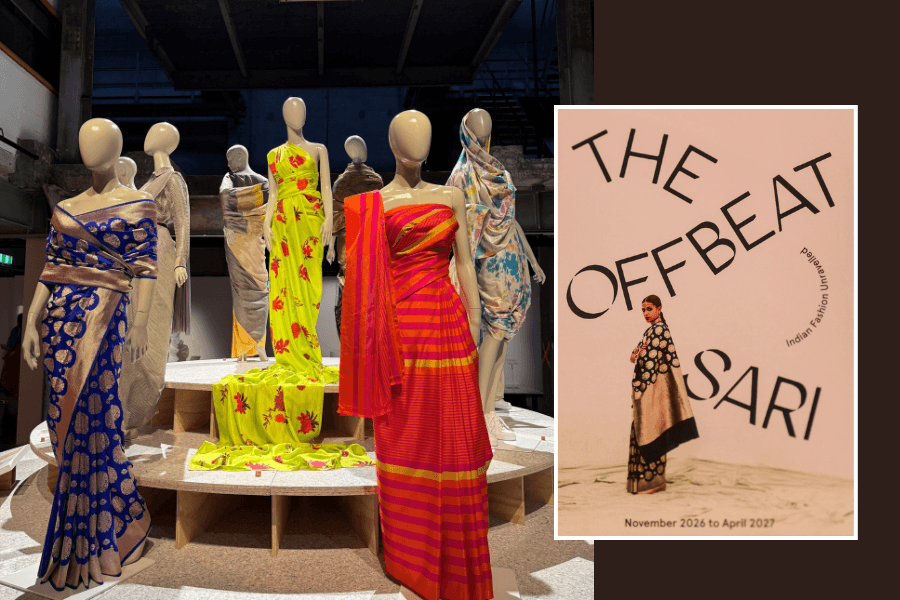
If you’re expecting saris paired with crop tops, blazers, sneakers, belts, or perhaps even sporting pockets, you might be disappointed, although there is a bit of that.
The ‘offbeatness’ here lies not merely in inventive styling, but in a spirit of irreverence and a willingness to challenge convention.
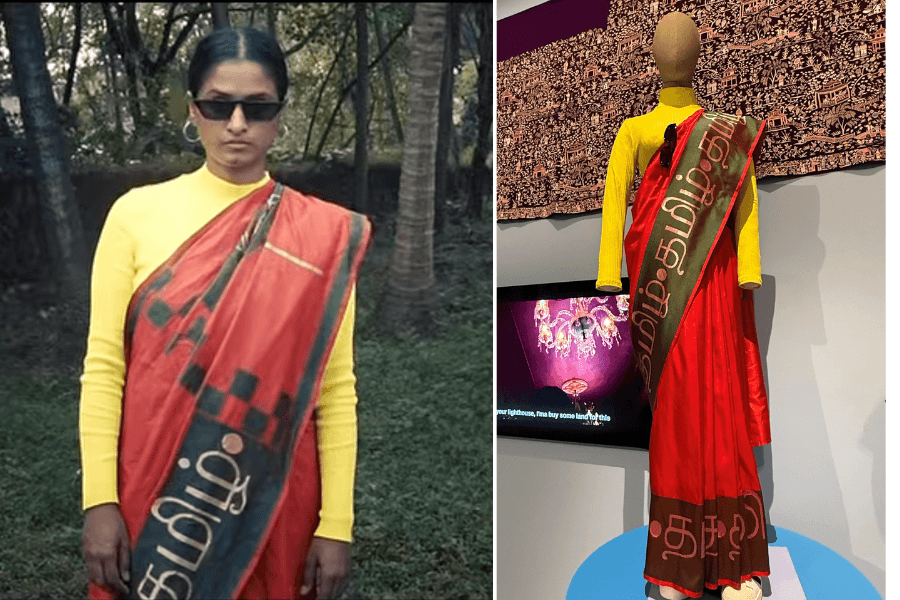
For starters, particularly for women in the diaspora, the sari can be a radical assertion of identity. Take Indian-Swiss performing artist Priya Ragu’s statement sari in her Good Love 2.0 video, where she wears her Tamil identity not on her sleeve but on her sari border, proclaiming it loud and clear in bold red and black.
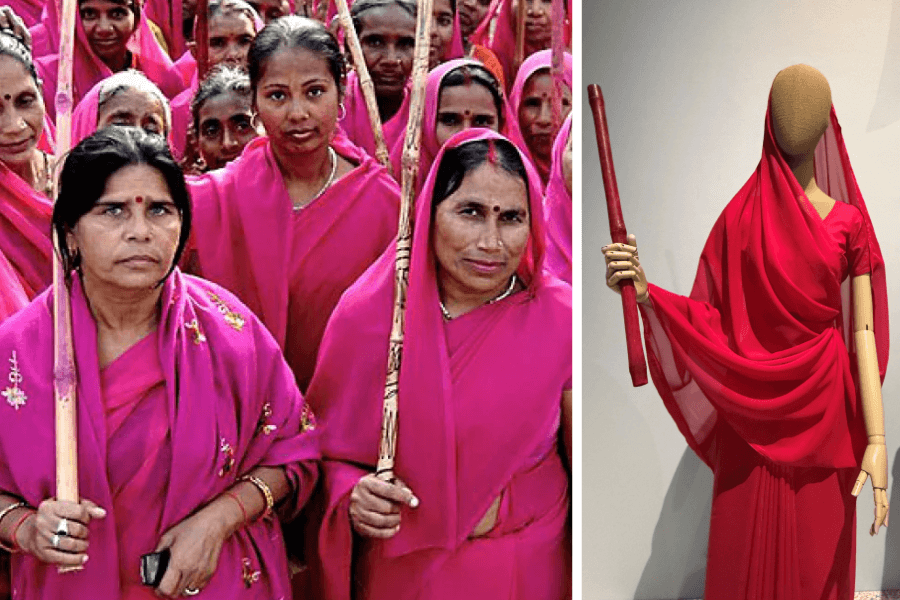
The sari can be a symbol of social action. The Gulabi Gang’s distinctive pink saris and lathis (bamboo sticks) are instantly recognisable symbol of resistance – quite literally taking a stick to injustice. Similarly, Assam’s Hargila sari, featuring motifs of the endangered greater adjutant stork after which it is named, champions the bird’s conservation.
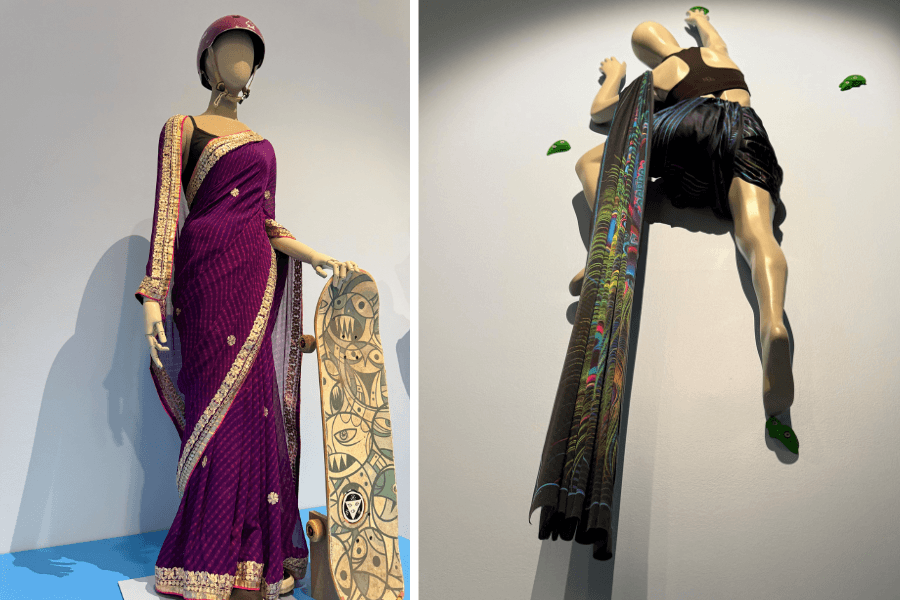
And then you have the sporting sari – for skateboarding, snowboarding, rollerblading, hula-hooping, rock climbing or riding a motorcycle, all while your pallu flutters and flirts with the elements.
View this post on Instagram
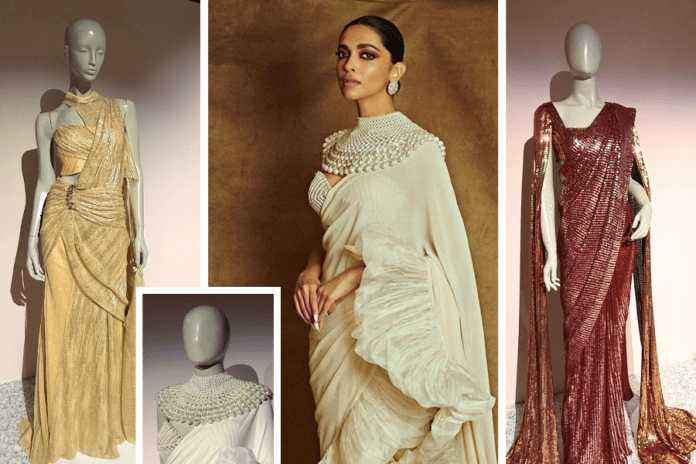
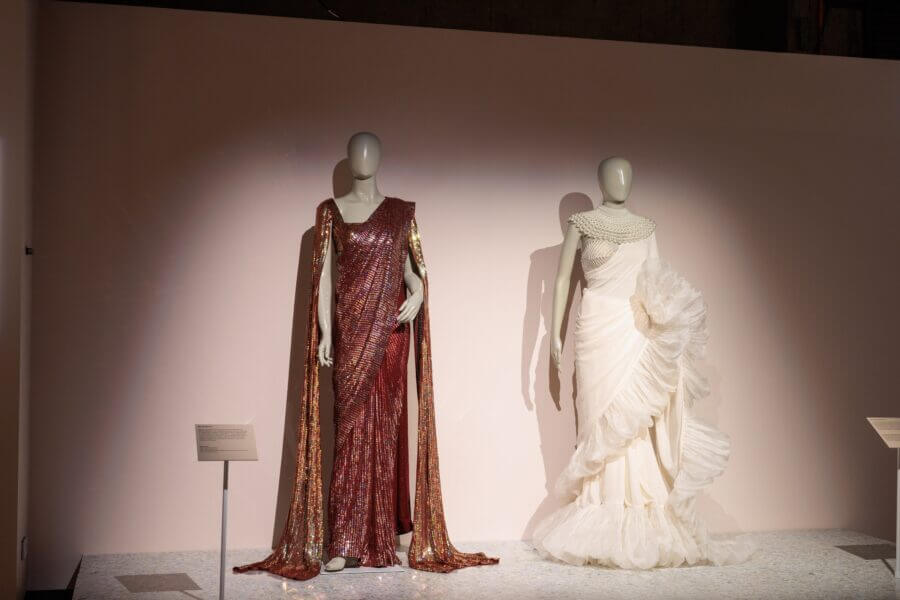
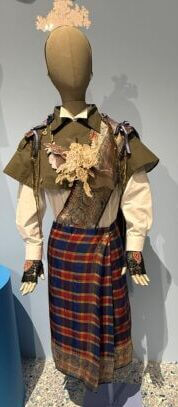 Or you can sport a fusion sari, such as designer Shilpa Chavan’s half-sari-half-kilt creation, the Raj Kilt (left), fashioned from made with vintage silk brocade and embellished with military epaulettes. Or go full red-carpet glamour with a ‘concept sari’ that veers closer to a gown, such as the shimmering gold Tarun Tahiliani creation on display.
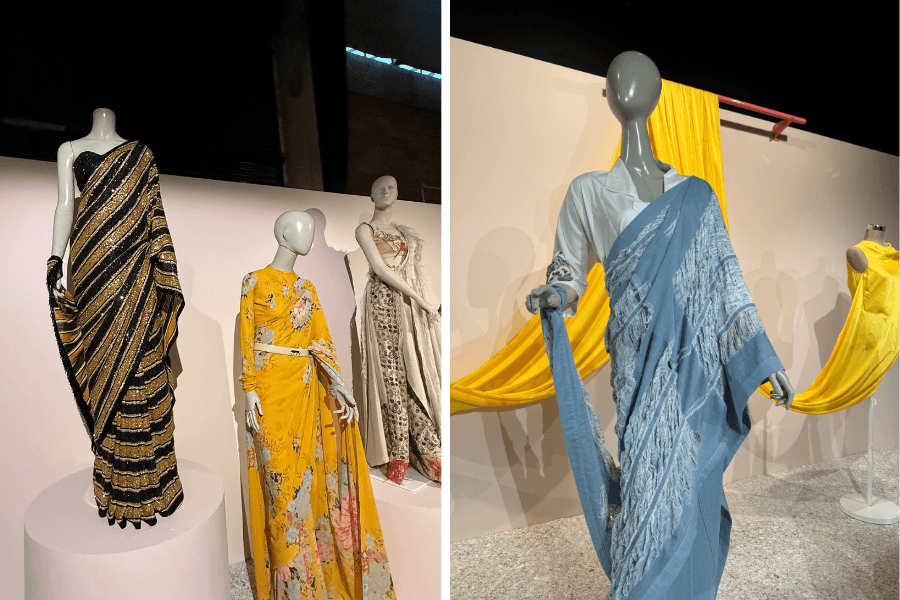
If however, your idea of an offbeat sari leans more towards ‘sari’ than ‘concept’ there’s plenty to admire in the exhibition’s Raw Mango displays, gold- and silver-thread creations, and a stunning piece woven from steel fibre. Material experimentation takes centre stage elsewhere too: distressed denim; a quilted sari (you read that right); sequins fashioned from x-ray film, Abu Jani and Sandeep Khosla’s pearl cape blouse and ruffled sari (think Deepika Padukone, Cannes 2022), and Manish Malhotra’s dazzling sari with its dramatic floor-length cape and taban embroidery (literally ‘luminous’) – a glorious dose of Bollywood extravagance.
If said offbeat extravagance is off-putting, head to the ‘Reclaimed’ section, where old saris find new life as repurposed garments – a trend currently enjoying its own moment in Instagram spotlight.
The diaspora embraces the sari
It’s hardly surprising that for Indian women raised overseas, these contemporary interpretations of the sari can be a revelation – a striking departure from their mums’ largely occasion-wear saris. Many who once felt self-conscious wearing traditional attire in predominantly Western settings – or who regarded it as restrictive, both physically and psychologically – are discovering it anew.
View this post on Instagram
Curator Priya Khanchandani spoke of just such an awakening when she addressed the exhibition opening remotely from London.
“When I moved to India, to see the sari work differently with blazers, trainers, and as part of everyday life, shifted something in me,” she revealed. “I started to see it not as tradition but as a canvas for the present. It can be traditional but also be disruptive – it can be humble, playful, political, it can move across religion and geography. I came to see it as beautiful but radical and full of energy.”
Her words recalled a moment from the early 2000s when British-Indian television newsreader Sharuna Sagar made headlines for wearing a sari to present the news on British TV – having admired the professionalism and elegance of sari-clad newsreaders in India.
Sometimes it takes seeing your own heritage through a different lens to recognise its possibilities.
The sari in the stories, not in the spectacle
It was this new perspective that made The Offbeat Sari exhibition memorable.
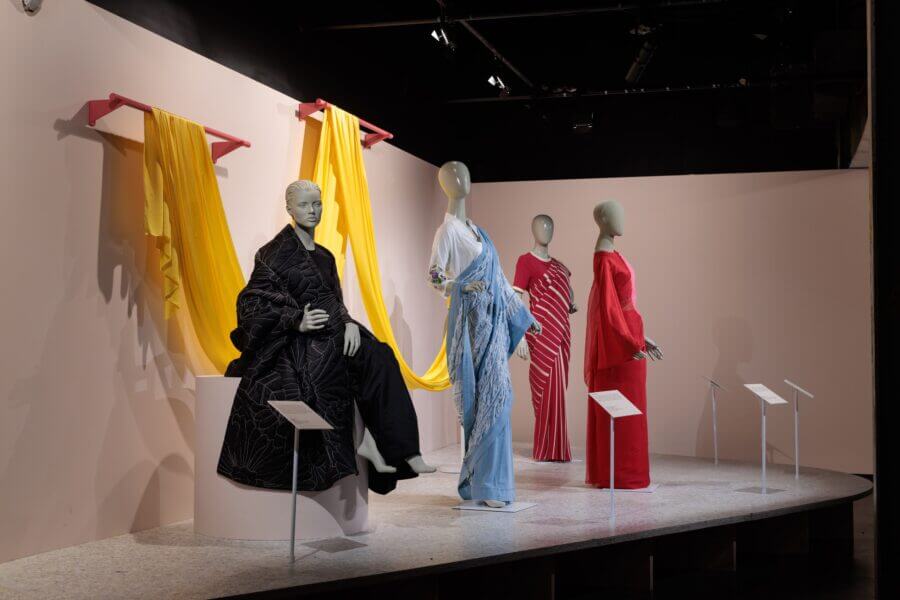
The scenography itself was rather underwhelming. Even the most glamorous garments seemed to be waiting for their moment in the spotlight – quite literally.
But what the staging lacked in drama, the stories made up for in spades.
Entertaining, illuminating and occasionally jaw-dropping, the real showstoppers were the stories, not the staging.
A fascinating dichotomy
For diasporic women, the sheer versatility of the sari seems to hold a particular fascination.
For their India-based sisters, meanwhile, much of this is simply everyday life, requiring neither explanation nor celebration.
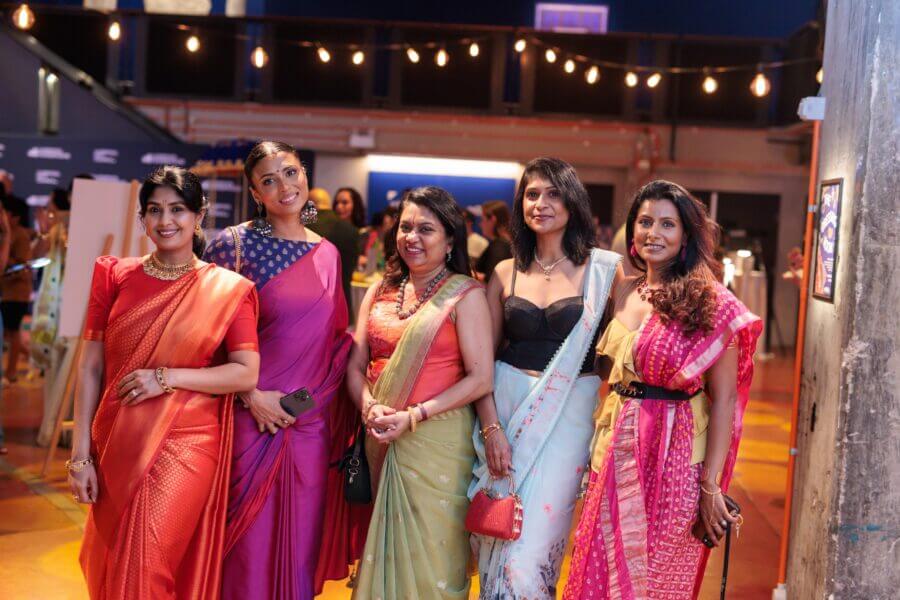
It’s a fascinating dichotomy – what is ordinary in one cultural setting can become an act of identity and self-expression in another.
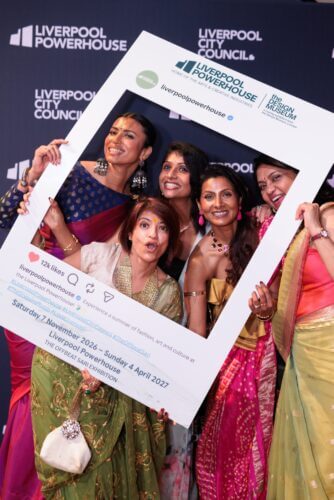
Which raises an interesting question: who is this exhibition really for? For women in India? Or for diaspora women rediscovering a garment they may once have kept at arm’s length? (How wonderful to see younger generations of diaspora women embracing the sari with enthusiasm. They are not necessarily returning to the sari as their mothers wore it. They are finding new ways to make it their own. Even at the exhibition opening, we saw influencers doing what influencers do best, sashaying down imaginary runways between the displays – and why not?)
Or is the exhibition for non-Indian audiences, an invitation to look beyond the exoticism and discover the sari as a living, evolving garment?
Perhaps its greatest achievement is that it speaks to all three, though each may come away seeing something rather different.
Learn more about The Offbeat Sari exhibition here
READ ALSO: In Mum’s Sari: A Mother’s Day Tribute