


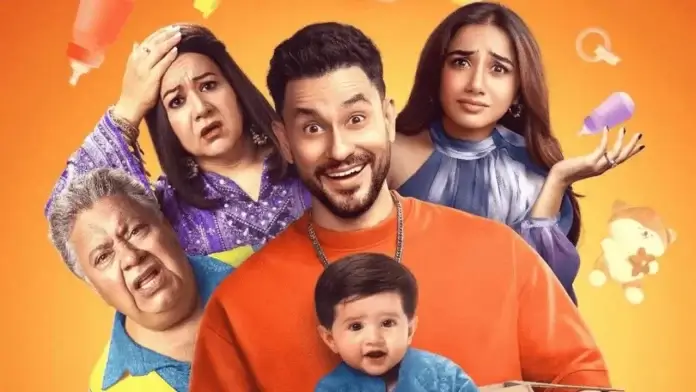

There is something quietly disarming about the Netflix series Single Papa. It does not arrive with the urgency of a social statement, nor does it dress itself up as a grand reinvention of family narratives. Instead, the Netflix series slips into the living room like a familiar relative. A little chaotic, a little uncomfortable, but impossible to ignore.
Led by Kunal Kemmu, Single Papa tells the story of Gaurav “GG” Gehlot, a man who has managed to coast through adulthood with minimal responsibility. Recently divorced and still dependent on his parents, Gaurav is not someone you would instinctively trust with a plant, let alone a child. Yet when a baby unexpectedly enters his life, he makes a decision that surprises everyone around him, including himself. He chooses to become a single father.
What follows is not a dramatic transformation but a slow and often clumsy reckoning with adulthood.
AT A GLANCE:
- Series: Single Papa (Netflix)
- Creator: Ishita Moitra and Neeraj Udhwani
- Cast: Kunal Khemmu, Hami Ali Hamil, Prajakta Koli, Manoj Pahwa, Ayesha Raza Mishra and Neha Dhupia
- Rating: ★★★☆☆
The strength of Single Papa lies in its ordinariness. This is not a story about heroism. It is about learning to show up, even when you are unsure of what you are doing. Gaurav does not wake up one day magically equipped with paternal instincts. He struggles, procrastinates, panics, and fails. And in doing so, the show captures something deeply honest about parenting and about growing up in general.
Kunal Kemmu delivers one of his most grounded performances to date. He resists the temptation to make Gaurav instantly likeable or noble. Instead, he allows the character to remain flawed, confused, and occasionally frustrating. That restraint makes the emotional moments land more authentically. Gaurav’s growth feels earned because it is incremental. It happens in missed sleep, awkward silences, and reluctant sacrifices rather than sweeping declarations. Baby Hami Ali Hamil is an absolute cutie in the entire series.
The series is equally invested in its supporting cast, which reflects the layered dynamics of an Indian household. Manoj Pahwa and Ayesha Raza Mishra play Gaurav’s parents with warmth, precision, and their comic timing is impeccable. They are loving but controlling, progressive in theory but anxious in practice. Their discomfort with Gaurav’s decision does not stem from cruelty but from conditioning. The show allows them space to be wrong without turning them into caricatures.
Prajakta Koli, as Gaurav’s sister, represents the voice of reason in a family that is constantly negotiating its own contradictions. Neha Dhupia’s role as an adoption officer introduces an institutional lens, quietly reminding viewers that good intentions are often filtered through rigid systems and societal expectations.
What makes Single Papa resonate is its understanding of Indian social realities. Single parenthood, especially single fatherhood, is still treated as an anomaly. The show does not pretend otherwise. Gaurav’s choice is questioned repeatedly, sometimes kindly and sometimes not. Can a man raise a child alone. Will the child lack something essential. Is this arrangement sustainable.
Rather than offering tidy answers, the series allows these doubts to linger. It acknowledges that care is not instinctive but learned, and that gendered assumptions around parenting are deeply entrenched. Importantly, it also recognises that families often change not because they want to, but because circumstances leave them no choice.
That said, Single Papa occasionally plays it safe. Certain emotional beats feel underexplored, and some conflicts resolve a little too easily. The exhaustion, isolation, and emotional labour of single parenting could have been examined with greater depth. At times, the series opts for comfort over complexity.
Yet there is something intentional about its gentleness. Single Papa does not aim to provoke or polarise. It aims to normalise. By situating its story within a familiar domestic setting, it makes space for empathy to grow gradually. The series trusts its audience to absorb change through proximity rather than confrontation.
In a streaming ecosystem often driven by extremes, this restraint feels refreshing.
Ultimately, Single Papa is less about parenting and more about accountability. It is about what happens when responsibility arrives before readiness, and how love often grows out of necessity rather than planning. It reminds us that adulthood is not a milestone we cross, but a series of choices we make, sometimes reluctantly and sometimes late.
Created by Ishita Moitra (who also wrote Rocky Aur Rani Kii Prem Kahaani) the show is warm, imperfect, and quietly progressive. Single Papa reflects an India in transition.
Read more: Dhurandhar : Film Review