


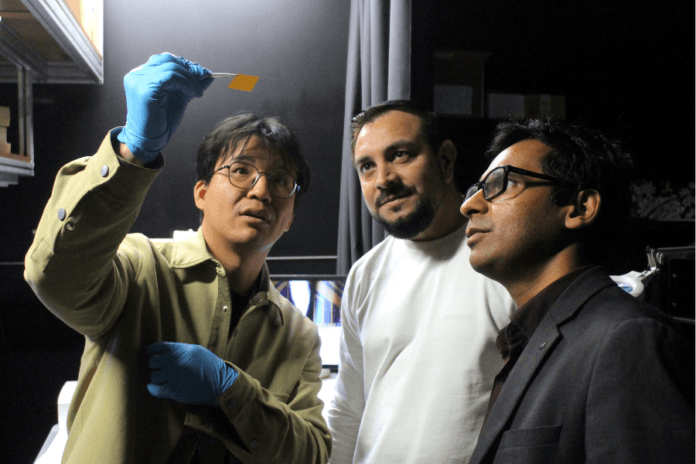
Imagine someone walking into a still room. A conventional camera keeps recording the walls, furniture and other unchanged details. A new vision system developed at RMIT University, however, is designed to focus instead on what has changed: the person moving through the scene.
Led by Professor Sumeet Walia at RMIT’s Centre for Opto-electronic Materials and Sensors (COMAS), the team has built a working prototype that combines light detection, memory and processing within the same system.
“A normal camera keeps recording the unchanged walls in every frame and passes it all on. Our system responds mainly to the change, the person moving, keeps a short-term memory of it, and processes it on the spot,” Walia tells Indian Link.
The technology could eventually help robots and self-driving machines process what they see more efficiently. It could also contribute to the development of bionic eyes – devices designed to help people with severe vision loss regain some ability to see.
Walia explains the difference through a simple comparison. “A normal camera is like a photocopier. It records everything in front of it, frame after frame, and sends all of it somewhere else to be analysed. Our chip does more of the thinking itself.”
The device does not see more than a regular camera, he points out. Its potential advantage is that it can begin processing information where the light is captured, rather than sending large amounts elsewhere for analysis.
“It isn’t ‘seeing more’ than a camera. It understands what it sees much earlier, and it throws away what doesn’t matter.”
A smart prototype
The approach takes inspiration from human vision. Our eyes and brains notice movement and changes while filtering out much of what remains constant. The researchers want electronics to work in a similarly selective way.
In laboratory tests, the prototype has been trained to recognise numbers, shapes and movement. It can detect changes in a scene, store that information and process it locally. It cannot yet identify anything it encounters: if shown something outside the tasks it has been trained for, it will not automatically know what it is.
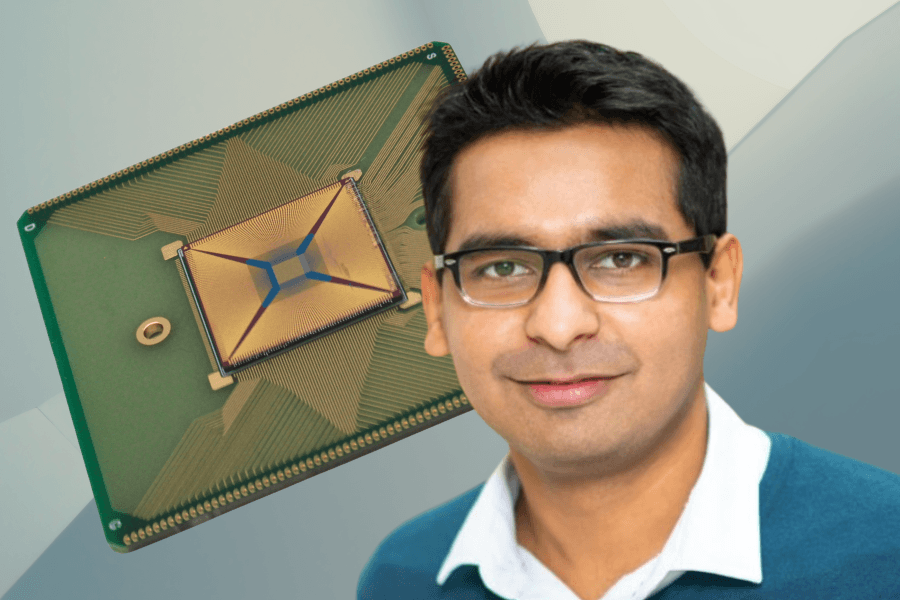
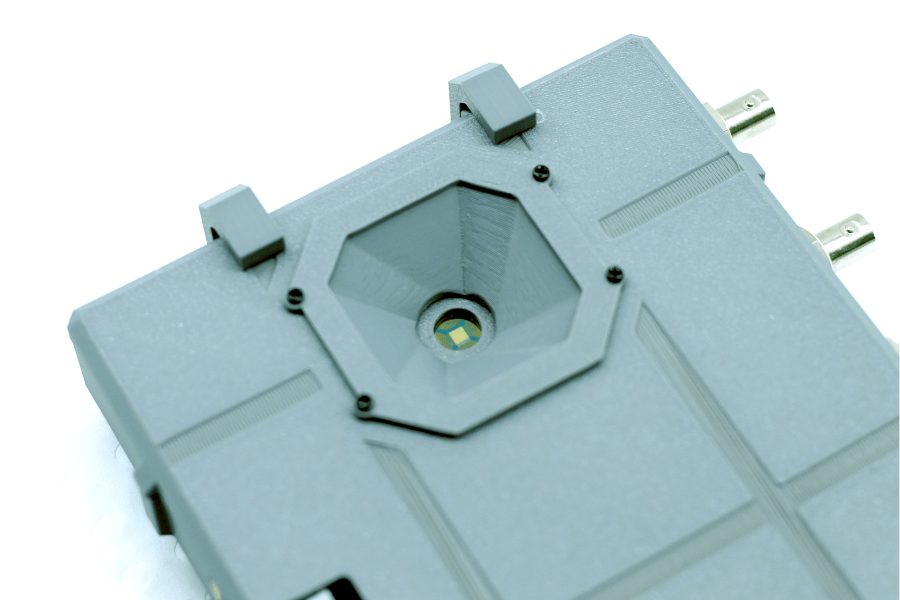
The sensing element sits on a chip measuring 2cm by 2cm. It uses molybdenum disulfide, an extremely thin semiconductor material that responds to light. The chip is housed in a larger prototype containing electronics needed to read and communicate information. The prototype measures 15 by 14 by 3cm, including its supporting electronics.
The team has also developed a water-based process to transfer the ultra-thin semiconductor and electrodes. RMIT says it produces devices with fewer defects and better electrical and light-sensing performance. The university has filed an international patent application for the invention.
One possible long-term use is a smarter bionic eye. But Walia stresses that capturing an image is only one part of restoring sight. A device must also convert visual information into signals the brain can interpret, and do so safely inside or near the body.
“Current bionic vision devices give people limited, low-resolution perception, such as light, shapes and movement, rather than natural sight,” he explains. Restoring natural-looking vision, he adds, remains “many years and many breakthroughs away”.
Vision for the future
The RMIT technology addresses the processing side of that challenge; it cannot restore sight on its own. It would need to work reliably on real-world scenes and integrate with systems that deliver signals to the visual system. Any medical use would also require clinical testing and regulatory approval.
Walia expects earlier applications outside medicine, where safety and approval requirements are less demanding. Robots, drones and industrial systems need to react quickly while operating within limits on size, weight and power. A vision system that processes information close to where it is collected could be useful in those settings.
The work may also offer one approach to AI’s growing energy demand. If less visual data needs to be transferred, stored and analysed elsewhere, future devices could use less power. That benefit will need to be demonstrated as the technology develops and is compared with existing systems.
The next major challenge is scaling up, Sumeet Walia says. The team must move from a small laboratory chip to larger, consistent arrays that can be manufactured reliably and connected to conventional electronics.
“Our new water-based fabrication process, which produces cleaner devices with fewer defects, is an important step in that direction.”
Over the next five to 10 years, he hopes to see the technology incorporated into real devices, including robots and smart sensors, and eventually medical technologies.
For now, the prototype demonstrates a different way to process visual information, taking its cue from the eye and brain but still facing a considerable journey from laboratory research to everyday use. vision chip bionic eye