



Rahul Patel
When a patient is lying on a hospital table undergoing a heart procedure, there is little room for interruptions and delays.
In the middle of that, a cardiologist may decide they need to check whether a narrowed artery is actually restricting blood flow enough to warrant treatment.
That decision can trigger an unexpected extra task: clinicians have to prepare a medication called intracoronary adenosine before the procedure can continue.
Adenosine temporarily increases blood flow through the heart’s coronary arteries.
Until now, the drug had to be diluted and prepared during the procedure itself because doctors did not know how long the prepared version would remain usable.
New research led by Indian-origin Dr Rahul Patel, a pharmaceutical researcher at the University of Tasmania, could change that!
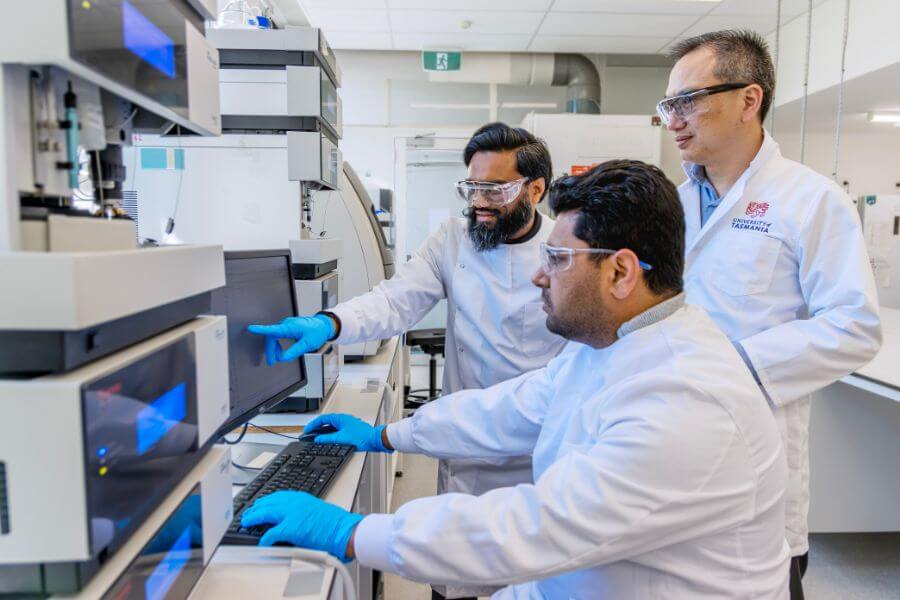
His team, working with clinicians and pharmacists at Royal Hobart Hospital, has found that the adenosine they prepared remains stable for up to seven weeks under the conditions tested.
The seemingly simple finding could allow hospitals to prepare ready-to-use syringes in advance, reducing preparation time, medication wastage and workload for healthcare professionals.
A practical problem Dr Patel says the original question came from a practical problem faced by hospital staff.
“The challenge is that the decision to perform an FFR measurement is made in real time during cardiac catheterisation,” he tells Indian Link.
FFR, or fractional flow reserve, is a way for cardiologists to determine whether a narrowed coronary artery is restricting blood flow enough to warrant treatment such as a stent or bypass surgery.
Adenosine is central to that measurement.
The medication is administered directly into the coronary artery to briefly produce maximum blood flow. Doctors can then measure how blood moves through the narrowed section and make a more informed decision about whether intervention is necessary.

The commercially available adenosine, however, comes in a much higher concentration than the amount required for this particular procedure.
It therefore has to be diluted to the correct concentration before it can be used.
Until Dr Patel and his colleagues investigated the question, there was no reliable evidence showing how long that diluted medication remained stable.
“As a result, when the cardiologist decides that FFR is required, the adenosine must be prepared on site,” Patel informs.
“That means the clinical team effectively has to stop and prepare the medicine while the procedure is underway.”
His team’s question was straightforward: what if that preparation could happen before the patient was on the table?
“Our question was quite simple: if we could establish that the prepared adenosine remained stable for a sufficiently long period, could we move from ‘prepare when needed’ to ‘readily available when needed’?”
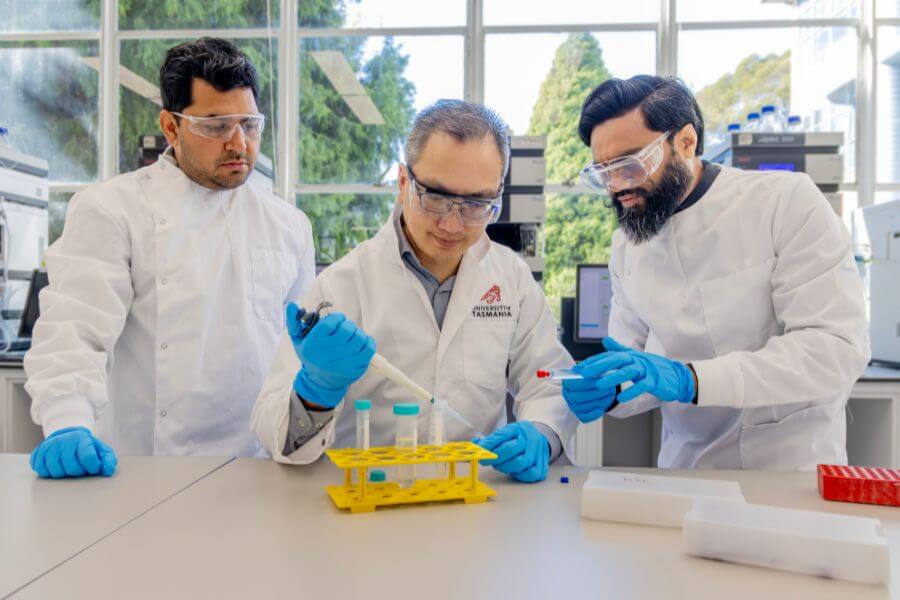
The researchers prepared adenosine at the concentration used clinically and stored it in syringes under three different temperatures – 4°C, 25°C and 35°C.
After 49 days, the medication retained more than 97 per cent of its original concentration under all the conditions tested.
The researchers also found no concerning changes in colour, pH or visible particles.
In simple terms, the medication remained essentially unchanged for seven weeks.
The road ahead
That timeframe is crucial. Seven weeks makes it possible to prepare batches in advance and have them available when required.
“Seven weeks creates the possibility of a completely different supply model,” Dr Patel adds.
The potential benefit is not simply a few minutes saved.
Every time a medication is manually measured and diluted, there are opportunities for variations in preparation, including getting the volume or concentration wrong or compromising sterile handling.
Reducing unnecessary preparation steps reduces the opportunities for error.
There is also a more visible problem: waste.
The commercially available adenosine comes in a 6 mg/2 mL vial. When a smaller dose is required, the vial is opened and the unused medication is discarded. The sterile diluent and single-use materials used during preparation also contribute to waste.
Preparing the medication in batches could make more efficient use of both the drug and the materials needed to prepare it.

“At the Royal Hobart Hospital alone, around 260 FFR assessments are performed each year, while a higher volume centre such as Nepean Hospital performs around 400,” he shares. “The impact becomes particularly important when we look at this nationally. Australia performs approximately 46,000 PCI procedures and 143,000 coronary angiography procedures each year, and many thousands of FFR assessments are performed across Australian hospitals.”
Dr Patel says their findings have been incorporated into the Australian Injectable Drugs Handbook, a clinical reference used by healthcare professionals to guide the preparation and use of injectable medicines.
Royal Hobart Hospital also intends to establish an arrangement with compounding pharmaceutical providers to source pre-prepared adenosine syringes with a seven-week expiry.
For Dr Patel, that is the real goal of the research: not simply proving that a medication can remain stable, but making a practical change that hospitals can actually use.
“Now that our findings have been published in the European Journal of Hospital Pharmacy, it is likely that other hospitals across Australia and around the world will follow the same approach, with the potential for similar adoption internationally.”
Read Also: Dr Nirmal Robinson: Looking to space for cancer clues