


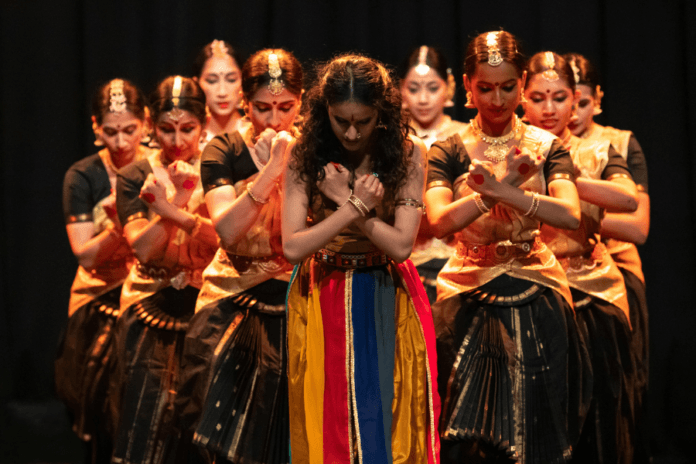

Paalam Idhuvum Kadandhu Pogum
The first rains arrived on stage to the strains of Barso Re Megha Megha.
Sung by the Australian Girls Choir with impressive Hindi diction, the familiar melody opened Idhuvum Kadandhu Pogum (This Too Shall Pass), presented by Samskriti School of Dance and the Taste of India Musical Ensemble at The Concourse, Chatswood, in late September.
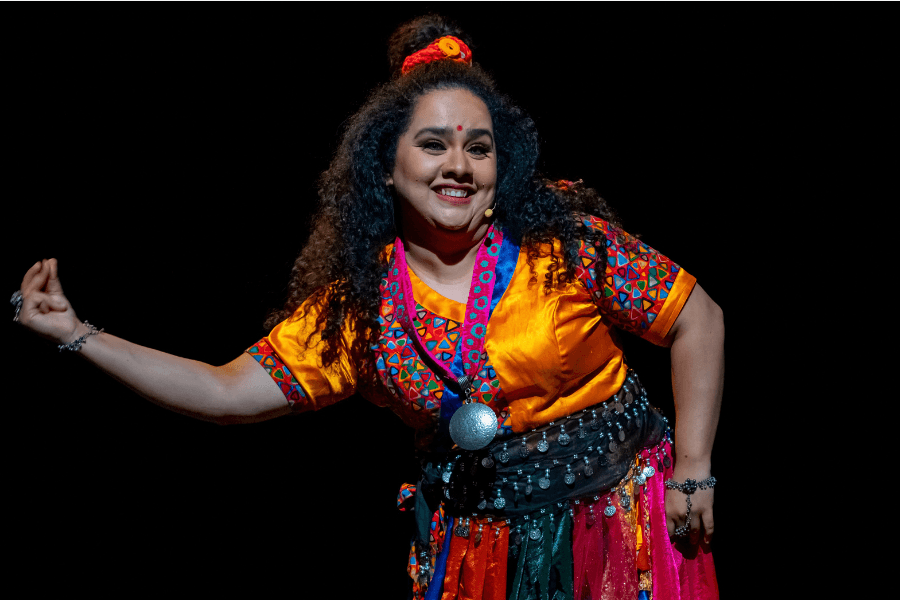
As the choir stepped away, kattiyakari – the traditional storyteller, here part narrator, part playful jester – appeared. Performed by Mrithula Chetlur, she invited the audience into a journey through the seasons, setting in motion an evening of Bharatanatyam, live music, theatre and storytelling.
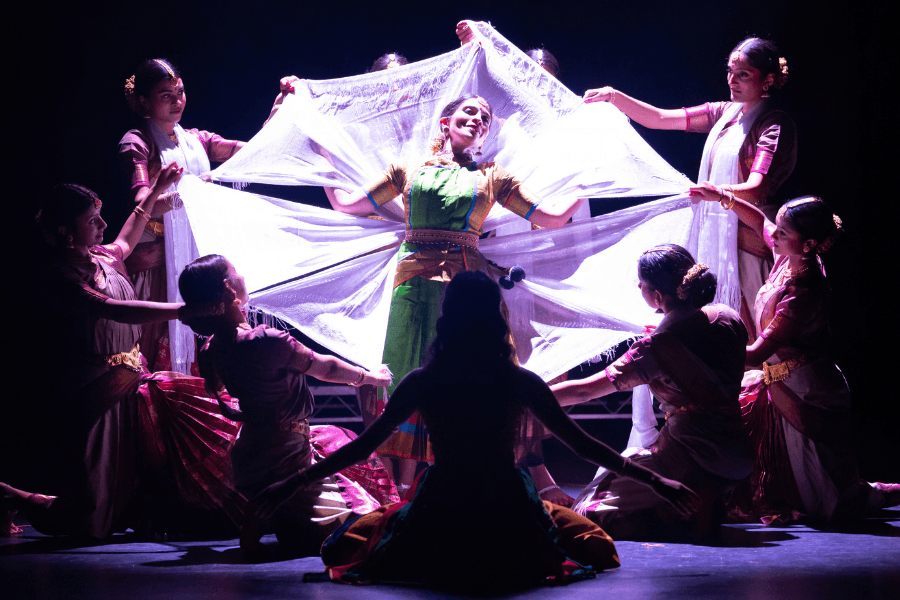
Choreographed by Hamsa Venkat and Vishakha Iyer, the production brought 25 seasoned Samskriti dancers to the stage, interpreting the changing seasons through precise footwork, expressive movement and shifting formations.
At the centre was Prakriti (Nature), the spirit of the seasons, danced by Vishakha Iyer. Her ethereal, fluid movements, weaving in and out of the ensemble, became a connecting thread as one season gave way to another.
Alongside this unfolded the journey of Maya, played by Vidya Gokul, who travels from alienation towards belonging with the guidance of Prakriti.
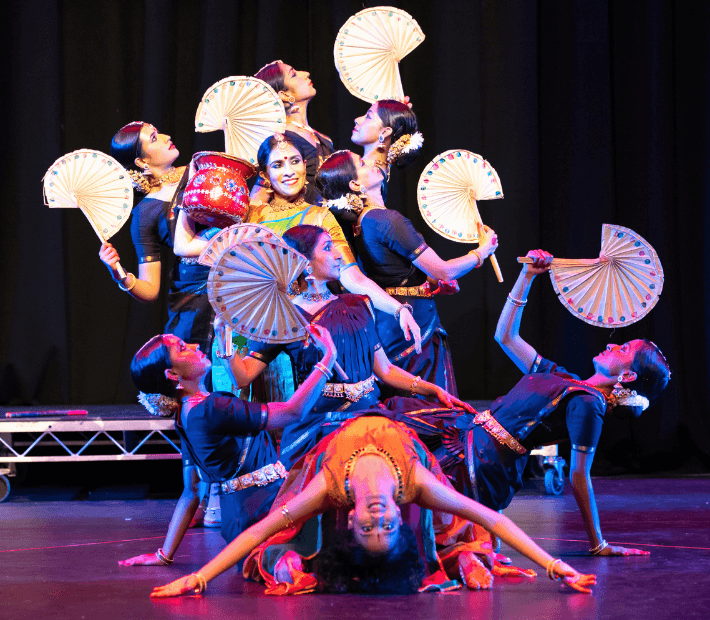
Throughout, the Taste of India Musical Ensemble provided the musical pulse of the production, its live vocals, rhythm and melody adding immediacy and energy to the dancing. The choreography responded closely to the music, while colourful costumes and distinctive props gave each season its own character.
The seasons of life
Idhuvum Kadandhu Pogum translates as “This too shall pass”, and the production built its narrative around that simple but enduring idea: life moves in cycles and nothing remains unchanged.
The six seasons provided both structure and metaphor.
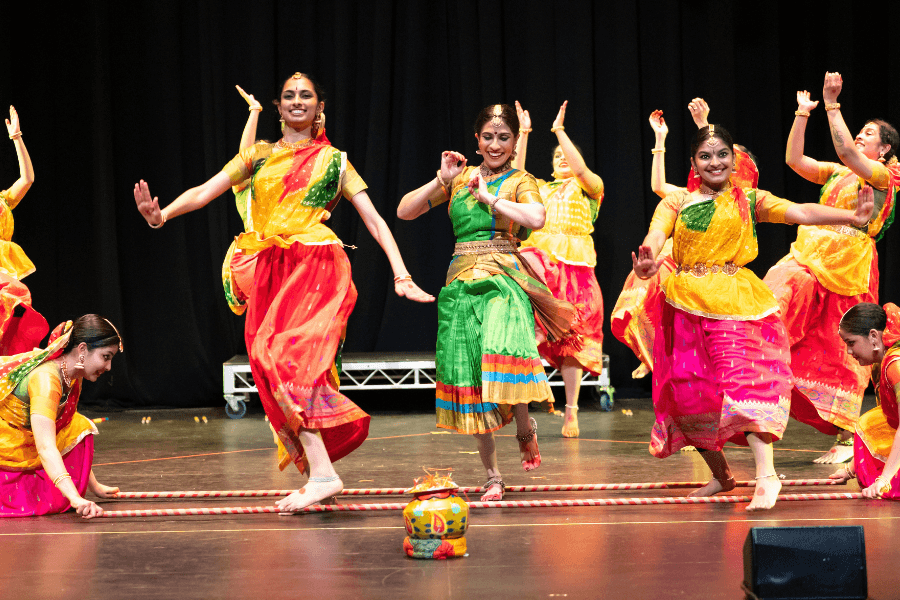
In Tamizh tradition, seasons represent far more than changes in climate. They influence the rhythms of everyday life – the rains bring renewal, cooler weather invites pause and gratitude, harvest celebrates abundance, and the summer heat tests endurance while carrying the hope of rains to come.
Here, those natural cycles became a way of examining human ones.
Between the dance segments, the kattiyakari returned to connect the seasons with music, memory, relationships, responsibility and the lighter absurdities of everyday life. Her interventions brought humour to a production that might otherwise have become overly philosophical.
Running beneath it all was the idea that our emotional seasons, like nature’s, are temporary.
That thought has particular resonance in a world of constant connectivity, social media comparison and the relentless acceleration of technology. We are continually encouraged to chase what someone else has, does or appears to be. Idhuvum Kadanthu Pogum instead made a case for pausing: acknowledging what we carry within, accepting both joy and difficulty as transient, and perhaps simply walking beside one another while they pass.
The production communicated this without losing its sense of spectacle. The dancers brought energy, grace and fluidity to the stage, with the synchronisation and pacing revealing the considerable rehearsal demanded by a work involving so many performers, live musicians, changing formations and theatrical elements.
Building a Paalam
That idea of walking alongside one another extended beyond the production itself.
Idhuvum Kadandhu Pogum is part of Paalam – meaning “bridge” – a collaborative initiative designed to bring cultures together through music, dance and storytelling.
The project has grown under the auspices of the Taste of India Ensemble, founded by Sivaganga OAM in 1999 and known for productions bringing Indian musical traditions into conversation with other forms.
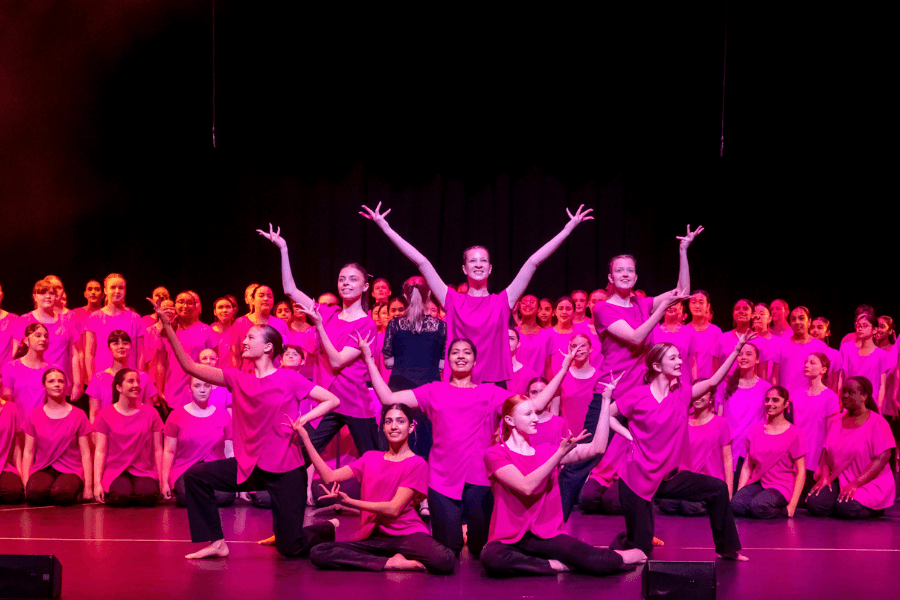
For Paalam, that conversation has included the Australian Girls Choir, founded by Judith Curphey OAM and today one of Australia’s major performing arts organisations, with more than 6,500 members across the country.
The collaboration provided some of the evening’s most memorable moments.
If the choir’s Hindi Barso Re Megha Megha opened the door, its return for the finale completed the circle. This time, the young singers performed the production’s theme song in Tamil – confidently, without prompts and in a language unfamiliar to most of them.
It was more than an impressive linguistic feat. It encapsulated what Paalam was attempting to do.
In the final moments, dancers, musicians, singers, storytellers and other contributors gathered on stage. The bridge was no longer simply an idea or the name of an initiative; it was there physically, in the coming together of artistic traditions and people.
Perhaps that was the evening’s most effective expression of Idhuvum Kadandhu Pogum. Seasons change, performances end and audiences go home. But each encounter leaves something behind.
Sydney was the latest stop on this particular journey. Before arriving at The Concourse, Idhuvum Kadandhu Pogum had travelled through Perth, Melbourne and Brisbane – carrying its music, movement and message across cities, and building its paalam along the way.
READ ALSO: Sharanga’s Velavane: From longing to divine union