


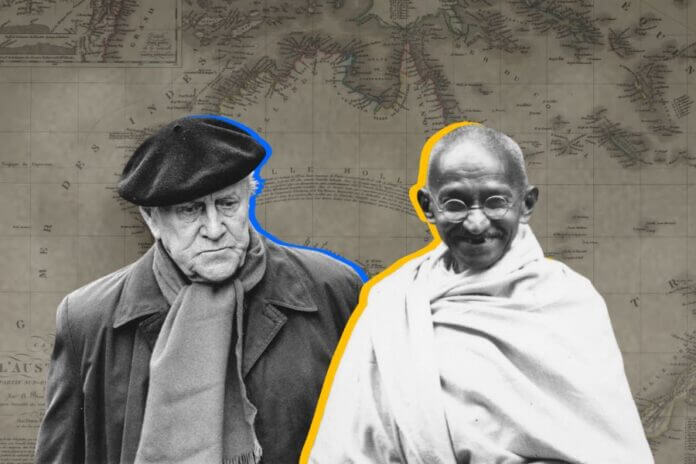

Patrick White, Gandhi and Australia
On 9 June 1958, I arrived in Sydney, a teenager from Nadi on my way to study at Delhi University.
I had been awarded one of three scholarships to India and was the first in my family to step outside the island of Viti Levu.
My four grandparents had made a very different journey. Transported from India to Fiji as indentured labourers, they served their Girmit for a decade. My parents were born in Fiji, as were my six siblings.
And now, one generation later, I was on my way to Mother India.
From Sydney I boarded the P&O liner Strathnaver, bound for Bombay. I consoled myself that my grandparents had endured far longer voyages from Calcutta to Fiji, many encountering the sea and a ship for the first time.
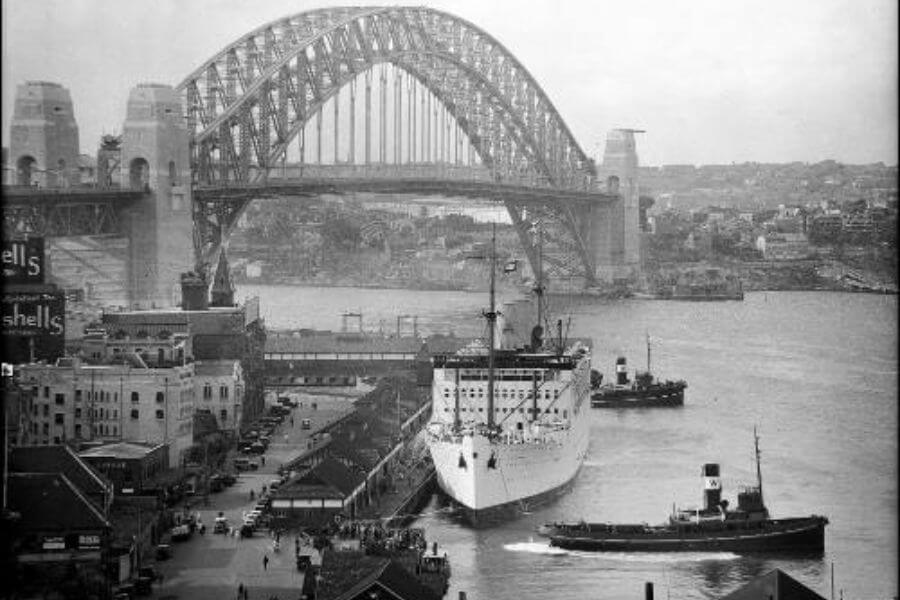
I arrived in Delhi in the heat of July 1958, barely a decade after Indian independence and the assassination of Mahatma Gandhi.
But something else happened that year that has stayed with me.
A race possessed of understanding
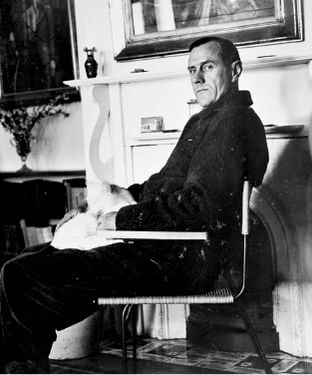
In April 1958, just weeks before I passed through Sydney, Patrick White published his remarkable essay The Prodigal Son.
One phrase remains in my mind. White imagined the possibility of Australians becoming “a race possessed of understanding”.
Nearly seven decades later, those words still speak to contemporary Australia.
White had published his first novel, Happy Valley, in 1939, with an epigraph drawn from Gandhi’s writings on suffering. In later years he would again invoke Gandhi, particularly in his opposition to nuclear weapons and advocacy for a more humane society.
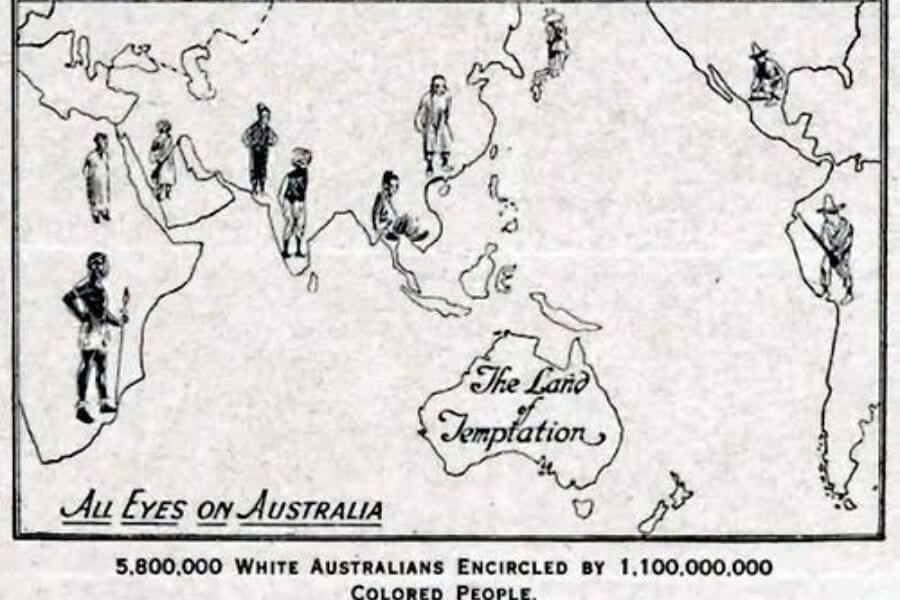
Looking back, there is something striking about the coincidence of 1958: Patrick White was imagining what Australia might become while a young Indo-Fijian grandson of indentured Indian labourers was passing through a country still shaped by the White Australia policy.
I did not understand the significance then.
Today, I cannot miss it.
Gandhi, the outsider
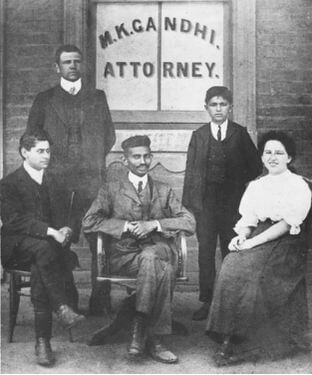
On 2 October this year, we mark Mahatma Gandhi’s 157th birth anniversary.
Gandhi himself knew what it meant to be an outsider.
On 7 June 1893, the 23-year-old London-trained lawyer was famously removed from a first-class railway carriage at Pietermaritzburg in South Africa despite holding a valid ticket.
That experience of racial discrimination became one of the defining episodes of his life.
Gandhi spent some 21 formative years in South Africa. It was there that he developed satyagraha – resistance grounded in truth and non-violence – a transformative weapon which he would later carry into India’s freedom struggle.
While deeply religious, he lived and worked among Hindus, Muslims, Christians, Jews, Parsis and Jains. His political consciousness developed among migrants, merchants and indentured labourers occupying very different places in the racial and economic hierarchies of their time.
It was there that the political became personal.
Gandhi discovered that human dignity could not depend upon race, caste, religion or social position.
The experience of exclusion enlarged rather than narrowed his idea of belonging.
Gandhi, the great outsider, grew into the deepest insider of the human soul.
Australia’s journey
Australia, too, has travelled an extraordinary distance.
When I passed through Sydney in 1958, immigration policy still privileged a White Australia.
The country I encountered then could scarcely have imagined the Australia of today.
India-born people are now one of Australia’s largest migrant communities – contributing across medicine, education, business, technology, sport, the arts, public service and political life.
Families who once might have found Australia’s doors difficult to enter are helping shape what Australia is becoming.
Yet demographic change alone does not create understanding.
That remains the more difficult journey.
This is where Gandhi and Patrick White continue to speak to each other across time.
Both, in very different ways, asked us to look beyond the boundaries we construct around ourselves.
For Gandhi, the lesson emerged through racial humiliation and resistance. For White, it came through his dissatisfaction with an Australia he believed could become culturally and imaginatively richer.
Both understood that a nation is more than territory. Its deeper character lies in how it sees those who appear different – the migrant, the outsider, the stranger.
An unfinished journey
Today, communities are again being divided by race, religion and nationalism. Migrants can easily become symbols of wider anxieties. Technology connects us instantly, yet understanding does not necessarily follow.
This is why Gandhi’s example, for all his complexities and human flaws, remains worth revisiting.
His Hind Swaraj, written in 1909 during a sea voyage, asked not merely how India might become independent, but what freedom itself should mean.
Freedom without humanity could simply replace one form of domination with another.
Nearly 70 years after my first journey through Sydney, I find myself returning to Patrick White’s words – imagining Australians as “a race possessed of understanding”.
His aspiration remains sadly unfinished.
Perhaps that is why Gandhi still matters. His life reminds us that understanding does not begin when others become more like us.
It begins when we recognise our shared humanity in those who are not.
A race possessed of understanding?
We are still becoming one.
Read Also: What Gandhi thought of Australia
Gandhi and Australia