


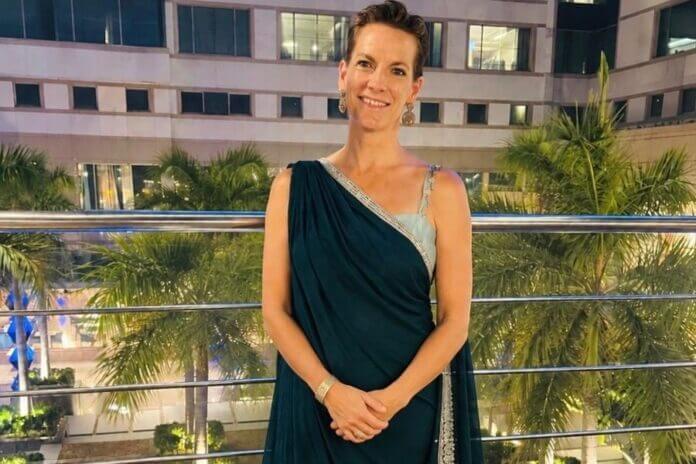

Sandy Grant
Before Sandy Grant Frankish ever set foot in India, she had already lived a little bit of a life that would later feel strangely familiar.
She grew up in the mountains of central Queensland in a remote home without electricity or a telephone. Her family grew fruit and vegetables, milked cows and kept dogs, poultry, pigs and goats. They cooked on a wood stove, heated water over a wood fire and worked together as a way of life.
She did not wear shoes.
Her mother taught her at home until she was 12, after which she moved to a boarding school in the city because of the distance from home.
Decades later, when Sandy finally arrived in India for the first time in January 2026, some of the things she had grown up considering ordinary suddenly felt familiar again.
“Sitting with family and friends around the table as the pot of chai boils away is one of my favourite things,” she tells Indian Link. “The connection, the conversation, the flavours, the smells. A simple way of life but so blessed because the things that matter the most are still valued to the highest. Family!”
View this post on Instagram
A FAMILIAR FEELING
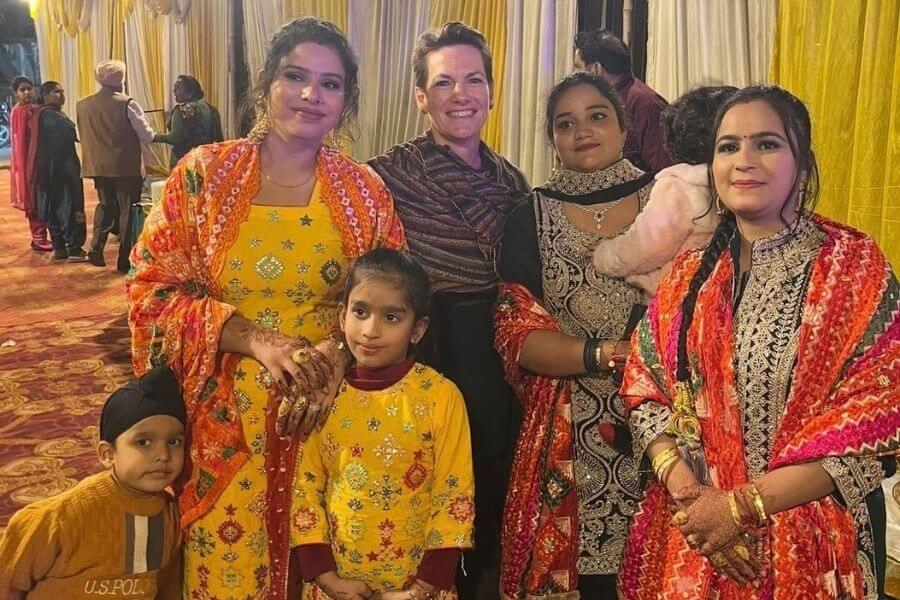
Sandy’s first visit came only this year, but her connection to India began much earlier through friendships with Indian people and families living in Australia and elsewhere around the world. Through them, she came to know Indian food, festivals, family traditions, faith, hospitality and the importance placed on community.
By the time she finally travelled to India, she felt she already knew parts of the country.
“Before my first visit in January 2026, India felt strangely familiar,” she shares. “So yes, I felt I knew India before I arrived. But once I visited, I soon realised I had only met the introduction.”
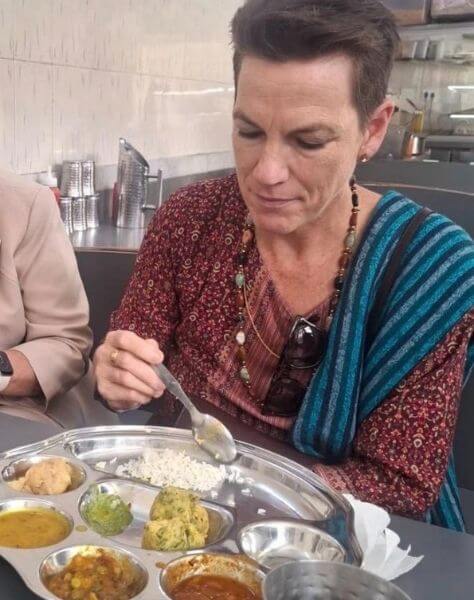
What she had known before, she says, was India intellectually. In January, she encountered it through the senses — its sounds, smells, colours, food and people.
“India is a place you don’t see with your eyes… you feel with your heart,” she says, almost poetically.
That first journey was also prompted by work. Sandy has spent more than two decades in health, wellness and nutrition, and is currently building Partner.Co, a global health and wellness business, as it expands its presence in India.
But the business quickly became only one part of the experience.
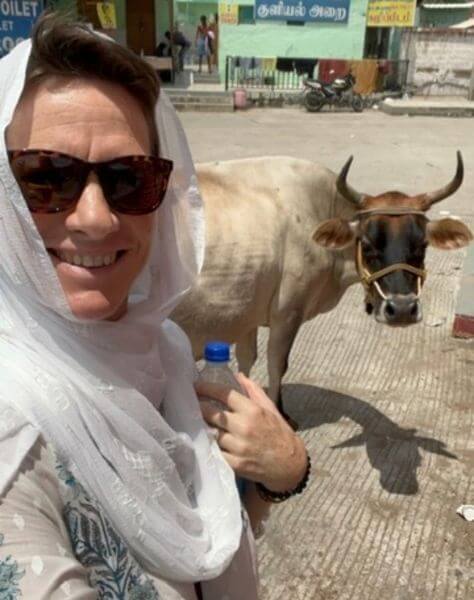
There was the temple in the mountains, where she sat barefoot in the sunshine, surrounded by goats and fresh air. There were meals shared with local families, busy streets filled with music and aromas, and encounters with people who went out of their way to help a visitor.
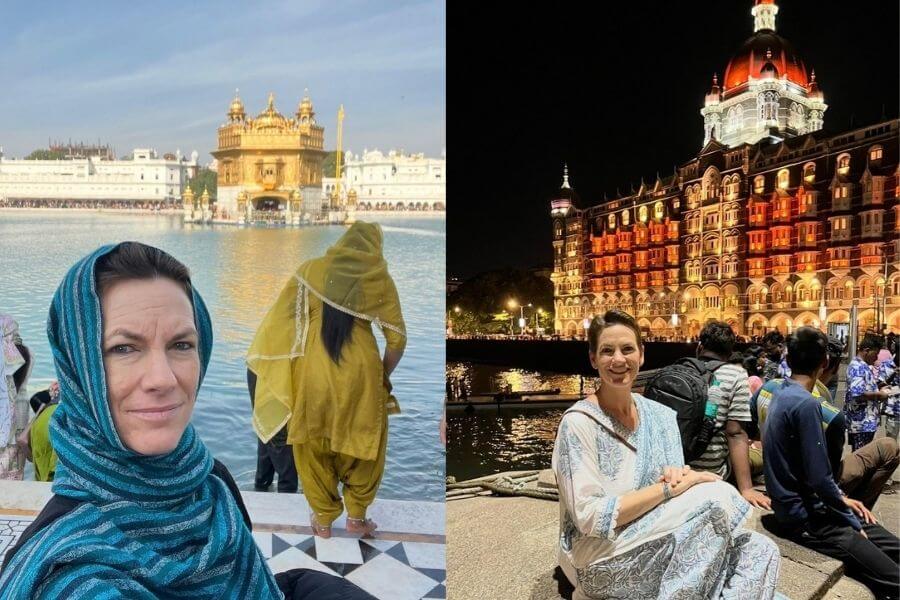
One hotel manager, she recalls, physically walked Sandy and her friend to the nearest ATM late at night so they could withdraw Indian currency to pay their driver before a 4am airport transfer.
“There wasn’t just one moment — it happened over and over again throughout that first trip,” she says.
She says that generosity crossed social and economic boundaries — from a man with little to give who offered her water to people she met in affluent settings.
“The hospitality and generosity are the same,” says Sandy, reflecting the Indian ethos of ‘Atithi Devo Bhava’ — treating guests with the respect accorded to God.
View this post on Instagram
BREAKING STEREOTYPES
It was the people, more than anything else, that brought her back. Sandy has now visited India four times in 2026 alone, travelling across different cities and regions.
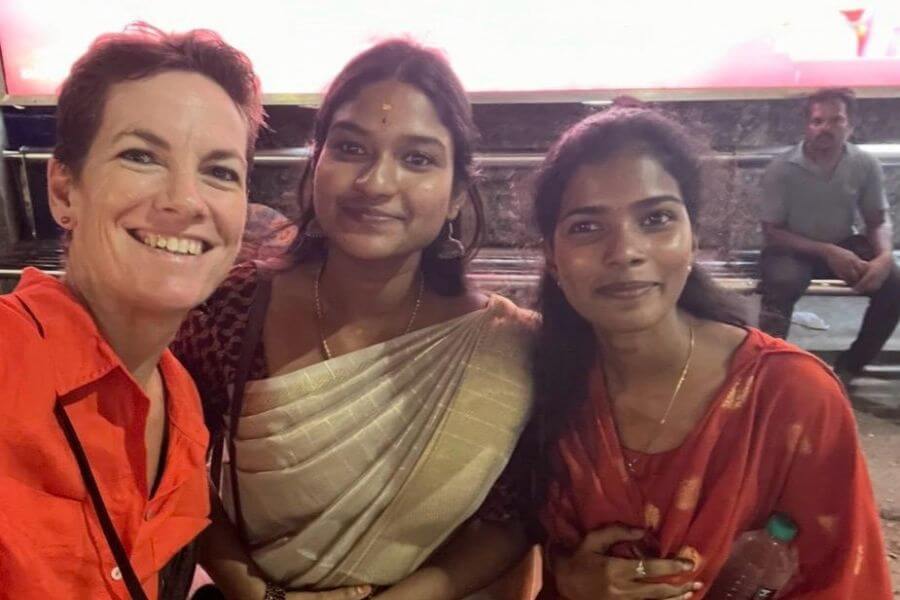
Her travels have also challenged some of the assumptions she carried with her.
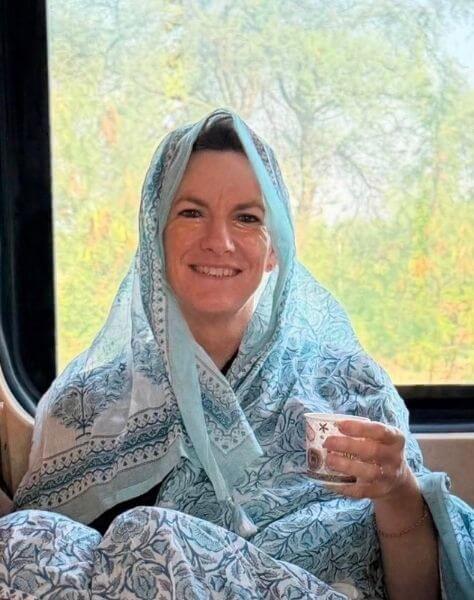
She was struck by the scale of India’s modernity — its luxury hotels, malls, restaurants, jewellery and businesses — and by the entrepreneurs, professionals and young people she encountered. At the same time, she saw traditions and family structures that remained deeply rooted.
“I was amazed by how beautifully the old and the new coexist.”
For Sandy, even the country’s slower, less digitised moments have been part of its appeal. Cash transactions and handwritten hotel registration books, things that might seem outdated elsewhere, have made her think about what can be lost in the pursuit of convenience.
That appreciation is perhaps tied to her own childhood.
In Australia, the rural simplicity of her upbringing belonged to another time. In India, she found elements of it still woven into everyday life — family gathered around food, traditional cooking, shared responsibilities and an emphasis on relationships.
View this post on Instagram
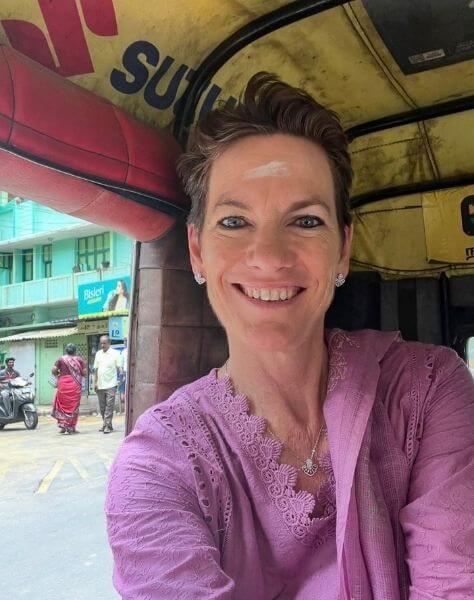
Sandy has been making reels on India, pushing back against the stereotypes she believes many people outside the country still carry. The response from Indian viewers, she says, has been overwhelmingly positive, with people thanking her for showing an India they feel is not always represented internationally.
She knows that her view is that of a visitor, but believes travel can challenge assumptions in ways that photographs and videos cannot.
“If my content encourages even one person to look beyond stereotypes and become curious about the real India, then it’s worth sharing.”
Read Also: Travel Diary of a Clueless Gori: Part 1 – Delhi
Sandy Grant