


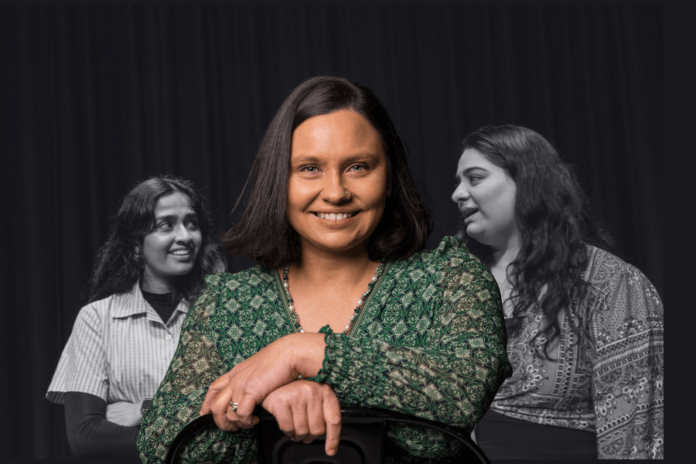
Laila is missing
With her new play Laila is Missing, Bina Bhattacharya is asking a deceptively simple question: does the art we make in Australia reflect who Australians actually are?
A hundred years ago, the average Australian was a 24-year-old man. In 2026, she is a 38-year-old woman living in a major city, with at least one parent born overseas.
Australia has changed dramatically. But have our films, plays and music—particularly the work that finds mainstream audiences and public support—changed with it?
Bhattacharya doesn’t think so. And she’s doing her bit to shift the dial, creating work that reflects the multicultural, multiethnic Australia we live in today.
Laila is Missing is her latest contribution to that endeavour.
The play was commissioned by the NSW Department of Education, as part of their efforts to support theatre for multicultural classrooms. As Bhattacharya herself recounts, the Australian drama curriculum can be limited in its embrace of non-European work.
“There was no option to study drama from the non-European world,” she tells Indian Link. “There was Australian theatre, and you could do Russian, Brecht, and Meyerhold. But I don’t remember ever being taught, ‘Let’s study Nautanki, let’s study Indian folk theatre’…Most school plays assume an Anglo identity as the invisible default.”
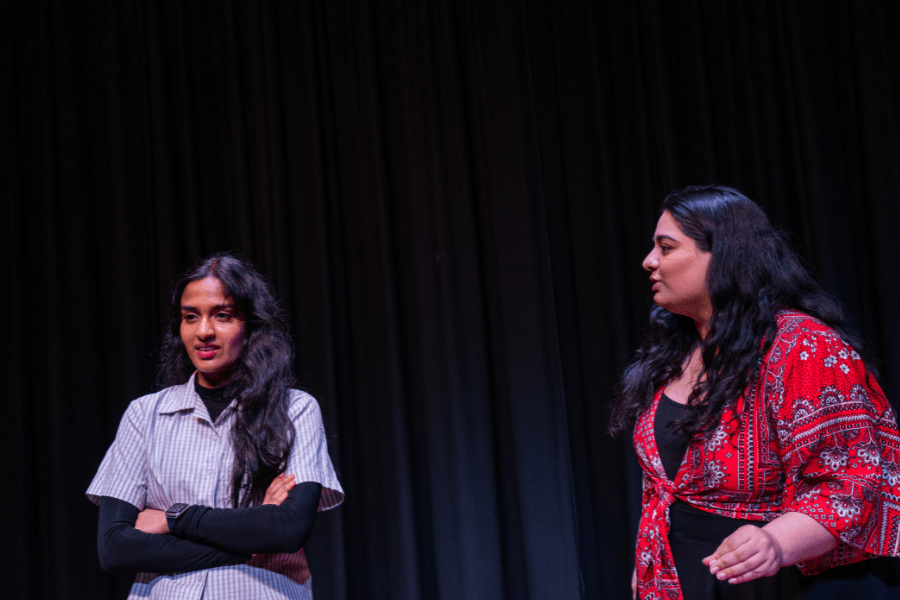
Written in the style of a ‘modern melodrama,’ Laila is Missing is set in the cutthroat world of an all-girls high school (modelled on Bhattacharya’s own experiences in a similar environment), one whose quotidian rhythms of teenage backstabbings and grade anxieties are punctured when a classmate, Laila, goes missing. From there, the girls attempt to piece together the circumstances of Laila’s disappearance, and find out a lot more than they bargained for about Laila, and their own community, as the mystery unravels.
While writing the play, Bhattacharya was cognisant of the need for versatility. It was important to write a play that could be staged in all kinds of schools, by all kinds of students.
“I wanted a play that my old school, Strathfield Girls High, could do, but also Bankstown Girls or Cabramatta High,” she reveals. “The play works as a complete 22-to-30-minute piece, but it was designed with standalone monologues, duologues, and ensemble scenes so any class size—from 8 students at an all-girls school to 28 at a co-ed school—could perform it.”
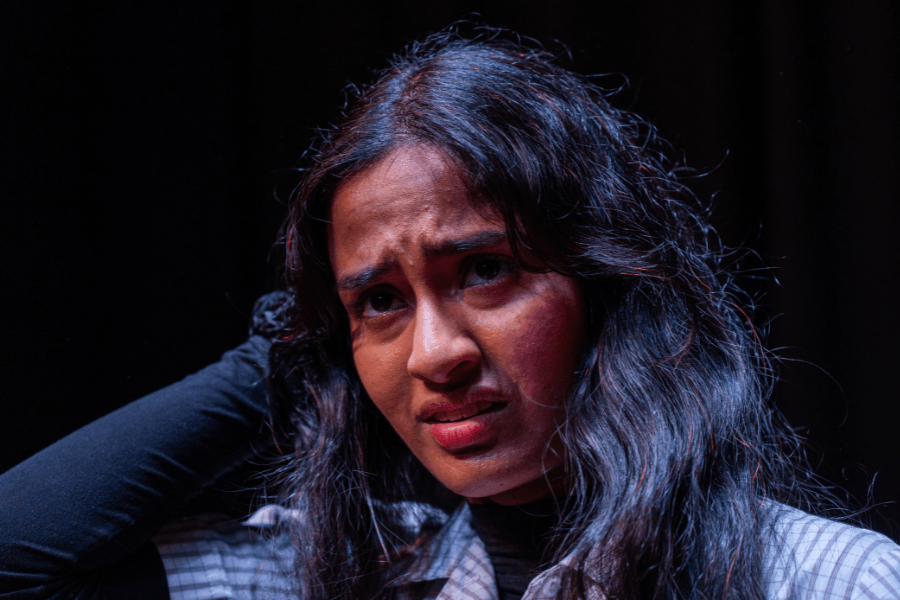
The play also pushes back on some of the most common themes in Australian theatre. By setting her play in the world of an all-girls high school, Bhattacharya hoped to provide students with a work that reflected their lived experience. Thus, the play is a rejection of some of the more commonly explored settings and themes of Australian theatre, which often idealises the rural or ‘bush’ setting. As Bhattacharya argues, “There’s an absolute reluctance to look at what our country actually is: a multicultural country where most people live in big cities with entire suburbs of non-white people who are highly educated and ambitious at school. That was completely missing from the curriculum.”
It also aims to expand the scope of what is considered ‘good’ Australian theatre. Bhattacharya speaks eloquently as to the influence of the Western canon on the taste of Australian audiences, and how it restricts their ability to appreciate art that exists outside these strictures. “For example, Indians use a lot of music and dance in our storytelling, but that’s seen as a less legitimate form of theatre. The more Anglo your work is in sensibility—things like naturalism, specific humour, and subject matter—the more people will understand it.”
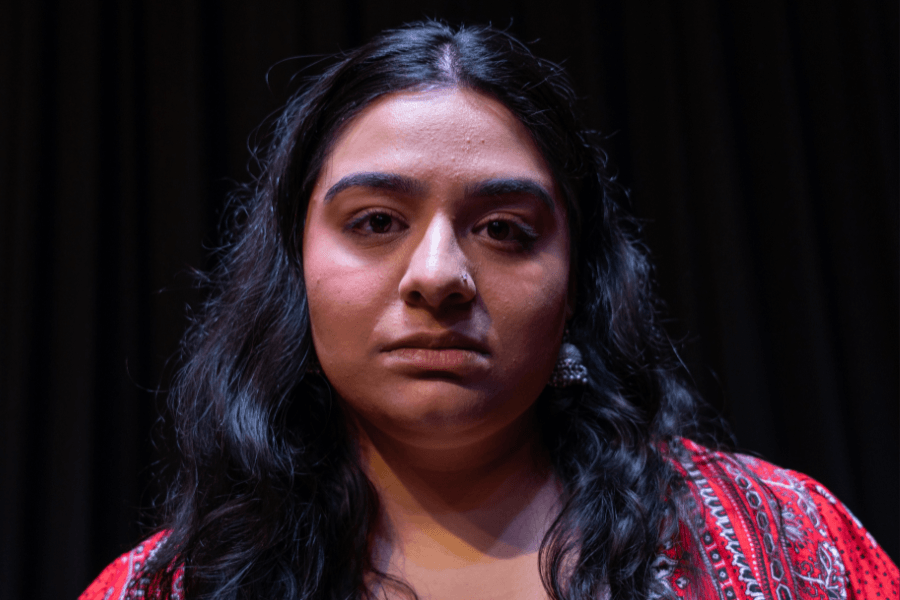
This is not Bhattacharya’s first work to explore the Indian diaspora. She is an established producer, playwright and filmmaker, whose films have been selected for the Sydney Film Festival, the Queer Screen Mardi Gras Film Festival, and acquired by SBS. Telling stories, through film and theatre, has always been in her bloodstream. “I’ve just always wanted to be a storyteller and a filmmaker,” she smiles. “There’s a video of me on my seventh birthday—it’s on my Instagram—where I’m just bossing my friends around and telling them where to stand. So I think I just came out of the womb with an interest in telling stories and telling people what to do.”
However, it was not always an easy path. Discouraged by her experiences studying theatre in high school, she became a public servant for 10 years. It was only after a long period of creative unfulfillment that she wrote her first film. As she herself describes, “I’ve had a pretty amazing career, but it’s very sideways, and my journey says a lot about how backward the industry is, particularly for South Asians.”
Now her work aims to represent her own community, the Indian-Australian diaspora, as well the broadway swathe of migrants in this country in a way that is true-to-life. Bhattacharya is creating theatre, film and storytelling that is for all those that feel as if they have not seen themselves depicted thoughtfully on screen or stage: “You’ll go crazy trying to write a work for everybody. I just wrote this work for Little Bina and the girls I went to school with.”
Read more: ‘I was prepared to shoot this on an iPhone’: Bina Bhattacharya on ‘From All Sides’