
Home Blog Page 5

Bought a new EV? Here’s a quick guide to driving and charging

0
(Source: Canva)
Reading Time: 4 minutes


Electric vehicle purchases in Australia have surged amid the ongoing war in Iran, as drivers worry about rising fuel costs.

The big drawcard: much cheaper running costs. As of 22 April, A$1 of electricity takes an EV 45 kilometres, while $1 of diesel gets you 5.4 km.

Driving an EV is fairly similar to a combustion engine car. The biggest difference is charging instead of refuelling.

In our research, we interviewed renters and people who live in apartments to understand how they made the switch – and what practical advice they would give others.

Driving experience

EVs generally offer a smoother ride with punchier acceleration compared to combustion engine cars.

One thing to watch for is speed. Because EVs have much more torque, they can accelerate much faster – and do so quietly. It can be easy to speed without meaning to. Using cruise control on freeways is a good idea.

Almost all EVs have regenerative braking, meaning the brakes recharge the battery.

Many EVs allow drivers to use just one pedal to accelerate and brake. To brake gently, you can take your foot off the accelerator and let the car slow itself down. But there’s still a traditional brake pedal.
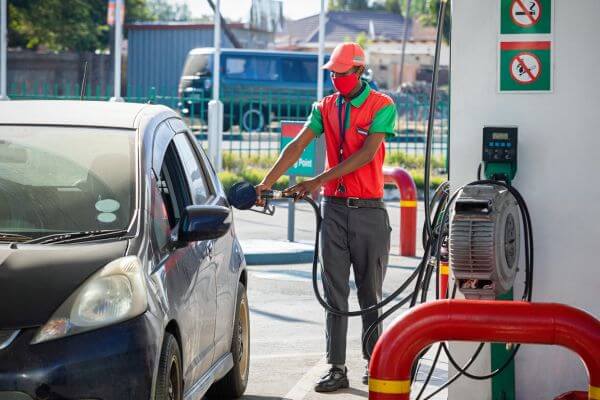
The rise in fuel prices has shot up demand for EVs in Australia (Source: Canva)

Refuelling vs charging

Refuelling a combustion engine car is quick, but requires going to a service station. Charging an EV can be done at home, at work, in shopping centres and public charging stations.

Charging time varies depending on the speed of the charger, from slow Level 1 trickle chargers, Level 2 chargers and Level 3 fast or ultrafast public chargers. The cost varies by location, time and operator.

The cheapest and easiest method is to plug in at home and charge overnight at off-peak electricity rates or using solar during the day. Charging overnight at off-peak rates is cheap, while running off solar is effectively free. EVs and solar pair well.

Drivers who regularly do longer distances can install a faster wallbox charger at home.

For the millions of Australians who live in apartments, it may not be possible to charge at home. Public charging plays a vital role here.

EVs in Australia
Plan for trips to optimise charge utilisation (Source: Canva)—EVs in Australia.

Range anxiety is fading

Early EV adopters often experienced range anxiety – the fear of running out of charge mid-trip.

This concern is fading, as the average range of new EVs is now over 400 km. Research shows this anxiety fades away as drivers become comfortable with their vehicles, learn the distances they usually travel and use apps and maps to plan where they will charge during road trips.

As one EV owner told us:

“Charging’s not something I really think about. Like, as soon as I get home and park, I just plug my car in and it charges automatically at 12 o’clock at night for 6 hours”

Home charging offers the biggest comfort. Most EV owners (93%) in Australia can charge at home, and most of them say home charging meets their travel needs.

Over time, EV owners learn the locations of more public chargers, which also reduces anxiety.

Public charging stations are becoming a must for EVs in Australia (Source: Canva)

Public charging is the biggest challenge

It took decades to build Australia’s network of more than 6,600 service stations.

The public charging network has had much less time to develop. The network is significantly bigger than it was five years ago, but some issues remain.

The main challenge then shifts from range anxiety to charging anxiety. This is the fear of arriving at a public charging station only to find the chargers don’t work, have an incompatible plug, deliver slower-than-advertised speeds or have long queues, especially at peak times.

EV drivers have told us the solution is to check on public chargers before driving there. Real-time data about chargers is easy to come by.

Charging apps let you check charger reliability easily. If you can see a charger has been successfully used recently, it’s a good sign. Charger ratings and reviews help you decide.

Choosing chargers used by drivers with similar EVs is an easy way to ensure the charger has the right plug.

Much of this information is held in charging apps such as Evie, Chargefox or Tesla.

Apps such as PlugShareGoogle Maps and the Electric Vehicle Council’s Charge@Large have data on chargers from many different networks.

EVs in Australia
Aim to charge before the battery drops (Source: Canva)

Planning roadtrips

Longer distance trips require a little bit of planning.

  • Use route planners such as A Better Route Planner to see where you will need to charge, find good charger options and identify backups
  • Pack an EV travel kit with a charger cable and extension lead
  • Allow time for charging, queues and possible detours, especially during busy periods. Aim to charge before the battery drops below 20%.

Some new EV owners may find public charging a hassle compared to a quick refuel stop. But there are perks.

Many regional charging stations are located in the centre of a town. As one EV owner told us:

“Just plug it in there, stroll up the street, have a coffee, grab a muffin or something. By the time you come back, the car’s charged.”

This article was first published in The Conversation and is authored by Isrrah Malabanan, PhD Candidate in Transport Engineering, The University of Melbourne, and Senior Lecturer in Transport Engineering, The University of Melbourne. 

Read more: A Good Deal?: Chinese electric vehicles in the Australian Market

Wyndham council vote no confidence in Preet Singh

0
Preet Singh
Reading Time: 2 minutes


Wyndham City councillors have unanimously passed a vote of no confidence against their Mayor Preet Singh, who refused to resign amid a character reference scandal.

Passed at a special meeting on Monday night, the motion does not obligate Cr Singh formally to step down but does capture councillors’ and community’s sentiments towards him.

Cr Peter Maynard who moved the motion of no confidence, described Cr Singh’s actions as ‘morally reprehensible’.

“Whilst we can all acknowledge that the mayor has done nothing illegal, he has shown an extremely concerning error of judgement — something we simply cannot tolerate in the leader of this council,” he said at the online meeting.

All councillors spoke to the decision, with Cr Larry Zhao noting he believed ‘the decision was not about racism at all’ and announcing he would boycott the next council meeting  ‘dysfunction as normal’.

The vote follows a media statement from the councillors earlier this month, where they stated they were ‘united to call for the mayor to resign’, and were ‘working behind the scenes to urge Cr Singh to step down’.

The state government have also intervened, installing an independent monitor at the municipality amidst a period of heightened scrutiny towards local government transparency.

What did Preet Singh do?

In April 2024, before he was elected to Wyndham City Council, Cr Preet Singh provided a reference for Kashyap Patel, who has been charged with grooming and sexually assaulting a child under 16.

Cr Singh’s reference describes Patel as someone of ‘high integrity’ despite his assault charges, and argues the offences are ‘a one-off event’ and ‘completely outside of [his] usual character’.

Provided during Cr Preet Singh’s time as a Justice of the Peace, the reference impacted Patel’s County Court judgement but was provided prior to his guilty plea.

In the aftermath of Patel’s verdict, many residents have called for Cr Singh’s resignation, with three protests and a parliamentary petition filed against him.   

Though since ‘accepting accountability for his error of judgement’, Cr Singh has defended his actions online, stating last month he ‘had done nothing illegal, criminal, or unlawful’, and intended to return to office ‘shortly’.

Cr Singh has described the calls as a ‘sustained campaign waged against him’, suggesting they ‘aim to destabilise a democratically elected Council and undermine what we have achieved together’.

“Capitulating to this pressure would not reflect accountability, it would wrongly legitimise allegations that are false, unfounded, and made to instil other leaders into positions of influence at Wyndham City,” Cr Singh wrote online.

Cr Preet Singh has not yet commented on the vote.

READ ALSO: Clusters, chagrin & first-time candidates: Victorian LGA elections

More than a simple cold: Are you prepared for RSV?

0
RSV
(Source: Canva)
Reading Time: 3 minutes


It was a quiet Tuesday morning when Aarav’s mother brought him in.
He was just six weeks old.
She thought it was a simple cold. His older sibling had been unwell a few days earlier, a runny nose, a cough, nothing unusual.
But overnight, something had changed.
Aarav was feeding differently. Slower. Pausing more. He seemed more tired than usual. Not distressed, just not himself.
When I examined him, his breathing was faster than it should have been.
Within hours, he was in the hospital.
The diagnosis was respiratory syncytial virus, or RSV.
Later that day, his parents asked, “We didn’t realise a cold could do this.”

This is not a rare story.

As we head into winter, these presentations become increasingly common.

(Source: Canva)

What exactly is RSV?

RSV is one of the most common respiratory viruses in early childhood. Almost all children will catch it at least once in the first two years of life. For many, it behaves like a cold. But in young babies, it can affect the small airways in the lungs and lead to bronchiolitis, making breathing and feeding much harder.

Information for families is available through the Sydney Children’s Hospitals Network: Here

How RSV shows up in real life

In the clinic, RSV rarely begins as an emergency. It usually starts quietly, a runny nose, a cough, maybe a mild fever.
Over a few days, some babies begin to change. Feeding becomes more difficult. Breathing becomes faster. Sleep becomes unsettled. Parents often say, “Something just isn’t right.”

That observation matters.

Why do we see more of it in winter

Every year, RSV follows a familiar pattern.Cases begin to rise through autumn and peak in winter, usually between April and September in Australia. It spreads easily within households, through coughs, close contact, and even surfaces like toys and hands. Once one child becomes unwell, it often moves quickly through the family.

Watch: RSV explained simply

Who tends to get sicker?

Most children recover with supportive care at home. But some are more vulnerable, particularly babies under six months, those born prematurely, or children with underlying medical conditions. These are the infants we watch more closely each winter.

Prevention is changing

Until recently, there was little families could do beyond supportive care. One of the biggest shifts in recent years is that prevention options are now available for some infants, especially in early infancy. This includes vaccination during pregnancy, which helps protect the baby in the first few months of life, as well as newer antibody-based protection for some infants. Detailed guidance is available here through NCIRS

(Source: Canva)


When should parents worry?

Most viral illnesses in children settle with time. But with RSV, it is the change that matters. If a baby is feeding poorly, breathing faster, or seems unusually sleepy, it is worth getting checked. Seek urgent care if there is laboured breathing, pauses in breathing, or difficulty waking.

A familiar winter pattern

Aarav improved after a few days in the hospital. His breathing settled, and feeding slowly returned to normal. For his parents, it was unexpected. For many paediatricians, it is something we see every winter. RSV is common. For most children, it remains mild.

But recognising when a “simple cold” is no longer simple and acting early is what makes the difference.

Read more: From wheeze to ease: Supporting children with asthma

“Afraid to fight; was murder more disgrace?”

0
The Anzac Legend
The Battle of Lone Pine by Drew Harrison (Source: Military Shop)
Reading Time: 3 minutes

The ANZAC legend

I was well versed in the legend of the ANZACs by the time I was ten years old:

They were ordinary men who went and did extraordinary things. These soldiers didn’t know what they were in for when they signed up, but despite the terror they faced, they helped each other out.

But knowing is very different from empathising. The ANZAC legend might be known to primary school kids all across Australia and New Zealand, but peek into a school hall during ANZAC Day and you’ll see many children nodding off. 

I was one of those children many years ago. One thing that was clear to me growing up was that the ANZAC legend may make its presence clear through monuments and murals, but they’re only truly alive in people’s minds. And how was I, someone who couldn’t relate to the community I had to somehow assimilate into, supposed to “remember” their relatives?

I almost felt vengeful. If you don’t understand my community, why should I revere the heroes in your history?

Justified I thought. Until, in Year 7 English, I read the lines “They leave their trenches, going over the top / While time ticks blank and busy on their wrists / And hope, with furtive eyes and grappling fists / Flounders in mud. O Jesu, make it stop!”

The ANZAC legend
Siegfried Sassoon – one of the leading poets of WWI (Source: Wikimedia)

Something about that last line, written by English war poet Siegfried Sassoon, made me shiver. It painted the picture of a soldier who was not just afraid but who was helpless. In my mind, the war was no longer just an event, but an unrelenting wave of horror that swallowed people whole regardless of their skill with a gun. 

Ironically, it was as though the ANZAC legend itself, which honours sacrifice and places soldiers on a pedestal, actually obscures the heroes we are supposed to remember. But somehow this English poet was able to, in just a few words, transport me to the trenches. 

Sassoon stands out for his singular ability to paint a landscape of terror through his poetry. In his poem ‘Ancient History,’ he depicts the internal conflict of warfare writing, ‘Afraid to fight; was murder more disgrace? …/‘God always hated Cain’ … Whereas in ‘Counter-Attack,’ he writes about a soldier ‘Sick for escape,—loathing the strangled horror / And butchered, frantic gestures of the dead.’

He depicts men who are not just changed, but utterly transformed by circumstance. His lines go for the jugular and vibrate with rage. The persona behind most of his poems is not just a victim, but a man resentful of the position he’s in. 

After reading these poems, it became obvious that the story of the ANZACs didn’t just belong to those who had lived in Australia much longer than I had. To actively engage with these stories is to acknowledge our shared humanity. Which nowadays, is no easy task. 

As I’ve gotten older, I’ve realised that empathy is no longer just something that you by chance feel, but something that must be cultivated. 

In a world where we now have direct access to the horrors of war, the responsibility falls on us to reject indifference – whether that’s by listening to poetry (Palestinian author and journalist Plestia Alaqad might just be the voice of our times), or by following online one of the many journalists who have willingly placed themselves on the frontlines of conflict. 

By making a genuine effort to remember the ANZACs, we also remember the horrors of war and, most importantly, why we said “never again,” in the first place.

READ MORE: Anzac Day 2025: Remembering the fallen soldiers

Satya Nadella comes to Australia to seal $25 billion AI deal

0
Australia Microsoft AI deal
Before the cameras, Albanese and Nadella met quietly to seal the terms of the agreement. (Source: Supplied)
Reading Time: 2 minutes

Satya Nadella AI deal

The Federal Government signs a landmark agreement with Microsoft, promising jobs, infrastructure and a seat at the table for one of Australia’s fastest-growing communities.

Australia has taken a significant step in its artificial intelligence future, with the Federal Government signing a Memorandum of Understanding with Microsoft that unlocks a $25 billion investment into the country’s digital economy and commits to training three million Australian workers.

On 23 April, Prime Minister Anthony Albanese stood alongside Microsoft CEO Satya Nadella in Sydney to announce the company’s largest ever investment in Australia, a $25 billion commitment that will reshape the country’s AI landscape over the next three years.

For the Indian Australian community, which has long been woven into the fabric of Australia’s technology sector as engineers, developers, entrepreneurs and educators, the announcement signals something more than a policy milestone. It is an acknowledgement that the AI economy is arriving, and that Australia intends to shape it on its own terms.

The agreement builds on the National AI Plan launched in late 2025 and extends Microsoft’s existing footprint in Australia, adding to the $5 billion cloud and AI investment the company announced in 2023. The new MoU covers continued infrastructure investment, collaboration with the AI Safety Institute and the National AI Centre, and a commitment to sustainable and secure data centre operations aligned with government expectations around energy and water use.

(Source: Supplied) Satya Nadella AI deal

Minister for Industry and Innovation Tim Ayres said the agreement is designed to ensure that AI “delivers real economic and social benefits for Australians while keeping safety front of mind.” Assistant Minister Andrew Charlton framed it as part of a broader effort to set “the regional benchmark for safe, secure and inclusive AI.”

For a community that has contributed so substantially to Australia’s technology workforce, the promise of three million workers receiving AI training carries particular resonance. Indian Australians are disproportionately represented in STEM fields, and as AI reshapes industries from healthcare to finance to education, access to reskilling and upskilling pathways will shape who benefits and who is left behind.

The MoU also signals Australia’s ambition to position itself as a trusted regional hub for AI, a goal that places the country in conversation with India’s own rapidly expanding technology sector. With bilateral ties between India and Australia continuing to deepen, a stronger Australian AI ecosystem may create new corridors for collaboration, talent and investment between the two nations.

Microsoft has operated in Australia for more than 40 years. This agreement is perhaps its most consequential commitment yet.

The full MoU is available at industry.gov.au/MOUMicrosoft

Read more: Aus-India green steel push, powered by rice husk


Isha, Madura, Riya: Three of Aust’s 5-member Y20 team

0
G20 Youth Summit Indian women
Reading Time: 3 minutes


Indian-origin women will make up three of the five delegates chosen to represent Australia at the G20 Youth Summit in Washington D.C. later this year.
 

The G20 Youth Summit, also known as the Y20, is the official engagement group of the G20 Leaders’ Summit. In August, the Y20 will conduct a week of negotiations to produce a set of policy recommendations feeding directly into the G20 leaders’ agenda. 

Isha Desai, Madura Katta, and Riya Rao were selected from a national round of competitive applications by Global Voices, a civil society policy organisation. They will each lead negotiations across key global challenges, from economic reform to food security, global health, and conflict. 

The three women met in Canberra earlier this year, where they engaged with the Human Rights Commissioner, Department of Foreign Affairs and Trade and the Department of Prime Minister and Cabinet. In between sessions, Isha, Madura and Riya connected over their shared experiences as South Asian women and are excited to actively shape global spaces as they prepare to travel to Washington together later this year. 

Isha Desai  

Isha Desai is negotiating on the Global Economy and Job Creation track. She is currently researching the rights of gig workers in Australia, as well as policies to increase medium/high density developments to provide more affordable housing. In addition to her duties at the G20 Youth Summit, she is developing a policy brief with Global Voices to strengthen Australia’s policies to support climate refugees in the Indo Pacific. 

In high school, Isha took modern history and economics, becoming fascinated with how change happens slowly on the international level. This led her to study politics and international relations at the University of Sydney, where she had the chance to intern at the United States Studies Centre. 

“My highlight as an Australian delegate has been meeting with the G20 team at the Department of Prime Minister and Cabinet to hear their insights and advice for working at global summits. I am especially excited to be travelling with other like-minded young women. Riya and I also connected over going to the same Indian wedding four years ago!” Isha told Indian Link.

Madura Katta 

Moving as a 12-year-old from tropical Bengaluru to -25℃ weather in Edmonton, Canada, helped Madura Katta understand how domestic and international inequities shape health outcomes for people across the globe, and negotiating different perspectives became a daily part of her life.  

While pursuing a Bachelor of Science at the University of British Columbia, Madura was drawn to public health policy, addressing problems at a system level and developing sustainable and resilient interventions targeting the drivers of health issues. This led to her pursuing a Master of Public Health at the University of Queensland, and she hopes to bring this perspective to engaging in diplomacy at the global level.  

“Growing up in India, and then immigrating to two different countries helped me understand how domestic and international inequities shape health outcomes for people across the globe. I hope to bring this perspective to the G20 Youth Summit, where I am negotiating on the Food Security and Global Health track,” she says.

At the G20 Youth Summit, Madura is exploring food security, disaster preparedness, and health financing. She is also drafting a policy brief on how to limit exposure to unhealthy foods to improve dietary patterns and health outcomes for Australians as part of the Global Voices fellowship.  

Riya Rao 

Riya Rao was born and brought up in Sydney’s West, where she got used to seeing people like herself absent from rooms that matter. Studying International Studies and Media (Communication & Journalism) at the University of New South Wales, with a year at King’s College, London, shaped her focus on the role of policy communication, and whose voices are included in that process.  

Riya’s turning point was fieldwork in Tanna, Vanuatu, contributing to a Department of Foreign Affairs and Trade-funded project; Fiksim Sola, co-designing solar literacy and repair strategies. Working within remote, Ni-Vanuatu communities, she saw how quickly locally led solutions can falter without long-term policy support. This informed her contribution to the Global Voices journal, on how Indigenous knowledge inclusion can build resilience into Australia’s disaster governance system – a separate duty from her Y20 work.  

At the G20 Youth Summit, Riya is negotiating on the Fragility, Conflict and Violence track, where she hopes to mediate between communities and decision-makers: listening, translating lived experience into policy and making those outcomes accessible again. Working alongside delegates like Madura and Isha, she is looking forward to ensuring global policy discussions include the voices of those most affected by the decisions they produce.   

As the second-largest minority group in Australia, estimated to grow to the largest by 2031, it is no surprise this year’s Y20 Australia Team is majority Indian-origin. For Indian-Australians, this demographic shift is an opportunity to step up from being part of this society to actively driving change in their communities.  

Isha, Madura, and Riya are keen to hear from other young Australians who would like to improve their local, national, and global communities, to bring these perspectives with them to the G20 Youth Summit. 

READ ALSO: Applications for the Australia-India Youth Dialogue now open

Why are over 20,000 migrant teachers underutilised?

0
Teacher shortage migrant skills
Reading Time: 4 minutes


Australia needs more teachers. It ranks among the worst-performing countries in the OECD for teacher shortages. This is particularly so for public schools.

As of December 2025, there was a reported shortfall of 2,600 teachers in Victoria and New South Wales alone.

A 2024 Australian Education Union survey of 953 primary and secondary schools also found almost 83% were experiencing teacher shortages. Many were relying on merged classes, relief staff and teachers taking on extra duties simply to keep operating.

State and federal governments have acknowledged the shortage, and have a national plan to improve the situation.

Yet while schools continue to struggle to fill vacancies, Australia has access to an untapped teaching workforce. But it is not using it.

Thousands of qualified migrant teachers already living here are not fully employed in the profession. What’s going on?

A broader skills recognition problem

A migrant teacher is one who did their teaching qualifications in another country before coming to Australia to live.

teacher shortage
Overseas skills recognition is a major problem for our workforce, leading to underutilised skills. (Source: Canva)

Migrant teachers currently make up about 6% of the overall teaching workforce in Australia. But there are an estimated 20,590 qualified migrant teachers who are not working in schools at all or who are underemployed (not working as much as they want).

This is part of a broader national problem. Policymakers have long warned Australia is failing to make full use of migrant skills. Earlier this month, former Treasury secretary Ken Henry argued many migrants are working in jobs well below their qualifications, weakening productivity and leaving workforce shortages unresolved.

It is estimated 44% of Australia’s skilled migrants are employed below their skill level.

An uncertain process

For teachers trained overseas, entering the profession in Australia is often a long and uncertain process.

The entire process, from initial document preparation to final approval, can take several months. Sometimes, if a migrant needs to do more study to meet Australian standards, it can take up to two years.

Most begin by having their qualifications assessed by the national teaching institute to see if they fit with Australia’s teaching standards. They may also need to meet English language proficiency requirements, even when they have taught for years in English-speaking settings.

teacher shortage
As our students become more diverse, so too should our teachers. (Source: Canva)

They must then register through a state or territory teacher regulatory authority. Because education is governed separately across jurisdictions, rules and processes can vary. Most states and territories require a minimum of four years of full-time tertiary training and a minimum of 45 days of supervised teaching. But specific requirements for Working with Children Checks, police checks and documentation vary significantly by jurisdiction and employer.

The pathway can be expensive. It may involve translating documents, verifying transcripts and sitting English tests multiple times to meet the score required if one’s teacher qualifications are not from Australia, New Zealand, the United Kingdom, United States, Canada or Ireland.

Teachers trained overseas who hold a three-year teaching degree often need to undertake further study or bridging program to address regulatory gaps and satisfy registration requirements.

What happens next?

Even for migrant teachers who successfully gain registration, barriers often remain.

My research with migrant teachers in Australia shows many arrive with years of experience, strong subject expertise and a deep commitment to teaching. Yet they are often treated as newcomers with deficits rather than professionals with valuable expertise.

Some describe years of waiting, repeated applications and being told they lack “local experience”. Others report being overlooked because of their accent, unfamiliar names or assumptions about classroom fit.

Years of overseas teaching are frequently discounted, forcing experienced educators to start again at lower levels or in casual roles.

Some eventually leave teaching altogether.

This is a significant loss. Not only can these teachers fill vacant positions, they can bring many benefits. They have linguistic resources, intercultural knowledge and global experience that can strengthen schools and better reflect increasingly diverse student communities.

What needs to change for migrant teachers

To boost migrant teachers in Australia, we can make several changes.

local experience
Australia needs to tap into its migrant teacher workforce to fill shortages. (Source: Canva)

First, we can make the recognition of qualifications faster, clearer and more nationally consistent.

Second, targeted transition programs by state education departments or registration bodies could help teachers understand Australia’s curriculum requirements, classroom expectations and local systems without unnecessary formal retraining through universities.

Third, overseas teaching experience should count more meaningfully in salary placement, hiring and promotion.

Fourth, schools should review recruitment practices for bias and better recognise international experience, multilingual capability and cultural knowledge.

Finally, once they are employed, migrant teachers should have proper mentoring and clear career pathways so they can stay and thrive in the profession.

This article, written by Sun Yee Yip, Lecturer in Teacher Education, Monash University, first appeared in The Conversation, and has been republished under a Creative Commons licence. 

When books become blockbusters: 8 Indian adaptations worth watching

0
Reading Time: 4 minutes


What happens when a great book meets the big screen? In Indian cinema, quite a lot. For decades, filmmakers have dipped into literature for stories worth retelling – sometimes sticking close to the source, sometimes boldly reshaping it.

It’s not an easy transition. Pages packed with detail have to become a tight, visual narrative. But when it clicks, the magic is undeniable – stories that live twice, once in print and once on screen.

Here are eight sensational Indian movies that reiterate their book origins with nuance and richness.

Devdas (2002)

(Based on Devdas by Sarat Chandra Chattopadhya)

Starring: Shah Rukh Khan, Aishwarya Rai, Madhuri Dixit

A much-loved cult classic in Indian cinema, Sanjay Leela Bhansali’s adaptation reimagines Sarat Chandra Chattopadhya’s Bengali romance novel of the same name with intensity and passion. The film narrates the story of wealthy law graduate Devdas (Khan) who returns to Bengal to wed his childhood friend and lover, Parvati “Paro” (Rai). Much to his dismay, Devdas’s family rejects the union, sparking his spiral into alcoholism and eventual undoing as he struggles to come to terms with the loss of his love.

Ponniyin Selvan: I (2022) & Ponniyin Selvan: II (2023)

(Based on Ponniyin Selvan by Kalki Krishnamurthy)

Starring: Vikram, Karthi, Ravi Mohan, Aishwarya Rai, Trisha Krishnan

This two-part chef doeuvre by Mani Ratnam paints on the screen Kalki’s five-volume historical fiction tale set in the 10th century Chola Empire. A spectacle of loyalty, dynastic pressures, conspiracies and the ever-immense tension between duty and love, the films follow events during the reign of Rajaraja Chola I (Mohan). Condensing the first two volumes, Ponniyin Selvan: I recounts the journey of warrior Vandiyathevan (Karthi) who embarks across the Chola land to deliver messages from crown prince Aditya Karikalan (Vikram) to Aditya’s sister and father, but soon stumbles upon secret plans to overthrow the Chola throne. The sequel covers the remaining three volumes, continuing to revolve around the rule of Rajaraja Chola I as his kingdom fights to resist perilous threats to the empire. A regal and visually brilliant saga infused with high-octane drama, the films are faithful portrayals of their textual sources.

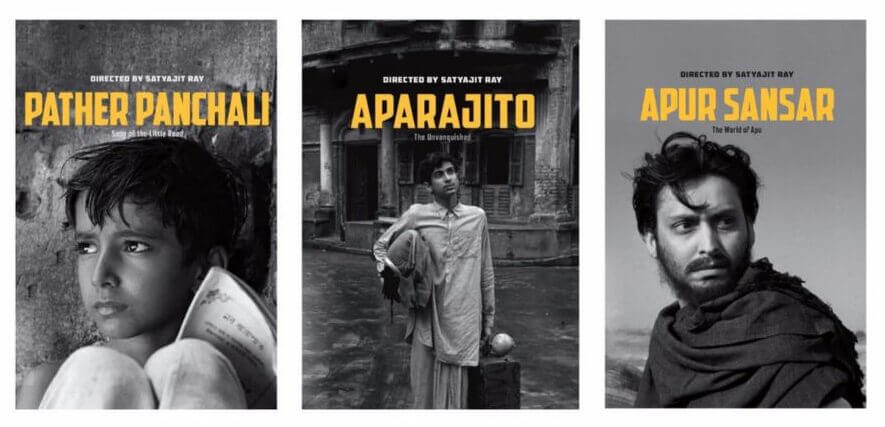
Pather Panchali (1955), Aparajito (1956) & Apur Sansar (1959)

(Based on Pather Panchali and Aparajito by Bibhutibhushan Bandyopadhyay)

Starring: Subir Banerjee, Kanu Banerjee, Karuna Banerjee, Uma Dasgupta, Pinaki Sengupta, Smaran Ghosal, Soumitra Chatterjee

Indian adaptations worth watching
Indian adaptations worth watching Indian adaptations worth watching Indian adaptations worth watching

Satyajit Ray’s Apu Trilogy flawlessly recreates Bibhutibhushan Bandyopadhyay’s heartfelt bildungsroman* novels through a cinematic lens.  In the vein of its title that translates as ‘Song of the Little Road’, the first movie Pather Panchali narrates the hardships of its child protagonist Apu (Subir Banerjee) and his elder sister as their family navigates austere rural poverty. Through a raw and unwavering gaze, Ray rendered a soul-stirring take on daily existence, pains and joys.

The sequel Aparajito spans from the last part of the first novel to the early sections of the second novel depicting Apu’s life after his family relocates to Varanasi, as he grows from a young boy (Sengupta) to a college adolescent (Ghosal). In this film, Ray explores the strained relationship between Apu and his mother, as the former slowly detaches himself from his rural background. The unconventional portrayal of the mother-son relationship was one of the very first in Indian cinema, cementing the film as bold, sublime and emotionally rich.

Concluding the celebrated trilogy with a flourish, Apur Sansar chronicles Apu’s (Chatterjee) romantic relationship with his wife, Aparna, who unfortunately dies during childbirth. Struggling to grapple with his grief and the responsibility of raising his son, Apu eschews his duties and becomes a vagabond.

A cornerstone of both Indian and world cinema, the Apu trilogy is hailed by critic Roger Ebert as “a promise of what film can be”.

* ‘Bildungsroman’ is a literary genre that follows the protagonists growth from childhood to adulthood.


The Goat Life (2024)

(Based on Aadujeevitham by Benyamin)

Starring: Prithviraj Sukumaran, Jimmy-Jean Louis, K.R. Gokul Amala Paul

This Malayalam survival drama makes for an accurate rendition of Aadujeevitham by Benyamin, with both works shedding light on the unjust, yet rampant exploitation of migrant workers in the Gulf states. Two Malayali immigrants Najeeb (Prithviraj) and Hakim (Gokul) seek better livelihoods in Saudi Arabia, only to be picked up by a deceitful local and later separated from each other. Trapped in dire circumstances, Najeeb is forced into slave labour at a remote, isolated desert farm as a goatherd – his dangerous journey and tribulations following his escape forms the remaining of the plot. Blessy’s direction cleverly delves into themes of profound loneliness, faith and sheer human will amid adversities.

Visaranai (2016)

(Based on Lock Up by M. Chandrakumar)

Starring: Dinesh, Anandhi, Samuthirakani, Murugadoss

Reworking true incidents of custodial torture and abuse of authority by the law enforcement agency, this Tamil socio-political thriller revolves around four labourers in Andhra Pradesh who are brutally persecuted in detainment and pressured to confess to a crime they did not commit. Soon, they experience a short-lived relief after being saved by a presumed honest policeman when they realise greater challenges loom over them. The savage events in the film were based on M. Chandrakumar’s memoir which recounted his personal experience of being arrested with his three friends and enduring two agonising weeks in prison. Directed by Vetrimaaran, the critically acclaimed film foregrounds the horrors of corruption and police violence.

Read more: The Bard goes masala

The secret sensory life of plants

0
(Source: Canva)
Reading Time: 3 minutes


Plants are often seen as passive organisms, rooted in one place and largely unable to react to the world around them.

But a new field of research is challenging these assumptions and showing that plants are as sophisticated as animals in detecting and adjusting to environmental signals.

Plants can perceive light through specialised proteinsdetect sound vibrations and respond to touch via mechano-sensitive channels, recognise chemical signals released by neighbouring plants, and even retain memories of past experiences through changes in their DNA.

My own research focuses on how plants detect the passage of time as part of their seasonal cycle, but that is merely one aspect of a major reconsideration of their sensory capacity – and the parallels with animal senses.

Plants can see colours

Anyone who has noticed a flower turning its head to track the sun knows plants can detect light. Like animals, plants sense light signals using specialised receptors, each for a different wavelength (or colour) of light.

Phytochromes detect red and far-red light and cryptochromes and phototropins respond to blue and ultraviolet light. These sensors transform light cues into molecular signals to coordinate a plant’s daily circadian rhythms.

Emerging research suggests trees can even identify the summer solstice, the longest day of the year. This cue may act as a seasonal switch, triggering a transition in key physiological processes such as leaf ageing and bud setting.

My research identified a specific gene, known as Early-Flowering-3, in European beech trees (Fagus sylvatica) which seems to control seasonal responses such as energy storage, changes in plant hormone signals and preparing for winter.

But light detection is only one sense plants use to perceive their world.

Sensory life of plants: Plants, such as this kawakawa, can detect the vibrations caused by chewing insects. (Source: Canva)

Tuning into their environment

Plants can also listen. Studies show they can detect vibrations caused by chewing insects or the buzz of pollinating bees, and they respond to the sound of flowing water by directing roots towards it.

Plants can also generate their own vibrations. When under stress, tobacco and tomato plants emit ultrasonic clicks that provide information about the plants’ condition, including the level of dehydration or injury. These clicks can be heard using a sound recorder.

Scientists also documented what happens when they play sounds to plants. They observed changes in the membranes of their cells and the chemical signalling along ion channels. While plants do not have nerves, these channels function in a similar way, acting as tiny gateways to transmit information in and out of cells.

The exact receptors plants use to perceive sound remain unclear, but we are now investigating whether they sense vibrations through tiny hair-like structures on leaf surfaces.

Don’t touch me

Beyond vibrations, plants also respond directly to physical touch, often in striking ways.

Familiar examples include the touch-me-not plant (Mimosa pudica) or the Venus flytrap (Dionaea muscipula), which respond to touch by rapidly closing their leaves.

Sensory life of plants
Sensory life of plants: The Venus flytrap will shut its leaves, triggered by touch. (Source: Canva)

These examples illustrate plants’ ability to perceive and respond to mechanical stimuli. But beyond these rapid movements, plants also detect rain and damage caused by browsing herbivores. The latter prompts plants to activate defence responses such as the production of toxins or depositing lignin to make themselves less palatable.

Just like animals, plants contain specialised proteins that detect these physical forces. These mechanical sensing proteins convert physical stimuli into biochemical signals, often through calcium signalling.

Plants remember the past to decide the future

Changes in temperature provide a good example of plants remembering that winter has passed. Remembering cold temperatures helps them flower at the right time when spring arrives.

As observed in animals, these memories are stored through epigenetic mechanisms – chemical changes to DNA that don’t affect the genetic code.

Epigenetic changes alter the way genes are packaged and read, creating a molecular record of past conditions.

In New Zealand, for example, trees remember temperatures from previous summers to synchronise their reproduction across entire forests – a phenomenon known as masting.

Masting triggers widespread seed production – and subsequent pest outbreaks that can threaten native wildlife. Researchers revealed that removable markers generate temporary chemical tags that can switch genes off. This allows masting plants to carry information from one year to the next.

Together, these findings show that plants can see, hear, feel and remember in ways parallel to our own sensory systems. Far from being passive or unresponsive, plants respond to environmental clues in sophisticated and complex ways.

Rethinking plant life in this way challenges long-held ideas about intelligence, awareness and communication in the natural world.

The ‘sensory life of plants’ was first published in The Conversation written by Research Fellow in Molecular Biology, University of Canterbury

Read more: Native plants in your garden