
Home Blog Page 3

Need to see a psychologist? How to find one that’s right for you

0
Finding the right psychologist
(Source: Pexels)
Reading Time: 4 minutes


After weeks (or months) of putting it off, you book a longer appointment with your GP to talk about your mental health. You explain that you’ve been feeling low, anxious and overwhelmed. They suggest seeing a psychologist. right psychologist

But how do you know if this psychologist is the right person for you?

It’s a fair question, and it matters more than many people realise.

So, what should you know before you book your first appointment?

What does a referral actually mean?

In Australia, your GP can refer you to a psychologist under a mental health treatment plan. This provides Medicare rebates for a set number of sessions.

To be eligible, your GP must assess that you have a diagnosable mental health condition that would benefit from treatment, such as anxiety, depression, sleep difficulties or stress-related concerns.

Most people can receive up to ten sessions a year with a Medicare rebate. Many psychologists charge an out-of-pocket fee, although some offer bulk billing. Rebates are higher for clinical psychologists than for other psychologists.

You’re not locked into the psychologist named on your referral. In most cases, you can choose a different psychologist and still receive a rebate.

Not all psychologists are the same finding a psychologist

All psychologists are registered with the Psychology Board of Australia. Some complete additional specialist training and are endorsed in areas such as clinical, counselling, educational and developmental, or forensic psychology.

Endorsement reflects specialised training, not necessarily “better” care. What matters most is whether the psychologist has experience with your concerns and uses an approach suited to your needs.

The most important element is whether the psychologist has experience with your concerns and uses an approach well-suited to your needs. (Source: Canva)

Therapies based on cognitive and behavioural principles have the strongest and most consistent evidence, particularly when matched to specific problems.

For example, structured approaches are widely used for anxietysleep difficulties and depression, while parenting programs are commonly used for child behaviour problems.

The Australian Psychological Society’s “Find a Psychologist” directory and the government’s healthdirect Service Finder are good places to start looking for a psychologist.

What should you look for?

Referrals to psychologists are often based on practical factors such as availability or location, rather than whether the psychologist is the right match for the person’s needs. But the match can shape how helpful therapy is.

So how do you find the right fit? It can help to ask a few simple questions. Many psychologists offer brief introductory phone calls to help determine whether they’re a good fit. These are usually short and focused on practical questions, and are often provided at no cost. You may also find some of this information on the psychologist’s website, or get a sense of it over the first few sessions.

You can ask:

  • have you worked with people with this problem before?
  • what kind of approach do you use?
  • what would the first few sessions look like?
  • how will we know if this is working?

If you have several psychologists to choose from, you can book your first appointment with the one that seems like the best match.

What if you don’t have much choice?

In rural or remote areas, or if you need a low-cost option, choices may be limited. In these cases, the focus shifts to making the best use of what’s available. That may include telehealth or working with your GP to review your progress.

It’s also worth knowing that seeing a psychologist isn’t the only option.

Evidence-based online programs can help, particularly for common problems. For instance, programs such as MindSpot and This Way Up offer courses for anxiety and depression.

Free parenting programs such as Triple P and ParentWorks provide evidence-based support for child behaviour problems. These online programs can be a useful starting point, although they may not suit more complex difficulties.

You can also call Medicare Mental Health on 1800 595 212 to connect you with supports.

How do you know you’re on the right track? finding a psychologist

So you’ve found a psychologist and had a few sessions. A good one can explain how they think about your problem and why they are using a particular approach.

Be cautious if, after a few sessions, your psychologist’s approach feels very generic, or it’s unclear how it fits your situation or problem.

You don’t have to like your psychologist for them to be a good fit. After the first few sessions, you should have a clearer sense of direction. They should make you feel understood, seem to “get it”, and be someone you’re able to work with. There should also be a clear plan or focus, and at least one useful idea or strategy.

Therapy can feel uncomfortable at times, that’s normal. But if you still feel unclear about the direction or not well understood, you have options.

You can talk to the psychologist, ask your GP for a different referral, or look for another psychologist yourself.

The key is not to stay stuck in something that isn’t helping.

The bottom line

Seeing a psychologist can be one of the most helpful steps you take for your mental health. But it’s not just about going. It’s about finding someone whose approach fits your needs and who you can work with.

When it comes to therapy, “available” is not always the same as “right”. You deserve the right fit.

This article, written by Trevor Mazzucchelli, Associate Professor of Clinical Psychology, Curtin University, first appeared in The Conversation, and has been republished under a Creative Commons licence.

READ MORE: Breaking the silence: The Desi mental health crisis
Helly Raichura: My mum, in her own words

0
helly raichura prity patel
Reading Time: 3 minutes


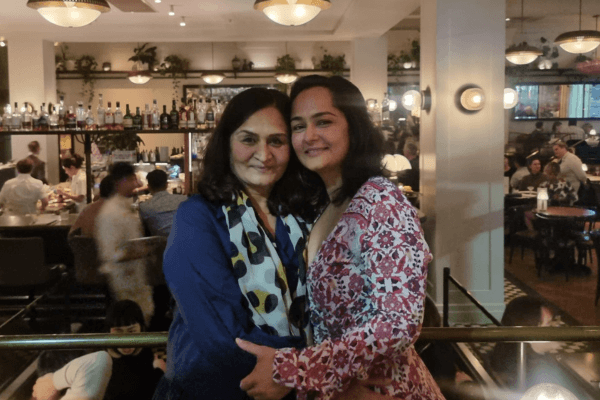
Our Mother’s Day series ‘My Mum in her own words’ pays tribute to our mothers, showcasing the intergenerational bond between mother and child. Here, Enter Via Laundry owner Helly Raichura interviews her mother Prity Patel.

I love it when you come to visit me here in Australia. What do you like about Australia?

I love that I can spend time with my children and grandchildren, which I don’t get when I am in Ahmedabad.

You’re such a great grandma and help to me with the kids. Tell me about a happy memory with your grandparents.

My grandfather was a very good man and used to tell us beautiful stories. Back then we didn’t have TV and phones, so we all gathered eagerly every evening to hear the stories from him. He was also a good cook and used to make us dinners and farsan.

Helly Raichura: What are your strongest memories of your mum?

Prity Patel: One that stands out is when she used to teach us how to sing. She was classically trained and very eager for us to learn Indian classical music, and she spent a great deal of time and effort to make us learn – I thank her now for her commitment as the gift of music is forever.


Prity Patel
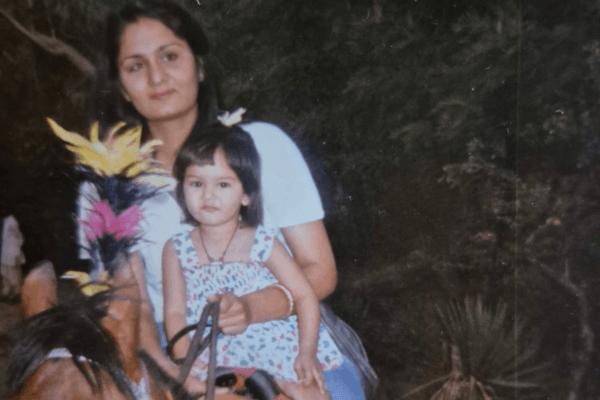
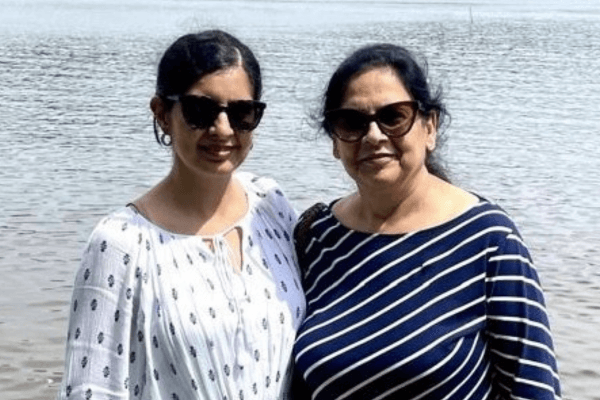
Helly Raichura and mother Prity Patel on holiday when she was younger. (Source: Supplied)

What family tradition do you love the most?

I love Janmashtami at our house, and how we used to gather the entire family and cook and eat together and celebrate.

Did you have dreams for me?

I always wanted you to be independent and skilled, and I am proud of what you have achieved. When you were young, you hated being bored and you kept on doing something or other – I knew then you would be a hard-working person.

How did you feel when you found out I was going to give up a corporate career to go into food?

I was a bit nervous, as there’s a lot of hard work in kitchens, but I had seen you work so I had no doubt about your ability. As a mum, I wanted to make sure you got enough time for yourself too.

What do you like about Enter Via Laundry? What could I be doing better?

I love what you do at Enter Via Laundry, your food is honest and isn’t overloaded with oil and spice and salt – that is a sign of a good cook.

What could you be doing better? I think you should hire more chefs so you can have more time for yourself.


View this post on Instagram


A post shared by Indian Link (@indianlink)

What do you like about Aussie food?

I like how you can eat Chinese dumplings, very nice pasta, good Thai and Indian too, all in one day. I really enjoyed the Sri Lankan meal at Many Littles in Red Hill – one of the best meals I’ve had.

What food do you love that I don’t?

I love the soft soggy rice congee that you hate. Ever since you were little, you have never liked soft rice.


View this post on Instagram


A post shared by Helly Raichura (@helly_raichura_)

Helly Raichura

What’s the best advice you’ve ever received?

It’s best to listen to others in a conversation and take your time to reply or make opinions about people.

What’s something you wish you knew or had when you were younger?

I wish there was more technology when we were young – life would have been easier.

What makes you happy when you’re having a bad day?

Music makes me happy; listening to classical music calms me down.

READ ALSO: Mia Kappadath: My mother, in her own words.

Sydney Film Festival 2026: All the South Asian links

0
sydney film festival featured
Reading Time: 4 minutes


South Asian cinema at the Sydney Film Festival 2026 brings together a diverse slate of films that move beyond mainstream narratives, spanning themes of love, survival, political ambition and crisis.

Even so, the limited presence of Indian cinema remains hard to ignore, echoing a concern many have raised about the festival over the years.

We start, perhaps unsurprisingly, with the Indian-Australian film – the kind of story that reminds us why representation matters in the first place. A rare one from our community – the other memorable feature from our own talent at the Sydney Film Festival being Bina Bhattacharya’s Here Out West (2021).

Don’t Tell Mother (Feature)

Melbourne-based filmmaker Anoop Lokkur draws on personal memories of growing up in 1990s Bangalore in this intimate family drama. Writer-director Lokkur who marks his debut with this film, partially financed it using savings originally set aside for a house deposit – a personal decision that inspired the film’s title.

Set in 1993, a pre-digital India where VHS tapes, cinema culture and everyday domestic rhythms shape life, the film follows a middle-class family navigating small joys and tensions within the home. Blending nostalgia with subtle social observation, this heartfelt film captures a changing world through a child’s-eye perspective, anchored by strong performances from its young cast.

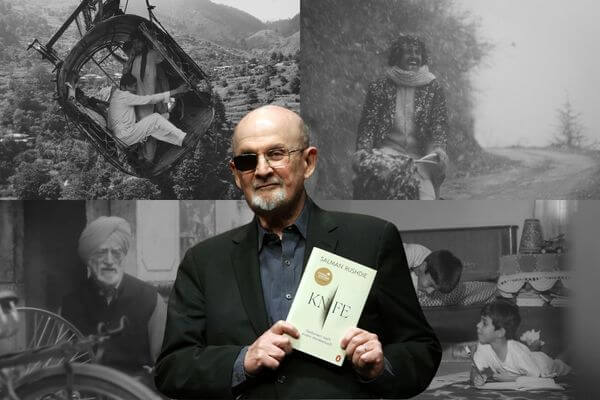
Knife: The Attempted Murder of Salman Rushdie (Documentary)

Based on Rushdie’s memoir Knife: Meditations After an Attempted Murder, this documentary goes beyond the story of an attack on one of the most influential writers of Indian origin to explore questions of free expression, identity, faith and resilience.

In 2022, Salman Rushdie was about to deliver a lecture in the United States when he was attacked on stage and stabbed 15 times within seconds. Critically injured, Rushdie was airlifted to hospital and survived after a long period of treatment and recovery. Oscar-winning filmmaker Alex Gibney traces the author’s recovery and emotional journey through Rushdie’s reflections and footage filmed by his wife, Rachel Eliza Griffiths.

Alex Gibney, Salman Rushdie and Rachel Eliza Griffit at Sundance (Source: X)
Alex Gibney, Salman Rushdie and Rachel Eliza Griffiths at Sundance (Source: X)

The Cycle of Love (Documentary) 

Directed by Oscar-winning filmmaker Orlando von Einsiedel, this documentary follows Indian street artist PK Mahanandia’s extraordinary 6,000-mile journey by bicycle in 1977 from Delhi to Sweden to reunite with the woman he loves. Featuring present-day interviews with PK and his lady love Lotta alongside vivid reconstructions, the film promises to melt your heart.
The story of PK’s extraordinary journey for love also resonated with Priyanka Chopra Jonas, who came on board as a producer, driven by its intimate yet universal themes of love, devotion and resilience. 

Hanging by a Wire (Documentary)

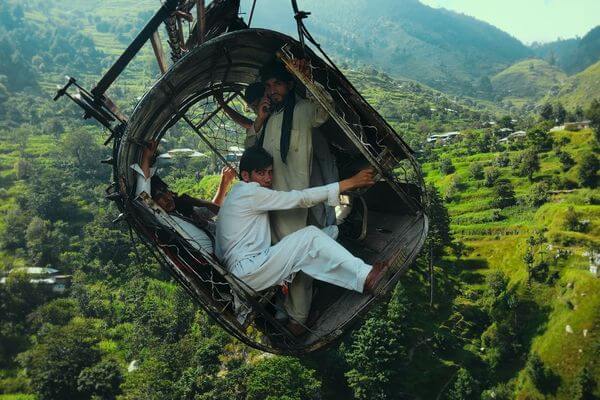
A gripping documentary that revisits a 2023 real-life rescue attempt in Battagram, northern Pakistan, where a cable car carrying eight people (including six schoolboys) became stranded 900 metres above ground after its cables began to fail. The incident and the stranded passengers drew global attention as a tense rescue operation unfolded.

Directed by Emmy-nominated producer/director Mohammed Ali Naqvi, the film uses on-the-ground footage, drone visuals and cinematic reconstructions to recreate the incident while also reflecting on wider themes of class, infrastructure and resilience.

(Source: Sundance)

Master (Feature)

A political drama set in a forest village in Bangladesh that follows Jahir, a respected schoolteacher whose populist campaign on education, women’s rights and public reform leads him to an unexpected victory as a first-time mayoral candidate.

Directed by Rezwan Shahriar Sumit, the film traces how Jahir’s ideals are tested when a controversial development proposal threatens to displace local communities, pulling him into a tense struggle between public duty and political pressure. The film won the Big Screen Competition at the International Film Festival Rotterdam.

100 Sunset (Feature) 

A neo-noir drama set within a Tibetan community in Toronto, following a quiet newcomer who observes and occasionally steals from her apartment building.

The film traces her growing connection with a fellow Tibetan migrant trapped in an unhappy marriage, as both navigate loneliness and the possibility of escape.

Set against the community’s traditional ‘Dukuti’ savings system, it offers a textured portrait of diaspora life shaped by trust, restraint and quiet rebellion.

Sonam Choekyi and Tenzin Kunsel(Source: IMDb)


The 73rd Sydney Film Festival takes place from 3-14 June 2026, featuring over 200 films across various city centric cinemas.

For these films at Sydney Film Festival and much more, head to https://www.sff.org.au/.

Read Also: Indian links at Met Gala 2026: A little bit palace, a little bit gallery

Bengal has spoken. Now listen.

0
West Bengal Elections
Reading Time: 4 minutes

Bengal Elections 2026

For fifteen years, West Bengal operated under a political arrangement that gradually hollowed out the idea of public life. Not through a single dramatic rupture, but through the slow, steady normalisation of things that should never have been normal. A commission paid to the local party worker to access a welfare scheme you were entitled to. A syndicate that decided whose materials built whose home. A government job that went not to the person who qualified but to the person who paid. By the end, people had stopped calling it corruption. They had simply started calling it how things work.

On the 4th of May, 2026, people decided they wanted things to work differently.

The voter turnout of 92.93 per cent was the highest in West Bengal’s recorded history, surpassing even the 2011 election that swept the Left Front out after thirty-four years. Numbers like this do not emerge from political enthusiasm alone. They emerge from something closer to collective resolve. People who had stayed home before, out of fear or fatigue or a learned sense that it would not matter, walked to the booth this time. That walk, quiet and determined, is the real story of this election.

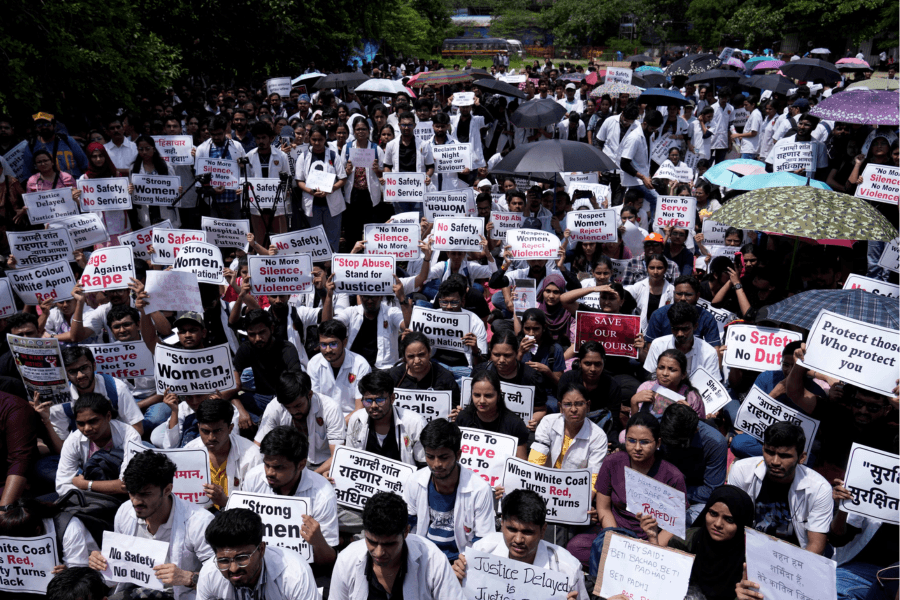
Doctors across West Bengal went on strike, demanding justice for the RG Kar victim. The protest eventually spread all across India. (Source: X) Bengal Elections 2026

The grievances were not manufactured. The cut money culture had become structural, woven into the delivery of everything from housing schemes to school admissions. Dissent carried a social cost that most ordinary families could not afford. And for women, the stakes were even more immediate. The rape and murder at R.G. Kar Medical College drew national attention and sharpened a much longer conversation about law and order and the government’s instinct to manage perception rather than deliver accountability. The streets outside that hospital, the protestors in white, the outrage that refused to be managed, all of it pointed to a public that had run out of patience.

Then there was the question Bengal’s young people carried most quietly: why do I have to leave? This was once India’s most economically significant state, contributing close to a third of the country’s GDP at independence. What followed were decades of industrial flight, political interference in opportunity, and a recruitment system so corroded by scandal that a government job became either a bribe or a mirage. Employment, delayed recruitment examinations, and the school recruitment scandal were central concerns for young and urban voters in this election. An entire generation voted in 2026 having grown up watching their most capable peers leave Bengal, and thrive in Mumbai, Delhi, Bengaluru, not by aspiration but by necessity.

The matter of illegal immigration and its alleged role in maintaining political control was not a rumour confined to opposition rallies. In border districts, the presence of undocumented individuals operating within local power structures had been reported, documented, and consistently dismissed by the state as communal rhetoric. Voters in those districts formed their own assessments.

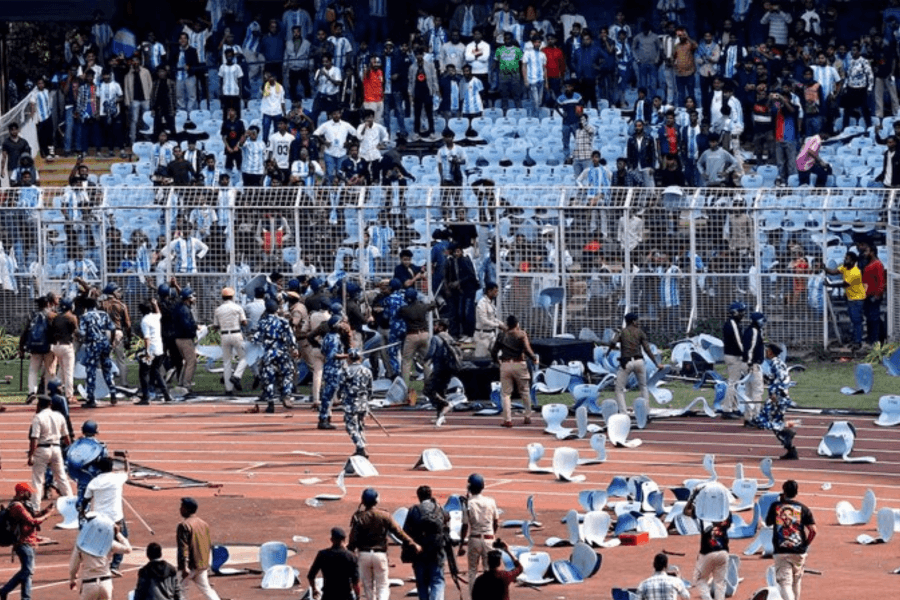
The anger among the youth was evident when mismanagement at the Messi event in Salt Lake Stadium last year led to vandalism. (Source: X)

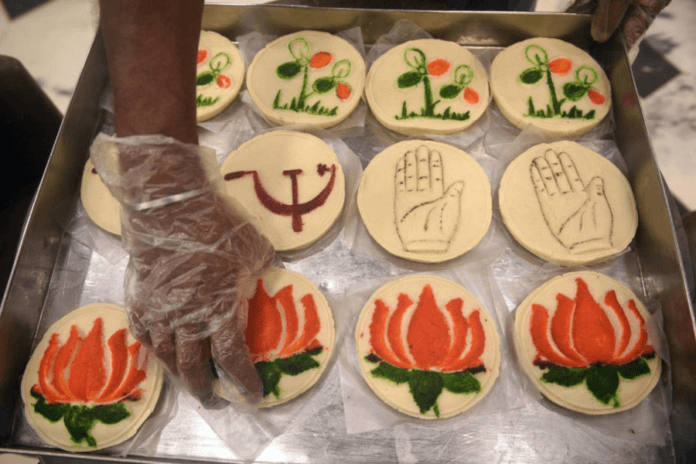
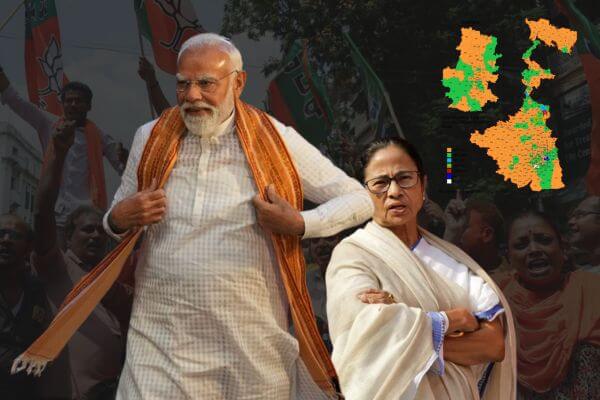
The BJP has become the first right-of-centre party to win a West Bengal assembly election since such elections began in 1937. That is a historic fact. But it would be a mistake for the incoming government to read it as a mandate for ideology rather than a mandate for change. The people of Bengal did not vote for a politics of triumphalism. They voted for jobs, for safety, for a government that does not extract a toll from citizens simply for existing within it.

The Special Intensive Revision (SIR) process was contested. Over nine million voter entries were removed during the SIR exercise, and the deletions remained under judicial scrutiny throughout the campaign period. These are legitimate questions that deserve continued institutional attention. And yet, across two phases of voting, the election was conducted without the deaths and large-scale violence that had become associated with Bengal polls. Over three hundred and fifty thousand security personnel were deployed statewide, with the National Investigation Agency involved in a state election for the first time. The result was an election where voter agency, not party muscle, determined the outcome. That is worth noting plainly.

The people of Bengal have shown they understand how to use a ballot as an instrument of accountability. They used it once to end Left Front rule. They have used it again now. The incoming government would be sensible to treat this not as an ideological triumph but as a conditional transfer of trust. The conditions are straightforward: jobs, safety, clean administration, and room for ordinary citizens to live without navigating a political tollbooth at every turn.

Bengal has given. Bengal knows how to take back.

The opinion expressed here is the author’s own reading of a democratic moment, not an endorsement of any party’s platform or policies. Bengal Elections 2026

Read more: The world’s largest democracy suffers a major blow

The world’s largest democracy suffers a major blow

0
Reading Time: 3 minutes

West Bengal elections

There has always been a never-ending list of things that enamours the world about the nation that is India. But perhaps the headline we have grown accustomed to seeing repeated across global media institutions has been around election time:

“India. The world’s largest democracy”

That a nation of India’s size, scale and diversity has been able to maintain a democratic system of government is a source of pride for so many people of Indian heritage – myself included. Indeed, I spoke to the ABC following the BJP’s successful bid for a third-term of Federal government and heralded the result as an example of a successful democracy in action.

However, recent news in relation to the elections in West Bengal and the ‘Special Intensive Revision’ (Revision) is alarming and should be cause for concern to all those who hold onto the values of democracy dearly – irrespective of political persuasion.

The Revision refers to a revision of the electoral rolls in India that has been argued to be a necessary intervention to ensure that deceased, incorrect and/or illegitimate voters are removed from the list of eligible voters. In theory, this intervention sounds a reasonable administrative task that one may expect of an electoral commission. In practice, the impact of the Revision is extremely troubling.

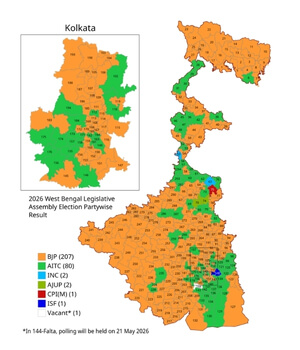
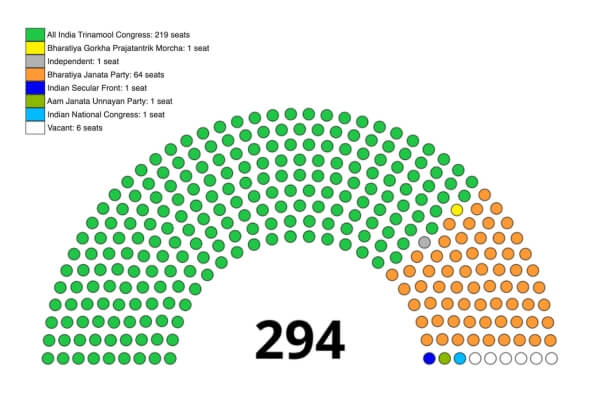
2026 West Bengal Legislative Assembly Election Partywise Result Map
2026 West Bengal Legislative Assembly Election Partywise Result Map (Source: Wikimedia Commons)

In the context of the recent elections in West Bengal, the Revision saw 9 million voters (a whopping 12% of West Bengal’s electorate) removed from the electoral roll. Given most elections are determined on a difference of a few percentage points, the change has massive consequences to the electorate and to any election result. Justice Bagchi of the Supreme Court himself is quoted observing this very concern.

Of course, one may argue that if 9 million voters were incorrectly included on the roll in the first place then the Revision has done an important job. The trouble is that no one can yet say that all 9 million who were removed were in fact removed correctly in the first place. Indeed, there have already been countless reports of individuals having been incorrectly removed from the roll despite having provided the required documentation to authorities. Statistically, the vast majority of those voters appear to be from disadvantaged, underrepresented and religious minority backgrounds.

Now it is true that these irregularities are not to be determined by simple folk like me, but by the wisdom of the courts. Indeed, several petitions and countless individual challenges were made disputing the validity of the removal of names from the electoral roll. However, the West Bengal elections proceeded without all of those cases having been resolved.

Accordingly, even the most ardent supporter of the Revision cannot deny that there is, at the very least, a possibility that millions of voters were incorrectly stripped of their right to vote. That possibility is a frightening threat to the core of what democracy is and brings us to the very heart of the storm cloud India’s democracy finds itself under as a result. The entire point of democratic elections is that everyone eligible to vote is entitled to have their voice heard at the ballot box  – regardless of what their background or political beliefs are.

India West Bengal Legislative Assembly 2026 PreElection
West Bengal Legislative Assembly 2026 PreElection (Source: Wikimedia Commons)

If it becomes true that even some portion of those voters removed from the roll had their voices silenced incorrectly, then it will not just be a moral tragedy. It will bring into question the very legitimacy of elections and government – that is, the very foundation of democracy in India and a principle that India has long heralded to be a core component of its national identity.

I want to make it clear that my point here is not about politics. I do not put forward any view on the actual domestic political battles of West Bengal. I do not lament the change in government, nor do I celebrate it. My only focus today is mourning the blow this saga has been to the foundations of the world’s largest democracy and the precedent that it may set for the future.

Read Also: Blockbusters to Ballots: Thalapathy Vijay

NZ‑India free trade deal: were early fears about immigration and investment justified?

0
NZ-India Free Trade Deal
Reading Time: 4 minutes


Depending on which side of the argument you listen to, the recently signed New Zealand-India free trade agreement represents either a huge economic opportunity for New Zealand or a risk to its economic sovereignty.

In an election year, we can expect political positioning over something as significant as this deal, given the broader context. India is a huge market of 1.4 billion people, migration is a burning issue globally and economic growth has been elusive during a period of inflation, war and fuel price hikes.

Broadly, the agreement reduces barriers to trade in goods, services, capital and skilled labour. It’s not surprising exporters are excited about the opportunities. India is projected to grow at 6.5% this year and the next – faster than New Zealand’s other existing trade partners.

The Ministry of Foreign Affairs and Trade’s national interest analysis estimates trade, output and real wages will increase due to the market access for New Zealand goods in the deal.

The economic benefits projected by 2050 may even be conservative estimates, given higher-than-modelled gains were seen once the New Zealand-China free trade agreement was in place.

But the India deal goes beyond trade in goods and encompasses services and investment liberalisation, which was where the most political opposition was faced.

First, it was feared New Zealand could be penalised for not investing enough in India. Second, according to NZ First’s Shane Jones, the agreement opens a door to “unfettered immigration”, displacing local jobs.

The hyperbole notwithstanding, then, what does the text of the agreement tell us about the likely economic impact of the deal on New Zealand?

NZ-India Free Trade Deal
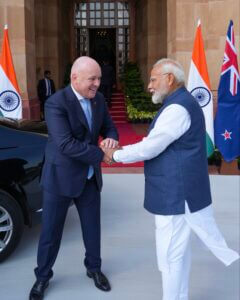
NZ PM Christopher Luxon with Indian PM Narendra Modi at a meet in India (Source: Christopher Luxon / X)

Can NZ be penalised for not investing enough?

The major sticking point for the Labour Party – whose support for the deal was needed because government coalition partner NZ First opposed it – was concern that New Zealand businesses would be legally obligated to invest NZ$33 billion dollars in India over 15 years.

A close reading of the chapter on investment promotion and cooperation, however, reveals the figure is not legally binding or subject to formal dispute settlement. It is to be mutually achieved through a “review, reporting and three-tier government-to-government” consultative process every five years.

As Trade Minister Todd McClay put it, the $33 billion figure is “aspirational”. It is based on a longer-term projection of India’s economic growth over the next 15 years. 

Investment will be facilitated by a dedicated desk within India’s Invest India agency. For example, it will include investment partnerships such as the Bioeconomy Science Institute Maiangi Taiao’s initiative to give expert support to India’s developing kiwifruit industry. NZ‑India free trade deal

If New Zealand businesses don’t achieve their investment targets after 15 years, there will still be a three-year grace period, with avenues for discussion and consultation.

Failing that, India has reserved the right to impose proportionate remedial measures by rebalancing tariff concessions. No specific details are mentioned, but they are intended to be temporary and will end once the investment objective is achieved.

These measures reflect the fact that India has given greater tariff concessions to New Zealand exporters than vice versa.

Focus on temporary labour mobility, not immigration

If anything, the bigger concern has been that the free trade agreement will establish an “open border” for Indian migrants into New Zealand, potentially undercutting local wages and putting even more pressure on an already strained housing market. 

In reality, the agreement negotiates temporary cross-border movement for contractual service suppliers in both directions between New Zealand and India. It also allows for working holiday visas (with clear time limits) aimed solely at alleviating short-term skill shortages. NZ‑India free trade deal

The agreement also allows temporary employment entry for some specific professions on New Zealand’s skill shortage list, all restricted to a non-renewable visa for three years. 

NZ-India Free Trade Deal
NZ and Indian PM launching the free trade agreement negotiations in 2025 (Source: Christopher Luxon / X)

Annexes to the agreement explicitly state:

This applies to a natural person of India, including a skilled worker, into the territory of New Zealand, in order to work under a fixed term employment contract concluded pursuant to the law of New Zealand, without the intent to establish permanent residence.

Furthermore, the agreement makes it clear these visas can only be granted for temporary travel for that specific employment purpose:

For greater certainty, these qualifications must be recognised by the appropriate New Zealand authority where under New Zealand law such recognition is a condition of the provision of that service in New Zealand.

This would mean qualified doctors, for example, can come to work in New Zealand for three years under temporary employment visas. But they will still be required to comply with local qualification and training requirements. NZ‑India free trade deal

The intention is clear: such labour mobility provisions will only allow skilled professionals from India to provide specific services for a finite time, complementing local jobs, not displacing them.

The proof, of course, will be in the implementation of the agreement and its overall impact on trade, investment and economic growth. For now, perhaps, it is time to move beyond politics and give New Zealand businesses a chance to tap the long-term opportunities offered by this deal.

This article first appeared on The Conversation, written by Rahul Sen, Senior Lecturer, Department of Economics and Finance at Auckland University of Technology. Read original article here.

READ ALSO: Free trade: Rum and Aussie lamb chops in the tandoor

Motherhood: A lineage of creativity

0
sukhmani khorana and mother
Sukhmani with her mum Meenu (Source: Supplied)
Reading Time: 3 minutes


When I became a mother nearly six years ago, I had imagined the logistics, the routines, the fatigue – but not the quiet rearranging of self that happens almost imperceptibly. Before my daughter was born, creativity was threaded through my everyday life. I had a writing community, and dipped in and out of other creative pursuits like photography. But motherhood arrived alongside a demanding research and teaching career, and something had to give. In my case, it was the time and headspace required for creative work. 

I remember confiding in a friend (herself a writer and musician) that creativity as I knew it then had vanished from my life since becoming a mother. She listened, and then said something that has stayed with me ever since: “Being a mother is a creative process in itself.”  

I have clung to those words like a small raft. They have helped me understand creativity doesn’t disappear with motherhood. Rather, it morphs, brews, and finds new forms, returning differently when the conditions are right. 

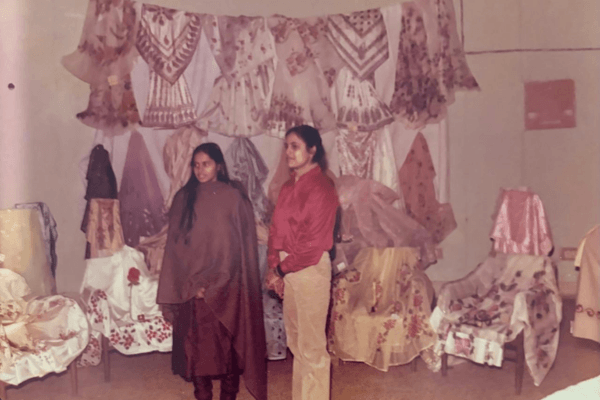
Lately, I’ve been thinking about the creative lineage I come from, especially my mother’s influence. She is a trained textile designer and I grew up surrounded by colour, fabric, and the rhythmic repetition of screen and block printing. She ran her own boutique, baked elaborate cakes, and made our birthday parties picturesque before Instagram.  

Sukhmani Khorana textile art mother
An early exhibition of Meenu Khorana’s creations. (Source: Supplied)

Motherhood Sukhmani Khorana

What I didn’t fully appreciate until recently was how unusual her path was. She grew up in Amritsar, lost her father young, and was fortunate to complete a course in textile design at a polytechnic in Delhi – a bold move for a young woman of her social positioning at that time. 

It took a cousin’s offhand comment to make me see my mother differently. Visiting from New York, she told me that her own mother (an artist working with textiles) felt able to pursue that path because mine had done it first. Creativity, I realised, is not only about what we make, but also about the paths we carve for others.  

Now, watching my fiveyearold daughter, I see creativity unfolding in the next generation.  She builds intricate houses of magnetic tiles and Lego, populating them with every miniature object she can find. She draws, writes early sentences, and tells stories with a kind of organised exuberance. Encouraging this feels instinctive, because I believe creativity is essential to our wellbeing, especially for sensitive souls who feel the world intensely. 

Teaching in classrooms across Sydney, and now at UNSW, I’ve met many students from migrant backgrounds who are drawn to creative careers, but struggle to justify these choices to their families. They are often the first in their communities to imagine and pursue such paths, and they carry both the weight of expectation and the spark of possibility.  

As representation from the South Asian diasporas grows in Australia, my own story and that of students makes me realise that representation begins at home in the small acts of permission mothers and mother-like figures give their children. 

For years, I wanted to create a resource for these students. Last year, that impulse became Colouring Outside the Box, a podcast I cohost with Dinusha Soo, a South Asian Australian who has transitioned from accounting to design. 

kalamkari painting
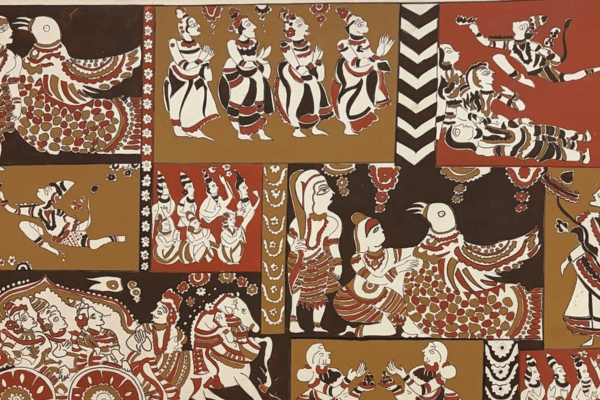
A kalamkari painting Meenu Khorana created as a student of textile design. (Source: Supplied)

Together, we interviewed ten Asian Australian creatives who have built what we call ‘braver careers’. Their stories are rich with negotiation – balancing parental expectations, navigating systemic barriers, and finding ways to honour both ambition and community. 

What struck me most during these interviews was that many of them didn’t rebel against their families; they reasoned with them. They excelled academically, then chose degrees in journalism, social work, or visual arts. They earned community approval when their work appeared in the public sphere. They carved space for their individual and collective without severing ties. Across these conversations, another message that surfaced repeatedly is to trust the process. Creativity requires it, and so does motherhood. Both ask us to surrender control and to stay open to change.  

That is the quiet truth I’ve come to understand: motherhood didn’t take creativity away from me. It simply taught me a different way to create – one rooted in patience, lineage, and the slow, surprising art of lifelong becoming.

READ ALSO:  Sukhmani Khorana: Half of Asian migrants don’t understand Aus voting system

The Salvation Army’s multicultural event unites communities in support of the 2026 Red Shield Appeal

0
CG Marek Sheba Miriam Paul
Reading Time: 3 minutes

Salvation Army

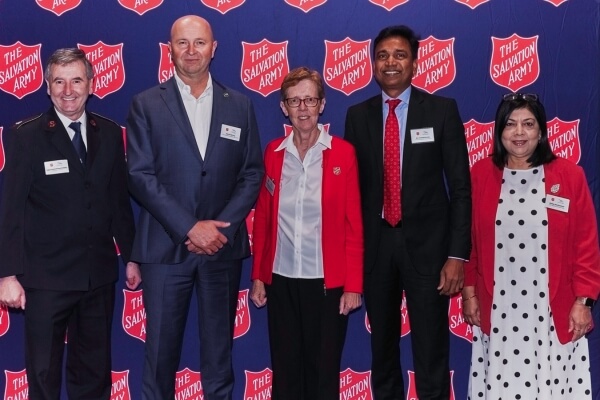
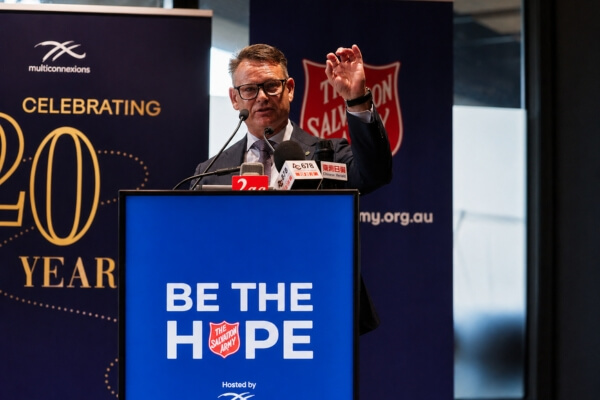
The Salvation Army’s national Multicultural Launch event, held as part of the annual Red Shield Appeal, took place on Thursday, 23 April 2026 at NSW Parliament House. The event was formally launched by distinguished leaders from government and business, including Dr. S. Janakiraman, Consul General of India in Sydney; Hon. Warren Kirby MP, NSW Parliament; and Marek Ristwej, Chair of Marque Capital and LBW Trust.

The event brought together business, community, and media leaders from 20+ community groups, raising awareness and supporting the work of The Salvation Army across Australia.

Now in it’s 62nd year, The Red Shield Appeal is The Salvation Army’s flagship fundraising appeal and Australia’s largest and longest running door knock appeal. This year, The Salvation Army are aiming to raise $41 million nationally to fund vital work around the country in areas such as homelessness, family and domestic violence, youth, financial hardship, drug and alcohol rehabilitation, as well as the key work of The Salvation Army within multicultural communities. 

Jonathan Miriam red shield appeal
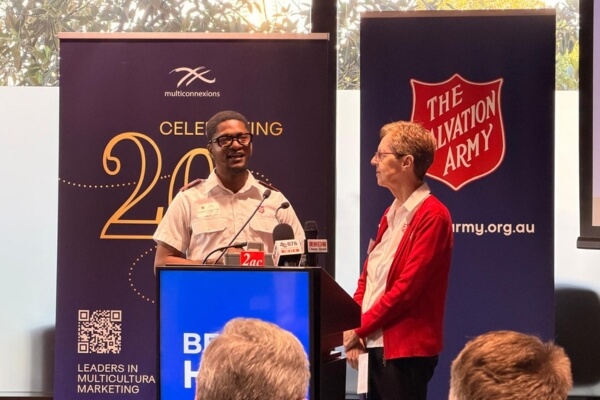
Lieutenant Jonathan Abduli (left) and Commissioner Miriam Gluyas (right) (Source: Supplied)

Commissioner Miriam Gluyas, Territorial Commander of The Salvation Army said, “The Salvation Army have been committed to standing alongside and supporting those from culturally and linguistically diverse communities for over 140 years, and we continue to provide services and programs in communities that have a lasting impact.”

“The Salvation Army Multicultural launch provides The Salvos with an amazing opportunity to connect with multicultural community leaders who are passionate about supporting people within multicultural communities. We are also extremely grateful to Multiconnexions, who have supported The Salvation Army for over 20 years.”

Warren Kirby - MP, Member of Riverstone
Warren Kirby – MP, Member of Riverstone (Source: Supplied)

Warren Kirby MP, NSW Parliament, said, “The Red Shield Appeal is one of Australia’s most powerful expressions of collective compassion, uniting communities to restore dignity, resilience, and hope for those facing hardship. I deeply commend The Salvation Army for leading this enduring national effort, and MultiConnexions for strengthening its impact through meaningful community engagement.”

Sheba Nandkeolyar, CEO of Multiconnexions and recipient of The Salvation Army’s Eva Burrows Award, said: “We are proud to continue hosting The Salvation Army’s Red Shield Appeal Multicultural Launch for over two decades. ‘Be Hope’ beautifully reflects the essence of multicultural Australia, where generosity transcends cultures, and giving becomes a shared responsibility that brings deeper meaning to our lives.”

Salvos Team
Salvos Team (Source: Supplied)

Across Australia last year, through The Salvation Army’s network of over 400 centres and 2,000 services, the Salvos provided: 

  • Assistance to one person every 17 seconds
  • More than 1.74 million sessions of care to over 228,000 people in need
  • Over 1 million nights of safe accommodation
  • More than 1.4 million meals for those who accessed our homelessness services.

To be the hope by donating to The Salvation Army’s Red Shield Appeal, or if you need support from The Salvos, visit salvationarmy.org.au or call 13 SALVOS. You can also donate at any Salvos Store.

Read Also: IAWBD: A new forum energising India-Australia women in business

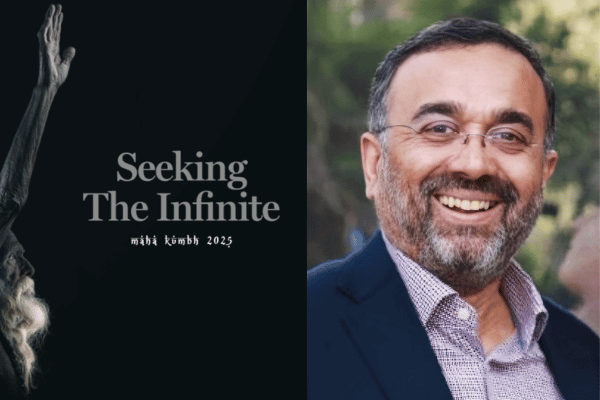
Book Review: Seeking the Infinite – Maha Kumbh 2025

0
Seeking the infinite
Reading Time: 3 minutes


Every 144 years, the Maha Kumbh marks a sacred gathering, helping us recognise the unifying core of humankind in a scattered world. The book Seeking the Infinite by Yakub Mathew distils the profound effect of this once-in-a-lifetime event into a single introspective answer: seeking the infinite in this adventure called life. At its heart, the book explores faith, humanity, and transformation from within – told through the eyes of people from every walk of life. 

sadhus
Evocative images weaved through the book for a powerful ambiance (Source: Supplied)

A Syrian-Christian banker from Kerala, raised in New Delhi, and shaped by four decades on Wall Street, Yakub Mathew happened to plan his life-long dream of a pilgrimage to Prayagraj the same year the Maha Kumbh Mela was set to take place. Travelling with his wife and seventeen friends from across the world, each carried their own questions, hoping to find something they couldn’t quite name. What began as a personal journey towards fulfilling a dream became a book brimming with profound ideas, intimate musings, and the voice of Indians who have made their mark on the global stage. 

Where Seeking the Infinite truly earns its place on the shelf is the vividness with which it pulls you into a world you may never have seen. For those of us who missed the Maha Kumbh, the images and words conjure the sheer press of bodies, colour, and devotion at Prayagraj with an immediacy that feels almost physical – or as Thiruvananthapuram MP Shashi Tharoor aptly describes it in the book, “a visual odyssey through one of humanity’s greatest assemblies.” 

sadhus
Portraits of Sadhus at Prayagraj (Source: Supplied)

Blessed beginnings

Yakub does not wade into this experience unprepared. He begins the book by seeking blessings from Sadhguru, Swami Avdheshanand Giri Maharaj Ji, His Eminence Oswald Cardinal Gracias, and Maharaj Radhanath Swami Ji – a quietly profound gesture that signals what kind of journey this will be. Seeking the Infinite holds accounts of politicians, film directors, philanthropists, authors, and CEOs, each offering a different lens on the same sacred ground.  

Sourish Bhattacharyya, a journalist and an author for the book, introduces us to the moment, tracing the history of the Triveni Sangam with the steadiness of someone who understands that a place this sacred does not need embellishment, only honest telling. In a world increasingly weighted down by hatred and violence, that history reads like an anchor, reminding us of our inner strengths. The Maha Kumbh carries with it the ancient story of asuras drunk on greed and power, ultimately swallowed by the same drops of amrit they sought to claim. 

Seeking the infinite
Sadhus in the sacred waters, immersed in ritual and devotion (Source: Supplied)

Traditional meets the modern

Yet the Kumbh is not frozen in the past. Amitabh Kant, former G20 Sherpa and CEO of NITI Aayog, writes of the Sangam between human tradition and technology at the event, and his optimism about India’s future feels earned rather than hollow.

Mokshapriya
Mokshapriya – a spiritual seeker based in Dehradun and New York writes in the book (Source: Supplied)

Yogmata Keiko Aikawa, the first female Siddha master, speaks of the five elements in Seeking the Infinite – water, earth, fire, wind and sky – blessing and awakening all those who make the journey. And Neelima Dalmia Adhar, poet and a well-known writer, captures the electricity of the dip itself: the swirling waters of the Sangam, she writes, felt like a pulsating, ancient vortex. 

Seeking the Infinite offers a first-hand, but diverse and deeply personal account of the lived experiences of the Maha Kumbh Mela. It reminds us, ultimately, that the journey of self-realisation begins with a single act of openness: to ask the question, and trust that the universe has an answer. 

READ ALSO: A sea of humanity, a tide of awakening: Reflections from Maha Kumbh

The presence of absence: Meri Nazar Se Dekho

0
Rushi Dave and Bobby Mallick (Source: Supplied)
Reading Time: 3 minutes

Meri Nazar Se Dekho

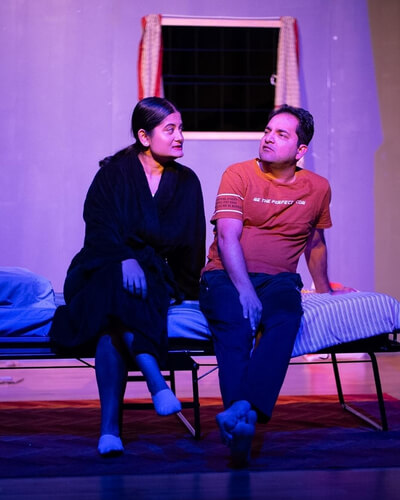
When the first act of Meri Nazar Se Dekho ends – abrupt, almost jolting – it hits you: Mohit, the main character you’ve been following, isn’t real.

You’ve become acquainted with him through the humdrum daily life of his parents – learning about his birth, school, friends, pastimes, even what he said this very morning. Yet, he is but a figment of imagination.

The two central characters – the real ones – do such a convincing job of conjuring their non-existent son that, for a full hour, you’re certain he’ll walk in at any moment.

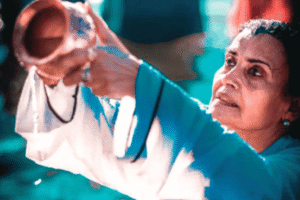
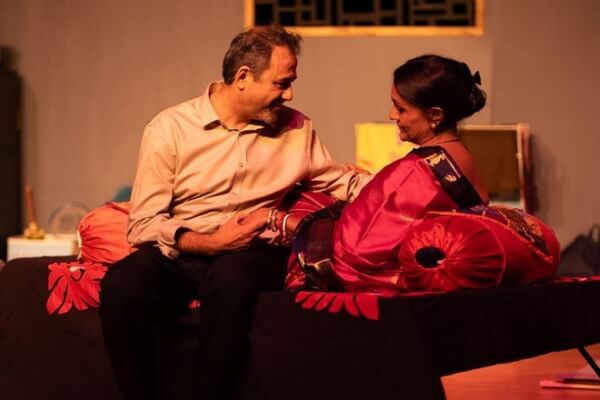
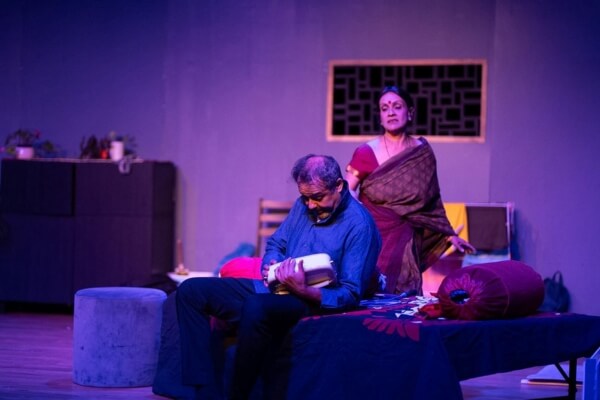
Bobby Mallick as Shalini and Rushi Dave as Abhimanyu sustain the illusion with such precision and emotional depth, that it never once feels strained.

Bobby Mallick as Shalini and Rushi Dave as Abhimanyu
Bobby Mallick as Shalini and Rushi Dave as Abhimanyu (Source: Supplied)

It would be simplistic to think of playwright Prashant Dalvi’s play as grieving the loss of a child – or at least an extreme case where the grief becomes pathologized. Even as a commentary on the pressures on a woman to have a child, across the physical, psychological, sociological and philosophical, it falls short. This is something else. It is about the pathology itself, the mechanics of denial.

meri nazar play photos
Catalysing factor: Sameer (Saurabh Datar) with Abhimanyu

Abhimanyu explains to his friend Sameer (Saurabh Datar) who has cottoned on to the situation, why he allowed the creation of this fully simulated environment. If it works as a coping mechanism, why not? When reality becomes too painful to face, we retreat into the moral simplicity of imagination – and in our cocoon, we stay protected.

Deep down, Abhimanyu knows this may serve in the moment, but cannot hold in the long run – and so he agrees to seek help.

The ultimate path to clarity unfolds as a drama within a drama. It resolves in brutal fashion – Abhimanyu overwhelmed in his transference, and consolation coming from a surprisingly calm, collected, and clear-sighted Shalini.

With that shift in perspective, it becomes clear that this was the play’s concern all along: the act of seeing. We interpret the world from within our own frames, often reshaping make-believe into lived reality.

To some extent, we all construct these private worlds. We inhabit our bubbles, defending them – sometimes vociferously – against anything that might rupture our carefully held truths, whether around politics, climate, race, or any other issue.

meri nazar se dekho play stills
Shalini (Bobby Mallick): Don’t you dare break my bubble. (Source: Supplied)

“Look at it through my eyes,” we seem to be saying in our WhatsApp threads and social media spats – meri nazar se dekho – as if perspective alone could make truth singular.

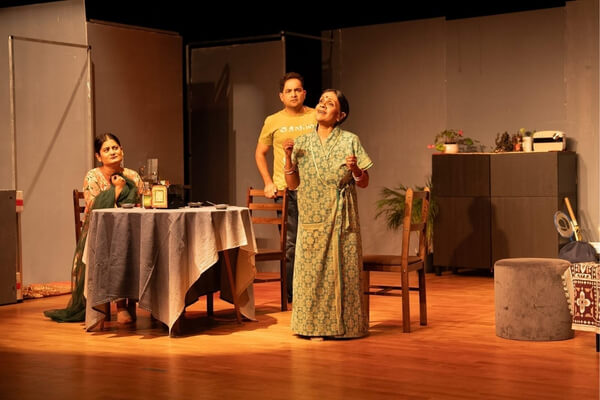
Rajshri Roy as Aparna with Sameer (Saurabh Datar)

Director Shashi Dandekar renders this shift through a distinctly stylised lens, shaping each moment so the illusion builds – and unravels – with controlled elegance. He is well supported by a cast of seasoned performers in this Prekshaa Arts production. Bobby Mallick is assured as the loving mother and devoted homemaker, although she allows moments of fragility, volatility, and eerie disquiet to seep through brilliantly. Rushi Dave navigates the emotional dissonance of presence and absence with quiet control – breaking down spectacularly at the ghastly end. (It was clear to see the toll this took on him, at the curtain call only minutes later).

Saurabh Datar’s Sameer, the persuasive force, is a circuit-breaker – may we all have a Sameer in our lives. Rajshri Roy’s Aparna stands in for society: observant, sympathetic, yet ultimately retreating from engagement.

Set design here stands out for its inventive and effective use of the full performance space, while lighting is handled with good control, accentuating pivotal moments and creating impact. If anything, the set changes might benefit from a slightly brisker pace.  

In the end, this play lingers in that fragile space between presence and absence, where what isn’t there can feel as real as what is. In this, it becomes a telling comment on our social moment.


Read Also: COVID and connection collide in ‘Camp Darwin’