


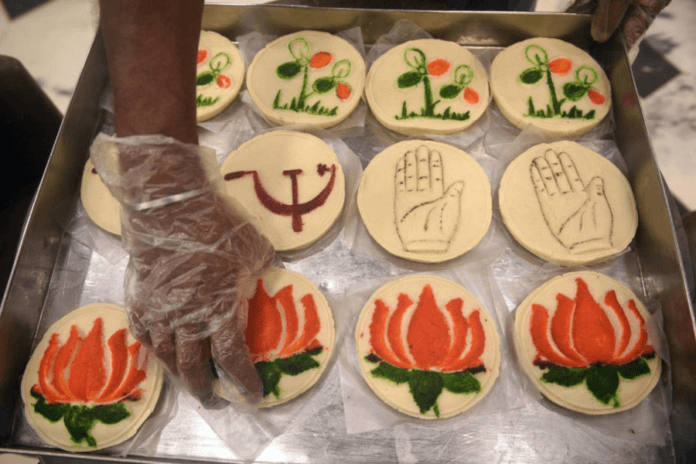

Bengal Elections 2026
For fifteen years, West Bengal operated under a political arrangement that gradually hollowed out the idea of public life. Not through a single dramatic rupture, but through the slow, steady normalisation of things that should never have been normal. A commission paid to the local party worker to access a welfare scheme you were entitled to. A syndicate that decided whose materials built whose home. A government job that went not to the person who qualified but to the person who paid. By the end, people had stopped calling it corruption. They had simply started calling it how things work.
On the 4th of May, 2026, people decided they wanted things to work differently.
The voter turnout of 92.93 per cent was the highest in West Bengal’s recorded history, surpassing even the 2011 election that swept the Left Front out after thirty-four years. Numbers like this do not emerge from political enthusiasm alone. They emerge from something closer to collective resolve. People who had stayed home before, out of fear or fatigue or a learned sense that it would not matter, walked to the booth this time. That walk, quiet and determined, is the real story of this election.
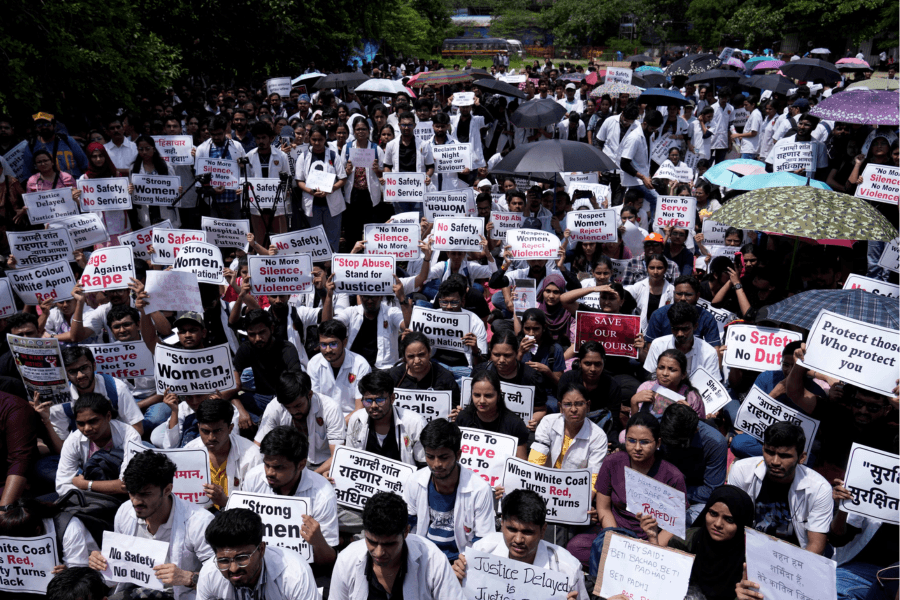
The grievances were not manufactured. The cut money culture had become structural, woven into the delivery of everything from housing schemes to school admissions. Dissent carried a social cost that most ordinary families could not afford. And for women, the stakes were even more immediate. The rape and murder at R.G. Kar Medical College drew national attention and sharpened a much longer conversation about law and order and the government’s instinct to manage perception rather than deliver accountability. The streets outside that hospital, the protestors in white, the outrage that refused to be managed, all of it pointed to a public that had run out of patience.
Then there was the question Bengal’s young people carried most quietly: why do I have to leave? This was once India’s most economically significant state, contributing close to a third of the country’s GDP at independence. What followed were decades of industrial flight, political interference in opportunity, and a recruitment system so corroded by scandal that a government job became either a bribe or a mirage. Employment, delayed recruitment examinations, and the school recruitment scandal were central concerns for young and urban voters in this election. An entire generation voted in 2026 having grown up watching their most capable peers leave Bengal, and thrive in Mumbai, Delhi, Bengaluru, not by aspiration but by necessity.
The matter of illegal immigration and its alleged role in maintaining political control was not a rumour confined to opposition rallies. In border districts, the presence of undocumented individuals operating within local power structures had been reported, documented, and consistently dismissed by the state as communal rhetoric. Voters in those districts formed their own assessments.
The BJP has become the first right-of-centre party to win a West Bengal assembly election since such elections began in 1937. That is a historic fact. But it would be a mistake for the incoming government to read it as a mandate for ideology rather than a mandate for change. The people of Bengal did not vote for a politics of triumphalism. They voted for jobs, for safety, for a government that does not extract a toll from citizens simply for existing within it.
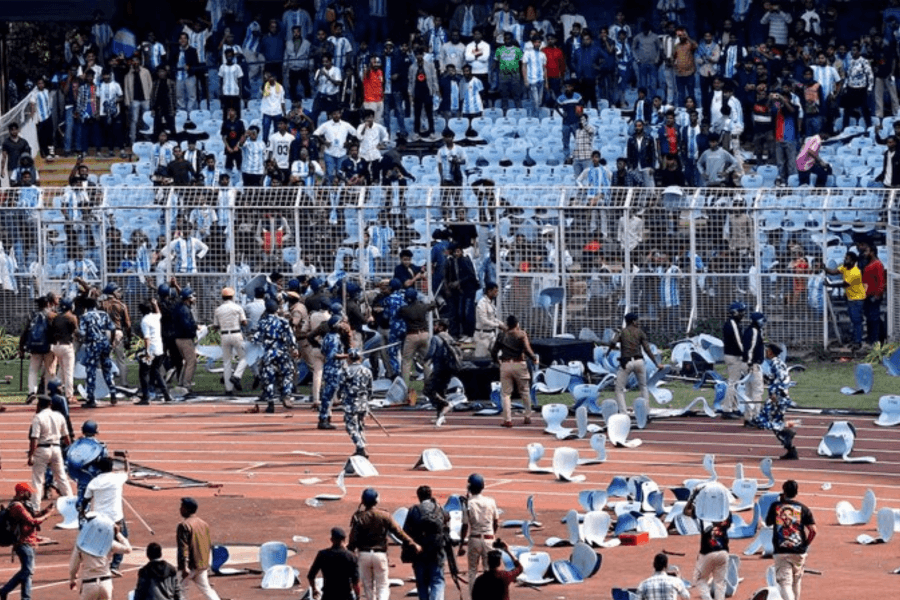
The Special Intensive Revision (SIR) process was contested. Over nine million voter entries were removed during the SIR exercise, and the deletions remained under judicial scrutiny throughout the campaign period. These are legitimate questions that deserve continued institutional attention. And yet, across two phases of voting, the election was conducted without the deaths and large-scale violence that had become associated with Bengal polls. Over three hundred and fifty thousand security personnel were deployed statewide, with the National Investigation Agency involved in a state election for the first time. The result was an election where voter agency, not party muscle, determined the outcome. That is worth noting plainly.
The people of Bengal have shown they understand how to use a ballot as an instrument of accountability. They used it once to end Left Front rule. They have used it again now. The incoming government would be sensible to treat this not as an ideological triumph but as a conditional transfer of trust. The conditions are straightforward: jobs, safety, clean administration, and room for ordinary citizens to live without navigating a political tollbooth at every turn.
Bengal has given. Bengal knows how to take back.
The opinion expressed here is the author’s own reading of a democratic moment, not an endorsement of any party’s platform or policies. Bengal Elections 2026
Read more: The world’s largest democracy suffers a major blow