




climate change and bushfires
When Vijay Kumar returned to the forests of his childhood in Himachal Pradesh, he was confronted by an unusual sight.
Entire stands of chir pine trees had burned up to their canopies.
“That was a particularly striking moment for me because I had never previously seen entire stand of chir pine forest so severely affected,” he told Indian Link.
The encounter reinforced a question that now sits at the heart of his research at Western Sydney University: what happens when forests that have lived with fire for centuries begin experiencing fires they are not adapted to?
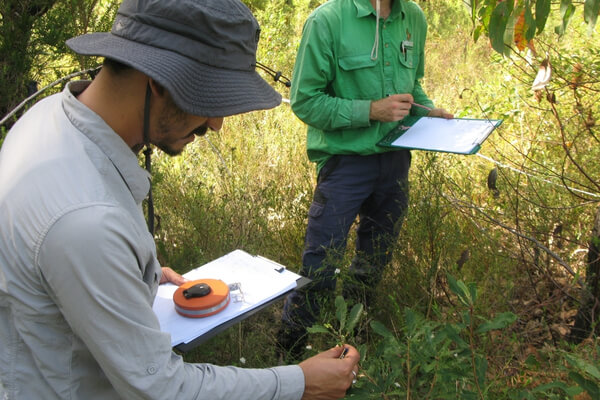
Kumar, who grew up in a rural village surrounded by forests in the Western Himalayas, is comparing changing fire regimes in India’s chir pine forests with Australia’s eucalypt ecosystems. His work probes how forests recover after fire, and whether climate change is pushing some ecosystems beyond their ecological limits.
His findings could help guide both nations in managing forests in an increasingly warming world.
Changing fire regimes
What has changed back home in India is worrying. “Nowadays, summers are becoming hotter and drier, and rainfall and snowfall patterns are much less predictable than they were before,” he informs.
Areas that once supported dense vegetation appear drier, while road construction and infrastructure development have increased pressure on forest landscapes.
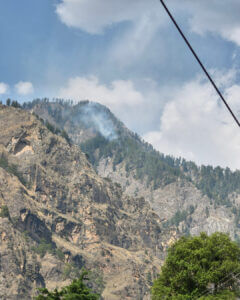
Like many Himalayan communities, his village depends on nearby forests for resources and livelihood.
What worries Kumar most is not simply the number of fires, but how fundamentally their behaviour is changing.
Historically, fires in chir pine forests occurred during summer and were generally low in severity. Today, fires are appearing outside their traditional seasons.
“Last year there were numerous reports of forest fires during winter, which was highly unusual,” he adds. “Seeing fires occur during a season that was historically associated with snowfall made me realise that something fundamental had changed.”
In the ecological world, these shifts are known as changes in a fire regime – the long-term pattern of how often fires occur, when they occur and how severe they become.
“A changing fire regime means that these patterns are no longer occurring in the way ecosystems have historically adapted to,” Kumar explains.
Australia, too, has experienced its share of unprecedented and humanitarian disaster – the Black Summer bushfires, spanning 2019 to 2020. However, how the two nations see wildfires today is different.
View this post on Instagram
Kumar explains: “Australia’s Black Summer bushfires became a single defining event that fundamentally changed the national conversation around climate change and bushfires. In India, the situation has been more gradual rather than being driven by one specific event. I think India may currently be at a stage where public awareness is increasing, but the issue has not yet reached the same level of national attention that Australia’s Black Summer did.”
What lies ahead
Regardless, the effects extend far beyond forests themselves, and therefore, urgent attention needs to be paid to the problem.
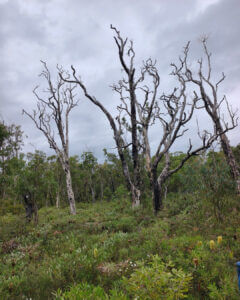
While many ecosystems have evolved with occasional fires, repeated high-severity fires can prevent recovery, causing tree mortality, regeneration failure and biodiversity loss.
“Forests provide many essential ecosystem services that directly support human well-being, such as clean air, water regulation, climate regulation, carbon storage, protection against soil erosion and more,” Kumar continues. “In other words, a changing fire regime is not only an environmental issue, but also a social and economic issue that can influence everyone.”
Studying forests in both India and Australia has given Kumar a unique perspective on how different ecosystems respond to similar pressures.
“What surprised me the most was that, although chir pine forests in the Himalayas and eucalypt forests in Australia are geographically and ecologically very different, both ecosystems have evolved with fire and possess remarkable adaptations that allow them to persist after fire events,” he says.
This, however, has limits.
Many Australian eucalypt species can rapidly recover through resprouting after fire. Chir pine forests depend more heavily on seeds to regenerate, making them more vulnerable when fires become too frequent or severe.
“Studying these two ecosystems side by side made me realise that being fire-adapted does not mean being immune to fire,” Kumar says. “There is a threshold beyond which ecosystems may struggle to recover.”
Kumar believes solutions require more than ecological science alone. Drawing on his experience with Australia’s Bushfire and Natural Hazards Research Centre, he points to the value of collaboration between scientists, government agencies, emergency services and Aboriginal communities
India, he argues, has its own wealth of traditional ecological knowledge but could do more to incorporate local communities into research and policy decisions.
Looking ahead, Kumar remains cautiously hopeful. Forests in both Australia and the Himalayas have survived fire for millennia. But the future they face may be unlike anything in their past.
“So, I would say we are entering new ecological territory,” he says, “but not a hopeless future”.
Read Also: Ambika Vishwanath, Maitri fellow, on why climate change is now a security issue