



Prof Mohan Yellishetty
Restoring farmland after mineral sands mining is emerging as a major environmental challenge in regional Victoria, particularly in the Wimmera and Mallee, where agricultural productivity depends heavily on long-term soil health.
Questions remain over whether mined land can be returned to its original agricultural use, even when rehabilitation is carried out in accordance with regulatory requirements.

To address these concerns, the Victorian Government has established a new working group to develop clearer, evidence-based approaches to restoring agricultural land after mining.
Indian-origin mining and sustainability expert Professor Mohan Yellishetty, of Monash University’s Department of Civil and Environmental Engineering, has been appointed to chair the Mineral Sands Agricultural Land Restoration Working Group.
“We are making sure farmers have a seat at the table to tell us about their concerns and share their expertise,” Minister for Energy and Resources Lily D’Ambrosio said in a statement.
The group includes representatives from the Victorian Farmers Federation, Agriculture Victoria, Catchment Management Authorities, local councils including Yarriambiack Shire and Horsham Rural City, and the Minerals Council of Australia.
Farmers at the table
Speaking to Indian Link, Professor Yellishetty said the group would provide independent advice on restoring agricultural land affected by mineral sands mining.
“The Mineral Sands Agricultural Land Restoration Working Group will provide independent, evidence-based guidance on restoring agricultural land post-mining,” he said.
Its mandate includes defining clearer rehabilitation requirements for mining companies and examining how soil productivity can be rebuilt and maintained over time.
“Soils are a vital part of farming and are key to its productivity,” Professor Yellishetty said.
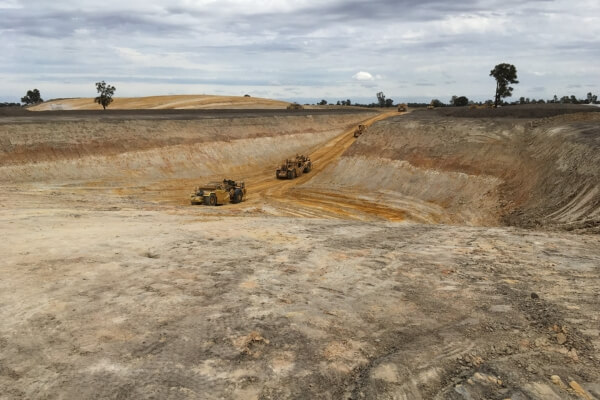
With mineral sands activity expected to increase across the Wimmera and Mallee, the group will also consider how quickly rehabilitated land can return to productive use.
“This working group is about acting to better define mine rehabilitation requirements for farming areas in the Wimmera and Mallee, and will directly address concerns from farmers about how soil productivity can be reliably restored, and over what timeframe.”
Progressive rehabilitation
A key part of the group’s work will be advising Resources Victoria on restoration practices during and after mineral extraction.
Professor Yellishetty said collaboration between mining operators and farming communities would be essential.
“Restoring agricultural land in the Wimmera and Mallee following mineral sands development is a critical part of the mining process, and we’ll be helping miners collaborate with the region’s farmers to plan its delivery,” he said.
One approach already used in the industry is progressive rehabilitation, in which sections of land are restored as mining moves across a site rather than only after the entire operation has ended.
“This means operators do not wait until the end of mining to begin rehabilitation,” Professor Yellishetty explained.
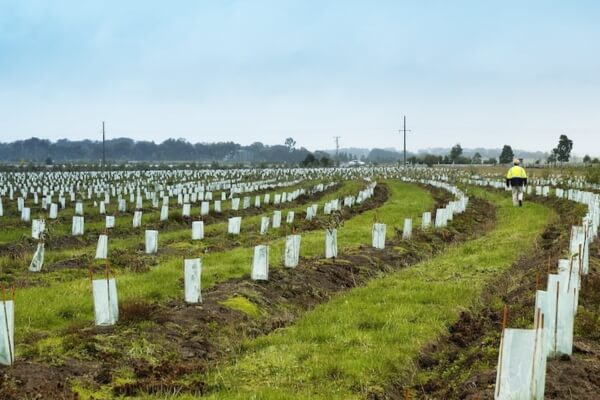
“They restore areas once mining is finished in that part of the site. This helps reduce the amount of disturbed land and supports faster recovery.”
The soil challenge
While progressive rehabilitation can reduce the area of land left disturbed, its long-term success depends largely on how well soil layers are removed, stored and reconstructed.
Returning land to its original shape is only one part of the process. Agricultural productivity also relies on soil structure, biological activity, nutrient cycles and water retention, all of which can take years to recover after major disturbance.
Across Australia, rehabilitation outcomes have varied. Some former mining sites have been successfully returned to productive use, while the long-term condition of others remains uncertain.
The working group is expected to examine these gaps and recommend stronger, more consistent standards for agricultural regions where land carries both economic and ecological value.
“Victoria has three per cent of the nation’s arable land but produces 25 per cent of the nation’s agricultural output,” said Victorian Farmers Federation Grains Director and incoming president Ryan Milgate.
“It’s imperative that if this land is mined, we ensure it can be restored to its former condition.”
Read Also: Monash Uni Professor keeping Indian freight trains running