


When I became a mother nearly six years ago, I had imagined the logistics, the routines, the fatigue – but not the quiet rearranging of self that happens almost imperceptibly. Before my daughter was born, creativity was threaded through my everyday life. I had a writing community, and dipped in and out of other creative pursuits like photography. But motherhood arrived alongside a demanding research and teaching career, and something had to give. In my case, it was the time and headspace required for creative work.
I remember confiding in a friend (herself a writer and musician) that creativity as I knew it then had vanished from my life since becoming a mother. She listened, and then said something that has stayed with me ever since: “Being a mother is a creative process in itself.”
I have clung to those words like a small raft. They have helped me understand creativity doesn’t disappear with motherhood. Rather, it morphs, brews, and finds new forms, returning differently when the conditions are right.
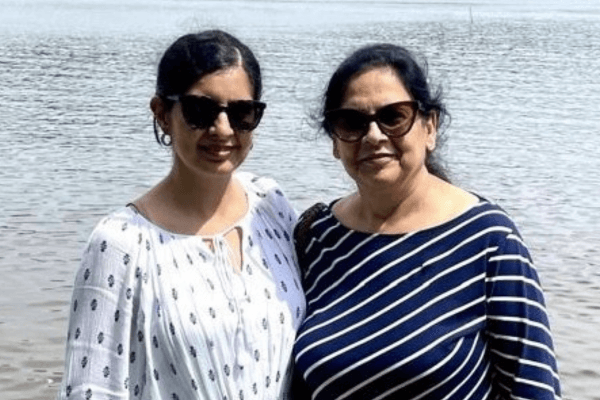
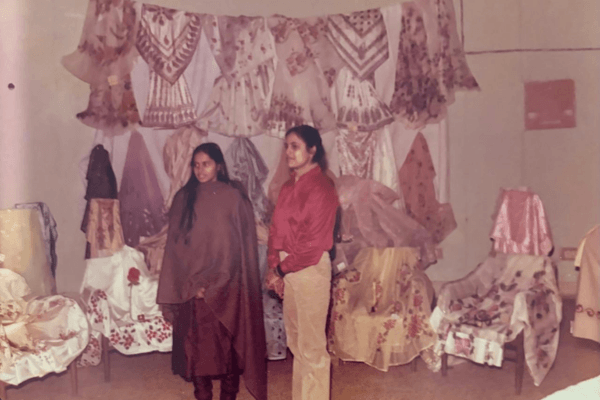
Lately, I’ve been thinking about the creative lineage I come from, especially my mother’s influence. She is a trained textile designer and I grew up surrounded by colour, fabric, and the rhythmic repetition of screen and block printing. She ran her own boutique, baked elaborate cakes, and made our birthday parties picturesque before Instagram.
Motherhood Sukhmani Khorana
What I didn’t fully appreciate until recently was how unusual her path was. She grew up in Amritsar, lost her father young, and was fortunate to complete a course in textile design at a polytechnic in Delhi – a bold move for a young woman of her social positioning at that time.
It took a cousin’s offhand comment to make me see my mother differently. Visiting from New York, she told me that her own mother (an artist working with textiles) felt able to pursue that path because mine had done it first. Creativity, I realised, is not only about what we make, but also about the paths we carve for others.
Now, watching my five‑year‑old daughter, I see creativity unfolding in the next generation. She builds intricate houses of magnetic tiles and Lego, populating them with every miniature object she can find. She draws, writes early sentences, and tells stories with a kind of organised exuberance. Encouraging this feels instinctive, because I believe creativity is essential to our wellbeing, especially for sensitive souls who feel the world intensely.
Teaching in classrooms across Sydney, and now at UNSW, I’ve met many students from migrant backgrounds who are drawn to creative careers, but struggle to justify these choices to their families. They are often the first in their communities to imagine and pursue such paths, and they carry both the weight of expectation and the spark of possibility.
As representation from the South Asian diasporas grows in Australia, my own story and that of students makes me realise that representation begins at home in the small acts of permission mothers and mother-like figures give their children.
For years, I wanted to create a resource for these students. Last year, that impulse became Colouring Outside the Box, a podcast I co‑host with Dinusha Soo, a South Asian Australian who has transitioned from accounting to design.
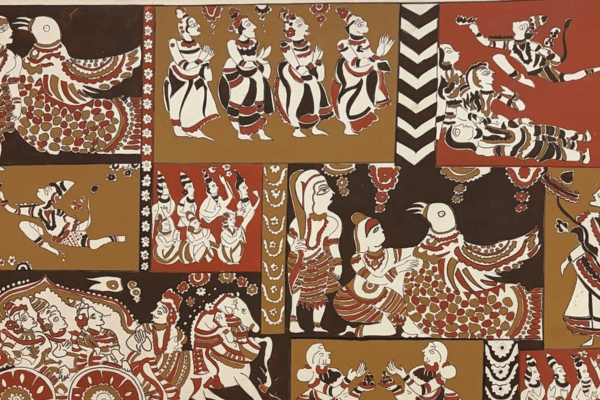
Together, we interviewed ten Asian Australian creatives who have built what we call ‘braver careers’. Their stories are rich with negotiation – balancing parental expectations, navigating systemic barriers, and finding ways to honour both ambition and community.
What struck me most during these interviews was that many of them didn’t rebel against their families; they reasoned with them. They excelled academically, then chose degrees in journalism, social work, or visual arts. They earned community approval when their work appeared in the public sphere. They carved space for their individual and collective without severing ties. Across these conversations, another message that surfaced repeatedly is to trust the process. Creativity requires it, and so does motherhood. Both ask us to surrender control and to stay open to change.
That is the quiet truth I’ve come to understand: motherhood didn’t take creativity away from me. It simply taught me a different way to create – one rooted in patience, lineage, and the slow, surprising art of lifelong becoming.
READ ALSO: Sukhmani Khorana: Half of Asian migrants don’t understand Aus voting system