


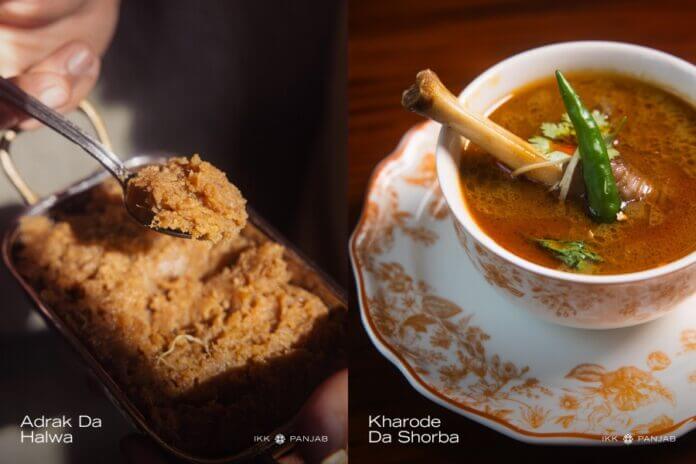

Panjabis are one of Delhi’s dominant ethnic groups and Panjabi food a standard in many of the city’s restaurants. India’s capital is also my second home. Coming and going here for three decades meant Panjabi cuisine became a commonplace and I had stopped paying it notice. But, when a restaurant called IKK Panjab, serving the food of “undivided Panjab”, opened in Connaught Place that got my attention, specifically the ‘undivided’ part.
How I found my way to Indian food
Before we get into IKK Panjab, there is backstory with a detour to Australia where I was born and received my history education.
When I decided to write about food history, my homeland held no appeal as a subject. The conventional story of early Australian cuisine is a bleak one. From 1788 onwards, non-Aboriginal settlers are said to have survived on a monotonous diet of badly cooked meat, cabbage, damper (unleavened bread) and stodgy puddings. According to this narrative, things didn’t improve until the late 1940s, when post-war migrants from Continental Europe arrived and, as the saying goes, “taught [Anglo-Australians] how to eat.”
Having been schooled on this singular ‘legend’ of my country’s “terrible” early food, there seemed little worth exploring. Instead, I chose to study India’s foodways, quickly learning the popular idea that Indians ate a uniform national cuisine called ‘curry’, was a falsehood.
This inspired me to re-examine the negative stereotypes of Australia’s food past and discover these were wildly exaggerated. In fact, there were good cooks and people with sophisticated palates in the Australian colonies – many of them enjoyed spices in their meals.
The transformative impact of post-war European migrants on Australian society – and its food – is taught as a defining chapter in our national history. Yet the Partition of India, another cataclysm of the same post-war era, was never mentioned in my history classes.
I only learnt of Partition in 1996 when I began studying India’s food. Writing a history of food in Delhi, a city radically changed by Partition, I recognised broad parallels between India’s capital and Australia. In both places, mass movement of people had catalysed significant change in foodways, although the consequences of Partition were very different otherwise.
When Panjab was one table
On a recent winter afternoon in Delhi, writer Vernika Awal and I were talking over mathi chole and chai, about her Panjabi food heritage, when she said, “I can never go back to the place [in Pakistan] my family comes from”. This exile has not stopped Vernika documenting and celebrating the living culture and social traditions of Panjab in her writing and as brand ambassador for IKK Panjab and the Heritage Gathering.
View this post on Instagram
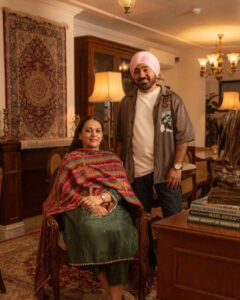
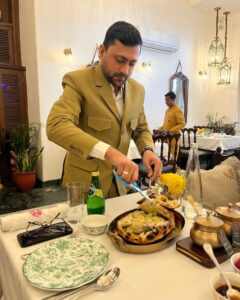
My first visit to IKK Panjab was driven by the promise of discovering dishes from the divided regions of Punjab. But as I stepped through its lofty, lace-curtained doors, I was met by an unexpected wave of nostalgia. It felt like I was entering a home, a classic north Indian bungalow with terrazzo flooring, palms in brass planters, karigari furniture, cabinets displaying sports trophies and memorabilia.
Owner Rajan Sethi later told me the interior was a purposeful recreation of the style and atmosphere of his grandfather’s residence.
I did not grow up in an Indian home, and the fact I felt wistful for one when I entered this dining room speaks to the achievement of this ambition.
Rajan, a graduate of Macquarie University, and his wife Deepika are veteran hospitality entrepreneurs and IKK Punjab is their passion project, rebuilding connections to what was lost in Partition and honouring an undivided Punjab. It is a project they intend to “spend the rest of [their] lives working on”.
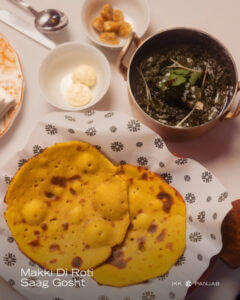
The menu at IKK Punjab draws on family memories and history and extensive research, including voice notes from people in Lahore and Swat, and continues to evolve in this way, sometimes inspired by the sharing of recipes by patrons. Dishes earn inclusion only after family elders taste test them against earlier memories of such foods.
Amongst the chosen are makki ka shoba, winter soup of fresh corn, reflecting the significance of this crop across all Panjab; kunna gosht, claypot mutton from Chiniot, near Lahore; Multani paneer tikka; Peshwari khari, aka tomato meat; saji, spiced whole chicken from Baluchistan; battered tandoor cooked quail from Patiala; Delhi butter chicken filled samosa and spring garlic jowar roti from Sind.
New custodians of old recipes
There is booming interest amongst Indians about their diverse foodways. People are documenting the food of family and community kitchens, taking deep dives into regions and researching historical archives. They are writing cookbooks, creating content, hosting supper clubs and opening eateries to share this. My decades of experience writing about India’s regional foods gives me good sense of this movement. IKK Panjab is one of the very best expressions of this; an invitation to experience inclusion, community and distinctive warm hospitality in celebration of living Panjabi heritage.
Read Also: Free trade: Rum and Aussie lamb chops in the tandoor