

Saving Fearless Nadia
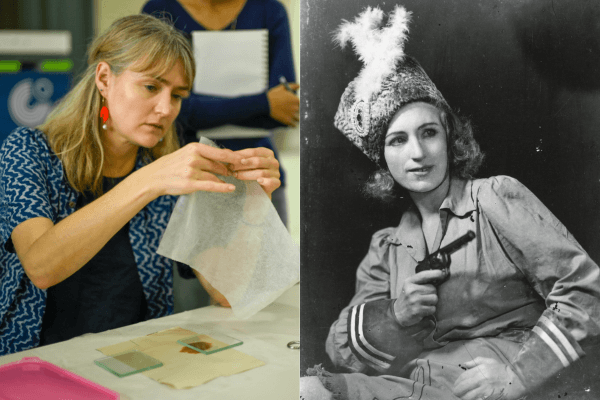
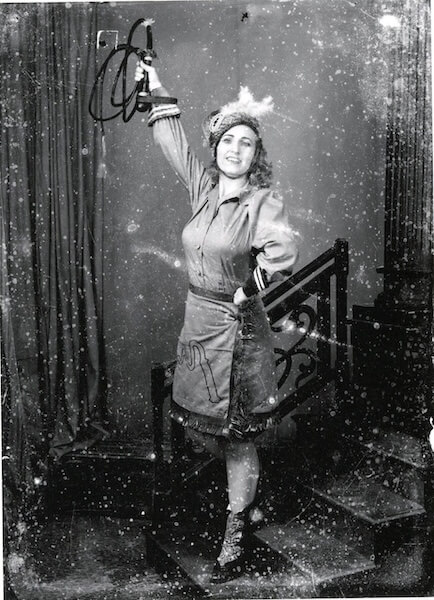
She was Australian by birth, Indian by choice, and decades ahead of her time. Long before superheroes dominated cinema screens or female-led action franchises became box office staples, a blonde, blue-eyed swashbuckling woman was leaping from speeding trains, cracking a whip at villains and rescuing men in Indian films. Her name was Mary Ann Evans, her stage name ‘Fearless Nadia’, and in the 1930s she transformed what audiences thought a heroine could be.
Now, nearly a century later, her remarkable story is bringing Australia and India together once again.
Backed by the Australian Government’s Maitri Grants Program, the National Film and Sound Archive of Australia (NFSA) and the Film Heritage Foundation (FHF) are embarking on a multi-year collaboration to restore three of Fearless Nadia’s landmark films – Hunterwali (1935), Miss Frontier Mail (1936) and Diamond Queen (1940). All three were produced by Wadia Movietone, the pioneering Mumbai studio that turned Nadia into India’s biggest stunt star and helped define the country’s action cinema in the 1930s and 40s. The project will also preserve the wider Wadia Movietone archive and train the next generation of film conservators.
The whip-wielding stuntwoman
For Shivendra Singh Dungarpur, founder-director of the Film Heritage Foundation, Nadia’s significance extends far beyond her Australian roots.
“Describing Fearless Nadia as a Bollywood star really doesn’t do her justice,” he tells Indian Link. “She was India’s first female action star who revolutionised the portrayal of women on the screen in India in the 1930s.”
She performed her own stunts at a time when there were virtually no safety measures, challenged villains instead of waiting to be rescued, and reversed gender stereotypes nearly a century before conversations around representation became mainstream.
“What makes her relevant even today is that her story anticipates almost every conversation we’re still having about representation, women in action roles, and who gets to be the hero rather than the rescued. She was doing that in 1935,” he continued.
Restoring a legacy
Yet despite her extraordinary influence, time has not been kind to the films that made her famous.
The surviving reels are incomplete. Original camera negatives no longer exist, and some reels have disappeared altogether. One complete print of Diamond Queen had to be sourced from the Library of Congress after a worldwide search through the International Federation of Film Archives network.
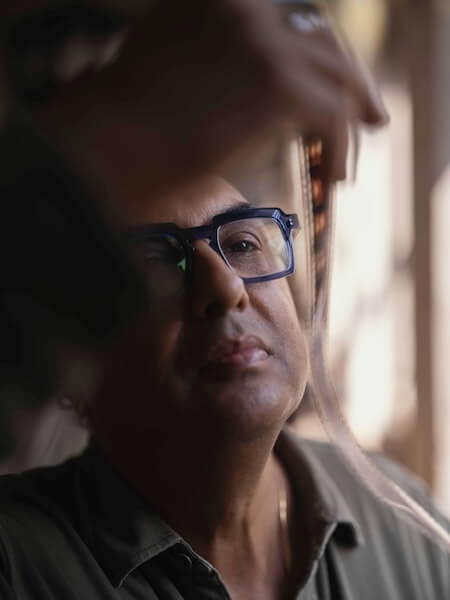
“The grant came in just in time,” Singh says. “Else there was a chance that these films, without restoration, would just survive as poor quality versions on YouTube and never return to the big screen.”
For Dr Sophie Lewincamp, Head of Conservation & Collection Management, NFSA, the project represents something much larger than restoring old films. And saving Fearless Nadia.
“What drew the NFSA to Fearless Nadia’s story was not a single film or archival discovery, but the remarkable scale of her legacy and what it represents for both Australia and India,” she shares.
Nadia occupies a unique place in the shared cultural history of both nations. Lewincamp believes her story transcends film history, opening conversations about gender, cultural diversity, performance and representation.
“By preserving and celebrating Fearless Nadia’s legacy, we’re not only protecting important cultural assets, we’re building new people-to-people connections between Australia and India and creating enduring cultural value that will extend well beyond the life of the project,” Lewincamp adds.
The Aus-India partnership in Saving Fearless Nadia
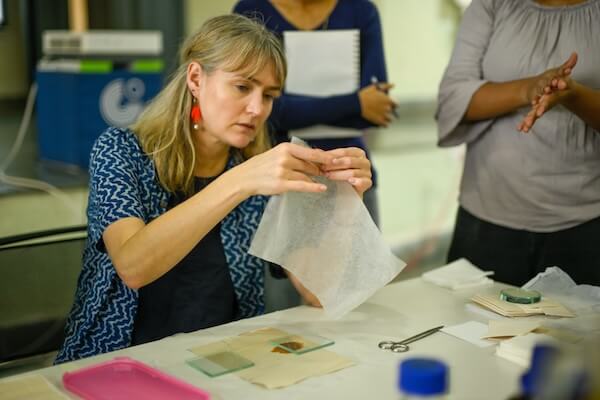
Alongside restoring films, the partnership will deliver annual conservation workshops in Mumbai for early and mid-career professionals, helping build expertise in film, paper and photographic preservation while addressing common challenges faced by archives in both countries – from fragile analogue collections to increasingly difficult climate conditions.
“The conservation training program is a key element of the project,” Lewincamp informs. “Through hands-on training, knowledge exchange, and collaborative learning, participants will explore practical approaches to preserving audiovisual heritage while building expertise in climate-responsive, sustainable collection care.”
She hopes the initiative will foster lasting professional relationships between Australian and Indian preservation specialists long after the project concludes.
Singh says that preserving the films is only one part of the mission.
The Wadia Movietone archive – containing rare glass negatives, posters, scripts, diaries, lobby cards and other memorabilia – offers an invaluable record of one of India’s pioneering studios and an era of filmmaking that has often been overlooked.
“Indian film history tends to get told through its social dramas and its post-Independence auteurs,” Singh explains. “The stunt and action cinema of the ’30s is a less-preserved, less-told strand, even though it was hugely popular at the time.”
A second life
Saving Fearless Nadia by restoring her films, however, is painstaking work.
James Campbell of the NFSA explains that restoration is far more than digitally cleaning scratches.
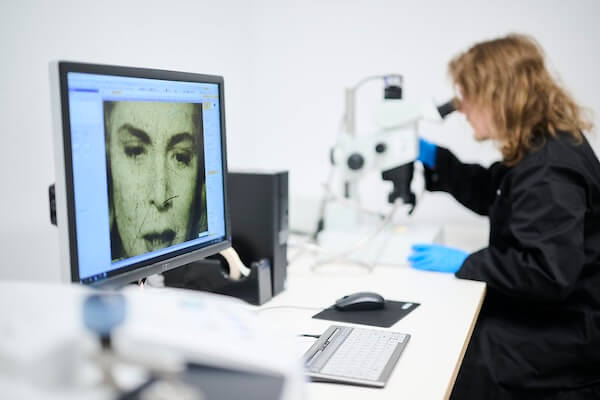
Each reel is first inspected by hand, cleaned, repaired and stabilized before being scanned frame by frame at high resolution. Conservators then spend hundreds of hours digitally repairing decades of damage while remaining faithful to the filmmakers’ original artistic vision.
“Each of these stages – physical conservation, digitisation and digital restoration – is labour intensive and can require hundreds of hours of careful work for a single reel of film,” Campbell informs.
Once complete, the restored classics won’t simply return to archive vaults.
The project includes public screenings, cultural exchange events, oral history interviews with the Wadia family, and hopes of taking the restored films to international festivals before introducing them to audiences across both India and Australia.
For modern audiences discovering Fearless Nadia for the first time, the biggest surprise may be how contemporary she still feels.
Long before the world coined terms like “strong female lead”, Nadia had already become one. Almost 90 years later, her films are finally getting the second life they deserve. Saving Fearless Nadia
READ ALSO: How a Maitri grant is helping QAGOMA restore Raja Ravi Verma’s gods