


Ashok Kumar Nanjundan
The battery in your phone may look unchanged after a full charge, but inside, its materials are undergoing repeated cycles of expansion and contraction. Over time, the stress can cause tiny cracks, weaken electrical connections and reduce how much energy the battery can store.
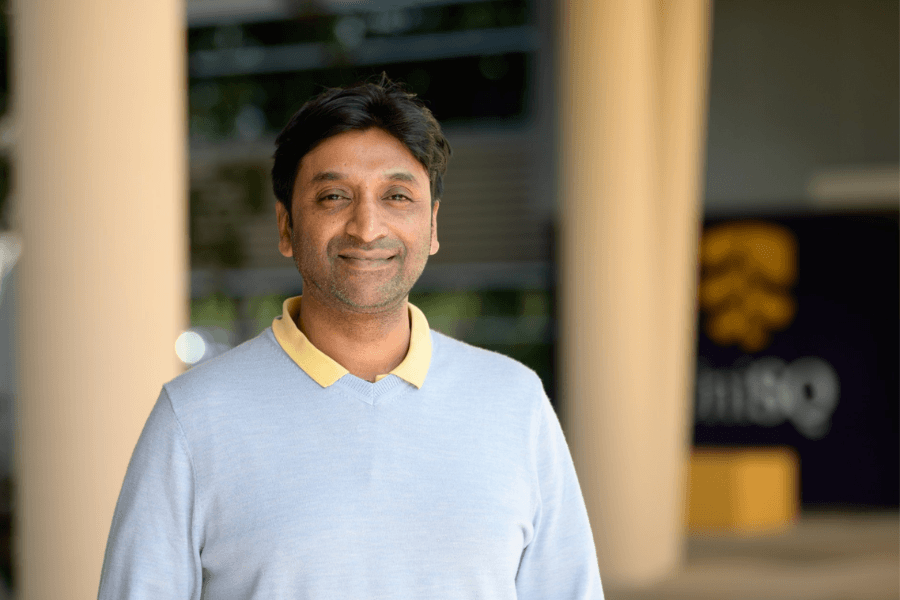
Indian-origin Professor Ashok Kumar Nanjundan wants to find out whether some of that damage can be repaired before it permanently affects performance.
At the University of Southern Queensland (UniSQ), the materials scientist is leading a $1.3 million Australian Research Council (ARC)-funded project investigating self-healing materials for sodium-ion battery electrodes. The aim is to develop materials that can recover from microscopic damage caused by repeated charging and discharging, potentially helping batteries last longer.
“People often think of a battery as a static container that simply holds electricity like water in a bucket, but it is actually a living, breathing chemical reactor under constant mechanical stress,” he tells Indian Link.
Imagine a sponge soaking up water and swelling, then being wrung out and shrinking, over and over again.
Inside a rechargeable battery, ions move into and out of electrode materials during charging and discharging. Repeated expansion and contraction can eventually damage the structure and disrupt the pathways through which electricity flows.
Prof. Nanjundan’s team is exploring whether specially engineered materials can help reconnect these broken pathways.
“At the microscopic level, traditional battery electrodes use rigid, conventional polymer binders – essentially a stiff glue – to hold the active particles and conductive carbon together,” he says.
The project seeks to replace these rigid binders with materials capable of responding to damage. If successful, this approach could establish a new way of designing rechargeable battery electrodes. However, demonstrating that the materials can repeatedly heal inside working batteries without compromising performance, remains a major scientific challenge.
Why sodium-ion batteries?
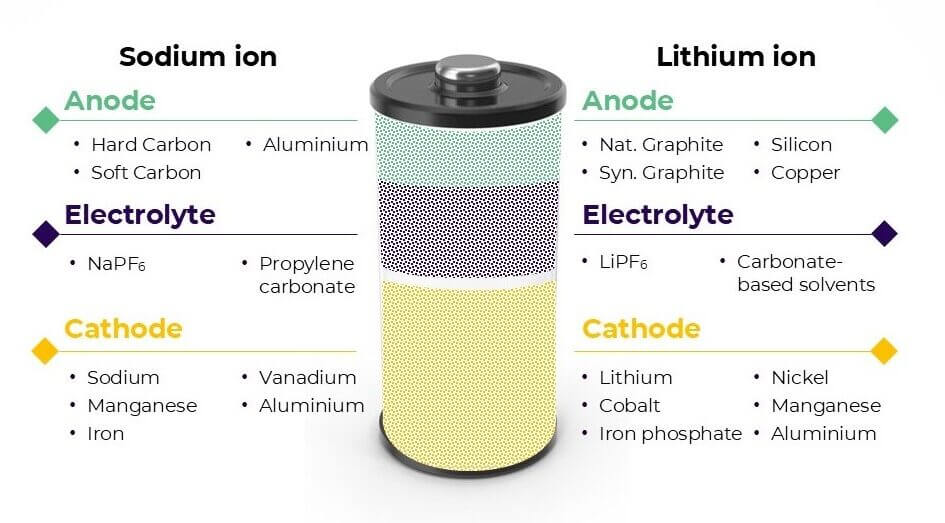
While lithium-ion batteries power everything from smartphones to electric vehicles, Nanjundan believes other battery chemistries will be important as global demand for energy storage increases.
Sodium-ion batteries offer one possible alternative. Sodium is abundant and widely available, and certain sodium-ion chemistries can avoid expensive metals such as nickel and cobalt. These batteries could complement lithium-ion technology, particularly in applications where cost and access to raw materials are important considerations.
But abundance alone does not guarantee a cheaper battery. The materials must also perform reliably, and their manufacture must be practical at scale.
That is where Nanjundan’s experience beyond academic research becomes relevant.
Before joining UniSQ, he served as chief scientific officer at Graphene Manufacturing Group, working on the development and commercialisation of graphene-based technologies. The experience changed how he assessed scientific discoveries.
A material might perform exceptionally well in a laboratory, he says, but that does not automatically make it suitable for commercial production. Researchers must also consider whether it can be manufactured consistently, whether raw materials are accessible, and whether production can be made safe, affordable and environmentally responsible.
“Scientific innovation creates possibilities, but engineering and manufacturing determine whether those possibilities can become technologies that benefit society.”
That distinction informs his current work. Developing a material that can heal microscopic damage is only one part of the challenge; the team must also determine whether it can function reliably within an electrode designed for practical use.
An exceptional journey
Nanjundan’s interest in materials science began when he encountered battery research during his master’s research project at the Indian Institute of Science. Watching senior researchers assemble batteries inside oxygen-free gloveboxes sparked his curiosity about how the structure and chemistry of materials determine their properties.
He went on to pursue doctoral research in South Korea, developing his interest in advanced materials and carbon nanostructures, including graphene and carbon nanotubes. His career subsequently brought him international research experience and, eventually, an opportunity to apply his scientific knowledge in industry.
His educational foundations were laid at Bharathiar University, through Government Arts College in Ooty and PSG College of Arts and Science in Coimbatore. He remembers those years as a period of developing critical thinking and persistence.
“Life was tough,” he says, reflecting on his early education. Those experiences strengthened his determination, while his subsequent international career showed him the opportunities that education could open.
Today, mentoring young researchers is among the most rewarding aspects of his work. He encourages students to look beyond positive experimental results and focus on identifying questions that matter.
“In science, we often focus on finding answers, but the ability to recognise an important unanswered question is equally valuable,” he shares.
For Nanjundan, battery research also extends beyond making individual devices last longer. He is involved in an Australia–India research collaboration with IIT Madras and IISER Bhopal exploring more sustainable ways to recover and regenerate materials from spent batteries.
The collaboration addresses another part of the energy-storage challenge: reducing waste and recovering valuable materials when batteries reach the end of their useful lives.
He sees considerable scope for Australia and India to combine their strengths in materials research, critical minerals, engineering and manufacturing to develop more sustainable energy technologies.
“Australia is blessed with immense reserves of critical minerals, world-leading fundamental research infrastructure, and one of the highest penetrations of rooftop solar in the world, making it an ideal testbed for renewable grid integration. India, on the other hand, has massive, rapidly scaling manufacturing capabilities, an extraordinary pool of STEM talent, and an enormous domestic market hungry for affordable clean energy – from two- and three-wheeler electric mobility to rural microgrids.”
His current project is an early step towards that ambition.
Read more: Dr Rahul Patel: Small innovation, big impact in cardiac surgery