


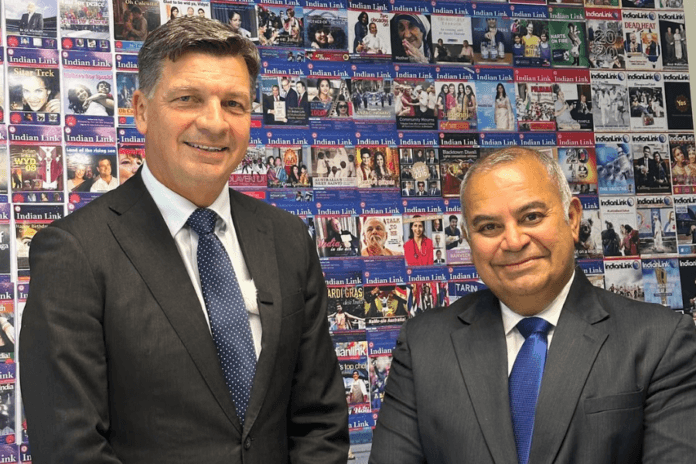
My interview with Angus Taylor, who is positioning himself for the opportunity to lead Australia as its next Prime Minister, offered a glimpse into the political message he wants Australians to hear. It also revealed some of the questions he appeared less comfortable addressing, particularly those that matter to the Indian-Australian community.
I had put in a request for the interview, and Taylor’s office was able to arrange a time. His willingness to engage was welcome. The Indian community is growing in size, influence and electoral significance, and its concerns deserve to be part of the national political conversation.
But beyond the opportunity to speak, the interview was about substance: what does Taylor stand for, what kind of Australia does he envision, and how prepared is he to address the difficult questions facing the Liberal Party?
A disciplined Liberal Party message
Taylor largely stayed on familiar Liberal Party territory. His key themes were support for small businesses, lower taxes and a smaller role for government. These are central elements of the Coalition’s traditional economic argument, and he presented them as important ingredients in building a stronger Australia.
He also repeatedly returned to his vision for the country. Rather than allowing the conversation to become solely about the shortcomings of the Albanese government, he appeared keen to establish his own priorities and communicate what he believes Australia should aspire to become.
Indeed, I had expected sharper criticism of the Albanese government, but Taylor was more restrained than I anticipated. Whether this reflects a deliberate strategy to appear prime-ministerial, a desire to focus on policy, or an effort to position himself beyond the usual political exchanges, it made for a different tone from what one might expect of an Opposition figure seeking the country’s highest office.
He also demonstrated an awareness of the political impact of Pauline Hanson and One Nation. However, he was not prepared to fully acknowledge the extent to which One Nation’s rise and its appeal to disaffected voters may be affecting the Coalition’s electoral position.
For the Liberal Party, this is an important challenge. Understanding why voters are moving away from the Coalition is essential to winning them back.
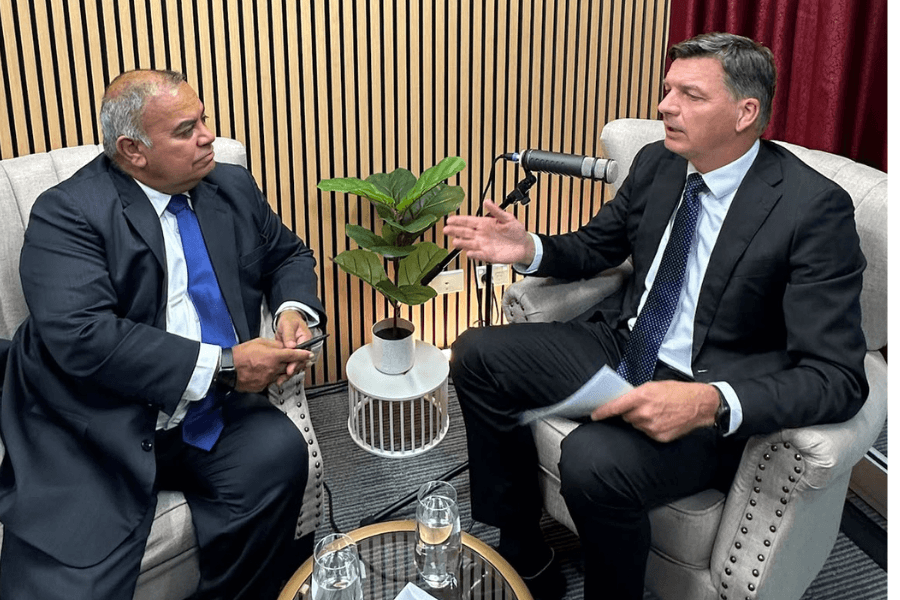
The questions that remained unanswered
Where the interview became more revealing was in the areas where greater clarity was needed.
The first concerned comments by Senator Jacinta Nampijinpa Price that have angered sections of the Indian-Australian community. I raised the issue because it was an opportunity for Taylor to address those concerns directly and explain where he stands.
He did not provide the response I was looking for.
This was a missed opportunity. When a community feels that its concerns have not been acknowledged, a clear and considered response from a senior political leader can help rebuild trust. Silence or an incomplete answer risks leaving those concerns unresolved.
Labor will likely see this as an issue it can raise repeatedly in its engagement with Indian-Australian voters. Whether or not that becomes a central electoral issue, the broader lesson is clear: communities expect political leaders to engage with difficult questions, not simply the ones that fit comfortably within their prepared messages.
Migration was another area where I would have welcomed greater specificity. Taylor spoke about the issue but did not engage sufficiently with the actual numbers. Migration is a complex subject, encompassing skilled workers, international students, family reunification, temporary visa holders and permanent settlement.
For a community with strong personal and family connections to migration, broad statements are not enough. Voters deserve to understand what a prospective government would change, what it would retain and how its policies would affect Australia’s economy and society.
SEE ALSO: ‘We will not form a coalition with One Nation. That’s clear.’ | Angus Taylor
An opportunity for the Coalition
The Indian-Australian community should not be viewed simply as a growing vote bank. It is a diverse community with economic interests, social concerns and expectations of political accountability. Its members will not necessarily vote as a bloc, nor should any political party assume their support is guaranteed.
For Taylor, the opportunity is to demonstrate that the Liberal Party understands this diversity and is prepared to engage with the community on its own terms.
The interview showed a politician keen to communicate a clear economic message and articulate a vision for Australia. It also highlighted the limits of that message when confronted with questions involving community trust, migration policy and the place of permanent residents.
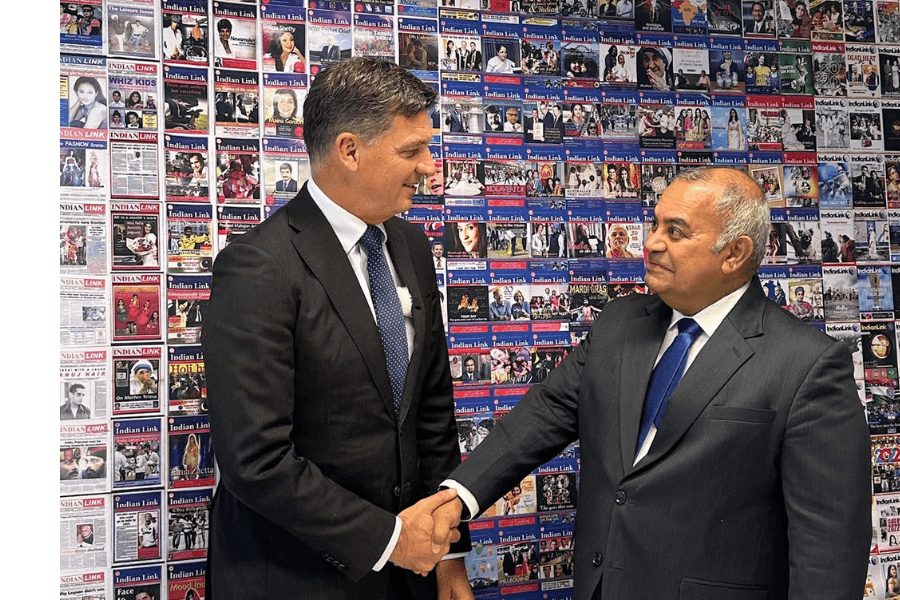
If Angus Taylor wants to become Prime Minister, setting out a vision is necessary. Demonstrating how that vision translates into clear positions on difficult issues is equally important. Opposition leader Angus Taylor with Indian Link CEO Pawan Luthra
My takeaway: Taylor came prepared to explain what he wants Australians to hear about the economy and the future of the country. On several issues of particular importance to the Indian-Australian community, however, the answers were less forthcoming.
The next step is for him to turn broad assurances into clear positions. For a community that is increasingly part of Australia’s economic, social and political fabric, that is not too much to ask of a potential Prime Minister.
Read more: When pessimism looks for someone to blame