

Although the subject was relevant and the performance commendable, Zameen was unfortunately dismal, writes DEEPA GOPINATH

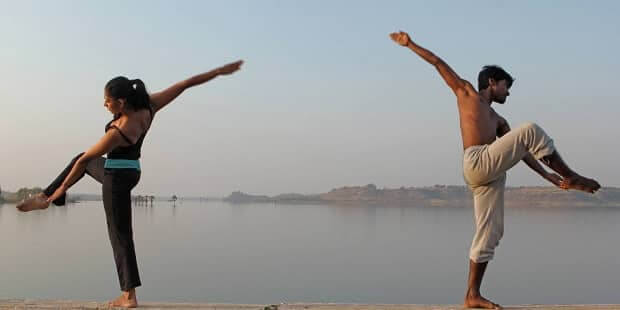
This year’s Parramasala featured Zameen by two dancers from the Attakalari Centre for Movement Arts, a dance and multimedia presentation. The work was intended to explore the plight of remote communities in India that are fighting to preserve their way of life in a country driven by progress.
Zameen began with the two dancers binding each other’s hands together, presumably depicting the frustration that is felt by members of these remote communities. Video clips of the lives of some of these people were interspersed into segments of dance, designed to bring to light issues such as a shortage of essential resources.
While the dancers were obviously talented, with commendable technique, the performance did not draw me in as I had hoped it would. The exploration of this issue was admirable, and it is one that I think should be further exposed. However, I felt that instead of the engaging intensity that was required, there was a depressive nature to the piece and the result was that I left without the joyous feeling that I normally experience following a dance-based performance, regardless of the subject.
While some of the video clips were of value, others had a strangely spooky quality reminiscent of a Japanese horror film, which I feel did not enhance the depiction of this topic. The dance segment towards the end of the piece saw a little more dynamic movement compared to the rest of the performance, and it was then that the audience could truly appreciate the finesse of these dancers. Their elegant and controlled movements were able to shine during this last segment, and there was a glimpse of the magnetism that I would expect from a performance by a professional dance company.
The haunting musical score by Leah Barclay was probably the highlight of the piece and its undulating nature was an appropriate representation of the topic at hand. There is no doubt that Zameen was a collaboration of some very talented individuals; however, the result of the show for me, somewhat missed its mark.
Gifted dancers in depressing piece
Rocking with Raghu
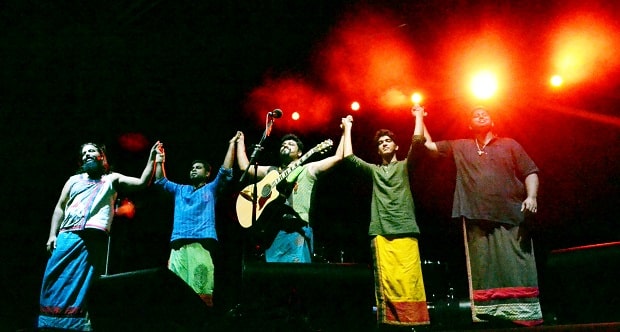
The Raghu Dixit Project performing at Parramasala 2013 was a treat for Kannadigas, writes SHRADDHA ARJUN

“Hey Bhagwan, mujko tu zindagi dobara de,” sang Raghu Dixit with passion to a multi-ethnic crowd at Prince Alfred Park in Parramatta on the opening night of Parramasala 2013. I could barely feel my feet on hearing his voice and the distinct sounds of his band. Quintessentially Indian, it almost felt like I had been teleported to a rock concert in Bangalore. That infectious energy and eclectic mix of Western rock, Latin, funk, reggae and Indian folk, made people in and around the venue get involved and start dancing to the catchy beats. Following the opening night’s fireworks, The Raghu Dixit Project began with a bang!
The Raghu Dixit Project has played in about 500 concerts in various parts of the world, and in extreme conditions and venues. The list of performances includes their stellar performance for Queen Elizabeth II of England and her husband the Duke of Edinburgh Prince Philip, at a spectacular Diamond Jubilee Pageant marking 60 years since her accession to the throne in 1952.
The Raghu Dixit Project, in Raghu’s words “Is an open house for musicians and artistes from different genres to come together, collaborate and create a dynamic sound and expression”. Raghu is the front man of the band and at Parramasala, the six member strong team included Raghu Dixit himself as guitarist/singer, Gaurav Vaz on bass guitar, Vinodh Dev on drums, Bryden Lewis on guitars, Parth Chandiramani on flutes and Vinod Bangera as sound engineer.
The audience at Parramasala was made up of some ardent fans of Raghu Dixit, and the rest who had never heard of him before, had absolutely no idea about what they were about to witness. The fans did make a whole lot of noise; but it ended up being a group right in front of the stage who were the loudest, who weren’t even his fans! Their behaviour was rather embarrassing as it did disrupt the performance for a brief moment. Members of the band were dressed in lungis and kurtas as usual, and the loud group in the crowd began shouting at Raghu, “Do the lungi dance!” for reasons only known to them! This was followed by, “Have you watched Chennai Express?” and “Say something like Deepika Padukone in the film”. Raghu’s reaction was succinct yet assertive, “This is my show fellas, I’m on stage… so thank you, we can manage on our own”. The group did not see this coming. The girl among them moved away and offered me her spot in the front row saying, “I don’t understand what he’s singing!” Slowly but surelyy, the group disintegrated and vanished.
Raghu then took over and as he belted out his popular Kannada numbers, the Kannadigas in the audience were euphoric. Most of Raghu’s Kannada songs are inspired by Shishunala Sharif’s literature (a saint and poet from the state of Karnataka). “Gudgudiya Sedi nodu…” he crooned, an interesting song with lyrics that quite literally translate to “Gudu gudiya sedinodo (smoke the hookah and see), vodalolagina roga toredu idyado (smoke out the disease inside you and feel good)”. Raghu made it a point throughout the concert to explain all of his songs prior to performing them, for the benefit of those who did not understand the language. He explained the deeper meaning of this particular song. “Open that small cloth bag called ‘mind’, pull out the hash called ‘lust,’ put that in a chillum called ‘faith’ and burn it with a fire called ‘intelligence’. Smoke that hookah and tell me how it feels!”
He went on to sing Lokada Kalaji, which involved interaction with the crowd. Patiently yet thoroughly, Raghu sang and taught us all the first line of the song. He made us all clap and sing along! The meaning of the first line in Raghu’s words is, “Don’t worry, and be happy! But if want to worry, I don’t give a damm”. He elaborated on the lyrics, saying “you want to worry all the time, earning a lot of money, building a palace, to live like a king riding an elephant. You can, however you eventually would need to get off that elephant and go six feet down under or maybe just turn into ash in the end, So why worry be happy, but if you want to worry and not sing, I don’t give a damn…!”
The cold night suddenly felt warm as people moved closer to clap and cheer as a single entity. You just had to be there to feel the excitement!
This was followed by a Punjabi song and then, by his not so favourite, yet superhit Kannada song Mahadeshwara from a film named Psycho! This song had a great resonance with the Kannadiga crowd.
The last song for the night was a Hindi song, Mysore se aayi who to which Raghu made us all dance along, well almost… Gaurav Vaz on the bass guitar had the responsibility of teaching us the dance moves. It was as simple and easy as it could be, all we had to do was jump with our hands up in the air, or clap. The tempo got faster towards the end, leaving the audience asking for more. Ignoring the shouts for an encore, Raghu wrapped up nicely by acknowledging the efforts of the band members, the organiser and the audience. The band took a bow and left the stage.
This was not the end though, as autographed copies of Raghu Dixit’s first album were on sale, and fans couldn’t just get enough of Raghu, clicking photographs with him, talking to him and refusing to leave!
Some came back for more the very next day. This time round the concert was indoors at the Chai temple, and it was packed!
The Raghu Dixit Project serenaded the crowd with acoustic versions of their mellow, mushy and romantic numbers.
They also performed at the closing night for Parramasala 2013 on October 7, where the song set was slightly different. Raghu offered a sneak peak into his forthcoming album, with a Kannada song, Kande na, which is about hope.
At the end of the concert, I briefly asked Raghu to comment about how he felt when performing to a disruptive crowd. He simply stated that a disruptive audience prevents genuine fans from enjoying the show. There was no bitterness, just concern that he expressed. So would he be singing in any other language in future? Well, we could soon expect to hear a Tamil koothu song as part of his forthcoming album. He will also be singing in Malayalam for a yet-to-be released film called North 24 Khaatham with Bijipal, composed by Govind Menon.
Independent bands such as the Raghu Dixit Project rarely come over to Sydney to perform. However, when they do it’s pure magic. In the hope that we see them again, I left reminiscing about the dreamlike concert and humming “Lokada Kalaji”.
Hunterwali rides again!
An iconic Aussie heroine of the Indian screen makes memorable comeback at Parramasalla, writes USHA RAMANUJAM ARVIND

Long before India opened up its shores to global market forces and certainly well before Bollywood became an international phenomenon, a fearless young Western Australian woman charmed her way into its hearts and homes. Liberalisation and bi-lateral trade were decades away. Free-spirited, self-made and ahead of her times, this daring woman rose from being a virtual non-entity to a celebrated Bollywood icon.
Meet Hunterwali, aka Fearless Nadia (born Mary Evans), best known for her roguish charm, swashbuckling heroics and death-defying stunts. The silent era film goddess was the ‘tough-talking, whip-cracking, action heroine of Indian cinema in the 1930s and ’40s’.
Her lasting contribution to Indo-Australian cultural scene was celebrated at Parramasala 2013, with an electrifying performance of Ben’s Walsh’s Fearless Nadia. The multimedia spectacle, which debuted at Adelaide’s OzAsia festival last year, was screened in Sydney for the first time. It has also successfully toured major metros in India.
“Fearless Nadia is a wonderful paean to Bollywood and a great night of music,” Festival Director David Malacari stated at the launch of Parramasala 2013.
“Nadia’s biffing and boffing of assorted baddies is great fun, but the music turns it into a must-see event that was a huge success in Mumbai, the home of Bollywood,” he further added.
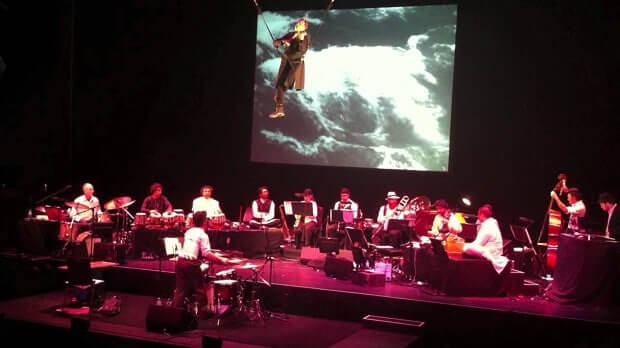
A world-renowned drummer, Walsh who fronts the eclectic international band Orkestra Of The Underground, entertained audiences with an adrenaline charged live performance at Parramatta’s Riverside Theatre.
Featuring 12 Australian and Indian musicians, including Sandy Evans, Shenton Gregory, Bobby Singh, Greg Sheehan, Sangeet Mishra, Sudhir Nayak, Aneesh Pradhan, Vinod Prasanna, Kim O’Sullivan, Matt Ottignon, Eden Ottignon and Daniel Pliner, Fearless Nadia is a musical collaboration steeped in history. The ensemble incorporated the sounds of the tabla, sarangi, dholak, Indian flutes and harmonium and combined it with the trumpet, drums, violin, clarinet to make up a spectacular soundscape, with Kathak dancer Shruti Ghosh also taking centrestage.
Paying homage to 100 years of Indian cinema (nowadays better known as Bollywood), high voltage percussions, gravity defying acrobatics by viola player Shenzo Gregorio, slapstick acts by Walsh and Greg Sheehan, and an original score, were some of the added extras as audiences were once again treated to the daring exploits of Nadia.
High-energy visuals from Diamond Queen (1940) have been painstakingly edited and collated by Walsh for Fearless Nadia, before being transferred from its nitrate original to digital format.
“For me, the project is a true labour of love. I have always enjoyed the world of the silent film as it lends itself to the potency of live music,” score composer Ben Walsh told Indian Link after the live performance.
“Dusting off the cobwebs of a nitrate film and infusing a new energy into the movie was an enriching experience,” he added. “I am truly grateful to Roy Wadia (Wadia Movietone) for trusting me with his family legacy, and believing in me the whole way. For me it was a great honour to bring history from the vault and into the world once more”.
Walsh, who has been to India several times, first met Wadia in Mumbai while on a concert tour. The chance meeting led to the idea of reincarnating the body of Nadia’s work. The storyline, action and comedy of Diamond Queen instantly appealed to Walsh.
“The action, romance, drama and also the political aspects spoke to me instantly when I first saw the film,” he reminisced.
“I could instantly hear the score!”
Elaborating on the background music, Walsh spoke about how the strong Indian and Australian elements have blended into a harmonious mix. “The Indian system of melody and rhythm have been skilfully married into pronounced Jazz elements,” he explained.
“For me it is a theatrical reinterpretation. The music drives the emotion and in turn, the scene itself. And having a live orchestra engages the audience like never before. As a director, I believe I have redirected the whole movie itself. I have put my heart and soul into this black and white world of kooky characters and iconic heroines,” he added.
Fearless Nadia also included passages of solo tabla composed by Aneesh Pradhan.
As the music came alive, the audience was in raptures, enthralled by the whole sensory experience and transported back in time to the world of the swashbuckling 40s, willingly suspending their sense of disbelief. It was a night to remember.
Dance, music and masti define Parramasala
The opening ceremony of the 2013 festival resulted in a mass street party full of fun and frolic, writes ASTHA SINGH

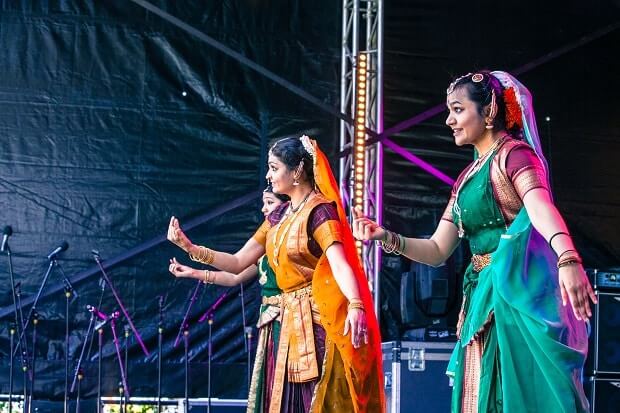
To celebrate Western Sydney’s multicultural diversity and the contemporary arts of Australia, this year’s Parramasala Festival 2013 begun with an incredible parade from Parramatta city’s Town Hall to Prince Alfred Park on the evening of October 4. It was a fitting beginning to the festival that celebrates Australia’s complexity of cultures through heralding the arts via colours and classics, with festivity and frolic. The parade was created and directed by one of Australia’s most awarded international producers and director of major events, Di Henry.
“Cultural diversity and the oneness amongst all the culturally different diaspora is the key to vivacity that encourages such events,” said Di, explaining the significance of the event. “By joining this awesome huge street party in the form of the parade, everyone had a good time and lots of fun,” she added.
The parade began at exactly 6:30pm in a very disciplined and diligent manner, starting with the Golden Kangaroo Epping RSL marching band flaunting their yellow uniforms and the band’s flag. The parade also comprised of various Bollywood dance groups, a multicultural procession of different ethnic groups, Sydney’s Youth Dragon and Lion Dance, Studio Dance Orientale, individual performers and drummers. It was a fascinating blend of colour and sound, of celebration and tradition, as different nations vied with each other to showcase their culture and heritage.
Almost all the participants were worth a mention, but the most unique were the dancers and drummers, associations and communities. The Karifi-Ghanian drummers group represented the ethnic communities of Africa, with the Brazilian drumming group, and Lebanese drummers keeping the crowd engaged and excited.
The dancers were varied, ranging from the beautiful Srikandi Indonesian dance group with their graceful moves, the curvaceous and adept belly dancers, Peruvian dancers, the ubiquitous Bollywood, bhangra and various other classical and neo-classical dancing which had the crowd engaged in their moves.
Groups of participants included the Hindi school, the colourful and well-lit National Sikh council of Australia troupe and the NSW Indian Welfare Association, accompanied by members of the Indian community.
Well-decorated and beautiful rickshaws gave some lucky women from the crowd a free ride. Penny-farthing bikes, with riders in traditional costumes, alongside the NSW lancers, Mark II tanks, a military vehicle with decorations and army personnel, followed by the Parracity shuttle bus, made up the motoring element. And the natural one was the sight of attractively decorated grey horses and camels accompanying their communities. The Parramasala float with its Maharshi drummers and Parramasala trucks with one of the Purotrucks with fa ire demonstration caught the attention of the crowd.
Alfred Park is just 10 minutes away from Parramatta Town Hall, but the parade that took about 25 minutes to get there had everything, from walking puppets, sailors with walking boats, floats, dragon and lion dances from the far east, traditional folk dancing from the middle east, Bhutanese walkers, Bollywood dancing, dandiya, mridangam and dhol playing, to make it an attractive medley of music, dance, display and excitement!
On reaching Alfred Park, the crowd was treated to an eclectic music concert that got most people dancing to world music from L-fresh The LION and his Punjabi Hip-Hop Band, Karifi and his African Union Beats and the headline act, Bangalore music sensation and the guru of folk rock, Raghu Dixit and his band. With his group of outstanding musicians, Dixit took the audience to a world of Indian folk music infused with elements of western rock, Arabic, Latino and Reggae rhythms.
The masala markets at the venue featured Asian Indian cuisine, fashion, spices, fabrics, arts, crafts and refreshments in open stalls under the trees from 4pm until 10 pm. Judging by the amount of people flocking to the stalls, it was clear that the food was a resounding success.
The opening night of Parramasala ended with a sensational display of fireworks, with the crowd reluctant to leave. But the program to come over the week was a promising one. The Bollywood concert featuring Shahrukh Khan, Madhuri Dixit, Rani Mukherji and Honey Singh was on the cards, and several other individual events featuring international performers and events were eagerly anticipated.
There’s little doubt that the opening ceremony of Parramasala 2013 was an enjoyable and memorable event. Di Henry anticipated that at least 10,000 people attended the event through the day, ranging from seniors to youth groups, to families with children. It was an eclectic mix of communities and performers who gathered together to celebrate multiculturalism in Australia, together making the festival a resounding success.
The unique pole act
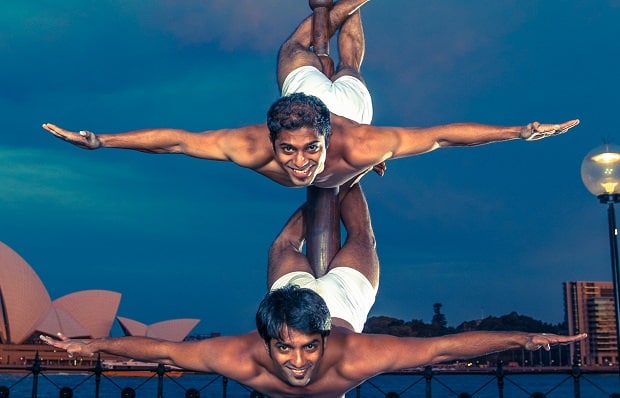
The ancient sport of mallakhamb is introduced to Australia with jaw-dropping results, says USHA RAMANUJAM ARVIND

They came, they performed and they left us completely awestruck. With gravity-defying feats and jaw-dropping poses, mallakhamb acrobats Vijay Ashok Bhojane and Rajesh Amrale were one of the biggest drawcards of the recently concluded Parramasala 2013.
In the lead-up to the October long weekend event, multiple shows were also staged at prestigious venues across Sydney, including the Harbour foreshore area, Chatswood and Liverpool shopping precinct, Parramatta Town Hall, Prince Alfred Park and Penrith Art Gallery.
In a thrilling performance outside the iconic Opera House, as the duo swung and swayed, the gathering crowds looked on in sheer disbelief. Is this a sport or an art, rhythmic gymnastics or circus acrobatics, they wondered? Whatever it was, it had to be seen to be believed!
Displaying incredible agility, composure and strength, the talented artistes balanced delicately on a wooden pole, performing impossible tricks. Clad in bare essentials, they wound their supple yet powerful bodies around the pole.
“What an amazing feat this is,” onlooker Arya Verma said. “I am so glad I came to watch the show. My two boys particularly enjoyed the physical spectacle. Until today, I did not know that such a sport existed. India is truly a country of wonders and our ancient customs and traditions are full of surprises. We have so much to offer the world”.
This is the first time the ancient art-form has been showcased in Australia. However, Mumbaikars Bhojane and Amrale have travelled the world, wowing audiences wherever they go. They have performed at international festivals, sporting competitions and even on TV, in a bid to introduce this dying sport to newer audiences. While Bhojane has performed in Germany, Holland, France and the Netherlands, Amrale was a 2009 finalist in India’s Got Talent and two-time finalist in the Indian National Championships of Mallakhamb.
Originating in 17th century Maharashtra as a complementary exercise to wrestling, mallakhamb is an ancient Indian sport. Deriving from the words malla (athlete or strong man) and khamba (pole), artists are traditionally suspended from a rope on balancing on a pole while performing a variety of yogic and gymnastic poses. Naturally it develops the mind as much as the body, requiring phenomenal willpower and composure.
Of the sixteen corollary practices that were developed, only one survives, the pole act.
Sadly, this traditional sport is facing extinction as with most Indian art forms, for want of patronage. This quirky sport received a bit of attention in India when it was showcased in the 2005 Bollywood movie Kisna. Surprisingly, mallakhamb has found new support in east European countries.
Speaking to Indian Link at the Prince Alfred Park, Bhojane explained that mallakhamb combines meditation and gymnastics. “It not only develops the muscles of the body but also improves the circulatory system,” he said. “This sport efficiently provides optimum exercise to the entire body in the least possible time”.
“It is wonderful to be invited to Sydney to showcase our body art to the Australian audience,” Amrale stated. “Hopefully all this attention and interest will provide new impetus to mallakhamb,” he added.
Destination NSW in conjunction with Parramasala 2013 brought Bhojane and Amrale to Australia.
Magical fairyland of dance
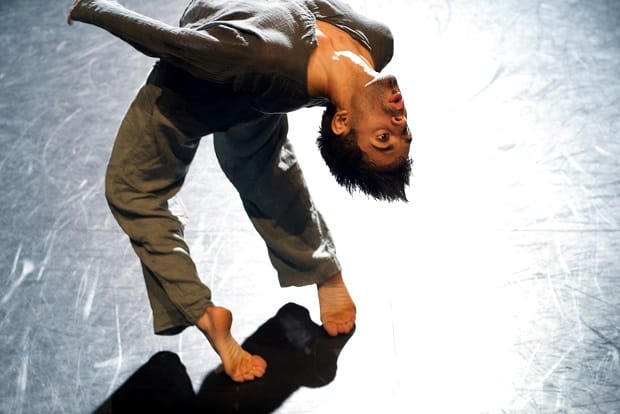
Aakash Odedra’s stunningly acute performance in Rising at Parramasala 2013 leaves the audience spellbound, says DEEPA GOPINATH

When a bird is wounded, what used to be a thing of immense beauty becomes an animal trapped in its suffering. Its once delicate grace is reduced to an anguished flurry of wings and its feet are desperate to maintain their balance. And yet the awe-inspiring creature cannot help but maintain a kind of heart-wrenching beauty, even within its painful movements.
This is what UK contemporary dancer Aakash Odedra portrayed in his animal-inspired piece In the Shadow of Man, choreographed by Akram Khan.
Haunting music by Jocelyn Pook provided the perfect instrumental dialogue as Odedra became one with the distressed creature. He began as a barely discernible shape, crouched in the dusk-like light. As the music came to life, so did the creature and we became caught up in its distress. The anguished writhing was punctuated with deeply stirring cries that were reminiscent of a trapped or wounded animal. Odedra’s fascination with animals and their movements from a young age served him well in this intense and thought-provoking piece.
The performance titled Rising at the Lennox theatre in the Parramatta Riverside complex was a standout part of the Parramasala festival. It began with Nritta, an abstract pure dance piece as suggested by the title. This was an electrifying introduction choreographed by the dancer himself, which highlighted his technical precision and elegance.
In Russell Maliphant’s Cut, we were held captive by the dancer’s sharp movements within and between columns of light. Complex spins were combined with controlled hand movements that sliced through the light and shadow. The effect was deliciously mysterious, with a glimpse of a rapidly moving hand here or a perfectly placed foot there, while the rest was barely seen in the darkness.
When the final piece titled Constellation began, I heard a hushed whisper of “Oooh! A magical fairyland!” from my neighbour. Intensely magical it certainly was, as the dancer moved delicately between orbs of soft light that were suspended from the ceiling. It was Odedra’s personal fairyland to which we were privy and by which we were utterly transfixed.
The musical score by Olga Wojciechowska was a truly enchanting accompaniment to this final piece. The smoke and mirrors (and lights) enhanced the audience’s experience, but it was Odedra’s astonishing talent that makes him one of the most exciting performers in contemporary Indian dance right now. His background in the classical dance forms of Bharathanatym and Kathak is evident, as he combines flawless technique with his ability to connect deeply with his audience.
Special mention must be made of Michael Hulls who provided the lighting, as well as the Parramasala committee who made a wise choice when they included Odedra in this year’s programme. For 75 minutes, the audience was indeed treated to the magical fairyland that is Aakash Odedra’s world of dance.
Healthy Diwali gift ideas
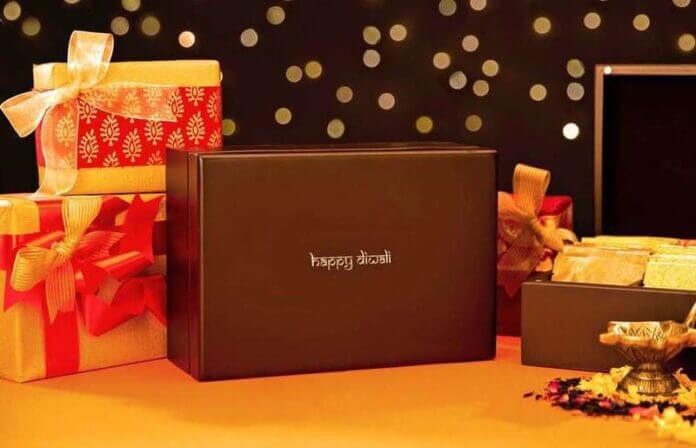
Another year has gone by and festival season is back again! Here are some alternative presents to the usual sweets
Another year has gone by and festival season is back again! India can never be complete without its special foods and good hospitality, and Diwali, the festival of lights, is the most awaited festival of India. And at this time, anyone even talking about dieting or healthy eating is deemed to be very unpopular.
It has been seen over the years that, right after the festival season, the rate of obesity and diabetes goes up. Therefore, experts warn that this festival fun, and not least, the culture of sweet-eating that peaks at the time, can help trigger long-term health problems, with diabetes only at the start. But with festivities all around it is very difficult to stay focused and adhere to a strict diet. It might start with a bite here and a bite there, but before we know we have suddenly eaten an extra plate full of extra calories. Counting calories at festivals is a big challenge.
Diwali is not complete without exchanging gifts for friends and family. The tradition of gifting mithai is a very old tradition. But many a time these days with people being a little calorie conscious, they do not tend to consume these and either the sweets are wasted or passed from one family to the other. So this Diwali, why not be a little untraditional and gift everyone the gift of health. Look a little more closely at gifts, and try to combine taste with health.
Here are a few ideas.
Fruit basket
A Fruit basket is the healthiest gift you can give anyone. Fill it up with different exotic fruits and give family and friends the perfect gift of health. According to dietary guidelines we should have at least two serves of fruit and five serves of vegetables every day, but most of us do not have even one piece of fruit a day. Fruits such as oranges, limes, mangoes, strawberries, rockmelon, and pineapple are excellent sources of vitamin C that help to heal cuts and wounds, build up our immune system and keep our gums and teeth healthy. Bananas, prunes, dried peaches, apricots, honeydew, melons and oranges are good sources of potassium. Fruits are also a good source of fibre. Some fruits, such as avocadoes and olives are excellent sources of unsaturated fats.
Nuts and dried fruit
Nuts and dried fruit are always a great healthy gift idea. Prepare a basket, or a beautifully decorated thali with a bountiful array of different nuts such as walnuts, almonds, macadamias, Brazil nuts, or others, and exotic dried fruit, such as dates, dried apricots, peaches, pitted prunes or dried apples. Nuts are an excellent source of protein and unsaturated fats and dried fruits are an excellent source of fibre, as well as an ideal replacement to desserts and sweets.
Healthy desserts
If you are home and have time to prepare some desserts, these would be the ideal and most thoughtful gift. Try and use low fat ingredients like low fat milk and other dairy products. Use natural sweeteners like honey and dates to make sweets, and avoid using refined sugar or artificial sweeteners. You can also improve the nutritional value by using wholemeal flour and adding some fruit, such as berries and bananas, nuts and dried fruit.
Herbs and seasonings
With everyone bringing in sweets, wouldn’t it be good to spice up your gift baskets with some fresh herbs, spices, condiments and healthy salad dressings. An exotic basket with bottles of herbs, spices, and a bottle of olive oil, some seasonings and a bottle of balsamic vinegar or Dijon mustard is sure to be a welcome gift. This gift is not only for Diwali, as it is not perishable, and your friends can enjoy its contents for months (except for the fresh herbs that is).
Basket full of tea
We Indians love a cup of chai. And giving someone the gift of tea means giving them the opportunity to stop, relax and enjoy the moment, time and time again. Prepare a basket full of different types and flavours of tea such as herbal, Tulsi, green tea, organic tea, flavoured tea, and present it to them.
Gift of light
Do not limit yourself to just sweet hampers; try to broaden your horizon and focus on other gifts too. Diwali being the festival of lights, pick up a variety of light symbols such as diyas and candle,s such as wax diyas, brass diyas, Lakshmi and Ganesh diyas. Attractive lanterns and lamps can also be gifted.
Home fragrances
Home fragrances, such as Diwali incense sticks, floating candles, fragrant sachets available in a large range of fragrances such as lemongrass, rose, orange and sandal might last for a long time.
The size of the gift should not matter, as even the smallest of gifts can be made to look elegant, but it the thought that matters. So this Diwali let’s give our friends and family thoughtful gifts, instead of giving for the sake of giving!
Why do South Asians love political dynasties?

South Asian cultures still defer to traditional authority, while Western cultures strongly question it

A few weeks ago, on a cold, blustery evening in Sydney, close to fifty people gathered in a seminar room at the University of New South Wales (UNSW). They were predominantly Bangladeshi men in their forties and fifties. Most worked as taxi drivers or in restaurants, in contrast with the professional and skilled migration in the majority of the South Asian community.
Their purpose was to honour Mr Tarique Rahman, the son of Khaleda Zia exiled in the United Kingdom. He had published a book from a range of contributors complimenting his ideas of a grassroots revival in Bangladesh, and extolling his virtues as a future leader. The night involved speeches from several political figures, including former Liberal candidate for the seat of Kingsford Smith Professor Michael Fenely, and Pakistani born NSW Greens Upper House MP Mehreen Faruqi.
What was striking was the reverence and devotion shown towards Mr Rahman, in spite of him having no discernible worldly achievements, other than being the son of a former leader. The crowd regularly burst into cries of ‘Bangladesh zindabad!” (Long live Bangladesh), a cry common in both Pakistan and Bangladesh.
The behaviour of the crowd was a reminder of the great power and endurance of political dynasties in the South Asian region, with political families dominating the landscape, if not holding the key positions of power. The Nehru dynasty in India is one of the most enduring political families that ruled the country for 37 years across 3 generations. Jawaharlal Nehru ruled from 1947 to 1964; his daughter Indira Gandhi was prime minister during 1966-1977 and again in 1980-1984; and her son Rajiv Gandhi was prime minister during 1984-1989. Rajiv’s son Rahul Gandhi is a rising force and is tipped to be a future leader.
There are of course, the Bhuttos in Pakistan, whose family’s shadow continue to threaten the stability of Pakistani politics at every turn. More recently, the youthful son of Asif Zardari and Benazir, Bilawal, has been rapidly elevated to the Chairman of the Paksitan People’s Party.
Both female leaders in Bangladesh, Khaleda Zia and Sheikh Hasina, derive their authority from their links with past male leaders, former Prime Ministers General Zia and Mujibur Rahman.
Political dynasties have resonance everywhere, not just in the developing world. Take for example the Kennedys or Clintons in the US. Australia does not have the same tradition. “We have never had anything quite like the Kennedys,” says ANU fellow Norman Abjorensen to the Crikey website, “but there have been political families prominent on all sides of politics, like the Playfords (Thomas II and Sir Thomas IV), Downers (Sir John, Sir Alec and Alexander), Creans (Frank, Simon and David) and the Anthonys (Larry, Larry Jnr and Doug)”.
But there are few regions in the world so powerfully tied to dynastic rule than the countries of Pakistan, India and Bangladesh. At the heart of this trend lies relationships and outlooks towards authority. Asian cultures still tend to defer to figures of authority and elders and emphasise duty, while Western countries celebrate the questioning of traditional authority. The sociologist Max Weber, known for popularizing the notion of the ‘Protestant Ethic’ categorized authority into legal, traditional and charismatic types.
It appears in countries like India and Pakistan, we still have great respect for traditional forms of authority such as those with links to former leaders. This has overlap with monarchs, where there was a belief that a king or queen had authority tied with God or higher powers from their birthright, regardless of any worldly qualifications.
Professor Mark Thompson is an academic at the University of Hong Kong and studies political trends in Asia. He believes the weak institutional structure of countries within South Asia are a key reason for the endurance of dynastic authority.
“Political dynasties are modern hybrids in which elite political aims are linked to popular norms of charismatic legitimacy… they provide key advantages in a context of weak institutions or institutional decay,” he says.
There is no reason that a relative of a politician should not enter politics. It is no different to taking over the family business in some respects and of course, there is much knowledge and networks handed down to children, regardless of what jobs their parents do.
But to what extent is a reliance on dynasties a marker of immaturity and a society that remains highly stratified from a class or social basis? In many respects, political dynasties legitimise the status quo, continue to attach privilege to birth and dilutes the progression towards healthy democracy. For all the positives our culture has towards embracing authority and our elders, we have too much deference to authority and hierarchy for its own sake.
There needs to much greater scrutiny and outright cynicism whenever a relative of a prominent political family seeks to acquire power through entitlement and not achievement.
Tadka boys take home their first award
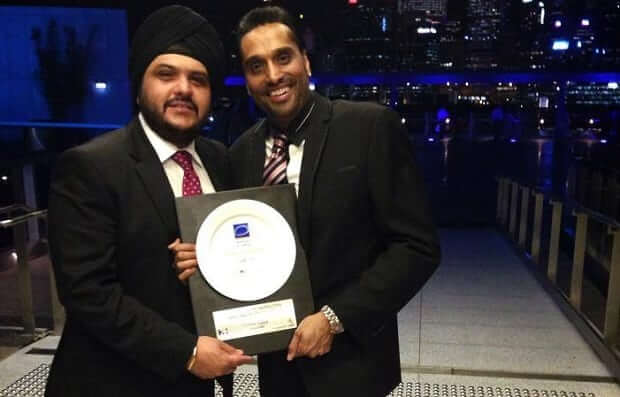
Urban Tadka wins Best Indian Restaurant award

Urban Tadka Restaurant in Terrey Hills was announced earlier this month as Sydney’s Best Indian Restaurant in the SMH Good Food Guide 2014.
Only two years and three months old, it took the fancy of the local Indian community almost from inception. Now it is just as popular with the wider mainstream.
Set up by long-time restaurateurs Mandeep Rana and Dimpy Singh, Urban Tadka, nestled in an acreage in leafy Terrey Hills, is modelled along the farmhouse-restaurants of Delhi. The food itself, authentic in style and classy in its presentation, reflects the trends in high-end restaurants in contemporary Mumbai.
It’s hard to believe that not so long ago an abandoned farmhouse stood in its place, over-run with weeds, snake holes and spider webs. It was painstakingly refashioned into a swanky restaurant, with a cosy but modern lounge and bar area, an open kitchen, a dance floor and beautifully landscaped lawns.
Urban Tadka, or ‘UT’ as the trendy set are now calling it, has also gone on to become one of the community’s most sought-after function venues.
The 250-person capacity, the dance floor and DJ facilities, the ample parking and specially erected marquees in the sprawling grounds outside, are particular drawcards.
“We took great pains to set it all up,” Dimpy tells Indian Link.
His partner Mandeep chimes in, “Now we take great care with our service. Regular guests come in and say, ‘Can we leave things up to you?’ We know whether they want a tapas-style meal, or the whole deal!”
On the awards night held at Star Casino, the Tadka boys felt quite humble to be amongst some of the finest Indian restaurants in this city, and apparently, were somewhat sceptical of their chances.
“But you know, an unbelievable thing happened just as our category was announced,” Dimpy reveals. “I felt a strange urge to push back my chair and start walking up to the stage. ‘Get ready, buddy!’, I whispered to Mandeep, and saw that same look on his face as he said ‘Yes’. Within seconds, they announced our name as winners!”
“Our efforts have all paid off,” Mandeep agrees. “And to be recognised like this, is surely a top-of-the-world feeling. Even to be listed as finalists, was immensely satisfying. We thank all our loyal patrons who have made this achievement worth more than we could have ever asked for. A very special thanks to our superb team of chefs, bartenders, wait-staff and kitchen hands, who have all contributed equally in our success,” he adds.
Dimpy concludes, “We had a vision – to be the most promising Indian restaurant in town – and we’ve proved ourselves, by the grace of God, the blessings of our parents, and the support of our families.”
And yet, that unmistakable Punjabi self-assurance is never far behind. “This is just the beginning,” both say with stars in their eyes.
The national awards are up next, and the Tadka boys, finalists there as well, are keeping their fingers crossed. We wish them all the very best.
Must-try dishes
Dastan-e-Chaman
Murgh 65
Lakhnavi Seekh Hazarvi
Kheema Baingan
Pork Lababdar
Jhinga Malabari
Methi Lachcha Paratha
Kashmiri Naan
Iconic Italy
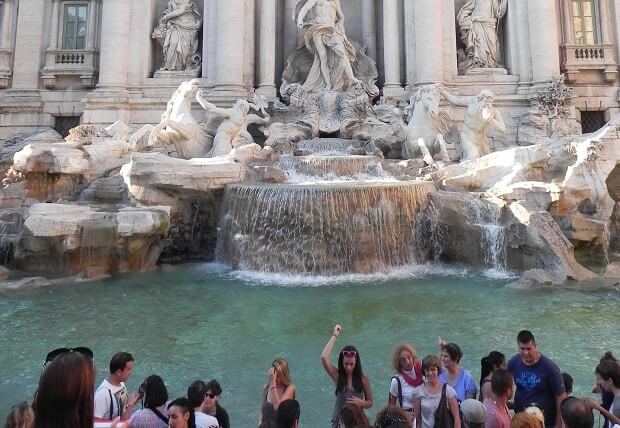
Exploring the boot-shaped peninsula through its railway network crossing is a rewarding and interesting experience

I love train journeys. I enjoy its speed, rattle, occasional jerks and most importantly, gazing through the window at the rolling scenery outside. So when in Italy recently, I obviously opted for the railways, rather than flying.
Like the rest of Europe, the rail network in Italy is well developed. It offers the best of efficiency and comfort, and its outstanding record of punctuality gives a traveller more time to explore the nation’s uncountable sights.
You arrive at Rome and savour its history, then hop onto a superfast train to explore Florence’s Renaissance architecture, discover Venice’s canals at that perfect and romantic destination, and finish off the trip in Milan, Italy’s football city and the world’s fashion capital. I followed this itinerary and got a great taste of Italy.
Rome, the Eternal City
Arriving at the nation’s capital city, I sensed over two millenniums of history in the air that is filled with memories of Caesar, Nero, Michelangelo, Raphael and many other Roman greats who have contributed to build and beautify this city. This is the point from where the mighty Roman Empire expanded, Catholicism blossomed and European art and culture were epitomised.
Flanking the famous thoroughfare Via Veneto, the grand Regina Baglioni Hotel where I resided was charmingly close to the city’s iconic landmarks – the Spanish Steps, Trevi Fountain, Piazza Navona, the Pantheon, the Colosseum, the Forum and the Vatican City, dominated by St Peter’s Basilica and the Sistine Chapel. Visiting all of them proved to me why Rome ranks as one of the world’s most visited destinations. Delightfully, almost all of these sites can be spotted if one occupies the hotel’s 560sq/m luxury penthouse suite, which offers the best overview of the city, but at a price.
The two museums that drew my attention were the Borghese Gallery which exhibits many master creations of Bernini, celebrated as the father of Baroque style; and Capitoline Museum where artefacts simply mesmerize visitors.
Roma Termini is the city’s main railway station. With 29 platforms and over 150 million passengers each year, it is one of the largest railway stations in Europe.

Florence, the Renaissance Quarter
Just couple of hours from Rome by rail is Florence, recognized as the nation’s cultural and intellectual epicenter. The city in which the Renaissance period was conceived, was home to many well-known artists, writers, explorers and scientists; Leonardo da Vinci, Donatello, Raphael, Michelangelo, Dante and Galileo are just a few from a long list. It is currently an UNESCO World heritage site, with visitors from around the globe landing here with a huge appetite for art as this city houses several museums and galleries, the most famous being the Uffizi Gallery. Designed by Vasari in the 16th century, it is regarded by art connoisseurs as one of the most important museums in the world, displaying classics from Bottichelli, Leonardo da Vinci, Raphael, Titan, Caravaggio, Michelangelo and many masters of the period. I regretted not having enough time to spend here. In fact, one needs days, perhaps weeks, to go through the wide range of the exhibits, each of which is a gem on its own. I also dropped in on another famous museum called the Accademia, to pay a visit to Michelangelo’s immortal creation David, an exact copy of which graces the Piazza Del Signoria, a cobblestone paved area powdered with a gorgeous fountain and several samples of art, akin to an open air museum.
Many of the city’s churches are works of art in themselves, the most famous being the city’s landmark Santa Maria del Fiore, popularly known simply as the Duomo.
My next stop on the train was to Pisa to see its world famous Leaning Tower.
Venice, the centre of Romance
Venice, as we have all seen in pictures and photographs, floats dream-like on canals and lagoons. This small city, with its ensemble of waterways and tiny bridges, gondolas and yachts, and its labyrinth of narrow alleyways opening to large piazzas flanked by a galaxy of colourful buildings glaring at the paved space occupied by locals, tourists and pigeons, induces novel thoughts even in the mind of the unromantic.
The best way to appreciate the beauty of Venice is by wandering aimlessly and losing yourself in its maze of unknown streets where every turn finds a new charm like an church, a former palace, an old house or a café servicing authentic Italian coffee and snacks. However, whichever mystic route is followed, you will ultimately end up at St Marco Square conquered by the presence of St Mark’s Basilica and the adjacent Doge’s Palace, the two most significant signposts of Venice. Another inescapable Venetian site is the Rialto Bridge, the oldest pathway across the Grand Canal, a tour of which in the local water-buses called Vaporetto, is fascinating. It presented me a different view of the fantasyland, while thinking about episodes of Bassani, Portia and Shylock from Shakespeare’s Merchants of Venice.
Milan, the Mecca of Italian football
Being the home of legendary football clubs Inter Milan and AC Milan makes Italy’s second largest city football-crazy, but there is more than that for visitors. Here you can see the Leonardo’s breathtaking fresco The Last Supper in a museum inside the church of Santa Maria delle Grazie (you are required to pre-book tickets and the museum is closed on Mondays), and ‘Rondanini Pietà’ a marble sculpture that Michelangelo worked on from the 1550s until his last days in 1564, in the Museum of Ancient Art of Sforza Castle. However, the most visited landmark of Milan is the Duomo, the world’s largest Gothic cathedral which, with its 3,400 statues, 135 spires and 155 gargoyles, simply mesmerizes onlookers, myself being no exception.
Milan is the world’s fashion capital and you can’t leave the city without paying a visit to its celebrated fashion district located in the heart of the city, not far from the Duomo. Here the streets are lined with shops of every designer label that you can think of. While wandering around, I noticed parking spots mostly filled with Bentleys and Ferraris, obviously shoppers! So my retail experience was restricted to window gazing, and surely it was rewarding to discover the latest on fashion.
TRAVEL NOTEBOOK
Getting there: Singapore Airlines (www.singaporeair.com) has daily flights from Australia to Rome via Singapore. From Roma Termini railway station there are connections to all major Italian cities and other European destinations. Check www.trenitalia.com for details or contact CIT Holidays in Australia on 1300 380 992 for getting rail tickets on hand before leaving home
Accommodation: At Rome at Regina Baglioni (www.baglioni hotels.com), at Florence at La Casa Del Garbo (www.casadelgarbo.it), at Venice at Hotel Commercio & Pellegrino (www.commerciopellegrino.com) and at Milan at Best Western Hotel Madison (www.madisonhotelmilano.com). All of these hotels are centrally located in close proximity of the main railways stations.
More information: www.turismoroma.it; www.turismo.intoscana.it; enturismovenezia.it and www.enit.it.