

Meagre attendance and few program sessions with mass appeal mar diaspora event, reports PAWAN LUTHRA
If the mission statement for the Regional Pravasi Bharitya Diwas (Overseas Indians Day) in Sydney was “Connecting for a Shared Future – the Indian Diaspora, India and the Pacific,” sadly, the event does not appear to have achieved its objective.
Poor attendance, unrealistic costing, a skew towards business in the program sessions, and less than satisfactory execution have been cited as factors.
With more than 800,000 Indian diaspora in Australia, New Zealand and the Pacific Island nations, Day One on November 10 saw less than 150 people in attendance. Numbers picked up on Day Two to about 350, but dwindled to about 200 on the last day.
The Sydney Convention Centre with its capacity of over 2,000 looked strangely desolate as key note speakers, some of them highly accomplished in their fields, made their addresses.
The concept of the Regional PBD
Regional PBDs are organised by the Indian Government’s Ministry of Overseas Affairs to provide a platform for the Indian community in a selected region of the world to contribute to the relationship between the countries of their region and India. Last year, the event was held at Port of Spain, Mauritius.
Earlier this year, there was much excitement in Australia’s Indian community as Sydney was picked to host the convention. An Indian High Commission communique said it expected “1,000 participants from within Australia and from Singapore, Malaysia, Indonesia, Fiji, New Zealand, PNG, Hong Kong, Phillippines and the Pacific Islands”. The Premier of NSW Barry O’Farrell showed the same enthusiasm, declaring that he foresaw “an estimated $2.8 million worth of economic activity for NSW”.
In the end, no more than 350 delegates attended, of whom 140 were invited speakers. Most attendees were local Sydney-siders, with only a smattering from other states, predominantly Victoria. The overseas delegates made up a negligible number.
PBD Sydney: Highlights
At the very outset, it must be said that hosting the seventh Pravasi Bhartiya Divas in Australia presented a great opportunity for the Indians in the region to connect with the motherland and with each other. Attendee Raj Natarajan, past UIA President, pointed out, “PBD Sydney was a perfect opportunity to present issues of concern in the local diaspora to the policy makers both in Australia and India, because we had the ears and eyes of the highest office in States, the Premiers and some of the highest offices at the Federal level like the Immigration and Trade Ministers”.
A significant platform was created by Australia’s nomination as the venue for the 2013 Regional PBD.
As well, attendees were afforded an excellent opportunity to listen to speakers with some great stories to tell. The passionate and emotional speech by the former Prime Minister of Fiji, Mahendra Pal Chaudhry, particularly stood out. Equally well presented was the warm welcome by NSW Premier Barry O’Farrell who hosted the delegates at Government House, speeches by the Premier of South Australia Jay Wetherill and the Deputy Premier of Queensland Jeff Sweeney, and the warm and friendly Pallavi Sharda, Australia’s own Bollywood celebrity. Well-known recluse and cricket legend Steve Waugh turned up as well, to share his experiences in India.
From the Federal level, the Minister for Immigration and Border Protection Scott Morrison and the Minister for Trade and Investment Andrew Robb found their way to the PBD even as their new government sat its first week in Parliament.
Two of the plenary sessions, one on languages and the other on media, went down particularly well. Never has the PBD discussed the power of Indian languages in the Indian diaspora; seeing this on the programme was indeed heartening, and sets a positive precedent for future PBDs. The session on media was efficiently handled by moderator Sushi Das as she led the participants through a structured session yet allowed flexibility in the various discussion points.
Flying in two accomplished performance artists such as santoor maestro Shiv Kumar Sharma and acclaimed vocalist Meeta Pandit also added a deeper dimension to the cultural engagement of the PBD. Both artists thrilled the crowd, however small, at their performances.
Perhaps most successfully, the convention turned out to be a great opportunity for delegates to network with community members from other states and nations. Faces were put to names already known, as people got to know each other.
So what went wrong?
The Chief Guest, India’s Minister for Overseas Affairs, Vayalar Ravi looked stunned as he stood at the dais to address the nearly empty Sydney Convention Centre in his opening speech. He fumbled his way through his address, which he attributed, somewhat strangely, to ‘poor stage lighting’. Speaking to Indian Link on the last day, the Minister did comment on the poor turnout, citing “the vast distances people would have had to travel, which would have added to the cost of attendance”.
Unfortunately, more things went wrong than right for this much-anticipated event.
For starters, the organisers chose an overly bureaucratised ‘top-heavy’ approach, about which much comment has already appeared in community media. Decisions were made out of Canberra, not exactly the greatest hub of connectivity amongst the local India population in Australia. Sydney and Melbourne seem to have more than a third of the targeted audiences of the PBD, and it is input from these concerned pravasis which should have been sought.
Perhaps the eligibility for membership in the managing committee should have been, a non-GPS drive to centres of influence within the local Indian community, say Harris Park in Sydney. This would have verified the candidates’ credentials in terms of how connected they are to the bulk of the Indian community! (Take for instance, Senator Lisa Singh, who sat on the organising committee. While she is deservedly admired for making it to Parliament through sheer dint of hard work, her in-depth knowledge of the Indian community here is questionable).
Jokes aside, the organisers simply could not excite the community about the PBD.
Perhaps the marketing could have been better, to reach a wider section of the targeted audience. Instead, thousands of dollars were spent on the venue and on brochures distributed at the event.
Sydney resident Rajesh Kumar wrote on Indian Link’s Facebook page, “There was absolutely no marketing. If people (or organisations) want to sell something, they first have to spend money to spread the word. Generally our people have this habit in India of relying on the population, the quantity but not the quality; the Indian government has to realise that the quantity stuff with no quality can work only in India and not outside India”.
The figure of registered delegates bandied about was 600; however even at the peak of the conference on Day Two, it was obvious that there were less than 350 people in attendance. When questioned about this, organisers responded that there had been 600 registrations, and perhaps people chose not to attend. Hard to believe, as there are not too many people who would forfeit the attendance fees of $425.
The cost of $425 per delegate was deemed extreme even by those who did attend. Not only was this amount prohibitive to most in Sydney, interstate and overseas visitors would have had to add travel and accommodation fares as well.
“I found it very pricey,” said one Sydney resident who chose not to attend. “There seems to be little idea of the income and lifestyle pressures of the local Indian community”.
He added laughingly that one organising committee member tried to entice him with the attraction of food: two grand lunches and two dinners, besides quality speakers at the sessions.
(Reporting on the event in Indian magazine Kerala Today, delegate Treassa Joseph commented that most of the attendees were members of the Indian community who were closely connected to the Indian High Commission or organisations that were already engaged in bilateral relations with India).
The decision to run the event over weekdays was another point of contention. This meant that many could not attend due to work commitments. Much of the Indian diaspora works in an employed category, and for most to take two out of their allocated 20 annual leave days to attend a conference, or take unpaid leave is difficult. The weekday choice is more conducive to a business programme where attendance suits the business community.
The heavy focus on business programmes was robustly criticised by most of those attending.
Sources within the organising committee pointed the finger at Canberra’s micro management of the whole affair. With just a couple of individuals who had the ear of the High Commissioner Biren Nanda, there definitely was a strong bias towards business, with less emphasis on issues which concern and connect the local diaspora with India and within the region. Business sessions of opportunities in services, business opportunities in resources, business opportunities in primary commodities, business opportunities in infrastructure etc. would have all been well appreciated in an Indo-Australian business forum, not in what was an essentially a forum for the diaspora to connect.
Saba Zaidi Abidi, the founder of Vision Asia network services was outspoken in her views. “The Australia India Business Council was heavily involved in the planning and execution of the PBD event along with the Indian High Commission and dominated most of the sessions,” she wrote in a letter to Indian Link. “This makes one wonder as to what was the objective of this whole exercise? If the purpose of the PBD was to promote B2B relationships between governments, then yes, it did achieve that objectively to some extent. But if it was about people coming together to celebrate their common heritage, share experiences and bring to focus their current problems and issues, and highlight the needs of the pravasi community at large, it fell short of delivering that. There was hardly any P2P or people-to-people contact”.
Some break-out sessions saw no more than 20-30 people attending. On one occasion, an organising committee member was seen imploring attendees to return to the auditorium, even as they stood outside lamenting the lack of relevance.
Most sessions ran late – even the cultural performances. Well-known santoor artist Shiv Kumar Sharma could not help commenting that Indian Standard Time seemed to have crossed international boundaries, as he patiently waited to start his show as part of the opening day entertainment. Members of the event management company that helped put the conference together were heard muttering in frustration as the organisers took time to get the event underway.
A note to organisers
It was clear to all those who attended that while it was an excellent opportunity to network, PBD Sydney could perhaps have been better thought through.
A press release by the organisers sent out upon the conclusion of the conference described it as “a very successful first-ever Regional Pravasi Bharatiya Divas held in Sydney”. They can continue to live with the delusion that it was “very successful,” or consider some of the following as suggestions. If they are not already doing such analyses, the community out there definitely is, and these suggestions are compiled from them.
The costing should have been reconsidered. Daily pricing or separate pricing for attending relevant forums would probably have brought in more attendance. A more suitable venue could have kept the prices down. Would a weekend PBD have been better? A solid publicity plan should have been put in place, much in advance, to ensure the message of the PBD got through clearly to the community at large. A more transparent way of working and organising the conference ought to have been adopted, rather than isolated decisions taken on the advice of a few who are largely not connected with the local community. Other minor plans to create goodwill in the community could have been implemented, such as free entry to attend the cultural performances (rather than have the maestros perform to empty halls).
The implications of Sydney PBD
The message that the Indian government will probably get out of the Sydney PBD, is that the Indian community in Australia (and the region) is too small, and/or too uninterested, for them to bother with.
Deplorably, this is far from the truth. The Indian community is strong and fully capable of making a difference, as mainstream politicians in Australia have already found out. Their strength, and this is not just in their numbers but also in terms of their influence, is set to grow in the very near future. The Indian government has been slow in engaging with Australia, and a strong Sydney PBD would have indicated to
them that the diaspora here could be relied upon to help them take the relationship further. Regrettably, this opportunity was missed.
On the other hand, the message that the Australian government will get out of the event, is that the organising committee could not engage the Indian community here. Both sides of the political divide are constantly on the lookout for strong Indian figures that they can count on to reach the community, a viable vote-bank. Perhaps the organisers were not those that the local diaspora look to as the true leaders of the community?
And finally, the message that the Indian community is going to take away from the Sydney PBD is this: the powers-that-be within the Indian government representatives here, as well as those within the community, need to be better in-touch with the community they serve, or hope to represent.
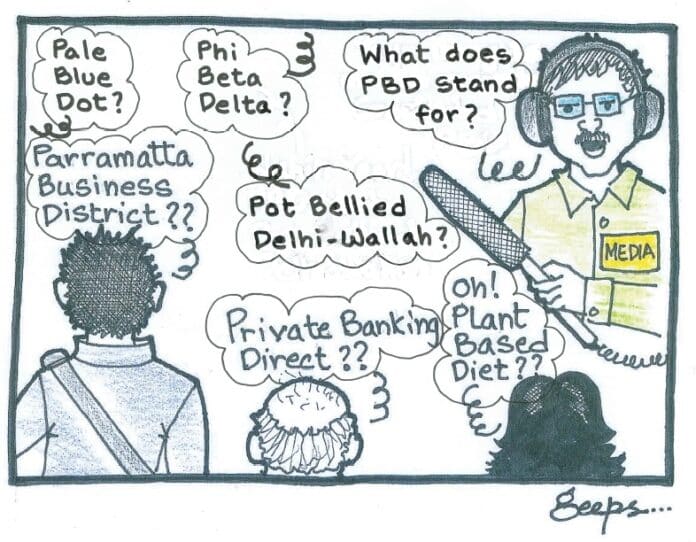
PBD Sydney unable to engage
Cricket: Thank you for the memories!
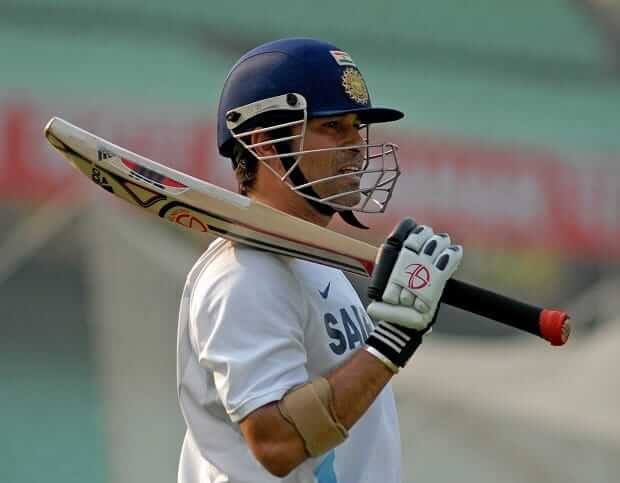
Sachin Tendulkar’s retirement from cricket earlier this month marks the end of a 24-year love affair, reports RITAM MITRA

When I was 12, I went to the Indian cricket team’s hotel in the city in the hope of catching a glimpse of my sporting heroes ahead of the 2004 SCG test match. I wasn’t alone – it was a strong crowd, and there were at least 50 others waiting patiently for the team’s arrival. When the team bus pulled up to the hotel, I was unceremoniously pushed to one side by people older, taller, and apparently much stronger than me. I watched players like Laxman, Dravid and Yuvraj enter the hotel lobby one by one after signing all the cricket bats, books and random pieces of paper being thrust in their faces. After some time, the most popular of them all, Sachin Tendulkar, had done as much signing, posing, and polite chitchatting as possible – and he turned and began walking towards the lobby. I called out after him, as did many others. “Sachin, please!” I shouted in desperation. He paused. There was just a moment’s hesitation as the concierge beckoned him towards the peace and quiet of the hotel. But it was a brief moment. The Little Master turned around, came towards me and quietly signed my cricket bat.
The relationship between Tendulkar and his fans is one of unbridled electricity, overwhelming passion and most of all, uncontained intimacy. Everyone has his or her own Sachin Tendulkar story to share – whether it is watching him on television, seeing him play live, or meeting him in person. They say that India stood still when Tendulkar was batting – but it was in those moments that the country’s, and indeed cricket’s love affair with him, reached a crescendo.
It was an affair only partly based on his feats on the cricket field. His batting was magical, make no mistake; but his statistics are a mere by-product of the romance – a love child that everyone knows about, but wouldn’t mind living without. After all, the ‘most memorable Tendulkar moment’ question is not answered with ‘His 34,347 runs in international cricket’ or ‘His 100 international centuries’. The cricketing world’s romance with Tendulkar has been built around stolen moments that will stay frozen in time: his lone stand against the might of McDermott, Hughes, Whitney and Reiffel on a dicey Perth deck in 1992; his devastating assault on Warne in Sharjah, 1998; his brutally flayed cut shot for 6 against Shoaib Akhtar in the 2003 World Cup.
It has been a somewhat dysfunctional relationship. After 24 years in the spotlight, none of us can say we really knew Sachin Tendulkar at all. On what would be his last day of international cricket, his wife Anjali gave an interview that revealed an almost mundane life with him at home. When he spent those rare periods of time with his family, he would annoy her immensely with his knack for finding faults – pointing out peeling paint here, cracks there. Harsha Bhogle later told viewers that the first time he visited the Tendulkars, Anjali made him tea while Tendulkar brought out the tea cups, “… just like any other middle-class Indian family”.
But this was not the Tendulkar we knew, and perhaps it was best that way. Sachin’s rise coincided with India’s rise as an economic power – not just in cricket, but on the world stage. In a country traditionally disillusioned by politics – exemplified even in the heavy emotion following Tendulkar’s last match, when Maharashtra Chief Minister Prithviraj Chavan and National Congress Party President Sharad Pawar were greeted with jeers and booing from the crowd – Tendulkar was the hero India needed. Not for his straight drive or back-foot punch through the covers, neither for his Pepsi commercials, nor for the timeless stories of his early-morning drives around the streets of Mumbai in his Ferrari, although those are the things we might well remember most about him.
In the end, India needed Tendulkar for his humility. As the nation found its voice on international affairs and within the cricketing fraternity, Tendulkar kept India grounded. He was immensely relatable, a far cry from politicians, playback singers and Bollywood superstars. It was because of his humility that the country put him on such a pedestal and revered him as they would a deity. His records might be broken – Kohli is already on the hunt in the ODI arena, and Kallis is hot on his heels in Test matches. Some may argue that Lara was a greater match-winner, or Kallis a more valuable cricketer. But it is the sheer romance of Tendulkar’s story – a quiet, shy 16-year-old Indian boy like any other, taking on the world and carrying the hopes and dreams of an entire nation for almost a quarter of a century – that makes him so special to India, and will outlive his countless records.
To the rest of the world, Tendulkar’s greatness may well lie in his insatiable appetite for runs. He was particularly ruthless against Australia, plundering 20 centuries against them, including the 114 in Perth that many regard as the greatest innings played by a visiting batsman in Australia. Time and again, he showed the world that he was at his best when he was being challenged. His innings in Cape Town, during which he prevailed in a titanic struggle with Dale Steyn, is testament to his ability to score against the best bowlers of every generation he played against. Starting with Younis and Akram in 1989, he overcame attacks that featured Ambrose and Walsh, McGrath and Warne, and more recently, Steyn and Morkel.
No one in history, sportsperson or otherwise, has endured the adoration of a billion people. It is not something Tendulkar ever asked for – and perhaps that is why we gave it to him so readily. Tendulkar has transcended sport, bringing together cultures, religions and castes in a way that no leader, politician or warrior has ever achieved – whether in India or abroad. In his retirement speech, Tendulkar said that the “Sachiiiin, Sachin” chant would reverberate in his ears until his last breath. Despite the entitlement every fan felt to the heartfelt ‘Thank you’ from Tendulkar, you could not help but feel a touch of pity for the man.
For although he might move on from the game and his time in the sun is now at an end, the nation will never move on from him. He will remain far and away the most adored son of India, and that will surely haunt Tendulkar, now that he does not have cricket as an outlet. The eerie moment when Tendulkar ventured out on his own to touch the Wankhede Stadium pitch reminded us once again that Tendulkar was only ever at home on the cricket field. It has been that way for a long time. Tendulkar was born to play this game.
This chapter of India’s love affair with him is over. Cricket will be poorer without him. But it was better to have loved and lost than never to have loved at all.
Festival of Dangerous Ideas: Humanity versus the GDP
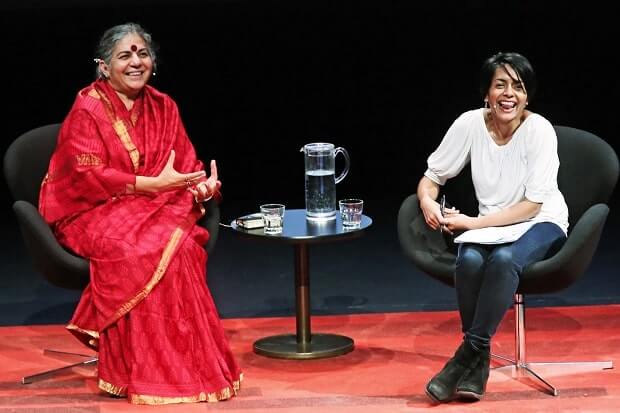
Vandana Shiva’s dangerous idea of ‘Growth = Poverty’ explained the concept of consumerism in relation to eco-sustainability, writes JYOTI SHANKAR

Three years ago, on November 3, 2010, Vandana Shiva won the hearts of many a Sydneysider with her fiery oration at the Sydney Peace Prize lecture at the Sydney Opera House. On exactly the same day this year, she was back at the Opera House presenting her lecture at the Festival of Dangerous Ideas on Growth = Poverty. The fire still smouldering within her, Vandana enthralled an almost full to capacity audience with her views on why the present measure of the world economy, the Gross Domestic Product (GDP), is a “rogue concept creating rogue economies the world over”. Vandana also spoke to the Indian Link the day before the lecture about globalisation, seed banks and her views on patriarchy and culturally perceived poverty.
Opposing patriarchy
Being one of the leading eco-feminists, Vandana’s views on the effects of the patriarchal society we live in has often offended numerous men. However, she offers no apologies for these views. “We need to be more aware of structures of patriarchy today as they have taken more virulent forms,” says Vandana. “Traditional patriarchy based on structures of religion and caste have now joined forces with capitalist patriarchy based on the rape of the earth. This is increasing the violence against women”. No one can deny the truth of her fundamental arguments, in spite of her inflammatory remarks and fierce rhetoric. She clarifies that it is the patriarchy she is against, not the male sex.
“If we want to use pleasant words, but our women get raped every day, that is a choice we make. For me to speak the truth is the very basis of my existence and my conscience,” stated Vandana.
She has witnessed first-hand the relationship between women and ecology way back with the Chipko movement in the 1970s, when women formed human circles around trees to prevent their felling. As an eco-feminist, Vandana suggests that a more sustainable and productive approach to agriculture can be achieved through reinstating a system of farming that engages women, works with nature, respects ecological limits to growth, understands the inter-connectedness of all living things, and celebrates bio-diversity. Patriarchy as a masculine mode of thinking has a mechanistic view of the world. It has created huge corporations that are trying to transform the world into a supermarket, where growth of an economy is measured by the narrow concept of GDP.
Grouse against GDP
“The first poverty is at the level of the mind, that humanity should have shrunk its mind so deeply and reduced the amazing plurality of options we have on how to produce and how to consume, to one number, the GDP,” she said in her lecture. Being a quantum physicist herself, Vandana says that she can appreciate the beauty of the abstract. Looking back to her school days, she reminisced that she never liked to speak at school assemblies, or write essays when five lines of equation would do. “I believe that the abstract as abstract is fine, but when it starts becoming the measure for the real world, that’s when the destructiveness comes in,” she explained.
“We are sacrificing our entire world for this flawed abstraction,” she said, giving an example of how the GDP does not measure the hydrological cycle of nature but takes into account what Coca Cola produces, though its processes use ground water extensively and leaves behind pollutants and heavy metals. In the act of eating and by making a choice in what we eat, we can make a difference. Vandana says that to this day she cannot bring herself to drink Coca Cola, referring to it as ‘the brown liquid’, after visiting Kerala where women were fighting to prevent the setting up of a Coca Cola plant. Another example of this flawed abstraction was that if you cook a wonderful meal at home, you do not contribute to the GDP, but if you consume a McDonald’s burger, you do.
“And then you contribute extra, to the obesity and all the things that come with the hamburger,” she said on a lighter vein.
Vandana quoted Robert Kennedy’s famous speech in 1968 about GDP, “It counts air pollution and cigarette advertising, and ambulances to clear our highways of carnage… It counts napalm and counts nuclear warheads and armoured cars for the police to fight the riots in our cities… Yet the Gross National Product does not allow for the health of our children, the quality of their education or the joy of their play. It does not include the beauty of our poetry or the strength of our marriages, the intelligence of our public debate or the integrity of our public officials… it measures everything in short, except that which makes life worthwhile”.
Cult of consumerism
It is often said that the Green Revolution saved India from famine, and though it is hard to deny that it did, it also gave rise to monocultures, corporate control over seeds, the depletion of soil fertility and pollution of rivers from chemical run-off from the over-use of fertilisers and pesticides. That this also destroyed indigenous farming cultures and has since caused many suicides, is telling. The statistic of farmer suicides quoted by Vandana is 284,694 and that is only the ‘official’ figure, she points out, which is chilling. She asks everyone to take another look at the paradigm of growth. The cult of ‘growth,’ which has dictated policy for decades. Consumerism as a cult is the way the growth mechanism keeps growing. Amidst the serious talk, Vandana drew laughter from the audience when she pointed out that the word ‘consumption’ was the word for TB or tuberculosis in the Middle Ages. You died of it!
Seed solution
Her detractors call her the High Priestess of the ‘keep the poor poor and hungry’ movement. But Vandana believes in change at a grassroots level. Navdanya, literally Nine Seeds, is an organisation she started in 1987 to create a non-violent system of farming where one works with nature. It was created as an alternative to the idea of seed as patented intellectual property, and the imperative that industry had to push genetically modified seeds. So the organisation started creating sanctuaries for seed in the form of community seed banks. Vandana said that her colleagues are working on distributing seeds that are salt-tolerant in Orissa, which was ravaged by a cyclone recently.
“In fact, the seeds that we saved have helped each time in recovery after a climate disaster, whether it is drought, flood or cyclone” said Vandana.
She believes that every garden should be a seed sanctuary, using open pollinated seeds that can be renewed and saved, creating a different growth economy; a growth of plants, of diversity, of children, of health, and of our relationship with the earth. It is not the narrow growth of finances.
“If people don’t rise up and start questioning the power of giant corporations, we will see that what has happened to Indian farmers will happen to all levels of society the world over,” emphasised Vandana.
Globalisation as the phenomena of countries opening their markets is now over, she avers. What is now happening is agreements such as the Trans-Pacific partnership agreement, which in effect allows corporations to sue governments.
“This next step of coercive globalisation where corporations sue governments will mean the end of democracy, the end of human rights and the end of sustainability,” Vandana warns.
When asked who was the real Vandana in private, she replied that she could not do what she does as a 9 to 5 job. It is her very existence. She has rejected politics in spite of requests from close friends who will be contesting the Delhi elections with the new Aam Aadmi Party. “I made a choice not to be in politics but rather, be in deeper transformational processes,” she stated.
Foreign Minister Julie Bishop in India
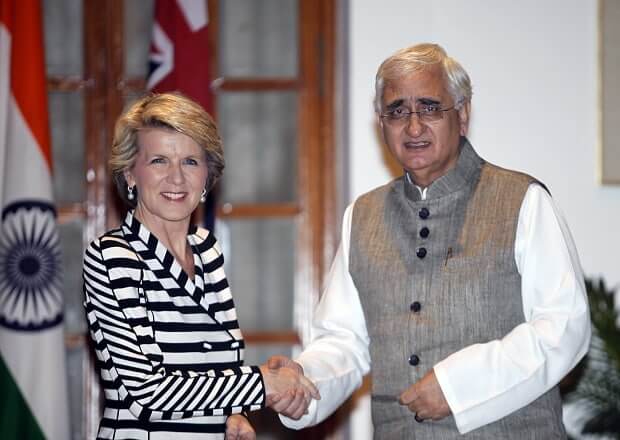
Third round of civil nuclear talks to take place soon

Australia and India are to hold the third round of their civil nuclear cooperation talks Nov 26-27 to pave the way for an early conclusion of the agreement, visiting Australian Foreign Minister Julie Bishop said in New Delhi on Nov 18 after talks with India’s External Affairs Minister Salman Khurshid.
Australia will also support India’s membership of the Nuclear Suppliers Group (NSG), Bishop said during a joint press conference. The two sides inked two agreements, including a statement of intent between the Australian government and India’s Nalanda University.
Bishop said both sides hoped to conclude the civil nuclear cooperation negotiations that would pave the way for the sale of Australian uranium to India. She said both sides are negotiating in “good faith” and added that the Tony Abbott government is in favour of selling uranium to India. Australia and India are also planning to begin negotiations on a free trade agreement, she said.
Khurshid said both sides were looking to schedule a visit early next year of new Australian Prime Minister Tony Abbott to India. “We are looking at an early slot for him to come down next year,” he said.
The visit was being planned amid indications that Abbott “wants to begin his term with a fruitful visit to India,” he said. Australia and India are also increasing air connectivity with Air India deciding to start direct flights to Sydney and Melbourne and Air Australia planning to launch direct flights to India, said Khurshid. The external affairs minister said Indian business had an “impressive footprint” on Australian soil and hoped that a larger number of Indian companies will invest in Australia. An Indian-Australian CEOs’ forum is to meet soon, he said.
Bishop said she wanted to visit India early in her tenure “to show the significance we attach to ties with India”.
She said the “ambitious” free trade agreement (FTA) they planned to negotiate would be mutually beneficial. As part of their deepening engagement in security cooperation, the navies of the two countries are to hold joint exercises. Both sides also discussed cooperation in counter-terrorism and cyber security.

In the field of energy security, Bishop said India could count on Australia for its “trusted and reliable support” for its needs, including coal, LNG and civil nuclear energy cooperation. Bishop said there were “no specific time lines” in concluding the civil nuclear agreement with India and both were “waiting to get it right”.
Energy-starved India aims to upgrade its nuclear power generation capacity to 20,000 megawatts (MW) by 2020. Australia has one of the largest known uranium reserves in the world.
Australia, a key member of the Nuclear Suppliers Group, had earlier been opposed to selling uranium to India as New Delhi has not signed the Nuclear Non-Proliferation Treaty (NPT). It reversed its policy in 2011. Bishop also said her country welcomes Indians coming to Australia to pursue higher education. As part of wooing bright Indian minds to that country, the Abbott government has proposed a new programme under which students can pursue internship with a business company, she said.

IANS
Window to India


ABC TV’s recent Q&A program broadcast from India offered a realistic peek at the issues that plague contemporary India, including its perceptions of Australia.
Much like India itself, the program was an assault on the senses from the onset, in terms of sight as well as sound, thanks to the unusually bright visuals and the passionate but noisy panellists! In the end, it left the ‘visitor’ Tony Jones somewhat impressed, perhaps intrigued, and definitely exasperated as he tried to make coherent sense of it all. The final sentiment for the viewers, indeed as many tourists have reported upon returning from India, was a wish for the engagement to continue for just a little bit longer, the realisation notwithstanding that there are some massive problems there, some of them beyond comprehension. Ahhh, the enigma that is India…
The issues that are engaging India at the moment came out loud and clear from the panel. To some degree, insights into Indian society also came from the live Twitter feed on screen.
For one thing, the stereotypes that both communities hold about each other, came to the fore.
It was ‘You treat your aborigines appallingly’ versus ‘How can you talk about racism when you invented the caste system?’
And, ‘Your men are disgusting for the manner in which they treat women’ versus ‘Your society is disgusting for the manner in which you treat asylum seekers’.
The open honesty of it all was impressive, and tellingly, there were no hard feelings.
The Australian viewers at least were able to glean some understanding of the level of involved debate taking place in India today as it struggles to find answers for its particular problems, whether food security, raising the standard of living, or gender equality. It was evident also, that such involvement is taking place not only at the policy-making level, but at the social consciousness level as well.
Perhaps a reverse forum will allow Indian viewers to understand how Australia is debating the asylum-seekers question, other social issues such as alcohol-related violence, or even those that it has faced historically such as Stolen Generations.
It is here that migrant or ‘new’ Australians can make a contribution. Two people on the program, a panellist and a questioner, both Indian-origin Australians, impressed with their particular allegiance to the two countries that make up their sense of identity. With their unique long-term perspective on their country of origin and their adopted country, they can be the bridging gaps that other forums such as government agencies and the business community can only try to be. While one is not in any way undermining the work done by these platforms, the suggestion is made that increased people-to-people contact can help shatter stereotypes and build relationships based on mutual respect.
And yet, India teaches us, that it will be alright in the end. The pretty girl will get up and dance to bring some much-needed cheer. India will forgive the British for their injustices and even learn to love them. The Commonwealth Games will conclude with no major mishaps. Heck, Indians might even change their perceptions about Australians and treat them like friends, because as Indian-origin Australians will tell you, they really do have many interests in common.
And another thing, it’s really not that difficult to find an Indian-origin person who doesn’t follow cricket. Believe it or not, we do exist (shock horror). Or haven’t you noticed that there isn’t a single mention of the game in this particular piece?
Honey, honey…

It’s natural, cost effective and can be great for your skin and hair, says MINNAL KHONA

While many natural ingredients work as worthy skin and hair care aids to improve our looks, there are none as versatile as honey. From a scrub, to a hair mask, to an astringent, you can use this extremely underestimated yet wonderful gift of nature to improve your skin and hair.
For those who like going back to the most original form of everything, raw honey would be the natural choice. However, it can be thicker than the processed variety we see on our supermarket shelves. It does contain more enzymes than processed honey, but it is also more expensive. Having said that, processed honey is equally good to use as it is cheaper, retains most of its goodness and is easier to apply.
Most people who know about skincare will promptly tell you that honey is a natural moisturiser. It is a known fact that Cleopatra, the original beauty queen, was an authority on skincare treatments, and she used to bathe in a concoction of milk and honey. Leaving it on your skin like a mask for even ten minutes will make your skin feel fresher and plumped up. That is because honey is a humectant, it absorbs the moisture from the air and transfers it onto your skin. For best results, apply honey on slightly damp skin and leave on for as long as you can. This will soften the skin and hydrate it and if you do it regularly, you will see the difference in a few days.
Honey is also effective for sensitive skin as it is gentle, so if you have spent too long at the beach and are sunburnt, apply honey on the sensitive areas to soothe the skin instantly.
In case those of you with oily skin think that honey is only good for people with dry skin, think again. Honey can be applied directly onto pimples and acne as it contains antibacterial properties. It kills the bacteria and prevents the condition from spreading. Also, the creams we use to get rid of pimples often leave the skin around the pimple dry and itchy. Honey takes care of that too, and moistens the skin effectively.
Honey highlights
- Use honey as a cleanser, hair mask or even as a face scrub.
- To cleanse your skin with honey, first splash your face with water. Leave the hands wet and pour a fair amount of honey onto your palms. Apply all over your face like you would do with your face wash. Alternatively, dilute a little honey with water and spread all over your face. Scrub in a circular motion for a few minutes and wash off. Only keep in mind that because honey doesn’t have any oil content, it is not useful to remove waterproof make up or sunscreen.
- To use as a moisturiser, simply apply all over face and neck and leave on till you shower.
- For your hair, mix a quarter cup of olive oil with half a cup of honey till they have blended well. Then apply all over your hair and leave on for half an hour. Wash and dry hair as you do normally.
- To make a face scrub, mix honey with a little granular brown sugar, add one spoon of lemon juice and a spoon of olive oil. Rub all over your face and neck in a circular motion to slough off dead skin cells.
- You can also make a lip balm with honey, brown sugar and olive oil to relieve dry and chapped lips.
So no matter what skin or hair type you have, this easy and natural remedy can make you look as sweet as honey!

Win tickets to Gori Tere Pyaar Mein!

Enter our competition for a chance to win a double pass to Mind Blowing Films Gori Tere Pyaar Mein!
For session times.
All you have to do to enter is ‘like’ this post and tell us what your favourite film of all time is!
Get your entry in quick – as the competition closes Saturday November 24th at midnight!

Sporting strength of a nation
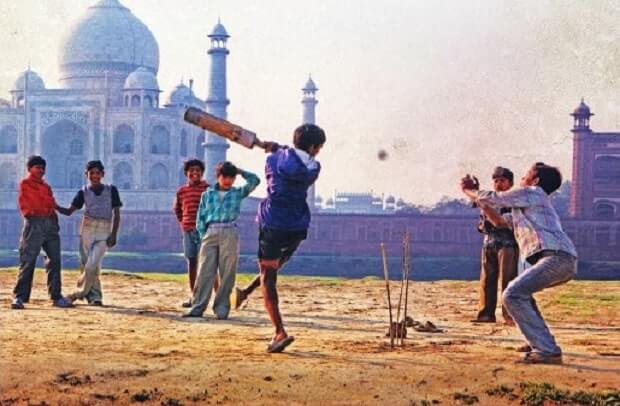
Cricket is India’s exclusive insignia into a world of money, love of the sport, and sadly, corruption
 With the cricket season well under way in India and the world, it is perhaps apt that we look at a book that looks at cricket. Written by James Astill, The Great Tamasha: Cricket, Corruption and the Rise of Modern India is about much more than the sport itself, as it is a metaphor for modern India, and its rise over the past two decades is told through the prism of the glitzy, lucrative and even sleazy Twenty20 cricket tournament, the Indian Premier League (IPL).
Contemporary cricket and modern India are synchronous with the opening up of the nation to satellite television: for two months of the year, IPL is watched more than anything else on Indian TV. The emergence of the IPL in many ways is also a harbinger of the rise of India in the global economy. When Lalit Modi, a businessman with a criminal record and history of failed business ventures, came up with the idea of creating a Twenty20 cricket league in India in 2008, few took him seriously. International Test cricket was still being controlled from London, and India was not a high achiever in the game. Modi put together a highly commercial model, melding three powerful forces in India, viz politics, Bollywood and business, throwing in come scantily-clad American cheerleader types into the mix to provide the masala, and he succeeded in creating the most successful domestic cricket competition.
The success of the IPL is a remarkable feat in itself; however, what India achieved as a consequence of that success is truly ground-breaking, for that success catapulted the country to the position of an ‘economic superpower of cricket, providing 80% of world cricket’s income’. It was a game changer (pardon the pun) in a way that was different and significant; the paradigm shift that Indian supremacy engendered in the world of cricket puts to shade in many ways China’s hosting of the Beijing Olympics in 2008 or Brazil’s dominance of football. The Olympics, like all sports played in the world, remain firmly under Western control; Brazil’s players may dominate football, but the nation does not control it economically. India’s economic rise in the world of cricket has changed the way both, the country and cricket are perceived. Take Australia, for instance. While Australian media and the cricket fraternity may be focused on the forthcoming Ashes series, as the cricket commentator Mihir Bose observed astutely, cricket administrators in both this country and England know “they will have to kowtow to India to generate the television income necessary to keep their cricket going”. This ‘rupee takeover’ of a Western sport is what is unique and sets cricket apart from all others.
But the takeover cannot hide India’s chronic problems of corruption, cronyism in business and politics, to name just a few. The way the powerful, newly rich BCCI administrators, the Srinivasans and the Shuklas, have ruthlessly pursued their interests on the world stage, is perhaps the way the leaders of a newly powerful and rich India may do. Astill writes, “India is becoming powerful… [however] it will be a long time before it forgets how it felt to be weak”. Set against this, the most touching stories in the book are of men in dirt poor parts of rural India, in small towns and slums, who coach aspiring stars with such dedication and selflessness. What it tells us is this: what is true of cricket is true for Indian democracy as well: it is the selfless dedication, sacrifice and integrity of a few, a handful, that keeps the game and Indian democracy alive at the grassroots level. Anyone who is interested in cricket and/or India will enjoy this book immensely, and forgive the author a few rather glaring mistakes.
James Astill was the Economist’s correspondent in India between 2007 and 2010.
Kennedy and me
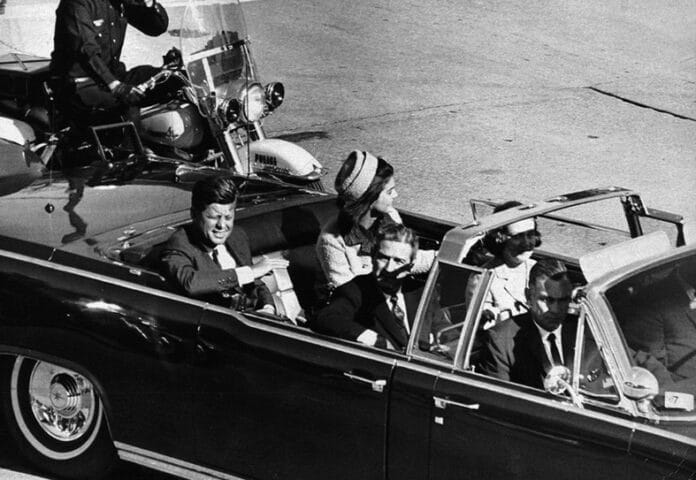
John F Kennedy’s assassination on 22 Nov 1963, changed the course of LP AYER’s life

President Kennedy’s assassination propelled my migration journey to Australia. Sounds incredible?
Major tragedies often create a ripple effect, affecting people living far removed from the scene and not even remotely connected with the event, like 9/11 or the tsunami. Kennedy’s death was one such event, in my case.
I was a journalist with the Financial Express, the first financial newspaper started in India in 1960 as part of the Indian Express group. After gaining my Honours degree in Economics, I joined this paper from day one of its planning stage.
In that set-up, the News Desk was responsible for editing news items, designing page layout and producing the paper. It worked in two shifts, with a chief sub-editor in charge for each shift. The night shift Chief sub-editor was the sole arbiter of what stories would go on the front and other overflow pages, as well as their layout.
Promotion came to me reasonably quick. Just a couple of months before that fateful Friday night in 1963, I was made Chief sub-editor. And that week in November it was my turn as the night shift in-charge chief sub-editor.
Being a financial daily with a small print-run, it was printed first around midnight, before the Group’s other two papers, the Indian Express and Lok Satta in Marathi, with a quarter of a million print run each, all on the same rotary machine.
Every night after checking the front page proof, I would give the go-head to the printing room. While waiting to see the first printed copy, the sub-editors would have a card game, then sleep on our office desks as there was no public transport after midnight, and none of us could afford a vehicle. We used to be woken up by the cleaners early next morning to return home.
Friday, November 22 was like any other day. Things went smoothly with good local stories breaking early, and the pages were ready on time for printing. We sat down to our card game a couple of metres from the teleprinter (a typewriter-like device in a glass-topped cabinet) that used to send out stories from the news agency. Usually the agency would give a couple of rings on the machine to indicate it was closing for the night and no more stories were to come. If some important news was about to break, it would sound longer and louder. But that was rare.
As the cards were about to be dealt, there was a loud ring a few minutes past midnight. The line on the teleprinter read: ‘Flash …..Flash…..Flash’. It was a regulation line to warn of a major story coming.
‘PRESIDENT KENNEDY SHOT’.
I nearly froze in my seat, only for a few seconds though. I asked one of the sub-editors to type out a few paragraphs on Kennedy, another to get a grim looking picture of him from the paper’s library, and a third staff to keep watching the teleprinter. I rang the printing room foreman to stop the press and rushed down to the composing room to retrieve the front page stone (a metal frame encasing news items cast in metal). Those were the days when each line was set in molten metal on a linotype machine; even changing a few lines would mean major layout changes to the page. There were no computers or cut-and-paste magic then.
As soon as the new paragraphs were composed, I placed the story and the picture on top of the page, removing parts of another story. All this took thirty minutes. The printing foreman was getting anxious as the papers would miss the delivery vehicles. I was equally nervous. The page was ready to go.
‘KENNEDY DECLARED DEAD’, the staff watching the teleprinter rang me at the composing room.
A quick re-editing, re-setting, a new bold headline and layout change. After another 15 minutes the rotary printer was spewing thousands of copies with the grim story. I returned to my desk. As a journalist I felt a sense of ‘pride’ in handling such a challenge in only my third month as a probationary Chief sub-editor. Kennedy was then a hero to most Indians, including me. I broke down and wept – a thing journalists are not expected to do in their line of duty.
Next morning I found out that only the Express Group of papers had covered the story and other ‘rival’ groups missed it. It was a sense of victory in that moment of great sadness.
I wrote an article on how I handled the story for the Indian Press Institute’s quarterly magazine Vidura. I submitted this as my entry and was selected by the Institute for a scholarship program in journalism at Cardiff in the UK, run by the Thompson Foundation, founded by Lord Thompson owner of The Times in London before Rupert Murdoch.
On that course there were twelve journalists from nine different countries, including the editor of a major regional newspaper in South Australia, Mr. Don Winton of Whyalla News. He and I became good friends. After the fourteen-week course we returned to our respective posts. I got a promotion and later moved to Public Relations at Tata Steel, thanks to my overseas stint. It is in this steel city that I met my future wife.
Don and I corresponded regularly. I took him to a few interesting places during his first visit to India. Our friendship grew and so did my interest in Australia, and at his urging I decided to migrate here. His support added weight to my application. I arrived with my wife in1972 and Don was there at Adelaide airport to greet us. Since then, Don visited India a dozen times until his death a few years ago. He was our guest during many a Christmas at our Adelaide home. In the 40-odd years since, Australia and our family of four have treated each other with great love and affection.
I often wonder if, were I were not present at that particular time when news came through of Kennedy’s assassination, would I have got that scholarship, met Don and come to Australia? Should I cry at the tragedy or feel happy at the turning point in my life, or simply assign that to my karma?
PS: In the years gone by, I learnt that out of those dozen journalists on that Cardiff course, four had met with tragic ends – two from Uganda became the victims of dictator Idi Amin; one handsome leftist Brazilian joined a guerrilla force somewhere in Africa and was killed in action; one from Egypt, the Deputy Editor of Al Ahram, the mouthpiece of President Nasser, died in a car accident. Don Winton too, was hit by a car but lived with broken leg, and died a couple of years later.
Fun-filled fundraiser for WGD
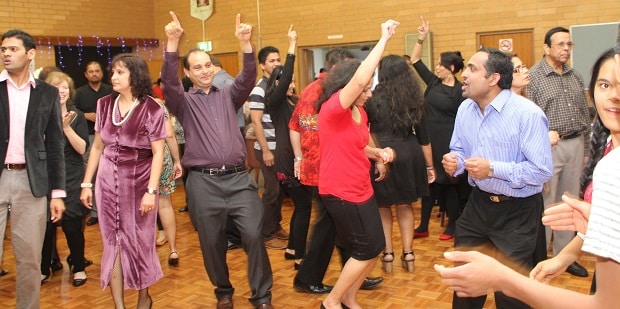
Youngest Goan and family present Beth-Beth-Lehem Association with profits from celebrations

The third World Goa Day celebrations in Adelaide, an annual event organised by Goans, continued to make great waves, drawing a large gathering who were treated to some great family entertainment. It was a lively community fundraiser event, and was an instant hit with participants of all ages who enjoyed Goan music and food until midnight. The celebration was a party not just for Goan migrants, but also for their Indian and Australian friends who were treated to some excellent Goan hospitality. The event was held to raise funds for The Beth-Beth-Lehem Association, a not for profit organisation situated in Karwar, a rural area just near Goa. This residence cares for dozens of homeless and mentally ill men rescued from the streets of the big cities.
The Chief Guest for the evening was Rev Fr Salvador Gomes Coutinho, Superior General of Beth-Beth-Lehem who thanked the gathering for their generosity and care shown to the Association. Fr Coutinho offered prayers and blessings to all the people of Australia and thanked the Goan community in South Australia and others who undertook this project to raise funds for the association. He said that the funds would go a long way in providing basic amenities to residents of Beth-Beth-Lehem. Fr Coutinho informed the gathering that money collected during the previous two years of World Goa Day celebrations in Adelaide went towards the construction of the hospital project. City of Charles Sturt Councillor from Findon ward, Chev Joe Ienco – OSJ, CMC, JP was a special invitee who appreciated the work carried out by the organisers to support a genuine cause that has affected so many people. During the event, the youngest Goan present, one month old baby Bernice Silveira, along with her parents Serling and Janice, and sister Swizel, presented a purse containing the handsome profits from the show to Rev Fr Coutinho. A kaleidoscopic toon titled ‘Good Old Goa’ by renowned Indian cartoonist Alexyz Fernandes was also auctioned, in addition to a bottle of the ever-popular Goan cashew feni. The toon was picked up by well-known Adelaide-based doctor Agnelo DeSouza and his wife Mathilda.The feni went to Daniel Colaco.
The capacity audience was treated to a sumptuous Goan spread which included the famous pork vindaloo and other delicacies. Leonard Carter, Shelvin Roswan, Ashton D’sa, Allan Pinto, Ghyan Pinto, Peter Lobo and Tony Hendricks enthusiastically relived the Goan musical past with their band The Music Revival, formed just for the evening. Old Konkani songs so popular in Goa, brought back nostalgic memories until DJ Nick Fernandes brought the crowd back to the present with top dance tunes to end the night on a high. WGD is intended as a day for Goans worldwide to focus on and take pride in their identity, culture, language, traditions, music and cuisine.
The first World Goa Day was held on August 20, 2000 in the UK. Its objective was to unite Goans all over the world in a day of common celebration. Today WGD is celebrated by over 40 organisations across the globe including Goa, Canada (Toronto, Vancouver, Quebec, Montreal, Calgary), Australia (Adelaide, Melbourne, Brisbane, New South Wales), New Zealand, United States (New York, LA, New Jersey, Houston, California), Kenya, Mombasa, Tanzania, Mozambique, Dar es Salaam, Zanzibar, Tanga, the Middle East, Portugal, Spain, Pakistan and Germany.
