

The spying scandal is recent, but intelligence gathering by stealth has been practiced for ages, says NOEL G DE  SOUZA
SOUZA
Spying at high governmental levels has been in the news recently. Angela Merkel and other European leaders displayed their anger that the Americans had been spying on them. They felt outraged and let down. After all, one spied on one’s enemies but not on one’s friends. Were not the Americans their friends?
News reports suggest that the European leaders were angry that their private conversations were also being listened into. How can a ‘spying’ or ‘intelligence’ agency distinguish between a personal and public conversation before it is recorded and analysed? This matter now appears to be resolved after a high level delegation was sent to the USA. However, the issue has stirred up a hornet’s nest.
The ramifications of the spying scandal are sprouting elsewhere, such as between Australia and its neighbours, particularly Indonesia. Indonesia is furious that Australia is spying on them, and that is vitiating their otherwise cordial relationship.
Spying has an undeniable glamour which seems to particularly attract young males. In the primary years in school it is common to see enthused young men in Sherlock Holmes outfits, complete with deer-stalker caps and magnifying glasses, appear on fancy dress days. Those who pursue the Sherlock Holmes legend by reading his books, many of which have been rendered into primary school language, have turned into fans of the science of deduction.
Absorbing the Holmes legend then becomes a worthy pastime. All scientific research is based on the science of deduction. That is the beginning of scientific thinking which is going to literally, last its fans for a whole lifetime. That was Sir Arthur Conan Doyle’s contribution to logical thought. He himself had challenged and solved some baffling puzzles of crime.
Glamour was added to spying by the advent of James Bond movies. Sir Ian Fleming brought colour, exoticism and action to the wide screen. It aroused young men to imitate their newly crafted hero.
Around 2010 a new sort of glamour, the glamour of importance entered the world of spying and revelation. It gave people in democratic countries internet access to what was considered as ‘secret’ information by their governments. This internet-based group was led by Julian Assange who founded Wikileaks. They had gathered thousands of documents and these were being selectively leaked to the press or certain members of the press had managed to obtain the keys to break into the sites where these documents had become available.
Assange continues to remain in asylum in the Ecuadorian Embassy in London where he in incarcerated until he can freely move about with no fear. There are ethical questions in the Wikileak exposures: is it right for someone entrusted with secret documents to make them public? Would one consider such an act as a breach of trust or does the public have a right to know what is being pursued by a government which the people put into power?
Those involve in the Wikileaks saga were not strictly sleuths who had used intuition and deduction to unravel mysteries and solve puzzles. Rather, Wikileaks was purely based on revealing already available documents.
One such example is money transfer. The CIA is authorised to engage in foreign intelligence gathering. However, it can spy on Americans if they have foreign links which includes financial transactions. This is authorised by the Patriot Act. Thus millions of Americans have their financial data gathered and processed. Very few of these are likely to be used for intelligence purposes, but then something very important might catch the eye of the CIA sleuths.
This is the era of the computer and of the internet. There was a case in Victoria where someone bought a computer from what later transpired to be a very wanted fugitive. The fugitive had forgotten to turn his computer off and consequently there were images being received and then transmitted to a cloud repository. The buyer informed the Victoria police who were able to track down and nab the fugitive.
Spying is a common feature of both, governments and businesses, particularly large business houses. Every business does its best to guard its activities which are secret. It needs cautious and trustworthy staff. For example, the pharmaceutical industry must first get patents for its products which can then be challenged by rivals. Some companies in the USA tried to patent well-known Indian condiments like turmeric, but were thwarted by timely action from the Indian government.
Recently, Monsato has been denied a patent for a genetically engineered method of increasing climate stress tolerance in plants. The Intellectual Property Appellate Board of India pointed out that plants and animals are not patentable in India. It said that the patent applied for was for a new property for a known substance, and therefore not patentable.
Had it not been for activists persistent spying on Monsato’s activities, the above judgement might not have been obtained.
There is glamour in spying

Indo-Oz: Common themes, but uncertain actions

Indian-origin Australians offer their perspective of how Indo-Oz relations can be mutually nurtured

Did you know that:
- There are 450,000 people of Indian origin now living in Australia? This is 2% of the Australian population.
- Victoria is the state where most people of Indian origin live
- The first Indians arrived in Australia on Captain Cook’s ship in 1770
- Some Indians were sent to Australia as convicts by the British colonial government in the early 19th century
- 138,700 people from India visited Australia as tourists in 2010, and this figure has shown an increasing trend
- Indian students are now the second-largest source of international students in Australia
- Three times more money (AUD20.4 billion) has come from India into Australia than vice versa (AUD6.88 billion) in 2010-2011
- Indians are three times more likely to have a University degree compared to the other Australians
- The unemployment rate among Indian-Australians stands higher at 6.2%, compared to the national average of 5.1%
- The median weekly income of Indians at AUD663 is higher than the average of AUD597?
- Only about 13% of Indians volunteer their time as compared to the national average of 36%?
Making sense of these statistics gathered from sources such as the Australian Bureau of Statistics, Department of Foreign Trade and Department of Immigration and Citizenship, as well as insights gained from interviews with 25 immigrants of Indian origin, is what Jayantee Mukherjee Saha, has attempted to do. Jayantee is the Director of Aei4eiA, a Sydney-based management research, training and consultancy firm. The recently released resultant report, Experience Australia: Reflections from the Indian Community, is a smorgasbord of interesting facts and a sprinkling of interviews with some of the more prominent and successful members of our community. Based on these, Jayantee has drawn certain conclusions about the Indian community in Australia, and what can be done to maintain a mutually sustainable relationship between the two countries.
India has been recognised as one of the countries Australia needs to engage with in the Asian century, but this engagement will not come easily on account of a number of factors identified in the report. Jayantee calls then them the 3 Cs – Chaos, Corruption and Cronyism, which is tarnishing the brand image of India. “This report is only the first step in the three-pronged approach that my organisation is launching – Analysis, Awareness and Action, the report being the Analysis phase,” states Jayantee. Her firm, Aei4eiA, derives its name from the Greek word ‘aeiforeia’ meaning ‘sustainability’. It aims to explore how India and Australia could forge and sustain a mutually beneficial relationship.

There is no dearth of qualified, intelligent and well-spoken Indians, but it is often found that Indian delegations to Australia are made of people who have been chosen for qualities other than these, presenting a poor image of India. By highlighting the stories of some of the individuals who have made their mark in Australia, Jayantee wishes to understand the common themes that emerge from these stories. These are individuals who have risen in their individual fields through hard work, participation in the community, and by understanding the nuances of living in the host country.
The sample size of 25 that this report has used to derive these conclusions is hardly a representative sample of the Indian population in Australia, but Jayantee accepts this shortcoming. However, at the same time she argues that these individuals are in a way representative of a much larger number of people, as many are community leaders in various states. Few of the individuals whose in-depth interviews appears in the report include Dr Tapas Biswas from Canberra; Dr Yadu Singh and Amarinder Bajwa, both from NSW; DLR Prasad from Queensland; Dipen Mitra, from South Australia; and Dr Sanjeev Sabhlok from Victoria. There is no representation from the Northern Territory or Western Australia.
The people interviewed are fairly well-settled migrants and their stories tell us what should be done to foster a better Indo-Oz relationship, which could be pointers to how migrants can make their assimilation into the country easier. The common themes that emerge are: few are fortunate to have a smooth start; job-seeking is the biggest challenge; shed regional biases and work together as a community; participate in community activities; do proper research before you migrate; take part in government policy-making processes and politics; and be aware that each Indian is an ambassador of India in Australia. Experiences of migrants from different periods of time (see Exhibit 1) are different, but this report does not capture the range of migrant experience. And maybe it would have been balanced to also have the perceptions of Australians about Indians living here. Often, how we perceive others perceiving us, is different from how others may really perceive us!
Jayantee believes that there has to be a basis for action and her report is the first step towards action. It is described as a “repository of information and collection sentiments”. The report is interesting for readers who would like to find information about the Indian diaspora in Australia in one place. But where to from here, is the question. Putting together a bunch of facts and interviews would serve little purpose otherwise. When asked about how the findings of the report will be taken further, “Watch this space!” is all Jayantee can say at this stage, of her plans. It would be certainly interesting to see the outcomes from the report.
Editorial: In a word: happening!


If 2013 had to be described in one word, it would have to be, ‘happening’. While most people will have ‘hectic’ at the top of their lists, ‘happening’ best describes the year gone past for us.
In Australian politics, a lot has happened in 2013. We had three Prime Ministers in one year and yes, democracy proved to be at its very best. No blood was shed and those we chose to lead either changed those who were leading, or were changed themselves. Julia Gillard survived the first leadership challenge, but lost to Kevin Rudd in the second. Mr Rudd became Australia’s second Prime Minister in the year as a result.
Meanwhile, the opposition Coalition did not change much, including (as some said) their views from the 1990s. So the Australian public who wanted things to happen in government, elected Tony Abbott as Prime Minister. And so we have our third Prime Minister in one year!
Rudd bid an emotional adieu to politics in Parliament, much to the joy of newly-elected Labor Opposition leader Bill Shorten.
On the international front, the most happening thing was the surveillance tactics of America and its allies. While the targets have changed, it seems the concept of eavesdropping remains the same as during the cold war. With Edward Snowden’s revelations, President Obama had to apologise to German Chancellor Angela Merkel and currently, PM Abbott is going through a rough ride when it emerged that Australia had been snooping on phone calls in the higher echelons in Indonesia.
Positive news comes from the Middle East where some sanctions have been lifted from Iraq and were welcomed by its denizens and the reluctant international community, but the political situation in Afghanistan seems relatively unchanged. Syria continues its civil war and Egypt is experiencing political problems too.
In India, though not a lot happened politically with the same argy bargy tactics between the two major political parties, an increase in inflation and a drop in Indian economic growth resulted in a review of India’s credit rating. The most happening thing in sports beyond the IPL match fixing scandal was the retirement of cricketing god Sachin Tendulkar.
Many natural disasters have stirred up more debate about global warming and its effects. The typhoon in the Philippines, the earthquake in China and the Uttarakhand flood disaster in India were just some of the many events resulting in serious loss of life and property. Closer home were the NSW bushfires that created a haze of smoke over Sydney that lasted for days!
Manmade events of destruction like the Kenya mall shootings and the Syria chemical attack allegations shocked the world, while the US shutdown shook the world.
In the local community, a lot has been happening too. While we had great opportunities to interact and promote our culture at various melas and get-togethers, the Pravasi Bharatiya Diwas in Sydney could have been a great happening, but ended up being a non-happening event. We were graced with the presence of Shah Rukh Khan who made the audience wait for over 90 minutes before anything happened.
So what will 2014 bring? Will a repeat of the Rudd-Gillard scenario occur in the Coalition Party? Will PM Abbott’s visit to India develop Indo-Oz relations? Will India choose a new government to its helm? Well, we’ll just have to wait and see.
But from all of us at Indian Link, we wish you a very happy New Year and all the very best in 2014. And if you have to pick a word to describe the coming year, start with relaxing, adventurous, prosperous, fun, family, positive change, healthy and happiness. Here’s wishing that they all come true for you.
‘Tis the season to be silly! Festive stories


We love the holidays, it’s that time of the year when we think of nothing more strenuous than deciding whether to go to the beach or the park, or what sausages to grill on the barbie. It’s a time for reminiscing too, and while most of us have had fun family times, there have also been those hilarious and unique moments which are sometimes fondly remembered, sometimes best forgotten. A few of our contributors shared their merry, mad, memorable moments with Indian Link.
Cracking ice at a Christmas party
There are possibly too many to choose just one! There was the time our new puppies decided to sniff out all of the edible presents under the Christmas tree and devour the lot, and then there are of course, the numerous stories associated with my famous (or infamous, depending on how you fared after drinking it) punch that I use to make, and that’s not even mentioning schoolies… But, I think that my most memorable silly season story by far is the time that my work colleagues and I decided to try to ice-skate (with our shoes) across a frozen fountain in London after a Christmas party. The ice appeared to be a good foot in thickness, but we soon learnt that our measurements were off by a considerable amount after the ice started to crack within seconds of us trying to slide across it. Needless to say we all ended up very cold that night, and rushed home to have hot baths. It just goes to show that Sydney-siders don’t really understand much about ice!
Lena Peacock
Man and his mushroom
Being an international student in Sydney isn’t easy, being away from family, but recently the residence threw a party to celebrate the season. I was away, but the quiet, serious boyfriend got drunker than he has ever been. Some memorable texts appeared, like ‘To much. Live you’, which I assumed were declarations of love. Loud background music during a phone-call suggested there was dancing. If he and his friends got around to their original agenda, there was also a game of cards. When the texting stopped, I assumed he had fallen asleep. Next morning, my phone buzzed with his message, ‘I want to die’.
Sometime during the evening, he’d found a huge stuffed mushroom. At one point his friends thought he had gone to bed, but then they saw a man sitting contemplatively in the rain, holding the mushroom. Like the nice friends they are, they put him to bed; but the next thing he knew, he was out in the hall, wearing nothing but boxers, socks and his left shoe. Oh, and still holding the mushroom. His keys were inside the house, and he ended up sleeping outside his door before the coordinator let him in.
“I’m gone one day, and this happens,” I replied, after I nearly died laughing. “I won’t be drinking for a while,” was his sober reply. It’s too funny to let go though, so all week he’s been receiving texts from me saying, “I’m so mushed up, why would you abandon me, I mush you so much”. He’s pleading that I stop; this is one holiday he wants to forget. But not if I can help it!
Kritika Rao
Plan paintballed!
Growing up outside of Queanbeyan, the small city east of Canberra was socially isolating. The Ridgeway Estate where I lived had only about 100 residents, with a single road leading into and out of the estate. The entry was off the main road to the coast from Canberra – the King’s Highway, which was notorious for its fast moving traffic. At the time, the single lane road was extremely poorly maintained.
As a young lad, my mates and I once ventured to the side of the highway having followed a dirt track that led, on the other side, down to the township of Queanbeyan. The cars and trucks passing us were moving scarily quickly, and in our youthful indignance we discussed how to gain safe passage across the road.
It was on a balmy night around Christmas that we came upon a plan to make the road safer, so we could complete our journey along the dirt track and into the town. One full moon night around 1am, my mates and I took some tins of white paint and paint brushes left over from my house having been painted only months earlier, and headed for the main road. With one person looking out for the glare of distant headlights, we started painting stripes along the road. Long, wide, even strips of thick white paint with a space between each of them, over the tarmac and knobbly gravel, parallel to the edge. After about 20 minutes, we thought we had done well. Stripes right across both lanes! Shaking with laughter as we admired our work, we heard the distant rumble of truck. The perfect time to test our zebra crossing!
The truck rolled into sight and we stepped back from the highway, planning to move to the very edge as it got closer. We assumed it would stop, so we could cross. As it thundered closer, we crept forward. The moonlight glistened off the paint on the road. But as the truck approached, we realised that it wasn’t actually slowing down. Then it rushed past and there was a squelchy sound as wet paint sprayed everywhere. We gazed at the back of the disappearing truck, and realised that it was leaving long white paint lines up the highway.
As we howled with laughter, a car came the other way and created long white lines down the other side of the road.
It was the best Christmas holiday ever, even though that road was no safer to cross. Every trip to town in the back of Dad’s car caused a smile, as we passed the ‘crossing’. The paint took several years to fade….
Mohan Dhall
Present peeker!
My friend Ju-a is one of four, and her parents own a laundrette just down the street from where I live. Her little sister Sia used to sneak to open her presents before Christmas, have a look at them and then put them back. On Christmas Day she would pick up a present and say, “Oooooh! And this one’s the fairy wand!” That’s how everyone knew that she had sneaked a peek, but Sia never caught on that she had given herself away.
Lily Rose Robertson
Rocking on the road!
In my early 20s, New Year’s Eve in Mumbai had become less about going to Midnight Mass and burning up the ‘Old Man,’ and more about which party we would attend.
One memorable year, a group of us were all dressed up and ready to party. At 10:30pm, we fit ourselves into four cars and headed off in a loud and noisy cavalcade. There was an atmosphere of celebration and anticipation in the air as we headed for Bandra Bandstand, about 20 minutes away, to a bash thrown by an upcoming actor. We would get there in plenty of time, or so we thought.
Driving towards Bandra, a feeling of apprehension began to grow, because the main road was absolutely jam-packed with traffic. We crawled along, anxiously watching the clock and unfairly recriminating with our friend for not driving fast enough.
At 11:50pm, we had come to a complete standstill, and the atmosphere in the car was wound up and anxious. Drivers honked impatiently, their passengers argued, but there was just no way we could get out of there. At 11:55pm, our driver friend decided that he’d had enough. He got out of the car, clambered out of the bonnet, stood on the roof (it was his car, what did we care?), and looking over the sea of cars, he announced that a traffic light had broken down in the distance. He was just about to climb down when we heard the fireworks, and the night sky lit up with a million flares. This intrepid guy, the only teetotaller in the group, stood upright and yelled out at the top of his voice, “Happy New Year, everybody!” For a magical moment, there was silence. Then car doors started opening, people started getting out and wishing each other a happy new year. All around us was a scene of cheerful chaos. Some wannabes climbed onto the roofs of their cars, but the moment belonged to our friend and we were in the midst of it, enthusiastically hugging strangers. A variety of music blared out of different car stereos, and we began to seriously party right there, surrounded by cars and people. It was a memorable and unforgettable sight.
15 minutes later, an irate party pooper police inspector got everyone into their cars, as traffic began moving. For our friend, the quiet, well-mannered one, it was his 15 minutes of fame, and we spent the rest of the year recounting his escapade, much to his visible embarrassment and secret delight! He’s a devoted husband and father now, but the sight of him atop his car, wishing the world is still an unforgettable one.
Sheryl Dixit
Heavy, not hearty!
It was ‘Heave Ho!’ instead of ‘Ho! Ho! Ho!’ the year we decided to celebrate Christmas in Inverloch with some friends. The holidays are a time to rejuvenate and recover from a year of working hard and partying even harder. So with kith and kin, we headed out to stay in a resort with close friends. I have no concept of travelling light, so the car boot was packed with food to last a week (in case we get hungry), clothing (unpredictable weather, so gotta take everything), golf clubs (hubby’s sole condition for coming along), laptop (naturally), seven pair of shoes (to match every outfit and a few extra just in case) and a Christmas tree (in true festive spirit).
On arriving at the resort, the porter inquired if we were staying for a month, and despite all his hospitality grooming, his eyebrows shot up in amusement when I sheepishly mentioned the duration of our stay. After a short rest, we pulled out the Christmas tree and in true celebratory spirit covered it with LED lights. Then we switched on the lights, and with a loud noise, the power went off. We called the reception, where the sleepy operator said he could not send anyone to help as the staff had all gone home early to be with family. None of us were talented enough to fix power outages and despite the three dozen candles that I had carried along, it was still too hot to manage without electricity. A few irate phone calls later, the ‘bordering on rude’ receptionist offered us another room on the opposite side of the resort. With no porters in sight we had to heave all the baggage, Christmas tree et al, to the newly allocated room. There was not even a car park near that room so we could not drive around to it. I still shiver from the memory of carting the seemingly endless pieces of luggage, bags and cartons between the two rooms. Three years later, the niggling pain in my lower back could well be attributed to that heavy, not hearty Christmas!
Preeti Jabbal

Maybe we can all learn a thing or two from these writers and remember to stay safe and out of trouble during the silly season!
BoB’s vision is TTB – Rs 10 trillion bank
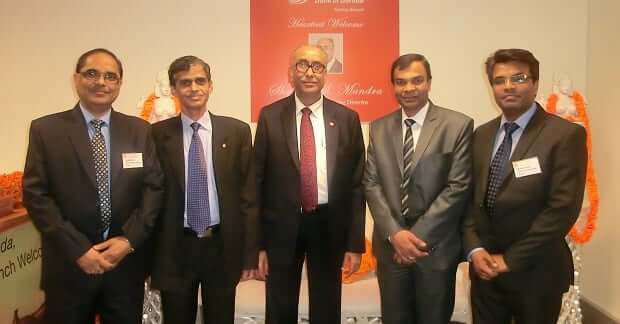
Roads, television and mobiles to drive Bank of Baroda’s future growth

“Retail business is not only in the metro cities of India but in the villages as well, where roads, television and mobile technology is going to drive growth,” SS Mundra, Chairman and Managing Director of Bank of Baroda told Indian Link in an exclusive interview in Sydney recently.
Mr Mundra was visiting Australia to take stock of the bank’s local operations and meet with its clients, customers and well-wishers. Although he is soon to retire, Mr Mundra’s passion and knowledge of banking was clearly in evidence during his interview.
“Yes, there has been low GDP growth in India but going forward, Bank of Baroda is well positioned to capture more business in the retail market. Of our 4,600 branches in India, about 40% are in the rural areas and about 25% are in semi-rural areas,” he revealed.
“There is currently a whole lot of urbanisation going on within India. It is as if the country is churning, and in fact, if you look at it from a satellite, India will look like a cauldron,” he added, somewhat illustratively. He spoke of the three big drivers being the roads, television and mobile technology.
“The roads are making transport easier, and places in the country which were cut due to seasonal conditions for months in a year, are now connecting to the local town,” explained Mr Mundra. “Television is creating awareness and encouraging lifestyle ambitions, and mobile technology is allowing for price discovery for selling commodities to the consumer,” he added. “The agriculture sector which suffered from disguised employment now has farmers who, with this new-found connectivity, have ambitions. They want a house in their nearest town, they want to provide education to their children, and they want to start a new business. Bank of Baroda is there to help them with all this,” he proclaimed.
Mr Mundra sees opportunities in the emerging middle class. “According to a latest survey, by 2015-16, up to 56.7 million households will upgrade to the middle class. That is a staggering 267 million people migrating from the lower class to the middle class, and there are great banking opportunities to consider,” he said. In fact, by March 2014, Mr Mundra’s ambition for the bank is to be a ‘TTB’ – a Rs10 trillion bank or a Rs10 lakh crore bank, with proper risk management.
“The platforms which will help achieve this goal is not only the retail lending in rural India, but also ramping up our alternative delivery mechanism by bringing in state of the art technology,” he averred.
Mr Mundra is quite dismissive about the threat from private banks to public sector banking in India. “Death notices for public sector banks were written in 1993-94 when licences were granted, then again in 2003-04. All that did was to make the public sector banks more efficient, and took away any complacent practices. New banks need time to scale up, which is not easy,” he claimed.
In fact, he feels that private sector banks feel more threatened by public sector banks.
Talking about rising inflation in India, Mr Mundra feels that this increase is largely due to two items, food and fuel.
“What needs to be fixed is the supplier side of things, and that will take time. There is a lot of wastage in the food chain which needs to be controlled. For fuel we are subject to international variation, but India does have vast energy resources,” explained Mr Mundra. “These need to be ramped up and yes, massive infrastructure investment is required in these areas. However, the good thing is that in the last four to five months, a lot of good work has been done by the government and I’m very confident that things will start looking up in a short period of time,” he asserts.
Mr Mundra urged settled NRIs to engage more with India and to bring their expertise to their country of origin, thus becoming a part of the ‘Indian Success Story’.
GDP growth to hit 8% in 6 months: PNB chairman
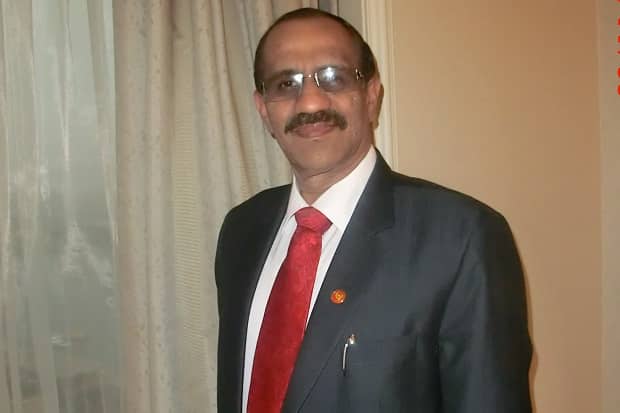
KR Kamath is confident of not just the progress of the bank, but also of the Indian economy finds PAWAN LUTHRA

Mr KR Kamath has the unique distinction of being the youngest Chairman and Managing Director of a major bank in India. He comes across a man with clarity, vision and strong communication skills. Now, just a few months short of completing his five year tenure with the bank, there are strong indications that his tenure in the highest echelons of the Indian banking sector will continue post his term with the Punjab National Bank (PNB)
Mr Kamath was in Australia recently to progress the status of the local PNB branch, from a representative office to a full branch. While local consultants KPMG followed the formalities, Mr Kamath was here to meet personally with the Chairman of the Australian Prudential and Regulatory Authority (APRA), to inform him about the formal intentions of his bank to lodge their papers.
Speaking to Indian Link after his meeting with the APRA chairman, Mr Kamath was pleased with the success of the local office. He was also confident that the Indian economy with the efforts of the Indian government and the Reserve Bank of India (RBI), would reach a GDP growth of 8-9% in the next six months. “Green shoots are emerging due to their efforts and I expect this figure to be attained in the next six months, despite the elections and whichever Government comes into power,” he stated confidently.
Mr Kamath also admitted that it was not possible for the Indian economy to continually grow at 9%, and the recent slowdown gave them a chance to be introspective and take corrective actions. “We can recover the lost pace of growth,” he further stated.
Talking about international influences on the Indian banking systems, he acknowledged that India is part of the global banking system and is not isolated. “But India’s growth story is based on domestic demand. Over the next few years, over 30% of our population will come into an income earning bracket, which will create demand for our growth and services. While we have the potential of being effected by any international movements, our domestic demand will act as shock absorbers for any downturn,” Mr Kamath said.
Commenting on the current high inflation in India and the role monetary policy can have in keeping inflation in check, he said that high interest rates can only control demand, whereas in India, the problem is in the supply side. “Though interest rates are very high in India, the real rate of interest after we take inflation into account is quite low,” he noted.
Mr Kamath is very proud of the progress made in PNB under his tenure. “PNB is the first bank set up over 188 years ago by Indians, for Indians and managed by Indians. We are the second largest bank in India in terms of network,” he proudly announced.
He admitted that PNB at times is perceived to be a north Indian bank, but quickly pointed out their extensive network of branches in Kerala and Tamil Naidu. He laughingly agreed that marrying his south Indian background and the north Indian character of the bank truly makes it a national bank.
“Yes, I did think about changing the name (of the bank) but it was a very brief thought, as I felt the Chairman and MD should spend his time and energy on better things. There are strong emotions attached to our name and logo,” stated Mr Kamath.
“We have not only the brick and mortar customers who like to go to their branches and get their passbooks updated and have a cup of tea, but we also have the younger generation who are more technologically friendly, who would not even know the location of their nearest branch. Our challenge is to meet the needs of both while reaching out to 60% of Indians who do not have a bank account,” he told Indian Link.
It is clear to see why Mr Kamath was judged by the Economic Times as one of the most powerful CEO’s among nationalised banks in India.
Pint sized Professional
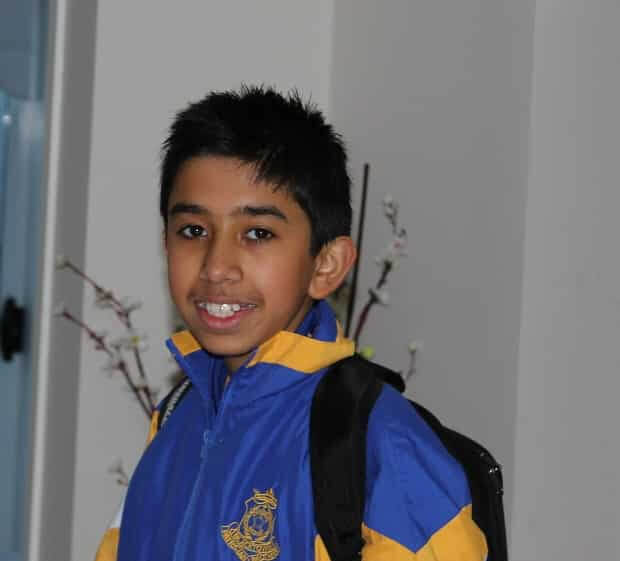
At 13, young Anshul Arora is a Microsoft Certified Professional, writes FARZANA SHAKIR

Anshul Arora, a Year 8 student of Patrician Brothers in Blacktown has achieved the distinction of being a Microsoft Certified Professional (MCP) at the tender age of 13.
The younger of two siblings, Anshul sat for the Microsoft Technology Associate exam 98-349 on November 2 at the Microsoft Centre in Parramatta. Forty-five minutes later and after having his Microsoft-related computer knowledge scrutinized in-depth, he walked out with the title of MCP.
Microsoft Certifications are professional information technology certificates based on Microsoft products. Main categories include Server, Desktop, Database, Applications and Developer. Individual certificates can be obtained upon clearing one or more exams. The Technology Associate exam that Anshul cleared is the new entry level certification by this reputed organisation. It is being hailed as the first step towards a career in IT as a professional or developer.
Chatting with Indian Link, Anshul opened up about his appreciation for computer technology. “I started taking an interest in computers at the age of probably nine or ten, mainly because of my dad who is an IT professional at the Department of Education,” he revealed.
Anshul credited his dad Sushil Arora, for his success, “he encouraged me to sit for the exam by providing me with all the study material and helping me with the preparation,” stated Anshul. It took the youngster six months of dedicated learning to pass the exam. Outlining his study routine he said, “in the beginning I started with one hour every two days, building it up gradually to three hours every day”.
Anshul admitted that the exam was tough for someone his age, but now that he has passed, it means a lot to him. “It can give me a headstart in an IT-based career like my dad,” he said.
Speaking about his reaction on passing the exam, Anshul quipped, “I was fairly confident I will pass, but at the same time extremely nervous, so when I got the news I was happy and relieved”.
Even though acquiring the Microsoft Certified Professional certificate helps little in terms of schoolwork, Anshul believes that it has given him a lot of knowledge about the Windows OS. This means he is now not only much more confident, but also proficient in using the operating system.
By acquiring the MCP qualification Anshul has made everyone he knows proud. “My friends and teachers have congratulated me, while the principal wrote a letter of commendation to my parents,” he stated, acknowledging the accolades he has received. “We are very proud to be Anshul’s parents. Because of his accomplishment at such a young age, and we feel like sharing it with everyone,” said mum Minti and dad Sushil.
Anshul is not quite sure what he wants to do when he grows up, but for now he is considering a career in IT. Apart from computers, his interest lies in cricket and video games. To other kids Anshul’s wise advice is, “work hard because by doing so, you can achieve anything”.
The Bir gang
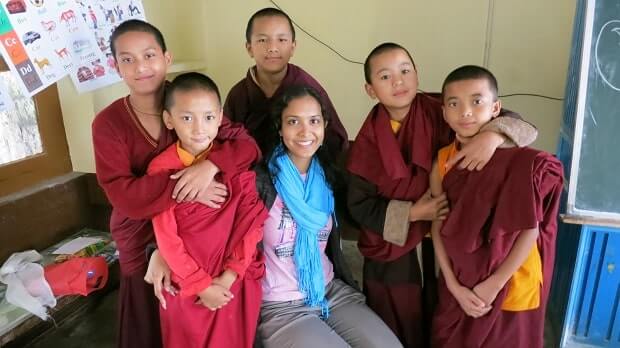
Volunteering has always been an endeavour that I have wanted to pursue, to be able to give back to the community (which is highly encouraged in my religion Jainism), and to my ancestral motherland, India. I finally got the opportunity to do so in September – October 2013, with IVHQ (International Volunteer HQ), and I have to admit that the experience was phenomenal.
My volunteer experience consisted of teaching English (grammar, vocabulary, poetry, conversation English) to monks of varying ages at a Tibetan colony in Bir, Himachal Pradesh. In all honesty I was not sure of what to expect, but when I got there, the experience exceeded my expectations.
Despite having limited supplies, the enthusiasm for learning a third language was very clear amongst all the monks. They strived to be a part of the learning, to create a bond with the educator and they had utmost respect for all the educators (volunteers). Their humble and respectful approach to knowledge and education touched me the most. A clear example of this occurred on my last day of teaching; I was given a party by my students (aged 8-13) who brought snacks, serenaded and danced for me, handed me heartfelt letters and gifts of appreciation, whilst bestowing me the honour (through white scarfs) of being their teacher.
The best part about volunteering with the monks was not just that I was given the opportunity to be a part of their learning curve, but that I was imparted with words of wisdom from them, which has allowed me to grow in a positive way.
Apart from being able to educate, volunteering in Bir also helped me to forge strong friendships with my fellow volunteers as well as the adult monks, and I will forever be grateful for this. We formed such a close knit group in the four weeks that I have nicknamed us the ‘Bir gang’!
I also experienced the stunning beauty of Bir, but more importantly, I was enveloped with a sense of peace and serenity. I became a part of a welcoming host family, enjoying their traditions, culture and their hospitality.
My volunteering experience has come to an end and I can only say that I am absolutely thankful to have had such an all-encompassing and enriching experience. Fortunately for me, the journey has not ended as I have been asked (by the principal of one of the monasteries) to create an English curriculum for new volunteers, so that there will be progression and continuation in the teaching of English there. Being able to give back to the community in this way is just absolutely fantastic!
I recommend volunteering at any juncture of your life; it has the power to change you profoundly.
Arijit sizzles as Kapil fizzles

Singer overshadows master comedian to save the show, writes SIMMI BAKSHI

The joke was on the audience at the recently held Kapil Sharma Comedy Show in Melbourne, and not many were amused. Allegedly the storms in Sydney resulted in flight delays for the accompanying artists, and the show started much later than the scheduled time. Kapil, when he did finally come on stage, managed a fair few laughs before singer Arijit overshadowed him with a spectacular performance.
Renowned for his comic flair and spontaneity, Kapil Sharma is a household name amongst Indians as the host of an immensely popular reality show on Colors TV called Comedy Nights with Kapil. In a short span of time, the shows TRPs and popularity have catapulted the comedian into stardom and won him innumerable fans across the world. Kapil performed in Australia for the first time with shows in Sydney and Melbourne. Royal Productions and Whistling Wood organised the show in Melbourne.
The majestic Palais Theatre in St. Kilda was chosen as the venue to display Kapil’s talent and comic virtuosity. Accompanying him were singers Arijit Singh and Navraj Hans. The versatile comedian evoked laughter to begin with, and then seemed to run out of steam.
“There is only so far you can go on limited material and picking on people in the audience,” lamented a disappointed fan.
The main drawcard for the Comedy Tadka show was Kapil, however as the evening progressed, singer Arijit Singh stole the limelight from the funnyman.
Arijit is currently riding high on the success of Bollywood hits Tum Hi Ho (Aashiqui 2), Phir le Aaya dil (Barfi), Dilli Wali Girlfriend, Illahi and Kabira (Yeh Jawani hai Diwani), Har kisi Ko (Boss 2), Raafta (Agent Vinod), Beintehaan (Race 2), among others. He sang most of them that evening much to the delight of the audience. A rock concert-like feeling enlivened the event, as the audience cried itself hoarse while singing in chorus to his songs. His melodious songs, gifted voice and interactive style won him a standing ovation.
The third artist Navraj Hans, son of iconic Punjabi singer Hans Raj Hans, prudently refused to sing after half a song as his accompanists had not arrived. That gave people more time to hear some gags from Kapil till he was requested to wrap up the show to adhere to timelines of the Palais Theatre.
In Kapil’s defense he did make some attempts to engage with the audience; however the delays, incoordination, late start and finish on a Sunday night, and exhaustion from the previous night’s show in Sydney, all seemed to have taken their toll. The absence of the supporting crew, especially Gutthi (Sunil Grover) from his Comedy Nights With Kapil show was also felt.
Bollywood singers Teji Sandhu and Zublee Baruah appeared briefly to sing a solo and a duet with Arijit respectively, and made a good impression. MC Aashna was full of chutzpah and confident in her attempts to appease the audience. The organisers did a good job of arranging the show in a beautiful venue, providing sufficient security and thankfully keeping the formalities to a minimum. All the sponsors were duly thanked and the artists were honoured with a trophy towards the latter half of the show.
The show received mixed reviews, but even die-hard fans of Kapil Sharma would hesitate to declare his performance in Melbourne as a raving success. Anoop Singh from Doncaster summed up the evening succinctly with this report: Arijit gets an ‘A’ for his amazing voice and melodious songs (would have got ‘A+’ if he had sung Dilliwali Girlfriend as well). Kapil gets a ‘C– (would have got ‘C’ if he was less cocky and ‘C+’ if he came prepared), and Navraj Hans gets a ‘D–’ (would have got ‘D’ if he sang continuously without criticizing the musicians). According to Anoop, overall the show barely scraped through from getting an ‘F’.
Here’s hoping that Kapil’s next appearance will live up to expectations.
New Consul General stresses need for solidarity
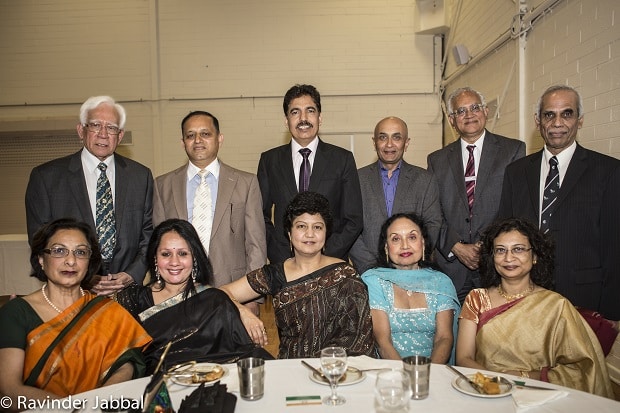
Leaders of the community gathered together at an event organised by the FIAV to greet Maneka Jain

“Nothing is permanent, impermanence is the nature of our being; therefore when Indian civilization started maybe we were not called Indians then, we may have been called ‘Bharatiya’ or ‘from Indus Valley’ or ‘Bharat’. But to understand that we have something in common in geographical or political terms, we needed to call ourselves something. Today when we say ‘India’ or ‘Indians’ we have some idea about a way of living, traditions and culture, and that is why we call ourselves Indians. We also have our own smaller identities, but in the larger context we can call ourselves ‘Indians’ or ‘Indo Australians’ or ‘Australians’, as the case may be,” said newly arrived Consul General Manika Jain to thunderous applause. She was addressing an identity issue raised by a speaker who wished to know what we should call ourselves, and why do we call ourselves Indians?
Ms Jain was speaking at a recent reception that was hosted by the Federation Of Indian Associations of Victoria (FIAV) and sponsored by the ANZ Bank. Credit goes to FIAV, under the leadership of President Vasan Srinivasan, for organizing an event where all the leaders of the community were invited to jointly welcome the new Consul General. The Indian community in Melbourne is thriving; however, so are rivalries between individuals and organizations that do not have the vision of the power of a unified front. Any attempt to bring the community together, like this event organized by FIAV, is therefore much desired and definitely commendable.
Acknowledging FIAV’s efforts Ms Jain said, “The most laudable thing that I found today is that you all came together under one umbrella. Our community must be united and grow united; this does not mean we lose on our diversity. We will celebrate our diversity, but it is beneficial to celebrate together under one umbrella and go from strength to strength”.
On the flip side, the event turned out to be quite long-drawn as input was invited from every regional organization under the umbrella of FIAV. As a result every community leader or representative spoke briefly about their organization and welcomed Ms. Jain individually, and there were quite a few of them.
Held at the Mount Waverley Youth Centre the event was attended by the member for Mount Waverley Mr Michael Gidley, who commended the Indian community in Victoria and Australia for ‘adding so much value’ to their local communities. He also took the opportunity to offer his support to the Consulate and the Indian community, and praised Vasan and the FIAV for organizing this inclusive event.
Over a three course meal catered by Tandoori Junction Indian restaurant the evening progressed from speeches to felicitation as the FIAV presented shawls to members of a visiting delegation of senior journalists from India. Local businessman Mani Maran was officially thanked for providing the shawls and traditional garlands for various FIAV events. MC Ambarish Deshmukh aka Adi was also presented with a traditional silk shawl for his ongoing support to FIAV.
The ANZ bank was acknowledged as the main sponsors of the event and guests were encouraged to pick up ANZ showbags, water bottles and other promotional material on their way out at the conclusion of the event.