

The Lunchbox
STARRING: Irrfan Khan, Nimrat Kaur, Nawazuddin Siddiqui
WRITER/DIRECTOR: Ritesh Batra
**** 1/2

In Mrinal Sen’s Khandhar, desolation was defined and epitomized as much by Shabana Azmi’s face and physicality as it was by the architectural ruins where Sen shot his dirge-like tale. In The Lunchbox, debutant director Ritest Batra – is this really his first feature film?! – does not seek easy escape routes for his characters’ destiny of drudgery.
The film is set in the heart of Mumbai where everyone is busy making a living…or just trying to live. Right away, this extraordinary film catches your attention with the way the sounds and the relentless rhythm of that City That Never Sleeps are captured and put on screen.
While remaining purely cinematic, there is something completely ‘non-cinematic’ about The Lunchbox.
It is stripped-down of all affectations. The secrets of lonely hearts are not laid bare through conventional cinematic devices – the use of background is so sparing that you often end up listening to the music inherent in everyday routine: the way the trains move in the sweltering afternoons, the sound of auto-rickshaws bustling through by-lanes, the sizzle of onions frying in a suburban kitchen, the sound of the television playing as a nuclear family of three lonely people dine in deathly silence.
Not just Ila (Nimrat Kaur), the cooking, cleaning suffering housewife, even her preoccupied husband (Nakul Vaid) seems so lost in the act of existence. Even their little daughter looks so forlorn with her rag-doll, as though she needs a good cry but is not sure if Mama will be there to console her.
And to scare you there are whispers of a woman jumping to her death with her daughter. Ila won’t ….never! Right?
Holding back the rituals of grief is a well-worn suburban ritual that Batra’s screenplay understands only too well. Every individual in Batra’s universe is disconnected from an inner tranquillity and distanced from the people around him or her.
It is no coincidence that Ila, our forlorn heroine who thinks of suicide but holds herself back, connects the best with an unseen aunty living with her comatose husband in the floor above. Aunty (Bharati Achrekar giving a vigorously expressive performance through her voice alone) never turns off the ceiling fan that whirrs above her inert husband, fearing if stops, so would his breath.
These little life-asserting pretences we indulge ourselves into believing that we lead meaningful lives, is the crux of The Lunchbox. Hence Ila strikes up an illusory bond of empathy with the almost-retired office-goer Fernandes (Irrfan Khan).
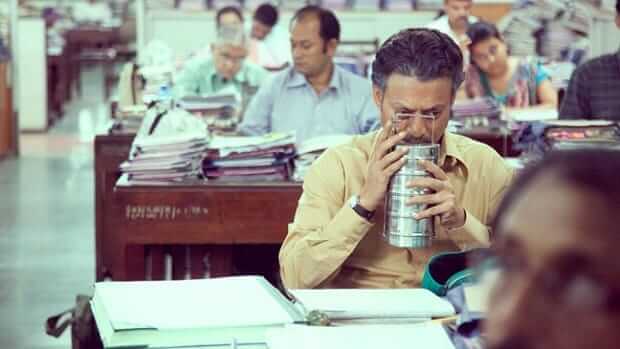
It starts off with a wrongly-delivered dabba to a lonely widower in a typical non-government office.
The initial delight of two strangers communicating facelessly soon turns into an intriguing relationship of empathy. The tragedy of two lonely people, one married in a loveless partnership and the other still wedded to his dead wife’s memory and bonding over burp-inducing tiffins filmed with gourmet dishes, is punctuated by the omni-presence of an annoying intruder, played by the very wonderful Nawazuddin, who keeps barging into Fernandes’ meditative melancholic interactions with his faceless culinary benefactor.
Among the three protagonists, Nawazuddin as the deceptively shallow Sheikh has the toughest role. He must seem frivolously jovial and insensitive to Fernandes’ lonely existence, though he is anything but these things. Further, he has a happy life. And that should and does fill him with a guilt he cannot express.
In many ways the bond that grows between Fernandes and Sheikh is far more tenable and real than the one Fernandes discovers in the aroma of the freshly-packed tiffin that lands up every day on his table.
Fernandes’ loneliness is not of the same breed as Violent Stonheim in 36 Chowringhee Lane. He is alone, trapped in memories of happiness but also surrounded by noises and smells of a normal life. That little contact he makes with a family in the building opposite his own, through his window, is emblematic of his empathetic solitude.
Yes, this man has hope.
Food, which contours the tragic love story of Batra’s film, is used almost as a reminder of life in the face of death. When Ila’s mother (Lilette Dubey nailing her character’s abject desolation in just two deftly-written sequences) finally loses her husband, she talks of hunger rather than loss.
Bereavement and loss affect individuals in very strange ways. What The Lunchbox says in a language that exudes the scent and comfort of the familiar is that we can strive to fill the emptiness inside us by cooking, feeding, remaining busy with motivating acts of daily gratification. But we are finally left with nothing to hold on to. This frightening thesis of existence is laid bare in The Lunchbox with compassion and warmth.
This is a sad film. But it isn’t depressing.
As the two protagonists whose souls collide and then come apart, Irrfan and Nimrat give exceptionally sorted-out performances even as their characters grapple with the chaos and complexities of feelings that alas, do not fit into compartments as comfortably as the food in a tiffin carrier.
Irrfan’s bearing suggests age that won’t accept defeat. He is a portrait of stoicism in the face of solitude. Does this actor ever disappoint?
Michael Simmonds’ camera doesn’t miss a thing. It seems to capture every moment of the characters’ inner and outer lives merging the two levels of existence and yet keeping them apart.
I came away from this profoundly moving tale with two of the most unforgettable lines of wisdom I’ve heard in a film.
One of them comes from Nawazuddin who says: “Sometimes the wrong train can take you to the right destination.” And then there is Nimrat, so noble and restrained in her suffering within a pitiable marriage, who opines: “Very often we forget our memories because we have no one to share them with.”
The memory of food, friendship and forlornness associated with The Lunchbox would stay with me for a very long time.
Some films scream for attention. This one gets it without trying. What a gentle, tender, soft and sincere love story! Is this really Batra’s first film? He demonstrates an astonishing mastery over the craft. And yet The Lunchbox is all heart.
Nawazuddin, Irrfan and Nimrat are so much in character that you wonder if these people were born before the script. The film celebrates the extraordinary ordinariness of their lives with a stark sincerity that takes away every morsel of artifice inherent in the act of filming made-up lives.
If this is not the best directorial debut since Satyajit Ray in Pather Panchali, then I am probably missing something vital.
And that’s what this film is about.
SUBHASH K. JHA
Desolation , Loneliness…Perfection!
Women in vardi (uniform)
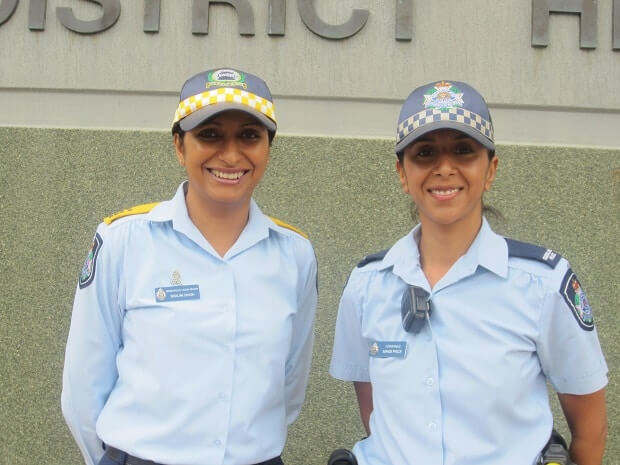
Indian origin women in policing discuss the highlights and challenges of the job

It is a male dominated field, perceived as dangerous and violent; which is why not many Indian women opt for a career in the police. To understand and delve more into the lives of women police officers, I caught up with two Indian origin women working within the Queensland Police Service to get an insight into the profession through their eyes.
“After our house got burgled in the UK and seeing the efficient manner in which the police helped us through this crisis, I made up my mind at the age of 12 that I would take on a career which involved helping people in times of distress. Joining the police service was my first option,” says UK-born Constable Mansi Price.
In 2003, Constable Price joined the London Police, attending to a diverse community. Hailing from a Sikh-Punjabi background was an advantage, as the Indian community developed faith and trust in her, not the least for her ability to communicate in both, the Punjabi and Hindi dialects. Constable Price is currently the General Duty Officer for Logan District in Queensland, having joined the South Australian Police Service in 2007.
Shalini Singh started her career with the Queensland Police Service as a Volunteer in Policing (VIP), which eventually led her to apply for the position of Police Liaison Officer in 2009. She presently holds the position of a Senior Police Liaison Officer for Logan District in Queensland.
“The first response of people from culturally and linguistically diverse backgrounds is often to steer away when there are police officers around; this can be based on a very different view of police officers from their home countries,” she says with a smile. “My obligation as a liaison officer is to speak the language of the people, to hear them and guide them to the right people. So far the journey has been good, people have been welcoming irrespective of their cultural backgrounds,” states PLO Singh.

All in a day’s work
“Everyday is a new day at work, you don’t know what you can get. Members of the Queensland Police Service are required to respond to a wide variety of incidents,” admits Singh. Her role as a Police Liaison Officer is to mediate between culturally specific communities and the police, to foster cooperation and understanding. “As a Liaison Officer, I have the opportunity to liaise with members of the diverse local community; in doing this I improve community access to policing services and can also assist by organising referrals to necessary services,” she explains.
Working erratic eight hours shifts as a General Duty Officer, Constable Price says, “I have been nervous about certain jobs; you see things you don’t want to, sometimes a dead body or a suicide. We all have hearts and seeing all this makes us want to cry. But with a good support network and people around you to make sure you are okay, it is reassuring”. So can women in particular, opt out of a certain job if they are not comfortable doing it? “There is no disparity among men and women, they are treated equally and are on par,” states Constable Price.
And what preparations are made before going out on patrol? “We always make an assessment of what we are going into, what is the address, do we know the history of the person/locality,” explains Constable Price. “However, at the end of the day, we don’t take things (work) home”.
Inspector Owen Hortz from Logan District responded positively when asked if Indian origin women officers were an asset to the Queensland Police Services.
“Multicultural officers are immensely important to Australian society. Having moved to Australia from a different country they not only speak the language of their community, but can also interact in the English language. In the workplace these officers are approachable and easy-going and provide a valuable link to a culturally divers community,” he says.
Community communication
“The Indian community is definitely receptive when spoken to in their local dialect, but with other immigrant groups they are sometimes difficult to deal with,” says PLO Singh. She further explains how some people are hesitant to discuss their issues or problems with an Indian origin officer in comparison to an Australian officer. On the other hand sometimes they are overwhelmed with appreciation to have one of their own to discuss their issues personally.
Archana Singh, Honorary India Consul for Queensland lauds the work done by Indian-origin women police officers. “It is important for women of Indian origin to feel comfortable with sharing their concerns and their issues without feeling judged or scared,” she says. “It is always helpful if someone can understand your cultural beliefs and traditions without having to explain things. The police are not only ensuring peace and security for society, they are also doing invaluable work with victims of domestic violence, crime and mental illness, among other issues,” she adds.
What will the family think?
PLO Singh laughs when she recalls her parents reacting to her career choice. “My family said, ‘can’t you find another job, you’ll be working and be surrounded by men.’ They were proud that I was the first one from the family (in this profession) but were anxious for me at the same time,” she says.
“My parents were definitely happy and proud, but also forewarned me that it was a dangerous job and I had to be cautious,” says Constable Price.
More than just a job
“I love and take a lot of pride in my uniform,” says PLO Singh. “This job is a constant learning curve, it is satisfying and gratifying and you are helping and assisting people through this profession”. Constable Price echoes similar thoughts. “The job is fun, challenging, interesting, and spontaneous, you are constantly learning new and different things everyday,” she says. “This is a well respected job and every day you are making a difference to society”.
Celebrating Janmashtami
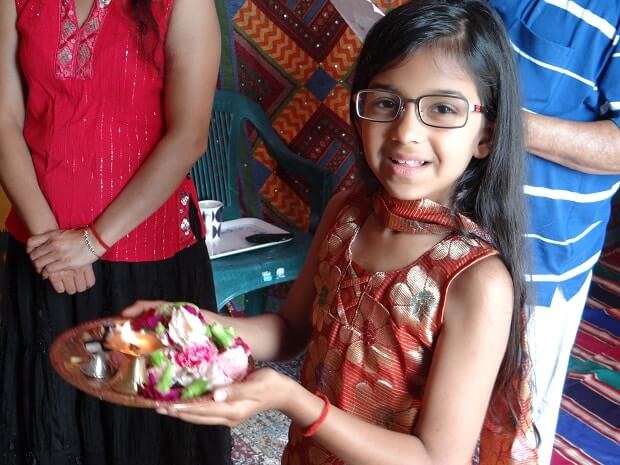
How one family brought a little bit of extra excitement to this auspicious day, writes VISHMA MISTRY

Many of us like to celebrate our birthdays in special ways, whether it is by throwing an extravagant party or by planning a simple day with the family. Birthdays tend to be very special and we make every effort to make sure it goes without a glitch. I know I most certainly do.
And just like birthdays, Janmashtami brings with it the same heart racing excitement and zeal for celebration. Only this time, it is extra special! Janmashtami marks the birth of Lord Krishna (the eighth avatar of Lord Vishnu). Krishna was the eighth son of Devki and Vasudev, and according to scriptures and astrological calculations, the date of Krishna’s birth is July 19, 3228 BCE. The festival is celebrated on the eighth day in the month of shraavan in the Hindu calendar.
Janmashtami is celebrated with great dhoom dham, not only across India but across the world with raas leela to celebrate Krishna’s youthful, flirtatious nature and the Dahi-Handi in which teams of young men form a sky-high human tower by climbing on to each other’s shoulders to reach a pot of butter which is hanging high up and break it.
Families also celebrate this auspicious day at home by holding bhajans and decorating the temple. When I was back home in England, I remember how my father used to wake up early and clean the temple and my mother would make Maal pura, which we used to take to the temple in the evening as Prasad. The function used to start off with bhajans and at midnight (according to the time in India) a specially chosen baby, dressed as Krishna would be bought in, carried in a woven basket as everyone chanted haathi gora paalki, jai kanhaiya lal ki; re-enacting the scene of when Vasudev carried Krishna in the basket and crossed the river Yamuna. We would then all line up eagerly to rock the cradle and seek blessings. The highlight of Janmashtami, however, were the little babies and toddlers dressed up as baby Krishna looking absolutely adorable!
Halfway across the world, here in Brisbane, Janmashtami is celebrated with the same enthusiasm and fervour. This year one family celebrated it in an extra special way.
Sankalp Khanna’s in-laws visited from India this year, and for his father in-law this was the first time he was spending Janmashtami away from home in 73 years. Sankalp’s in-laws both hail from Chandametta, a small mining town on the border of Madhya Pradesh and Maharashtra. Janmashtami has traditionally been their biggest celebration of the year and his wife Awanika’s dad has been an integral part of the preparation and celebration since his childhood. So to make the celebrations special, Sankalp, his wife Awanika, and their two daughters, decided to recreate the celebrations at home in Brisbane.
They used everyday materials to create an animated display, much like the window displays you see at the Myer, to recreate a scene from the story of Lord Krishna. Converting the garage into a puja room, a stage was erected using filing cabinets, the sides of a single bed, and cardboard packing boxes. The steel columns from a trampoline were used to build the walls. A variety of drawings, stencils and craft paper were use to paint the scene. Statues of Radha Krishna and the Gopis were created using Ken and Barbie dolls, but they didn’t stop there. In order to bring their creation to life, they used electronic circuits and hobby motors, used for helicopter wings, to make Krishna raise his hand as if to throw a stone, and bring his hand back down without throwing the stone. Radha also turned her head to look at him.

“What surprised my father in law the most, was how all our friends came together to make things happen,” Sankalp said. “Every weekend, friends would come over and spend time to help build the display. Some would take work home to finish it. The circuit was actually built with the help from a colleague of one of my friends. The flowers for the decoration and everyday puja were donated by another friend who owns a flower farm”.
As the festivities commenced in the Khanna household, friends and family joined them for Arti and Prashad over five days. That night they held a dinner, including a performance by their nine-year-old daughter Khushi, which was attended by 50 people,.
“What Awanika’s parents, our friends and I will cherish the most from this celebration is the experience we were able to provide for the kids,” Sankalp said. “They were able to be a part of how it is traditionally celebrated in India. They stayed up with us at night for the Aarti. We even varied some Aarti times to suit their school times. My elder daughter, Khushi, also did a presentation to her school friends describing the significance of the festival and took Prasad for all her friends”.
As the festivities came to an end for this year, the Khanna family gained some very special memories, which will stay with them forever.
Ganesh venerated through pooja and prayer
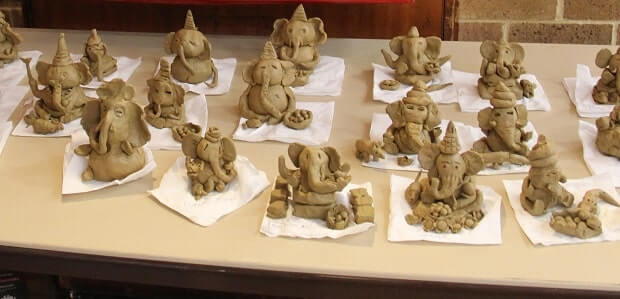
Tradition was highlighted at the ATF Ganesh festival celebrations with an idol making contest and laddoo auction, writes SHERYL DIXIT
 It was a day of joy and celebration as 350 attendees to the Ganesh Festival 2013 venerated Lord Ganesha at the Ermington Community Centre in Western Sydney. Indian cultural organisation Australian Telangana Forum (ATF) was instrumental in gathering Telangana people especially from Hyderabad, to join them on the auspicious occasion in September.
The free event began at around 2pm with a priest performing the Saamoohika Ganesh pooja (combined prayer) with 30 families in attendance. The idol had been brought from India and had been created using only natural material, donated by one of the patrons of the organisation. In parallel, about 30 children participated in a competition to make idols of Lord Ganesha, using clay. Prizes were distributed to the top three winners of the best idol, while all the children present were presented with pooja pens. The committee conducted this event to showcase India’s reverence for Ganesha, one of the deities best known and most widely worshipped in the Hindu pantheon.

Next followed the cultural section which highlighted the traditional arts of India through classical vocal and dance performances, which were sincerely applauded by an appreciative audience.
The procession leading to the Ganesh visarjan (immersion) ceremony is an integral part of the festival celebrations, and this was symbolically conducted with joy and chanting within the confines of the venue.
Another highlight of a successful evening was the Hyderabad tradition of the Ganesh laddoo auction. The Ganesh laddoo is a sweet that made out of yellow split peas, sugar syrup and other ingredients, and is specifically offered to Ganesh at poojas in Hyderabad. It is considered as auspicious to the home, particularly to business people. Auction of this laddoo is a popular tradition in Hyderabad. At the event, the Ganesh laddoo auction began with a bid of $499, and soon crossed last year’s record of $700. Finally, Sagar Group and Western Chargers Sports Club together secured the laddoo with a winning bid of $1,550. A smaller laddoo meant for children was secured by Neil Reddy Karri and Nikhil Reddy Karri with a winning bid of $250. The entire process of the laddoo auction filled the venue with cheer and excitement, with cries of “Jai bolo Ganesh maharaj ki…Jai” resounding through the hall.
Following the auction, dinner was served to all participants and ATF’s biggest event Bathukamma Festival 2013 was announced, which will be held at the same venue on October 12.

ATF President Mr Madhav Katikaneni led with his executive committee team to make this event a very successful one. Addressing the audience, General Secretary Mr Venkata Prasad Ragipani said that Australian Telangana Forum represents all Australian Telugu speaking people mainly from Telangana. “This festival showcases the integration of our cultural heritage into multicultural Australia,” he added.
The ATF thanked all EC members, ATF members and all the guests who contributed. The event concluded at 9pm, following the visarjan of the Ganesh idol as per tradition.
Details of upcoming events: www.australiantelanganaforum.org.au
Successful India trip strengthens trade and investment links


The South Australian government recently signed a Memorandum of Cooperation with the Export-Import Bank of India to further strengthen South Australia’s trade and investment ties with India. In Mumbai, as part of a week-long trade mission to India, South Australia’s Manufacturing, Innovation and Trade Minister Tom Kenyon signed the MoC with Mr TCA Ranganathan, the Bank’s Chairman and Managing Director.
“India is one of the largest economies in the world and South Australia is well positioned to support and benefit from India’s growth,” Mr Kenyon said. “This agreement provides the basis for a supportive, mutually-beneficial relationship with the Export-Import Bank of India which will focus on trade, business and investment opportunities”.
The MoC stated that each party has agreed to cooperate in regular exchanges of information on trade, business and investment opportunities between South Australia and India; locating suitable joint venture/trade partners to promote business opportunities and facilitate trade and investment; regular exchange of publications and other investment-related literature; organising seminars/workshops and training and skills development initiatives. “Our strategy emphasises four sectors in which the state’s strengths are aligned to India’s needs, aerospace and defence, energy and natural resources, education and training, and clean technology,” stated Mr Kenyon. Mr Raju Narayanan was recently appointed as Director India by the SA government to lead efforts to shape mutually beneficial business, investment and social relationships with India.
In another event, South Australia’s leadership in using industry clusters to successfully upgrade its manufacturing sector was highlighted at a major international conference in Mumbai on September 23. Mr Kenyon who attended the conference told delegates at a Global Economic Summit in Mumbai that South Australia was witnessing a transformation of its manufacturing industry from ‘traditional’ to ‘advanced’. “South Australia has a robust, diverse and outward looking economy which plays to our natural advantages and strengths,” Mr Kenyon said.
“The State Government’s manufacturing strategy, Manufacturing Works, outlines a pathway for this transition by encouraging high-tech precincts with clusters of businesses sharing knowledge and ideas.
“This reflects a growing international emphasis on bringing together research and industry to foster economic development based on a region’s strengths.
“Clusters spread risk, generate skill development and ultimately increase productivity,” Mr Kenyon said. “South Australia already has several outstanding business clusters, including a naval construction hub, a specialist bioscience hub and an agricultural, wine and food research precinct”.
The SA government has developed an India Engagement Strategy to take advantage of the close economic and cultural ties between India and South Australia.
Research grant supports duel against diabetes
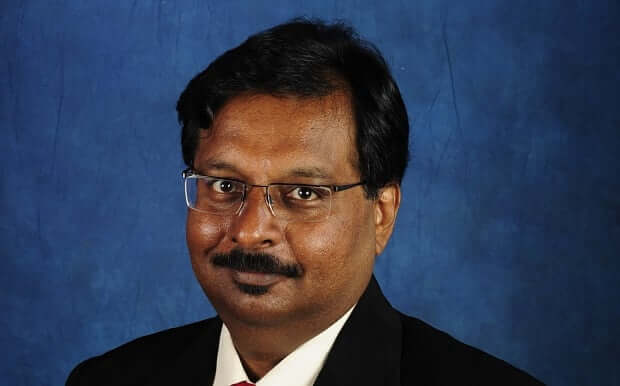
Information, detection and prevention of diabetes is essential for people of Indian and subcontinent origin, writes TASNEEM ZAVERY

“People of Indian descent are six times more likely to contract type 2 diabetes than the general population,” says Dr Kunwarjit Sangla, Director of Diabetes and Endocrinology, Townsville Hospital and Health Service.
“The chances of developing diabetes may depend on a mix of genetic factors, lifestyle (diet and exercise) and environmental factors. Complications from Diabetes including blindness, amputations, heart attacks and kidney failure are common among Indians,” he adds.
Waichal is now 63, and was diagnosed with diabetes at just 33. She never had a sweet tooth, but was genetically pre-disposed to this disease, having lost her mother to diabetes. Waichal’s diabetes slowly and gradually increased with time and stress, and she now has to follow a strictly disciplined diet along with insulin injections four times a day.
Akbar (66) was diagnosed with Type 2 Diabetes in 2009. Although she did restrict fatty and sugary food groups from her diet, she too inherited this disease. She too, lost her mother to diabetes and by following a strict daily diet, Akbar has not needed insulin injections.
So what is diabetes?
“There are principally two types of Diabetes – Type 1 and Type 2. The risk factors are different for both of them,” explains Dr Sangla. “A third variety is secondary diabetes where the pancreas has become completely dysfunctional due to disease or illness, or may have been surgically removed. There is a genetically inherited type of diabetes in children. All types can occur at any age”.
Type 1 diabetes develops when the insulin-producing cells in the pancreas have been destroyed. No one knows for certain why these cells have been damaged. It is rare in Indians. Type 2 diabetes usually appears in middle-aged or older people, although more frequently it is being diagnosed in younger overweight people (especially Indian children). Type 2 diabetes occurs when the body is not making enough insulin, or the insulin it is making is not being used properly. The risk of developing Type 2 diabetes can be reduced by changes in lifestyle.
After losing her nani (grandmother) to diabetes and her mother affected by this disease, fifth generation Fijian-born Heena Akbar realised there was not enough information and awareness provided on diabetes among communities. Currently a PhD student at Queensland University of Technology (QUT) 42-year-old Heena was recently provided with funding from Diabetes Queensland and QUT to study ‘the management of diabetes by women from Fiji who are now in Brisbane regardless of their ethnicity/ race. Indians, Fijian, Chinese, Polynesians and other groups all have a high incidence of Type 2 diabetes.’
“Diabetes is the world’s sixth megatrend! Over the years our lifestyle has become sedentary, we have less time and no physical activity,” says Heena. “We are moving into an era of modernisation and because of our change in habits, diabetes and cardiovascular diseases are common causes of death. It is a fact that Indians and Asians are prone to Type 2 diabetes due to pre-history of diabetes in the family,” claims Heena, who comes from an Indian-Afghan and Nepali background.
Commenting on the research grant given, Michelle Trute, CEO Diabetes Queensland says, “Type 2 diabetes is the world’s fastest growing chronic disease and the situation in Queensland is no different. The aim of the research grants is to help inform sufferers about the direction of Queensland’s health system which includes having the right structures and systems in place to manage the complications related to all types of diabetes, so that they are tailored to the needs of individual communities”.
“This is the reason we were extremely pleased to be able to provide Heena Akbar with $30,000 funding through Diabetes Queensland’s annual PhD scholarship to study the impact of Type 2 diabetes on Fijian women living in Australia,” she adds.
Echoing similar thoughts on research on diabetes, Dr Sangla says, “Research in diabetes, obesity and chronic disease within culturally and linguistically diverse communities is very important. These high risk communities of various ethnicities will benefit from research which identifies key issues relevant to their physical, mental and social well-being. Hopefully this will then help identify solutions which are culturally and traditionally appropriate to their living”.
“The objective of the PhD research is to gain a better understanding of migrant women from Fiji of all ethnic backgrounds living in Brisbane, in managing Type 2 diabetes,” explains Heena. “This will be done through communication which will include talking to elders/leaders of the community, conducting interviews and focus groups with health providers and women with family who have diabetes. Through my research I will be able to draw an analysis, develop interventions and programs tailored specifically to fill gaps and address issues thus in helping and assisting people affected by diabetes,” she adds.
So who is at risk?
“Obese children are at high risk of diabetes, hypertension, heart attacks and hypercholesterolemia,” Dr Sangla explains. “Get them screened when young. These are no longer illnesses only of the elderly”.
If you have a family history of diabetes or are overweight, get screened. If the initial screening is normal, it doesn’t mean you are safe forever and can’t get diabetes. Get screened regularly, especially if the risk factors are unchanged and as you get older.
If overweight, get screened for diabetes prior to pregnancy.
If you have diabetes, control your sugars, cholesterol and blood pressure. Controlling sugars is not enough. Ask your doctor to give you targets levels you need to achieve.
Some of the risk factors for diabetes
Genes
For Type 1 diabetes (on average)
- If the mother has the condition, the risk of developing it is about 2%
- If the father has the condition, the risk of developing it is about 6%
- If both parents have the condition, the risk of developing it is up to 30%
- If a brother or sister develops the condition, the risk of developing it is 10% (rising to 15% for a non-identical twin and 40% for an identical twin).
For Type 2 diabetes (on average)
- If either parent has the condition, the risk of developing it is 15%
- If both parents have the condition, the risk of developing it is 75%
- If a non-identical twin has the condition, the risk of developing it is 10%
- If an identical twin has the condition, the risk of developing it is 90%
Ethnicity
Type 2 diabetes is up to six times more common in people of Indian descent.
According to the Health Survey for England 2004, doctor-diagnosed diabetes is almost three times as prevalent in Indian men compared with men in the general population.
Among women, diabetes is two-and-a-half times as likely in Indian women, compared with women in the general population.
Dr Sangla suggests preventive measures against diabetes
- Exercise regularly. Burn the calories
- It’s not all about weight (rugby players weigh a lot but are not fat). It’s about having a slim waistline
- Eat to live but don’t live to eat. See a dietician for culturally and traditionally appropriate diet plan
- Understand that just because a food is not sweet doesn’t mean it will not have sugar in it
- Restricting sugary foods is not enough. Calories come from proteins, carbohydrates and fatty food
PM’s Indian plan
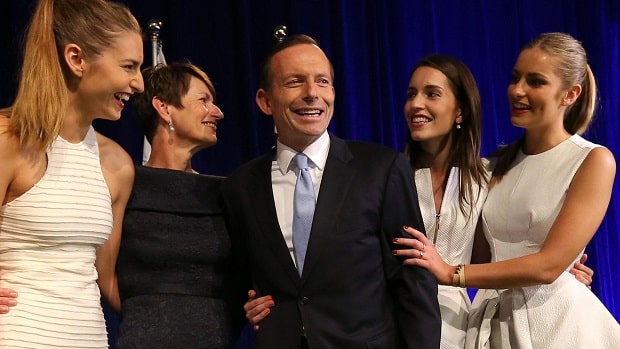
Prime Minister Tony Abbott spoke exclusively to PAWAN LUTHRA on uranium, Indian students, 457 visas and… chicken tikka, just days before he was elected

With just a few days to go before the 2013 Federal Election, Indian Link wrote to the Australian Labor Party and the Coalition Party to request interviews with their leaders. On behalf of the community, we wanted a better understanding of their overall polices before the election, with particular reference to the ones relating to India, as well as their plans for the Indian Australian community.
The Coalition responded within minutes of receiving our request, and Opposition Leader Tony Abbott agreed to an interview that aired on Indian Link Radio.
However, we were not as fortunate with then Prime Minister Kevin Rudd. Despite of a number of emails and text messages to the Prime Minister’s senior media adviser, Mr Rudd’s office did not take up this offer.
The 2013 Federal Elections results that followed were of no great surprise to Indian Link. They reflected the Indian Link online survey, which correctly predicted the results of this Federal Election. Tony Abbott, the new Prime Minister of Australia, won the Federal Elections through a comfortable margin.
Mr Abbott was friendly and relaxed as he spoke about Indo-Australia issues to Pawan Luthra. The Indian community has great expectations from Mr Abbott now that he is in office, and hopes that he will deliver on these promises.
(Note: Interview is an excerpt taken from the Indian Link itnerview conducted prior to the election)
Pawan Luthra (PL): The white elephant in the room to progress the India-Australia relationship is the sale of uranium to India. While this was agreed on by the Labor Party, sadly the process remains stalled with little action forthcoming. How will the Coalition government handle this situation?
Prime Minister Tony Abbott (TA): We want it to happen. India is a democracy that enjoys the rule of law, and is a country with which we have good relations. Plainly, if Australia sells uranium to Russia or elsewhere, we ought to be prepared to sell uranium, under appropriate safeguards, to India. It seems like the current (at the time of interview: Labor) government has singled India out for punishment even though India’s role in the international community is a very stable one. I’m very keen to try to ensure that uranium sales to India are resumed as soon as possible. Pawan, I will want to know exactly what the obstacles to these sales would be, exactly why there seems to have been a bit of dragging of the chain by perhaps the officials, rather than others. And if it’s some obstacle of law on the path of Australian officialdom that’s the problem I’d want to resolve.
PL: That’s good to hear, because this is one of the major issues holding back a more conducive relationship between the two countries.
TA: And we shouldn’t make it out to look like we are singling out India for some kind of criticism. India is a democracy under the rule of law, it’s been a very constructive contributor to the international community. It’s one of the coming superpowers of this century and it’s important that we acknowledge that and work as well as we can with India and the Indian government.
PL: Leading on from there, the NSW Premier Barry O’Farrell made it very clear at the start of his term that he would be visiting India and China every year; would you be looking at a similar agenda?
TA: Yes I would, Pawan. I think that it’s very important that Australia maintains the best possible relations with all its friends. Over the years we’ve obviously had outstanding relations with Washington and London, but we should never allow our strong friendship with our traditional friends and allies to divert us from an even stronger friendship with the emerging powers of our region, and India is very much in the forefront there. So I think it’s important that Australia acknowledges the fact that as time goes by, India is going to count for more and more in the world. Particularly given India’s profound commitment to democracy in the rule of law, it’s very important to build an even stronger relationship with India. India is the emerging democratic super power of Asia and I want to stress that. That’s why it’s very important that Australian leaders spend more time in India, or on India in the future, than we have in the past.
PL: Former Prime Minister John Howard made his first overseas visit to Indonesia, reflecting his particular change in foreign policy. If elected, would India be high on your list of countries to visit?
TA: It would be. I expect Indonesia to be my first significant overseas visit… I’m certainly not getting ahead of myself there, Pawan, but I would be surprised and disappointed if within a matter of months there hadn’t been a trip to India.
PL: On another issue, the changes to the 457 visa program have not only made a deep impact on a number Indian professionals here, they have not played out well in India either. Unfortunately it has added to the perception that Australia is ‘racist,’ triggered by the student attacks in the past. What would you do to counter this perception?
TA: I acknowledge that the violence against Indian students, particularly in Victoria a few years ago, was a real blot on our national copy book and the then Victorian government was far too slow to response to what was, at the time, racially motivated violence. At the time I deplored these attacks, I think it’s profoundly out of character for Australians to do that. I think Indians in Australia appreciate that Australians are very welcoming people, that we are a very welcoming, free and fair country. Yes, but it happened, it shouldn’t have happened, governments at all levels were slow to respond but eventually we did get on top of it and now it’s not happening. Equally, I deplore the fact that the current national government (at the time of interview: Labor Party) has demonised people coming to Australia on 457 visas. I’ve been saying repeatedly since this campaign began, the people who come to Australia to work and pay taxes from day one, are not stealing Aussie jobs, they are building our country. We should be very welcoming to people who are prepared to come here for a short time, or for a long time, to work and pay taxes and join the Australian team, which is what people on 457 visas abundantly do.
PL: So will you look at making some changes?
TA: Oh absolutely! We want 457 visas not just to be a component of our immigration program, we want them to be a very possibly, the mainstay of our immigration program. Because the tradition in this country is that we extend the hand of welcome to everyone who wants to come here and join the team, and come to work and pay taxes from day one.
PL: Your education policy promised to improve the take-up of Hindi in Australian schools. While this is a terrific start, are there any plans to extend this to higher education at University levels?
TA: Thank you. I think we had better take one step at a time, Pawan. Hindi is one of the most widely spoken languages in the world and it’s appropriate that our study of Hindi be expanded, rather than contracted. This is one of the problems of modern Australia; because so many people speak English we become a bit linguistically lazy and we shouldn’t expect that the world will speak to us in our language. We should be ready to speak to the world in its language. That’s why the study of Hindi, the study of Japanese, Bahasa or Korean, is important. Back in the 1960s about 40% of Australia’s school leavers had studied a foreign language. Now it’s less than 10% and this is an indictment of our system, and it has got to be fixed.
PL: We know you travelled to India as a youth and worked at a Jesuit mission in Bihar, but what are your recent links?
TA: I regret to say I haven’t been to India since this time.
PL: But you’re promising to visit post September 7?
TA: Absolutely! I had hopes to go this year as Opposition Leader, but unfortunately the pressure of the elections intervened. There was a clash between the proposed dates for a visit by me and a visit by an Australian government minister, so in the end the ministerial visit went ahead, not the leader of the opposition’s visit. But this is a mission on which I want to break the ice very, very soon. I spent some fascinating months in India back in 1981, on my way from Australia to England to take up a Rhodes scholarship at Oxford. I spent three fascinating months in India, mostly in the Bihar province, in the company of the Jesuits. I have been fascinated by India ever since. I thought back then, that India was a country with enormous potential. It was in those days a bit of a sleeping giant, but the giant has well and truly awoken and it’s important that Australia makes the most of that potential. And it’s important that Australia acknowledges India’s prospects of future success.
Up close and personal with Tony Abbott
An Indian personality, alive or dead, who has made an impression on you?
Mohandas K Gandhi, because he managed to lead his people in a great struggle, and he did what he could to ensure that the struggle was peaceful.
Your favourite order at an Indian restaurant?
Lamb rogan josh, chicken tikka, beef Bombay and prawn masala.
Ever cooked something Indian?
I use to cook a reasonable curry, but these days my wife tries to keep me out of the kitchen.
An Indian book you have read that’s made an impression?
I haven’t had enough time to read lately. There has been an extraordinary proliferation of Indian literature in English over the last couple of decades, and I’m probably not as up with it as I should be, so I’ll probably pass on this question, but I did have a go at Vikram Seth’s, A Suitable Boy, and I must confess I didn’t really like it much. That’s probably a comment on me, on my busy work, but I confess I didn’t get through it.
Seen any Indian films?
Again, when I was in India I watched some Bollywood films. They weren’t really my type, but like everyone else, I watched Slumdog Millionaire and I loved it.
An Indian word you know?
Well ‘khaki,’ as I understand it, is an English word derived from India.
An outstanding memory from your time spent in India?
I guess apart from the colours, the sounds, the extraordinary work of the Jesuits, probably my strongest memory is just the readiness of the ordinary Indian to engage with me. You couldn’t walk 10 yards without being basically hailed and talked to, and maybe it was because in those days, a white face in the street was a rare thing. Maybe it was because they just wanted to practise their English on me, but I certainly had an amazing time there.
PL: Or maybe they saw a fair dinkum fellow in you over there…
TA: (Laughing) Well, I’d like to think that I was a fair dinkum fellow but I guess at that point in time they may not have known that.
PL: India – Australia relationship future?
TA: Well look, I want to do everything I reasonably can to build a better relationship between Australia and India because this will be good for India, but it will be very, very good for Australia.
Fun in Fiji

Seafood and cocktails made an interesting and relaxing combination at Fiji’s exotic islands, writes GEORGE THAKUR

The flight from Tullamarine took over 4 hours to reach Nadi in Fiji, and as we disembarked, a desirable 27oc welcomed us. We were happy to unload ourselves of warm clothing suited for Melbourne’s 10oc. We asked the local population what Nadi was all about, and they all told us that it is a rather dull city of Viti Levu, the main Fijian island.
Since the time difference between Australia and Fiji is about three hours, by the time we reached Hotel Mercure where we were to spent a night, it was already dark. We hit the restaurant to taste the local cuisine, where the staff recommended we began with Fijian beer. Then came the seafood salad – pungent, citrussy and a big serve. The butter chicken Fijian style was delicious, yet not far removed from how Indians would cook it. We cut short our after-dinner walk in the suburb, for the Fijian traffic sense was as scary as is the Indian.
Early the following morning we were transported to Denarau Island, some 20 minutes from the international airport, where we checked ourselves onto a catamaran for a four night cruise of six major islands from about 360 small and large ones. Denarau, in Viti Levu is the main island inundated with some of Fiji’s best resorts and privately owned mansions of the rich and the filthy rich from Australia and New Zealand; but also from the USA, Britain and Germany. The never-ending palm-treed approaches to these facilities via innumerable and vast golf courses are clean and beautiful.
The catamaran took over two hours to connect us with our ship, moored in the deep ocean. Refreshments were available on board at a cost. On the way there, we dropped off many couples who had opted for smaller, uninhabited, but self-contained island resorts just for themselves, where one may bask undisturbed in nature’s sunshine and/or walk around the island in their birthday suits, the next island being 5 nautical miles away, and the next ship with supplies two days away.
The Mamanuca island group is a collection of twenty small and large sand-fringed islands set among the deep blue waters of the South Pacific ocean. Situated inside the Malolo Barrier Reef, this stunning group of islands is easily accessible from the mainland and offers ideal conditions for boating, scuba (self-contained underwater breathing apparatus) diving, snorkelling and other water-based activities. Here is located the island on which Tom Hanks filmed Castaway, alongside various traditional Fijian villages.
Finally, we boarded our ship, the Blue Lagoon. Mimi, our Cruise Director, and her friendly staff welcomed us with ethnic songs accompanied by guitars, the base singer adding grace to the sopranos, and a drink of our choice. After a continental dinner, we retired for the night. Each day, we were transported to sandy beaches of warm water on different islands, where we swam, learnt to scuba dive, or just lazed on beach chairs or hammocks, sipping cocktails. One day we were given a conducted tour of a village, where a stern-looking, gigantic armed warrior, his face half-painted black, escorted us into a room. The men led the way, and women necessarily followed. The men also sat in the front and were served before the women. Caps were taboo in the villages. The kahwa drinking ritual was truly ritualistic. Since I had felt sick after drinking it in Vanuatu, I respectfully declined the offer. The food served in porcelain plates with cutlery was delicious, but the locals ate off banana leaves, using their fingers. Locally made but terribly expensive artefacts were on sale. Kindergarten and primary school children we met were friendly and conversed with us in English. Each family in the village grows its own vegetables and fruit in their backyards. Fijians of Indian origin cannot just walk in to live in these villages. They have their own, as we were told, ‘settlements’ where they live. One day, we tried food wrapped in banana leaves cooked the Fijian way, in a pit of hot coals.
The famed Coral Coast stretches for 130 kilometres along the southern shores of Viti Levu, with easy access via the Queen’s Highway that connects the jet-set town of Nadi with the capital city of Suva. It boasts any number of mile-long beach resorts and/or smaller accommodation options with a distinctly Fijian feel, and magnificent views of the waves breaking along the famous coral reef. All the way from Nadi to Suva are locations bubbling with activity, with restaurants, petrol pumps, shops and large pools with kamal-ke-phool, and playing loud Bollywood music, these were the Indian settlements. The Fijian villages were dull in comparison.
The beachside Hideaway Resort, some 65kms from Nadi, in which we stayed was modern and beautiful, the staff friendly and polite. Our large and self-contained Bure was five meters from the actual Pacific Ocean, and during low tide we walked right into the deep, admiring rare shells and sea-life. I even dared to canoe, although I can’t swim. The seafood aplenty was delicious, the portions large and the cocktails were to kill for. The residents were friendly and shouted drinks to each other, while we danced to loud music played every evening by the staff. We had many Indian families holidaying at the Hideaway. While the staff in direct contact with guests was all Fijian, the cooks, even the General Manager, were of Indian origin. The following day, we went on a small cruise to see a waterfall at some height. We also tried bamboo rafting in fast currents, and were treated to home-made nibbles and soft drinks.
The taxi to Suva for a day cost Fijian $200. We drove past the Old Parliament House, the present-day Parliament House, Government House, roamed around in shopping arcades and lunched at Ashiana Restaurant. While rows of buildings, shopping arcades and proudly captioned shops are owned by Indians, the locals believe more in 9am to 5pm, Monday to Friday paid jobs. A pack of 60 tablets of medicine for which I pay $5 at home was sold to me by an Indian chemist for the equivalent of AUD$2 per tablet, which means $156 for the packet of 60! No wonder Fijian Indians are rich! Rose and I wondered why they would leave a cushy life in warm Fiji for anywhere else in the world.
By the time our holiday ended, we were saying the ubiquitous bula, meaning welcome/hello/goodbye automatically. Therefore, if you wish to relax, eat mouth-watering seafood and taste wicked cocktails, Fiji is your destination.
Soulful splendour at RFAK show
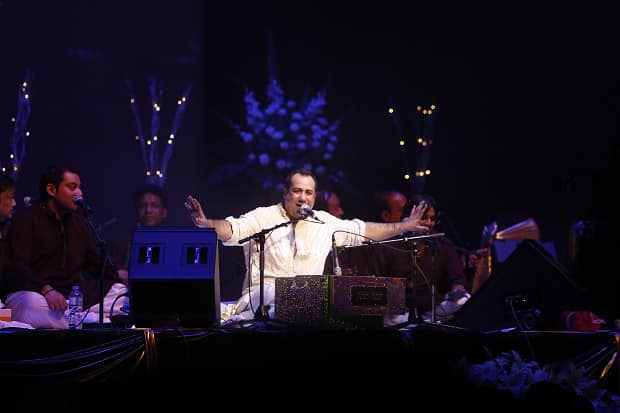
The music maestro performed par excellence at his recently held concert in Melbourne, writes PREETI JABBAL

Mind-blowing, fabulous, mesmerizing, soul stirring, sizzling – the adjectives were flowing fast on Facebook and for once, everyone seemed to agree that the Rahat Fateh Ali Khan show held in Melbourne recently, was worth every dollar spent. As an ardent fan of Rahat claimed on her status, “I have been to all the RFAK’s concerts in Melbourne and this Rahat Reloaded show was by far the best!” The credit goes to the organisers Sizzlin Events, for not cutting corners with the choice of venue, backdrop or sound.
The recently redeveloped Hamer Hall at the Arts Centre in Melbourne was a fitting location for a power-packed performance from the King of Sufi music, while the backdrop of blossoming flowers and myriad light effects added to the overall experience. The turnout was impressive for a Sunday evening, as the talented singer from Pakistan took soulful music beyond borders, following the tradition of his uncle late Ustad Nusrat Fateh Ali.
Popular Pakistani actress and PTV personality Ayesha Sana ushered the maestro and his troupe on to the stage to the delight of the audience who was getting impatient with the delay. A slickly edited audio-visual clip offered a glimpse of RFAK’s musical journey from the early age of three along with snippets of his multiple concerts around the globe.
Once his accompanists, clad in brown and white traditional outfits, settled in behind him, the iconic singer launched straight into a devotional qawwali, Allah Hu. This was followed in rapid succession by many of his popular Bollywood songs including Surilli Ankhiyon wale (Veer), Sajdaa (My Name is Khan), Tere Naina Dagabaaz (Dabangg 2), O Re Piya (Aaja Nachle), Tere mast mast do nain (Dabangg 1) and Dam Mastqalandar.
The pace did not drop at any stage nor did the power of his vocal mastery, as the singer belted song after song with no preliminaries. His interaction with the audience was mainly through his music, lyrics and song. RFAK’s accompanists, many of whom had also performed with Ustad Nusrat Fateh Ali Khan, supported him with equal fervour helping him to carry the legacy and tradition of a great musical family.
The evening held its magic right up to the last few songs where RFAK launched into full serenade mode with Teri Ore from Singh is King. This particular song could have been toned down to retain the essence of romance, but ended up sounding like a softer qawwali or at best a raspy ghazal. Try as I did, even with my eyes closed, I failed to be transported to the gondolas of Venice skimming smoothly through the river and being serenaded by the gondolier, albeit in Hindi/Urdu. The recorded version proved far more melodic than the live rendition.
The concert went on till later than expected, but no-one seemed to be overly concerned. Towards the end of the show a raffle was drawn, giving the winner a trip to Agra in India, and all the sponsors were dutifully acknowledged. They included Bank Of Queensland Clayton, Landmark Investments, Aria Hotels, Metropol, KBros and Divine Vibes. The Rahat Reloaded 2013 concert proved to be an entertaining event organised with style and substance
Milky Way man
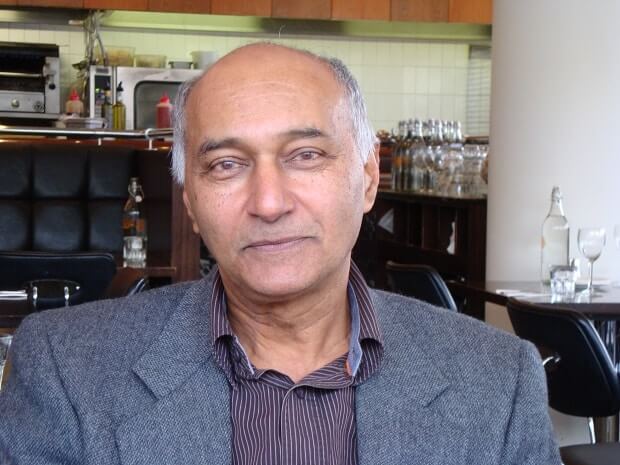
A stratospheric scientific balloon expert in Australia has earned well-deserved accolades for his contribution to astrophysics, writes GEORGE THAKUR

Ravi Sood was born in Nairobi, Kenya, and obtained his BSc from Makerere College in Uganda. He completed his PhD in Astrophysics from Imperial College, London, studying the emission of high energy gamma rays from the sun and from our Milky Way galaxy, using instruments flown on balloons at high altitude from locations in four continents. In 1975, Ravi was shortlisted to work in space on the Space Shuttle as a payload specialist, but failed the rigorous medical examination due to his colour blindness.
In 1979, he took up a lecturing position at the Royal Australian Air Force Academy, University of Melbourne, where he continued his astrophysics research using stratospheric balloons, branching into the fields of cosmic radiation and X-ray astronomy. He joined the Australian Defence Force Academy, University of NSW in1986 as a senior lecturer, where he established the High Energy Astrophysics Research Group in the School of Physics. In 1992, Ravi was promoted to Associate Professor and was the Head of the School of Physics from 1995 to 2002.
Today, Ravi is the leading expert in stratospheric scientific ballooning in Australia. He is the Station Director of the Balloon Launching Station, Alice Springs. Currently, this is the only stratospheric balloon operations facility in Australia. Ravi has published over 120 research papers in scientific journals. The launch of stratospheric balloons is carried out from a runway at Alice Springs airport that is closed to other air traffic operations. “To inflate balloons,” says Ravi, “instead of hydrogen, helium gas is used as the extremely dry air of the zone can generate hazardous electrostatic discharges during inflation”. Balloons with a volume of up to 45 million cubic feet, carrying payloads weighting up to 2 tons have been launched from Alice Springs. The tracking of these balloons in flight is conducted via radio links, and visually by small aircraft during the descent phase.
Ravi has taught Physics at the undergraduate degree in Australia for three decades, and has also supervised several PhD and MSc students. He led the complete updating of the Physics curriculum at UNSW@ADFA to provide a degree which stands approved by the Australian Institute of Physics that is relevant to officer cadets of the Australian Defence Force. He was awarded the UNSW@ADFA Teaching Award for Excellence in 2000. Ravi has taught Astronomy and Astrophysics at all undergraduate levels, and has put together innovative courses in Cosmology, and Navigation and Guidance Physics. He has led the development and delivery of a highly successful course on ionising radiation safety for the Australian Defence Force.
Recently, Ravi has led the development of a postgraduate course in Fundamentals and Management of Weapons of Mass Destruction. This course was specifically designed for officers of the Australian Defence Force.