


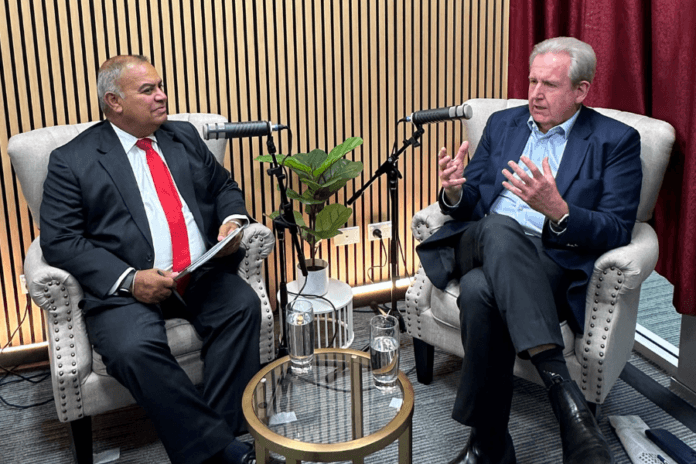
Barry O’Farrell
Australia is having a very different conversation about migration. What was once seen as an economic and social strength is now at the centre of debates about housing, infrastructure, universities, jobs and social cohesion. Both Labor and the Coalition are proposing lower migration levels, with the Coalition arguing for much deeper cuts, while One Nation wants to go further still. So where does Australia go from here? Pawan Luthra put the question to Barry O’Farrell, former Premier of NSW and former Australian High Commissioner to India.
Has Australia simply let migration get too high?
Barry O’Farrell: I don’t know whether it’s the size, or whether the concern is really about what the people coming bring to Australia. I am very pleased I’m no longer in politics – I haven’t been engaged since I left Parliament in 2015 – because some of the debates don’t make sense to me.
For the whole existence of European settlement in Australia – and I’ll mention our Indigenous friends a bit later – migration, particularly skilled migration, has been seen not only as an asset to the country, but as something that has helped boost our economy, create jobs and deliver a better Australia.
I grew up in the Top End, in Darwin, among Italians, Chinese and Greeks – thank God, because we had some decent restaurants then. Ethnic communities have left their mark on us for well over 100 years, and that’s not neglecting those who came with the First Fleet or those who came subsequently. Why do we think migrants from England are any better than migrants from anywhere else? We shouldn’t dismiss anyone.
In the ’70s and ’80s, as governments changed, Labor was very strong on family reunion policies and the Coalition was always strong on skilled migration. As things evolved, John Howard’s government focused on skilled migration and on stopping illegal migration. They had a carrot and a stick: if you want to come to this country with skills, you’ll be welcome; if you want to come through the back door, forget it – you’ll be sent home.
These days I think we haven’t focused as much on skilled migration, and skilled migration is critical. Secondly, we don’t seem to have much of a mechanism for removing citizenship when people who came here as migrants engage in fairly serious criminal acts. It’s not easy.
But we know what migrants have built – whether it’s the magnificent power scheme between Victoria and NSW, or the Frank Lowys of this world, following on from the generation of the Myer family, who built magnificent department stores that not only sold goods but employed people. All those things were beneficial. And the term ‘multicultural Australia’ was seen as a positive – that we were a blend of nationalities from around the world. But somehow or other, it has fractured, and that’s what we’re dealing with.
Whether you’re Labor, Liberal or One Nation, you need to understand that without migrants we can’t get people in country areas to do the basic jobs that put fruit and vegetables on our table. We have a skills shortage, particularly in building, and also with nurses, especially in retirement villages. I’ve said publicly that there’s a great opportunity for the wonderfully trained nurses of Kerala to come to Australia and help fill that gap.

But the discussion very often is that, of the permanent places reserved for migrants, a lot are being filled by family members rather than skilled migrants like those nurses. What do you say to that?
Barry O’Farrell: No one’s arguing that there aren’t jobs in Australia. It’s just that people like me, who are multigenerational Australians, don’t want to do some jobs.
What is astounding to me about the Indian community – and I used to joke about this as I travelled around when I was in politics – is that they’re incredibly industrious. They want to make the most of what Australia has to offer, whether it’s good schools, safety or good hospitals. But they also want to buy a home, and they’d work their backsides off to do so. It wasn’t long before they did.
I remember meeting a pharmacist of Indian heritage in a public hospital. She told me she’d been here for five years, and I asked, ‘So what else does the family do?’ My joke was always that all Indians are Gujaratis, because there was always a business on the side. She wasn’t Gujarati, but she did tell me her son had a business on the side.
So now you have Kerala on your side and Gujarat on your side.
Barry O’Farrell: We’re moving up. So no one has said we have reached peak jobs. And until we do – whether through local ageing and population growth, or through skilled migration – it’s not a problem. The problems all revolve around housing.
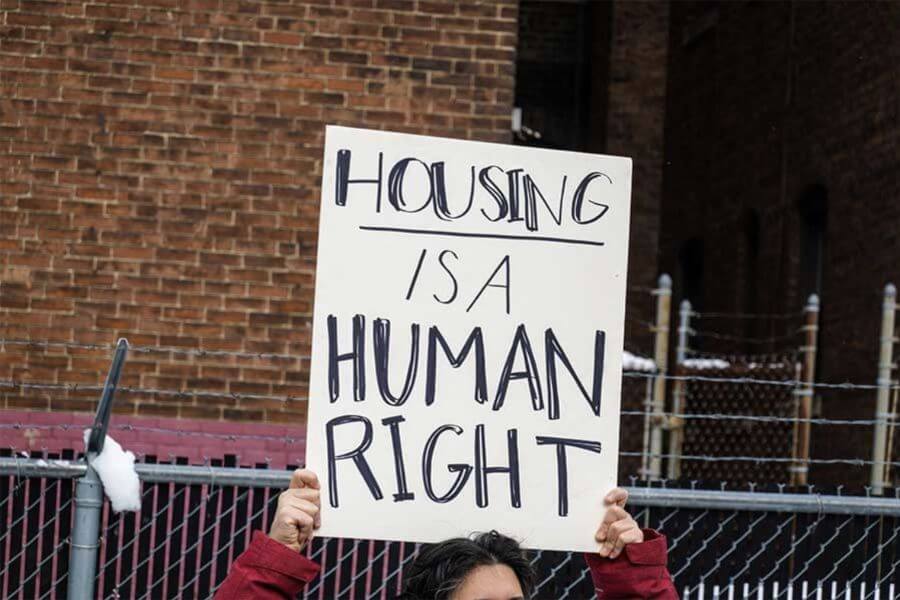
I was talking over the weekend to Brad Hazzard, who was housing minister in my government, and he reminded me that we took the figures back up to tens of thousands of homes being built every year. The only reason they’re not being built now is that governments – state, local and sometimes federal – interfere too much. The regulations are too tough and the fees are too high. That makes it hard for a person who wants to build a home for themselves, and for the big developers. Those things are all fixable.
In the 2011 election, my opponent, standing with the Prime Minister, said Sydney’s infrastructure problems were due to the migration mix in Sydney. I dismissed it completely, because Labor had had 16 years in office, had promised infrastructure in every area including housing, and hadn’t delivered a thing. It was extraordinary that someone in the middle of a campaign would argue that.
So have governments got greedy, putting more taxes on housing, and are they now trying to shift the blame onto migrants?
Barry O’Farrell: I think NSW deserves a bit of leeway here. In the last couple of budgets I’ve seen, the federal government has delivered more money to Victoria than to NSW, and the breakdown of funds between the states has been detrimental to NSW. So Chris Minns and Daniel Mookhey have limited resources. And you’ve got schools, hospitals, police and transport – people need all those things, and they need them to be reliable so they can invest, create businesses and employ others. That’s very hard to do when the money’s not there.
People talk about stamp duty. Well, stamp duty helps educate kids, fix people in hospitals and keep people safe on the streets. The mint was closed a couple of hundred years ago – government doesn’t print money. It has to find ways to raise it.
And that’s my point: you bring in skilled migrants, they start businesses and they create jobs. When I was premier, I think the value of international students to universities in NSW was about $5 billion. I think it’s three times that now, and something like $50 billion at a federal level. The money they invest in universities creates other jobs across the economy. I don’t understand why we would start telling any institution how many customers it can have.
Universities are being told there’ll be caps on the number of students they can take, and that is a dog whistle if ever I’ve heard one. It’s untrue that overseas students are taking Australian students’ places at university. It’s untrue that they’re taking up accommodation that could have been used by Australian students – a vice-chancellor in Greater Western Sydney has made the point that he has empty student accommodation available.
These things are said, no doubt, to whip up the likes of some of the fringe parties that have started to appear. And as a result, once again, others are being blamed for problems that, in a democracy, you can fix. Because guess what: if a government’s not building enough housing or enough roads, vote it down.
Former Prime Minister John Howard has said migration has been a great Australian success, but that it must be steady and controlled. Have we lost that balance?
Barry O’Farrell: That’s my point. It was a more rigid regime. It might have been a bit tougher to get in, but it didn’t stop people getting in. People knew that this was the way to go, and not to come via the back door.
So have we lost control of our borders?
Barry O’Farrell: I don’t think we’ve lost control of our borders. I think that was taken care of, most closely by Scott Morrison in two roles. But we need to keep focusing on bringing skilled people in. Ironically, many of the people who built the Snowy scheme were unskilled – they were just slogging away.
Perhaps that was the call of the times.
Barry O’Farrell: It was the call of the times, post-World War II. But the post-war years also brought some magnificently educated people into the country, who built businesses and enterprises that still exist.

What about some of the proposals now on the table – cutting family visas, especially for students already here, the issue of visa-hopping by graduates, and deporting people who overstay?
Barry O’Farrell: My view has always been that if there are problems in the university and TAFE sector, with people jumping between the two simply to prolong their time in Australia, we’ve got regulators. TEQSA is the regulator for universities. There are regulators who should be doing their job.
People wonder at times why governments spend enormous sums on consultants. Frankly, they shouldn’t have to, because public servants and ministers need to accept accountability. If there’s a rort going on, with people coming in to study higher education and ending up in the TAFE system just to extend their stay, that rort should be stopped. It should be closed. But they don’t seem to do that.
Why?
Barry O’Farrell: I have an answer to that which I couldn’t use on a podcast. I’m unsure. I think there’s confusion out there. There’s no clarity about what our goals are. We’ve all heard and read the suggestions about what goes on – but has it ever been properly investigated?
So we need more investigation, and to use regulation to cut it down, rather than draconian measures?
Barry O’Farrell: We need to work out what’s not working well, and fix it. Because there is no doubt that, done well, overseas students coming to Australia are an asset.
I’ve said to you before, Pawan, that from the moment I got to India – a month before the COVID lockdown there – I was getting regular phone calls asking, ‘Will we get students back to Australia when this finishes?’ Every government during COVID was contacting the Australian High Commission in India saying, ‘We want some certainty around getting these students back, because we need them.’ What’s changed?
How does this debate about migration and student cuts affect the Australia–India relationship?
Barry O’Farrell: The Australia–India relationship is the best it’s ever been. When I first went to India in 2010, there had been an assault on a student in Adelaide. I never realised until that visit that India had the same tabloid newspapers we have, which just beat the hell out of everything. For the next 10 years that I visited India, you could not talk to the media without being asked whether Australia was safe for Indian students.
The good news is that in the interim we had migration growth, and then COVID. Eventually India put on the Vande Bharat flights to take students home – and 80 per cent decided to stay. That’s a great credit to each of the universities, which worked very, very hard. Governments at times were not as sympathetic to those students, but the universities were, and so was the diaspora.

The diaspora’s own children were going to university, so they were telling friends and family in India that Australia is a great place to study, and that it’s safe. There is no better evidence of Indian students feeling safe – and I kept pointing to it until I left the job – than the fact that 80 per cent of them decided to stay.
If you had to advise an Indian student’s family about studying in Australia now, what would you say?
Barry O’Farrell: The one element of this I’d question is that students doing higher degrees were, as I understood it, able to bring a spouse with them – and I’m not quite sure what problem people are trying to address by changing that. What does it do? Chances are it delivers another baby in an Australian hospital. Having your spouse with you while you’re doing a three-year PhD in subjects that both Australia and India are interested in, seems to me a sensible thing.
So what would you tell families considering sending their children to Australia to study for the first time?
Barry O’Farrell: I think they should send their children here to study. The danger is that, if it’s their children going for the first time, they may not come with a spouse – but they might leave with one!
I know a former senior member of a state government in India whose son took his advice to study in Australia, and I think that’s what’s happening more broadly. When I first went to India, I’d ask people whether they knew anyone in Australia, and a few did. By the time I went back as High Commissioner, ministers themselves and departmental secretaries all had some connection with Australia. That’s been the big change, and it’s also why growth from India has continued to expand.
But as I say, that’s growth of people who are highly motivated, industrious, entrepreneurial and law-abiding. In my time as premier, I never had a single complaint come across my desk about a person of Indian origin.
Let’s turn to social cohesion. Is it genuinely under pressure in Australia, or are politicians turning community anxiety into a political opportunity?
Barry O’Farrell: I think the more we have these debates – and the less explanation there is of why they’re being held and why positions are being taken – the more stresses and strains we put on ourselves. We’ve seen with the Bondi issue, and the protests in both directions afterwards, that it has caused conflict as well. In the lead-up to the last federal election, we saw Islamic Australians protesting about a range of issues and threatening to hold back their votes.
So you’re right. In the ’60s and ’70s, multiculturalism emerged and was seen as a positive. People identified with their heritage but also regarded themselves as Greek Australians or Indian Australians. But we seem to have had a shattering of that. We used to say, leave your problems at the door. It seems some people now like to bring their problems in through the door.
Do you think Australians are becoming less tolerant, or are people simply speaking more openly about their concerns?
Barry O’Farrell: I think Australians are reacting to a failure to explain policies – a failure to explain why we’re having a housing crisis. You’ll get 100 different answers from 100 different politicians. But equally, when was the last time you saw something that set out to celebrate the migrant contribution to Australia?
And I don’t care whether it’s the migrants who came with the First Fleet or those who’ve come in recent years. We have Indigenous Australians who’ve been here for 50,000 years or so, and they came as part of the migration out of Africa – I’m not saying they all walked at the same time, but that’s the prehistory of it. We know that Polynesian people visited Australia. Papuans visited Australia. And we know that Indians visited Australia.

In the 1990s, the science journal Nature published a study of the DNA of Indigenous families in Northern Australia, and it found Indian DNA. That suggests it wasn’t just students going home with Australian partners – Indians visiting 20, 30, 40,000 years ago were interacting with Indigenous Australians.
I’ve said this before, probably inappropriately, but I think Australia without migrants is not Australia. By and large, we have had migrants coming into Australia ever since the place was settled by Europeans – by the British government.
Who were the first migrants anyway.
Barry O’Farrell: Indeed. And I have some relevance to this, because once upon a time the Irish were the cause of all the problems in Australia – and as someone of Irish origin who might have caused a few problems when he was a politician, I do resent it. We always try to blame others. And you only blame others when you don’t have all the facts about what’s going on, and when government isn’t out there spruiking what it should be.
So people start blaming others when there’s no clear vision for the future?
Barry O’Farrell: Before we focus on the future, we’ve got to work out how to make communities cohere again, the way they did before. When I first moved to Sydney in the ’80s, I went down to the big park at Paddington on Australia Day, and most of the people celebrating were Chinese, Indian and others. There were a few English – normally doing the jogging.
People from ethnic communities who have come to this country understand how well off they are. As Tony Abbott used to say, they’ve been given the keys to the kingdom. They make use of the opportunities all Australians are able to make use of. They prioritise education because they understand how critical it is – and sometimes I think people of my vintage take it a bit too much for granted these days.
But government is meant to lead. Politicians are meant to lead. Premiers, prime ministers and opposition leaders who seem more intent on election programs than on migration policy are doing themselves a disservice, and certainly doing the country a disservice.
We have three elections coming up – Victoria in a month’s time, NSW in about four or five months, and then the federal election. What kind of politicians will we get: ones who lead, or ones who play on people’s insecurities about housing and migration?
Barry O’Farrell: The ones the parties select. At the end of the day, voting is important, and Indians know that. Indian turnout in general elections is higher than the turnout we’ll see in the US election in November. A lot of the people who have come to this country, including the Kiwis, know how to exercise their vote. Their right is to choose people who are doing the right thing.
I spent 16 years in opposition – that always made Indian MPs laugh – and then had one term in government. I had very large support from ethnic communities across Sydney and NSW in the 2011 election, and what I realised was that they don’t want special policies. They want the things all Australians need to get on and prosper: safety, police, good education, transport to get to and from work. All the things that sometimes sound boring.
Which is very much what everyday Australians want too.
Barry O’Farrell: Yes. And ultimately I still believe it’s those issues that determine the outcome of elections, except when some extraneous issue comes along.
Then why are the major parties allowing Pauline Hanson and One Nation to set the current agenda?
Barry O’Farrell: Whenever parties lose, the Liberal Party tends to go right and the Labor Party tends to go left – and surprise, surprise, Pawan, they don’t win again until they’re back in the centre. The hardest thing for some politicians is to stick to their knitting and update it for the needs of today: to put practical suggestions out there about how to increase housing, instead of pretending they can pull down the cost of electricity – which we’ve all mouthed, and where are we?
Elections are great because ultimately people get to decide. But people don’t necessarily get to decide who runs in a seat. That’s done by party members.

But aren’t elections telling us a rather strange story? In 1987, only about 8 per cent of the vote went beyond the major parties; at the 2025 election it was about 34 per cent. There’s a strong argument that within the next five or six elections, Labor and the Coalition will cease to exist and there will only be minor parties. What are your thoughts?
Barry O’Farrell: I think it’s right. Chris Minns relies on independents in the Lower House, even though I was watching the results come in from India and it was being described as a 2011-like landslide.
I think the failure of politicians to follow through on the basics people need, including housing, has meant people are looking for alternatives. The irony, Pawan, is that some of those putting themselves forward as alternatives – I just cannot imagine them in government, with all the complexity involved in delivering a better outcome.
As a faithful Liberal Party leader – if One Nation holds the balance of power, would the Liberal Party do a deal with Pauline Hanson, and where would you draw the line?
Barry O’Farrell: Happily, I’m not engaged in politics anymore – seriously. I don’t participate, and I try not to comment. And I won’t on that, because I think there’s a very easy answer to it, but I’m not going to engage.
Fair enough. I had to throw it out there.
Barry O’Farrell: You’ll find many Liberals who will, but I won’t.
My final question: are we becoming a more confident Australia, or are fear and anxiety beginning to shape the country we want to be?
Barry O’Farrell: I worry some of the shade is coming over. It’s going to take leadership at a state and federal level to stop that happening.
Can they do that?
Barry O’Farrell: I think they can. They just need to understand the importance of doing it. Don’t get me wrong – opposition leaders, premiers and ministers are flat out every day governing NSW and the country. But you also need to understand that unless you get the big picture right, the small picture is irrelevant.
Have we lost the art of the bigger picture under the onslaught of a constant news cycle?
Barry O’Farrell: I won’t comment on politics, but I will comment on media. I’m a newspaper person. I read newspapers – including yours. I don’t listen to much radio, I certainly don’t watch TV politics, and I get enough information to—
Make an informed decision?
Barry O’Farrell: I hope so.
Read more: Angus Taylor’s vision for Australia: A message of lower taxes, but questions left unanswered